Whitall Tatum Specimen Jar Value Guide
- Period
- 1890-1910
- Origin
- United States
- Materials
- Glass, Steel
- Category
- Whitall tatum glass
The Whitall Tatum Specimen Jar is a cornerstone of early American medical history, manufactured by the renowned Millville, New Jersey glassworks. These cylindrical vessels were the industry standard for museums and medical schools, prized for their precision-ground glass lids that created an airtight seal for biological preservation.
What Is Whitall Tatum Specimen Jar Worth?
The typical price range for Whitall Tatum Specimen Jar is $110 - $120 based on recent sales. However, values can vary depending on the item's condition, rarity, and other factors such as:
- The physical integrity of the ground glass seal, as chips or heavy wear significantly reduce the airtight functionality and value.
- The condition of the metal wire bail, specifically looking for original components without excessive rust or structural snapping.
- Glass clarity and the absence of 'sick glass' or permanent cloudiness caused by long-term chemical storage.
- Market demand for specific sizes, with larger or unusually proportioned cylindrical jars often fetching the $110-$120 price range.
How to Identify Whitall Tatum Specimen Jar?
- Check for the distinct ground glass finish on both the inner rim of the jar and the contact surface of the lid.
- Verify the presence of the original steel wire bail closure system used to secure the lid during the 1890-1910 era.
- Look for the characteristic clear, heavy glass construction typical of Whitall Tatum & Company's industrial-grade apothecary production.
- Inspect the base for specific manufacturer markings or mold numbers associated with the Millville, New Jersey factory.
History of Whitall Tatum Specimen Jar
Whitall Tatum & Company was one of the first glass manufacturers in the United States, operating out of Millville, New Jersey. While they produced a vast array of apothecary and fruit jars, their ground-glass lid specimen jars became industry standards for medical schools and museums for preserving biological samples due to their airtight seal.
Shop Similar
VINTAGE BARBICIDE Glass Disinfectant Barber Beauty…
ebay.com · $15
Vintage 1992 Coca-Cola Diner-Style Glass Straw Dis…
ebay.com · $16
Vintage Glass Tobacco Jar - 1900's. For Sale at Ru…
rubylane.com · $22
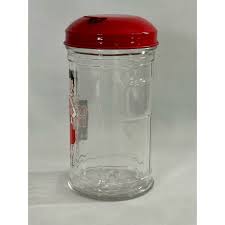
Betty Boop w/ puppy glass sugar dispenser with red…
ebay.com · $26
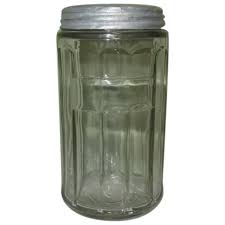
Vintage Glass Hoosier Spice Jar, Clear, Paneled, A…
rubylane.com · $50
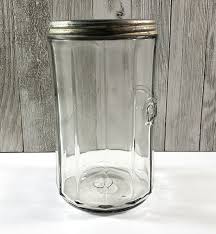
Antique Hoosier Cabinet Clear Glass COFFEE Jar Col…
zsinta.com · $60
Related Items
Have an antique to identify?
Get an instant AI appraisal with values, history, and market insights.
Download for iPhone