William Morris Tree of Life Tapestry Value Guide
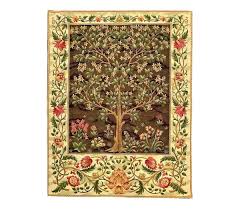
- Period
- Late 19th Century
- Origin
- Belgium
- Materials
- Wool, Cotton
- Category
- William morris tapestry
The William Morris Tree of Life tapestry is a cornerstone of the British Arts and Crafts movement, originally designed around 1877 to celebrate medieval aesthetics and botanical complexity. These late 19th-century Belgian jacquard weaves are highly collectible for their rebellion against industrial mass production and their representation of universal growth and connection.
What Is William Morris Tree of Life Tapestry Worth?
The typical price range for William Morris Tree of Life Tapestry is $950 - $1,050 based on recent sales. However, values can vary depending on the item's condition, rarity, and other factors such as:
- Overall physical condition, specifically the presence of fading from UV exposure or fraying of the wool and cotton fibers.
- The provenance and era of production, with late 19th-century Belgian weaves commanding the $950-$1050 price range.
- The integrity of the original borders and the presence of any historical repairs or restorations to the textile.
- Size and scale of the tapestry, as larger wall-hanging formats typically hold higher market value for collectors.
How to Identify William Morris Tree of Life Tapestry?
- Verify the jacquard weave structure which should show a complex interlacing of wool and cotton threads rather than a printed pattern.
- Look for the specific late 19th-century Belgian manufacturing marks or labels often found on the reverse lining.
- Examine the color palette for the deep, rich vegetable-dye tones characteristic of Morris's original botanical inspirations.
- Check for the intricate floral and arboreal motifs that define the 1877 design, ensuring the symmetry and density match period examples.
History of William Morris Tree of Life Tapestry
William Morris, a pivotal figure in the British Arts and Crafts movement, designed 'The Tree of Life' around 1877. This design embodies his deep appreciation for nature and his commitment to handcrafted quality, rebelling against industrial mass production. Morris's textiles and tapestries were celebrated for their rich colors and complex patterns, drawing inspiration from medieval art and botany. The 'Tree of Life' motif itself is an ancient and universal symbol across many cultures, representing connection, knowledge, and growth.
Shop Similar
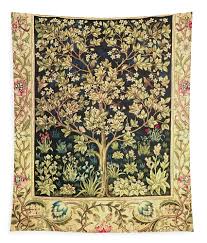
Tree Of Life Tapestry by William Morris - Masterpi…
masterpiecesofart.pixels.com · $42
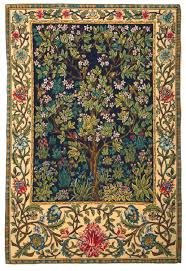
William Morris Tree of Life Tapestry - Arts & Craf…
yapatkwatapestries.com · $78
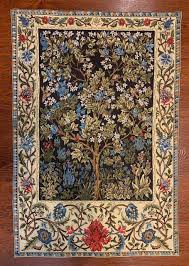
William Morris "tree of Life" Tapestry: Medieval A…
etsy.com · $93
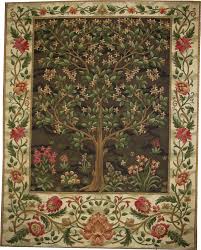
Morris Tree of Life - The Tapestry House - Jacquar…
thetapestryhouse.com · $105
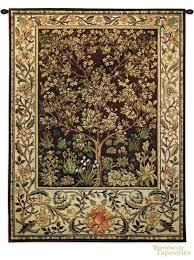
Tree Of Life Umber - Best Selling - Worldwide Tape…
worldwidetapestries.com · $109
Tree of Life William MORRIS Design BELGIAN Jacquar…
etsy.com · $251
Have an antique to identify?
Get an instant AI appraisal with values, history, and market insights.
Download for iPhone