Decode the Bottom of Your Vase: How to Spot a $5,000 Pottery Mark in Seconds

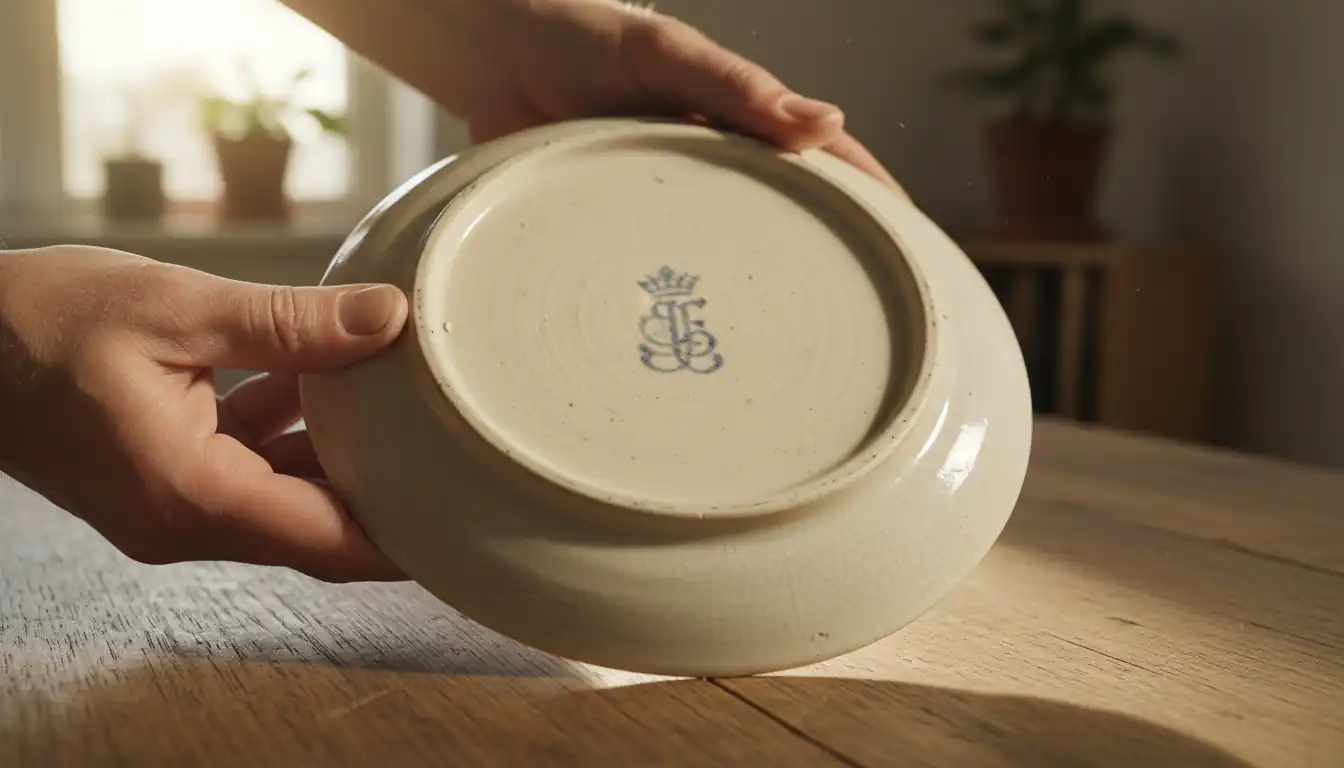
You are standing in a crowded thrift store, your eyes scanning rows of mismatched plates and dusty figurines. You spot a ceramic vase tucked behind a stack of chipped dinnerware. It has a certain weight to it, a luster that suggests quality, and a shape that feels more like art than a mass-produced household item. You turn it over, and there it is: a small, faded blue symbol. Is it a random squiggle, or is it the mark of a master potter from two centuries ago?
That tiny mark on the bottom of a piece of pottery is a window into history. It tells you who made the item, where they made it, and often, exactly when it left the kiln. For the uninitiated, these marks look like a secret code. For the savvy collector, they are a roadmap to a potential $5,000 windfall. Understanding how to read these symbols is the difference between passing over a masterpiece and making the find of a lifetime.
By the time you finish reading this, you will know how to analyze the physical characteristics of a maker's mark like a professional appraiser. You will learn to distinguish between the prestigious hallmarks of European royalty and the complex reign marks of Chinese dynasties. Most importantly, you will understand how to separate the genuine treasures from the clever fakes that have fooled collectors for generations.
The Anatomy of a Maker’s Mark
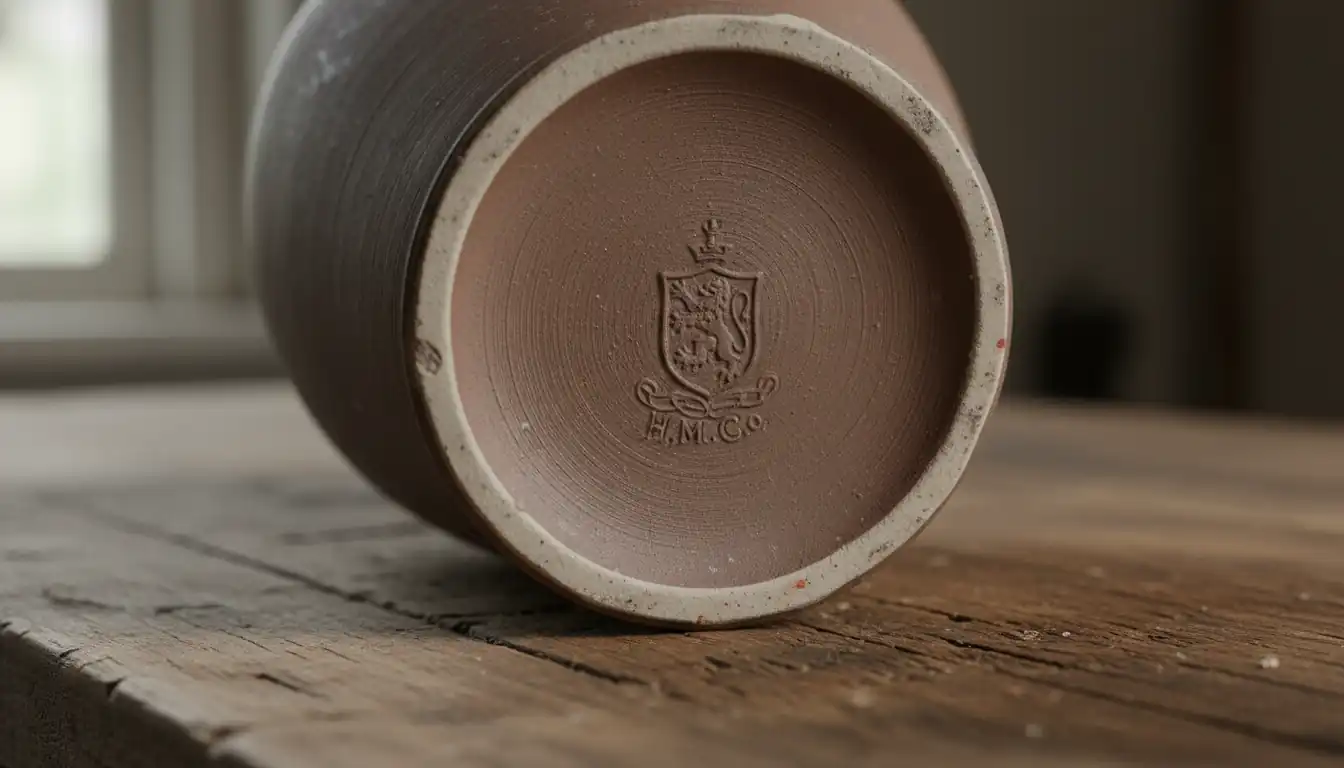
Before you can identify who made a piece of pottery, you must understand how they marked it. The physical method used to apply a signature or logo provides immediate clues about the age and production style of the piece. Think of it as forensic evidence. A mark isn't just a symbol; it is a physical impression left in the medium of clay and glass.
Deciphering Incised vs. Stamped Impressions
The earliest marks were often "incised." This means the potter used a sharp tool, like a needle or a wooden stylus, to scratch their name or a symbol directly into the damp clay before it was fired. When you run your finger over an incised mark, you can feel the ridges and the depth of the lines. It feels personal, almost like a handwritten note. Because this was a manual process, incised marks are common on early 18th-century pieces or studio pottery where the artist worked alone.
As the Industrial Revolution took hold in the 19th century, pottery production moved from small workshops to massive factories. Efficiency became the priority. This led to the rise of "impressed" or "stamped" marks. Instead of scratching the clay by hand, workers used a metal or wooden stamp to press a uniform logo into the base. These marks are characterized by their perfect symmetry and consistent depth. If you see a mark that looks like it was made with a typewriter or a professional seal, you are likely looking at a piece from the mid-1800s or later.
- Incised Marks: Hand-carved, often irregular, found on early or artisanal pieces.
- Impressed Marks: Uniform, deep, and often accompanied by "blind" numbers (small numbers pressed into the clay indicating a shape or size).
- Tactile Check: Always close your eyes and feel the mark; your fingertips can often detect the method of application better than your eyes.
Reading Between the Lines of Painted Signatures
Not all marks are pressed into the clay. Many are applied with pigment, and the placement of this pigment relative to the glaze is a vital chronological marker. "Underglaze" marks were painted onto the "bisque" (fired but unglazed clay) before the final clear coating was applied. When you look at an underglaze mark, it appears to be "inside" the ceramic, protected by a glassy layer. These are incredibly durable and cannot be scratched off. Historically, cobalt blue was the most common color for underglaze marks because it could withstand the intense heat of the kiln.
"Overglaze" marks, on the other hand, were painted on top of the finished, glazed piece and then fired a second time at a lower temperature. These marks sit on the surface. If you hold the piece at an angle to the light, you might see a slight difference in the reflection where the mark is located. Overglaze marks are more susceptible to wear and can sometimes be partially rubbed away by decades of cleaning. This technique allowed for a wider range of colors, such as red, gold, and green, which would have burned up at the higher temperatures required for the initial glaze firing.
Expert Insight: If a mark looks "fuzzy" or blurred at the edges, it is likely an underglaze mark where the pigment bled slightly into the wet glaze during firing. A crisp, sharp, colorful mark is almost always overglaze.
Iconic Hallmarks of the World’s Most Valuable Kilns
Once you understand the physical nature of the mark, you can begin to identify the "heavy hitters." Certain kilns have achieved such legendary status that their marks alone can add thousands of dollars to an item's value. These symbols represent centuries of tradition, royal patronage, and unparalleled craftsmanship.
The Prestige of European Porcelain Marks
The story of European porcelain is essentially a story of industrial espionage and royal competition. For centuries, Europeans tried to replicate the "white gold" coming out of China. When they finally succeeded, they marked their creations with symbols of power.
The Meissen factory in Germany is perhaps the most famous example. Their "Crossed Swords" mark is one of the oldest and most respected trademarks in existence. Introduced around 1722, the swords have evolved significantly. Early versions were spindly and hand-painted, while later 19th-century versions featured a more standardized, "curvy" look with pommels at the ends of the hilts. If you find a piece where the swords have a small dot between the blades, you’ve found a "Marcolini Period" piece (1774–1814), which is highly sought after by collectors.
| Era | Mark Description | Significance |
|---|---|---|
| 1722–1763 | Spindly, hand-painted swords | Early, high-value experimental period |
| 1774–1814 | Swords with a dot (Marcolini) | Highly refined, neoclassical style |
| 1815–1924 | Standardized swords with pommels | Industrial peak of the factory |
Similarly, the evolution of the Wedgwood mark tells the story of British ceramic dominance. While early pieces were simply impressed with the name "Wedgwood," later iterations added "England" (after 1891) and "Made in England" (after 1910) to comply with international trade laws. Spotting a Wedgwood piece without the word "England" is a quick way to identify a valuable 18th-century original.
Decoding Ancient Chinese Reign Marks
Chinese porcelain is the "holy grail" for many collectors, but its marking system is notoriously complex. Most valuable Chinese pieces feature a "Nian Hao," or reign mark. This is typically a four or six-character mark written in a vertical grid, identifying the dynasty and the specific emperor under whose reign the piece was produced.
The most common marks you will encounter are from the Ming and Qing dynasties. For example, the Da Qing Qianlong Nian Zhi mark indicates the piece was made during the reign of the Qianlong Emperor (1736–1795). However, there is a catch: Chinese potters frequently used "apocryphal" marks. This means a 19th-century potter might put a 15th-century Ming mark on a vase, not necessarily to deceive, but as a sign of respect for the quality of that earlier era. Identifying a true reign-period piece requires looking at the calligraphy's fluidity and the quality of the cobalt blue used in the underglaze.
- The Six-Character Rule: Most authentic imperial marks follow a specific format: "Made in [Dynasty] [Emperor's Name] Reign."
- Kaishu vs. Zhanshu: Look for the script style. "Kaishu" is a standard, readable script, while "Zhanshu" is a more ancient, blocky "seal script" often used on official imperial wares.
Spotting the Imposter: Marks That Are Too Good to Be True
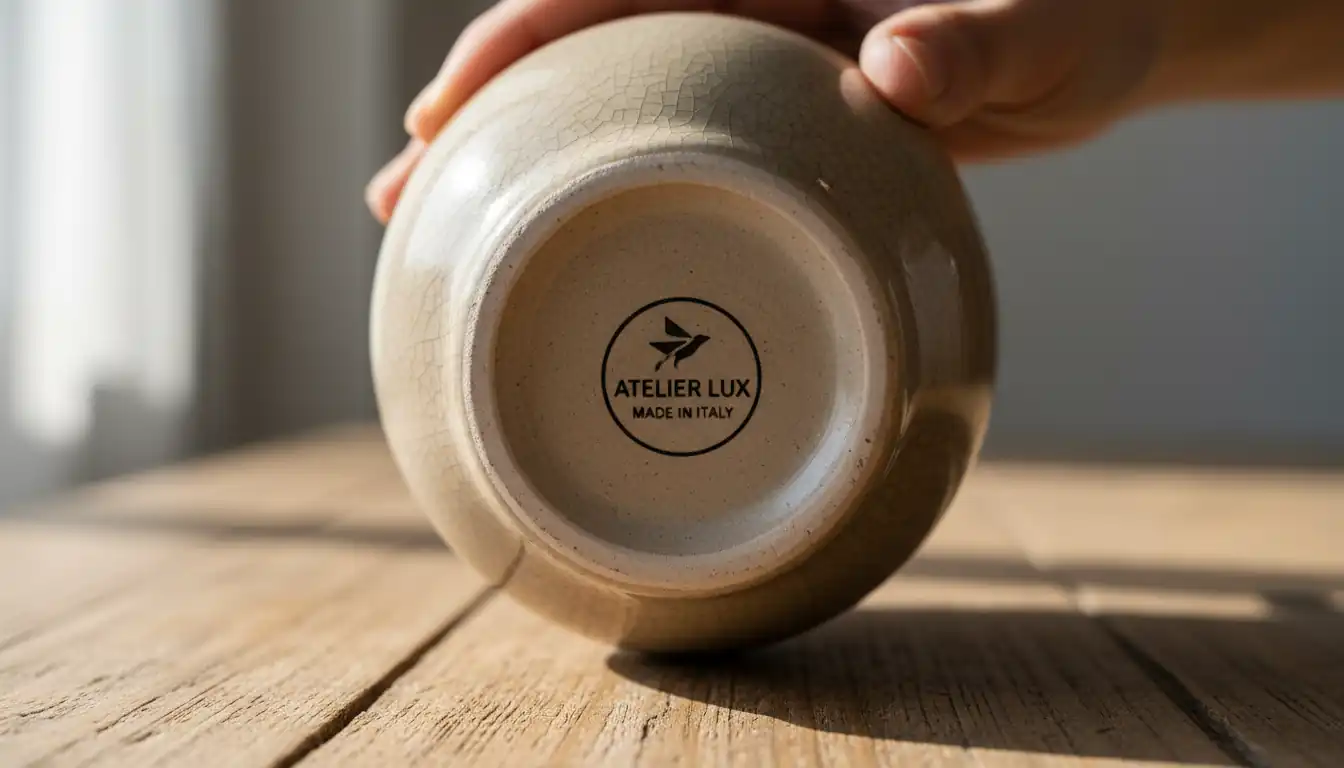
As long as there has been valuable pottery, there have been people trying to fake it. However, not all "fakes" were created with malicious intent. In the 19th century, several factories specialized in high-quality reproductions of 18th-century masterpieces.
The Rise of 19th Century Style Reproductions
The most famous name in the world of "honest" fakes is Samson of Paris. Edmé Samson founded a firm in 1845 that specialized in creating replacements for broken pieces of famous dinner services. They were masters of their craft, replicating Meissen, Sèvres, and even Chinese export porcelain with incredible accuracy.
While Samson pieces are antiques in their own right and can be worth hundreds of dollars, they are often mistaken for the multi-thousand-dollar originals they mimic. Samson usually added their own small mark—often a tiny "S" or a variation of the original mark—but these were frequently ground off by unscrupulous dealers later on. If you find a piece that looks "too perfect" or has a slightly grayish tint to the porcelain, it might be a Samson.
Red Flags in Modern Counterfeit Signatures
Modern technology has made it easier for counterfeiters to produce deceptive marks, but it has also left behind specific clues that you can spot. One of the biggest red flags is an "acid-etched" mark. Genuine 18th and 19th-century marks were either painted or stamped. Modern fakes often use a stencil and acid to etch a mark into the glaze. These marks look perfectly uniform and often have a slightly "frosted" appearance.
Another warning sign is a mark that sits "on top" of the glaze when it should be underneath. For example, if you find a "Ming" vase where the blue reign mark feels raised or looks like it was printed with a modern inkjet printer, it is a contemporary reproduction. Authentic underglaze blue marks should look like they are part of the ceramic's soul, slightly softened by the layer of glass above them.
- The "Wear" Test: Look at the base of the piece. If the mark is pristine but the "foot rim" (the unglazed ring the piece sits on) is heavily scratched and dirty, the mark might have been added later.
- Consistency Check: Does the quality of the mark match the quality of the decoration? A sloppy, poorly drawn "Crossed Swords" mark on a beautifully painted plate is a major red flag.
Leveraging AI to Unmask Obscure Origins Instantly
For decades, identifying a pottery mark meant lugging a five-pound "Encyclopedia of Marks" to every estate sale and flea market. You would spend hours squinting at tiny line drawings, trying to match a faded squiggle on a plate to a grainy illustration in a book. Even then, you were often left guessing. Was that a crown or a fleur-de-lis? Is that a "7" or a "T"?
The digital age has replaced that frustration with instant clarity. Instead of relying on memory or outdated books, you can now use your smartphone to bridge the gap between a mystery object and a professional appraisal. This is where the Relic app has become an essential tool for the modern collector.
Why Manual Database Searches Often Fail
Manual searching is prone to human error. Marks are often partial, faded, or written in languages like Chinese, Japanese, or Cyrillic. If you don't know the language, you don't even know which way is "up" when looking at the mark. Furthermore, many marks are incredibly similar; hundreds of small German factories used variations of a crown or a shield, and distinguishing between them requires an expert eye for minute details.
Instant Appraisal and History with Relic
Relic changes the game by using advanced AI to analyze the visual data of a pottery mark in seconds. When you take a photo of the bottom of a vase with the Relic app, the AI doesn't just look for a matching picture; it analyzes the style, the method of application (incised vs. stamped), and the historical context of the ceramic itself.
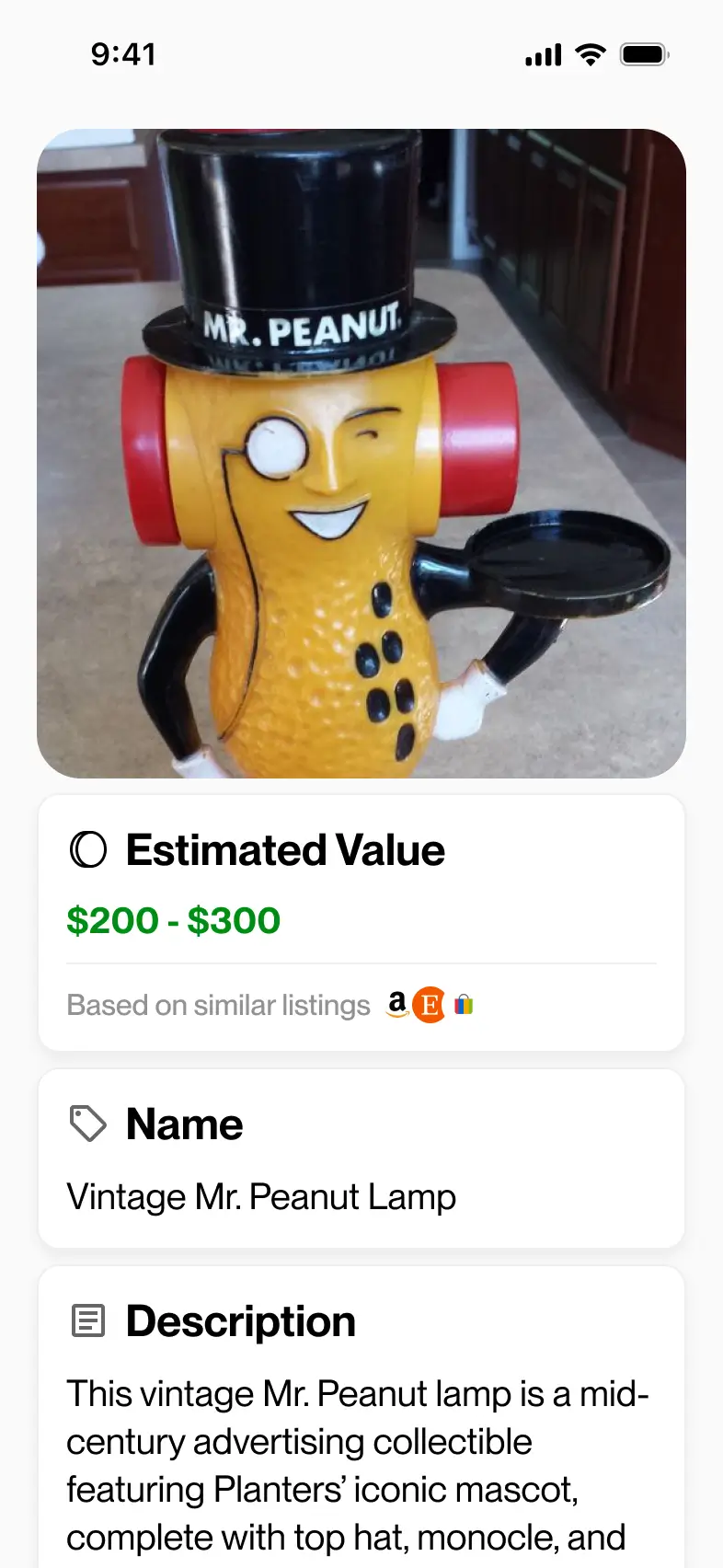
The app provides more than just a name. It offers a real appraisal, origin story, and the historical significance of the item. For a collector standing in a dusty barn, this is the difference between a $10 gamble and a $5,000 investment. With over 20,000 reviews and a 4.9-star rating, Relic has built a reputation for accuracy that gives users the confidence to make informed buying and selling decisions on the spot. It effectively puts a professional appraiser in your pocket, allowing you to scan items and access a searchable catalog of your finds instantly.
Pro Tip: When using Relic, ensure you have good lighting. A clear, high-resolution photo of the mark—and the piece as a whole—allows the AI to provide the most accurate historical context and valuation.
Beyond the Mark: Determining Market Value and Rarity
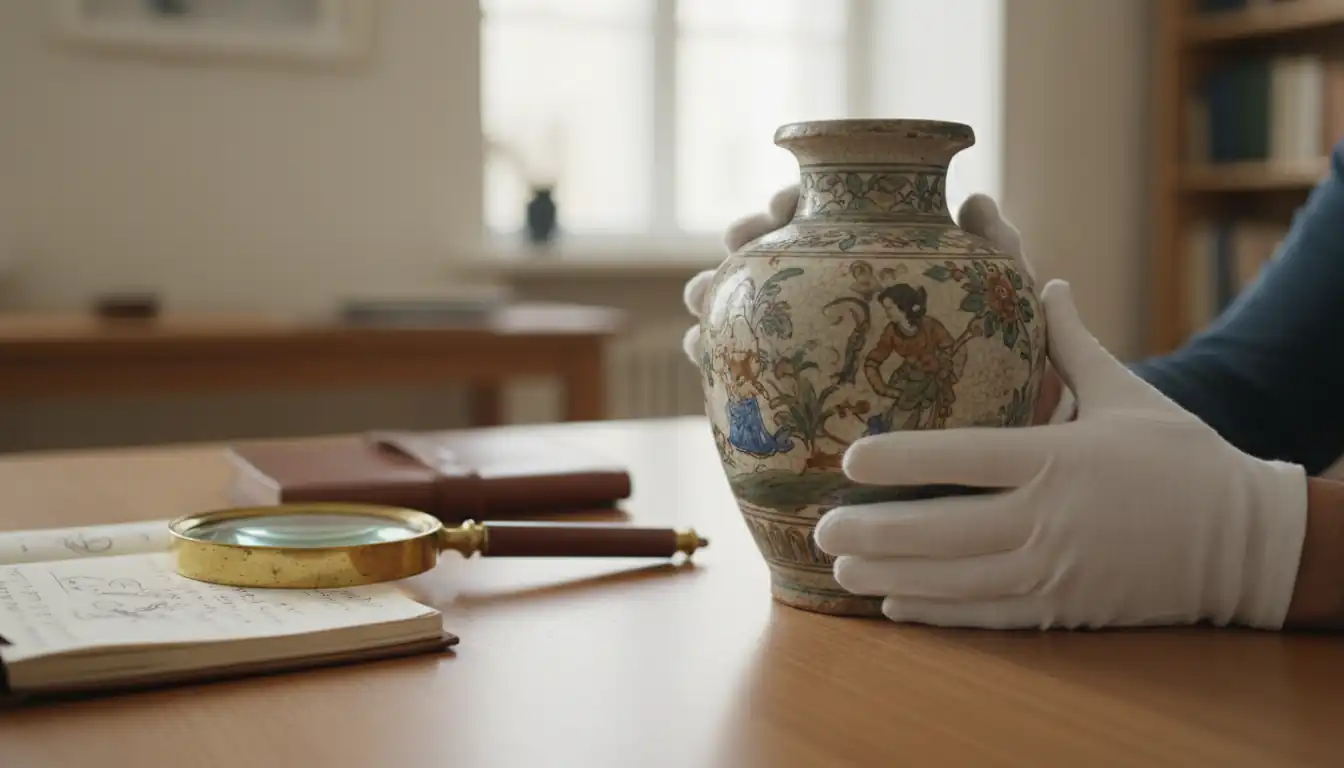
Identifying the mark is a massive victory, but it is only the first step in determining what a piece is actually worth. A mark tells you the "who" and "when," but the market determines the "how much." You must look at the piece as a whole to understand its true value.
How Condition Impacts the Signature’s Worth
In the world of high-end ceramics, condition is everything. A rare 18th-century Sèvres plate with a perfect mark is a treasure; that same plate with a hairline crack or a repaired chip can lose 70% to 90% of its value. Collectors are notoriously picky. They want "pristine" or "cabinet condition" pieces.
However, there is an exception for extremely rare items. If you find a piece of 17th-century Medici porcelain (of which only about 60 pieces are known to exist), even a broken and glued specimen would be worth a fortune. For more common "valuable" items like Meissen or Wedgwood, always check for "flea bites" (tiny chips) along the rim and "crazing" (fine cracks in the glaze).
- The "Ring" Test: Gently tap the rim of a piece with your fingernail. A healthy piece of porcelain will produce a clear, bell-like ring. A piece with a hidden crack will produce a dull "thud."
- Restoration Detection: Use a blacklight. Modern glues and paints used in repairs will often glow a different color than the original 200-year-old ceramic.
Finding the Right Marketplace for Your Discovery
Once you have identified your piece and confirmed its value using an app like Relic, you need to decide where to sell it. The "where" is just as important as the "what."
For world-class items like imperial Chinese porcelain or early European royal wares, high-end auction houses like Sotheby’s or Christie’s are the best bet. They have the global reach to find the one collector willing to pay top dollar. For mid-range "collectible" pottery, such as Art Deco pieces or mid-century modern studio pottery, niche online marketplaces or specialized antique shows are often more effective. These venues attract enthusiasts who are specifically looking for those styles and are willing to pay a premium for well-identified, authenticated pieces.
How can I identify valuable vintage pottery? To identify valuable pottery, start by examining the base for a maker's mark. Use the tactile methods discussed earlier to determine if it is incised, stamped, or painted. Look for signs of age, such as natural wear on the foot rim and the "ring" of the porcelain. Finally, use a tool like the Relic app to cross-reference the mark with a global database of known kilns and artists to get an instant appraisal and historical background.
Conclusion
The world of antique pottery is a vast, silent library of history, with every mark serving as a title on a spine. Whether it is the hand-scratched signature of a rural potter or the regal crossed swords of a German factory, these symbols are the keys to unlocking hidden value. By understanding the physical anatomy of a mark, recognizing the hallmarks of the great kilns, and staying vigilant against clever reproductions, you transform from a casual observer into a savvy treasure hunter.
You no longer have to guess or spend hours flipping through dusty reference books. With the foundational knowledge of ceramic history and the power of AI tools like Relic, you can identify and appraise discoveries in seconds. The next time you see a dusty vase at the back of a shelf, don't just look at the shape—flip it over. Your $5,000 discovery is waiting for you to read its story.
Download the Relic app today and start scanning your collection; you might already be sitting on a masterpiece.
Identify antiques instantly
Point your camera at any antique, collectible, or vintage item. Get valuations, history, and market insights in seconds.
Download for iPhone