Hidden Fortune in the Cupboard: Decoding Antique China Backstamps Instantly

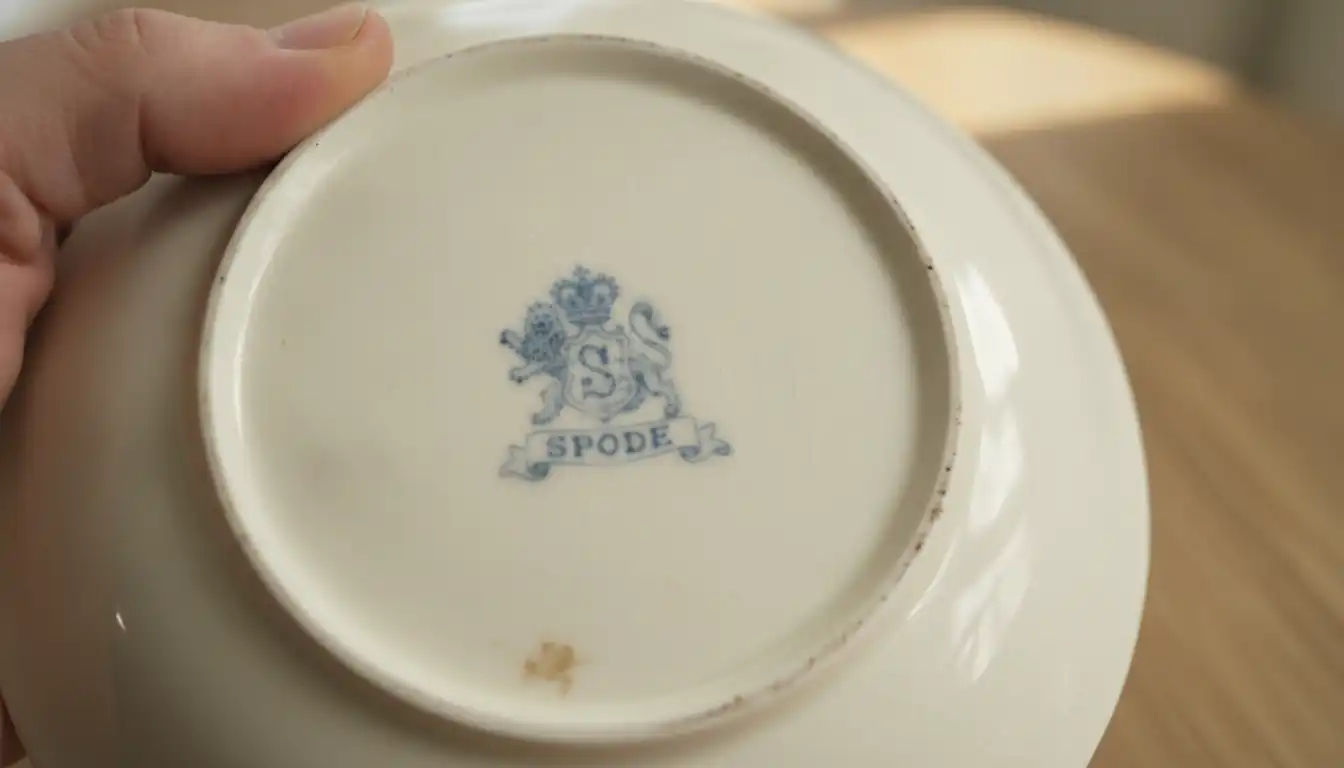
You might be sitting on a small fortune without even knowing it. That dusty stack of floral plates in the back of your kitchen cabinet or the heavy tureen inherited from a great-aunt isn't just old dinnerware. It is a physical record of industrial history, artistic trends, and global trade. Every piece of antique china carries a "passport" on its underside, a small mark that tells the story of its birth, its travels, and its true worth.
Decoding these marks is often the difference between selling a plate for five dollars at a garage sale or realizing it belongs in a high-end auction house. For decades, this knowledge was locked away in massive, dusty reference books or held exclusively by professional appraisers. You had to know exactly what you were looking for to even begin the search.
This guide will pull back the curtain on the secret language of porcelain backstamps. You will learn how to distinguish a hand-carved mark from a printed one, how to spot a clever forgery, and how to determine if your "old" dish is a 19th-century masterpiece or a 1990s reproduction. By the time you finish reading, you will have the tools to transform your cupboard from a storage space into a curated gallery of history.
The Secret Language of Porcelain Markings
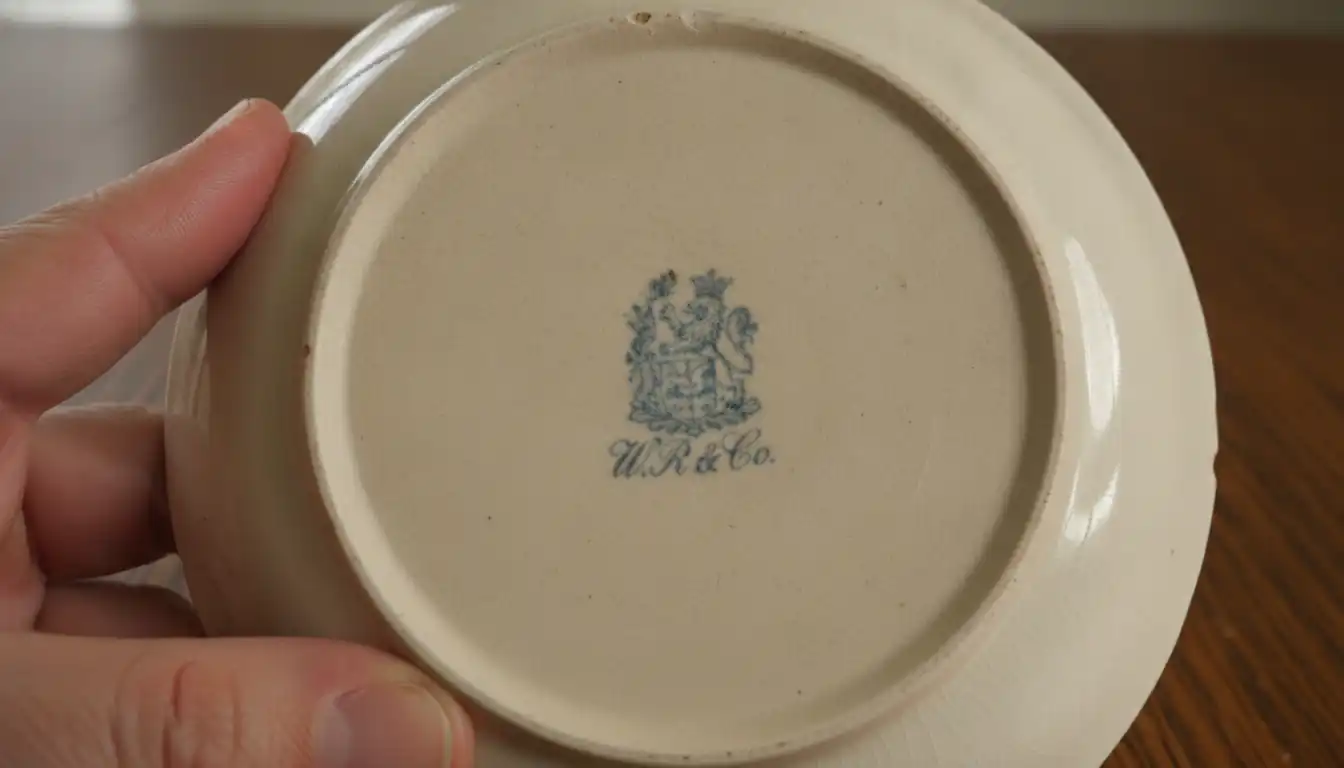
When you flip over a piece of fine china, you are looking at the potter’s signature. Before the era of mass production and digital branding, craftsmen used physical impressions to claim their work. These marks weren't just for pride; they were often required by law or guild regulations to ensure quality and track taxes. Understanding the physical nature of these marks is your first step in the detective work of identification.
Deciphering Symbols and Registry Numbers
The earliest marks were often incised. This means the potter used a sharp tool to carve a symbol, name, or number directly into the wet clay before the first firing. If you run your finger over an incised mark, you will feel the indentation. Because these were done by hand, they are often slightly irregular. You might see a simple "X," a set of initials, or a series of Roman numerals. These marks are common on 18th-century European porcelain, such as early Meissen or Sèvres, where the artist was as important as the factory.
Impressed marks are slightly different. Instead of being carved freehand, they were stamped into the moist clay using a metal or wooden die. This resulted in a cleaner, more uniform look than incised marks. Wedgwood is famous for its impressed marks; the word "WEDGWOOD" stamped in block letters is a hallmark of their classic jasperware. If the letters look slightly soft or "mushy," it could indicate a later reproduction where the stamp was worn down.
As technology advanced, printed marks became the standard. These are applied using a transfer process.
- Underglaze marks: These were applied to the "biscuit" (fired but unglazed) porcelain before the final clear glaze was added. Because the glaze protects them, these marks are permanent and cannot be scratched off. They are usually blue, as cobalt was one of the few pigments that could withstand the intense heat of the kiln.
- Overglaze marks: These were applied on top of the finished glaze and fired a second or third time at lower temperatures. These marks are often colorful—red, green, or gold—but they are more fragile. If you see a mark that looks faded or has bits missing where it has been rubbed, it is likely an overglaze mark.
One of the most complex but rewarding marks to decode is the British Diamond Mark. Used between 1842 and 1883, this kite-shaped symbol provided a wealth of information to the trained eye. By looking at the letters and numbers in the four corners of the diamond, you can pinpoint the exact day, month, and year the design was registered with the British Patent Office.
| Position | 1842–1867 Meaning | 1868–1883 Meaning |
|---|---|---|
| Top Circle | Year Code | Day of Month |
| Right Corner | Month Code | Year Code |
| Bottom Corner | Day of Month | Month Code |
| Left Corner | Bundle Number | Bundle Number |
Learning this code allows you to date a piece of Victorian ironstone to a specific Tuesday in October 1862. It is a direct connection to a specific moment in the 19th century.
Dating Techniques Through Ink and Impression
The color and style of the ink used in a backstamp can be just as telling as the symbol itself. Early printed marks often had a "flow" to them, where the ink bled slightly into the surrounding porcelain, creating a soft, blurred edge. This is particularly common in "Flow Blue" patterns. If a mark looks too crisp, like it was printed by a modern laser printer, your internal alarm should go off.
The evolution of font styles also provides clues. Serif fonts with elegant flourishes were popular in the mid-1800s, while the turn of the century saw a shift toward more utilitarian, blocky lettering. If you find a piece that claims to be from 1820 but uses a font that looks like it belongs on a 1950s diner menu, you have likely found a "marriage" of a new piece and an old style.
A backstamp is more than a logo; it is a timestamp of the chemical and industrial capabilities of its era.
Modern Shortcuts for Instant Identification
While the manual detective work of identifying porcelain is deeply satisfying, it is also incredibly time-consuming. In the past, a collector would have to carry around heavy volumes like Kovel's Antiques & Collectibles Price Guide or Godden's Guide to British Porcelain. You would spend hours squinting at tiny black-and-white drawings of crowns and lions, trying to find a match for the blurry blue smudge on your plate. If the mark was partially worn away, you were often out of luck.
The Limitations of Manual Catalog Search
Manual searching relies heavily on your ability to describe what you see. Is that a bird or a griffin? Is that a crown with five points or seven? If you misidentify the symbol, you will never find it in a printed index. Furthermore, books are static. They cannot be updated in real-time to reflect new discoveries or shifting market prices. By the time a price guide is printed, the "hot" pattern it lists might have already cooled off in the auction world.
There is also the issue of the "unmarked" piece. Many high-quality antique pieces have no backstamp at all, especially those from the early 18th century or pieces that were part of a larger set where only the main platter was marked. For a human, identifying an unmarked piece requires years of handling porcelain to recognize the specific "weight" of a Spode glaze or the "whiteness" of a Minton body.
Using Relic to Identify Patterns via AI
This is where modern technology has completely changed the game for collectors and casual treasure hunters alike. Instead of flipping through thousands of pages, you can now use the Relic app to get an answer in seconds. Relic uses advanced AI that has been trained on millions of images of antiques, including rare porcelain and pottery.
The process is straightforward:
- Capture: You take a clear photo of the backstamp or the entire piece using your iPhone.
- Analyze: Relic’s AI doesn't just look at the mark; it analyzes the pattern, the shape of the rim, the translucency of the material, and the specific color palette.
- Identify: Within seconds, the app provides a real appraisal, historical context, and the origin of the item.
What makes Relic particularly useful is its ability to see past the "smudge." If a backstamp is partially faded, the AI can often reconstruct the likely mark based on the other physical characteristics of the dish. It provides a professional-grade identification that used to require a trip to an auction house. For dealers, importers, and "pickers" who are scanning items at a crowded estate sale, this speed is a massive advantage. You can know the value of a piece before the person behind you even notices it’s on the shelf.
With over 20,000 reviews and a 4.9-star rating, Relic has become the go-to tool for anyone who wants to move from "I think this is old" to "I know exactly what this is and what it’s worth."
Red Flags and the Evolution of Authenticity
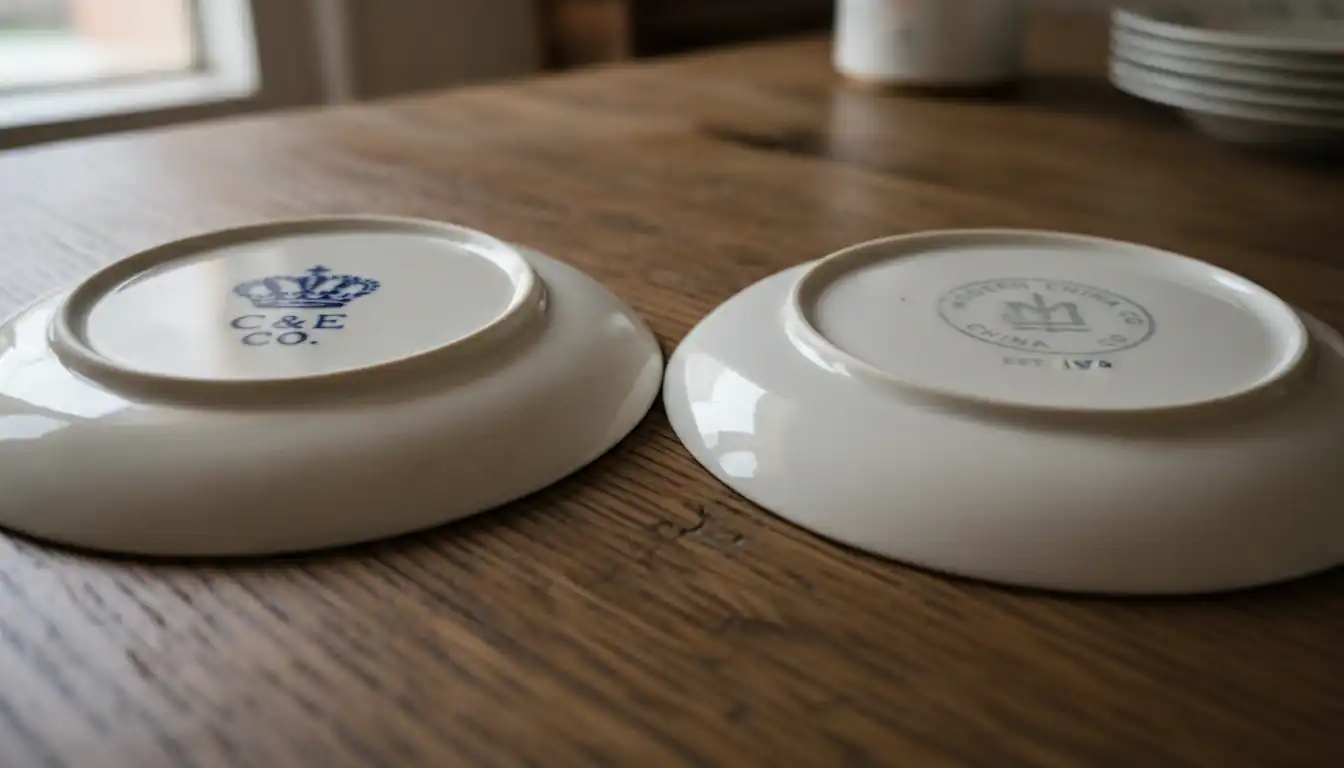
As long as there has been valuable china, there have been people trying to fake it. Some of these fakes are over a century old themselves, created by smaller factories in the 1800s to capitalize on the fame of prestigious names like Meissen or Sèvres. To protect yourself, you need to look beyond the mark and evaluate the piece as a whole.
Spotting Modern Fakes of Classic Patterns
One of the most forged marks in history is the Meissen Crossed Swords. Since the early 1700s, this mark has represented the pinnacle of European porcelain. Authentic marks were hand-painted in underglaze blue. Fakes often have swords that look too perfect, or conversely, too sloppy. A common trick used by Meissen itself was to cut a "cancel" mark (a horizontal scratch) through the swords to indicate "seconds" or pieces with flaws. If you see a piece with the swords but the quality of the painting looks amateurish, check for those scratches.
Another frequent target is Nippon ware. "Nippon" is simply the Japanese word for Japan. Pieces marked "Nippon" were generally made between 1891 and 1921. Because these pieces became highly collectible in the 1980s, a flood of modern fakes hit the market. These "Morimura" fakes often have marks that are applied over the glaze and feel slightly raised or "sticky" to the touch, whereas authentic Nippon marks are smooth and integrated into the piece.
The Impact of the McKinley Tariff Act
If you want to date a piece instantly, look for the country of origin. The McKinley Tariff Act of 1890 was a turning point in the history of imports. This US law required all imported goods to be marked with their country of origin in English.
- Pre-1891: Pieces often have no country name, just the factory name or a symbol.
- 1891–1914: Pieces will be marked with just the country name (e.g., "France," "Germany," "Japan").
- Post-1914: The phrase "Made In" was added (e.g., "Made in England").
If you find a "18th-century" plate that says "Made in China" on the bottom in crisp, sans-serif letters, you are looking at a modern souvenir, not a Ming Dynasty treasure.
Physical Tests for Authenticity:
- The Temperature Test: Hold the piece to your cheek. True hard-paste porcelain (like Meissen or Chinese export) feels "cold" and stays cold longer. Soft-paste porcelain and earthenware feel "warmer" and reach room temperature quickly.
- The Light Test: Hold a plate up to a bright light and place your hand behind it. Fine bone china and porcelain should be translucent; you should see the shadow of your fingers through the dish. If it’s opaque, it’s likely ironstone or earthenware.
- The Weight Test: Forgers often struggle to get the weight right. Antique bone china is surprisingly light and delicate. If a piece looks dainty but feels like a brick, the proportions are wrong.
Determining Market Value Beyond the Stamp
A prestigious backstamp is a great start, but it isn't a guarantee of a windfall. In the world of antique collecting, the stamp gets you into the room, but the condition and rarity determine your seat at the table. You must be objective when evaluating your finds.
Condition Grading for Serious Collectors
Professional collectors use a specific vocabulary to describe condition. Being honest about these grades is essential if you plan to sell your items online.
- Mint: The piece is in the same condition it was when it left the factory. No chips, no scratches, no fading, and no "crazing."
- Excellent: Very minor signs of use, perhaps some light "shelf wear" on the bottom rim where it sat on a table, but no visible damage.
- Good: May have minor "flea bites" (tiny chips), some loss of gold gilding on the rim, or light crazing.
- As Found: The piece has significant damage—large chips, cracks, or heavy staining. Generally, "As Found" pieces are only valuable if they are incredibly rare or are being sold for "shards" (upcycling).
Crazing is a particularly misunderstood element. It refers to the fine network of cracks in the glaze, often caused by age or sudden temperature changes. In some types of pottery, like English Ironstone or certain types of earthenware, collectors expect and even enjoy a bit of crazing as a sign of age. However, in fine porcelain or bone china, crazing is considered a significant defect that can reduce the value by 50% or more.
Rarity vs. Demand in Modern Auctions
The market for antique china is constantly shifting. Currently, we are seeing a "generational " shift in taste.
- Victorian Patterns: Massive sets of ornate, heavy Victorian dinnerware have seen a dip in value. Modern buyers often lack the storage space for a 100-piece set and don't want hand-wash-only dishes.
- Mid-Century Modern (MCM): Patterns from the 1950s and 60s, like those by Midwinter or Heath Ceramics, are currently skyrocketing in value. Their clean lines and "retro" feel appeal to younger collectors.
- Oddities and Commemoratives: Pieces made for specific historical events (like a Royal Coronation) or "advertising" pieces can often fetch more than standard dinner plates because they cross over into other collecting niches.
When you use an app like Relic to identify your piece, you aren't just getting a name; you are getting a story. Having a documented history—knowing that your platter was designed by a specific artist or was part of a limited run—allows you to justify a higher asking price. On platforms like eBay or 1stDibs, a listing that says "Antique Plate" will be ignored. A listing that says "1864 Minton Hand-Painted Botanical Plate, Pattern #1234, Documented via Relic" will attract serious bidders.
| Pattern Type | Current Market Trend | Key Manufacturers |
|---|---|---|
| Flow Blue | Stable/High for rare pieces | Johnson Bros, Copeland |
| Mid-Century Modern | Rapidly Rising | Franciscan, Midwinter |
| Formal Victorian | Declining for sets | Haviland, Limoges |
| Blue & White Transferware | Always in Demand | Spode, Wedgwood |
The Ethics of Upcycling Vintage Porcelain
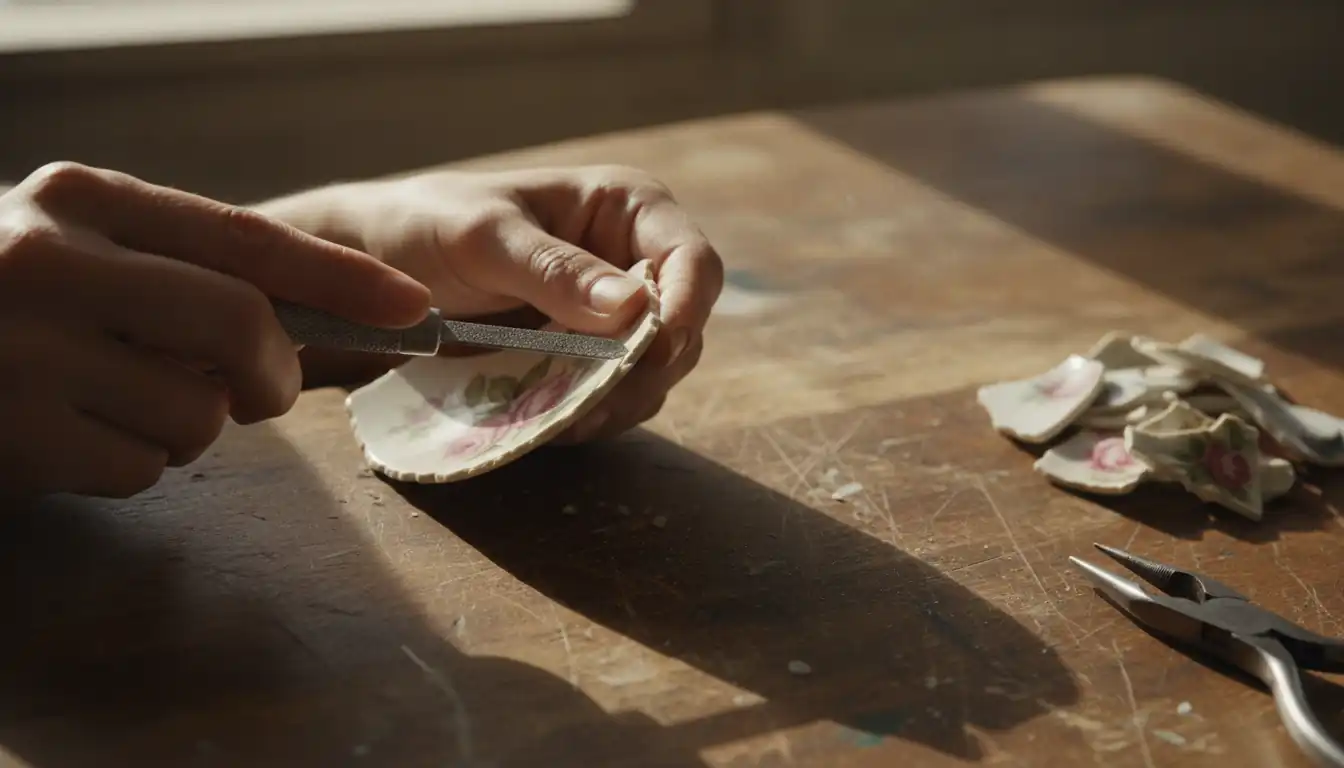
In recent years, a trend has emerged where "orphan" plates—single pieces from a lost set—are drilled to make tiered cake stands or broken into pieces to create "shards" jewelry. This is a controversial topic in the collecting community. On one hand, it gives a new life to items that might otherwise end up in a landfill. On the other, it can result in the destruction of irreplaceable history.
When to Preserve and When to Repurpose
Before you take a drill or a hammer to a piece of china, you have a responsibility to ensure you aren't destroying a treasure. Use this checklist to decide if a piece is a candidate for upcycling:
- Is it part of a complete set? If you have 11 matching plates, don't break one. A complete set is always more valuable than the sum of its parts.
- Is the backstamp rare? If Relic identifies the mark as a short-lived factory or a rare artist’s signature, preserve it, even if it has a small chip.
- Is the pattern discontinued? Some patterns are highly sought after by people looking to replace broken pieces in their own family sets. Your "orphan" plate might be the missing piece someone else has been searching for for years.
- Is the damage structural? If a plate has a "hairline crack" (a crack that goes all the way through the body), it is no longer safe for food use. This is the perfect candidate for repurposing.
Documenting Provenance for Future Generations
Whether you keep your collection intact or decide to sell it, documenting what you have is vital. Provenance is the record of ownership and origin of an object. It adds a layer of "soul" to the item and significantly increases its resale value.
Consider keeping a "Provenance Log." This can be a simple digital folder or a physical notebook. For every significant piece in your collection, include:
- A photo of the piece and its backstamp.
- The identification and history provided by your Relic scan.
- Where you acquired it (e.g., "Purchased at an estate sale in Charleston, SC, 2023").
- Any family stories associated with it.
By doing this, you transition from being a mere consumer of "old stuff" to being a steward of history. You are ensuring that the secret language of the potter isn't lost when the piece eventually passes to the next owner.
Conclusion
The world of antique china is a fascinating blend of art, chemistry, and detective work. From the tactile feel of an incised 18th-century mark to the instant AI-driven insights provided by the Relic app, identifying these pieces allows us to touch the past. You no longer need to be an academic to uncover the hidden fortune in your cupboard; you simply need a curious eye and the right tools.
Next time you find yourself at a thrift store or cleaning out an attic, don't just look at the pattern on the front. Flip the piece over. Look for the kite-shaped diamond, the crossed swords, or the "Made in" stamp. Use technology to bridge the gap between mystery and knowledge. Whether you find a rare museum-quality piece or a sentimental family heirloom, you are participating in a tradition of collecting that spans centuries. Happy hunting, and may your next scan reveal a hidden masterpiece.
Identify antiques instantly
Point your camera at any antique, collectible, or vintage item. Get valuations, history, and market insights in seconds.
Download for iPhone