Hidden Gems in Your Cupboard: How AI Identifies Rare Depression Glass Patterns

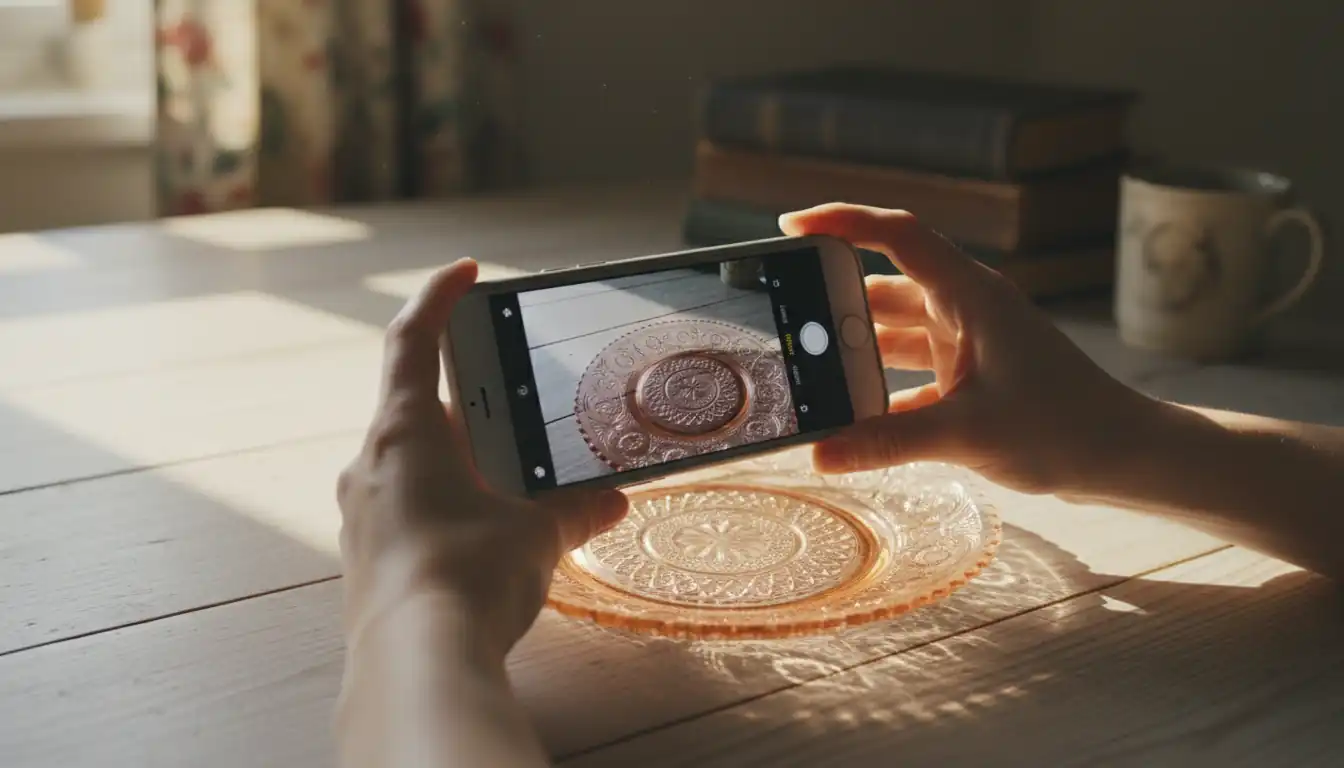
You might be standing in front of a kitchen cupboard right now, looking at a stack of translucent pink or green plates that belonged to your grandmother. To the untrained eye, they look like simple relics of a bygone era, perhaps a bit too fragile for daily use. To a collector, however, those plates represent a fascinating chapter of American industrial history known as the Depression era.
The challenge lies in the fact that these pieces were never meant to be high-end collectibles. They were mass-produced, often given away for free in boxes of oatmeal or as prizes at movie theaters. Because of this chaotic production, identifying exactly what you have is a daunting task. A single pattern might have been produced by three different factories with slight variations that mean the difference between a $5 plate and a $500 rarity.
By the time you finish reading this, you will understand the physical markers that define authentic 1930s glassware and how modern technology has finally caught up to the complexity of these patterns. You will learn how to distinguish a genuine "Cherry Blossom" piece from a modern imitation and why the history of the factory that made your glass is just as important as the color of the piece itself.
The Complexity of Depression Glass Identification
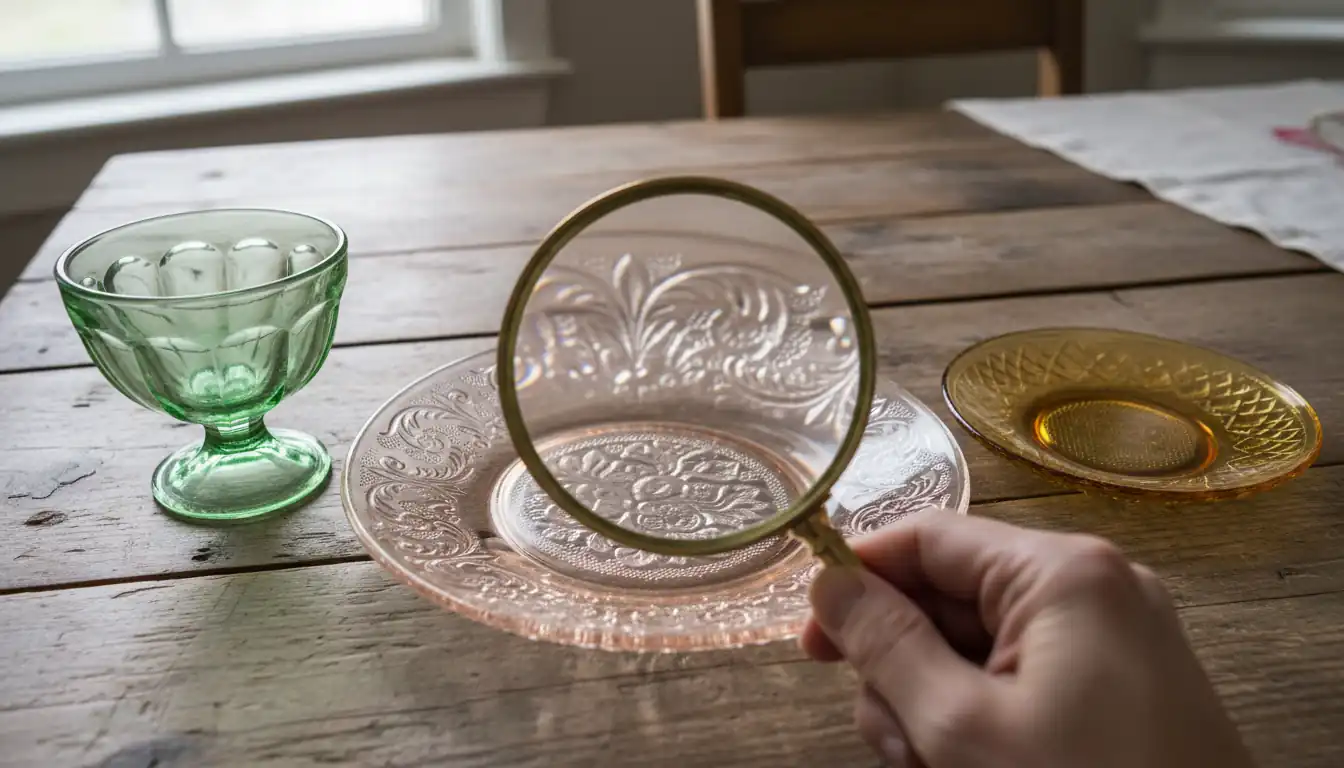
Identifying Depression glass is often described as a rite of passage for antique enthusiasts. During the 1930s, dozens of glass companies produced over 90 distinct patterns in a dizzying array of colors. Because these items were made quickly and cheaply to keep factories running during the Great Economic Collapse, the quality control was inconsistent. This inconsistency is exactly what makes identification so difficult for the modern collector.
You aren't looking for perfection; you are looking for specific manufacturing "flaws" that prove the item's age. Authentic Depression glass often features mold marks—thin, raised lines where the two halves of the metal mold met. You might also find "straw marks," which look like tiny scratches or hairs embedded in the glass. These were actually caused by the glass cooling too quickly on the production line. If a piece looks too perfect, it might actually be a modern reproduction.
Visual Markers of Authentic 1930s Glassware
When you pick up a piece of authentic glass, the first thing you should notice is the "feel." Authentic pieces are generally thinner and lighter than modern glass. Because the molds were used thousands of times, the patterns on original pieces are often slightly soft or blurred.
- Bubbles and Inclusions: Small air bubbles trapped inside the glass are common and expected in authentic 1930s pieces.
- Irregular Rims: Run your finger along the edge of a plate; you may feel slight undulations or unevenness that wouldn't exist in modern, machine-perfected glassware.
- Color Consistency: While colors like "Federal Green" or "Jeannette Pink" are iconic, the hue can vary slightly between batches. However, modern fakes often use colors that are too "neon" or saturated compared to the softer tones of the 1930s.
Consider the "Adam" pattern by the Jeannette Glass Company. It features a highly geometric, almost Art Deco style with delicate feathers and flowers. If you find an Adam plate, you have to look closely at the center. Authentic pieces have a very specific "stippled" or textured background behind the floral elements. If that background is smooth, you are likely holding a reproduction.
Common Reproductions and How to Spot Them
The popularity of Depression glass in the 1970s and 80s led to a flood of "repros" entering the market. Patterns like "Cherry Blossom," "Mayfair," and "Iris and Herringbone" were copied extensively. For a novice, these fakes are dangerous because they can look remarkably convincing on a dimly lit shelf at an estate sale.
One of the most famous examples is the "Royal Lace" pattern. Originally produced by Hazel-Atlas, it is one of the most beautiful and sought-after patterns in the hobby. The authentic Royal Lace has a very fine, crisp detail in the "lace" portions. Reproductions often have "mushy" details where the lace looks more like blobs than intricate threadwork.
"The most expensive mistake a collector can make is assuming that 'old-looking' glass is synonymous with 'authentic' glass. In the Depression glass market, the fakes are often decades old themselves."
| Pattern Name | Common Fake Colors | Authentic "Tell" |
|---|---|---|
| Cherry Blossom | Bright Blue, Dark Green | Authentic leaves have serrated edges; fakes are smooth. |
| Mayfair | Cobalt Blue (rarely authentic) | Authentic pieces have a distinct "open rose" detail. |
| Madrid | Amberine (Red/Yellow) | Authentic pieces are thinner; fakes feel heavy like stoneware. |
Modern Solutions for Instant Pattern Recognition
For decades, the only way to identify a mystery pattern was to lug a three-pound reference book to every flea market and estate sale. You would spend twenty minutes flipping through grainy black-and-white photos, trying to decide if your plate was "American Sweetheart" or "Petalware." The margin for error was massive, and by the time you found the answer, another buyer had likely already snatched up the item.
The shift toward mobile AI solutions has changed the landscape for collectors. Instead of relying on a fallible human memory or an outdated book, you can now use computer vision to do the heavy lifting. Advanced AI can analyze the specific geometry of a glass pattern—the number of petals on a flower, the spacing of the ridges, and the thickness of the rim—and compare it against a massive database of known patterns in a heartbeat.
How Computer Vision Decodes Intricate Glass Patterns
Computer vision works by breaking down an image into thousands of data points. When you take a photo of a Depression glass bowl, the AI isn't just looking at a "pink bowl." It is measuring the angle of the mold lines and the specific frequency of the etched design. This is particularly helpful when dealing with patterns that look nearly identical to the naked eye.
Take, for example, the "Cherry Blossom" and "Mayfair" patterns. Both feature floral motifs and were produced in similar shades of pink. To a human, they might look interchangeable at a glance. However, an AI can instantly recognize that the leaf structure in Cherry Blossom is fundamentally different from the floral clusters in Mayfair.
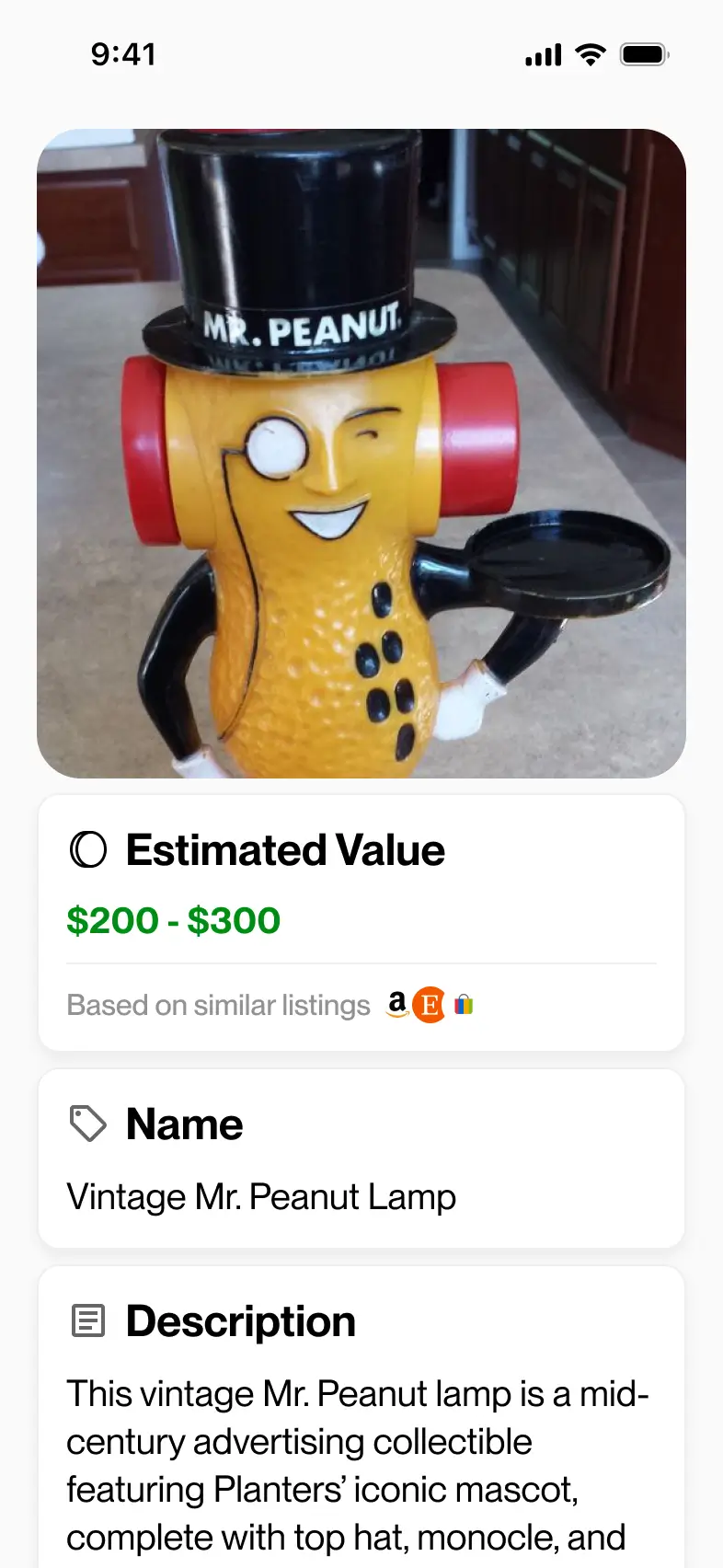
This is where an app like Relic becomes an essential part of your toolkit. Relic is an iOS app that allows you to simply point your camera at an antique and receive an instant identification. It uses sophisticated AI to provide not just the name of the pattern, but a real appraisal, history, and the origin of the item. Instead of guessing, you get a professional-grade analysis based on a single photo.
Why Photo-Based Apps Outperform Traditional Price Guides
Price guides are often obsolete the moment they are printed. The market for antiques moves fast, influenced by interior design trends and the availability of items on online auction sites. A guide from 2018 might tell you a piece is worth $100, but today’s market might only support a $40 price tag—or conversely, a sudden surge in interest could have pushed it to $200.
- Speed: You can identify an item in seconds, which is vital in a competitive shopping environment.
- Accuracy: AI doesn't get tired or have "wishful thinking" about a find. It looks at the data objectively.
- Context: Beyond just a name, modern apps provide the "why" behind the value, explaining the rarity of a specific color or mold shape.
Using Relic, you can upload a photo and get a comprehensive history of the piece. This is a significant efficiency gain over manual searching. You no longer have to wonder if you've found a "hidden gem" or a common "clunker." The app provides the clarity needed to make informed buying or selling decisions on the spot.
Evaluating Rarity and Market Value
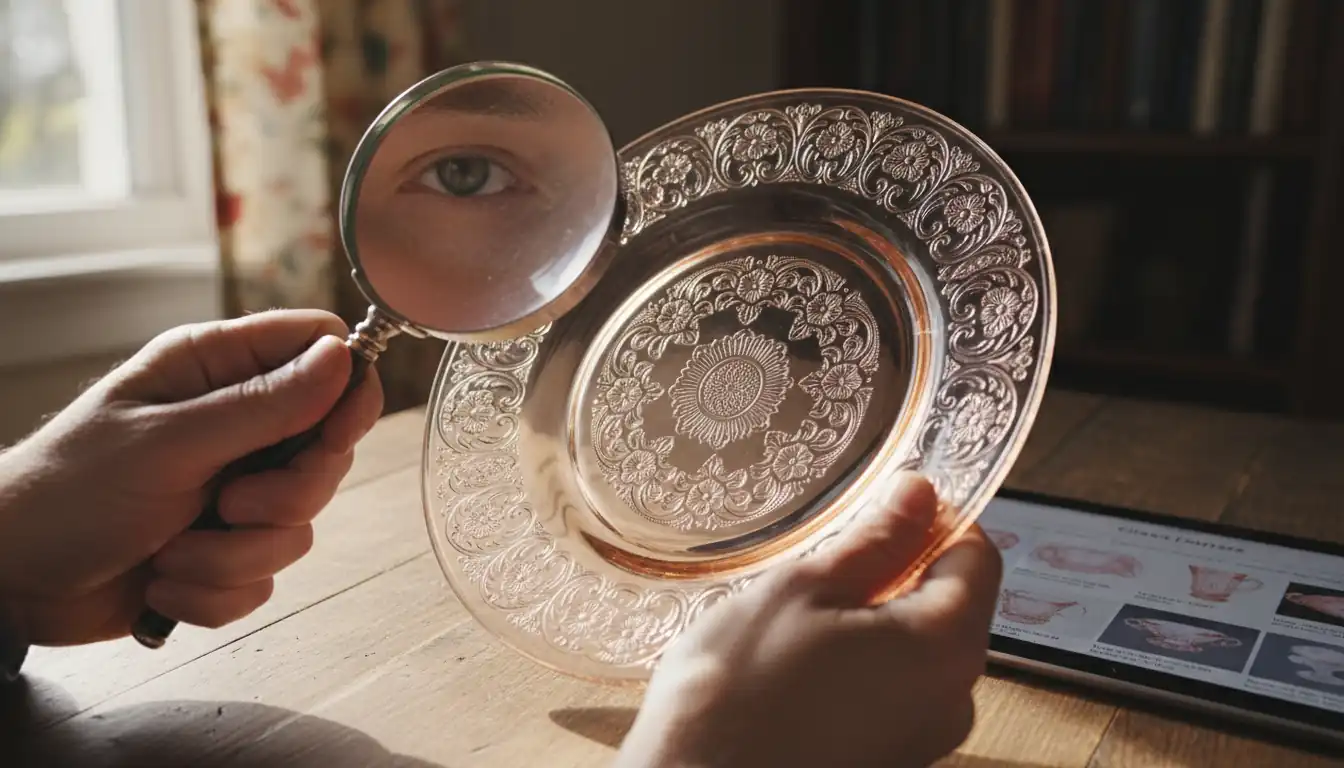
How do you know if your Depression glass is valuable? This is the question that every person asks when they inherit a box of old glassware. The truth is that most Depression glass is worth between $5 and $25 per piece. However, there are "holy grail" items that can fetch hundreds or even thousands of dollars.
The value is driven by the "Big Three": color, pattern rarity, and physical condition. If you have a rare pattern in a common color, it might be worth a modest amount. If you have a rare pattern in a rare color, you’ve hit the jackpot.
Factors That Drive Scarcity and Collector Demand
Color is perhaps the most significant factor in Depression glass valuation. While pink, green, and amber were the most common colors produced, certain "limited run" colors are highly prized.
- Cobalt Blue: This is often the most sought-after color. Patterns like "Royal Lace" in cobalt blue are iconic and consistently hold high value.
- Uranium Green: Some green glass was made with small amounts of uranium, causing it to glow under a blacklight. This "Vaseline glass" effect adds a premium to the price.
- Red (Ruby): Red glass was more expensive to produce because it required gold chloride in the mixture. Consequently, fewer pieces were made.
Condition is the second pillar of value. Collectors are notoriously picky. "Sick glass" is a term used for glassware that has developed a permanent cloudy film due to being washed in a dishwasher (the heat and chemicals etch the surface). This cloudiness cannot be removed and significantly drops the value. Similarly, "flea bites"—tiny chips along the rim—can turn a museum-quality piece into a "user" piece that is worth very little.
Real-Time Appraisals versus Static Price Lists
As mentioned earlier, static price lists are a gamble. To get a true sense of value, you need to know what people are actually paying right now. This is why the appraisal feature in the Relic app is so useful. It doesn't just give you a historical estimate; it provides a real appraisal based on current market data.
"A price guide tells you what someone thought an item was worth last year. An AI-driven appraisal tells you what the market is willing to pay today."
If you are looking for the most sought-after Depression glass, keep an eye out for the "Royal Lace" pattern in cobalt blue or the "Avocado" pattern in pink. These pieces are the blue chips of the glass world. Using an app to verify these finds ensures you don't overpay for a piece that has hidden damage or is a clever modern imitation.
Uncovering the History and Origin of Your Pieces
There is a certain "detective work" involved in glass collecting that goes beyond mere financial value. Every piece of Depression glass tells a story of the American industrial spirit. During a time when the economy was in shambles, these glass companies—Hazel-Atlas, Federal Glass, Hocking Glass, and Indiana Glass—found ways to innovate and bring a small amount of beauty into impoverished homes.
Knowing the factory of origin changes the provenance of your item. For example, the Hocking Glass Company (which later became Anchor Hocking) was known for its "Fire-King" line, but their early Depression patterns like "Princess" or "Block Optic" are what defined the era. Federal Glass, based in Columbus, Ohio, was famous for its "Patrician" pattern, which featured a delicate, lace-like design that felt much more expensive than it actually was.
Tracing Glassware to Original Manufacturers
When you identify the manufacturer, you begin to understand the "why" behind the design. Hazel-Atlas was a giant in the industry, focusing on functional, sturdy pieces. Their glass often has a slightly different chemical composition that gives it a distinct clarity.
- Hazel-Atlas: Known for "Royal Lace" and "Moderntone."
- Jeannette Glass: Famous for "Adam," "Iris and Herringbone," and "Cherry Blossom."
- Federal Glass: Produced "Patrician," "Sharon," and "Madrid."
- Hocking Glass: The powerhouse behind "Miss America" and "Old Colony."
Relic’s ability to provide the history and origin of an item adds a layer of emotional value to your collection. When you scan a plate and learn it was manufactured in a specific Ohio factory that provided jobs for an entire town during the 1930s, the item becomes more than just a piece of glass. It becomes a tangible link to the past.
The Role of Historical Context in Valuation
Historical context can actually influence financial value. For instance, some patterns were only produced for a single year (1932-1933) because the molds broke or the company went bankrupt. These "short-run" patterns are naturally rarer.
Understanding the history also helps you spot "marriages"—where a lid from one manufacturer has been placed on a base from another. While they might fit together, they aren't an original set, and their value is diminished. Knowing the specific history of how these items were sold (or given away) helps you reconstruct the "story" of your specific piece, which is a major selling point if you ever decide to part with your collection.
Mastering the Hunt at Estate Sales and Auctions
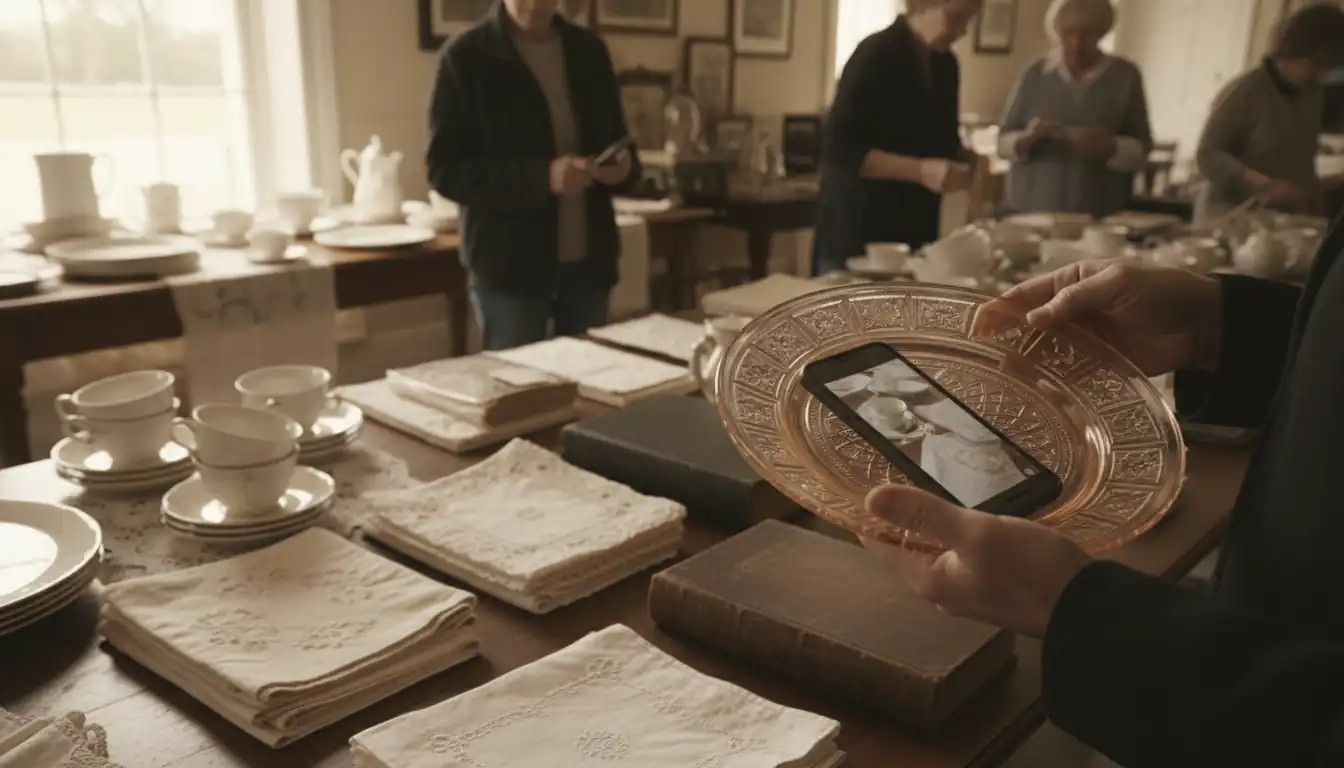
The most exciting part of being a collector is the hunt. Whether you are at a dusty barn sale or a high-end antique auction, the adrenaline of finding a hidden gem is unparalleled. However, these environments are often high-pressure. You might only have seconds to decide if a piece is worth the $50 asking price before someone else reaches for it.
This is where your smartphone becomes your most powerful tool. In the past, you would have to rely on your gut feeling. Now, you can use the Relic app to perform a quick, discreet scan. Because Relic allows for both live camera identification and photo uploads, you can snap a quick picture and check the results while you're walking to the next room.
Instant Identification in High-Pressure Environments
Imagine you are at a crowded estate sale. You see a green pitcher tucked away in a corner. Is it a common "Hoosier" glass piece, or is it a rare "Doric and Pansy" pattern by Jeannette? You don't want to stand there for ten minutes searching Google Images.
With Relic, you can get an instant identification. The app’s 4.9-star rating from over 20,000 reviews is a testament to its accuracy in these exact scenarios. Professionals—dealers, pickers, and online sellers—use it because it provides market research and one-touch scanning. It allows you to act with the confidence of a seasoned expert, even if you’ve only been collecting for a month.
Building a Digital Portfolio of Your Discoveries
One of the most overlooked benefits of using an app like Relic is the ability to keep a digital log of your finds. As your collection grows, it becomes difficult to remember exactly what you paid for each piece or where it came from.
- Insurance Purposes: Having a digital catalog with appraisals is vital if you ever need to file an insurance claim for breakage or theft.
- Resale Strategy: If you decide to sell your collection, you already have the historical data and appraisals ready to show potential buyers.
- Organization: You can categorize your items by pattern, color, or manufacturer, making it easy to see where the "holes" in your collection are.
By the time you leave an estate sale, you shouldn't just have a box of glass; you should have a digital portfolio of your new acquisitions. This level of organization turns a hobby into a professional-grade pursuit.
Conclusion
Depression glass is far more than just "old dishes." It is a vibrant, complex category of antiques that requires a keen eye and the right tools to navigate. From understanding the subtle "straw marks" of the 1930s to distinguishing between the intricate "Royal Lace" and its modern copies, the journey of a collector is one of constant learning.
The challenge of manual identification is real, but you don't have to face it alone. By combining traditional knowledge of mold marks and colors with the power of AI, you can uncover the hidden gems that others miss. Whether you are wondering if your grandmother's glass is valuable or you are looking for the most sought-after patterns at a local auction, technology has made the process faster and more accurate than ever before.
If you want to turn your phone into a professional-grade antique identifier, the next step is simple. Download the Relic app on iOS. With its ability to provide instant appraisals, historical context, and origin details, it is the perfect companion for your next hunt. Stop guessing and start identifying—your cupboard might be hiding a fortune.
Identify antiques instantly
Point your camera at any antique, collectible, or vintage item. Get valuations, history, and market insights in seconds.
Download for iPhone