Identify Art Deco Antiques Instantly: The AI Secret to Spotting Real Value

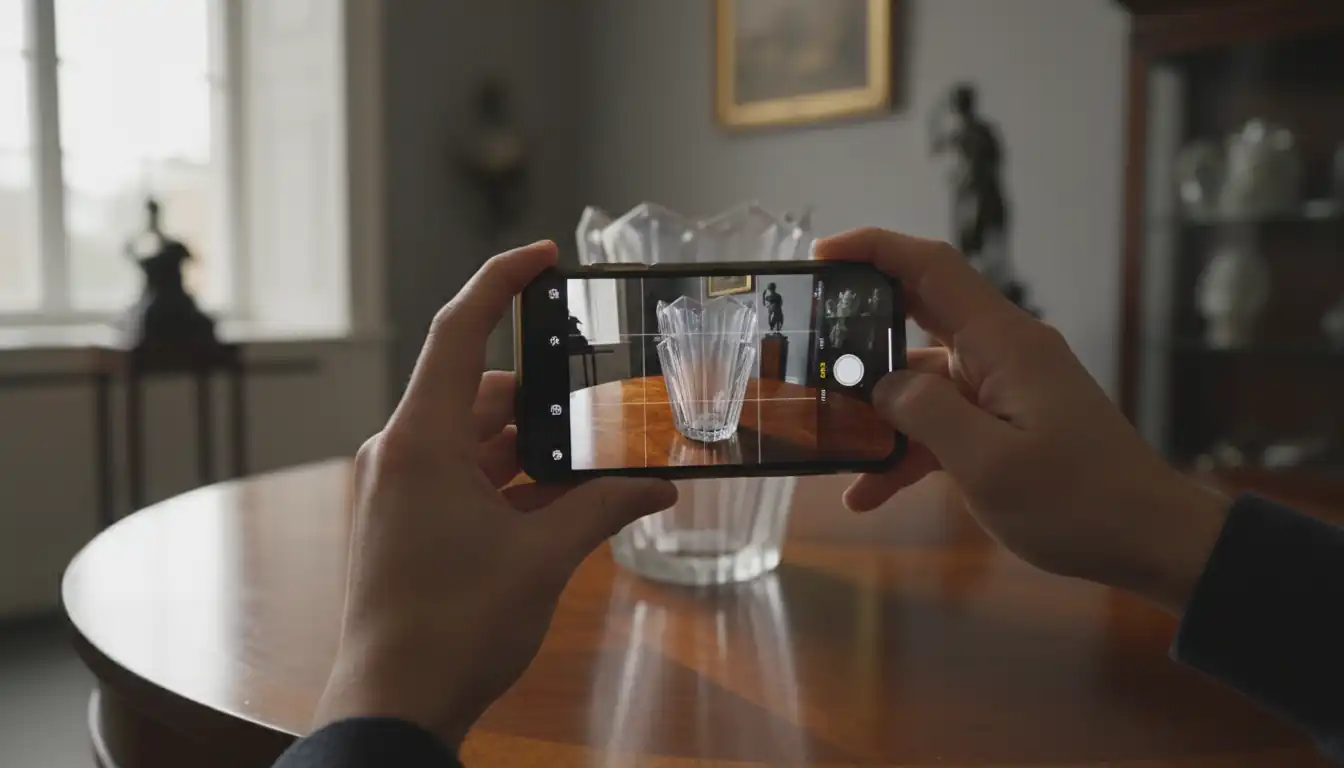
You are standing in a sun-drenched corner of a dusty estate sale, and your eyes lock onto a geometric vanity. It has that unmistakable shimmer of the 1920s—bold lines, mirrored surfaces, and a silhouette that looks like it belongs in a Great Gatsby film set. You know it could be a masterpiece of the Art Deco era, worth thousands to the right collector. But you also know that the 1980s and 90s were filled with high-quality reproductions that look nearly identical to the untrained eye.
The difference between a genuine 1925 French original and a 1985 department store knockoff is the difference between a major investment and a decorative impulse buy. In the past, you would have needed a library of reference books or a direct line to an appraiser to tell the difference. Today, the secret to uncovering that value is already in your pocket. By understanding the visual language of the era and using the right digital tools, you can transform your smartphone into a professional-grade appraisal suite.
This guide will show you how to read the "DNA" of Art Deco design and how to use specialized AI to verify your finds instantly. You will learn what to look for through your camera lens, how to spot the subtle "tells" of a fake, and how to build a digital inventory that protects your investments. Whether you are a seasoned picker or a weekend hobbyist, the ability to identify value on the fly is the ultimate advantage in a competitive market.
Visual DNA of the Art Deco Movement
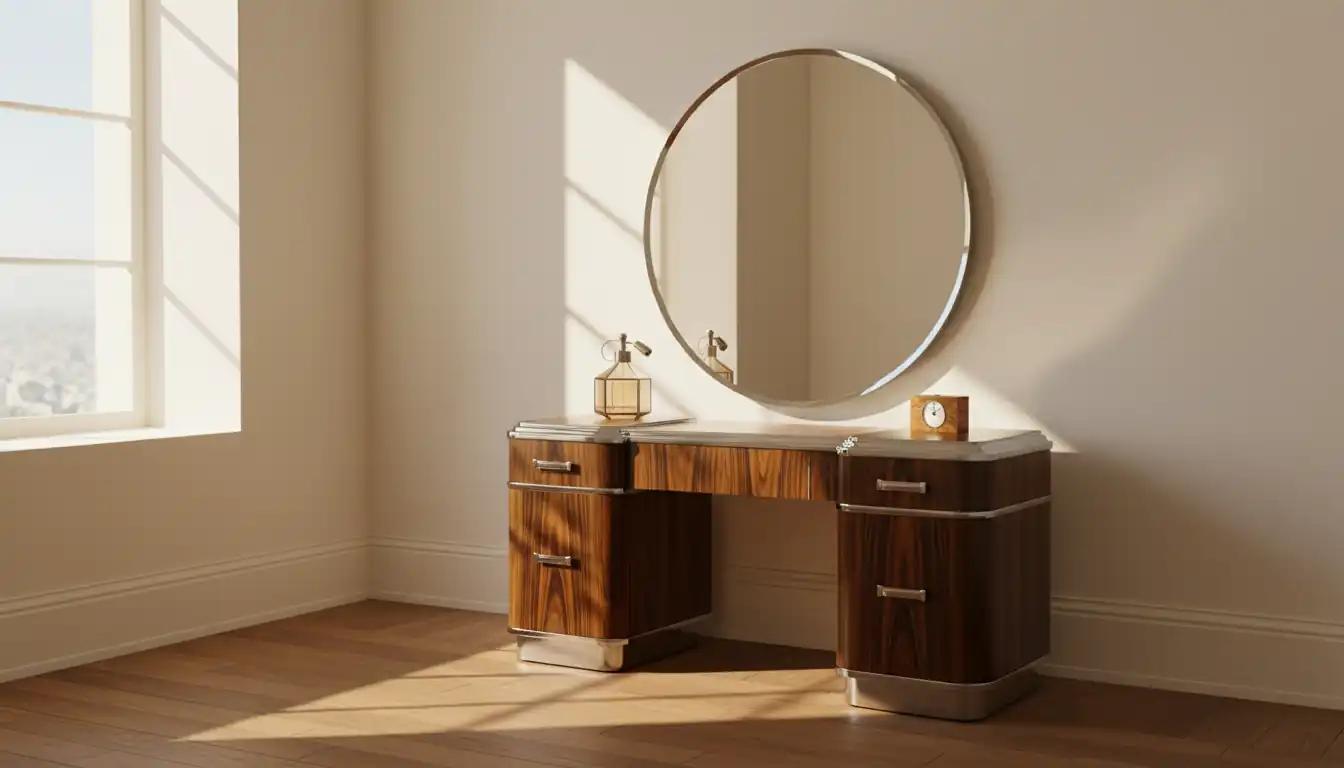
To find the treasure, you first have to know what the "Machine Age" actually looks like. Art Deco wasn't just a style; it was a celebration of the future. After the organic, flowing, and often chaotic lines of the Art Nouveau period, the world wanted order, speed, and luxury. This shift created a visual language that is incredibly distinct, making it the perfect candidate for identification through visual analysis.
Geometric Patterns and Bold Symmetry
Art Deco is defined by its rigid adherence to geometry. While the previous era looked to the forest for inspiration—think vines and lilies—Art Deco looked to the factory and the skyscraper. When you are looking at a potential piece, your eyes should be searching for mathematical precision.
- The Sunburst and Radiating Lines: This is perhaps the most iconic Deco motif. You will see it in everything from clock faces to the "rising sun" marquetry on wooden sideboards. It represents the dawn of a new, modern age.
- Zigzags and Chevrons: These patterns were influenced by the discovery of King Tut’s tomb in 1922. The world became obsessed with Egyptian and Aztec "stepped" designs. If a piece features sharp, repeating V-shapes, it is speaking the language of Deco.
- The Skyscraper Silhouette: Furniture from this era often mimics the architecture of the time. Look for "stepped" tops on armoires or bookcases that resemble the tiered heights of the Chrysler Building.
- Symmetry Above All: Unlike Art Nouveau, which embraced asymmetry, Art Deco is almost always perfectly balanced. If you split the item down the middle, the left side should be a mirror image of the right.
Materials and Finishes That Define the Era
The materials used in the 1920s and 30s were a mix of the incredibly expensive and the brand new. This was the era where exotic woods met industrial metals.
- Exotic Veneers: Designers loved high-contrast woods. Macassar ebony, with its dark and light stripes, was a favorite. Amboyna burl, which looks like a swirling galaxy of wood grain, was often used on high-end French pieces.
- Chrome and Steel: This was the first time industrial metals were brought into the home for decoration. Look for tubular steel legs or chrome accents that provide a "machine-like" polish.
- Early Plastics (Bakelite and Catalin): Before modern plastic, there was Bakelite. It has a specific weight and a "clack" sound when two pieces hit each other. It was used for everything from radio housings to jewelry and drawer pulls.
- Lacquer and High-Gloss: Art Deco pieces often have a mirror-like finish. This wasn't just for looks; it was meant to reflect the electric lighting that was becoming standard in homes for the first time.
Pro Tip: When you are framing a photo for identification, try to capture the way light hits these materials. The "sheen" of authentic 1920s lacquer looks very different from modern polyurethane.
The Evolution of Camera Based Identification
As you stand before an object, your first instinct might be to pull out a general search tool. It is a common question among collectors: Can Google Lens identify antiques? The answer is a bit more complicated than a simple yes or no. While general image recognition tools are excellent at identifying a brand of shoes or a type of flower, they often struggle with the nuances of the decorative arts.
Can Google Lens Identify Antiques?
Google Lens works by matching your photo against millions of other images on the web. It is looking for "visual similarity." If you take a photo of a common IKEA lamp, it will find it instantly. However, if you take a photo of an unsigned Art Deco bronze statue, Google Lens might simply tell you it is a "statue" or show you similar-looking items for sale on eBay.
The problem is that general search engines cannot distinguish between a $20 reproduction and a $2,000 original. They don't "understand" the difference between hand-carved joinery and machine-pressed wood. They are looking at the surface, not the soul of the object. For a serious collector, a "close match" isn't good enough. You need to know the origin, the maker, and the current market value.
Why Specialized AI Like Relic Outperforms General Search
This is where specialized technology changes the game. Unlike general tools, an app like Relic is built specifically for the world of antiques and collectibles. It doesn't just look for a visual match; it uses deep-learning models trained on hundreds of thousands of authenticated auction records, museum archives, and expert appraisals.
When you use Relic to identify an Art Deco piece, the AI is looking for specific markers that general tools miss. It analyzes the proportions, the specific grain of the wood, and the patina of the metal. It then cross-references this data with its internal database to provide a real appraisal, a detailed history, and the origin of the item.
| Feature | General Search (Google Lens) | Specialized AI (Relic) |
|---|---|---|
| Primary Goal | Find similar images online | Identify, appraise, and date antiques |
| Data Source | General internet crawl | Auction houses, experts, and archives |
| Appraisal Data | None (only listing prices) | Real-world market valuations |
| Historical Context | Limited or none | Detailed origin and maker history |
| Accuracy for Fakes | Low (often matches fakes to originals) | High (trained to spot reproduction markers) |
What is the app that identifies antiques by picture? While several exist, Relic has become the preferred tool for professionals because it bridges the gap between a simple photo and a professional appraisal. It allows you to move past the "I think this is old" phase and into the "I know what this is worth" phase in seconds.
Field Guide for Using Your Phone at Estate Sales
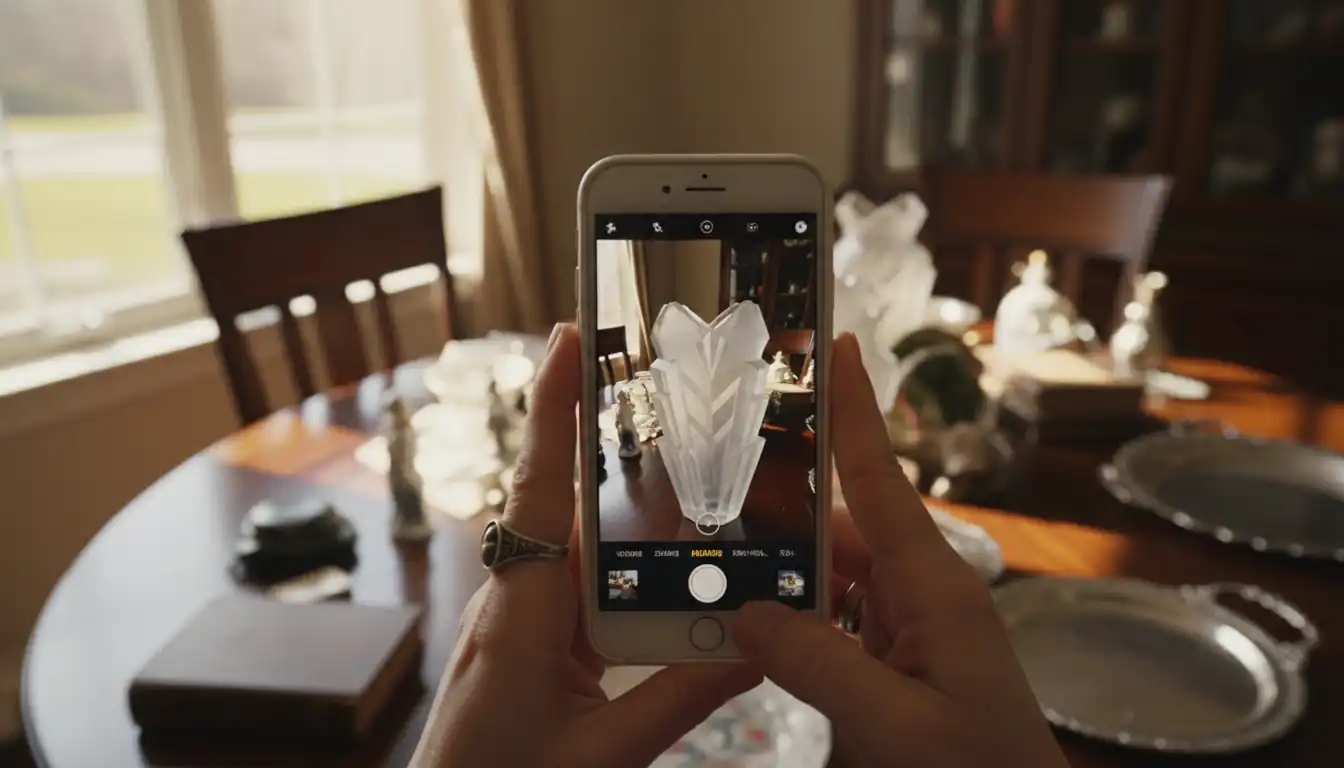
The environment of an estate sale or an "Antique Village" is often high-pressure. There are other buyers circling, the lighting is usually poor, and you have to make a decision quickly. To get the most out of an identification app, you need to treat your phone like a scientific instrument.
Mastering Lighting and Angles for AI Accuracy
AI models are incredibly smart, but they are still dependent on the data you give them. A blurry, dark photo will lead to a vague result. To get a professional-grade appraisal from Relic, follow these steps:
- Find the Light: If possible, move the item toward a window. If you can't move it, use a secondary light source. Avoid using your phone's flash directly on mirrored or glass surfaces, as the "hot spot" of the flash can obscure important details.
- The Three-Shot Rule: Take one photo of the entire piece to establish its proportions. Take a second photo of the most prominent design element (like a sunburst or a handle). Take a third photo of the "underside" or the back.
- Focus on the Joinery: In Art Deco furniture, the way a drawer is put together tells the whole story. Open a drawer and take a clear, well-lit photo of the dovetail joints. The AI can use these patterns to determine if the piece was handmade in 1930 or mass-produced in 1990.
The Thrill of the Hunt in Antique Villages
Antique villages are sprawling complexes filled with hundreds of vendors. It is easy to get overwhelmed. The most successful "pickers" use their phones as a filtering tool. Instead of spending twenty minutes researching every item that catches your eye, you can use a one-touch scanning approach.
Imagine walking past a booth and seeing a set of "streamline moderne" bookends. You aren't sure if they are weighted plastic or genuine silver-plated bronze. By taking a quick photo with Relic, you can instantly see if similar items have sold at major auction houses. This allows you to ignore the "filler" and focus your budget on the items that have genuine investment potential.
"The camera doesn't just see the object; it sees the history hidden in the craftsmanship. Your job is to provide the clearest window possible into that history."
Spotting Fakes and Reproductions Through the Lens
As Art Deco has surged in popularity, the market has been flooded with "Deco-style" items. Some are honest reproductions meant for home decor, but others are sophisticated forgeries designed to trick the unwary. To protect yourself, you need to use your camera to look for what shouldn't be there. This is known as negative identification.
Identifying Modern Manufacturing Marks
One of the easiest ways to spot a modern fake is to look at the hardware. Art Deco ended roughly around the start of World War II. If you see a Phillips head screw (the one with the cross shape), you should be suspicious. While the Phillips screw was invented in the 1930s, it wasn't widely used in furniture manufacturing until much later.
- The Zoom Test: Use your phone’s zoom to look at the screws and hinges. Original Deco pieces will almost exclusively use flathead screws. If the screws are perfectly uniform and look brand new, the piece is likely a reproduction.
- Machine-Sprayed Finishes: Look at the "nooks and crannies" of a piece. Modern reproductions are often spray-painted or finished with a uniform coat of polyurethane. This leaves a "perfect" finish that lacks the depth of hand-applied lacquer or French polish.
- Uniformity vs. Character: Authentic antiques have slight variations. If you are looking at a set of six "Art Deco" chairs and every single grain pattern and carved notch is 100% identical, they were likely made by a CNC machine in the last 20 years.
Analyzing Patina and Authentic Wear
Patina is the "soul" of an antique. It is the subtle wear and oxidation that happens over decades. It is very difficult to fake convincingly, and it is something that specialized AI is trained to recognize.
- Wear Patterns: On a genuine Art Deco chair, the wear should be on the armrests and the front of the seat. If a piece looks "distressed" in places where a human body wouldn't naturally touch it, it’s a red flag.
- The Smell of Age: While your phone can't smell (yet), your camera can see the results of age. Look for "crazing" in the finish—fine, spider-web-like cracks that occur as old lacquer dries out over a century.
- Material Consistency: Art Deco designers often used real ivory or bone for inlays. Modern fakes use plastic. If you zoom in close, real bone will have tiny pores or "grain," whereas plastic will be perfectly smooth.
Relic’s database is particularly helpful here. When you upload a photo, the AI compares your item's texture and wear patterns against known authentic examples. If the proportions of a "Cartier" clock are off by even a few millimeters, or if the metal has a "sheen" that didn't exist in 1925, the app can flag these discrepancies, saving you from a costly mistake.
From Identification to Valuation and Cataloging
Once you have confirmed that your find is a genuine piece of Art Deco history, the journey isn't over. Identification is just the first step. The real value comes from knowing how to manage that asset.
Understanding Market Value and Rarity
There is a significant difference between what someone asks for an item and what it is actually worth. In the antique world, we deal with two main types of value:
- Fair Market Value: This is what a willing buyer would pay a willing seller on the open market (like an auction or a specialized shop).
- Insurance Value: This is the cost to replace the item if it were lost or destroyed. This is usually higher than the market value because it accounts for the difficulty of finding an exact match.
Using an app like Relic provides you with these numbers instantly. Instead of guessing, you have a data-backed appraisal that you can use to negotiate. If a dealer is asking $500 for a lamp, but your app shows that the last three similar lamps sold for $1,200, you know you’ve found a bargain. Conversely, if the app shows the market is flooded with that specific model, you have the leverage to ask for a better price.
Building a Digital Inventory of Your Collection
For many, the joy of collecting is in the hunt. But as your collection grows, it becomes difficult to keep track of what you have, what you paid, and what it’s worth today. This is where digital cataloging becomes essential.
- Estate Planning: Having a photo-linked database of your antiques ensures that your heirs know the true value of what they are inheriting. Many valuable collections have been sold for pennies at yard sales because the family didn't realize what they had.
- Insurance Protection: If a fire or theft occurs, "a big wooden cabinet" isn't enough for an insurance claim. You need a dated photo, a professional description, and a valuation.
- Market Tracking: The value of Art Deco fluctuates. By keeping a digital inventory in an app like Relic, you can periodically refresh the appraisal data to see how your investment is performing over time.
| Step | Action | Benefit |
|---|---|---|
| 1. Scan | Take high-quality photos of the item | Establishes a visual record |
| 2. Appraise | Use Relic to get a valuation | Provides a baseline for insurance/resale |
| 3. Catalog | Save the item to your digital vault | Organizes your collection for the future |
| 4. Monitor | Check for market updates | Helps you decide when to sell or hold |
Conclusion
The world of Art Deco is a landscape of hidden gems and sophisticated illusions. The difference between a masterwork and a mass-produced copy is often hidden in the smallest details—the curve of a chrome leg, the joinery of a drawer, or the specific "crazing" of a lacquered finish. While the human eye can be fooled by a clever reproduction, the combination of historical knowledge and specialized AI creates a powerful shield for any collector.
By understanding the visual DNA of the 1920s and 30s, you can narrow your focus to the pieces that truly matter. Tools like the Relic app take the guesswork out of the process, providing you with the same level of insight that was once reserved for elite auction house specialists. You no longer have to wonder if you've found a treasure; you can know for sure before you even reach for your wallet.
Your next great find is out there, tucked away in a corner of a shop or sitting unnoticed at a local auction. Armed with your phone and the right knowledge, you are ready to uncover the history and value hidden in plain sight. Download Relic today and turn your next outing into a professional-grade treasure hunt.
Identify antiques instantly
Point your camera at any antique, collectible, or vintage item. Get valuations, history, and market insights in seconds.
Download for iPhone