Is That $5 Spoon Actually Solid Silver? A Guide to Reading Hallmarks at Antique Shops

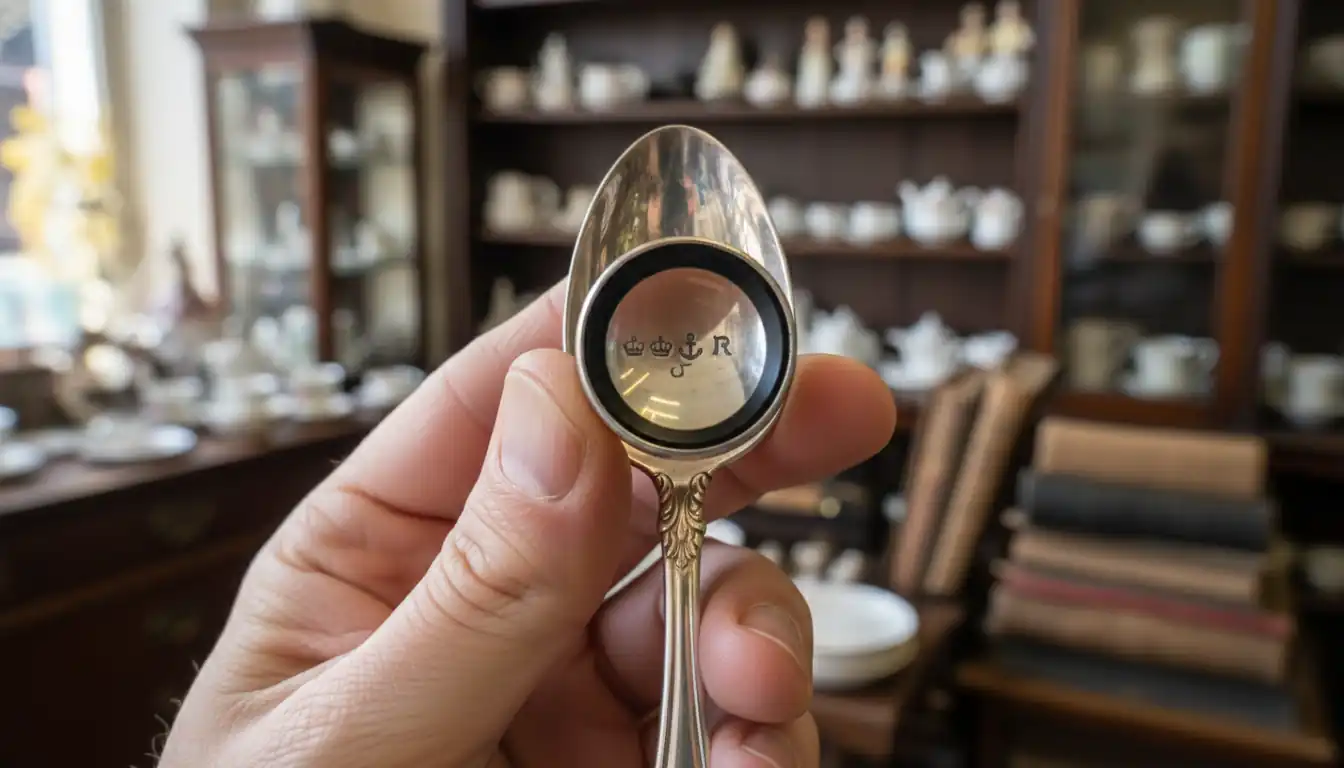
You are standing in the back corner of a crowded antique mall, the air thick with the scent of old wood and floor wax. In your hand is a tarnished, heavy spoon you pulled from a "everything for $5" bin. It has a certain weight to it, a coolness that feels different from the stainless steel in your kitchen drawer. You flip it over and see a row of tiny, cramped symbols stamped into the neck. Are these just decorative flourishes, or have you just found a piece of history worth fifty times what you’re about to pay?
Learning to read silver hallmarks is like learning a secret language that has remained largely unchanged for seven hundred years. These marks were the world’s first form of consumer protection, long before government agencies or digital receipts existed. They tell a story of origin, purity, and craftsmanship that cannot be faked by a simple coat of silver paint. If you know how to decode them, you stop being a casual browser and start being a "picker" with a professional edge.
This guide will transform how you look at metal. We will break down the rigorous logic of the British hallmarking system, explore the variations found across the globe, and reveal the tricks used by forgers to fool the untrained eye. By the time you reach the end of this article, that $5 spoon will no longer be a mystery; it will be an open book.
The Anatomy of a Professional Hallmark
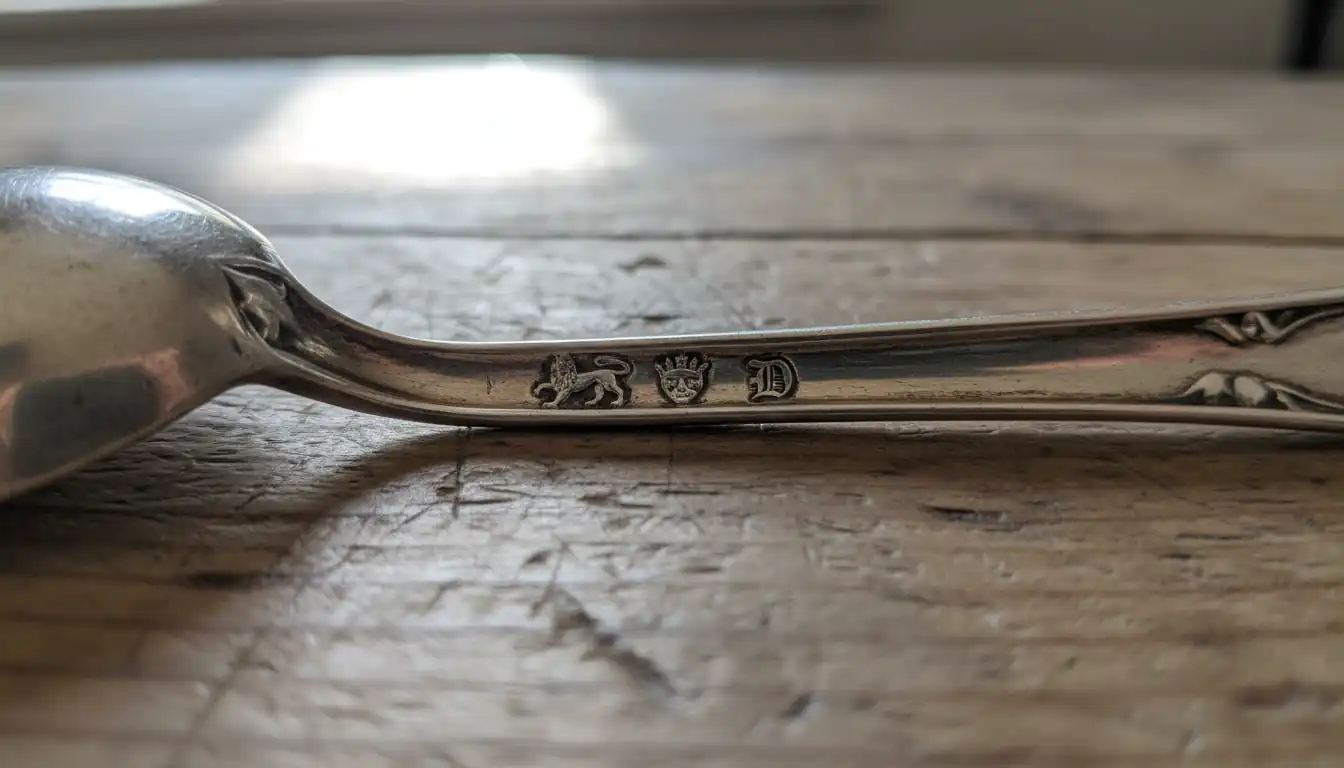
To understand silver, you must first understand the British hallmarking system. While many countries have their own methods, the British system is the most organized, documented, and widely encountered in the antique world. It functions like a four-part sentence. If one part is missing or doesn't make sense, the whole "sentence" is likely a lie.
Decoding the Four Essential British Marks
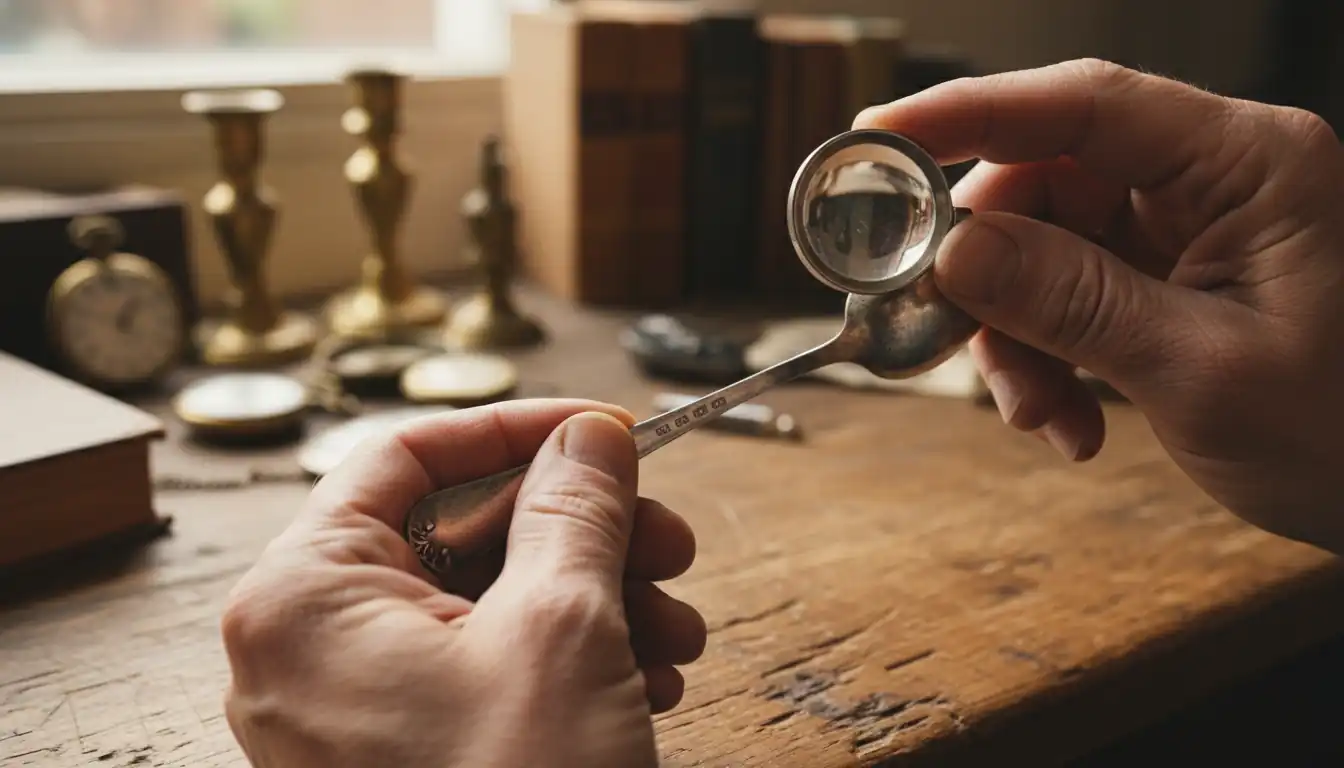
When you look through a magnifying glass at a piece of English silver, you are looking for a specific sequence. This sequence was mandated by law to ensure that the silver was of a high enough quality to be traded. The "Standard Mark" is the most critical. In England, this is almost always the "Lion Passant"—a lion walking to the left with one paw raised. This lion tells you the item is Sterling Silver, meaning it is 92.5% pure silver.
The second mark is the "Town Mark," which identifies where the item was tested and stamped. Think of this as the item's birthplace. A leopard’s head indicates London, an anchor represents Birmingham, and a crown (on older pieces) or a rose represents Sheffield. These marks have remained remarkably consistent for centuries, allowing you to pinpoint exactly which guild hall handled the piece.
The third mark is the "Date Letter." This is where things get interesting for collectors. The guilds used a letter of the alphabet to represent the year the item was marked. Once they ran through the alphabet, they changed the font or the shape of the shield surrounding the letter. By cross-referencing the letter, the font, and the shield shape, you can date a piece of silver to the exact year it was made.
Finally, you have the "Maker’s Mark" or "Sponsor’s Mark." This usually consists of two or three initials inside a small shape. This identifies the workshop or the specific silversmith responsible for the piece. Finding a famous maker’s mark, like "PS" for Paul Storr or "Hester Bateman," can instantly turn a modest piece of silver into a museum-quality treasure.
| Mark Type | What It Tells You | Common Example |
|---|---|---|
| Standard Mark | Purity of the metal | Lion Passant (Sterling 925) |
| Town Mark | Location of the Assay Office | Anchor (Birmingham) |
| Date Letter | The year of manufacture | "a" in a specific shield (e.g., 1900) |
| Maker's Mark | The silversmith or firm | "WB" (William Bateman) |
Differentiating Sterling from Silver Plate
The most common heartbreak in an antique shop is mistaking "silver plate" for "solid silver." Silver plate is a base metal, like copper or nickel, covered in a microscopically thin layer of silver. While it can be beautiful, its value is a fraction of sterling silver. Forgers rarely try to fake hallmarks on plate; instead, they use marks that look like hallmarks to the uninitiated.
Look for the initials "EPNS." This stands for Electro-Plated Nickel Silver. It contains no actual silver in the core. Similarly, "EPBM" stands for Electro-Plated Britannia Metal. You might also see "A1" or "Triple Plate," which are simply marketing terms used to describe the thickness of the silver coating. None of these indicate solid silver.
Real sterling silver hallmarks are struck into the metal with a steel punch, creating a crisp, deep impression. Plated marks are often cast or stamped more shallowly because the manufacturer didn't want to cut through the thin silver layer into the base metal below.
Mastering the Hunt in Crowded Antique Shops
Walking into an antique shop with the intent to find silver requires a tactical approach. You aren't just looking at the items; you are looking under and inside them. Silver marks are rarely placed in the center of a design where they would disrupt the aesthetics. They are tucked away, hidden in places that require a bit of physical effort to find.
Common Locations for Hidden Marks
On a spoon or fork, the marks are almost always on the back of the handle, near the widest part. On larger serving pieces, check the underside of the base. For teapots and coffee pots, the marks are often located near the rim of the lid or on the body of the pot, tucked close to the handle attachment.
Jewelry requires an even closer look. Check the interior of rings, the clasp of a necklace, or the very edge of a brooch. If you find a piece of hollowware, like a bowl or a trophy, don't forget to look at the very bottom. Sometimes, marks are even hidden within the decorative engraving itself, though this is rare and usually reserved for high-end presentation pieces.
- Teapots: Check the underside of the lid and the base of the spout.
- Trays: Look at the underside of the rim or the very center of the bottom.
- Candlesticks: Often marked along the bottom edge or inside the candle socket.
- Spoons: Always check the back of the stem or the "heel" of the bowl.
Essential Tools for On-the-Spot Identification
You cannot rely on your naked eyes in a dimly lit shop. A 10x jeweler’s loupe is your most important physical tool. It allows you to see the tiny details of a date letter or the specific shape of a maker’s mark shield. Without magnification, a "B" can look like an "R," and a lion can look like a smudge.
A soft microfiber cloth is also helpful. Silver tarnishes, and a thick layer of black oxidation can completely obscure a hallmark. A quick, gentle rub can reveal the marks without damaging the patina of the piece. Be careful not to use abrasive cleaners in the shop, as this can upset the owner and potentially devalue the item.
The most powerful tool in a modern collector's kit, however, is the Relic app. Carrying around a library of hallmark books is heavy and impractical when you're digging through bins. With Relic, you can simply take a photo of the marks you find. The app uses advanced AI to analyze the symbols, providing an instant appraisal, the history of the maker, and the origin of the item. It effectively puts a professional appraiser in your pocket, allowing you to make buying decisions in seconds rather than hours.
Regional Variations and Global Standards
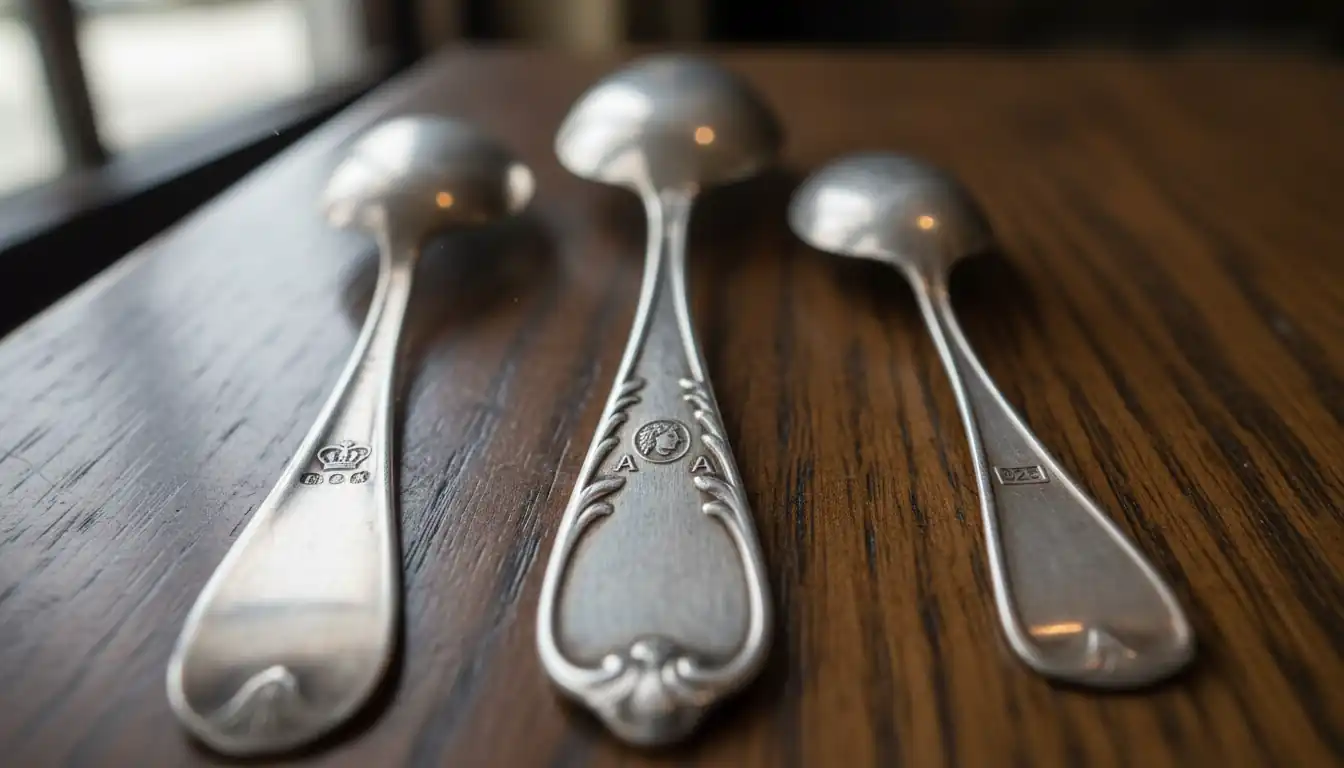
Once you move away from the British Isles, the "language" of silver changes. While the British system uses pictorial symbols, other countries opted for numbers or different icons. Understanding these variations is the difference between passing over a valuable piece of French silver and recognizing it for the high-purity treasure it is.
American Sterling and Coin Silver Standards
In the United States, the system was much less regulated for a long time. Before the mid-1860s, most American silver was "Coin Silver." This was made by melting down silver coins and was typically around 90% pure. These pieces are often marked only with the maker's name and perhaps a city, like "N. Harding" or "Boston."
After the Civil War, the "Sterling" standard (92.5%) became the norm, largely driven by the influence of Tiffany & Co. American pieces from this era are usually stamped clearly with the word "STERLING" or the number "925." If you see a piece marked "900," it is likely coin silver or an early industrial standard. American silver lacks the complex date letter system of the UK, so you must rely on the maker's style and known working dates to determine age.
Identifying Continental and European Hallmarks
European silver can be a dizzying array of symbols, but a few key marks stand out. France uses the "Minerva" head. If the head is in a frame with a number 1, it is 95% pure (higher than sterling). If it has a number 2, it is 80% pure. This is a vital distinction, as the "First Standard" French silver is highly sought after by collectors.
Germany moved to a unified system in 1888. Look for a crescent moon and a crown (the Reichsmark), usually accompanied by a decimal number like "800" or "835." This indicates the silver content per thousand parts. While 800 is lower than sterling, German silver from the Hanau region or the Art Deco period remains incredibly valuable due to its design and weight.
- France: Look for the Minerva head or the Boar's head (for small items).
- Germany: Look for the Crescent and Crown alongside "800."
- Italy: Look for a lozenge-shaped mark containing a number (the maker's ID) and two letters (the province).
- Scandinavia: Often uses a "Three Crowns" mark (Sweden) or simple decimal marks like "830S" (Norway/Denmark).
Spotting Forgeries and Pseudo-Hallmarks
As long as silver has been valuable, people have tried to fake it. In the world of antiques, a forgery isn't always a modern "fake" made yesterday. Some of the most deceptive pieces were created over a hundred years ago to look even older than they actually were. These are known as pseudo-hallmarks.
Red Flags of Cast or Altered Marks
A genuine hallmark is "struck." This means a steel punch was hit with a hammer, displacing the metal. This creates sharp, crisp edges and a slight "halo" or displacement of metal around the mark. If the marks look soft, rounded, or "soapy," the item might be cast. Casting involves pouring molten metal into a mold; this process cannot replicate the sharp precision of a struck punch.
Another sophisticated scam is the "transposed" hallmark. A forger might take a genuine set of hallmarks from a small, inexpensive item—like a broken spoon—and solder them into a large, expensive item like a fake George III tankard. To spot this, look for a "solder halo." This is a faint, circular line around the marks where the metal was joined. If you breathe on the metal, the condensation will often reveal the hidden seam of the solder.
The Rise of Hanau and Decorative Pseudo-Marks
In the late 19th century, silversmiths in Hanau, Germany, began producing high-quality silver in the styles of the 17th and 18th centuries. To complete the look, they created "pseudo-hallmarks" that mimicked old French or British marks. These weren't necessarily intended to defraud at the time—they were seen as decorative—but today they often confuse buyers.
Hanau marks often look like a jumble of crowns, lions, and letters, but they don't follow the logical sequence of a real assay office. If the marks look "too good to be true" or are placed in a very prominent, decorative position, be skeptical. These pieces are still solid silver (usually 800 or 830), but they are not the 300-year-old treasures they pretend to be.
Always check the wear patterns. On a genuine 200-year-old spoon, the hallmarks should show some softening from centuries of polishing. If the spoon is heavily worn but the marks look brand new, something is wrong.
From Identification to Market Appraisal
Once you have identified the marks and confirmed the silver is genuine, the question shifts from "What is it?" to "What is it worth?" The value of silver is rarely determined by the "melt value" (the price of the raw metal) alone. In the antique world, the premium is in the history, the maker, and the condition.
Factors That Determine Value Beyond Weight
The maker is the most significant multiplier of value. A standard Victorian silver teapot might be worth $500 based on its weight and age. However, if that same teapot bears the mark of a master like Paul Storr, the price could easily jump to $5,000 or more. Collectors pay for the "hand" of the artist.
Condition and provenance also play massive roles. "Provenance" is the documented history of who owned the item. A silver tray owned by a historical figure is worth significantly more than an identical tray with no history. Regarding condition, look for "erased" engravings. Sometimes, a previous owner's initials were buffed out so a new one could be added. This thins the metal and significantly lowers the value.
| Value Factor | Impact on Price | What to Look For |
|---|---|---|
| Maker's Reputation | High | Famous initials (e.g., Tiffany, Storr, Chawner) |
| Rarity of Form | Medium | Unusual items (e.g., marrow scoops, grape scissors) |
| Condition | High | Lack of repairs, crisp hallmarks, no "thin" spots |
| Aesthetic Appeal | Variable | High-quality engraving or repoussé work |
Using AI to Get Instant Professional Insights
The gap between a hobbyist and a professional dealer is the ability to access information quickly. In the past, this meant years of study and a massive library. Today, technology has leveled the playing field. When you're standing in a shop, you don't have time to go home and research a maker's mark in a biographical dictionary.
This is where the Relic app becomes indispensable. By using its AI-driven scanning, you can bypass the guesswork. The app doesn't just tell you that the "lion" means sterling; it provides the historical context of the specific maker and a real-world appraisal based on current market data. It allows you to see if a particular silversmith's work is currently trending in auction houses or if the asking price in the shop is a genuine bargain. For anyone serious about "picking" antiques, having this level of data available instantly is the ultimate advantage.
Conclusion
Finding a piece of solid silver in a sea of plated junk is one of the great thrills of antique hunting. It requires a mix of historical knowledge, physical intuition, and the right tools. By understanding the four-part British hallmark, recognizing the regional variations of American and European silver, and staying alert for the tell-tale signs of forgeries, you protect yourself from costly mistakes.
Remember that every mark is a piece of a puzzle. A lion tells you the quality, a leopard tells you the city, and a letter tells you the year. When these pieces click together, you aren't just buying a spoon or a tray; you are acquiring a tangible piece of the past.
Next time you’re at an estate sale or a flea market, don't just glance at the silver. Pick it up. Turn it over. Use your loupe to find those hidden stamps. And if you find something that looks promising but you aren't quite sure, let Relic do the heavy lifting for you. With the right knowledge and a bit of technology in your pocket, that $5 bin might just hold your next great investment. Happy hunting.
Identify antiques instantly
Point your camera at any antique, collectible, or vintage item. Get valuations, history, and market insights in seconds.
Download for iPhone