Is That Dusty Vase Actually Worth Thousands? These AI Tools Can Tell You Instantly

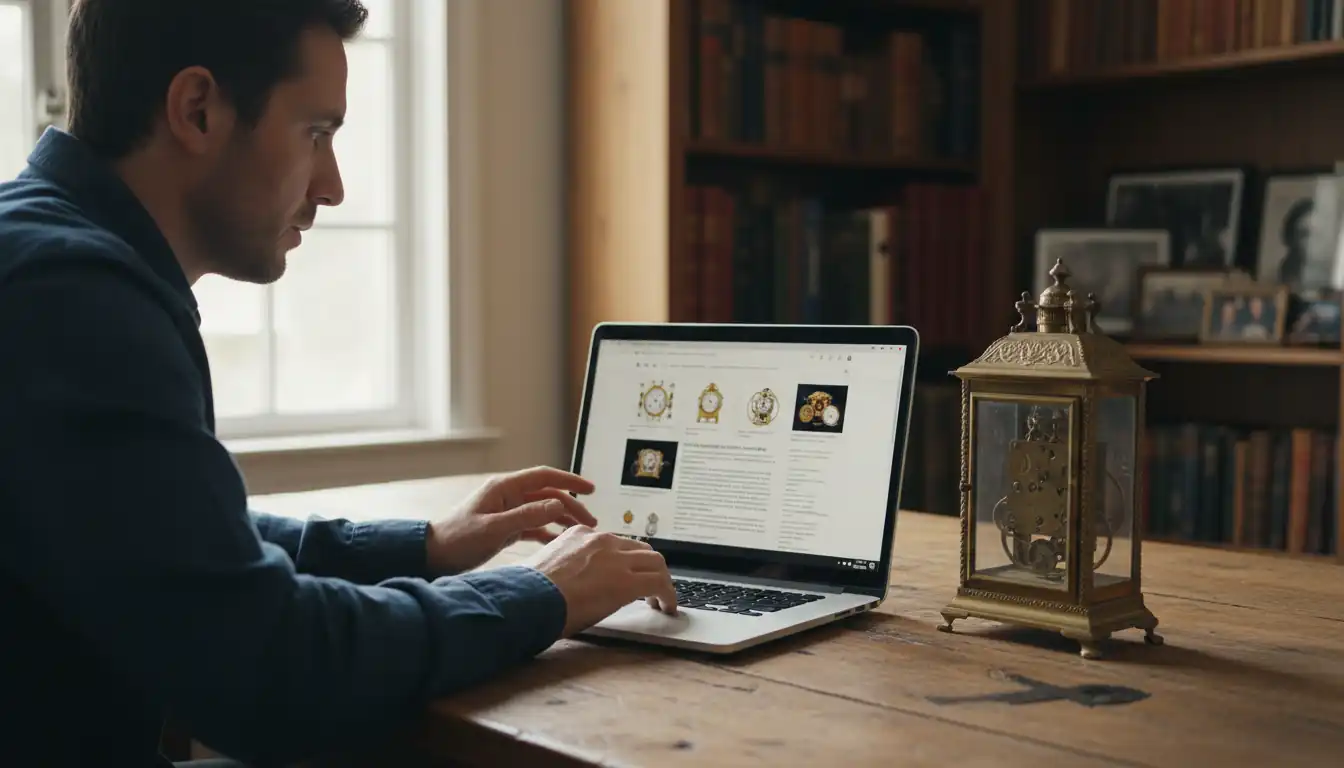
You are standing in a crowded garage sale, your eyes landing on a heavy, tarnished silver bowl tucked behind a stack of old magazines. The price tag says five dollars. Your gut tells you it might be something special, but your brain reminds you that you aren't an expert in 18th-century hallmarks. In the past, you would have had to buy it on a whim, take it home, and spend hours squinting at library books or paying an appraiser just to find out it was a mass-produced replica from the 1970s.
That era of guesswork is ending. The barrier between a "lucky find" and a "calculated investment" has vanished thanks to the integration of artificial intelligence and massive digital archives. You no longer need to carry a library of price guides in your trunk or spend decades memorizing the subtle differences between Ming Dynasty glazes and Victorian reproductions. The expertise that used to take a lifetime to acquire is now accessible in the palm of your hand.
This guide will show you how to use the latest digital tools to identify, research, and value antiques with professional precision. You will learn how to move from a simple photo to a comprehensive understanding of an object’s history, origin, and market value. Whether you are looking to flip a thrift store find or settle an estate, these strategies will turn your smartphone into your most powerful scouting tool.
The Digital Revolution in Antique Identification
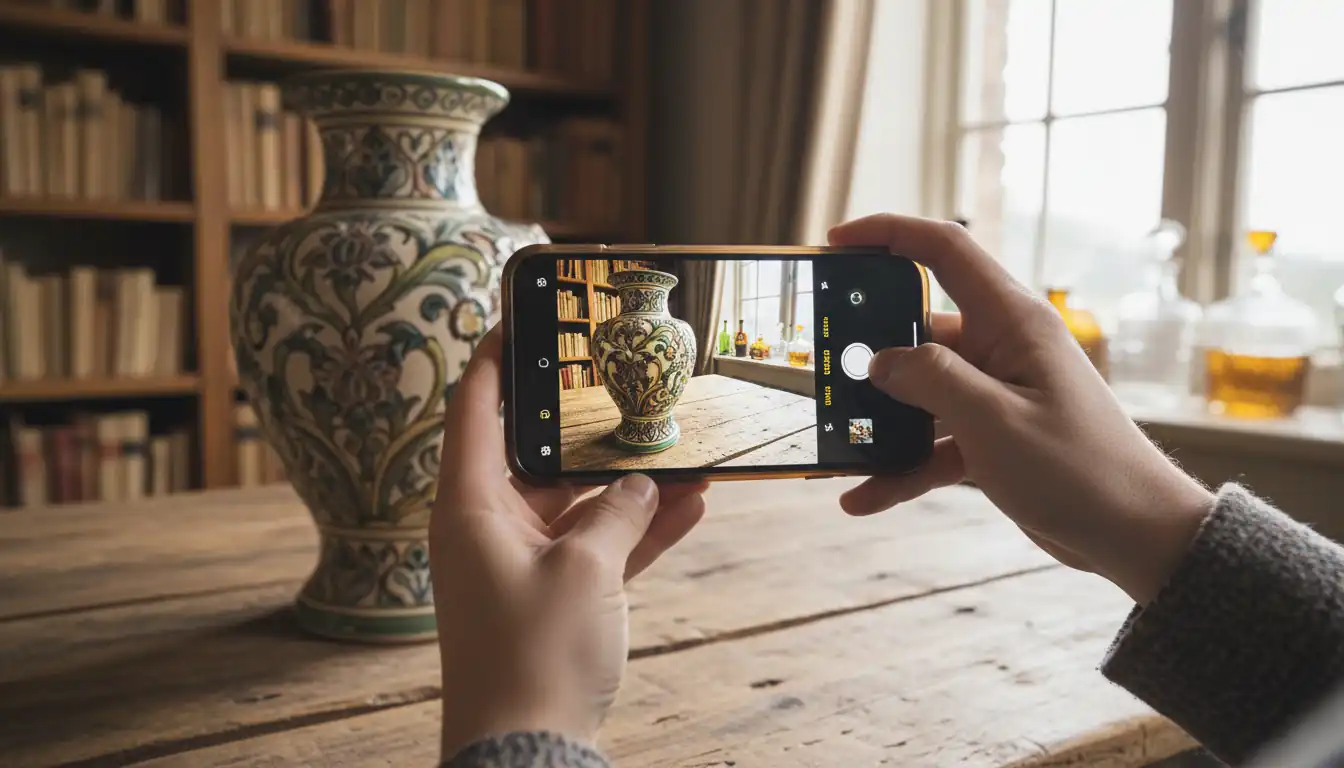
The way we identify old objects has undergone a massive structural shift. For decades, the "gold standard" for any serious collector was a shelf full of physical price guides. Names like Kovels or Miller’s were the gatekeepers of knowledge. If your item wasn't in the book, or if you didn't know which category to look in, you were stuck. This manual process was slow, often outdated by the time the book hit the shelves, and required you to already have a baseline of knowledge to even begin your search.
From Physical Price Guides to Real-Time Databases
The transition to digital didn't happen overnight. It started with simple websites that acted as digital versions of those paper books. However, the real shift occurred when these static lists evolved into dynamic, real-time databases. When people ask, "Is there a website to identify antiques?", they are often looking for a single source of truth. The reality is more exciting: we now have an entire ecosystem of interconnected digital archives.
These databases aggregate millions of data points from auction houses, museum collections, and private sales. Instead of looking at a single price from 1998, you can see what a similar item sold for last week in London, New York, or Tokyo. This connectivity has democratized the antique market. It has moved the power away from a few "experts" and placed it into the hands of anyone with an internet connection. You are no longer searching for a needle in a haystack; you are using a magnet to pull the needle toward you.
How AI is Solving the Mystery of Unmarked Items
The most difficult part of antiquing has always been the "unmarked" item. A chair with no manufacturer’s stamp or a vase with a faded signature used to be a dead end for most amateurs. This is where artificial intelligence has changed the game. AI doesn't just "look" at a photo; it analyzes patterns, textures, and structural signatures that are invisible to the untrained eye.
Think of AI as a digital apprentice that has "seen" every item in every major museum and auction catalog in the world. When you scan a piece of furniture, the AI analyzes the joinery, the wood grain, and the specific curve of the cabriole leg. It compares these features against its massive dataset to find a match. It can recognize the specific "hand" of a maker or the chemical signature of a certain type of glass. This technology bridges the gap between "I think this looks old" and "This was made in the Ohio River Valley circa 1840."
"The true power of AI in the antique world isn't just identification; it's the removal of human bias and the speed of processing vast amounts of visual history."
Top-Tier Websites for Manual Research and Verification
While AI provides the initial spark of identification, serious collectors know that verification is where the real value is found. Once you have a lead on what an item might be, you need to dive into high-authority databases to confirm the details. This manual research phase is what separates a hobbyist from a professional. It’s about building a "case" for your item’s authenticity.
Specialized Databases for Hallmarks and Maker Marks
If you are dealing with silver, ceramics, or fine china, the "mark" is your primary evidence. However, marks can be forged, or they can be so similar that they are easily confused. This is where specialized websites become indispensable. For silver, the Online Encyclopedia of Silver Marks, Hallmarks & Makers' Marks is the industry standard. It allows you to trace a tiny stamp on the bottom of a spoon back to a specific silversmith in a specific city in a specific year.
For porcelain and pottery, sites like the Marks 4 Antiques or various museum-run databases provide high-resolution images of authentic marks. When you are verifying an item, you aren't just looking for a match; you are looking for discrepancies. Is the spacing of the letters correct? Is the depth of the stamp consistent with the tools used in that era? By using these specialized sites, you can cross-reference your AI-generated lead with historical records.
Leveraging Auction House Archives for Provenance
Identification is only half the battle; the other half is valuation. To find out what an item is truly worth, you must look at "sold" prices, not "asking" prices. Anyone can list a dusty vase on eBay for $10,000, but that doesn't mean it will sell. To find the real market temperature, you should use the archives of major auction houses like Sotheby’s, Christie’s, or LiveAuctioneers.
These archives are a gold mine for provenance research. You can often find high-resolution photos and detailed descriptions of items identical to yours that have sold in the past. This allows you to see the "condition reports" of high-value items. If a pristine version of your vase sold for $5,000, but yours has a hairline crack, the auction archives will help you understand how much that flaw impacts the final price.
| Resource Type | Best For | Why Use It? |
|---|---|---|
| Auction Archives | Valuation & Provenance | Shows real-world "sold" prices and historical ownership. |
| Hallmark Databases | Silver & Metalwork | Essential for dating items and identifying specific makers. |
| Museum Catalogs | Authentication | Provides the "ideal" specimen to compare against your find. |
| Specialized Forums | Niche Categories | Connects you with specialists in specific fields like clocks or toys. |
Relic and the Rise of the Pocket Appraiser
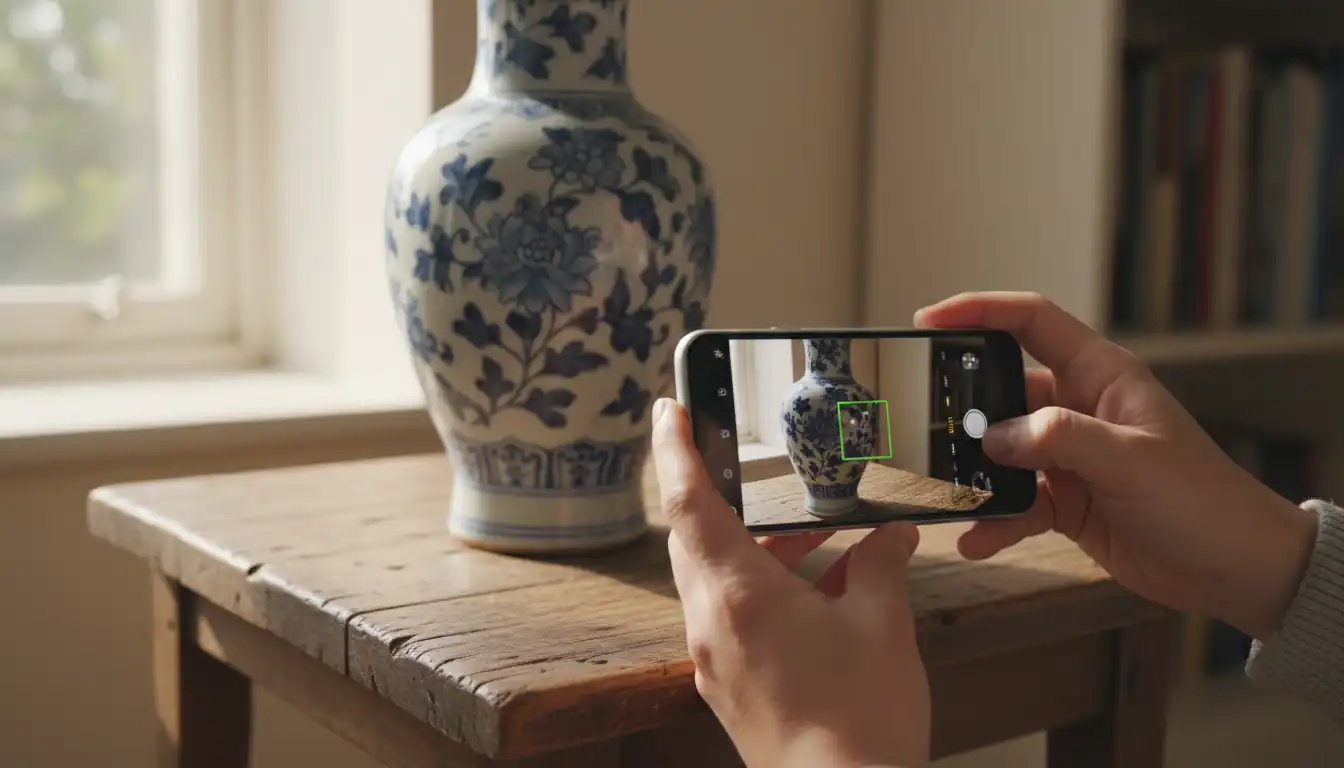
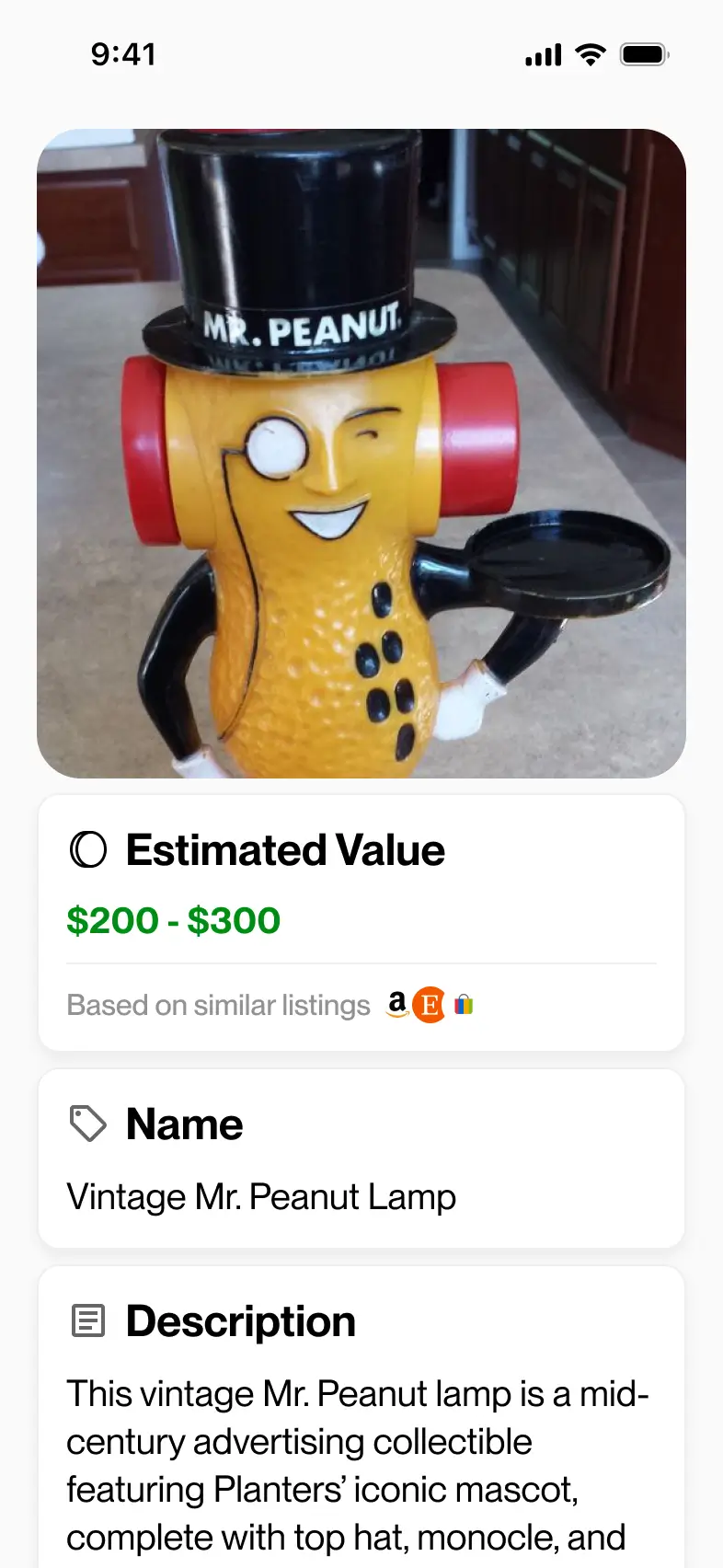
The most significant advancement for the modern collector is the ability to perform this entire research process in seconds using a mobile device. This is where the Relic app has become an essential tool for anyone navigating estate sales or antique malls. If you’ve ever wondered, "Can AI identify antiques?", Relic provides a definitive answer. It transforms the complex, multi-step process of identification and valuation into a single, streamlined action.
Instant History and Origin Mapping via Photo
Imagine you are at a flea market and spot a piece of mid-century modern glassware. Instead of trying to describe the color and shape into a search engine—which often yields thousands of irrelevant results—you simply open Relic and take a photo. The app’s AI immediately goes to work, analyzing the silhouette, the pontil mark on the bottom, and the specific hue of the glass.
Within seconds, Relic doesn't just give you a name; it provides a narrative. It might tell you that the piece is "Blenko Glass, designed by Winslow Anderson, circa 1952." It maps the origin and provides the historical context that makes the item valuable. This instant feedback is vital when you are in a fast-moving environment where another buyer might be eyeing the same item. You are no longer guessing; you are making an informed decision based on professional-grade data.
Bridging the Gap Between Identification and Valuation
The real brilliance of an app like Relic is that it doesn't stop at identification. It understands that for most users, the ultimate question is: "What is this worth?" Relic provides a real appraisal by synthesizing current market data and historical sales. It looks at the rarity of the pattern and the demand for that specific era of production.
For professionals like dealers, importers, or online sellers, this "one-touch scanning" is a massive efficiency boost. Instead of spending an evening researching a day's worth of "picks," you can appraise items as you find them. With a 4.9-star rating from over 20,000 reviews, the app has proven its accuracy in the field. It acts as an expert-in-your-pocket, giving you the confidence to pass on the junk and invest in the gems.
- Instant Identification: Take a photo and get an immediate breakdown of the item.
- Historical Context: Learn the "who, what, where, and when" of your discovery.
- Market Insights: Receive a valuation based on real-world data, not just guesses.
- Searchable Catalog: Keep a digital record of everything you’ve scanned for future reference.
Comparing AI Identification Tools for Maximum Accuracy
Not all AI is created equal. While the technology is impressive, the results you get depend heavily on the "brain" behind the camera. Many people start with general-purpose tools like Google Lens because they are built into their phones. However, there is a fundamental difference between a tool designed to find a pair of shoes online and a tool designed to identify a 19th-century French mantle clock.
Google Lens vs. Dedicated Antique Identifiers
Google Lens is a marvel of general identification. It is excellent at recognizing common consumer goods, landmarks, and plants. If you scan a modern IKEA lamp, it will find it instantly. However, antiques are a different beast. Antiques often lack barcodes, standardized shapes, or clear branding. They rely on subtle cues like the type of screw used in a hinge or the way a glaze has "crazed" over a hundred years.
Dedicated antique identifiers like Relic are trained on specific, high-quality datasets. While Google scans the entire "messy" internet, a specialized AI is fed auction catalogs, museum archives, and expert appraisals. This means the specialized tool is much more likely to distinguish between a genuine Tiffany lamp and a high-quality reproduction from the 1990s. The specialized AI understands the nuance of value, whereas a general AI only understands visual similarity.
The Importance of Multi-Angle Visual Analysis
To get the most out of any AI tool, you have to provide it with the right information. Think of the AI as a detective; it can only solve the case if you give it the clues. A single, blurry photo of the front of an item is rarely enough for a definitive identification.
- The "Hero" Shot: A clear, well-lit photo of the entire item against a neutral background.
- The Maker's Mark: A macro (close-up) shot of any stamps, signatures, or labels, usually found on the bottom or back.
- The Construction: For furniture, take photos of the drawer joins (dovetails) or the underside of the piece.
- The Texture: Close-ups of the material—whether it’s the weave of a textile or the grain of the wood—help the AI determine age.
The quality of your identification is directly proportional to the quality of your photography. Use "raking light"—light from the side—to highlight textures and marks that a flat flash would wash out.
Advanced Digital Strategies for Serious Collectors
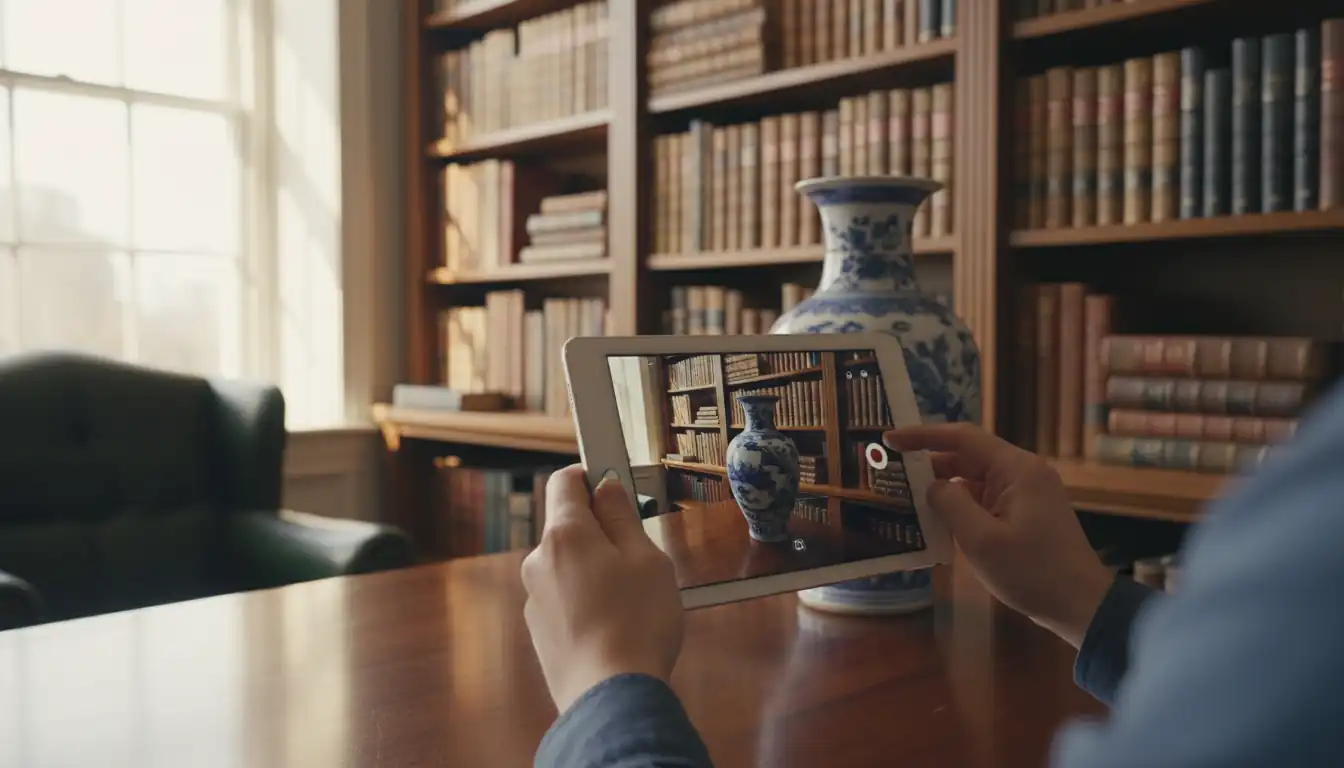
Once you have identified an item and gotten an initial valuation, you enter the "advanced" phase of collecting. This is where you move beyond simple identification and start looking at the item as a financial asset or a piece of history that needs protection. Digital tools can help you here, too, but the strategy changes from "What is this?" to "How do I prove it and protect it?"
Using Image Metadata to Trace Item History
Every digital photo contains metadata—hidden information about when and where the photo was taken. While this is useful for your own records, you can also use "reverse image search" in a more strategic way. By uploading a photo of your item to specialized search engines, you can sometimes find where that exact item was listed years ago.
Perhaps your vase was sold at a small regional auction in 2012. Finding that old listing can provide you with a previous owner's description, which might include provenance you didn't know about. It might reveal that the item was once part of a famous collection or was exhibited in a specific gallery. This "digital paper trail" can add thousands of dollars to the value of an item by proving its history.
When to Move from Digital Tools to Professional Certification
As powerful as AI and digital databases are, they have a "ceiling." If your digital tools suggest that an item is worth more than $2,000 to $5,000, it is time to transition from digital identification to physical certification. This is especially true for insurance purposes. Most insurance companies will not accept an app screenshot as proof of value for a high-end policy.
In these cases, use your digital findings as a "pre-qualification." If Relic tells you your dusty vase is a rare piece of Galle glass worth $10,000, your next step should be to find a USPAP-compliant (Uniform Standards of Professional Appraisal Practice) appraiser. These professionals will provide a legal document that stands up in court or with insurance adjusters. The digital tool saved you the cost of appraising a fake; now, the professional appraiser will secure the value of the real thing.
| Step | Action | Goal |
|---|---|---|
| 1. Discovery | Scan with Relic | Instant ID and "ballpark" valuation. |
| 2. Research | Check Auction Archives | See what similar items actually sold for. |
| 3. Verification | Cross-reference Marks | Confirm the maker and date via specialized databases. |
| 4. Protection | Professional Appraisal | Get a legal document for high-value items ($2k+). |
Conclusion
The world of antiques is no longer a "closed shop" reserved for those with elite connections or decades of study. By combining the instant processing power of AI with the deep historical data found in digital archives, you can navigate any estate sale or auction with the confidence of a seasoned pro. Tools like the Relic app have removed the "fear of the unknown," allowing you to spot value in places others might overlook.
Remember that technology is a partner, not a replacement for your own curiosity. Use AI to do the heavy lifting of identification, use specialized websites to verify the fine details, and use professional appraisers to protect your most significant finds. The next time you see a dusty vase or a strange piece of furniture, don't walk away. Pull out your phone, take a photo, and see what history is waiting to be uncovered. Your next big discovery is likely just one scan away.
Identify antiques instantly
Point your camera at any antique, collectible, or vintage item. Get valuations, history, and market insights in seconds.
Download for iPhone