Is That Rusty Wrench Worth a Fortune? How to Identify Antique Tools Instantly

You are standing in a dusty barn, the air thick with the scent of dry hay and old grease. In front of you sits a wooden crate overflowing with heavy, rusted metal objects. To the untrained eye, it looks like a pile of scrap metal destined for the recycling center. But to a seasoned collector, this pile is a treasure map. Hidden beneath layers of orange oxidation could be a rare 19th-century patent or a hand-forged masterpiece from a blacksmith whose name has been forgotten by history.
The difference between a $5 bucket of "junk" and a $500 museum-grade artifact often comes down to a few millimeters of stamped steel or the specific curve of a wooden handle. Identifying these items isn't just a hobby; it’s a form of historical detective work. You are looking for the fingerprints of the Industrial Revolution, the marks of craftsmen who built the world before assembly lines and plastic parts became the norm.
In this guide, you will learn how to look past the rust and see the history beneath. We will cover the physical clues that reveal a tool’s age, how modern technology can instantly solve the "what is this" mystery, and which specific categories of vintage hardware are currently commanding the highest prices. By the time you finish reading, you will know exactly how to spot a fortune hiding in plain sight.
Decoding the Physical Anatomy of Antique Tools
Before you can value a tool, you have to read it. Every antique tool tells a story through its physical construction, but that story is often written in a language of subtle stamps and material choices. You need to know where the "signatures" are hidden and what the metal itself is trying to tell you about its birth date.
Reading Maker Marks and Logo Evolutions
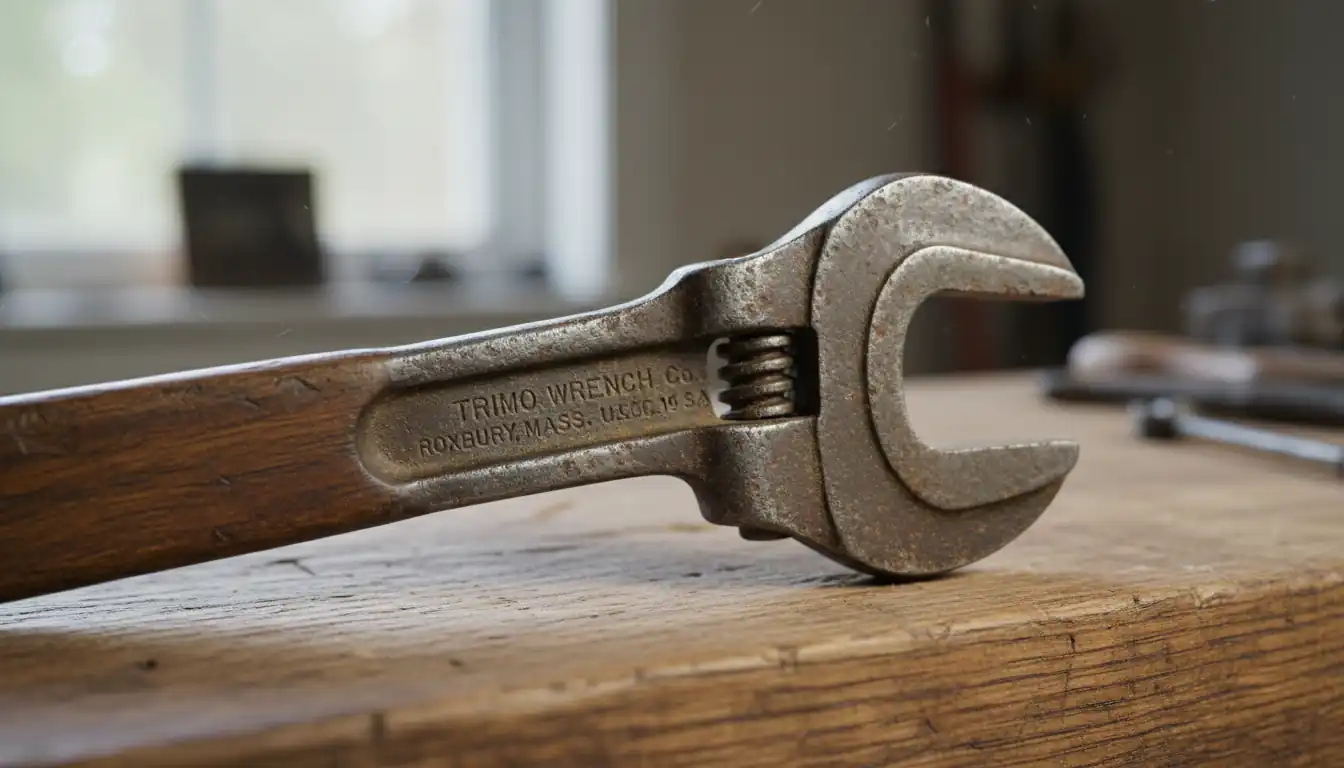
The most critical piece of evidence on any tool is the maker's mark. This is the stamp, logo, or name of the manufacturer. On a wrench, you might find it along the shank. On a plane, check the "iron" (the blade) or the "lateral adjustment lever." For many hand tools, the most common place to find a mark is on the tang—the part of the metal tool that extends into the wooden handle.
Manufacturers didn't just pick a logo and stick with it for a century. They updated their branding constantly, and these changes are your best friend for dating an item. For example, the famous Stanley Works changed their logo dozens of times. A "Sweetheart" logo (a heart shape with "SW" inside) tells you the tool was made between 1920 and 1935. If you see a simple notched rectangle, you’re likely looking at something from the late 1800s.
- The Tang Stamp: Always pull a tool out of its handle if it’s loose. The hidden metal often contains the clearest version of the maker's name because it was protected from the elements.
- Casting Marks: Look for raised letters or numbers on the body of cast-iron tools. These are often part numbers or "Type" indicators that help collectors narrow down the exact production run.
- The "Pat. Applied For" Clue: If a tool is stamped with this, it was likely produced in the short window between the invention and the granting of the patent, often a period of only a year or two.
Analyzing Material Composition and Patina
The very metal the tool is made of acts as a timeline. If you see a tool that looks "grainy" or has a texture like wood grain when it rusts, you are likely looking at wrought iron. This material was common before the mid-1800s. It was tough but required a steel edge welded onto it to stay sharp. If the tool is uniform and smooth, it’s likely cast steel or "crucible steel," which became the standard as the 19th century progressed.
Then there is the wood. High-end antique tools often used exotic hardwoods. Rosewood was a favorite for the handles of premium levels and planes because of its density and beautiful dark grain. If you find a tool with a handle made of beech or applewood, it was likely a "user grade" tool—high quality, but intended for a working man’s daily kit rather than a master craftsman’s pride and joy.
Crucial Rule: Never, ever "clean" a tool with a wire wheel or harsh chemicals before you know what it is. The dark, smooth finish that develops on old metal is called patina. It takes a hundred years to form and thirty seconds to destroy. Collectors want the patina; they don't want a shiny, ruined piece of history.
| Material | Era | Identification Clue |
|---|---|---|
| Wrought Iron | Pre-1850s | Visible "grain" or fiber-like texture in the rust. |
| Cast Steel | 1850s - 1920s | Smooth surface, often stamped "Cast Steel" or "Warranted." |
| Rosewood | 1870s - 1930s | Very dark, heavy wood with tight grain; feels oily to the touch. |
| Nickel Plating | 1890s - 1940s | Shiny, silver-like coating that often "flakes" off in scales. |
Leveraging AI for Instant Tool Identification
Even with a magnifying glass and a library of reference books, identifying a mystery tool can take hours. You might find a mark that says "PEXTO" or "L.S.S. CO," but what does that mean for the value? This is where the traditional "detective work" meets the efficiency of modern technology.
How Relic Transforms Photos into Appraisals
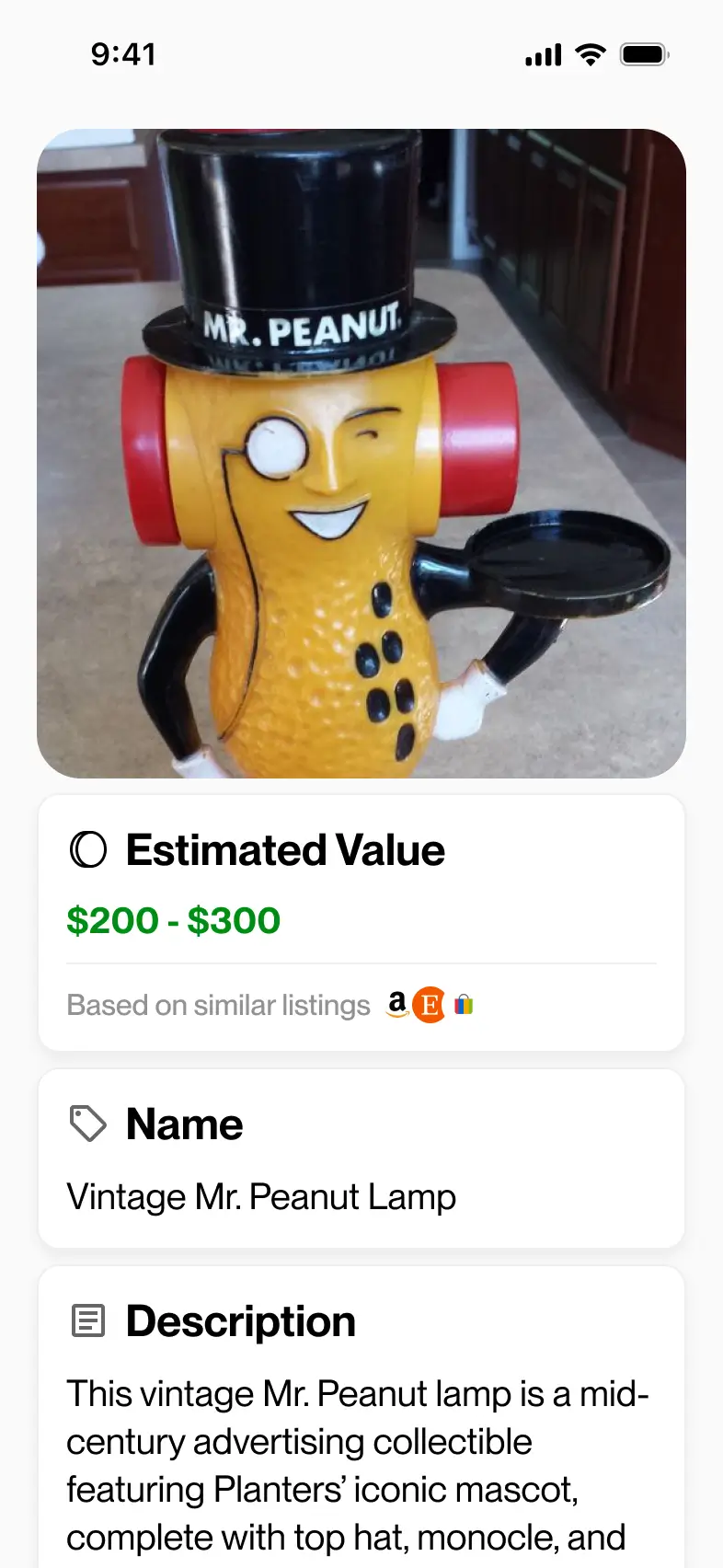
If you find yourself staring at a strange, geared contraption that looks like it belongs in a Victorian laboratory, you don't have to guess anymore. The Relic app for iOS was built specifically for these moments. Instead of flipping through a 500-page catalog of 19th-century hardware, you simply take a high-resolution photo of the tool.
Relic uses advanced AI to analyze the physical geometry of the object. It looks at the specific curve of the handle, the placement of the rivets, and the wear patterns on the metal. Within seconds, the app matches your photo against a massive database of historical artifacts. It doesn't just give you a name; it provides a real appraisal and the history of the item. This is how you answer the question, "How to identify my antique?" without needing a PhD in industrial history.
The Science of Visual Recognition in Antiques
Can AI identify antiques as accurately as a human expert? In many cases, it can actually be more precise because it doesn't suffer from "eye fatigue." When you upload a photo to Relic, the AI isn't just looking at the object as a whole. It is isolating the maker's marks and comparing the font styles to known historical variations.
- Instant Context: Relic provides the origin and history of the tool, telling you where it was made and what it was used for.
- Market Insights: Because the app is used by professionals like pickers and dealers, it provides a valuation based on current market trends.
- Searchable Catalog: You can keep a digital inventory of your finds, which is perfect for insurance purposes or for showing off your collection to other enthusiasts.
Using an app like Relic bridges the gap between the physical clues you found in the first section and the actual market value. It turns a "maybe" into a "definitely."
Identifying High-Value Categories of Vintage Hardware
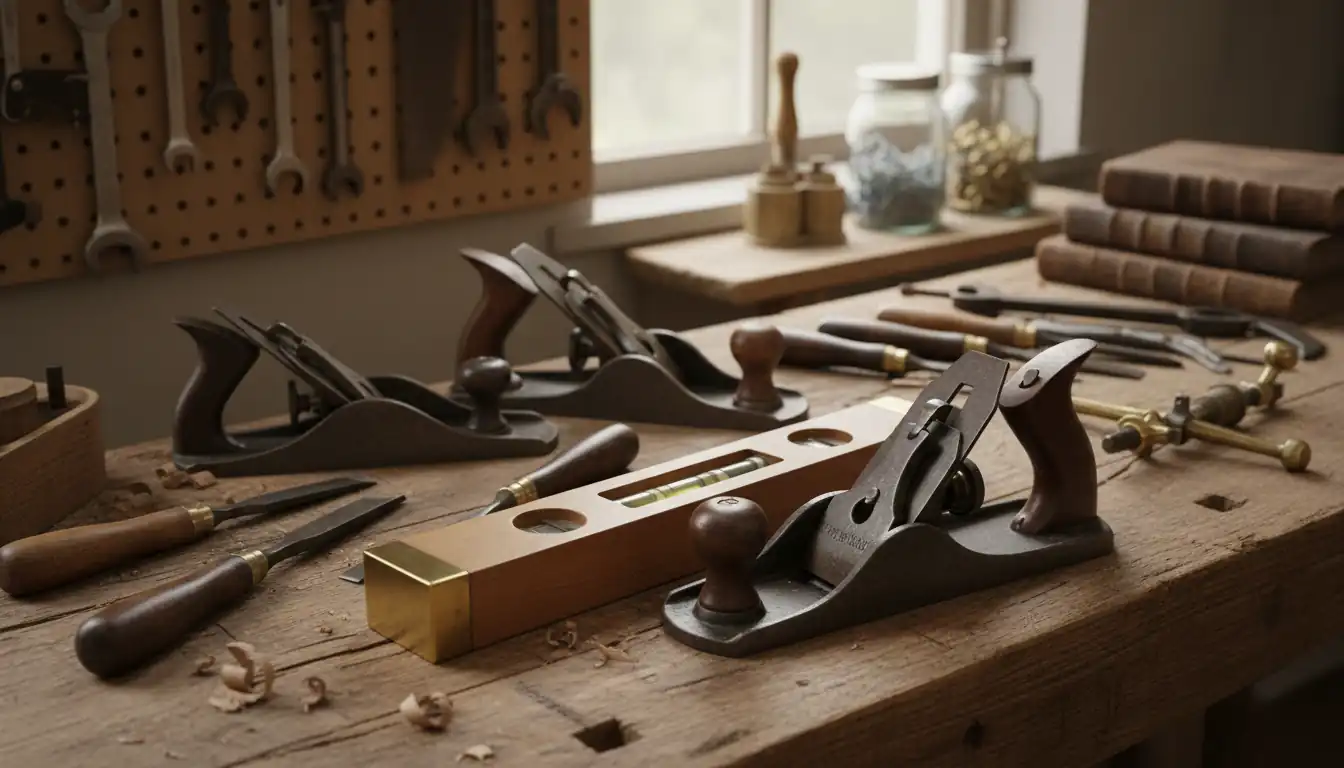
Not all old tools are created equal. While a standard 1940s claw hammer might be worth $5 at a garage sale, a specialized woodworking plane from the same era could fetch $500. To make the most of your time, you need to know which "niches" the big-money collectors are currently fighting over.
Precision Woodworking and Measuring Instruments
Woodworking tools are the "blue chips" of the antique tool world. Collectors love them because they are often beautiful to look at and still functional today. Stanley is the king of this category, but you have to be specific. The Stanley #1 bench plane is the "Holy Grail" for many because of its tiny size and rarity.
But don't stop at planes. Measuring instruments from companies like Starrett or Lufkin are highly prized. Look for:
- Combination Squares: Early versions with ornate "scrollwork" on the iron.
- Inclinometers: These are levels that also measure the specific angle of a slope. They are often made of brass and look like scientific instruments.
- Folding Rules: Boxwood rules with brass hinges. If they have an integrated "caliper" (a sliding metal bit at the end), the value jumps significantly.
Specialized Blacksmithing and Industrial Gear
Blacksmithing tools have seen a massive surge in value recently. As more people take up the hobby of "bladesmithing," the demand for old anvils and specialized tongs has skyrocketed.
- Anvils: Look for names like Peter Wright, Hay-Budden, or Fisher. A high-quality anvil is valued by its weight. If you find one with a clear maker's mark and "sharp" edges on the top face, you are looking at an item worth several hundred, if not thousands, of dollars.
- Post Vises: These are large, floor-mounted vises used by blacksmiths. They have a long "leg" that goes into the ground. If the threads are still good and the spring works, these are highly sought after.
- Coachmaker's Tools: These were used to build wooden wagons and carriages. They are often oddly shaped and very specialized, which makes them rare.
Pro Tip: Look for "The Fish." This is the logo for Berg, a Swedish toolmaker. Their chisels and pliers are considered some of the best ever made, and collectors will pay a premium for any tool bearing that tiny stamped fish.
Determining Market Value and Collector Grade
Once you’ve identified your tool using your detective skills and the Relic app, you need to understand its "grade." In the tool world, there is a massive price gap between something you can use and something you should put in a glass case.
The Difference Between User Grade and Museum Quality
A "User Grade" tool is exactly what it sounds like. It’s a high-quality vintage tool that a modern woodworker or mechanic wants to put back to work. These tools should have no cracks in the metal and all their original parts. They don't need to be pretty, but they must be functional.
"Collector Grade" (or Museum Quality) tools are a different beast. These are items that look like they just rolled off the factory floor in 1890. They often have:
- Original Japanning: This is the black, baked-on finish found on the bodies of old planes and drills. If 95% or more of the japanning is intact, the value stays high.
- No Personalization: Many old-timers stamped their names into their tools to prevent theft. For a "user," this adds character. For a high-end collector, this is considered "damage" and lowers the price.
- Box and Papers: Finding an antique tool in its original wooden or cardboard box is like finding a needle in a haystack. The box alone can sometimes be worth more than the tool itself.
Establishing Provenance and Historical Significance
Provenance is the history of who owned the tool and where it was used. This is where Relic’s ability to provide "historical context" becomes invaluable. If you can prove that a set of wrenches was used in an early Ford factory or that a specific level was used in the construction of a famous landmark, the value isn't just in the metal anymore—it’s in the story.
| Factor | User Grade | Collector Grade |
|---|---|---|
| Condition | Clean, sharp, functional. | Original finish, no wear, "New Old Stock." |
| Completeness | May have replacement screws. | 100% original parts, including the box. |
| Price Driver | Utility and brand reputation. | Rarity, age, and aesthetic beauty. |
| Modifications | Sharpened or lightly restored. | Untouched, original patina. |
The Mystery of Patented Oddities and One-Off Inventions
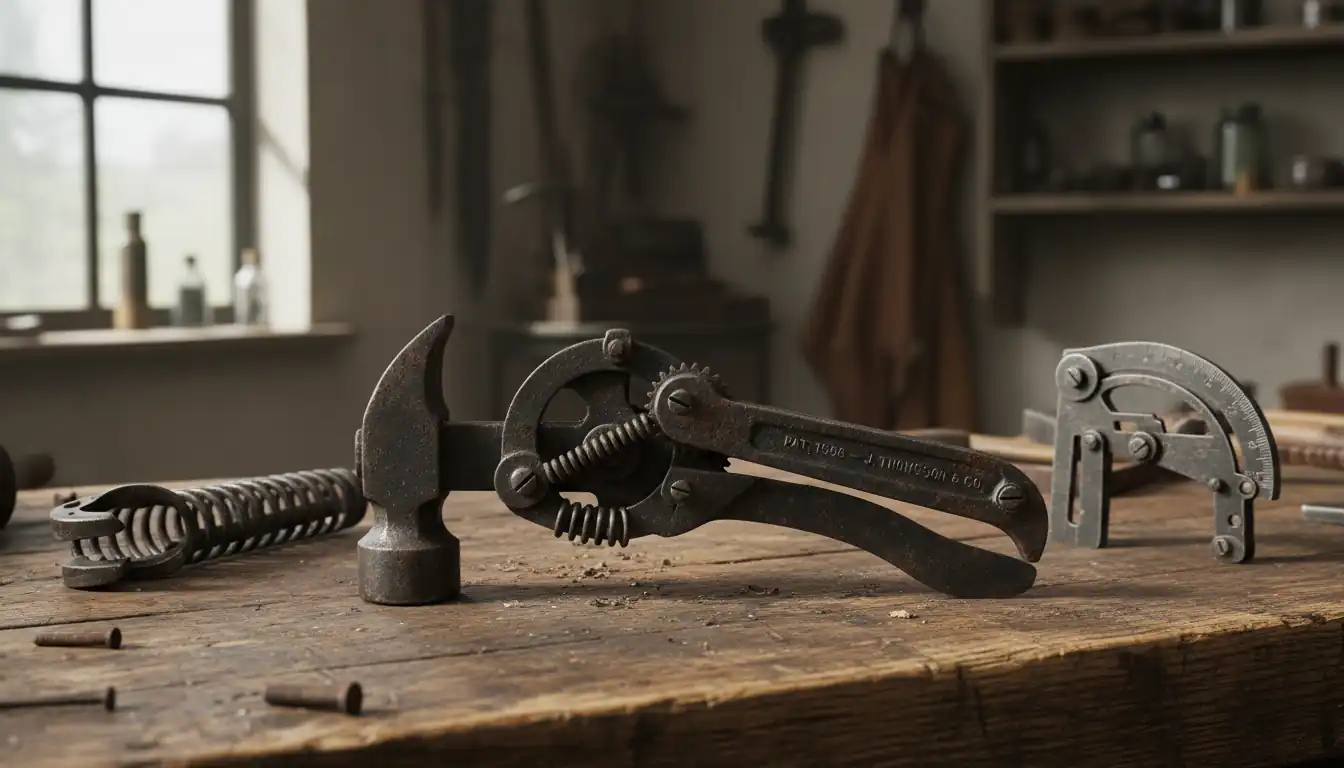
The most exciting part of tool hunting is finding the "what-is-it." During the late 19th century, there was a patent craze in America. Everyone thought they had a better way to pull a nail or turn a bolt. Many of these inventions failed commercially, meaning only a few hundred were ever made. These "failures" are now the rarest tools on earth.
Researching Obscure Patent Dates and Numbers
If you find a tool with a patent date but no maker's name, that date is your key. You can look up patent records to find the original blueprints and the inventor's name. This often reveals that your "weird wrench" was actually a specialized tool for a machine that only existed for three years.
- "Pat. Applied For": This indicates a very early production model. If the tool became successful later, these early "pre-patent" models are highly collectible.
- Multiple Dates: Some tools list five or six patent dates. This shows the evolution of the tool and helps you identify the "Type" or version you have.
Identifying Salesman Samples and Prototype Tools
Before the era of high-quality color catalogs, traveling salesmen carried "samples." These were often miniature, fully functional versions of the actual product. A salesman sample of a grain drill or a massive industrial press is a work of art. Because they were expensive to produce and never sold to the public, they are incredibly valuable.
Similarly, prototypes are tools that were handmade by an inventor before they went into mass production. You can spot these by looking for:
- Lack of Branding: No logos or stamps.
- Hand-Filed Edges: Marks that show the tool was shaped by hand rather than a machine.
- Experimental Materials: A mix of brass and steel where you would usually only see iron.
If you find something in your junk drawer that doesn't make sense—a hammer with three heads or a saw that folds into a square—don't throw it away. It might be a "one-off" that a collector has been searching for for decades.
Conclusion
Identifying antique tools is a journey that starts with a physical inspection and ends with a deep understanding of industrial history. By learning to read maker's marks, understanding the significance of materials like rosewood and cast steel, and knowing which brands to hunt for, you turn every flea market visit into a potential windfall.
Remember that you don't have to do it alone. While the physical clues provide the foundation, using the Relic app can instantly confirm your suspicions, providing you with a professional-grade appraisal and the historical context that makes a tool truly valuable. Whether you are looking to build a world-class collection or just want to know if that rusty wrench in the garage is worth a fortune, the answers are right there in the metal.
Your next step? Go back to that "junk" pile. Look for the hidden stamps, feel the weight of the wrought iron, and use your phone to see what history is hiding in your hand. You might just be holding a piece of the past that’s worth a very modern sum of money.
Identify antiques instantly
Point your camera at any antique, collectible, or vintage item. Get valuations, history, and market insights in seconds.
Download for iPhone