Is That Silver Spoon a Hidden Fortune? The Modern Guide to Decoding Hallmarks in Seconds

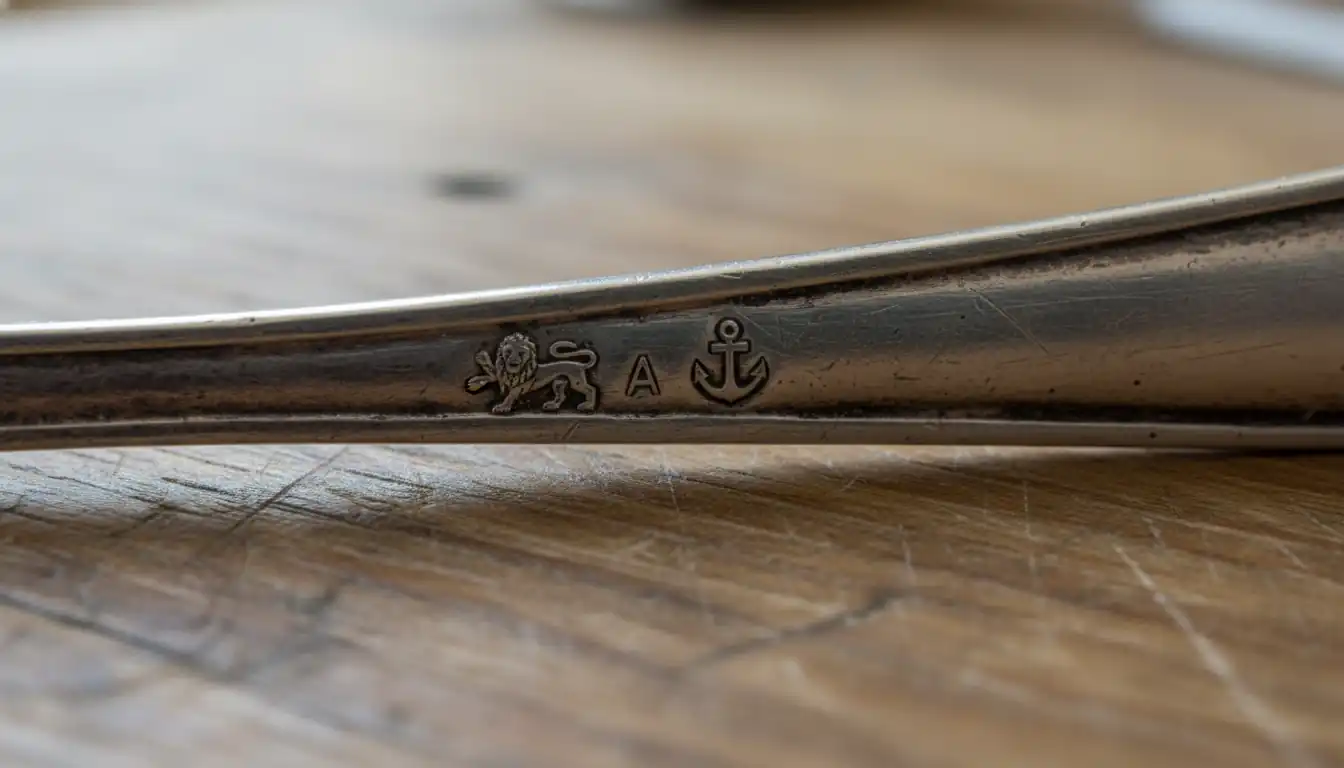
You are standing at a crowded estate sale, shoulder-to-shoulder with professional pickers and weekend hobbyists. Your eyes land on a tarnished, heavy silver spoon tucked away in a box of kitchen clutter. It feels substantial, but the surface is black with decades of oxidation. You flip it over, squinting at a row of tiny, cramped symbols stamped into the handle. Are these just random decorations, or are you holding a piece of history worth hundreds of dollars?
Most people walk past these small fortunes every day because they don't know how to translate the language of metal. Hallmarks are not just stamps; they are a sophisticated tracking system that has existed for centuries to protect buyers from fraud. Learning to read them is like gaining a superpower that allows you to see through the grime and identify the true pedigree of an object.
This guide will transform you from a casual observer into a confident identifier. We will break down the technical hierarchy of stamps, compare international systems, and show you how to spot the clever fakes that trip up even seasoned collectors. By the time you finish reading, you will know exactly how to determine if that silver spoon is a hidden fortune or just a piece of plated scrap.
The Anatomy of a Genuine Sterling Hallmark
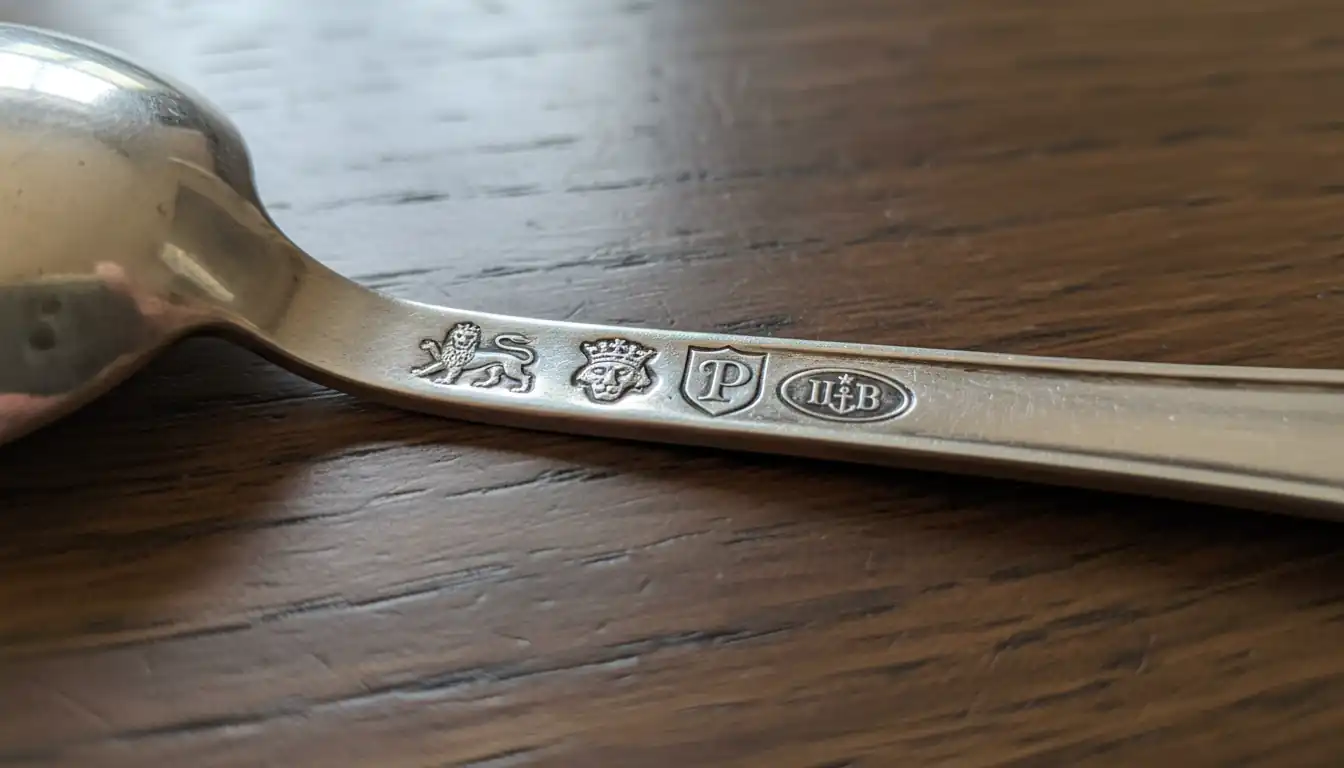
To understand how to read a sterling silver hallmark, you must first understand what you are looking for. Think of a hallmark as a tiny, encoded passport for an object. It tells you where the item was born, what it is made of, and who is responsible for its quality. In the world of silver, these marks follow a specific visual hierarchy that has remained remarkably consistent over time.
Standard Marks and Purity Indicators
The most critical mark on any piece of silver is the purity indicator. This tells you the actual silver content of the metal. Sterling silver is an alloy consisting of 92.5% pure silver and 7.5% other metals, usually copper. This specific ratio is used because pure silver is too soft for functional items like forks or bowls; it would bend and warp under the slightest pressure.
- The .925 Stamp: This is the most common modern indicator. If you see "925" or ".925," it signifies that the piece meets the international standard for sterling silver.
- The Lion Passant: In British silver, the purity isn't usually a number. Instead, you will see a "lion passant"—a lion walking with one paw raised. This symbol has represented sterling quality in England since the 1500s.
- The Britannia Mark: Occasionally, you might find a seated figure of Britannia. This indicates a higher purity of 95.8%, which was briefly the mandatory standard in England between 1697 and 1720 to prevent people from melting down coins to make silver plate.
- The Thistle or Crowned Harp: Different regions within the British Isles used their own purity symbols. A thistle represents Scottish silver, while a crowned harp signifies Irish origin.
Pro Tip: If you see a number like "800" or "900," the piece is still silver, but it is "coin silver" or "continental silver," which has a lower silver content than sterling.
Identifying the Maker and Origin
Once you have established that the piece is sterling, the next stamps in the sequence provide the "who" and "where." These marks are essential for collectors because a piece made by a famous silversmith in a prestigious city can be worth ten times its weight in silver.
- The Maker’s Mark: This is usually the initials of the silversmith or the manufacturing company, often enclosed in a geometric shape like a shield or a rectangle. For example, "T & Co" would indicate Tiffany & Co., while "WB" might represent a smaller independent maker like William Bateman.
- The Town Mark: This symbol tells you which assay office tested and certified the silver. A leopard’s head represents London, an anchor represents Birmingham, and a crown represents Sheffield.
- The Date Letter: This is perhaps the most fascinating part of the hallmark. It is a single letter of the alphabet that corresponds to a specific year. The font, the case (upper or lower), and the shape of the shield surrounding the letter all change every 20 to 26 years, allowing you to date a piece to the exact year it was made.
| Symbol | Meaning | Common Example |
|---|---|---|
| Lion Passant | Sterling Purity (92.5%) | Walking Lion |
| Leopard's Head | London Assay Office | Crowned or Uncrowned Head |
| Anchor | Birmingham Assay Office | Small Anchor |
| Initial Letters | The Maker | "PS" for Paul Storr |
Decoding British versus International Systems
While the British system is the most rigid and well-documented, silver from other parts of the world follows different rules. If you only look for a lion or a leopard, you might miss a valuable piece of French or American silver. Understanding these regional variations is the key to becoming a versatile collector.
The Traditional Four-Part British System
The British system is often referred to as the "four-part" or "five-part" hallmark. It is designed to be foolproof. When you look at a piece of English silver, you will typically see the Maker's Mark, the Lion Passant (purity), the Town Mark, and the Date Letter in a neat row.
From 1784 to 1890, a fifth mark was added: the Duty Mark. This was a profile of the reigning monarch’s head, indicating that the tax on the silver had been paid to the crown. If you see the head of King George or Queen Victoria, you are looking at a piece of "Duty Silver," which helps narrow down the age of the item even before you look at the date letter.
American and Continental European Variations
American silver is much more straightforward, but it can also be more confusing for beginners. Before the mid-1800s, American silversmiths often used "pseudo-hallmarks"—marks that looked like British symbols but had no official legal standing. They were simply trying to give their work an air of European authority.
- The "Sterling" Stamp: By the 1860s, American makers like Tiffany and Gorham began simply stamping the word "Sterling" on their pieces. If a piece is American and doesn't say "Sterling" or "925," it is likely "coin silver" (stamped "Coin" or "Pure Coin") or silver plate.
- France (The Minerva Head): French silver uses a very different system. Instead of a row of marks, they use a single small stamp of the head of the goddess Minerva. A "1" next to her forehead indicates .950 purity, while a "2" indicates .800 purity. These marks are often tiny and hidden in the design.
- Germany (Crescent and Crown): After 1888, German silver was standardized with a crescent moon and a crown, accompanied by a decimal purity mark like "800" or "835."
The absence of a "925" stamp does not mean a piece is fake. It often means the piece is older or from a country that used pictorial symbols rather than numerical ones.
Spotting Fakes and Silver Plate Deceptions
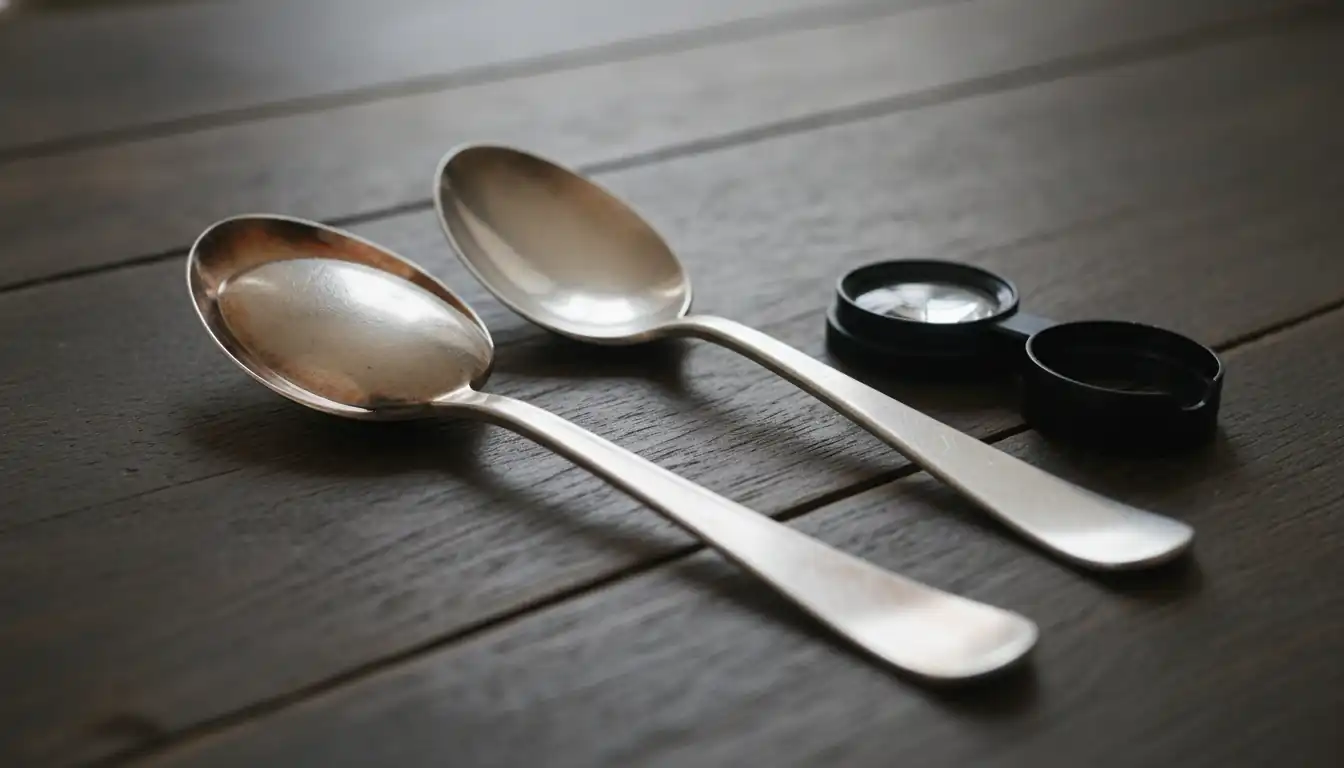
The biggest heartbreak for a new collector is buying what they think is a sterling silver treasure, only to find out it is silver-plated base metal. Silver plate is a thin layer of silver electroplated onto a cheaper metal like copper or nickel. While it looks beautiful, its value is a fraction of sterling silver.
Common Pseudo-Hallmarks and EPNS
Manufacturers of silver plate were notorious for using marks that looked like official hallmarks to trick the eye. They knew that if they put four small symbols in a row, a casual buyer would assume it was sterling. You must learn to read the fine print of these "pseudo-hallmarks."
- EPNS: This stands for "Electro-Plated Nickel Silver." Despite the name, there is no actual silver in the base metal; it is a mix of nickel, copper, and zinc.
- EPBM: This stands for "Electro-Plated Britannia Metal," another common base for silver plating.
- Quadruple Plate: This was a marketing term used by American companies to suggest a thicker layer of silver. While higher quality than single plate, it is still not sterling and has no "melt value."
- A1 or Sheffield Plate: These are indicators of high-quality plating, but they are still not solid silver.
Physical Tests to Verify Sterling Content
If the hallmarks are worn down or suspicious, you can use physical tests to verify the metal. These should be used as a backup to hallmark identification, not a replacement.
- The Magnet Test: Pure silver and sterling silver are non-magnetic. If a strong neodymium magnet sticks to your spoon, it is definitely not silver. It is likely steel or iron with a silver coating.
- The Ice Test: Silver is the best thermal conductor of all metals. If you place a cube of ice on a silver spoon, the ice will begin to melt almost instantly, as if it were on a hot stove. The spoon will also become freezing cold to the touch within seconds.
- The Sound Test: If you gently tap a sterling silver item with a coin, it should produce a long, high-pitched ringing sound like a bell. Silver plate usually produces a dull "thud."
| Mark to Avoid | What it Actually Means |
|---|---|
| EPNS | Electro-Plated Nickel Silver (No solid silver) |
| EPBM | Electro-Plated Britannia Metal (No solid silver) |
| IS | International Silver (Often used on plated flatware) |
| Silver Soldered | Thick plating used in hotels and restaurants |
Instant Identification with AI Technology
Even with a magnifying glass and a library of reference books, identifying hallmarks can be a grueling process. Some marks are so worn that they look like nothing more than a smudge. Others are so obscure—perhaps from a tiny village in 18th-century Russia—that they don't appear in standard Western directories. This is where the traditional hobby of antiquing meets the future.
Moving Beyond Dusty Reference Books
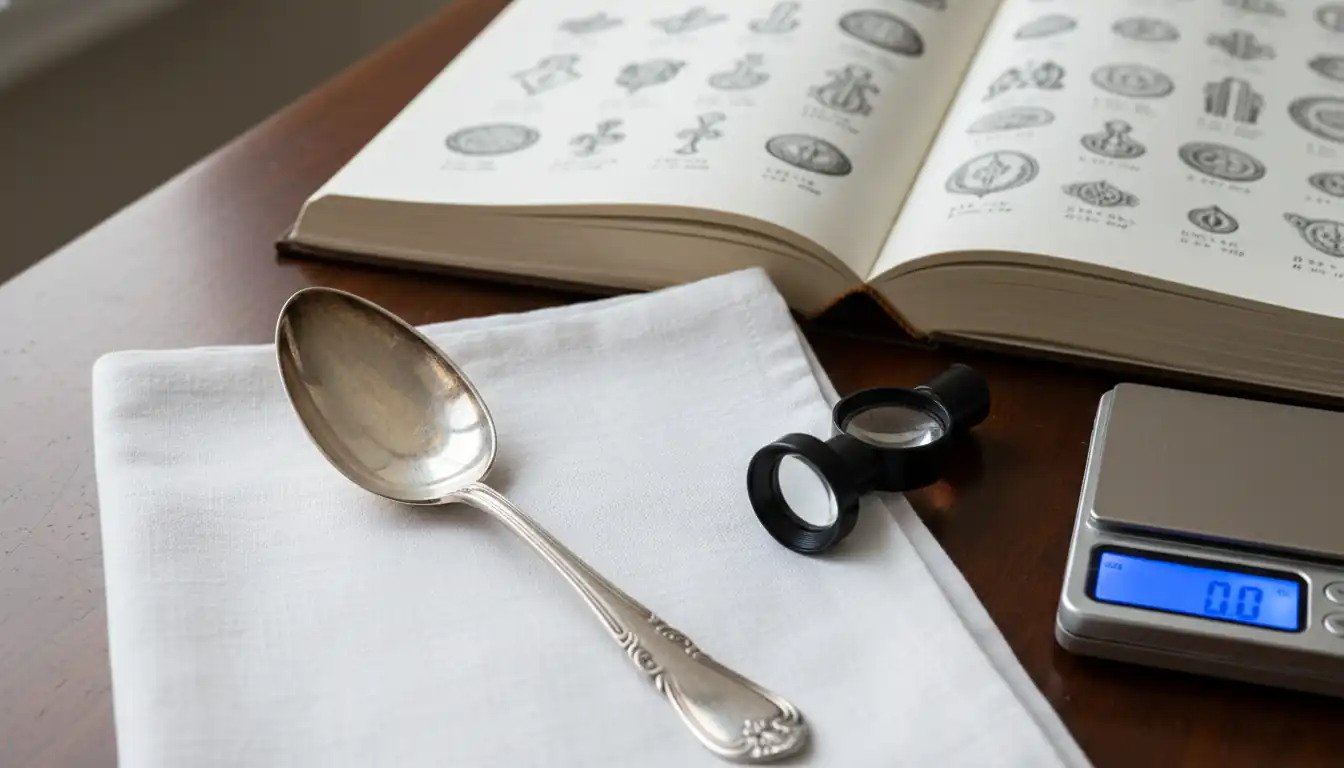
In the past, a serious collector had to carry around heavy "pocket guides" to hallmarks. These books are filled with thousands of tiny drawings of lions, anchors, and letters. Trying to match a worn stamp on a spoon to a tiny drawing in a book while standing in a dimly lit thrift store is a recipe for a headache. Furthermore, these books can't tell you what the item is currently worth on the open market.
Manual identification also leaves room for human error. Is that a "G" from 1782 or a "C" from 1804? The difference could be thousands of dollars in valuation. When you are dealing with high-stakes purchases, guessing isn't an option.
Using Relic for Real-Time Appraisal and History
This is where the Relic app becomes an essential tool for any modern collector. Instead of squinting at a mark and flipping through pages, you can simply take a photo of the hallmark with your iPhone. Relic uses advanced AI to analyze the stamp, instantly comparing it against a massive database of historical marks and maker's symbols.
The app doesn't just tell you "it's silver." It provides a comprehensive breakdown:
- Origin and Date: It identifies the town and the exact year of manufacture.
- Maker Biography: It tells you who the silversmith was and why their work might be significant.
- Real-Time Appraisal: It provides a valuation based on current market trends and historical auction data.
With a 4.9-star rating from over 20,000 reviews, Relic has become the go-to resource for professional dealers and "pickers" who need to make split-second decisions. Whether you are at a high-end auction or a dusty garage sale, having a professional-grade appraisal tool in your pocket ensures you never overpay for a fake or leave a fortune behind.
Determining Value and Rarity After Identification
Once you have confirmed that your item is sterling and identified its origin, the next step is determining what it is actually worth. Value in the silver world is determined by a combination of "melt value" and "collector value."
How Provenance Impacts Market Price
The melt value is the baseline. It is the price you would get if you melted the silver down into a puddle and sold it for its weight. However, for many pieces, the melt value is the least interesting part of the price. The real money lies in the provenance and the maker.
- The Maker's Premium: A plain silver bowl by a generic maker might sell for $200. That same bowl, stamped with the mark of Paul Storr (the most famous English silversmith of the Regency era) or Hester Bateman (a legendary female silversmith), could fetch $5,000 or more.
- Historical Significance: If a piece can be traced to a specific historical event or a famous family, its value skyrockets. This is why identifying the maker's mark and town mark is so vital.
- Condition: Unlike coins, silver is meant to be used. However, "over-polishing" can actually hurt the value. If the hallmarks have been polished so thin they are barely visible, collectors will pay less.
Finding the Best Platform to Sell Your Silver
If you discover you are holding a genuine treasure, don't rush to the nearest "We Buy Gold" shop. These businesses typically pay only a percentage of the melt value and ignore the artistic or historical significance of the piece.
- Specialized Auction Houses: For high-end pieces by famous makers, auction houses like Sotheby's or Christie's (or smaller regional specialists) are the best bet. They have the reach to find collectors willing to pay a premium.
- Online Marketplaces: For more common sterling items, platforms like eBay or Etsy are excellent, provided you have clear photos of the hallmarks and a detailed description.
- Antique Dealers: A reputable dealer will often buy pieces outright, though they will offer a wholesale price so they can make a profit on the resale.
Before selling, use a tool like Relic to get a baseline appraisal. Knowing the historical context of your piece gives you the upper hand in any negotiation.
Conclusion
Identifying silver hallmarks is a skill that combines the precision of a scientist with the intuition of a historian. By understanding the visual hierarchy of stamps—from the purity of the Lion Passant to the specific date letter of a London assay office—you can peel back the layers of time on any object you find. You no longer have to wonder if a piece is "real" or "fake"; you have the technical knowledge to prove it.
Remember that the world of silver is vast, and even the most experienced collectors encounter marks that stump them. Don't be afraid to use modern tools to supplement your knowledge. Whether you are using a traditional loupe or the AI-powered precision of the Relic app, the goal is the same: to preserve history and ensure you are getting the true value of your find.
The next time you see a tarnished spoon at the bottom of a bargain bin, don't just look at the surface. Flip it over, find the marks, and see if you’ve discovered a hidden fortune. Your next great find is waiting for you to decode it.
Identify antiques instantly
Point your camera at any antique, collectible, or vintage item. Get valuations, history, and market insights in seconds.
Download for iPhone