Is That Yard Sale Find Solid Cherry? Use Your Phone to Reveal Its Secret History

You are standing in a sun-drenched driveway, staring at a heavy, dust-covered sideboard. The seller insists it’s an heirloom, a piece of "solid cherry" passed down through three generations. You run your hand over the surface, feeling the cool, dense grain beneath the grime. Is this a genuine 19th-century masterpiece worth thousands, or a clever 1980s reproduction destined for a guest bedroom?
The difference between a life-changing find and a bulky mistake often comes down to the wood itself. Understanding the history written in the grain is like learning a secret language. Once you know how to read the rings, the pores, and the way the light hits the surface, you stop seeing furniture and start seeing a timeline of craftsmanship.
This guide will teach you how to look past the surface finish to identify the "Visual DNA" of antique timber. You will learn to distinguish high-value hardwoods from common lumber and discover how modern technology can instantly verify the history of your finds. By the time you reach the end of this article, you will have the tools to walk into any estate sale with the confidence of a seasoned appraiser.
The Visual DNA of Antique Woods

Before you can name the tree, you must understand the material. Antique furniture wasn't built with the same wood you find at a modern big-box hardware store. The timber used two centuries ago came from "old-growth" forests—vast, ancient woodlands where trees grew slowly under a dense canopy. This slow growth is the fundamental building block of an antique’s value.
Decoding Grain Patterns and Texture
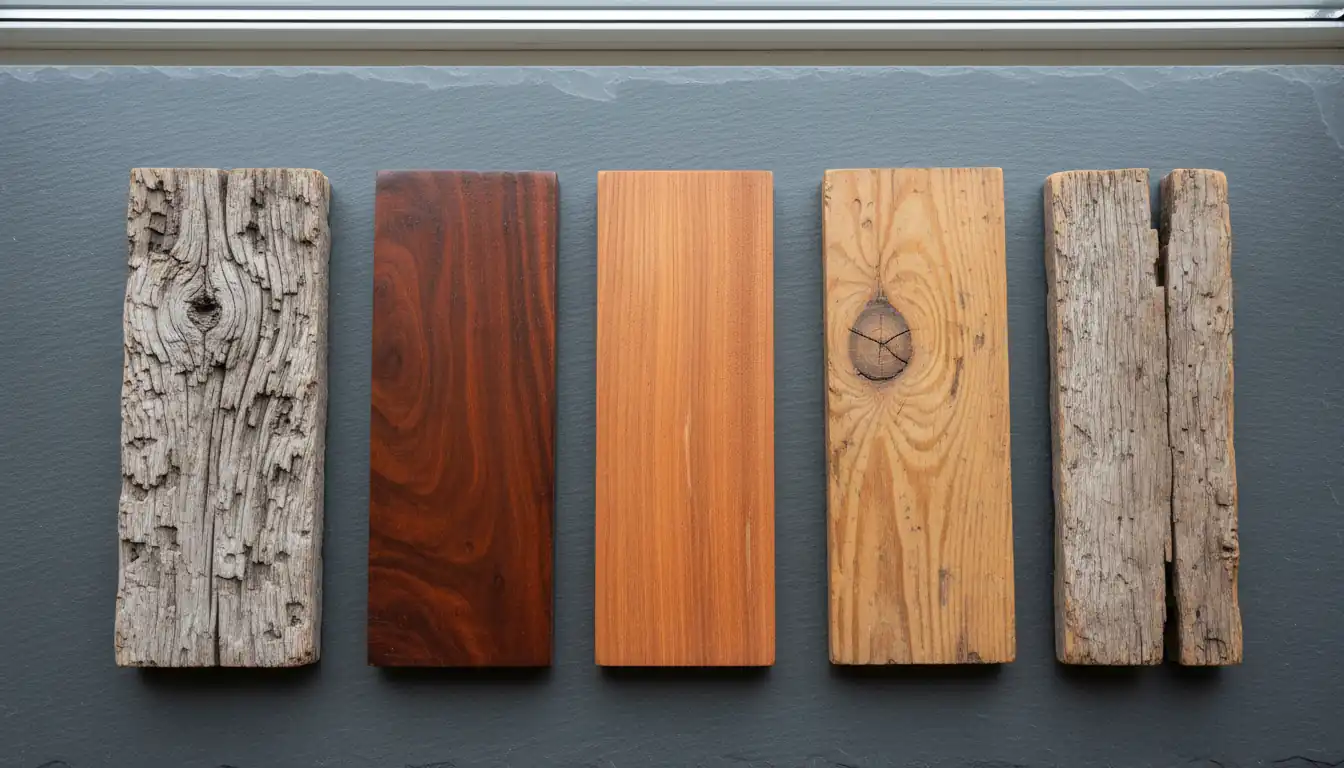
When a tree grows slowly, its annual rings are packed tightly together. If you look at the end grain of a 200-year-old table, you might see twenty or thirty rings per inch. In contrast, modern "new-growth" lumber is harvested from trees bred to grow fast, resulting in wide, porous rings that lack structural density. This density is why a genuine antique feels surprisingly heavy for its size.
The texture of the wood also tells a story. Old-growth timber has a tight, refined cellular structure. When you touch a piece of 18th-century furniture, the surface feels almost like stone or polished bone rather than fibrous wood. This is because the fibers are so densely packed that they resist the "fuzziness" often seen in modern pine or poplar.
- Growth Ring Density: Look at the edges or underside of the piece. Tight, nearly invisible rings indicate old-growth timber.
- Weight-to-Volume Ratio: Pick up one end of the piece. High-density hardwoods like mahogany or oak will feel significantly heavier than modern plywood or fast-growth pine.
- Pore Structure: Antique hardwoods often have a "closed" or very fine pore structure that creates a glass-like finish when polished.
The 100-Year Rule and Patina Evolution
In the antique trade, the "100-year rule" is the gold standard. To be legally considered an antique in many jurisdictions, an item must be at least a century old. But how do you verify a century of existence just by looking at the wood? The answer lies in the patina.
Patina is not just a fancy word for "old dirt." It is a chemical change that occurs as wood is exposed to oxygen, light, and human touch over decades. This process, known as oxidation, causes the wood to darken or "mellow" in a way that no modern stain can perfectly mimic. A piece of cherry wood, for example, starts as a pale pinkish-brown but deepens into a rich, burnt-orange or deep red over a hundred years.
"True patina is the history of a piece made visible. It is the accumulation of wax, dust, sunlight, and the oils from thousands of hands, creating a depth of color that seems to glow from within."
Modern manufacturers try to fake this by using dark glazes and "distressing" the wood with chains or hammers. However, fake patina sits on top of the wood. Real patina is part of the wood. If you look into a scratch on a genuine antique, the wood underneath will often be nearly as dark as the surface. On a fake, a scratch reveals the bright, pale "new" wood hiding just beneath a thin layer of stain.
| Feature | Authentic Antique Patina | Modern Reproduction Stain |
|---|---|---|
| Depth | Deep, multi-layered glow | Flat, uniform color |
| Light Reaction | Reflects light from within the grain | Absorbs light or looks "muddy" |
| Wear Patterns | Natural thinning at touchpoints (knobs, edges) | Uniform thickness across the entire piece |
| Color Shift | Gradual transition from light to dark | Sharp, artificial contrast |
High-Value Hardwoods and Their Tell-Tale Signs
Once you understand the age and quality of the timber, the next step is identifying the species. In the high-end antique market, the species of wood can be the difference between a $500 piece and a $50,000 piece. Certain woods were prized for their stability, beauty, and rarity, making them the preferred choice for master cabinetmakers.
Distinguishing Mahogany from Cherry
Mahogany and Cherry are often confused because they both develop a deep, reddish-brown hue over time. However, their grain patterns are worlds apart. Mahogany, specifically the "Honduran" or "Cuban" varieties found in 18th-century pieces, features a "ribbon" grain. This looks like long, shimmering stripes that seem to shift and move as you walk past the piece. This optical illusion is a hallmark of high-quality mahogany.
Cherry, on the other hand, is much smoother. It lacks the large, open pores of mahogany. When you look closely at cherry, the grain is subtle and flowing, often described as "milky." One of the most distinct markers of cherry is the presence of small, black "pith flecks." These are tiny mineral deposits that look like thin black streaks or dots. If you see these flecks in a piece that has aged to a deep reddish-black, you are almost certainly looking at solid cherry.
- Mahogany Markers: Large pores, ribbon-like shimmer, and a deep "oxblood" color in very old pieces.
- Cherry Markers: Fine, closed grain, pith flecks (black streaks), and a warm, orange-red glow.
The Rare Allure of Bird’s Eye Maple and Burl
While most furniture makers sought out straight, predictable grain, the most valuable antiques often feature "anomalies." These are biological hiccups in the tree's growth that create stunning visual patterns.
Bird’s Eye Maple is a rare phenomenon where the wood is dotted with tiny, swirling circles that look like the eyes of a bird. This isn't a separate species of tree, but a mysterious growth pattern found in a tiny percentage of Sugar Maples. Because it was so difficult to work with—the "eyes" tend to pop out during planing—it was reserved for the finest decorative veneers and accent pieces.
Burl is perhaps the most prized anomaly of all. A burl is a large, knobby growth on the side of a tree, often caused by stress or injury. When sliced, the wood inside reveals a chaotic, swirling explosion of grain that looks more like marble than timber. Burl wood is incredibly unstable in solid form, so it is almost always used as a veneer. If you find an antique desk with a burl walnut front, you are looking at a piece that was designed to be a status symbol.
- Bird's Eye Maple: Look for clusters of small, circular "eyes" about 1/8th of an inch wide.
- Burl Wood: Look for "wild" grain with no discernible direction, often appearing in walnut, oak, or maple.
- Value Factor: These anomalies significantly increase the value of a piece because they are rare in nature and require immense skill to harvest and apply.
Identifying Wood Species with AI Technology
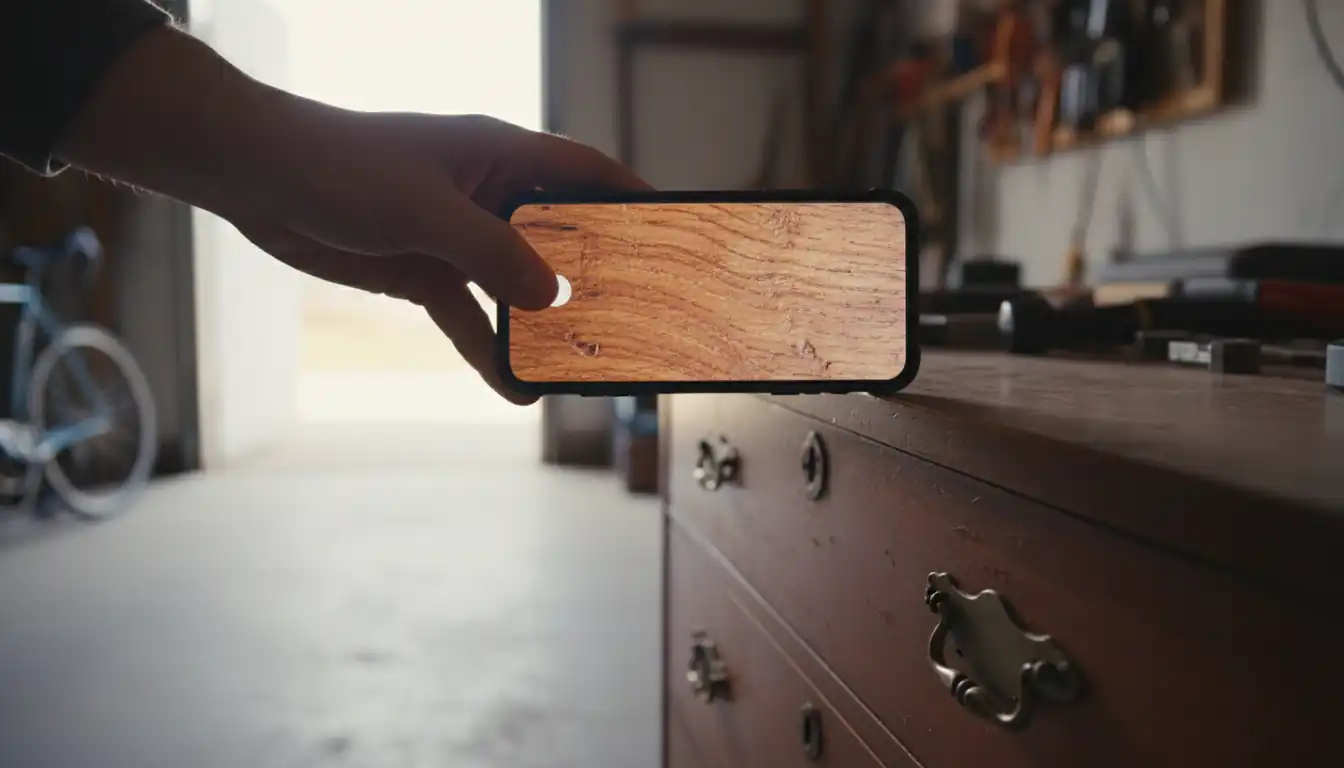
Identifying wood by eye is a skill that takes years to master. Even professionals sometimes struggle to distinguish between a well-stained piece of birch and a genuine mahogany plank. This brings us to a question often asked by modern collectors: Is there an app that can tell you what type of wood you have?
The answer is yes, and it has changed the way people shop at auctions and yard sales. The Relic app is a specialized tool designed to bridge the gap between a casual observer and a professional appraiser. By using advanced AI trained on thousands of verified antique samples, Relic can analyze the cellular structure and grain patterns of a piece through your iPhone's camera.
How the Relic App Decodes Wood Grain
When you use Relic, you aren't just taking a photo; you are performing a digital scan. The AI looks for the specific markers we’ve discussed—pore density, grain direction, and mineral deposits. It can distinguish between the "ribbon" grain of mahogany and the "cathedral" grain of oak in seconds.
This technology answers the common PAA question: How to identify wood type by picture? Instead of flipping through heavy reference books or guessing based on a grainy website photo, you simply point your phone at the wood. Relic processes the visual data and provides an instant identification of the species, along with a historical context of when that wood was most commonly used.
- Instant Appraisal: Relic doesn't just name the wood; it helps you understand the market value of the item based on its materials and condition.
- Origin Stories: The app can often trace the likely geographic origin of the timber, helping you determine if a piece is American Colonial or English Regency.
- Searchable Catalog: Every item you scan is saved in your personal catalog, allowing you to build a digital inventory of your collection or your "maybe" list from a day of picking.
Moving Beyond Manual Identification Guides
Manual guides are helpful, but they have limitations. They can't account for the way a 200-year-old finish obscures the grain, and they can't tell you if the "oak" you're looking at is actually a clever laminate. Relic’s AI is trained to see through these surface distractions. It looks at the "Visual DNA" of the wood, providing a level of accuracy that was previously only available to those who carried a magnifying glass and a lifetime of experience.
For anyone serious about the hunt, having this kind of power in your pocket removes the fear of overpaying for a reproduction. It turns a "guess" into a "fact," allowing you to make split-second decisions in the fast-paced environment of a live auction or a busy estate sale.
Regional Styles and Their Preferred Timbers
History is often written in the wood that was available at the time. Before the era of global shipping, furniture makers used what grew in their backyard. This regionality is one of the best ways to date a piece and verify its authenticity.
American Colonial Oak vs. English Walnut Classics
In the early days of the American colonies, the vast forests of the Northeast provided an abundance of White Oak. This wood was incredibly strong and rot-resistant, making it perfect for the rugged, utilitarian furniture of the 17th and early 18th centuries. American "Pilgrim-style" furniture is almost synonymous with thick, heavy oak planks.
Meanwhile, in England, the late 17th century is often referred to as the "Age of Walnut." English Walnut is a softer, more refined wood than oak, allowing for the intricate carvings and "barley-twist" legs seen in William and Mary style furniture. If you find a piece that looks like it belongs in a 1690s London manor but it's made of American White Oak, you might be looking at a colonial "country" version of a sophisticated city style.
| Period | Preferred Wood | Key Style Characteristics |
|---|---|---|
| 1600s - 1720s | Oak / Walnut | Heavy, turned legs, geometric carvings |
| 1730s - 1780s | Mahogany | Curvy "Queen Anne" legs, ornate "Chippendale" carvings |
| 1790s - 1830s | Cherry / Maple | Slim, tapered legs, "Federal" or "Hepplewhite" elegance |
| 1880s - 1920s | Quarter-Sawn Oak | "Mission" or "Arts & Crafts" style, heavy and linear |
Assessing Quality Through Wood Choice
In the world of antiques, not all wood is created equal. Master craftsmen used a hierarchy of materials. The "Primary Wood" is what you see on the outside—the mahogany, cherry, or walnut that was meant to be shown off. The "Secondary Wood" is what was used for the parts that weren't visible, such as drawer bottoms, back panels, and internal framing.
In a high-quality antique, the secondary wood is just as telling as the primary. Early American makers often used White Pine or Poplar for secondary parts because these woods were easy to work and plentiful. In England, you might find Oak or Deal (a type of fir) used for drawer linings.
The presence of a "cheap" secondary wood like pine in a mahogany chest isn't a sign of poor quality; it's a sign of authenticity. It shows the maker was using resources wisely, a hallmark of pre-industrial craftsmanship.
If you find a piece that is "mahogany" inside and out—including the drawer bottoms—be suspicious. Solid mahogany was far too expensive to "waste" on the parts of a dresser that no one would ever see. A piece made entirely of a single expensive hardwood is often a sign of a modern reproduction where the manufacturer used cheaper, plantation-grown mahogany for the entire construction.
Field Guide to Spotting Fakes and Veneers
The final step in your journey is learning to spot the "gotchas." As the value of antiques has risen, so has the sophistication of those trying to replicate them. However, wood has a way of telling the truth if you know where to look.
Detecting Modern Stains on Old Growth
One of the most common tricks is taking a piece of modern, fast-growth wood and staining it to look like an antique. To catch this, you need to look at the pores. Modern stains tend to "pool" in the large, open pores of new-growth wood, creating dark, muddy spots. On a genuine antique, the color is more translucent.
Another giveaway is the "sanding" pattern. Modern furniture is sanded by high-speed machines that leave perfectly flat surfaces. Antique furniture was smoothed by hand using "scrapers" or hand planes. If you look at the surface of an antique under a raking light (light hitting the surface from a low angle), you will often see very slight undulations or "waves" left by the craftsman's hand. If the surface is as flat as a sheet of glass, it was likely made in a factory.
- The "Nail" Test: Look at how the wood is held together. If you see perfectly round, modern "wire" nails, the piece is likely post-1900. Authentic 18th-century pieces use hand-forged, square-headed nails.
- The "Smell" Test: Old wood has a distinct, dusty, slightly sweet scent. New wood, or wood that has been recently stained, will often smell of chemicals or "fresh" lumber.
The Hidden Truth Behind Veneers and Secondary Woods
Many people assume that "veneer" is a bad word, synonymous with cheap modern furniture. In the antique world, this couldn't be further from the truth. Some of the most expensive furniture in history—think French Empire or English Regency—is veneered.
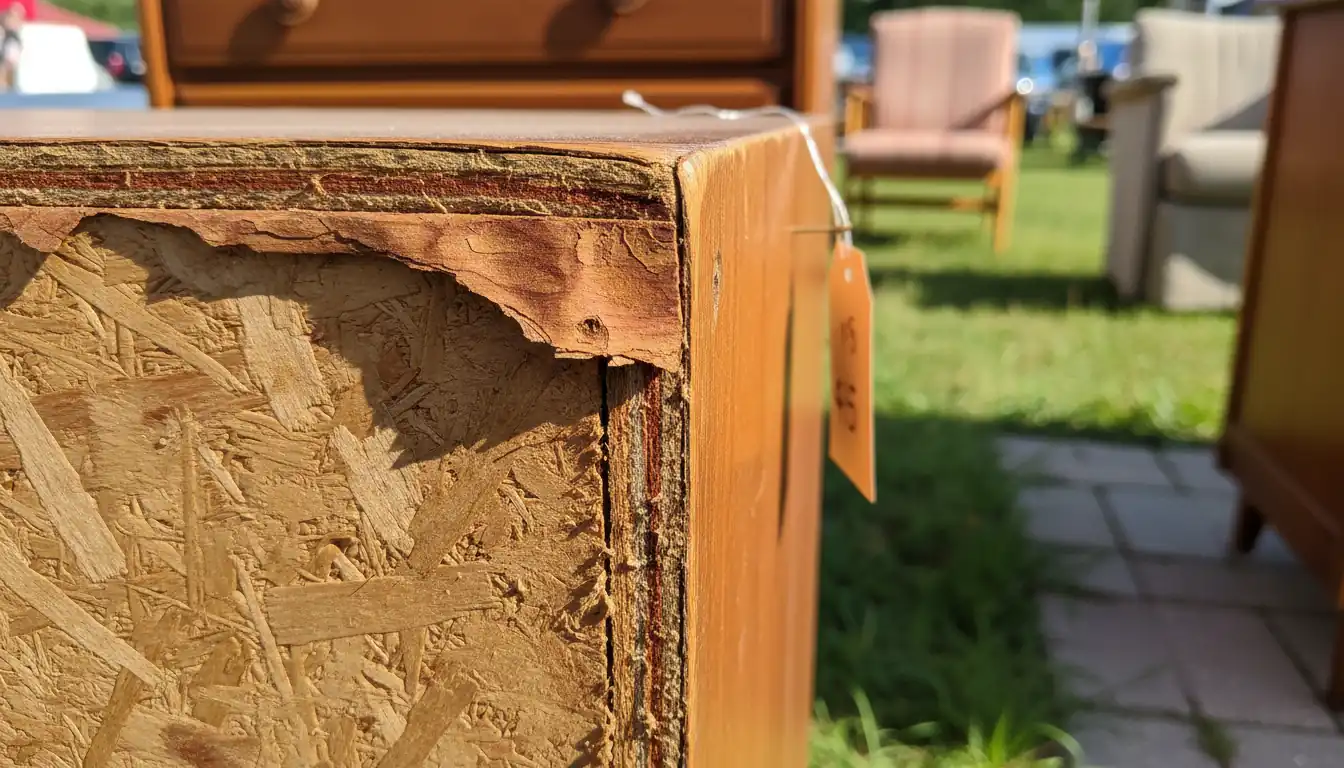
The key is identifying what is under the veneer. In a genuine antique, the veneer (a thin slice of expensive wood like Burl Walnut) is applied over a solid wood "core," usually pine or oak. In a modern fake, the veneer is applied over particleboard or MDF (medium-density fiberboard).
- Check the Edges: Look at the edge of a tabletop or drawer front. If you see a thin line where the top layer meets the base, it's a veneer.
- Inspect the Back: Turn the piece around. If the back panel is a single, perfectly smooth sheet of plywood, it’s modern. If it’s made of several wide, hand-planed boards of pine or poplar, you’ve found something special.
- Hardware "Ghosting": Remove a brass pull or handle if possible. On a real antique, the wood behind the hardware will be lighter than the rest of the piece because it hasn't been exposed to light. If the wood is the same color everywhere, it’s a recent creation.
As you refine your eye, you’ll realize that identifying wood is about looking for inconsistencies. A piece that is "too perfect" is usually a reproduction. Real antiques have "character"—a knot here, a slight shrinkage crack there, and a depth of color that only a century of existence can provide.
When you find yourself doubting your instincts, tools like the Relic app serve as the final word. By combining your new knowledge of grain patterns and regional styles with Relic’s AI-driven appraisal and history tools, you can verify the origin and value of any find in seconds. It’s the ultimate safety net for the modern treasure hunter.
Conclusion
Identifying antique wood is a blend of science, history, and intuition. You’ve learned that the secret lies in the "Visual DNA"—the tight growth rings of old-growth timber, the deep oxidation of a century-old patina, and the unique grain patterns of mahogany, cherry, and maple. You now know to look for the "secondary woods" that hide in the shadows of drawers and back panels to prove a piece's age.
The next time you’re at a yard sale and spot that "solid cherry" find, you won't have to guess. You’ll look for the pith flecks, check the weight, and examine the joinery. And for that final layer of certainty, you can use the Relic app to scan the piece, revealing its true history and market value instantly.
The world of antiques is full of hidden treasures waiting to be rediscovered. Armed with the right knowledge and the right technology, you are no longer just a shopper—you are a detective. Happy hunting.
Identify antiques instantly
Point your camera at any antique, collectible, or vintage item. Get valuations, history, and market insights in seconds.
Download for iPhone