Is Your Attic Hiding a $5,000 Hummel? The Modern Guide to Figurine Valuation

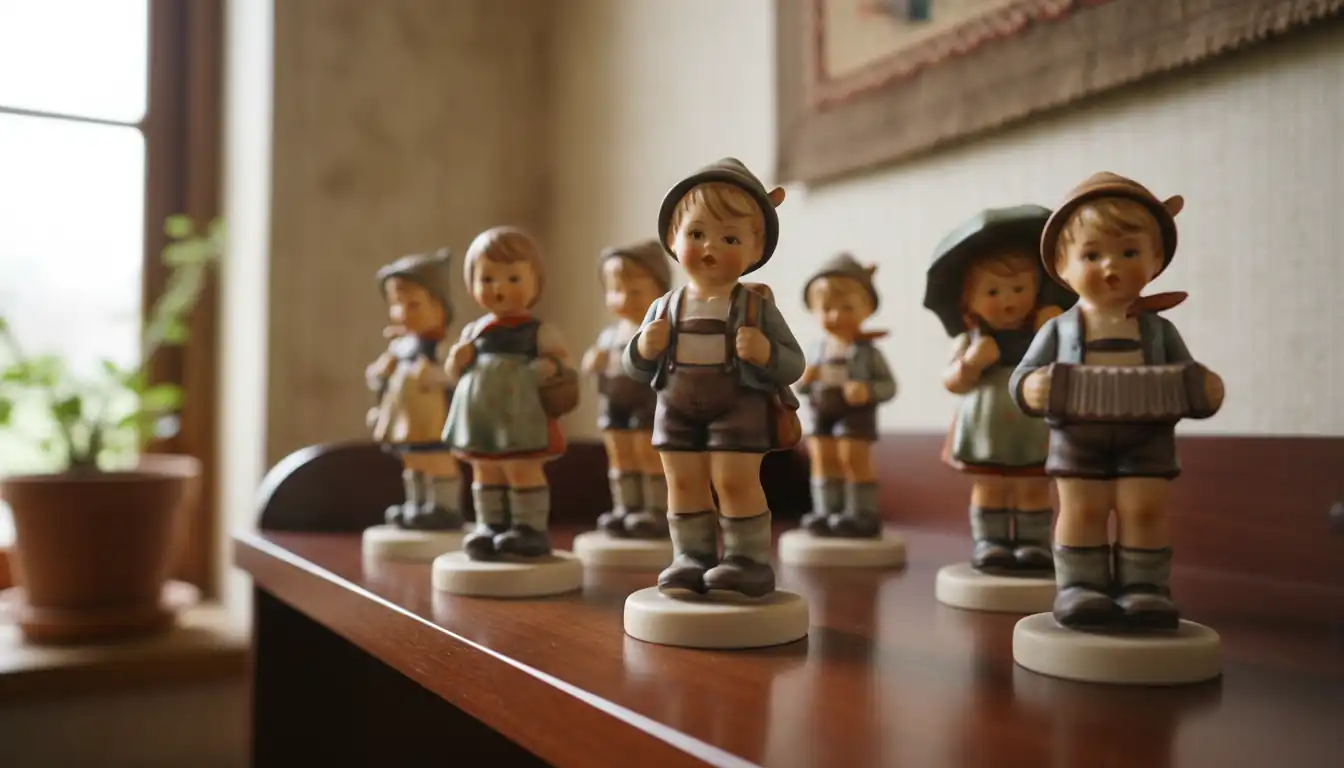
You’ve likely seen them perched on a grandmother’s mantel or tucked away in a dusty cardboard box in the garage. Those rosy-cheeked, wide-eyed porcelain children, known as Hummel figurines, were once the gold standard of collectibles. During the 1970s and 80s, they weren't just decorations; they were seen as legitimate financial investments, with prices climbing steadily year after year.
If you’ve recently inherited a collection or stumbled upon a few at an estate sale, you might be wondering if that investment ever paid off. The answer isn't a simple yes or no. While the market for common Hummels has cooled significantly, a "hidden" subset of these figurines still commands thousands of dollars at auction. The challenge lies in knowing how to separate a $20 dust-collector from a $5,000 masterpiece.
This guide will walk you through the nuances of the modern Hummel market. You will learn how to decode the mysterious marks on the bottom of each piece, identify the specific models that collectors are still fighting over, and use modern tools to value your collection in seconds. By the time you finish reading, you’ll know exactly whether you’re looking at a sentimental keepsake or a significant windfall.
The Reality of the Hummel Market Today
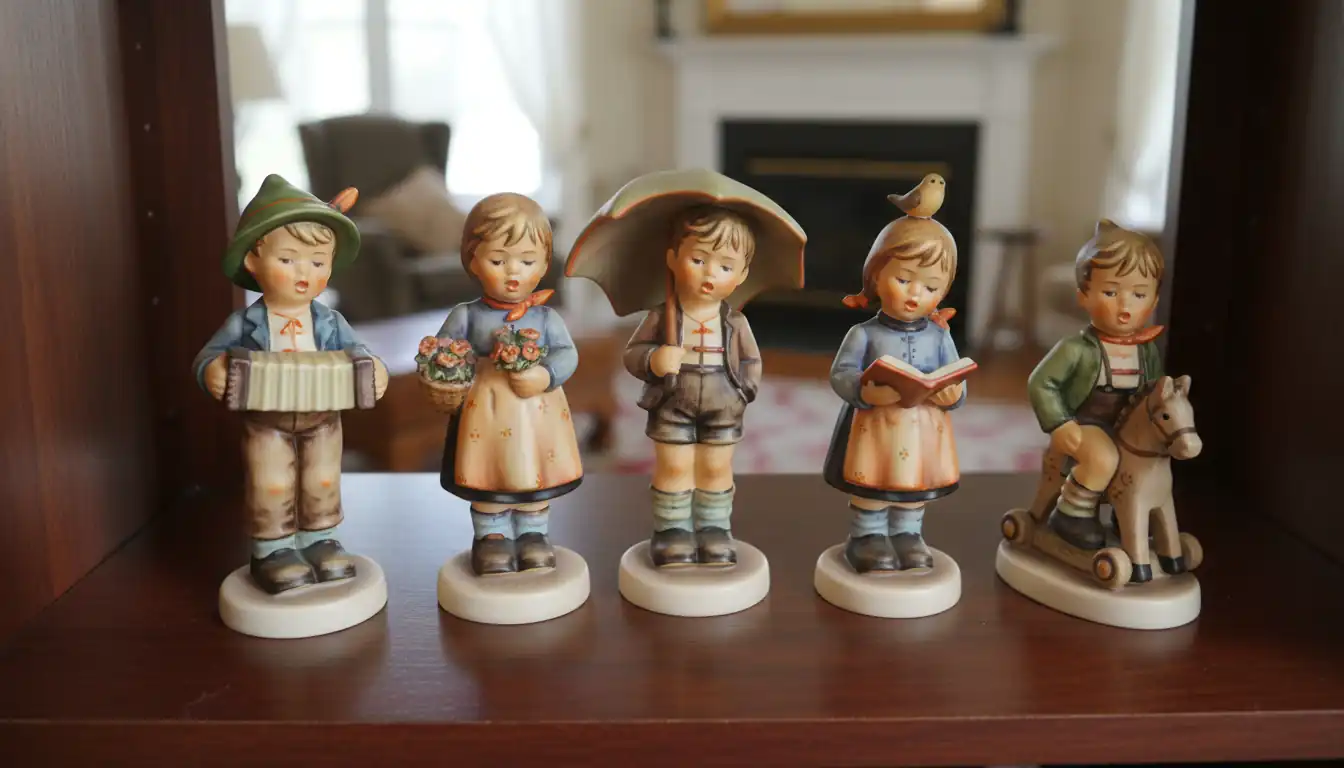
If you ask a casual observer, "Are Hummels worth money now?" they might tell you the market has crashed. In a sense, they are right. The days of buying any random Hummel and expecting it to double in value over a decade are long gone. The market has shifted from a broad "speculative bubble" to a "specialist’s market." This means that while 90% of Hummels have depreciated, the top 10%—the rare, the early, and the oversized—have actually held or increased their value.
To understand why, you have to look at the history of the manufacturer, W. Goebel Porzellanfabrik. Based on the drawings of Sister Maria Innocentia Hummel, these figurines began production in Germany in 1935. After World War II, American GIs stationed in Germany began sending them home to their families. This created a massive US market that peaked in the late 20th century. Today, the original generation of collectors is downsizing, leading to a surplus of common models on the market. However, serious collectors are still hunting for the "holy grails" of the Hummel world.
Identifying the Golden Era Trademarks
The single most important factor in determining a Hummel’s value is the trademark (TMK) found on the underside of the base. These marks tell you exactly when the piece was manufactured. Generally speaking, the older the mark, the higher the value. Collectors categorize these into several "TMK" periods.
- TMK-1 (The Crown Mark): Used from 1935 to 1949. This is the "Holy Grail" of marks. It features a crown, often with the letters "WG" (for W. Goebel) underneath. If you find a Crown Mark, you are looking at a first-generation piece produced during or immediately after the war.
- TMK-2 (The Full Bee): Used from 1950 to 1955. This mark features a bee inside a large "V." The bee represents Sister Hummel (whose name means "bumblebee" in German). These are highly sought after because they represent the peak of the hand-painting quality.
- TMK-3 through TMK-8: As the years progressed, the bee got smaller and eventually disappeared, replaced by various stylized logos. While these pieces are still beautiful, they were produced in much higher quantities and are generally less valuable to serious collectors.
| Trademark Period | Name | Years Used | Value Potential |
|---|---|---|---|
| TMK-1 | Crown Mark | 1935–1949 | Very High |
| TMK-2 | Full Bee | 1950–1955 | High |
| TMK-3 | Stylized Bee | 1960–1972 | Moderate |
| TMK-5 | Last Bee | 1972–1979 | Low to Moderate |
| TMK-7 | The Crown & Bee | 1991–1999 | Low |
Why Rarity Trumps Age in the Secondary Market
You might assume that a figurine from 1940 is automatically worth more than one from 1990. While age is a strong indicator, rarity is the true king of the secondary market. Some models were only produced for a few years before the molds were retired or broken. Others were produced in such limited quantities that only a handful are known to exist today.
"In the world of Hummel collecting, a common figurine from 1938 might sell for $50, while a rare, oversized model from 1980 could easily fetch $2,000. Never assume age equals value without checking the mold number."
The mold number is an incised (pressed into the porcelain) number on the bottom of the base. This number identifies the specific design. When you combine a rare mold number with an early trademark like the Crown or Full Bee, you have the "perfect storm" for a high-value item. This is why professional dealers spend so much time squinting at the bottoms of figurines—they are looking for that specific combination of numbers and symbols that signals a rare find.
High Value Icons and What Makes Them Special
When people ask, "What is the most sought after Hummel figurines?" a few names always rise to the top of the list. These are the icons of the hobby, the pieces that make auctioneers sit up a little straighter. If you find one of these in your attic, you aren't just looking at a collectible; you're looking at a significant asset.
The most famous of these is undoubtedly "Adventure Bound" (Mold #347). This piece depicts a group of seven boys heading out on an adventure. It is complex, heavy, and incredibly difficult to manufacture. Because of its size and the number of figures involved, it was expensive to produce and expensive to buy. Today, a large "Adventure Bound" with an early trademark can sell for anywhere from $2,000 to $5,000 depending on its condition.
The Legends of the Hummel World
Beyond "Adventure Bound," there are several other models that consistently command high prices. The "Apple Tree Boy" and "Apple Tree Girl" are classic designs, but their value fluctuates wildly based on size. Most people own the 4-inch versions, which are worth very little. However, Goebel produced massive 12-inch and even 32-inch versions for store displays.
- The 12-inch Rule: If you have a Hummel that is significantly larger than the palm of your hand, its value likely increases exponentially. A 12-inch "Apple Tree Boy" can be worth ten times more than the standard version.
- Ring Around the Rosie (#348): Similar to Adventure Bound, this features a group of children. Its complexity makes it a favorite for high-end collectors.
- School Girls and School Boys: Large-scale versions of these classic "back-to-school" themes are perennial favorites at auction houses like Morphy’s.
Spotting Rare Variations and Factory Errors
Sometimes, the value isn't in the model itself, but in a mistake or a unique variation. In the early days of production, painters had more leeway with their color palettes. You might find a figurine where the child’s jacket is blue instead of the standard brown. These "color variations" are catnip for collectors who already own the standard version and want something unique.
Factory errors also play a role. Occasionally, a figurine would leave the factory with the wrong mold number incised on the bottom, or with a trademark that was double-stamped. While these would be considered "seconds" in other industries, in the world of Hummels, they are rare oddities that can drive up the price. However, you must be careful—these variations are subtle, and it takes a keen eye to distinguish a genuine factory variation from a later repair or a counterfeit.
Modern Tools for Instant Appraisal
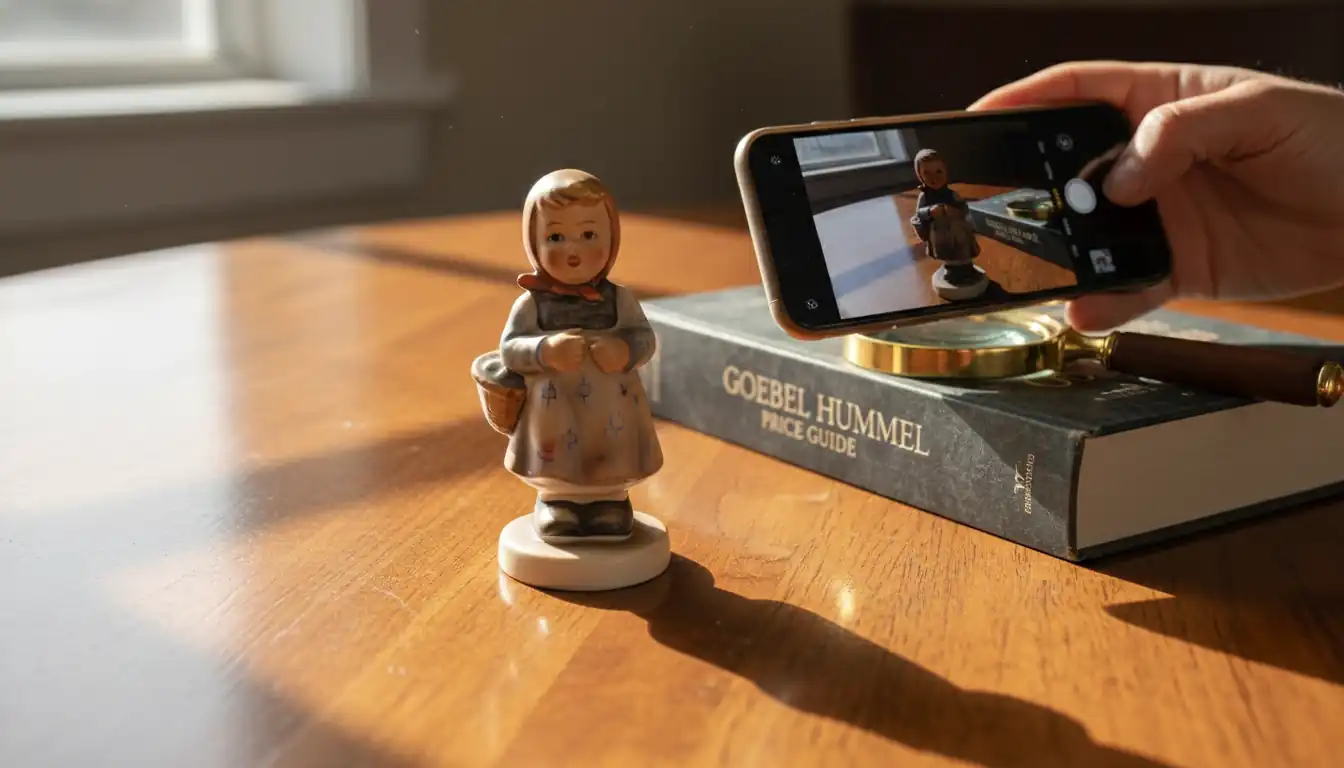
For decades, if you wanted to know what a Hummel was worth, you had to buy a 500-page price guide that was likely outdated by the time it hit the shelves. You would spend hours flipping through grainy black-and-white photos, trying to match your figurine to a tiny thumbnail image. It was a tedious, frustrating process that often led to more questions than answers.
The digital age has changed the game for collectors. You no longer need to be a walking encyclopedia of German porcelain to get an accurate valuation. Modern technology has democratized the appraisal process, putting the expertise of a professional dealer directly into your pocket.
Moving Beyond Outdated Price Guides
The problem with traditional price guides is that they reflect "asking prices" or "insurance values," which are often much higher than what someone will actually pay you in cash. Furthermore, they can't account for the subtle differences in paint quality or the specific trademark on your specific piece. To get a real-world value, you need to see what similar items have actually sold for in the last 30 to 60 days.
This is where digital solutions excel. Instead of guessing, you can access real-time market data. But even searching eBay "Sold" listings can be difficult if you don't know the exact name or mold number of your figurine. Is that "Boy with Rabbit" or "Barnyard Hero"? If you search for the wrong name, you'll get the wrong price.
Using AI to Identify and Value Your Collection Instantly
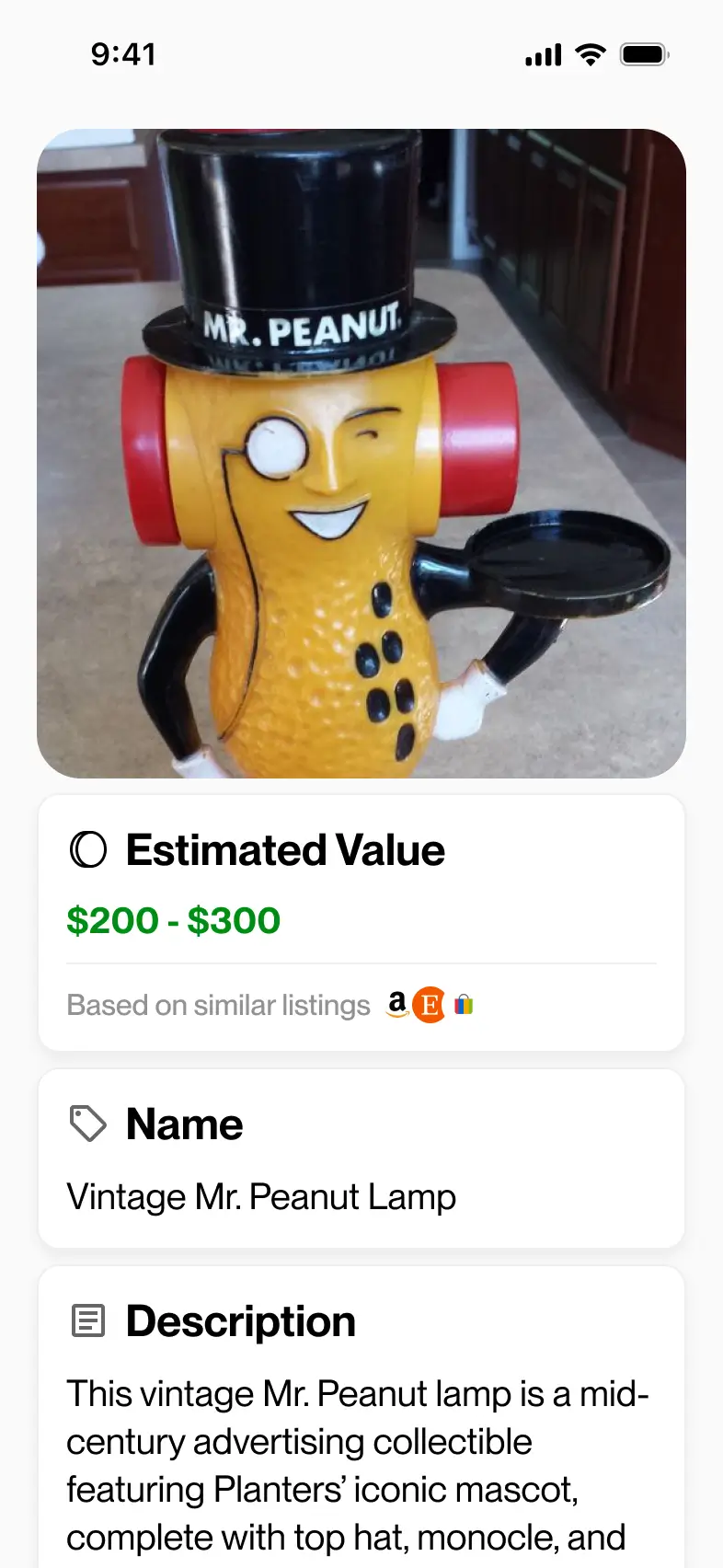
This is where the Relic app becomes an essential tool for the modern collector. Relic uses advanced AI-driven photo recognition to identify antiques and collectibles instantly. Instead of scrolling through endless lists, you simply take a photo of your Hummel—or upload one from your gallery—and the app does the heavy lifting.
Relic doesn't just give you a name; it identifies the specific history, origin, and provides a real appraisal based on current market trends. It can distinguish between different trademarks and help you understand if you’re holding a common TMK-5 or a rare TMK-2. With a 4.9-star rating from over 20,000 reviews, it’s become the go-to resource for pickers, estate sale enthusiasts, and people who just want to know if that box in the attic is worth a fortune. Having this kind of "pro appraiser" in your pocket allows you to make split-second decisions at a thrift store or auction without the fear of overpaying or missing a hidden gem.
Determining Condition and Authenticity
Once you’ve identified that you have a potentially valuable Hummel, the next step is a rigorous physical inspection. You might find a rare "Adventure Bound" with a Crown Mark, but if it has a hairline crack running through the base, its value could drop by 80% or more. Learning "how do I find out what my Hummel is worth" requires you to look past the charm of the figurine and see it through the eyes of a cold, calculating grader.
Professional collectors use a specific set of criteria to grade condition. A "Mint" piece is exactly as it left the factory, with no flaws whatsoever. "Excellent" might allow for some very minor shelf wear on the bottom of the base. Anything below that—chips, cracks, or repairs—significantly impacts the resale price.
The Crazing Factor and Its Impact on Price
The most common condition issue with Hummels is "crazing." Crazing refers to the tiny, spider-web-like cracks that appear in the clear overglaze of the porcelain. This isn't a crack in the porcelain itself, but rather a result of the glaze and the porcelain body expanding and contracting at different rates over decades of temperature changes.
- Is Crazing a Dealbreaker? Not necessarily. Because Hummels are made of earthenware, almost all older pieces (TMK-1 through TMK-3) will have some degree of crazing.
- Light Crazing: If you need a magnifying glass to see it, most collectors will accept it on an older piece.
- Heavy Crazing: If the cracks are visible from a distance or have turned brown due to dirt getting inside them, the value drops significantly.
- Location Matters: Crazing on the base is acceptable; crazing on the child’s face is a major detractor.
Detecting Professional Repairs and Restorations
The most dangerous pitfall for a new collector is the "invisible repair." There are professional restorers who can take a shattered Hummel and piece it back together so perfectly that it looks brand new to the naked eye. While these pieces are fine for display, they have almost zero value to a serious collector.
To protect yourself, you need to perform a "DIY inspection" using a few simple tools. First, use a UV (Black) Light. Turn off the lights and shine the UV light over the figurine. Original glaze will glow with a consistent, dull fluorescence. Repairs, however, use different chemicals and resins that will glow a bright, neon color or appear as dark, "dead" spots.
Second, use the "Tooth Test." Gently run a toothpick or even your fingernail over the surface. Original porcelain is cold and glass-like. Repaired areas often feel slightly warmer, softer, or "tacky" to the touch. Finally, give the figurine a very gentle "tap" with a wooden pencil. A solid, undamaged Hummel will produce a clear, bell-like ring. A cracked or repaired piece will produce a dull "thud."
Strategic Selling for Maximum Profit
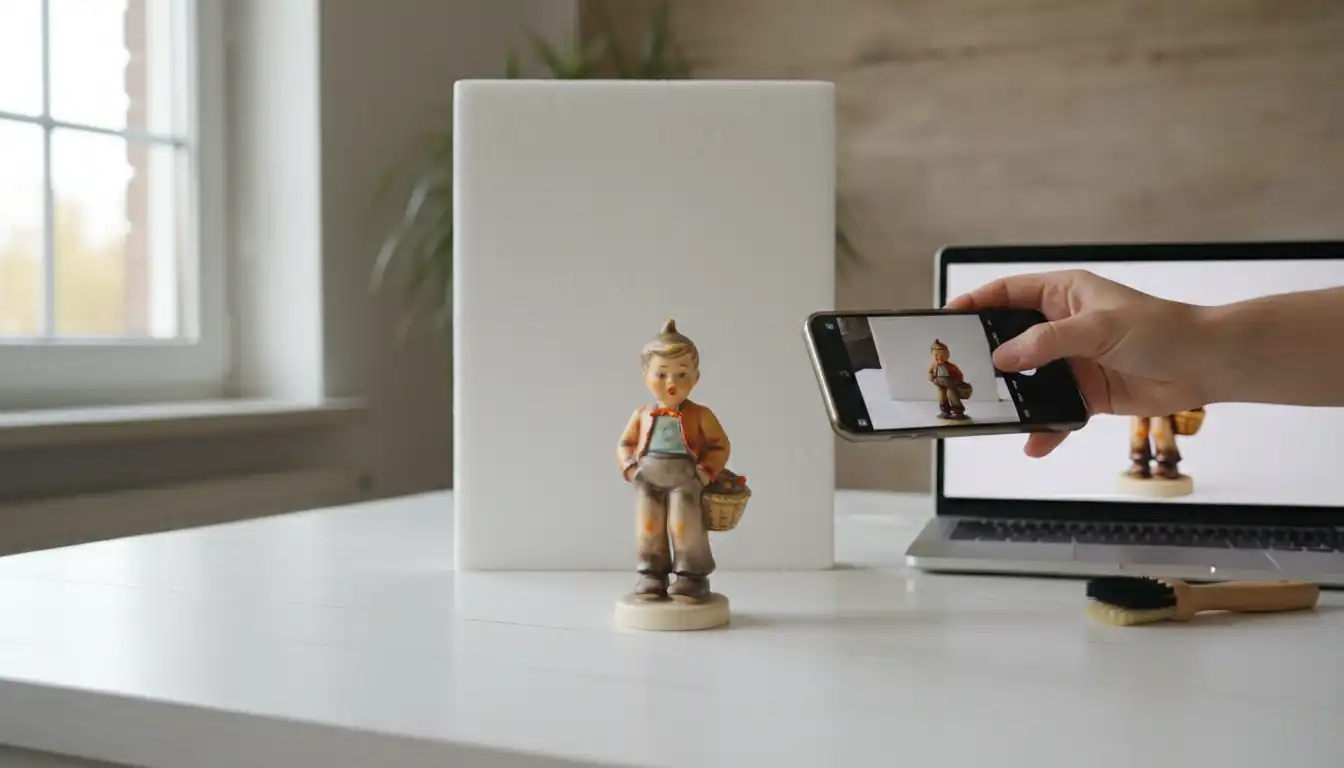
If you’ve done your research, used an app like Relic to confirm the value, and verified the condition, you’re ready to sell. But "where is the best place to sell Hummel figurines?" The answer depends on your goals. Are you looking for a quick $50, or are you trying to maximize the return on a $2,000 rarity?
Selling a collection requires a strategy. If you take a rare figurine to a local pawn shop, you will likely get pennies on the dollar. If you sell it yourself on a global platform, you keep more of the profit but take on more of the risk. You have to decide which trade-off is right for you.
Choosing Between Auction Houses and Private Sales
For high-value items (anything worth over $500), specialized auction houses are often the best route. Companies like Morphy Auctions or Bunte Auction House have established lists of Hummel collectors who are willing to pay premium prices.
- Auction Houses: They handle the photography, descriptions, and shipping. In exchange, they take a commission (usually 15-25%) and it may take months for your item to go to auction.
- eBay: This is the largest market in the world for Hummels. You get your money faster and have lower fees, but you are responsible for everything. Shipping porcelain is notoriously difficult; one dropped box can turn your $500 profit into a $0 insurance claim.
- Hummel Collector Clubs: There are still active groups of enthusiasts. Selling through club newsletters or forums can connect you with "purist" buyers who value quality and are less likely to haggle than a random eBay bidder.
Preparing Your Figurines for the Global Market
When you’re ready to list your item, the language you use is vital. You need to speak the language of the collector to show that you know what you have. A listing titled "Cute German Boy Statue" will be ignored. A listing titled "Rare Hummel #347 Adventure Bound - TMK-2 Full Bee - Mint Condition" will attract serious bidders.
- Use the Terminology: Explicitly state the TMK number and the mold number in the title.
- Be Honest About Condition: If there is crazing, take a macro photo of it. Serious buyers appreciate transparency and are less likely to initiate a return if they know exactly what they are buying.
- Lotting vs. Individual Sales: If you have 50 common Hummels, don't sell them one by one. You'll spend more on shipping and time than they are worth. Group them into "lots" of 5 or 10. However, if you have a rare piece, always sell it individually to ensure it gets the attention it deserves.
Conclusion
The world of Hummel collecting has changed, but it is far from dead. While the "average" figurine might not be the retirement fund people once hoped for, the market for rare, early, and oversized pieces remains incredibly robust. Finding a $5,000 Hummel in an attic isn't an urban legend—it happens to people who know what to look for.
The key to success is moving away from guesswork and embracing the tools available to you. Start by checking the trademarks on your collection to identify any Crown or Full Bee marks. Use the Relic app to get an instant, AI-driven appraisal and historical context for your pieces. Finally, inspect your figurines with a critical eye, looking for crazing or hidden repairs that could affect the value.
Whether you decide to keep your collection as a family heirloom or sell it to the highest bidder, knowing the true value of what you own is the first step. Take a look at those rosy-cheeked children again—you might just be sitting on a small fortune.
Identify antiques instantly
Point your camera at any antique, collectible, or vintage item. Get valuations, history, and market insights in seconds.
Download for iPhone