Is Your Silverware a Hidden Fortune? The Secret Symbols of Vintage Plate

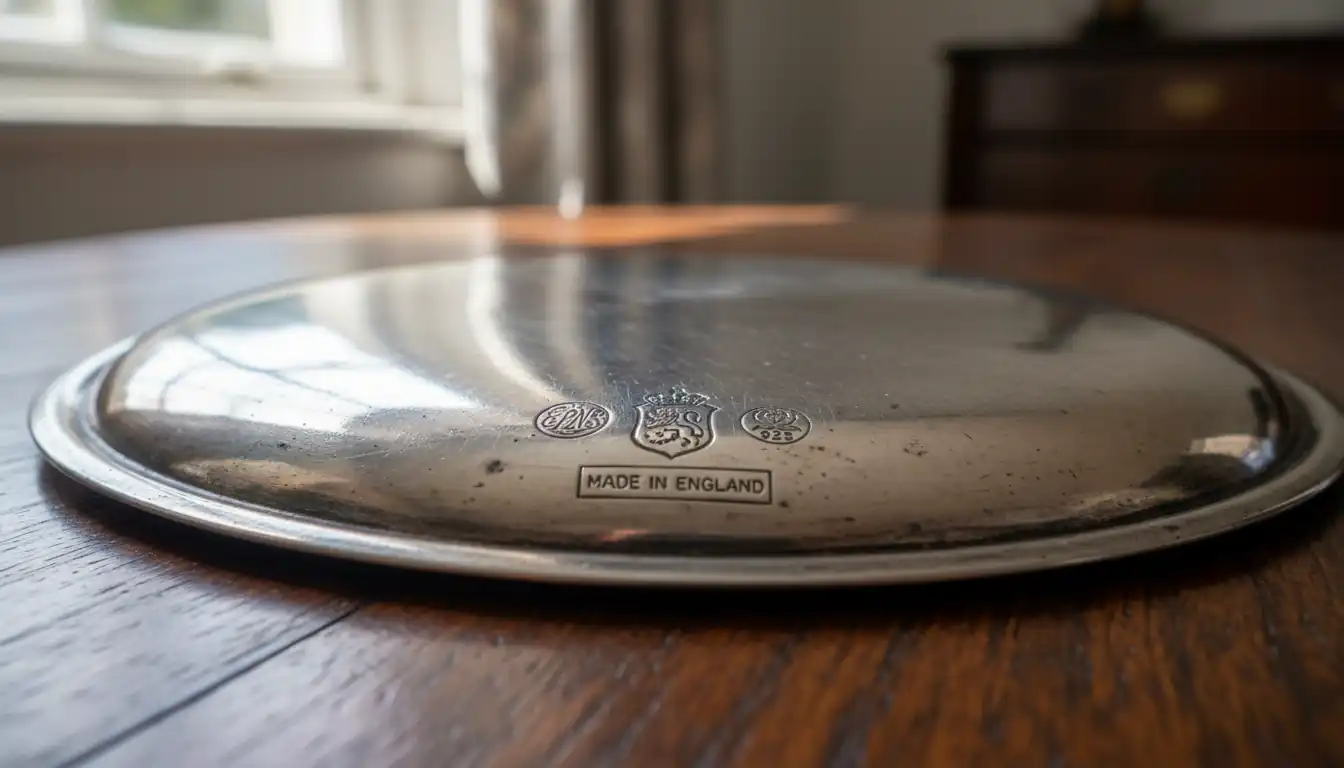
You are standing at a garage sale or perhaps clearing out a relative’s sideboard when you find it: a heavy, tarnished tray or a set of ornate spoons. Your first instinct is to look for a mark. You flip the piece over, squinting at a series of tiny, weathered symbols that look like a secret code. Is it sterling silver, worth hundreds or even thousands in metal weight alone? Or is it silver plate, often dismissed as "costume jewelry for the dining table"?
The truth is more nuanced than a simple "yes" or "no." While many silver-plated items have modest value, certain pieces are highly coveted by collectors, sometimes fetching prices that rival or exceed their solid silver counterparts. The key to unlocking this value lies in your ability to read the metal. Those tiny stamps aren't just decorations; they are a historical record of where the piece was made, who made it, and the quality of the craftsmanship involved.
By the time you finish reading this, you will understand how to distinguish between a standard British hallmark and a deceptive "pseudo-hallmark." You will know which regional symbols indicate a high-quality manufacturing pedigree and which physical clues suggest a piece has historical significance. Most importantly, you will learn how to use modern tools to turn a confusing blur of symbols into a clear appraisal of your find.
Decoding the Visual Language of Silver Plate Marks
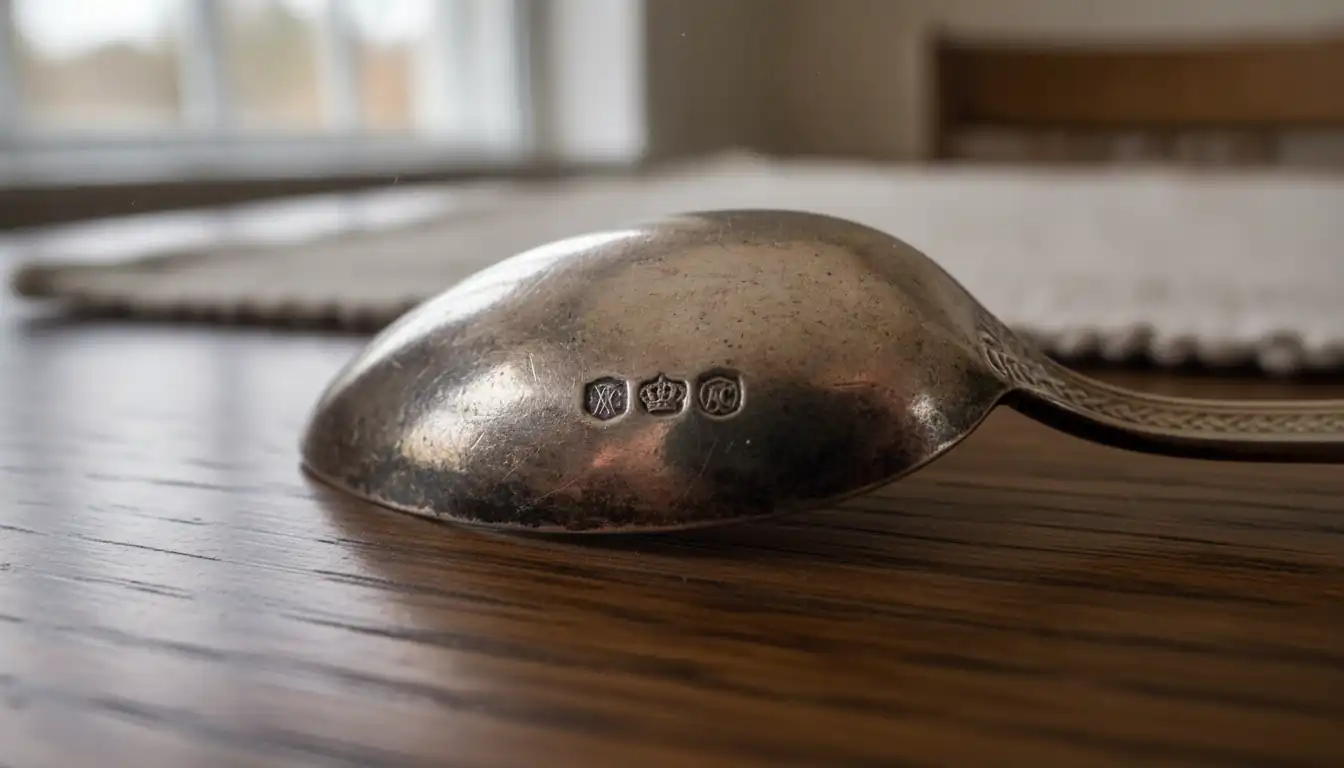
When you pick up a piece of vintage silver, your eyes likely hunt for a "hallmark." However, there is a technical distinction you must understand immediately: true hallmarks are legally required stamps found on solid (sterling) silver. Silver plate, which consists of a thin layer of silver bonded to a base metal like copper or nickel, does not carry these official government-regulated marks. Instead, manufacturers used "maker’s marks" and quality stamps to identify their work.
This distinction is where most beginners get tripped up. You might have heard of the "5 standard silver marks" used in the British system. These typically include a maker's mark, a town mark (like a leopard’s head for London), a fineness mark (the lion passant for sterling), a date letter, and a duty mark. If you don't see these specific five symbols, you are likely looking at silver plate. Plate manufacturers often created marks that looked strikingly similar to sterling hallmarks to give their products an air of prestige—a practice known as using "pseudo-hallmarks."
The Difference Between True Hallmarks and Maker’s Marks
A maker’s mark on silver plate is essentially a corporate logo. While sterling hallmarks are a guarantee of metal purity, a plate mark is a guarantee of the manufacturer’s reputation. Because there was no legal requirement to mark silver plate in the same way as sterling, manufacturers had more freedom. They used symbols like birds, stars, or shields to distinguish themselves in a crowded market.
To read these marks, you have to look for the "alphabet soup" of silver plate. These abbreviations tell you exactly what the base metal is under that thin silver skin.
- EPNS (Electroplated Nickel Silver): This is the most common mark you will find. Despite the name, "nickel silver" contains no actual silver; it is an alloy of nickel, copper, and zinc that provides a bright, hard base for the silver plating.
- EPBM (Electroplated Britannia Metal): This indicates the base is a type of pewter-like alloy (tin, antimony, and copper). These pieces are often heavier and have a slightly duller "thud" when tapped compared to the ring of nickel silver.
- A1 or AI: This is a quality stamp. It suggests that a high amount of silver was used in the plating process, usually measured in pennyweights per dozen pieces.
- EP (Electroplated): A generic term used when the manufacturer didn't specify the base metal.
Common Pseudo-Hallmarks and What They Signal
In the 19th century, manufacturers were clever. They knew consumers wanted the look of sterling without the price tag. To bridge this gap, they designed marks that mimicked the layout of official hallmarks. You might see a row of four or five small shields containing symbols like a crown, a bird, or a letter.
At first glance, these look like the British sterling system. However, if you look closer, you’ll notice the symbols don't match the official registry. For example, a "crown" on a plated piece doesn't mean it was made for royalty; it was often used by Sheffield makers to imply quality. Learning to spot these "fakes" is your first step toward literacy in the world of vintage plate. You aren't looking for a guarantee of silver content; you are looking for the "signature" of a factory that took pride in its work.
| Mark Abbreviation | Meaning | Base Metal Quality |
|---|---|---|
| EPNS | Electroplated Nickel Silver | High (Durable and bright) |
| EPBM | Electroplated Britannia Metal | Medium (Softer, prone to dents) |
| BP | Britannia Plate | Medium |
| EPWM | Electroplated White Metal | Variable |
| GS | German Silver | Same as Nickel Silver |
Pro Tip: If you see the word "Sterling" or the number "925," it is not silver plate. If you see "EPNS" or a series of symbols without a lion, it is almost certainly plated.
Regional Powerhouses and Their Signature Stamps
Once you can distinguish a plate mark from a sterling hallmark, the next step is identifying where the piece came from. In the 1800s and early 1900s, silver plate production was concentrated in a few specific geographic hubs. Each region had its own "visual dialect." By identifying the regional style of a mark, you can often narrow down the age and potential rarity of your item.
The Sheffield and Birmingham Manufacturing Legacy
England was the undisputed leader of the silver plate industry. Sheffield, in particular, is legendary for "Old Sheffield Plate," a process where silver was fused to copper before the invention of electroplating. If you find a mark that includes a crown, you are likely looking at a piece from Sheffield. While the crown is the official town mark for Sheffield sterling, plate manufacturers frequently used it (often paired with their own initials) to signal their location.
Birmingham was the other titan of industry. While the anchor is the official Birmingham town mark for sterling, you will see many plated pieces featuring symbols that mimic the anchor or use Gothic-style lettering that feels very "English."
- The Crown: Often associated with Sheffield makers like Dixon & Sons.
- The Anchor: Frequently appears on Birmingham-made items, even those that are electroplated.
- The Bell: A common symbol for Roberts & Belk, a high-quality Sheffield firm.
Identifying American and Continental Silver Plate
American silver plate followed a different path. While British makers loved cryptic symbols, American companies were much more direct. They often stamped their full company name onto the piece. If you see "1847 Rogers Bros," you are looking at one of the most famous American brands. The "1847" isn't the date the piece was made; it’s the date the company was founded.
American marks often include numbers that indicate the "weight" of the plating. You might see "Triple Plate" or "Quadruple Plate." While these sound impressive, they were often marketing terms used to suggest durability.
Continental silver plate—from France, Germany, or Italy—often uses a different system entirely. French pieces, particularly from the famous house of Christofle, use a square mark with a symbol (like a scales or a knight) to denote silver plate, whereas their sterling uses a diamond-shaped mark. German makers like WMF (Württembergische Metallwarenfabrik) often used an ostrich mark inside a rhombus or a beehive symbol.
- Rogers Bros / Reed & Barton: Common American marks that prioritize the brand name.
- Christofle (France): Look for the square scales mark.
- WMF (Germany): Look for the ostrich or "geislingen" marks.
Determining if Your Vintage Plate is Actually Valuable
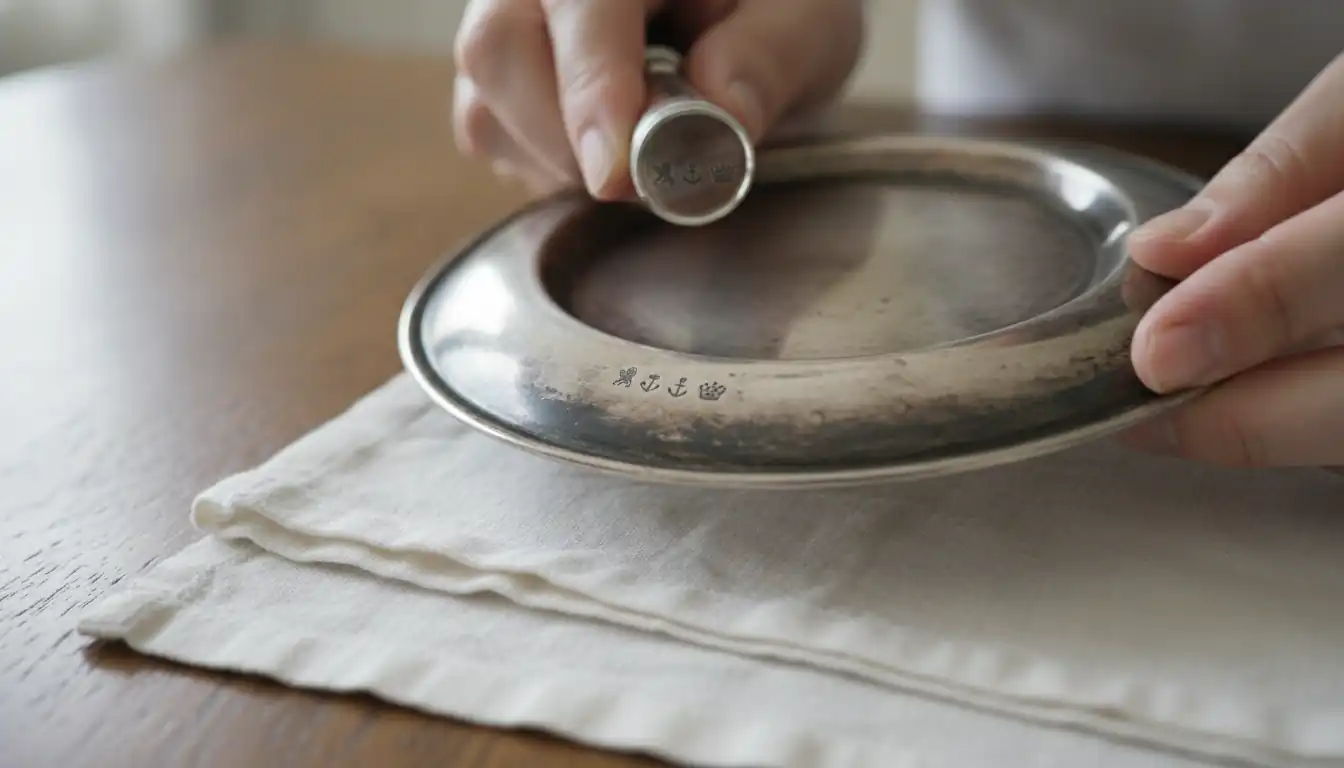
Now we address the question that everyone asks: "Is vintage silver plate worth anything?" If you take a random silver-plated tray to a scrap metal dealer, they will likely turn you away. Unlike sterling, which can be melted down for its silver content, the amount of silver on a plated piece is so thin that it isn't worth the cost of recovery.
However, "worth" isn't just about metal. For collectors, the value lies in the maker, the designer, and the rarity. A silver-plated teapot designed by a famous architect can sell for thousands of dollars, while a sterling silver teapot of a generic design might only be worth its weight in metal.
Why Certain Makers Outperform Sterling at Auction
There are a handful of manufacturers whose names instantly elevate the value of a plated piece. These companies were the "luxury brands" of their day. They didn't just slap silver on cheap metal; they employed the finest artists and used heavy, high-quality base metals.
- Elkington & Co: They pioneered the electroplating process. Their early pieces, especially those with intricate Victorian designs, are highly collectible.
- Christofle: This French firm provided silver for royalty and grand hotels. Their "Gallia" line is particularly sought after by Art Nouveau collectors.
- WMF: Their Art Nouveau (Jugendstil) pieces are world-renowned. A WMF plated centerpiece with its original glass liner can be a centerpiece of a high-end collection.
The Impact of Designer Pedigree on Resale Price
The most significant factor in silver plate value today is the "Aesthetic" or "Art Deco" movement. In the late 19th century, designers like Christopher Dresser began creating silver plate that looked like modern art. These pieces are characterized by geometric shapes, ebony handles, and a lack of fussy Victorian ornamentation.
Because these designs were so radical for their time, they weren't produced in massive quantities. Today, a Christopher Dresser-designed toast rack for Hukin & Heath—even though it is "just" silver plate—can fetch a staggering price at auction. You are paying for the art, not the silver.
The value of silver plate is found in the eyes of the collector, not the scales of the jeweler. A rare designer mark is worth more than an ounce of silver.
Instant Identification Using Modern AI Technology
If you’ve ever tried to look up a silver mark in a reference book, you know how frustrating it can be. You spend hours flipping through thousands of tiny black-and-white drawings, trying to find a bird that looks exactly like the one on your spoon. Is that a hawk or an eagle? Is that a letter 'G' or a 'C'?
This is where the manual process often fails. Marks are frequently worn down by years of polishing, or they were struck poorly at the factory. A novice eye might miss the subtle curve of a shield that distinguishes a high-value Elkington piece from a mass-produced souvenir.
How Relic Deciphers Obscure Silver Marks in Seconds
This is where modern technology changes the game for collectors. Instead of squinting through a magnifying glass, you can use the Relic app to do the heavy lifting. Relic is an iOS app designed specifically for antique identification and appraisal.
The workflow is simple: you take a clear photo of the mark on your silverware and upload it to the app. Relic uses advanced AI to analyze the specific geometry, font, and symbols of the mark. It compares your photo against a massive database of historical maker’s marks and pseudo-hallmarks. Within seconds, the app provides you with the history of the piece, the manufacturer, and a real-world appraisal.
Moving Beyond Manual Lists and Magnifying Glasses
The beauty of using an AI tool like Relic is its ability to recognize patterns that the human eye might overlook. If a mark is partially rubbed away—a common problem with silver plate—the AI can often reconstruct the likely symbol based on the remaining fragments and the style of the object itself.
For a dealer at a flea market or a picker at an estate sale, this speed is vital. You don't have time to go home and research a piece; you need to know now if that $10 tray is a hidden Christofle masterpiece. Relic provides that professional-grade insight instantly, giving you the confidence to make a purchase or a sale based on data rather than a "hunch."
Physical Indicators of Quality and Age Beyond the Mark
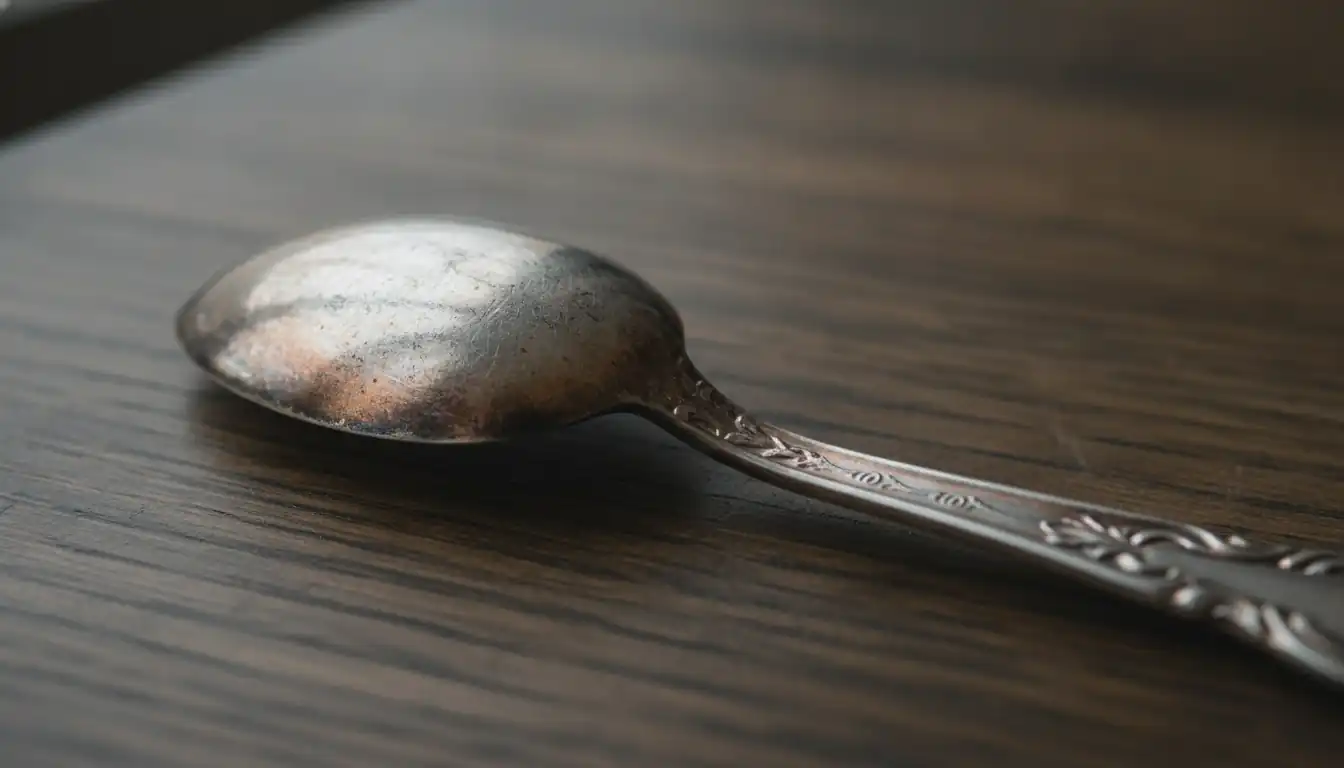
While the marks provide the "who" and "where," the physical object itself tells you the "how" and "when." Sometimes marks are completely worn away, or the piece was never marked at all. In these cases, you have to become a forensic investigator, looking for clues in the construction of the item.
Spotting the Bleeding Effect and Base Metal Exposure
One of the most reliable ways to identify silver plate—and to judge its age—is to look for "bleeding." Because silver plate is a layered material, decades of polishing eventually wear away the silver, revealing the base metal underneath.
- Copper Bleeding: On Old Sheffield Plate, you will often see a warm, pinkish glow on the high points of the design (like the edges of a tray or the curves of a handle). This is the copper base showing through. Collectors actually love this "bleeding" because it proves the piece is an authentic, early fused-plate item.
- Nickel Exposure: On EPNS pieces, the base metal is yellowish or grey. When this wears through, it looks less attractive than copper bleeding and usually decreases the value, as it suggests the plating was thin or the piece was over-cleaned.
Evaluating Construction Methods to Verify Age
Before the mid-19th century, silver plate was made by hand. If you look at the joints of a teapot or the place where a handle meets a cup, you can see how it was put together.
- Hand-Soldered Joints: Early pieces will have slight irregularities where parts were joined. If you see a "seam" that looks perfectly smooth and machine-made, the piece is likely 20th-century.
- Applied Borders: High-quality silver plate often has "applied" borders. This means the decorative edge was cast separately and then soldered onto the body. You can feel the thickness and the weight. Cheaper, modern pieces have the decoration stamped directly into the metal, which looks flat and lacks depth.
- Weight and Sound: Pick the item up. High-quality vintage plate has a "heft" to it. If you tap it with your fingernail, it should produce a duller, more solid sound than the thin, tinny ring of cheap modern reproductions.
| Feature | Old Sheffield Plate (Pre-1840) | Electroplate (Post-1840) |
|---|---|---|
| Base Metal | Always Copper | Usually Nickel or Britannia Metal |
| Bleeding | Pink/Orange (Copper) | Yellow/Grey (Nickel) |
| Construction | Fused layers, hand-finished | Electrolytic bath, often machine-finished |
| Marks | Often unmarked or "pseudo" | Usually EPNS, EPBM, or Maker's Name |
Conclusion
Identifying vintage silver plate is a journey from seeing a "tarnished old tray" to seeing a piece of industrial history. By understanding the difference between a sterling hallmark and a maker's mark, you've already bypassed the most common mistake made by amateur collectors. You now know that the "5 standard marks" are a guide for solid silver, while the "alphabet soup" of EPNS and EPBM defines the world of plate.
You’ve learned that geography matters—that a Sheffield crown or a French Christofle square can be the difference between a common item and a museum-quality piece. You also know that value isn't just about the metal; it's about the vision of designers like Christopher Dresser and the craftsmanship of firms like Elkington.
The next time you find a piece of silver with a mysterious set of symbols, don't let it remain a secret. Use your new knowledge of "bleeding" and construction to assess its age, and then use the Relic app to get an instant, professional identification. Whether you are looking to flip a find for a profit or simply want to know the history of a family heirloom, the tools are now in your hands. Happy hunting—your hidden fortune might be just one polish away.
Identify antiques instantly
Point your camera at any antique, collectible, or vintage item. Get valuations, history, and market insights in seconds.
Download for iPhone