Is Your Silverware Sterling or Scrap? The Secret Marks of High-Value Antiques

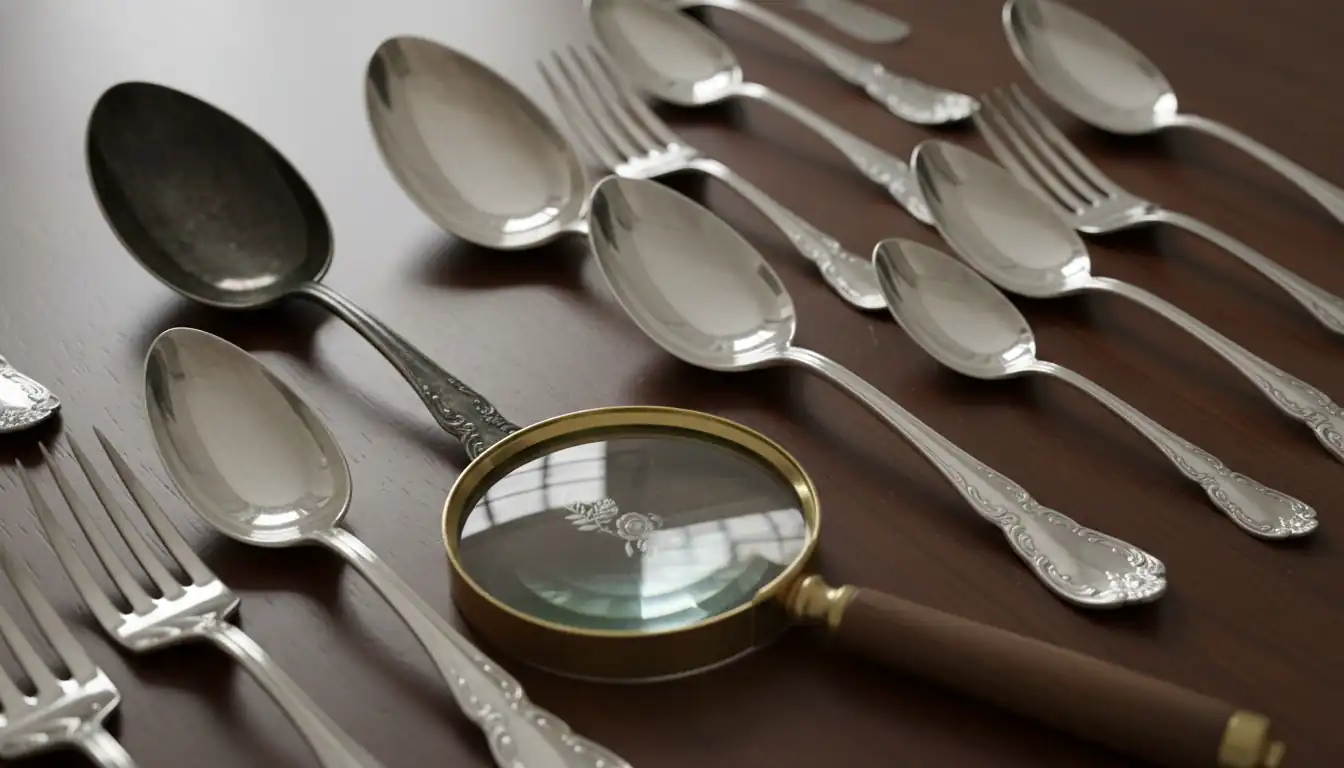
You might have a fortune hiding in your dining room sideboard, disguised as a tarnished set of forks and spoons. For many, old silverware is something inherited from a grandmother or picked up at an estate sale, often left to gather dust because the task of identifying it feels overwhelming. Is it solid silver, or just a thin layer of silver over a base metal? Is that ornate floral pattern a mass-produced relic of the 1970s, or a hand-chased masterpiece from the 19th century?
The difference between "sterling" and "scrap" isn't just a matter of semantics; it is a matter of hundreds, or even thousands, of dollars. A single sterling silver serving piece can sometimes be worth more than an entire set of silver-plated flatware. Understanding the tiny, cryptic symbols stamped into the metal is the first step toward uncovering the true value of your collection.
In this guide, you will learn how to read the "language" of silver hallmarks, identify the most prestigious patterns that collectors fight over at auctions, and use modern technology to get an instant appraisal. Whether you intend to sell your collection or pass it down as a family heirloom, knowing exactly what you hold in your hands changes everything.
Cracking the Code of Silver Hallmarks
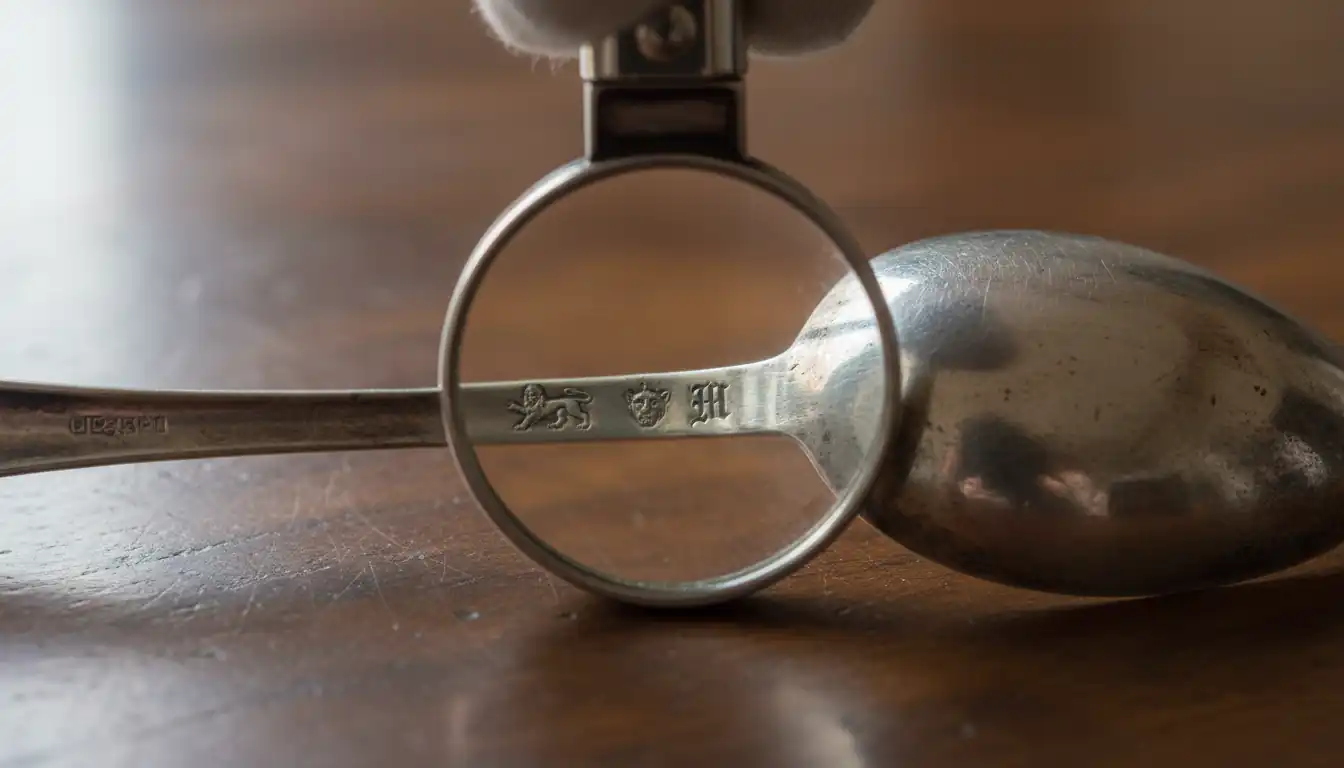
If you look closely at the back of a silver spoon, you will likely see a series of tiny, rectangular stamps. These are not decorative flourishes; they are a legal record of the item’s history. For centuries, silver was a form of currency, and the government needed a way to ensure that "silver" was actually silver. This led to the creation of the hallmark system, a rigorous method of consumer protection that predates modern labeling by hundreds of years.
To the untrained eye, these marks look like nothing more than microscopic smudges. However, once you know what to look for, they tell a complete story of where the piece was made, who made it, and exactly how much pure silver it contains.
The Five Standard Marks and Their Meanings
When examining English silver—which sets the international standard for hallmarking—you will typically find five specific marks. Each one answers a different question about the item's origin.
1. The Purity Mark (The Lion Passant) The most important mark for any collector is the purity mark. In the British system, this is almost always a "Lion Passant"—a lion walking to the left with one paw raised. This symbol is your guarantee that the item is Sterling Silver, meaning it is 92.5% pure silver and 7.5% copper. If you see the lion, you are holding high-value precious metal.
2. The Town Mark (The Assay Office) This mark tells you which city tested and approved the silver. The most common mark is a Leopard’s Head, which signifies the London Assay Office. If you see an Anchor, the piece was assayed in Birmingham; a Crown indicates Sheffield. These marks help researchers track the specific regional styles and economic history of the piece.
3. The Date Letter This is perhaps the most ingenious part of the system. Each year was assigned a specific letter of the alphabet. To prevent forgery, the font and the shape of the shield surrounding the letter changed every cycle. By matching the letter and the shield shape to a hallmark chart, you can pinpoint the exact year your silverware was manufactured.
4. The Maker’s Mark This stamp identifies the silversmith or the company responsible for the piece. It usually consists of the initials of the maker (for example, "WB" for William Bateman). High-end makers like Paul Storr or Hester Bateman can command prices that are ten times higher than the silver's weight value alone.
5. The Duty Mark Found on pieces made between 1784 and 1890, this mark features the profile of the reigning monarch’s head. It proves that the required tax had been paid to the crown. While it doesn't tell you the purity, it is a fantastic "at-a-glance" indicator that the piece is genuinely antique.
Spotting the Difference Between Sterling and Silver Plate
The biggest trap for new collectors is confusing sterling silver with silver plate. Silver plate is a base metal (like copper or brass) that has been "washed" in a very thin layer of silver. While it looks beautiful, it has almost no resale value because the silver cannot be easily recovered.
| Mark Found | Meaning | Value Category |
|---|---|---|
| Lion Passant | Sterling Silver (92.5% Pure) | High Value |
| .925 | International Sterling Standard | High Value |
| EPNS | Electro-Plated Nickel Silver | Low/Scrap Value |
| A1 or AA | Superior Grade Silver Plate | Low/Scrap Value |
| Quadruple Plate | Four layers of plating over base metal | Low/Scrap Value |
If you see the letters "EPNS," "EPBM," or "A1," you are looking at silver plate. Another quick trick is the "magnet test." Pure silver is not magnetic. If a strong magnet sticks to your fork, it is definitely a base metal core and not sterling. However, the hallmark is always the final authority. Sterling silver will almost always be clearly marked with "Sterling" or the Lion Passant. If the marks are blurry or missing entirely, proceed with caution.
Pro Tip: Always use a 10x jeweler’s loupe when inspecting marks. What looks like a scratch to the naked eye often reveals itself to be a perfectly preserved 18th-century hallmark under magnification.
The High-Value Patterns Collectors Crave
Once you have confirmed that your silver is sterling, the next factor in its value is the pattern. Just as fashion designers have "it" bags, silversmiths have "it" patterns. Some designs are so iconic and difficult to produce that they have remained in high demand for over a century.
While there are thousands of patterns in existence, three specific designs consistently top the charts for resale value and collector interest. These are often referred to as the "Big Three" of the American silver market.
Iconic Designs from Wallace to Reed & Barton
Wallace – Grand Baroque Introduced in 1941, Grand Baroque is perhaps the most famous silver pattern in the world. It was designed by William S. Warren to capture the opulence of the 16th and 17th centuries. The pattern is "three-dimensional," meaning the ornate scrolls and flowers are visible from both the front and the back. It is heavy, bold, and unapologetically luxurious. Because of its complexity, it is expensive to manufacture, which keeps its secondary market price very high.
Stieff – Repousse The word "repousse" actually refers to a technique where metal is hammered from the back to create a raised design on the front. Stieff’s Repousse pattern, introduced in 1892, is a floral explosion. It features a dense arrangement of roses, daisies, and leaves. It feels incredibly tactile in the hand. Unlike the structured symmetry of other patterns, Repousse feels organic and handcrafted, making it a favorite for those who appreciate traditional artistry.
Reed & Barton – Francis 1st If you are looking for the "most valuable" sterling silver pattern in terms of consistent demand and prestige, Francis 1st is a top contender. Launched in 1907, this pattern features fifteen different fruit and flower clusters. This means that your dinner fork might have a different fruit arrangement than your salad fork. This level of variety is rare in flatware and makes the set feel like a curated collection of art rather than a uniform set of tools.
Why Patterns Like Francis 1st Command a Premium
Why does one pattern sell for $50 a spoon while another sells for $150? It comes down to three things: weight, labor, and prestige.
- Weight: Patterns like Francis 1st and Grand Baroque are "heavyweight" patterns. They contain more actual ounces of silver than a simple, thin pattern like "Fairfax."
- Labor: The molds used to create these intricate designs are incredibly detailed. Polishing a piece of Grand Baroque without softening the sharp edges of the scrolls requires a master craftsman.
- Prestige: These patterns were historically marketed to the elite. Owning a full set of Francis 1st was a status symbol in the early 20th century, and that "brand power" has persisted into the modern era.
When you are looking at a pile of silver, look for the "busy" pieces. The more detail, the more "depth" in the metal, and the heavier the piece feels, the more likely it is to be a high-value pattern.
Modern Tools for Instant Identification
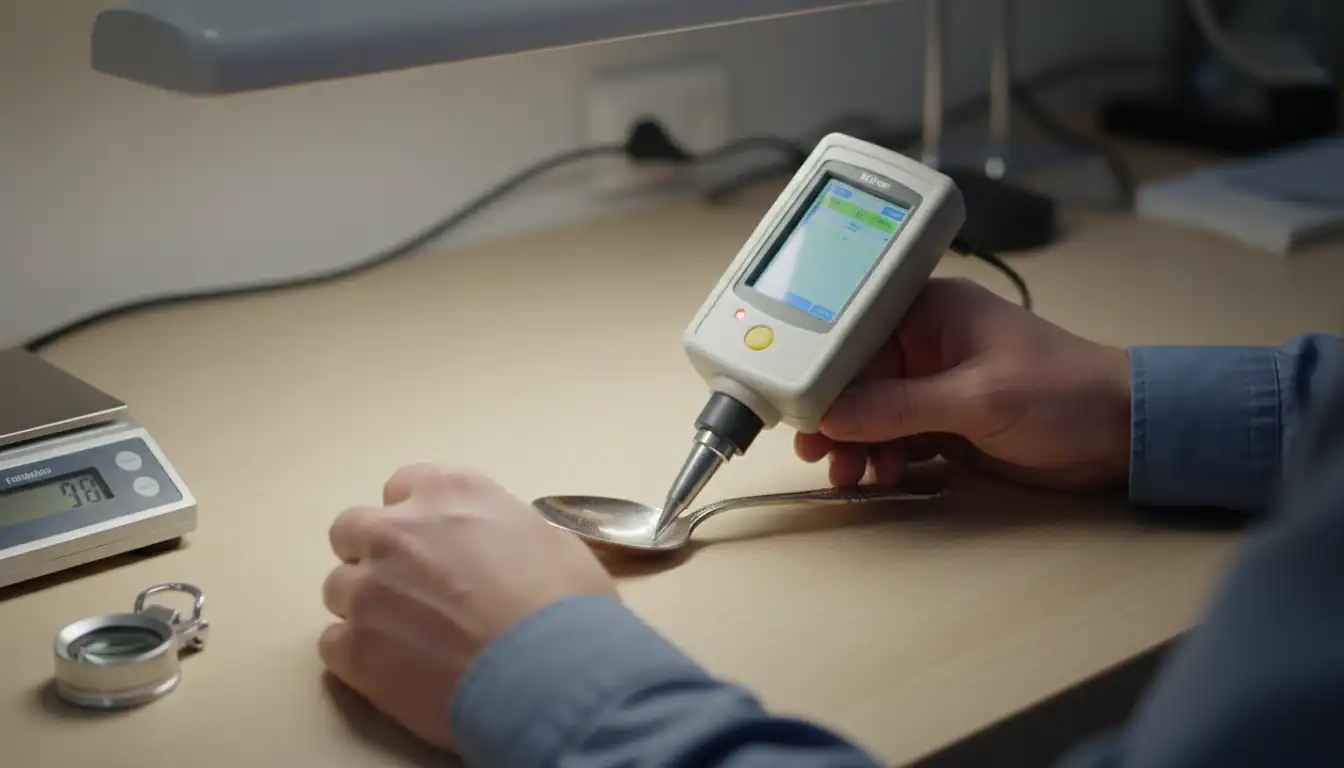
In the past, identifying a silver pattern was a grueling process. You would have to visit a library, flip through massive "Pattern Identification" books, and hope that your specific floral arrangement matched a grainy black-and-white photo. If you wanted a professional appraisal, you had to pack up your silver, drive to an antique dealer, and pay a fee just to be told what you already suspected.
Thankfully, technology has finally caught up with the world of antiquing. You no longer need to be a trained historian to figure out what is in your drawer.
Using AI to Skip the Research Rabbit Hole
The biggest challenge with silver is that many patterns look remarkably similar. A rose on a Gorham spoon looks very much like a rose on a Towle spoon to the untrained eye. This is where Artificial Intelligence shines. AI can analyze thousands of data points—the curve of a handle, the depth of a scroll, the specific spacing of a hallmark—in a fraction of a second.
Instead of guessing, you can now use your smartphone to do the heavy lifting. This bridges the gap between a novice who just inherited a box of "old stuff" and a professional dealer who has been in the business for forty years.
Real-Time Appraisals with the Relic App
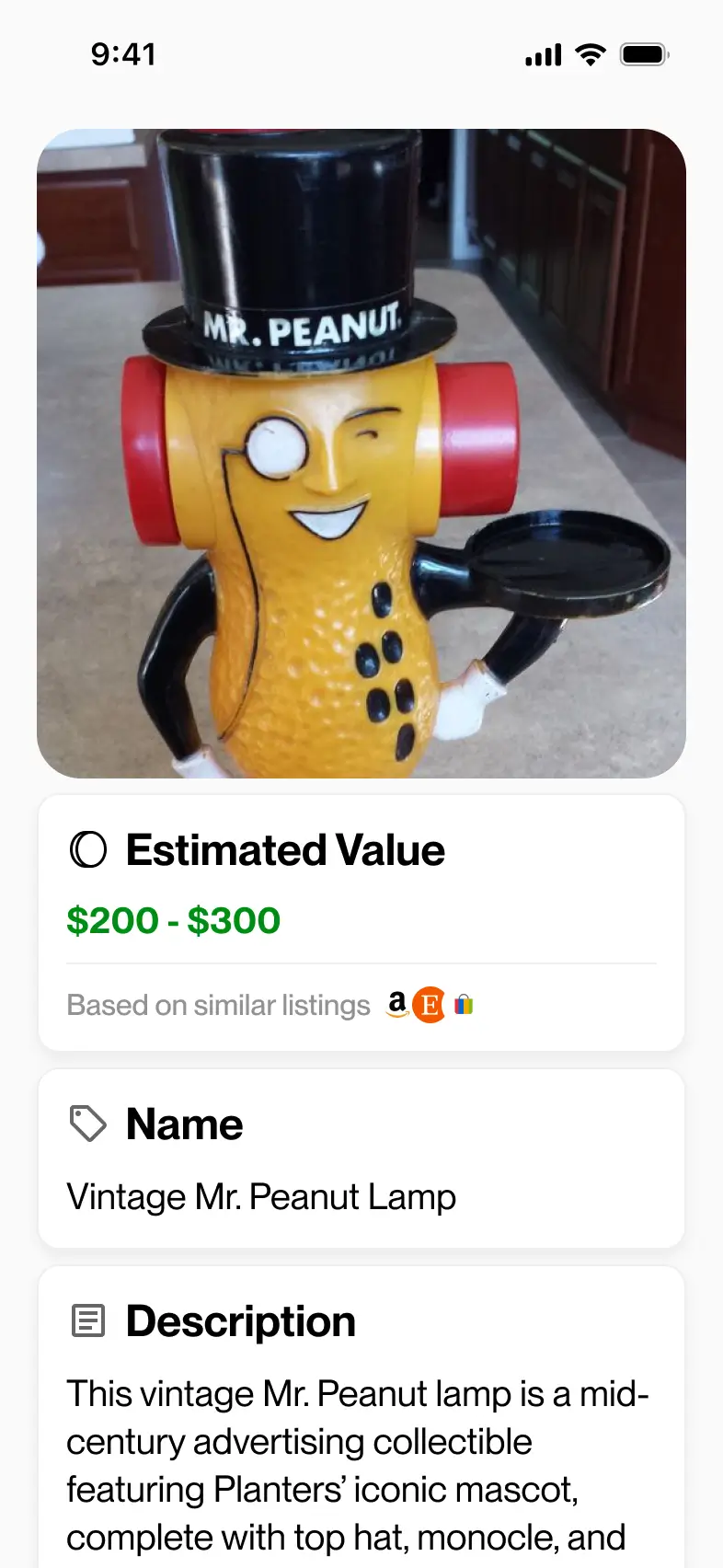
This is where a tool like the Relic app becomes indispensable. Relic is an antique identifier that uses advanced AI to provide a real appraisal, history, and origin of an item from a single photo.
Imagine you are at a crowded estate sale. You see a dusty silver pitcher. Is it worth the $100 asking price? With Relic, you don't have to wonder. You simply take a photo of the item and its hallmarks. The app analyzes the image against a massive database of silver patterns and maker's marks. Within seconds, it can tell you:
- The Maker: "This was made by Tiffany & Co. in 1895."
- The Purity: "This is confirmed Sterling Silver."
- The Value: "Similar pieces have recently sold for $1,200."
For professionals like online sellers or "pickers," this is a massive advantage. It allows you to make informed buying decisions on the fly without carrying a library of books in your trunk. Even for a casual collector, it provides the peace of mind that you aren't accidentally selling a rare heirloom for scrap prices.
Determining the True Worth of Your Collection
Once you know that your silver is sterling and you’ve identified the pattern, it’s time to talk about money. The value of silver is unique because it is based on two completely different markets: the "melt" market and the "collector" market.
Calculating Sterling Value Beyond the Scale
The "floor" price of your silver is its melt value. This is the price a refinery would pay you to melt the silver down into a bar.
To calculate this, you need to know three things:
- The Weight: Silver is measured in Troy Ounces (which are slightly heavier than standard ounces).
- The Purity: Sterling is 92.5% silver.
- The Spot Price: The current market price of silver (which fluctuates daily).
The Formula:
(Weight in Troy Ounces) x (0.925) x (Current Silver Spot Price) = Melt Value
However, you should never sell high-quality antique silver for melt value. If you have a rare pattern or a famous maker, the "collector value" can be double or triple the melt value.
Factors That Influence Rarity and Resale Price
Several nuances can swing the price of a piece by hundreds of dollars.
- The "Marrow Scoop" Factor: In any silver pattern, the standard pieces (knives, forks, spoons) are the most common. The real money is in the "specialty" pieces. Items like marrow scoops, asparagus tongs, or chocolate pots are much rarer and highly sought after by collectors looking to complete their sets.
- The Monogram Dilemma: This is a point of contention among collectors. Generally, a monogram (someone else's initials engraved on the silver) decreases the value by 15% to 25%. Most modern buyers want their own initials or no initials at all. However, if the engraving is exceptionally beautiful or belongs to a historical figure, it can actually add value.
- Condition: Silver is soft. Deep scratches, "disposal damage" (where a spoon has been chewed up by a garbage disposal), or "pitting" from acidic foods can significantly lower the price.
- Completeness: A full "service for 12" in its original wooden chest will always command a higher per-piece price than a handful of loose forks.
| Item Type | Rarity | Value Impact |
|---|---|---|
| Teaspoon | Very Common | Base Value |
| Dinner Fork | Common | Base Value |
| Fish Knife | Uncommon | 1.5x Base |
| Soup Ladle | Rare | 3x - 5x Base |
| Stuffing Spoon | Very Rare | 10x+ Base |
Maximizing Your Silverware Investment
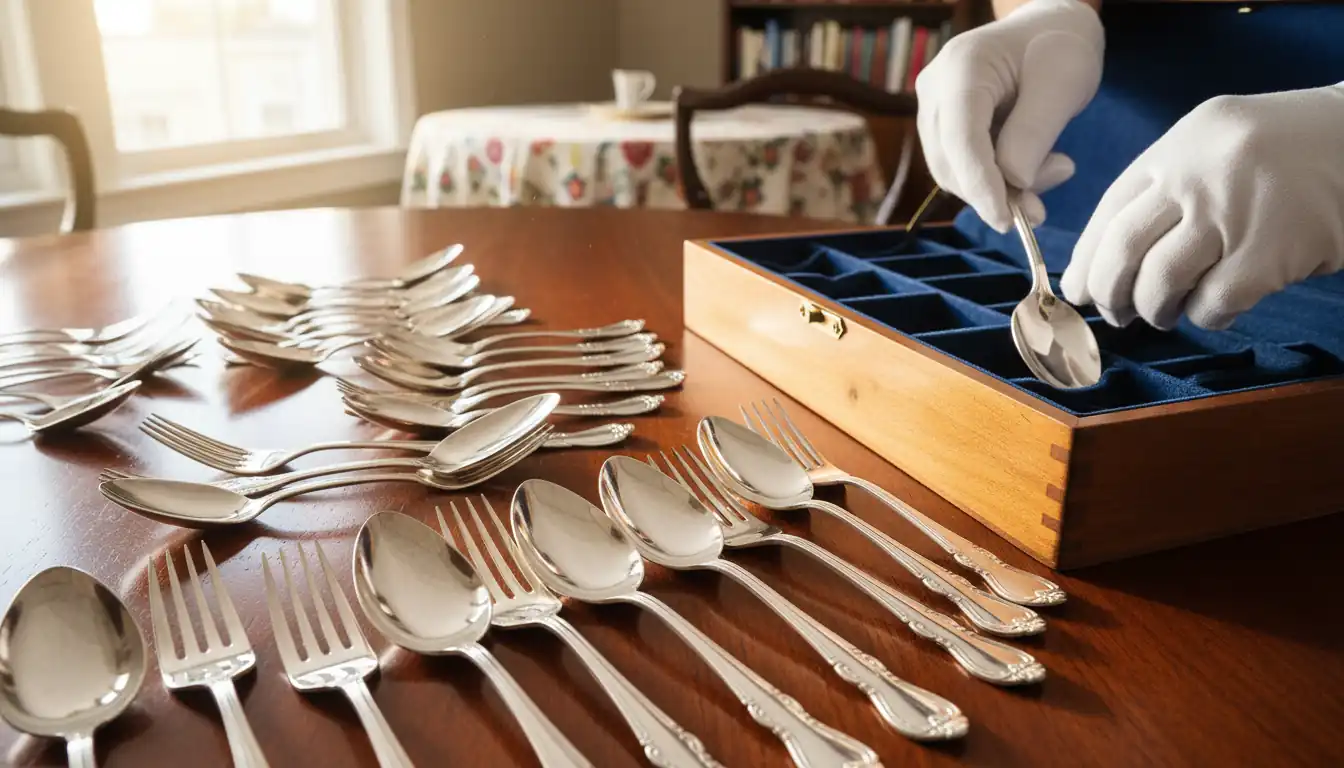
So, you’ve identified your silver, appraised it using Relic, and calculated its value. Now what? You have two choices: you can integrate these beautiful objects into your life, or you can sell them for a profit.
Creative Ways to Use Vintage Silver Today
The modern trend in home decor is "elevated utility." People are moving away from keeping silver locked in a felt-lined box and are instead bringing it into the light.
- Silver Pitchers as Vases: A tarnished silver water pitcher makes a stunning, weighted vase for hydrangeas or peonies. The cool tones of the silver make the colors of the flowers pop.
- Mismatched Settings: Don't have a full set? That’s actually a blessing. Mixing and matching different sterling patterns creates a "collected over time" look that is very popular in high-end interior design.
- Daily Luxury: Sterling silver is naturally antimicrobial. Using a sterling spoon for your morning coffee isn't just pretentious; it’s a tactile, heavy, and hygienic way to start the day. Silver was meant to be used, and the more you use it, the less it tarnishes (as the oils from your hands and regular washing prevent oxidation).
Strategic Selling for the Highest Return
If you decide to sell, don't just walk into the nearest "We Buy Gold" shop. Those businesses are looking for melt value and will give you the lowest possible price.
1. Specialized Replacements Sites: Companies like Replacements, Ltd. buy silver patterns to resell to people looking to finish their sets. They are reliable and easy to work with, but they usually pay "wholesale" prices (about 30-40% of the retail value).
2. Online Marketplaces (eBay/Etsy): This is where you will get the highest price, but it requires the most work. You have to take professional photos, write descriptions, and handle shipping. If you have a highly desirable pattern like Francis 1st, this is your best bet.
3. Local Auction Houses: For very rare, high-end pieces (like 18th-century tea sets), a specialized antique auction is the way to go. They will take a commission (usually 20-25%), but they will put your items in front of serious collectors who are willing to bid the price up.
Final Thoughts
Silverware is one of the few household items that truly holds its value over centuries. It is a unique intersection of precious metal commodity and fine art. By learning to read the hallmarks, identifying the prestigious patterns, and utilizing tools like the Relic app to verify your findings, you transform a box of old metal into a documented financial asset.
Whether you choose to sell your collection for a windfall or set your table with it for a Sunday dinner, you are now part of a long tradition of "informed inspection." You know the secrets of the marks, the history of the makers, and the true worth of the silver in your hands.
Conclusion
Identifying high-value silver doesn't have to be a mystery. By focusing on the five standard hallmarks—the purity mark, town mark, date letter, maker's mark, and duty mark—you can quickly separate sterling from silver plate. Recognizing iconic patterns like Wallace’s Grand Baroque or Reed & Barton’s Francis 1st allows you to spot pieces that carry a significant collector premium.
In the past, this knowledge took a lifetime to acquire. Today, you can use the Relic app to bridge that gap instantly, getting professional-grade appraisals and historical context right from your phone.
Your next step: Go to your kitchen or storage closet and find one piece of silver. Look for the hallmark. If you see a lion or the number .925, you’re holding history. Use a tool like Relic to see exactly what that history is worth—you might be surprised by what you find.
Identify antiques instantly
Point your camera at any antique, collectible, or vintage item. Get valuations, history, and market insights in seconds.
Download for iPhone