Stop Guessing at Estate Sales: Use Your iPhone to Decode Silver Hallmarks in Seconds

You stand in a crowded, dusty living room at a Saturday morning estate sale. Your eyes land on a tarnished cream pitcher tucked behind a stack of porcelain plates. You pick it up, feeling the surprising weight of the metal, and flip it over to find a series of tiny, cramped stamps near the base. In years past, this was the moment where the guessing game began. You would squint through a plastic magnifying glass, trying to remember if a lion facing left meant sterling or if a crown indicated a specific city in Germany.
The pressure of the "picker's gamble" is a familiar feeling for any collector. If you pass on the item, you might be leaving a four-figure profit on the table; if you buy it, you might be paying fifty dollars for a silver-plated souvenir. The barrier between a hobbyist and a professional has always been the sheer volume of knowledge required to decode these microscopic symbols. Fortunately, the era of carrying heavy reference books and hoping for the best is over.
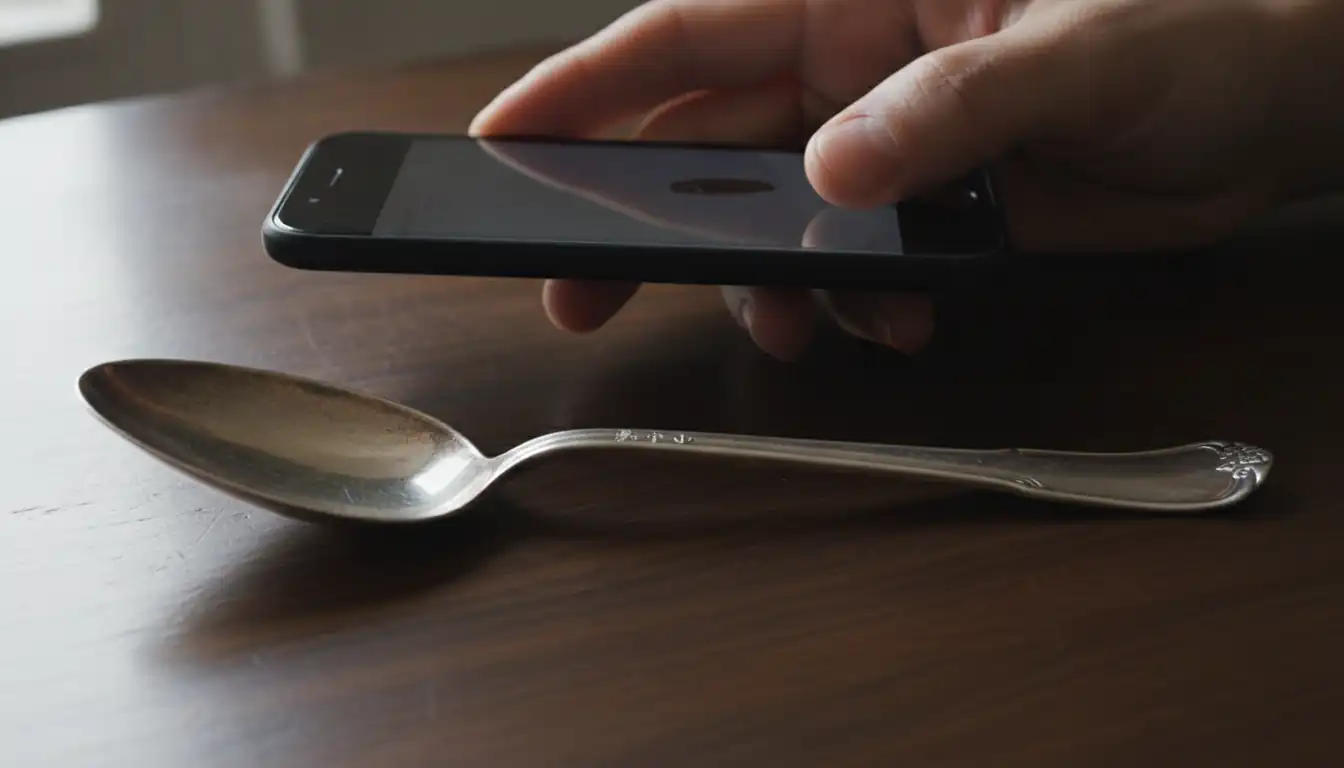
Your iPhone is no longer just a communication device; it has become the most sophisticated tool in the antique trade. By combining high-resolution optics with advanced machine learning, you can now identify, date, and value silver in the time it takes to snap a photo. This shift from manual research to instant digital verification is changing how we preserve history and build collections. You are about to learn how to turn your smartphone into a professional-grade silver expert.
The Evolution of Silver Identification Technology
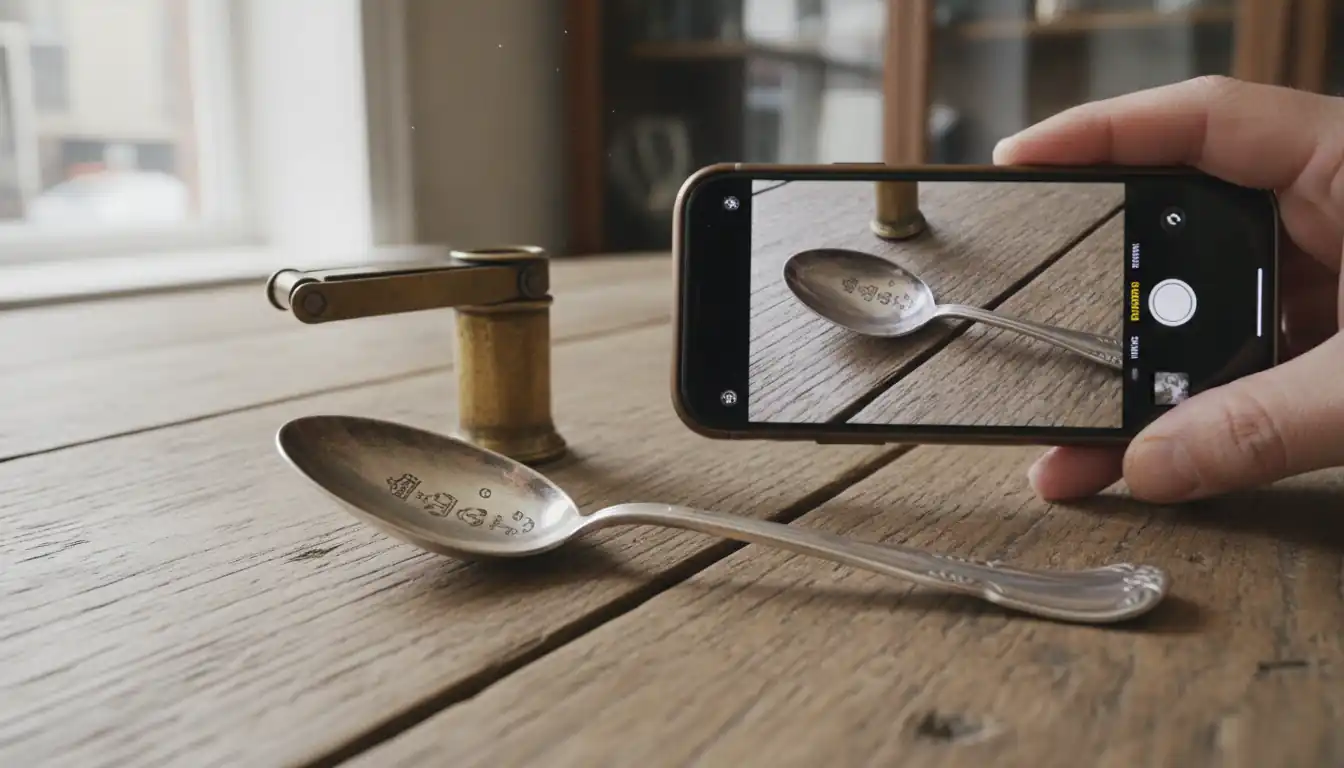
For centuries, identifying silver was a craft passed down through apprenticeships or mastered over decades of handling physical objects. If you wanted to know the origin of a silver spoon in 1920, you consulted a master silversmith or a specialized appraiser. By the late 20th century, this knowledge was codified into massive, multi-volume encyclopedias. Collectors would lug these "bibles" of hallmarks to auctions, frantically flipping through pages of black-and-white line drawings to find a match.
The problem with traditional methods was the margin for human error. A hallmark on a well-used piece of silver is rarely pristine. It might be rubbed smooth from a century of polishing, or it might be a "struck" mark that was applied unevenly at the foundry. The human eye struggles to differentiate between a slightly worn 18th-century London leopard’s head and a 19th-century provincial imitation. This is where the transition to digital technology has fundamentally altered the landscape for collectors.
From Magnifying Glasses to AI Algorithms
The leap from a magnifying glass to an AI algorithm is like moving from a candle to a searchlight. Traditional identification relies on pattern matching within the human brain. You see a shape, you search your memory or a book, and you hope the two align. Modern tools like Relic use computer vision to analyze the geometry of a mark at a pixel level. Instead of looking for a "lion," the AI identifies the specific contours, depth, and spacing of the stamp, comparing it against a vast database of verified historical marks in milliseconds.
This technology doesn't just look at the mark in isolation. It understands the context of the metal's surface, the wear patterns, and even the style of the object itself. When you use an app to scan a hallmark, the software is performing thousands of calculations that a human appraiser would take hours to complete. It removes the "guesswork" by providing a statistical probability of a match, effectively lowering the barrier to entry for anyone interested in silver collecting. You no longer need to spend twenty years studying British assay offices to know exactly what you are holding.
Why Smartphone Cameras Outperform the Human Eye
It might seem counterintuitive to suggest that a phone camera is better than a trained human eye, but the physics of modern optics tell a different story. The latest iPhone models feature macro capabilities that can capture details invisible to the naked eye. When you look at a hallmark through a standard jeweler’s loupe, you are limited by the quality of the lens and the steadiness of your hand. A smartphone camera, however, uses computational photography to "stack" images, ensuring every part of the tiny stamp is in sharp focus.
Digital sensors can detect subtle variations in the depth of a stamp that indicate whether a mark was hand-struck or machine-pressed, a key factor in determining age and authenticity.
Furthermore, the ability to zoom in digitally without losing significant resolution allows you to inspect the "serifs" on date letters—the tiny decorative lines at the ends of characters. These serifs are often the only difference between a piece made in 1790 and one made in 1810. By capturing these details and processing them through an AI-driven antique identifier, you gain a level of certainty that was previously reserved for museum curators.
Mastering the Art of the Digital Hallmark Scan
To get the most out of an app like Relic, you need to provide it with the best possible data. While the AI is powerful, it still relies on the quality of the image you capture. Many users struggle with silver because it is inherently reflective. If you’ve ever tried to take a photo of a mirror, you know the challenge. Learning how to check a hallmark for silver using your phone requires a few technical adjustments to your environment and your technique.
The goal is to eliminate "noise"—glare, shadows, and blurry edges—so the computer vision can see the "signal" of the hallmark. When you master the physical act of the scan, you'll find that the app provides much faster and more accurate results. You want to reach a point where you can get a "green light" scan on the first try, even in the middle of a dimly lit antique shop.
Perfecting Your Lighting and Macro Focus
Lighting is the single most important factor when you want to verify a hallmark on silver. Direct sunlight or harsh overhead fluorescent lights create "hot spots" on the polished metal that can completely obscure the mark. The best lighting is diffused and indirect. If you are at an estate sale, try to move the item near a window with natural light, or use your body to shade the item from direct overhead bulbs.
- The Bounce Method: Instead of pointing your phone's flash directly at the silver, use an external light source (like a friend's phone flashlight) and bounce the light off a white piece of paper or a wall onto the item.
- Macro Mode Activation: On newer iPhones, the macro mode kicks in automatically when you get close to an object. Look for the yellow flower icon on your screen. If it’s not appearing, back away slightly and use the 2x or 3x optical zoom instead.
- Steadying the Shot: Even a tiny tremor can blur a hallmark. Rest your elbows on a table or use the edge of the silver piece itself to stabilize your phone.
- Neutral Backgrounds: Place the silver on a solid, non-reflective surface like a dark cloth or a wooden table. A busy background forces the camera to hunt for focus, which can lead to a soft image.
Troubleshooting Common Scanning Errors
If you are struggling to get a clear read, the issue is usually one of three things: focus hunting, glare, or "rubbing." Focus hunting happens when the camera can't decide whether to focus on the surface of the silver or the reflection inside the silver. To fix this, tap and hold the screen on the hallmark to engage the "AE/AF Lock." This locks the focus and exposure, allowing you to move the phone slightly until the image is crisp.
| Error | Cause | Solution |
|---|---|---|
| White Washout | Too much direct light/flash | Turn off flash; move to a shaded area. |
| Grainy Image | Low light environment | Increase ambient light; don't use digital zoom. |
| Distorted Mark | Angled camera | Keep the phone lens perfectly parallel to the mark. |
| Soft Edges | Moving too close | Back up 2 inches and use the optical zoom. |
Sometimes, the hallmark itself is the problem. "Rubbed" marks occur when a piece has been polished so many times over a century that the edges of the stamp have softened. In these cases, try "side-lighting." Hold a light source at a very low angle to the side of the mark. This creates tiny shadows inside the indentations of the stamp, making the pattern pop for the AI. This technique is often the secret to identifying silver that other dealers have passed over as "unmarked."
Decoding the Global Language of Silver Marks
Once you have a clear image, the real challenge begins: understanding what the marks actually mean. Hallmarking is not a universal system; it is a fragmented, global language that has evolved differently in every country over the last 800 years. This complexity is exactly why a digital tool is necessary. While you might recognize a British lion, would you recognize a 19th-century Egyptian lotus flower or a Portuguese boar’s head?
The history of silver marking is a history of taxation and consumer protection. Governments wanted to ensure that when a merchant sold "sterling" silver, it actually contained the required 92.5% silver. Because of this, different jurisdictions developed their own unique sets of symbols. Navigating these international nuances is where most amateur collectors get lost, but it is also where the most significant discoveries are made.
Regional Variations Across Europe and Asia
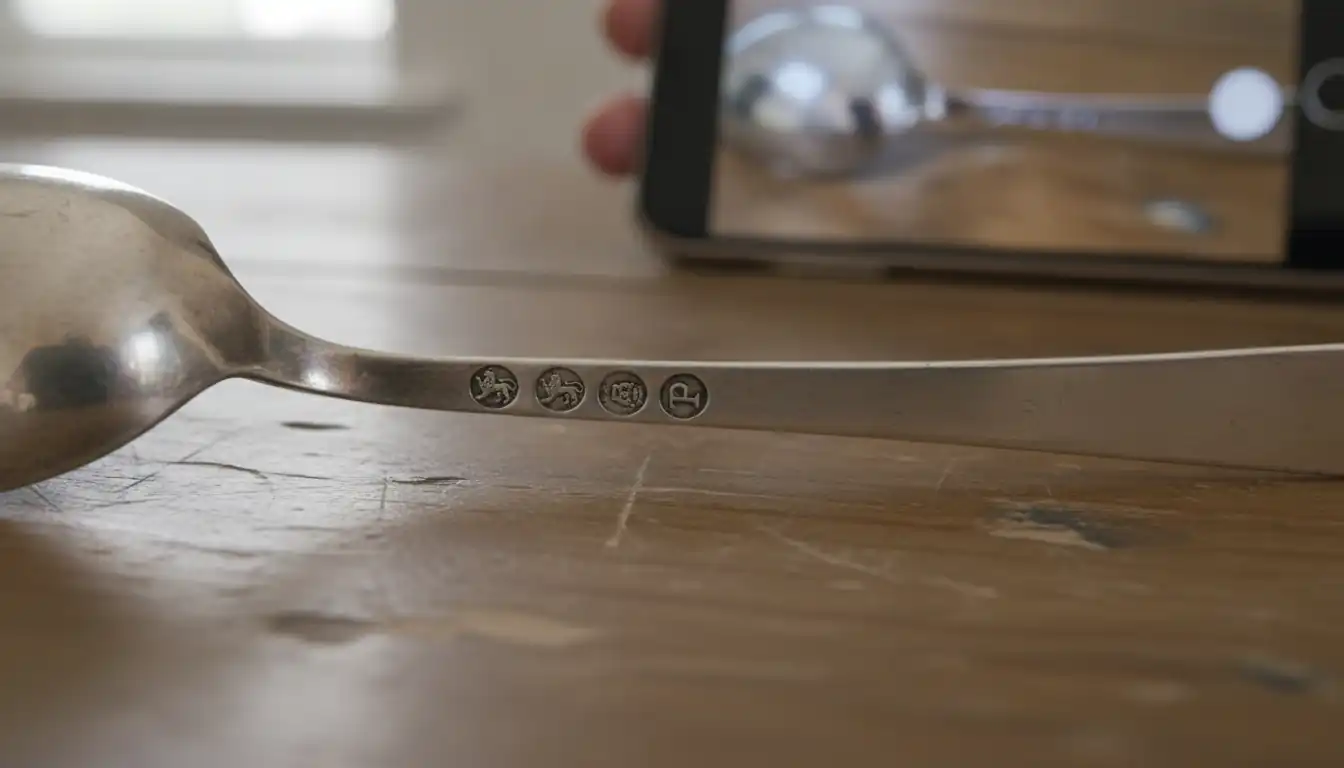
Europe has the most documented and rigid hallmarking systems in the world. The British system is the "gold standard" for collectors because it is so logical. Usually, you will find four or five marks: the maker's mark, the standard mark (like the lion passant for sterling), the town mark (like a leopard's head for London), and a date letter. However, move across the English Channel to France, and the system changes entirely. The French often used a "Minerva" head to denote silver fineness, and the shape of the frame around the head tells you the purity.
In Asia, the landscape is even more varied. Chinese Export Silver, which is highly prized by collectors today, often features "pseudo-hallmarks." These were marks designed to look like British hallmarks to appeal to Western buyers, but they often included Chinese characters or specific maker's marks like "Wang Hing." Without an AI tool to cross-reference these specific character sets and styles, it is nearly impossible for a Western collector to accurately date these pieces.
Identifying Rare Marks from Africa and the Middle East
The Middle East and Africa present a unique challenge because their marking systems were often less centralized or used different alphabets and calendars. For example, Egyptian silver marks often include a three-part stamp: the silver purity in Arabic numerals, a national symbol (like the lotus or a cat), and a date letter from the Arabic alphabet.
- Middle Eastern Purity: Many regions in the Middle East use "800" or "900" silver rather than the "925" sterling standard common in the West.
- Latin American Colonial Silver: Often features "quinto" marks or specific tax stamps that look nothing like European hallmarks.
- Indian Silver: Frequently unmarked or marked with "T.90" or "O.M" (Orissa Modern), requiring a deep knowledge of regional styles.
Using Relic allows you to bridge this gap. The AI doesn't care if the mark is in English, Arabic, or Hanzi; it recognizes the visual signature of the stamp. This is particularly useful in regions with less documented history, where the "official" records might be incomplete or difficult to access. By using a global database, the app can identify a rare mark from a small colonial outpost that a human expert might only see once in a career.
Privacy and Data Security in Antique Apps
When you are scanning high-value items, privacy is not just a technical detail—it’s a matter of personal security. If you are a collector with a significant amount of silver in your home, you are essentially cataloging your private wealth. The idea of uploading photos of valuable assets to a cloud-based server can be daunting. This is why understanding how modern iOS apps handle your data is crucial for any serious collector or dealer.
The "App Privacy" labels found in the App Store are your first line of defense. These labels tell you exactly what data the app collects and, more importantly, how it is linked to your identity. For an antique identifier, the goal should be "Data Not Linked to You." This means that while the app might process the image of your silver to provide an identification, it doesn't attach that information to your name, email, or physical location.
Understanding Data Not Linked to You
"Data Not Linked to You" is the gold standard for privacy in the digital age. When you scan a hallmark, the image is sent to a server for analysis. However, in a privacy-focused app, the metadata—the "hidden" information attached to the photo—is stripped away. The server sees the hallmark, but it doesn't see who you are. This ensures that your collection remains anonymous.
Privacy-conscious apps prioritize local processing whenever possible, meaning the heavy lifting of identification happens right on your iPhone rather than on a remote server.
This architecture is vital because it prevents the creation of a "map" of high-value items. If an app were to link your scans to your account and your GPS coordinates, it would create a massive security risk. By choosing tools that adhere to strict iOS privacy guidelines, you can build a digital catalog of your collection without worrying about your data being sold to third parties or compromised in a breach.
Protecting Your Collection’s Location Privacy
One of the most sensitive pieces of data your iPhone captures is the EXIF data, which includes the exact GPS coordinates of where a photo was taken. When you are at an estate sale, this doesn't matter much. But when you are scanning items in your own dining room, it matters a great deal.
- Disable Location Services: You can go into your iPhone settings and prevent specific apps from accessing your location data entirely.
- Metadata Stripping: High-quality antique apps automatically strip location data from images before they are processed for identification.
- Anonymous Accounts: Look for apps that allow you to use their features without creating a profile that requires a phone number or social media link.
By maintaining location privacy, you ensure that your digital inventory is a tool for your own use, not a beacon for others. This level of security allows you to feel confident using your phone as a professional-grade tool, even when handling items of immense value.
Beyond the Stamp: Realizing the Full Value of Your Silver
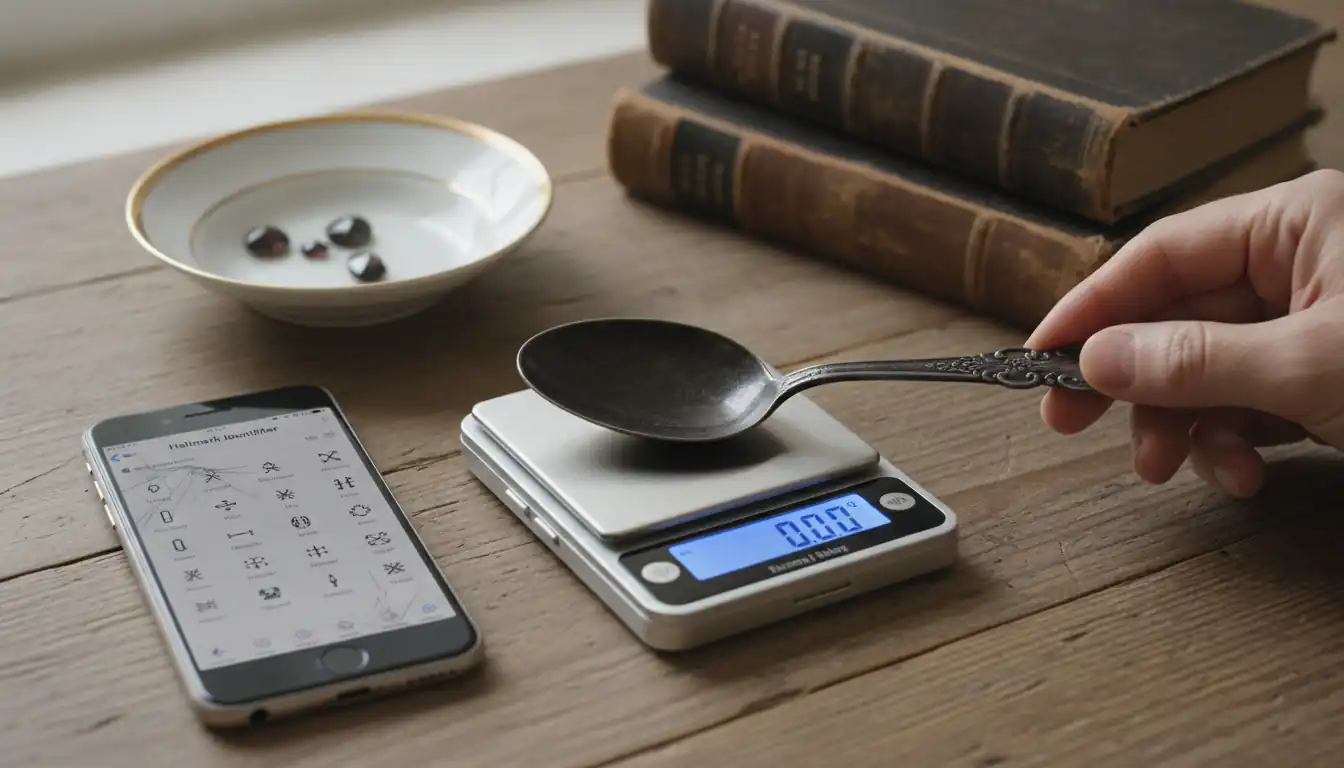
Identifying a hallmark is only the first step in the journey. Once you know that a piece is sterling and that it was made in 1842 by a specific silversmith, the next question is: "What is it worth?" The value of silver is determined by a combination of three factors: the "melt value" (the raw price of the silver metal), the "artistic value" (the craftsmanship and style), and the "historical value" (the provenance and rarity).
A digital tool like Relic goes beyond the initial scan to help you navigate these three pillars of value. It transforms your phone from a simple scanner into a gateway for professional-grade antique dealing. By providing real appraisals and historical context, the app gives you the data you need to make informed decisions about buying, selling, or insuring your items.
Getting a Professional Appraisal Through AI
In the past, getting an appraisal meant making an appointment, transporting your silver to a gallery, and paying a significant fee. AI has democratized this process. By analyzing the hallmark alongside current market trends and historical auction data, an app can provide a valuation that is remarkably accurate. It looks at what similar pieces by the same maker have sold for recently, adjusting for condition and rarity.
| Value Factor | Traditional Method | AI Method (Relic) |
|---|---|---|
| Maker Research | Hours in library | Instant database match |
| Market Trends | Monthly trade journals | Real-time auction data |
| Purity Verification | Acid testing (destructive) | Hallmark recognition (non-destructive) |
| Valuation | Subjective opinion | Data-driven market analysis |
This instant appraisal is a "power move" at estate sales. If you find a piece of silver priced at $100, and the app tells you its market value is $800 due to a rare maker's mark, you can buy with total confidence. Conversely, it can save you from overpaying for a piece that has a common mark and low collector interest.
Documenting Provenance for Future Resale
Provenance—the record of ownership for an object—is what separates a museum piece from a flea market find. When you sell a piece of silver, being able to provide a digital "pedigree" significantly increases its value. A digital record of your scan serves as the starting point for an item's modern history. It proves that you did the due diligence to verify the marks and the origin.
A well-documented digital catalog is often the difference between a quick sale and a long-term investment.
You can use the searchable catalog feature in your app to keep track of every item you've scanned, including the date, the location of purchase, and the appraised value at the time. If you ever need to file an insurance claim due to loss or damage, this digital inventory is your most valuable asset. It provides clear, high-resolution evidence of the item's existence and its hallmarks, making the claims process much smoother.
Conclusion
The world of silver collecting is no longer a "closed club" reserved for those with decades of experience and a library of reference books. By using your iPhone and the power of AI, you have effectively leveled the playing field. You can walk into any estate sale, auction, or thrift store and decode the most obscure hallmarks in seconds.
Technology has replaced the magnifying glass with a sophisticated digital eye, and the "guesswork" of the past has been replaced by data-driven certainty. Whether you are looking to build a personal collection, find hidden treasures for resale, or simply identify family heirlooms, tools like Relic provide the professional-grade insights you need.
Your next step is simple: the next time you see a tiny, mysterious mark on a piece of metal, don't guess. Pull out your phone, ensure your lighting is right, and let the AI do the work. You might just be holding a piece of history that everyone else missed.
Identify antiques instantly
Point your camera at any antique, collectible, or vintage item. Get valuations, history, and market insights in seconds.
Download for iPhone