Stop Guessing: How One Photo Can Reveal Your Antique Chair's Secret History and Value

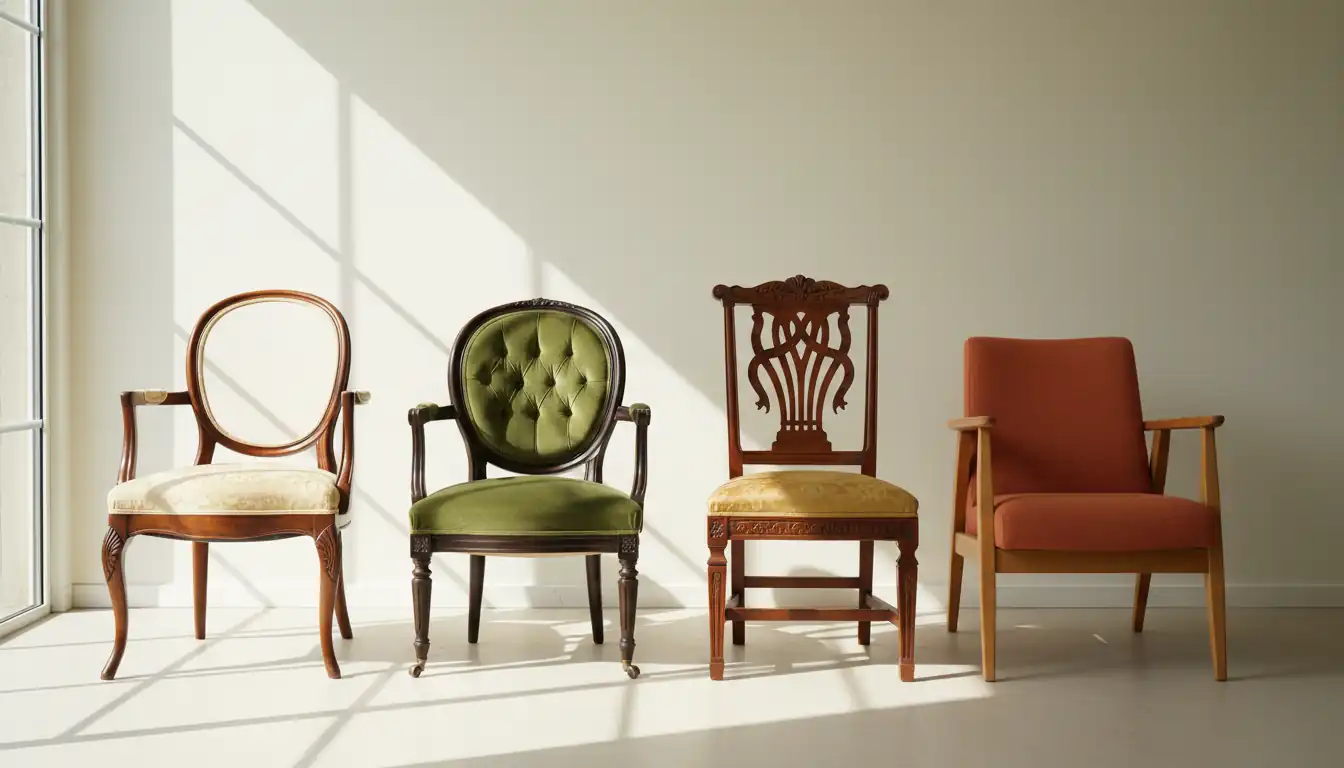
You are standing in a crowded estate sale, surrounded by the scent of old dust and floor wax. In the corner, tucked behind a stack of faded quilts, sits a wooden chair. It has a curved back, intricate carvings on the legs, and a seat covered in tattered velvet. You feel a pull of curiosity. Is this a discarded piece of mass-produced junk from the 1920s, or have you stumbled upon a rare 18th-century masterpiece worth thousands of dollars?
Most people walk away because they don’t want to gamble on a "maybe." They assume that identifying antique furniture requires a lifetime of study or a dusty library of reference books. But the truth is that every antique chair carries a secret code written into its wood, its joints, and its silhouette. Once you learn how to read that code, the mystery disappears.
This guide will show you how to look at a chair not as a single object, but as a collection of historical clues. You will learn to spot the difference between a hand-carved curve and a machine-stamped pattern. By the time you finish reading, you will understand how to use your phone to bridge the gap between a lucky guess and a professional appraisal.
Decoding the Visual Language of Antique Furniture
Before you can identify a style, you have to understand the anatomy of the chair. Think of a chair like a person; it has a posture, a certain way of standing, and specific "limbs" that changed as fashions evolved. When you approach a piece of furniture with your camera, you shouldn't just take one wide shot. You need to focus on the individual components that act as historical fingerprints.
Leg and Foot Styles as Historical Timestamps
The legs of a chair are often the most reliable way to date a piece. Furniture makers followed strict trends, and the shape of a leg can narrow down a chair's origin to within a twenty-year window.
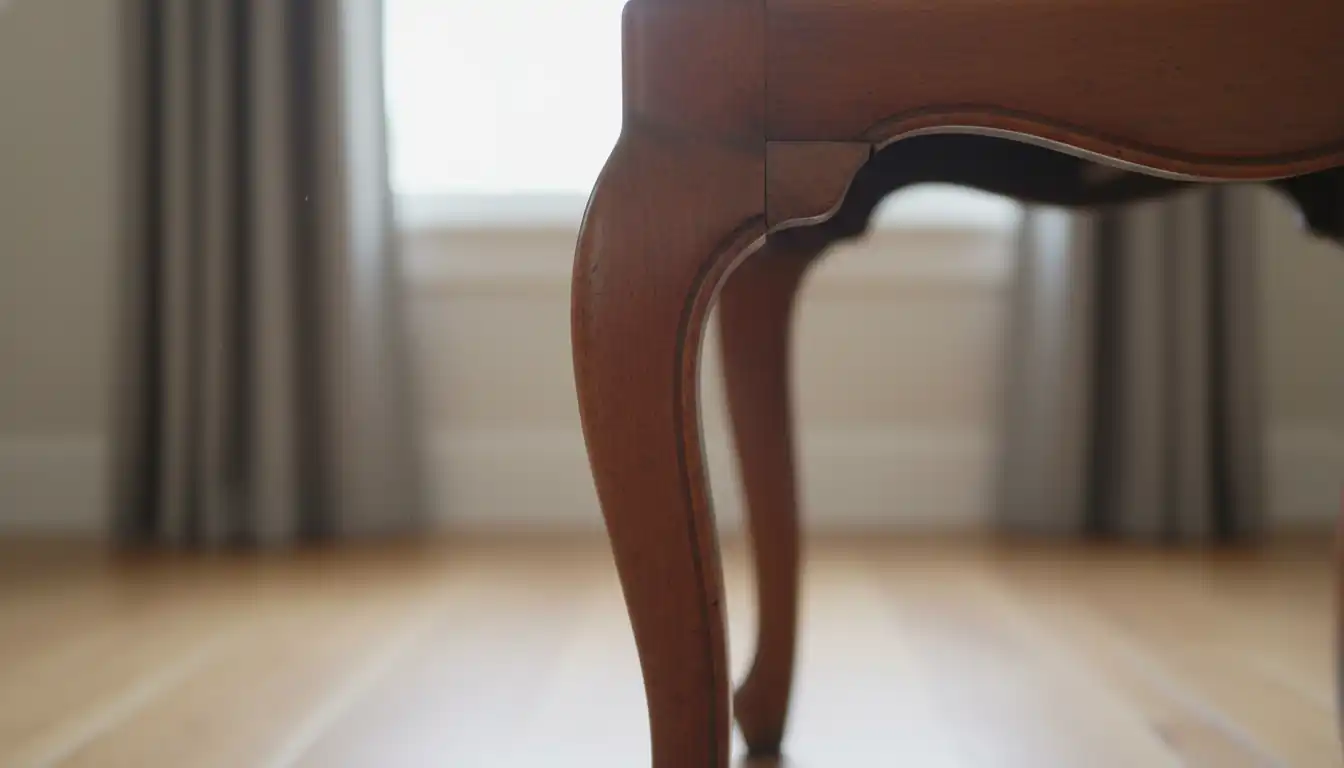
One of the most recognizable shapes is the Cabriole leg. This is an "S" shaped curve where the knee bulges outward and the ankle curves inward. It was designed to mimic the leg of a leaping animal, specifically a goat. If you see a Cabriole leg, you are likely looking at a piece influenced by the early to mid-18th century. It represents a move away from the heavy, boxy furniture of the past toward something more graceful and organic.
Contrast this with the Federal leg, which appeared later. These are straight and tapered, looking almost like a sharpened pencil. They are thin, elegant, and prioritize symmetry over ornamentation. If the Cabriole leg is a flowing gown, the Federal leg is a tailored suit.
Earlier pieces, like those from the William and Mary period (late 17th century), feature "turned" legs. These were created on a lathe and look like a series of stacked balls, rings, or trumpets. They are heavy and sturdy, reflecting a time when furniture was meant to look imposing and permanent.
The "foot" at the bottom of the leg is the final signature. A ball-and-claw foot—where a bird’s talon grips a sphere—is a classic mark of the mid-18th century. A spade foot looks like a small, rectangular block tapered at the bottom, common in Neoclassical designs. A bun foot is exactly what it sounds like: a round, slightly flattened ball, often found on heavy 17th-century pieces.
Back Splats and Ornamental Carvings
The "splat" is the vertical piece of wood in the center of the chair back. This is where craftsmen showed off their artistic skills. In early designs, the splat was often a solid piece of wood shaped like a vase or a fiddle. As tools improved and tastes became more refined, these splats became "pierced," meaning the wood was carved out to create intricate, lace-like patterns.
Look closely at the edges of these carvings. Are they perfectly smooth and identical on both sides? If so, they might be machine-cut. On a true antique, you will often see slight variations where a chisel slipped or where the carver’s hand was more expressive on one side than the other. These "imperfections" are actually marks of value.
| Component | Feature to Observe | Historical Significance |
|---|---|---|
| Leg | Cabriole (S-curve) | Indicates 18th-century elegance and movement. |
| Foot | Ball-and-Claw | Suggests a mid-1700s English or American origin. |
| Splat | Pierced or Fiddle-back | Shows the transition from solid utility to artistic display. |
| Joinery | Dovetails or Pegs | Reveals if the piece was built by hand or in a factory. |
Pro Tip: When photographing a chair for identification, always get a clear shot of the "knee" of the leg and the underside of the seat frame. These areas hold the most data for AI analysis.
The Golden Age of English and American Design
The 18th and early 19th centuries are often called the "Golden Age" of furniture. This was a time when furniture wasn't just a household item; it was a status symbol. The designs from this era are the ones most frequently reproduced today, which makes identifying an original both difficult and rewarding.
Queen Anne and Chippendale Elegance
The Queen Anne style (roughly 1720–1750) is defined by the curve. You won't find many sharp angles here. The chairs are characterized by a "fiddle-back" splat and the aforementioned Cabriole leg. These pieces were usually made of walnut, a wood with a deep, rich grain that looks almost like marble when polished. The beauty of Queen Anne furniture lies in its restraint; it relies on its silhouette rather than heavy carving to make a statement.
Then came Thomas Chippendale. His name became so synonymous with high-quality furniture that he was the first cabinetmaker to have a style named after him rather than a monarch. Chippendale took the basic Queen Anne shape and made it more "masculine" and ornate.
Chippendale chairs are almost always made of mahogany, which is denser and darker than walnut. This wood allowed for much finer carving. Instead of a simple fiddle-back, a Chippendale chair might have a "ribbon-back" splat that looks like frozen silk. The legs often end in a fierce ball-and-claw foot. If you find a chair that looks like a Queen Anne but feels "heavier" and more decorated, you are likely looking at a Chippendale influence.
Hepplewhite and Federal Refinement
As the 18th century drew to a close, the heavy carvings of Chippendale fell out of fashion. The world became obsessed with "Neoclassicism"—a return to the simple, clean lines of ancient Greece and Rome. This is where George Hepplewhite and the American Federal style come in.
Hepplewhite chairs are famous for their "shield-back" design. The back of the chair is shaped like a knight's shield, often containing delicate carvings of wheat stalks, urns, or feathers. The legs are no longer curved; they are straight, tapered, and sometimes have a "spade" foot.
In America, this style evolved into the Federal period. These chairs often used "inlays"—small pieces of lighter wood like satinwood or maple set into the darker mahogany to create geometric patterns. While a Chippendale chair feels like it belongs in a dark, wood-paneled library, a Hepplewhite or Federal chair feels like it belongs in a bright, airy dining room.
From Shaker Simplicity to Victorian Excess
The 19th century brought about a massive shift in how furniture was made and who it was for. The Industrial Revolution allowed for mass production, but it also sparked a counter-movement of people who craved simplicity and craftsmanship.
Utilitarian Beauty of Shaker and Mission Styles
The Shakers were a religious sect that believed "beauty rests in utility." They despised the ornate carvings of the Victorian era, seeing them as prideful and unnecessary. A Shaker chair is the ultimate example of "form follows function."
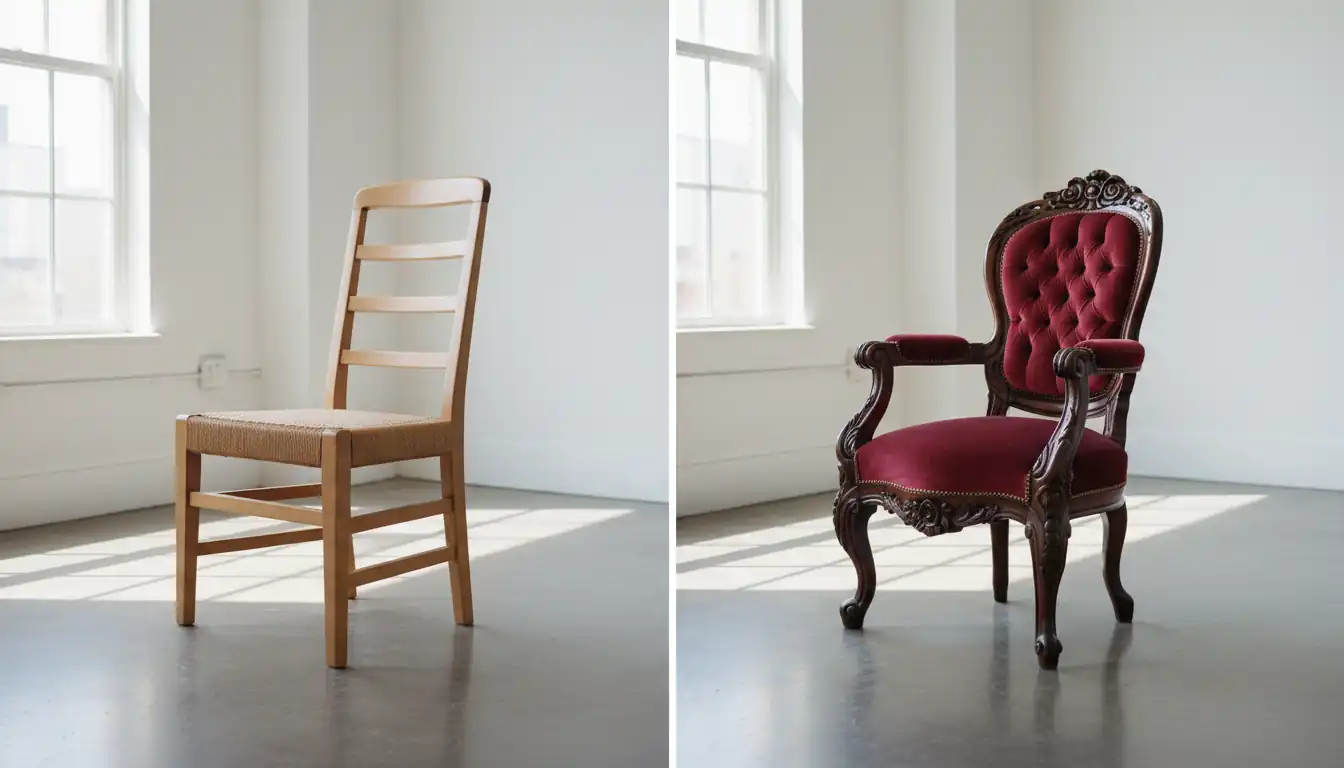
You can recognize a Shaker chair by its ladder-back design—horizontal slats that look like the rungs of a ladder. They are incredibly lightweight, often with woven "tape" seats made of fabric rather than leather or wood. These chairs were designed to be hung on pegs on the wall when the floor needed to be swept.
Similarly, the Mission style (part of the Arts and Crafts movement) was a reaction against factory-made clutter. Mission chairs are heavy, blocky, and usually made of dark oak. They celebrate the "honesty" of the construction, often showing the mortise-and-tenon joints right on the outside of the piece. If a chair looks like it was built by a blacksmith out of thick planks of wood, it’s likely Mission style.
Rococo Revival and the Ornate Victorian Era
On the opposite end of the spectrum was the Victorian era. This was a time of "more is more." As the middle class grew, people wanted furniture that looked expensive, even if it was mass-produced.
The Rococo Revival style is the most famous Victorian look. These chairs are characterized by "balloon backs" (rounded tops) and incredibly intricate carvings of roses, grapes, and leaves. They were often made of rosewood or mahogany.
This era also introduced the "press-back" chair. Manufacturers realized they could use a metal plate to "stamp" a design into the wood under high pressure, mimicking the look of hand-carving for a fraction of the cost. If you see a chair with a very detailed design that feels a bit "flat" or repetitive, it’s likely a Victorian press-back. These were the "everyman's" chairs of the late 1800s, found in farmhouses and city apartments alike.
- Shaker: Lightweight, ladder-back, minimalist, maple or cherry wood.
- Mission: Heavy, rectangular, oak, visible joinery.
- Victorian Rococo: Curved, floral carvings, velvet upholstery, balloon backs.
- Press-back: Mass-produced, stamped designs, often made of oak or ash.
Leveraging AI for Instant Style Identification
For decades, if you wanted to know what kind of chair you had, you had to call an expert or spend hours flipping through price guides. Even then, it was easy to get it wrong. Is that a "shield-back" or a "heart-back"? Is that wood mahogany or just stained pine? The nuances are so subtle that they can baffle even seasoned hobbyists.
This is where technology has changed the game for collectors. You no longer need to memorize every leg style and wood grain pattern from the last 300 years. Instead, you can use the camera in your pocket to access a massive database of historical data.
How Visual Recognition Bridges the Knowledge Gap
Artificial intelligence works by analyzing thousands of data points in a single image. When you look at a chair, you see a piece of furniture. When an AI tool looks at a chair, it sees the specific angle of the leg taper, the depth of the carving, the pattern of the wood grain, and the proportions of the back splat.
It compares these features against a vast library of verified antiques. It can distinguish between the hand-chiseled marks of an 18th-century craftsman and the uniform lines of a 20th-century CNC machine. This level of analysis used to take an appraiser years to master, but now it happens in the blink of an eye.
Getting Professional Results with Relic
The Relic app is designed to be that expert appraiser in your pocket. It doesn't just give you a generic name like "old chair." It provides a comprehensive look at the item's DNA.
Using Relic is a straightforward process that starts with a photo. To get the most accurate results, you should:
- Find Good Lighting: Natural light is best. It reveals the true color of the wood and the texture of the finish.
- Capture the Silhouette: Take a photo of the chair from the side to show the leg curvature and the "rake" (the angle) of the back.
- Zoom in on Details: Take a close-up of the joinery (where the arm meets the back) and any carvings.
Once you upload the photo, Relic uses its advanced AI to provide a real appraisal, history, and the origin of the item. It tells you why it identified the piece as a specific style, pointing out the features you might have missed. Beyond just identification, it gives you a sense of what the item is worth in today's market, which is vital if you're looking to buy or sell. It turns a "guess" into a documented fact.
Beyond Style to Authenticity and Worth
Once you have a style name—say, "Chippendale"—the next question is the most important one: Is it a "period" piece (made during the time the style was popular) or a later reproduction? A chair made in 1760 is a treasure; a chair made in 1960 in the style of 1760 is a functional piece of furniture, but it isn't an investment.
Signs of Age Versus Modern Reproductions
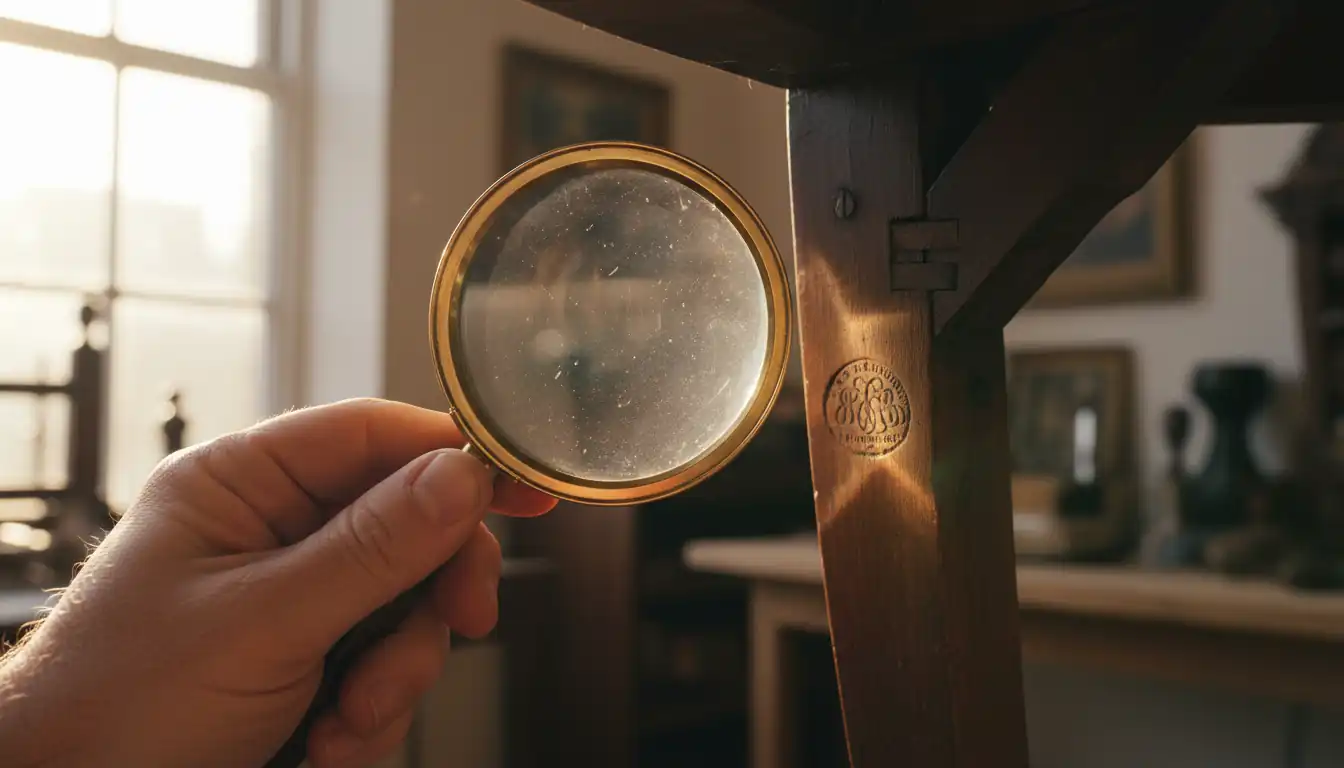
To tell the difference, you have to look where the maker didn't expect you to look. Turn the chair upside down. Look at the "secondary" woods—the wood used for the seat frame or the interior blocks. In a true antique, these are often different from the "show" wood. A mahogany chair might have a pine or oak frame.
Check the Joinery: Look at the dovetails (the interlocking joints that look like bird tails).
- Hand-cut dovetails: These are slightly uneven. Some are wider than others, and you might see small "scribe marks" where the woodworker used a tool to layout the cut.
- Machine-cut dovetails: These are perfectly uniform and spaced exactly the same. These indicate a piece made after 1860.
Look for Tool Marks: Before the mid-19th century, wood was cut with straight saws. If you see circular saw marks (curved lines in the wood), the piece was made after 1850. If the wood is perfectly smooth and looks like it was sanded by a machine, it’s likely a modern reproduction.
Observe Wood Shrinkage: Wood is a living material that shrinks over time, but it only shrinks across the grain, not with it. This means that a perfectly round table or a perfectly circular chair seat from the 1700s should now be slightly oval. If you measure a "round" 200-year-old stool and it is still perfectly circular, it’s probably a fake.
Determining Market Value in Today's Economy
The value of an antique isn't just based on its age; it’s based on "desirability." Currently, the market is seeing a massive shift. For a long time, "brown furniture" (the heavy, dark mahogany and oak pieces) was the gold standard. However, younger collectors are currently gravitating toward Mid-Century Modern styles—clean lines, light woods like teak, and minimalist profiles.
This means that some high-quality Victorian or Empire pieces are currently undervalued. It’s a "buyer's market" for traditional antiques. However, "signed" pieces or those with a clear "provenance" (a documented history of who owned it) still command premium prices.
Condition is the final factor. A chair with its original finish—even if it’s a bit scratched—is almost always worth more than a chair that has been stripped and refinished. Collectors value "patina," the thin layer of oxidation and wear that only comes with centuries of use. If you find a chair that looks "too perfect," be suspicious.
Conclusion
Identifying an antique chair is a bit like being a detective. You start with the big picture—the silhouette and the style—and then you zoom in on the forensic evidence: the dovetails, the saw marks, and the wood grain. You've learned that a Cabriole leg points to the 18th century, while a ladder-back suggests Shaker utility. You know that mahogany speaks of Chippendale's luxury, while oak often signals the Mission or Victorian eras.
But you don't have to do this work alone. While your eyes can spot the beauty of a piece, technology can confirm its history. Using a tool like Relic allows you to bypass the years of study and get straight to the truth. By simply taking a photo, you can uncover the origin, the era, and the real-world value of a find before you ever open your wallet.
The next time you see a lonely chair in a thrift shop or an attic, don't just walk by. Take a photo, look at the legs, check the joints, and let the wood tell you its story. You might just be holding a piece of history in your hands.
Identify antiques instantly
Point your camera at any antique, collectible, or vintage item. Get valuations, history, and market insights in seconds.
Download for iPhone