Stop Guessing: How to Identify Rare Pottery Marks Without a Library Card

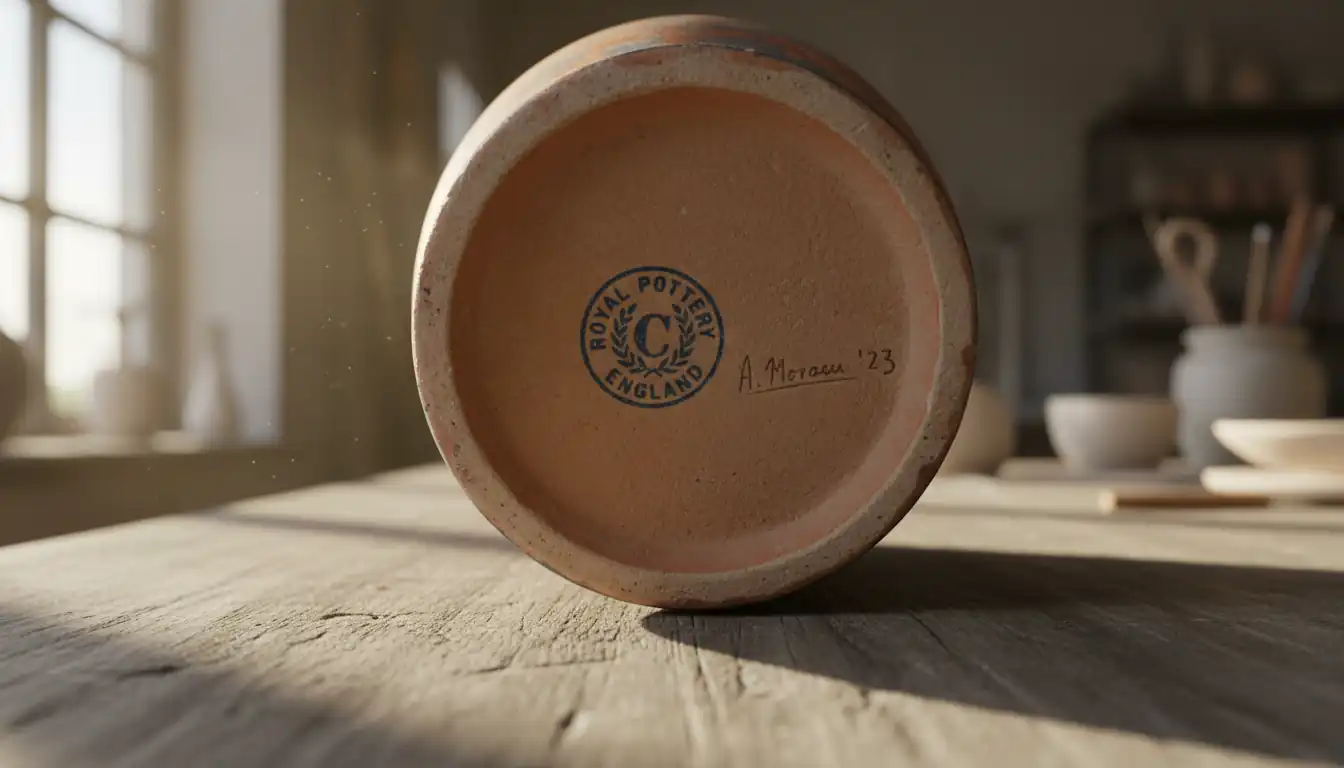
You are standing in a crowded antique mall, your eyes scanning rows of dusty shelves. A small, cream-colored vase catches the light. You pick it up, feeling the cool weight of the ceramic in your hand, and instinctively flip it over. There it is: a faint, blue symbol that looks like a pair of crossed swords. Is this a common reproduction worth five dollars, or a rare piece of 18th-century Meissen porcelain worth thousands?
Identifying pottery marks often feels like trying to read a forgotten language. For decades, collectors had to lug around heavy encyclopedias or spend hours squinting at grainy photocopies in a library. The process was slow, prone to error, and often left you guessing. You might know a mark looks "European," but without the right tools, the specific history remains locked away.
This guide changes that. You will learn how to decode the physical characteristics of ceramic marks, identify the "blue chip" manufacturers that hold the most value, and use modern technology to get instant answers. By the time you finish reading, you will have the skills to transform a casual hobby into a disciplined, professional approach to collecting.
Decoding the Visual Language of Pottery Marks
Before you can identify a maker, you must understand how the mark was physically applied to the piece. The method of marking is a primary clue to the age of the item. Manufacturers changed their techniques as technology evolved, moving from hand-incised scratches to sophisticated printed decals.
Physical Methods of Marking
The way a mark sits on the clay tells a story of the kiln. When you run your finger over the base of a piece, pay attention to the texture. Is the mark recessed into the clay, or does it sit on top of the glaze?
- Incised Marks: These are scratched into the damp clay using a pointed tool before the piece is fired. This is one of the oldest methods and is frequently found on early studio pottery or ancient earthenware. Because they are done by hand, incised marks are often irregular and unique to the individual potter.
- Impressed Marks: Similar to incised marks, these are pressed into the wet clay, but they use a metal or wooden stamp. This results in a much cleaner, more uniform appearance. You will often see impressed marks on 19th-century stoneware and English creamware.
- Underglaze Marks: These are applied to the "bisque" (fired but unglazed) clay using a brush or a stamp. A clear glaze is then applied over the top, and the piece is fired again. These marks are permanent and protected; they will never wear off, which is why they are a favorite for high-end porcelain houses.
- Overglaze Marks: These are applied after the piece has been fully glazed and fired. The mark is painted on top and then fired a third time at a lower temperature to fuse it to the surface. If you feel a slight ridge when you touch the mark, it is likely overglaze. Be careful—these marks can wear away over centuries of cleaning.
Common Symbolic Motifs
Once you identify the method, you can look at the imagery. Pottery marks are rarely just names; they are a shorthand of heraldry and national pride. Many European factories used symbols to denote royal patronage or regional identity.
| Symbol | Common Origin | Typical Meaning |
|---|---|---|
| Crossed Swords | Germany | Meissen Porcelain (The most famous mark in history) |
| Crown | United Kingdom / Germany | Royal warrant or state-sponsored factory |
| Anchor | England / Italy | Chelsea Porcelain or Capodimonte |
| Eagle | United States / Germany | Patriotic themes or German state factories (KPM) |
| Lion Passant | United Kingdom | Often denotes English origin or high-quality export |
If you see a crown, don't immediately assume it’s British. German makers like Royal Bonn and various Prussian factories used crowns extensively. However, a crown paired with a "Made in England" stamp usually points to a post-1891 date, as the McKinley Tariff Act required the country of origin to be listed on imports to the United States.
Pro Tip: If a mark includes the word "Limited" or "Ltd," the piece almost certainly dates to after 1860. If it says "Trademark," it likely dates to after the British Trade Marks Registration Act of 1875.
Identifying High Value European and American Makers
How can I identify a piece of pottery that is actually worth money? This is the question that drives every collector. While thousands of small potteries existed, a few "blue chip" names consistently command high prices at auction. Knowing these marks by heart is like having a map to buried treasure.
Blue Chip Marks to Memorize
European porcelain set the standard for luxury for centuries. The marks from these factories were so prestigious that they were frequently copied, even in their own time.
Meissen (Germany): The crossed swords mark is the holy grail for many. Established in 1710, Meissen was the first European factory to produce true hard-paste porcelain. Look for the swords in cobalt blue underglaze. If you see a piece where the swords have one or more "slashes" or cut lines across them, it indicates the piece was sold as a "second" or was undecorated when it left the factory.
Wedgwood (England): Unlike the ornate symbols of the continent, Josiah Wedgwood preferred a clean, impressed mark. Early pieces simply say "WEDGWOOD" in all capital letters. If you see "Wedgwood & Bentley," you have found a highly desirable piece from the partnership era (1769–1780). Be wary of marks that say "Wedgwood & Co"—this is a different, less valuable manufacturer.
Sèvres (France): The royal factory of France used a distinctive "interlaced Ls" mark. Inside the Ls, you will often find a letter that corresponds to the year of production. For example, "A" stands for 1753. This precise dating system makes Sèvres a favorite for serious historians, but it also makes it a prime target for forgers.
Hidden Gems in American Art Pottery
While Europe focused on porcelain, American makers in the late 19th and early 20th centuries excelled in "Art Pottery." These pieces are often characterized by matte glazes and organic shapes.
- Rookwood: Based in Cincinnati, Rookwood used one of the most logical marking systems in history. Their mark features a reversed "R" and a "P" (for Rookwood Pottery). Starting in 1886, they added a small flame point above the logo for each year. A mark with 14 flames means the piece was made in 1900. After 1900, they added Roman numerals below the logo to indicate the year.
- Roseville: This is a name you will see at almost every antique show. Early Roseville was marked with paper labels, which are often lost. Later pieces have "Roseville" in a raised, stylized script on the bottom, often accompanied by the shape number and size. While common, certain patterns like "Falline" or "Pinecone" remain highly collectible.
Identifying these marks manually requires a sharp eye and a lot of patience. You have to account for variations in hand-painting and the way glaze can fill in an impressed mark, making it nearly illegible. It is a rewarding process, but it is also one where a single mistake can lead to a very expensive "learning experience."
Modern Tools for Instant Appraisal
Is there a pottery marks database online? Yes, there are several. However, if you have ever tried to use them, you know the frustration. You find yourself scrolling through a 500-page "pottery marks identification guide pdf," trying to match a blurry blue smudge on your vase to a tiny black-and-white drawing on your screen. It is a digital version of the old library card problem—static, slow, and often inconclusive.
The reality is that a database is only as good as your ability to search it. If you don't know if your mark is a flower or a star, how do you even begin your search? This is where the "manual" era of collecting meets the digital future.
Why PDF Guides Often Fail
Static guides are snapshots in time. They don't account for the subtle textures of the clay or the way light hits a glaze. More importantly, they don't provide context. A PDF might tell you that a mark belongs to a specific German factory, but it won't tell you what that factory's work is currently selling for on the secondary market. You are left with a name, but no valuation.
The AI Revolution with Relic
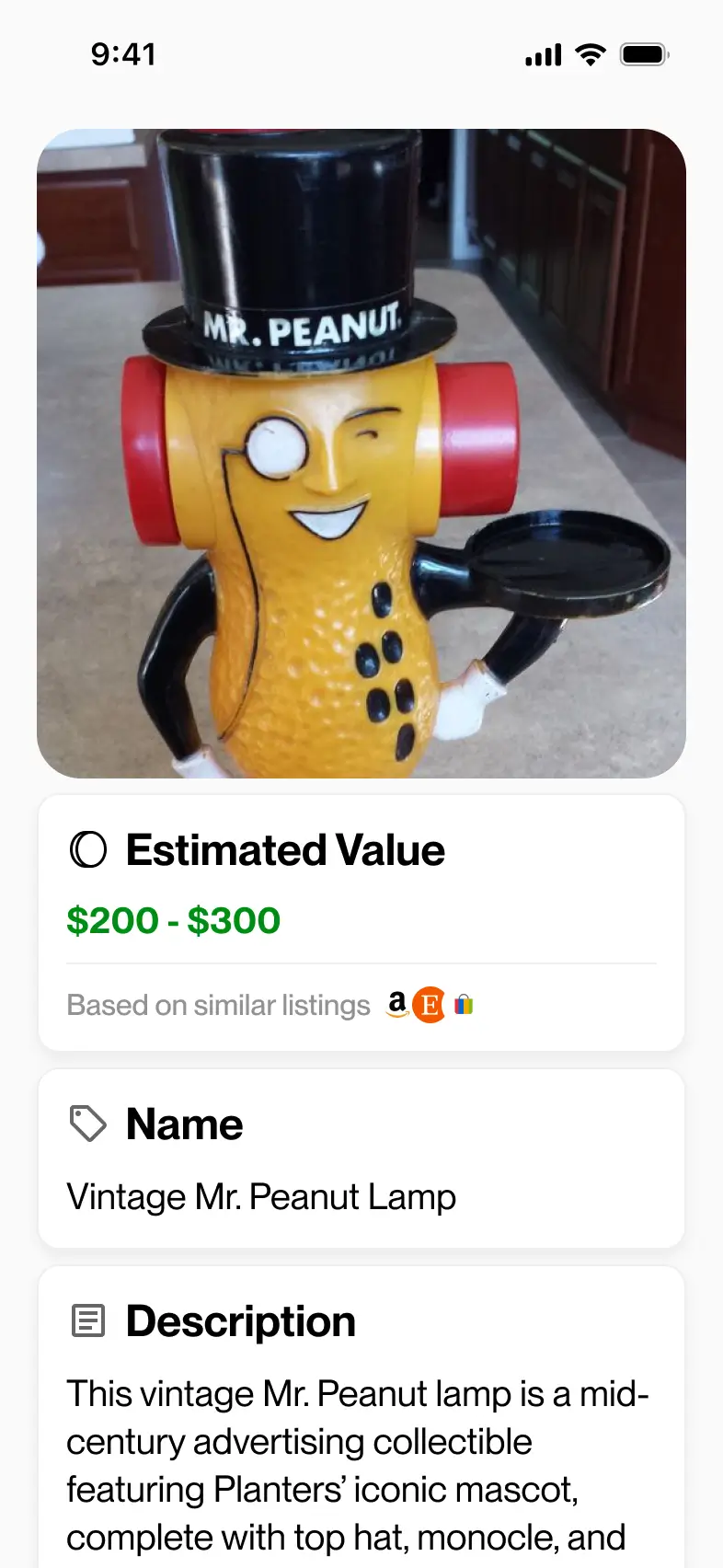
This is where the Relic app changes the game for collectors and professional dealers alike. Instead of hunting through thousands of pages of symbols, you simply take a photo. Relic uses advanced AI to analyze the mark, the shape of the vessel, and the style of the decoration.
Within seconds, the app provides a real appraisal, the history of the maker, and the origin of the item. It’s like having a professional appraiser in your pocket. For people who spend their weekends at estate sales or flea markets, this speed is vital. You don't have time to go home and check a book; you need to know if that $20 vase is a $2,000 find before someone else picks it up.
Relic doesn't just identify the mark; it understands the "language" of the object. It can distinguish between the genuine cobalt of an 18th-century piece and the synthetic pigments used in modern reproductions. With a 4.9-star rating from over 20,000 reviews, it has become the go-to tool for importers, pickers, and online sellers who need accuracy without the wait.
The difference between a hobbyist and a professional is the quality of their data. While others are guessing, the professional is scanning.
Spotting Forgeries and Reproductions
Even with a clear mark, you must be careful. Forgers have been faking pottery marks for as long as pottery has been valuable. In the 19th century, many smaller factories "borrowed" the Meissen crossed swords to trick buyers. To protect yourself, you must look beyond the mark and evaluate the physical object as a whole.
Material and Glaze Consistency
The "body" of the piece—the clay itself—is your first line of defense. If a mark suggests the piece is 18th-century Sèvres porcelain, but the clay feels heavy, thick, and opaque, something is wrong.
- The Weight Test: True fine porcelain is surprisingly light and can be translucent. If you hold a high-quality porcelain plate up to a strong light, you should be able to see the shadow of your hand through it. Earthenware reproductions will be heavy and block all light.
- The "Ping" Test: Gently flick the rim of the piece with your fingernail. High-fired porcelain will produce a clear, sustained ring like a bell. Earthenware or low-quality fakes will produce a dull "thud."
- Crazing Patterns: Crazing is the network of fine cracks in the glaze. While it can happen naturally over time, forgers often "force" crazing by heating a piece and then cooling it rapidly. Natural crazing is usually random and uneven. Forced crazing often looks too uniform or "perfect."
Common Modern Imitations
Many items found in thrift stores today are "decorator pieces" made in the mid-20th century to look like antiques. These often feature marks that are "in the style of" famous makers but aren't exact matches.
| Feature | Genuine Antique | Modern Reproduction |
|---|---|---|
| Glaze Chemistry | Often contains lead or natural pigments; soft glow | Often high-gloss, synthetic, and very "shiny" |
| Wear Patterns | Natural shelf wear on the unglazed foot rim | Artificial distressing or perfectly clean base |
| Mark Precision | May be slightly blurred due to kiln heat | Often looks like a crisp, modern computer print |
Forgers often fail to match the historical glaze chemistry of the original period. For example, 18th-century glazes often have tiny bubbles or "pinholes" and a slightly blue or green tint. Modern glazes are chemically pure and can look "too perfect." If the mark says 1750 but the glaze looks like it was applied yesterday, trust your gut.
Creating a Digital Catalog of Your Collection
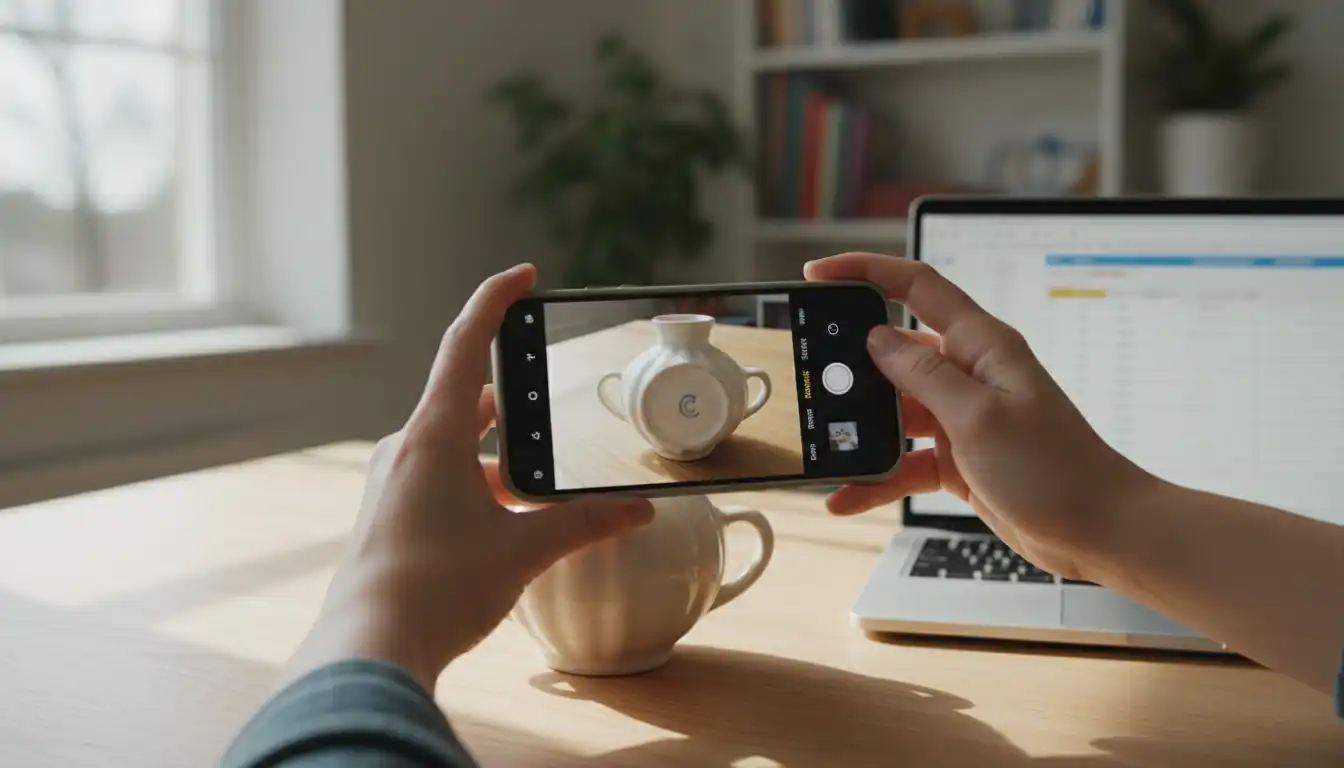
Once you have identified your pieces and verified their authenticity, the work of a true collector begins: curation. Owning a hundred pieces of pottery is a hobby; owning a documented, cataloged collection is an asset.
Organizing Your Finds Digitally
In the past, collectors kept "ledger books" with polaroid photos taped to the pages. Today, you can use digital tools to build a searchable inventory of your estate finds. This is crucial for insurance purposes. If a fire or flood occurs, having a digital record of your collection—complete with high-resolution photos of the marks—is the difference between a full insurance payout and a total loss.
When you use an app like Relic, you aren't just getting a one-time appraisal. You are building a digital catalog. Each scan saves the history, origin, and value of the item in a way that is easy to export or share.
- Photography: Take photos of the item from the front, the side, and a direct macro shot of the mark.
- Metadata: Record the provenance (where you bought it), the price you paid, and any damage or restoration you found.
- Condition Reports: Note any "flea bites" (tiny chips), hairlines, or professional repairs. These significantly impact the value over time.
Tracking Market Value Trends
The world of antiques is not static. A pattern that was popular ten years ago might be cooling off, while mid-century modern ceramics are currently seeing a massive surge in value. By maintaining a digital catalog, you can periodically re-appraise your items to see how your "portfolio" is performing.
Professional dealers use this data to decide when to "flip" an item and when to hold it. If you see that Rookwood prices are climbing, you might decide to hold onto that vase for another year. If you notice a decline in demand for certain European dinnerware, it might be time to list it on the secondary market.
Conclusion
Identifying rare pottery marks is a blend of historical detective work and modern data analysis. You start by feeling the texture of the mark—is it incised or underglaze? You look for the symbols of the great houses, from the crossed swords of Meissen to the flames of Rookwood. You verify the "ping" of the porcelain and the chemistry of the glaze to ensure you aren't holding a clever forgery.
But you don't have to do it alone. The days of wandering through library stacks are over. By combining your physical senses with the AI-driven power of the Relic app, you can identify and appraise items with a level of accuracy that was once reserved for museum curators.
Your next great find is out there, hidden under a layer of dust at a garage sale or tucked away in an attic. Stop guessing about what you've found. Download Relic today, flip that vase over, and finally discover the story—and the value—hidden in the mark.
Identify antiques instantly
Point your camera at any antique, collectible, or vintage item. Get valuations, history, and market insights in seconds.
Download for iPhone