Stop Guessing: How to Spot the Secret Marks That Turn Pottery into Paydays

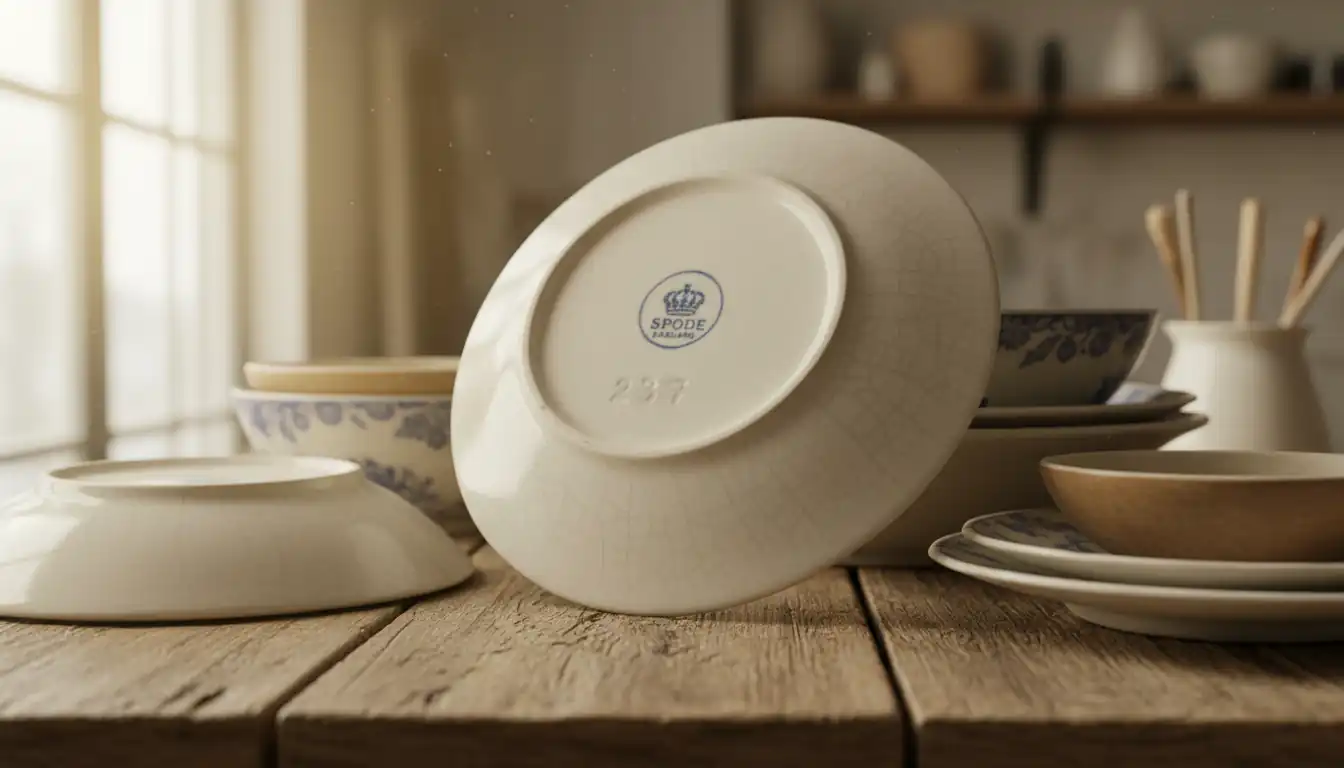
You are standing in a crowded estate sale, shoulder-to-shoulder with professional pickers and weekend hobbyists. Your eyes land on a dusty, cream-colored vase tucked away on a bottom shelf. It looks unremarkable, perhaps even a bit plain, but something about the weight and the glaze feels different. You flip it over, and there it is: a small, faded blue mark that looks like a pair of crossed sticks. Is this a piece of 18th-century fine porcelain worth thousands, or a modern reproduction destined for a yard sale?
The difference between a "payday" and a "pass" almost always lies in your ability to read the bottom of the pot. These marks are more than just logos; they are a coded language that tells the story of a piece’s birth, its travels across oceans, and its true place in history. If you can decode these symbols, you stop guessing and start investing.
In this guide, we will break down the systematic approach to identifying pottery marks. You will learn how to distinguish between handmade and factory-produced items, how to date pieces using international trade laws, and which specific marks from Europe, America, and Asia command the highest prices at auction. By the end of this article, you will have the framework needed to spot high-value ceramics in any environment.
The Visual Language of Ceramic History
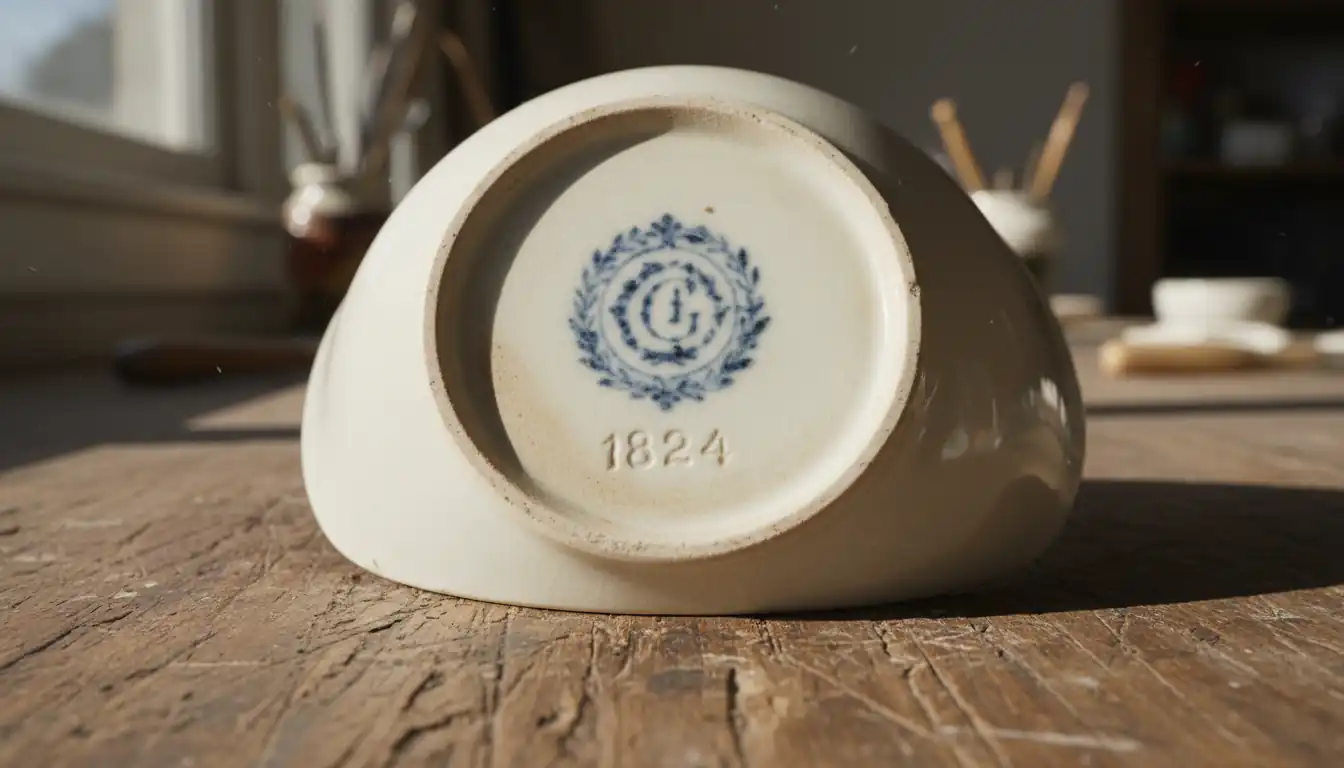
Before you try to identify a specific maker, you must understand the physical nature of the mark itself. The way a mark was applied to a piece of pottery tells you a great deal about the technology available at the time and the intent of the artist. Think of the mark as a fingerprint; the method of application is often as revealing as the design.
Deciphering Incised vs. Stamped Marks
The most basic distinction you will encounter is between marks that are "incised" and those that are "stamped" or "transferred." An incised mark is cut directly into the damp clay before the piece is fired. This is a labor-intensive process that usually indicates an older piece or one made by a studio artist rather than a large factory. When you run your finger over an incised mark, you can feel the depth and the slight ridges where the clay was pushed aside by the stylus.
Stamped marks, on the other hand, are applied using a rubber or metal stamp, often with ink or glaze. These became the industry standard during the Industrial Revolution as factories sought ways to brand thousands of items quickly. A stamp is usually very uniform and sits on the surface of the clay. Later, "transfer" marks were developed, which are essentially decals applied under or over the glaze. These allow for incredibly intricate designs, including coats of arms and detailed typography, which were impossible to achieve with hand-incising.
- Incised Marks: Often found on 17th and 18th-century European pieces or 20th-century American art pottery. They suggest a "hands-on" creation process.
- Stamped Marks: Common from the mid-19th century onwards. They indicate a standardized production line and are often easier to read.
- Painted Marks: Frequently seen on high-end porcelain like Meissen or Sevres. A skilled artisan would hand-paint the mark in cobalt blue or gold, making each mark slightly unique.
The Evolution of National Origin Stamps
One of the most effective ways to date a piece of pottery is to look for the "Made in" stamp. This isn't just a matter of branding; it was a legal requirement that changed over time. The McKinley Tariff Act of 1890 is the most important date for any collector to memorize. This American law required that all imported goods be clearly marked with their country of origin.
If you see a piece marked simply "England" or "France," it was likely produced between 1891 and 1914. If the mark says "Made in England" or "Made in Japan," it almost certainly dates to after 1914. This single piece of information can help you instantly filter out modern reproductions when you are hunting for true antiques.
| Mark Phrasing | Approximate Date Range |
|---|---|
| No country name | Pre-1891 |
| Country name only (e.g., "Germany") | 1891 – 1914 |
| "Made in [Country]" | 1914 – Present |
| "Occupied Japan" | 1945 – 1952 |
Pro Tip: If you find a piece of pottery with no mark at all, don't dismiss it. Many early 18th-century pieces were unmarked, or the marks were lost during the firing process. In these cases, you must rely on the "body" of the clay and the style of the glaze.
Blue-Chip Brands and Their Signature Stamps
When you are looking for pottery marks worth money, certain names carry more weight than others. These "blue-chip" brands have been collected for centuries, and their marks have evolved in specific, documented ways. Knowing these evolutions allows you to distinguish a rare early piece from a common later production.
European Giants: Meissen’s Crossed Swords and Delft Blue
Meissen is often considered the gold standard of European porcelain. Established in 1710, it was the first factory in Europe to produce true hard-paste porcelain. Their signature mark—the "Crossed Swords"—is perhaps the most famous in the world. However, the swords have changed significantly over the last 300 years.
Early Meissen marks from the 1720s often featured the "AR" (Augustus Rex) monogram, which was reserved for pieces intended for the royal court. These are incredibly rare. By the mid-1700s, the crossed swords became the standard. If you see a small dot between the hilts of the swords, you are looking at the "Academic Period" (1763–1774). If there is a star between the hilts, it is from the "Marcolini Period" (1774–1814). These small variations can change the value of a piece by thousands of dollars.
Delftware, the famous blue-and-white tin-glazed pottery from the Netherlands, is another area where marks are vital. Many people mistake modern souvenirs for 17th-century antiques. True antique Delft often has the initials of the factory owner or the specific pottery house, such as "AK" for Adrianus Kocx of the Greek A factory. Modern pieces will almost always have a printed "Delft" stamp, whereas the old pieces were hand-painted with a much softer, more organic look.
British Excellence: Wedgwood’s Iconic W and Spode’s Legacy
Wedgwood is a name that even non-collectors recognize, but identifying the age of a Wedgwood piece requires a keen eye for typography. Early Wedgwood (pre-1780) was often marked with a simple "Wedgwood" stamp in lower-case letters. Later, the company moved to all capital letters.
One of the most useful tools for dating Wedgwood is the three-letter code used between 1860 and 1945. These letters represent the month, the potter, and the year. For example, if you see a code where the last letter is "O," the piece was made in 1861. If the last letter is "P," it’s 1862. This level of precision is a dream for collectors because it removes the guesswork from the appraisal process.
Spode, another titan of British ceramics, is famous for perfecting the formula for bone china. Their marks often include the pattern number hand-painted in red or gold. If you find a piece of Spode with a printed mark and a pattern number in the 2000s or 3000s, you are likely looking at a piece from the early 19th century. The quality of the transfer printing on Spode is so high that the lines should look crisp even under a magnifying glass.
Hidden Gems of American Art Pottery
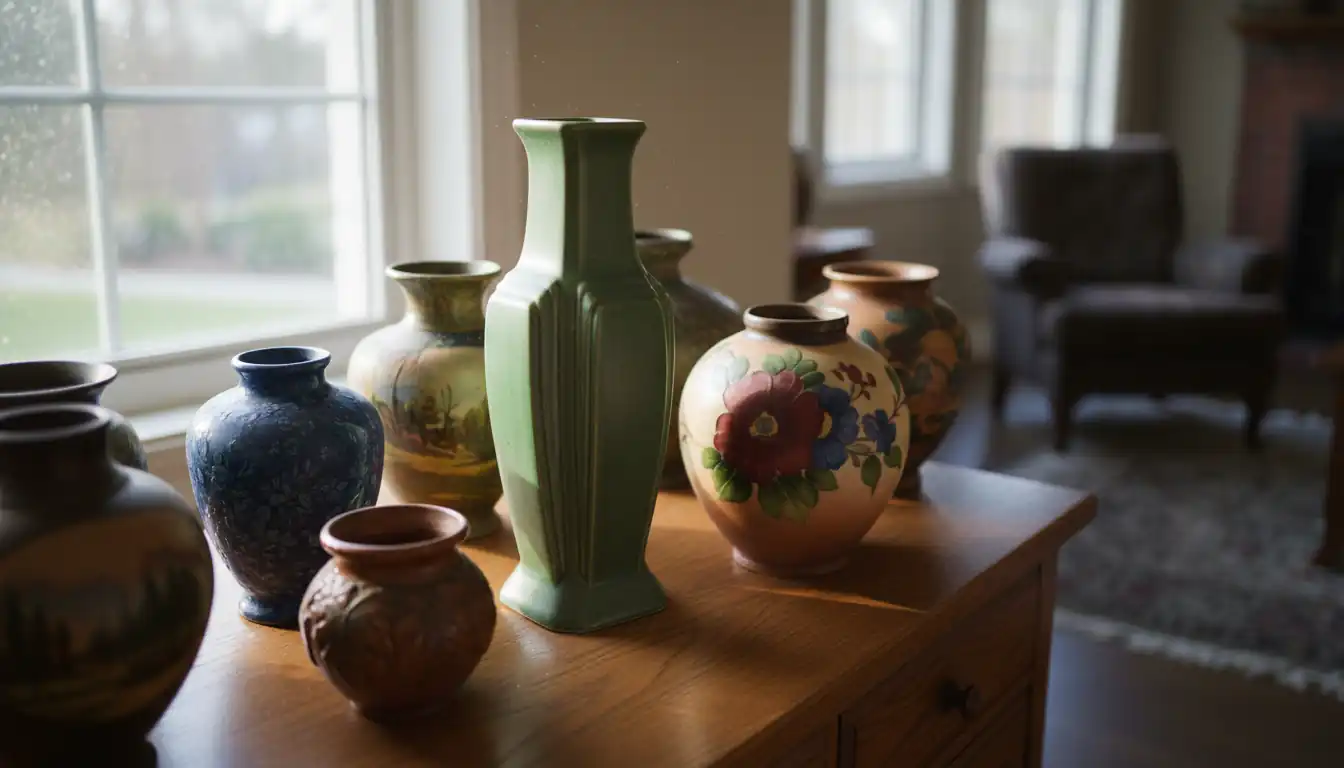
While European porcelain is steeped in royal history, American art pottery is defined by the Arts and Crafts movement of the late 19th and early 20th centuries. This era produced some of the most visually stunning and highly collectible ceramics in history. For a picker at a local estate sale, these are the items most likely to be overlooked.
Roseville’s Stylized Signatures
Roseville Pottery is a favorite among American collectors, but its marking system can be confusing. Because Roseville was produced for decades, the marks changed as the company modernized.
- Early Marks: The earliest pieces often had a small "RV" mark or were completely unmarked, relying on paper labels. Because these labels often fell off over time, many early, valuable Roseville pieces are found "in the wild" with no identification.
- Middle Period: In the 1930s, Roseville began using an impressed mark that was stamped into the bottom. These are usually easy to read but can be faint if the glaze was applied thickly.
- Late Period: The most common marks you will see are "raised" marks. These were part of the mold itself, meaning the words "Roseville U.S.A." stick out from the bottom of the pot. While these are authentic, they generally represent the later, mass-produced lines which are often less valuable than the early, hand-painted ones.
The Paul Revere Pottery and Saturday Evening Girls
If you ever find a piece of pottery with a mark that looks like a hand-drawn sketch of a man on a horse, stop everything. You have found Paul Revere Pottery. This was part of a social program in Boston known as the Saturday Evening Girls (SEG) club, designed to provide vocational training for young immigrant women.
The marks on SEG pottery are almost always hand-drawn and often include the initials of the artist and the date. Because these pieces were made in small batches by hand, they are highly sought after by museums and serious collectors. The style is often "cuerda seca," which looks like stained glass on clay, with thick black outlines separating different colors of glaze.
"The value of American art pottery is often tied to the individual artist rather than just the factory. A piece of Rookwood pottery marked with the initials of a famous decorator like Kataro Shirayamadani can sell for ten times the price of a standard piece from the same year."
The High-Stakes World of Chinese Reign Marks
Identifying Chinese porcelain is perhaps the most challenging skill for any collector. The history of Chinese ceramics spans millennia, and the marking system is deeply rooted in imperial tradition. When people ask, "How can I identify a pottery mark?" in the context of Chinese art, they are usually referring to "reign marks."
Reading Kaishu and Zhuanhu Scripts
A reign mark typically consists of six characters (though four-character marks are also common). These characters tell you the dynasty and the name of the Emperor during whose reign the piece was made. There are two primary scripts used for these marks:
- Kaishu (Standard Script): This looks like traditional calligraphy. It was the dominant script for marks during the Ming Dynasty and the early Qing Dynasty. The characters are clear and look as if they were written with a brush.
- Zhuanhu (Seal Script): This script is much more angular and looks like a labyrinth or a geometric pattern. It became popular during the Qianlong period (1736–1795). To the untrained eye, it can look like a series of interconnected boxes.
| Script Type | Visual Characteristic | Common Era |
|---|---|---|
| Kaishu | Fluid, brush-like strokes | Ming & Early Qing |
| Zhuanhu | Square, blocky, geometric | Mid to Late Qing |
Spotting Apocryphal Marks and Modern Fakes
Here is where it gets tricky: Chinese potters have a long-standing tradition of placing the marks of earlier, prestigious Emperors on their work as a sign of respect. These are known as "apocryphal marks." For example, a 19th-century potter might put a 15th-century Ming Dynasty mark on a vase. This isn't necessarily a "fake" in the modern sense; it was an homage.
However, the market is also flooded with modern forgeries designed to deceive. To tell the difference, you must look at the quality of the mark. On an authentic imperial piece, the calligraphy will be perfect. The blue pigment (cobalt) will have "heaped and piled" effects where the color has concentrated in certain areas, and the glaze will have a depth that modern chemical glazes cannot replicate. If the mark looks too perfect, or if the blue color looks flat and "printed," it is likely a modern reproduction.
Modern Tools for Instant Appraisal
For decades, the only way to identify a pottery mark was to carry around massive reference books. Collectors would lug copies of Kovel’s Antiques & Collectibles Price Guide or Godden’s Guide to British Porcelain to every flea market and auction house. While these books are excellent resources, they are impossible to search quickly when you are in the middle of a busy sale.
The reality is that traditional reference books are failing modern collectors. They can't keep up with the sheer volume of marks, and they certainly can't help you if a mark is partially faded or written in a language you don't speak. This is where technology has finally caught up to the needs of the antique world.
Using AI to Decode Obscure Hallmarks in Seconds
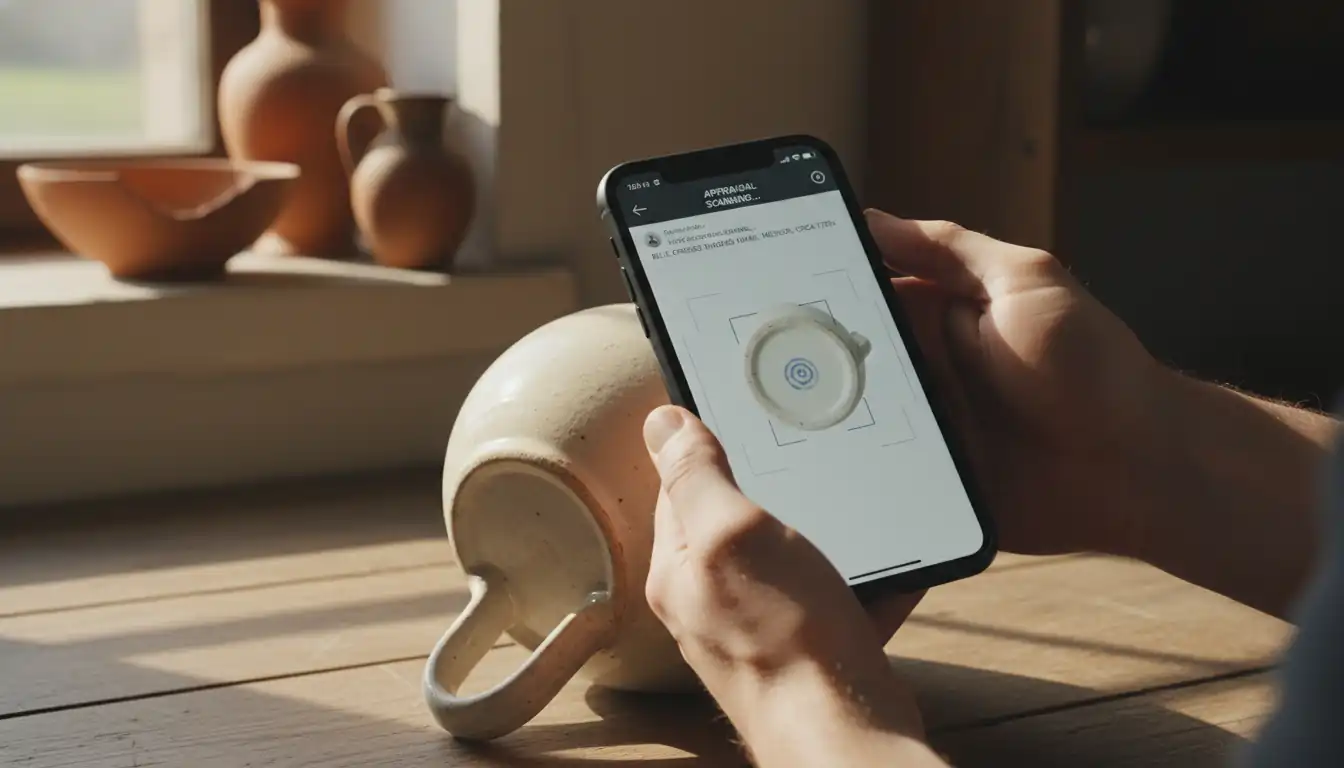
If you’ve ever wondered, "What is the app that identifies pottery marks?" the answer is Relic. Relic is an iOS app designed specifically for the high-stakes environment of antique hunting. Instead of flipping through a thousand pages of a book, you simply take a photo of the mark with your phone.
Relic uses advanced AI to analyze the mark, comparing it against a massive database of known maker's marks, reign marks, and factory stamps. Within seconds, the app provides:
- Instant Identification: It tells you exactly who made the piece and where it came from.
- Historical Context: You get the background story of the manufacturer or the artist.
- Real Appraisal: Relic provides a valuation based on current market trends, so you know exactly how much to bid or pay.
For professionals like dealers, pickers, and online sellers, this is a massive advantage. In the time it takes someone else to pull out their glasses and squint at a mark, you have already appraised the item and decided if it’s worth the investment. With a 4.9-star rating from over 20,000 reviews, it has become the secret weapon for anyone serious about turning pottery into paydays.
Why Speed Matters in the Field
In the world of picking, the first person to identify the "sleeper" wins. A sleeper is a high-value item that has been mispriced by the seller because they didn't recognize the mark. If you are at a thrift store and you find a piece of Chinese porcelain with a faint seal script mark, you don't have time to go home and research it. You need to know now.
Using an app like Relic allows you to perform market research on the fly. You can see what similar items have sold for at recent auctions, helping you avoid overpaying for "look-alikes" or missing out on a once-in-a-lifetime find. It turns your smartphone into a professional-grade appraisal tool, giving you the confidence to make split-second decisions.
Conclusion
Identifying pottery marks is a blend of historical knowledge, physical observation, and modern technology. By understanding the difference between incised and stamped marks, recognizing the impact of the McKinley Tariff Act, and learning the signature styles of giants like Meissen and Roseville, you build a foundation of expertise. You move from being a casual observer to a knowledgeable hunter who can see the value that others miss.
However, even the most seasoned experts encounter marks that are obscure, faded, or written in complex scripts. In those moments, don't leave your money on the table. Use the tools available to you. Download the Relic app on your iPhone and give yourself the edge of AI-powered appraisals. The next time you flip over a piece of pottery and see a mysterious symbol, you won't have to guess. You'll know exactly what you're holding—and exactly what it's worth. Happy hunting.
Identify antiques instantly
Point your camera at any antique, collectible, or vintage item. Get valuations, history, and market insights in seconds.
Download for iPhone