Stop Guessing: The Secret Marks That Prove Your Hummel Is Authentic

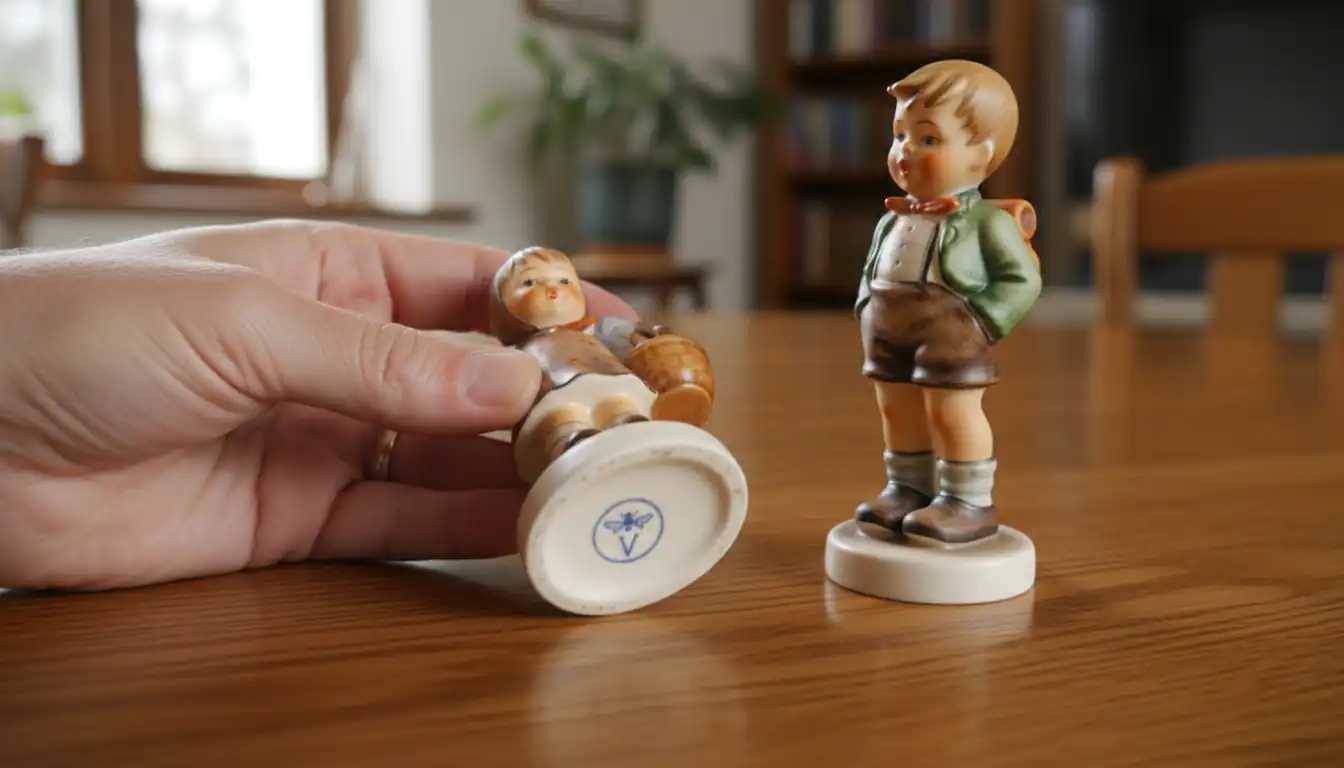
You are standing at a dusty estate sale, eyes locked on a small, rosy-cheeked figurine of a boy carrying a pair of boots. Your heart thumps. Is this a genuine M.I. Hummel, a rare find worth hundreds, or just a clever piece of molded plastic from a mid-century knockoff factory? For decades, these charming depictions of childhood innocence have been the crown jewels of many collections, but their popularity has invited a flood of counterfeits into the market.
The difference between a treasure and a trinket often comes down to details invisible to the untrained eye. You might think you need a magnifying glass and a lifetime of study to tell the difference, but the truth is simpler. Authenticity leaves a trail of physical evidence, from the weight of the clay to the specific curve of a painted eyebrow.
By the time you finish reading this, you will have the tools to identify a genuine Hummel with the confidence of a professional dealer. We will break down the physical anatomy of these pieces, decode the cryptic symbols on their bases, and show you how to spot a "fauxthentic" piece from a mile away.
The Anatomy of an Authentic Hummel
Before you even look at the bottom of a figurine, you can often tell if it is genuine just by picking it up. Authentic Hummels are not made of standard porcelain or cheap plastic; they are crafted from a specific type of earthenware known as "soft-paste" porcelain. This material gives them a distinct tactile quality that forgers find nearly impossible to replicate perfectly.
Porcelain Quality and Weight
When you hold a genuine Hummel, it should feel substantial. It has a "heft" that suggests quality, yet it lacks the clunky, overly heavy feel of plaster-of-paris or solid resin. Because they are hollow-cast, they possess a delicate balance. If you tap the side of the figurine gently with your fingernail, it should produce a dull "thud" rather than the high-pitched "ring" associated with fine bone china or the hollow "clack" of plastic.
The texture of the surface is another dead giveaway. Goebel, the manufacturer, used a specific glazing process that results in a matte, velvety finish. If the figurine is exceptionally shiny or feels "slick" like a glazed dinner plate, proceed with caution. Authentic Hummels are designed to look soft and organic, reflecting the charcoal and pastel drawings of Sister Maria Innocentia Hummel.
- The Weight Test: A genuine piece feels balanced. If it feels suspiciously light, it is likely a modern plastic imitation.
- The Surface Feel: Run your thumb over the "skin" of the figurine. It should feel smooth but not glassy.
- The Composition: Authentic pieces are made of earthenware clay sourced from the Oeslau region in Germany, which has a specific density.
The M.I. Hummel Signature
The most consistent physical mark of authenticity is the incised signature of the artist herself. Sister Maria Innocentia Hummel (born Berta Hummel) insisted that her signature appear on every piece approved by her and the Convent of Siessen.
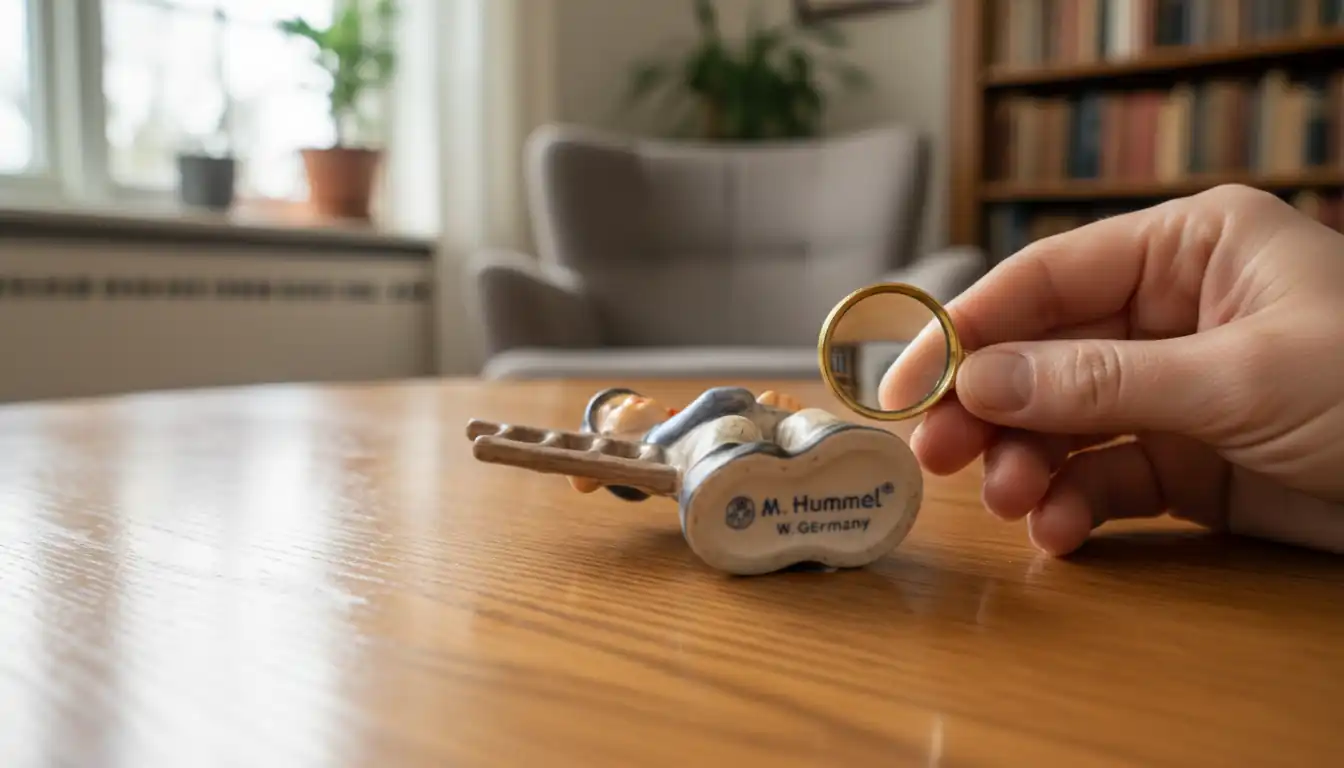
Look closely at the base of the figurine—not the bottom, but the top or side of the "ground" the character is standing on. You should see "M.I. Hummel" pressed into the clay. This is an incised mark, meaning it was stamped into the wet clay before the piece was fired. On very small pieces, this signature might be tiny, but it is almost always there.
Pro Tip: If the signature is painted on top of the glaze rather than pressed into the clay, the item is almost certainly a fake. Forgers often forget this structural detail, opting for easier surface markings.
Decoding the Evolution of the Goebel Trademark
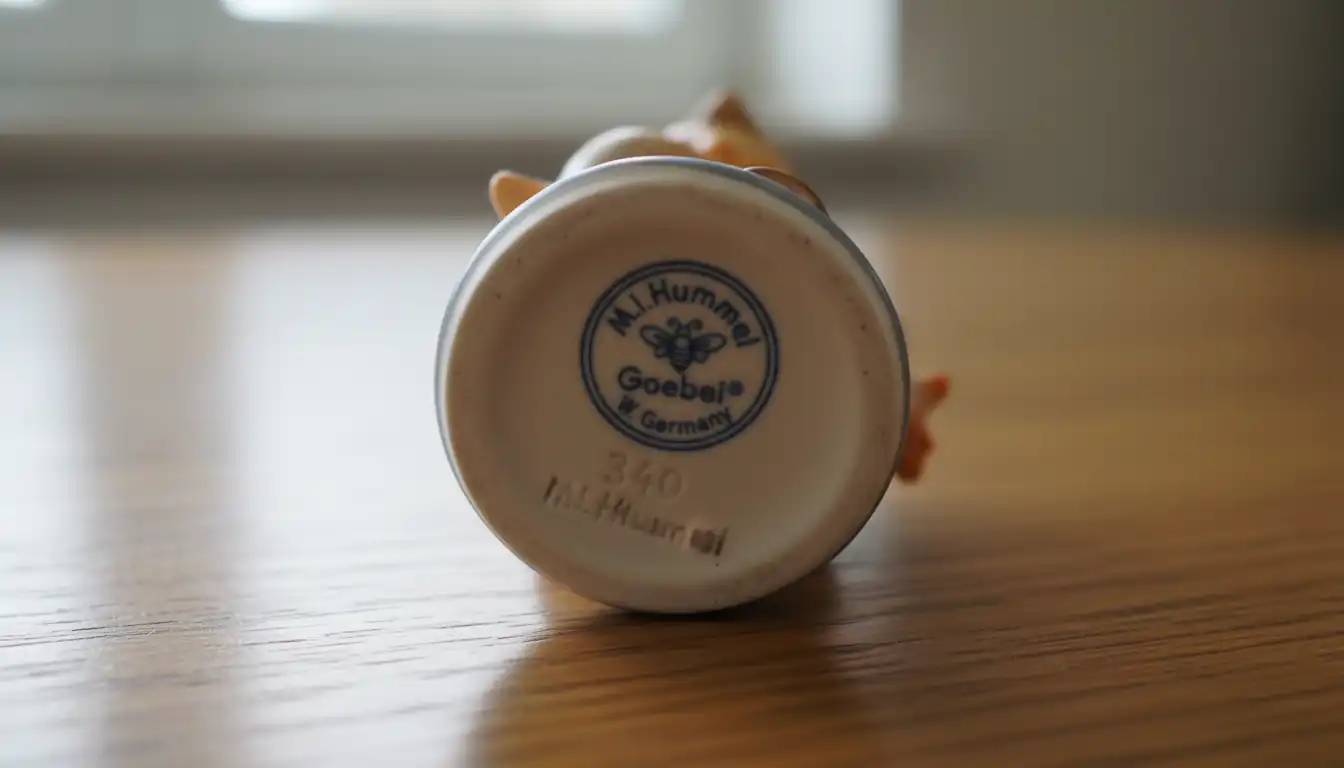
Once you have assessed the physical feel and found the signature, it is time to flip the figurine over. The underside of a Hummel is a historical roadmap. These marks, known as Trademarks (TMK), allow you to date the piece to a specific era. Understanding these marks is the key to answering a common question: What is the difference between Hummel and Goebel Hummel?
Simply put, "Hummel" refers to the brand and the artistic style based on Berta Hummel’s drawings. "Goebel" was the name of the German porcelain factory (W. Goebel Porzellanfabrik) that held the exclusive rights to produce these figurines from 1935 until 2008. Therefore, almost every authentic vintage Hummel is a "Goebel Hummel."
The Reign of the Bee Marks
The most famous period of Hummel production is defined by the "Bee" marks. This was a tribute to Sister Maria Innocentia, whose childhood nickname was "Hummel," which means "bumblebee" in German.
| Trademark Period | Name | Description |
|---|---|---|
| TMK-1 (1934–1950) | The Crown Mark | Features a crown with the initials "WG" (William Goebel). |
| TMK-2 (1950–1955) | The Full Bee | A large bee inside a "V". The bee's wings are often quite detailed. |
| TMK-3 (1960–1972) | The Stylized Bee | The bee becomes a simple triangle with wings, still inside a "V". |
| TMK-4 (1964–1972) | The Three Line | Includes "© by W. Goebel" in three lines of text next to the bee. |
| TMK-5 (1972–1979) | The Last Bee | The bee is very small and sits above the "G" in Goebel. |
The transition from the Crown Mark to the Bee marks represents the "Golden Age" of Hummels. If you find a TMK-2 "Full Bee," you are looking at a piece from the post-WWII era, which is highly coveted by collectors. The marks were usually applied in blue or black ink under the glaze, ensuring they would never wear off.
Modern Marks and the Rödental Era
In 1991, Goebel changed the mark significantly to include the original Crown Mark and the year 1871 (the year the Goebel factory was founded). This is known as TMK-7. However, the biggest shift occurred in 2008 when Goebel ceased production.
The manufacture was taken over by Manufaktur Rödental. These newer pieces (TMK-9 and beyond) feature a different logo that often includes the name "Manufaktur Rödental" and a bumblebee. While these are authentic Hummels, they are considered "modern" and generally do not hold the same secondary market value as the vintage Goebel-era pieces.
- Incised Numbers: In addition to the ink trademark, look for numbers pressed into the clay. These represent the "mold number" (which identifies the design) and the "size designator."
- Factory Marks: You may also see small hand-painted numbers or letters. These were the personal marks of the painters and finishers who worked on that specific piece.
Red Flags That Scream Counterfeit
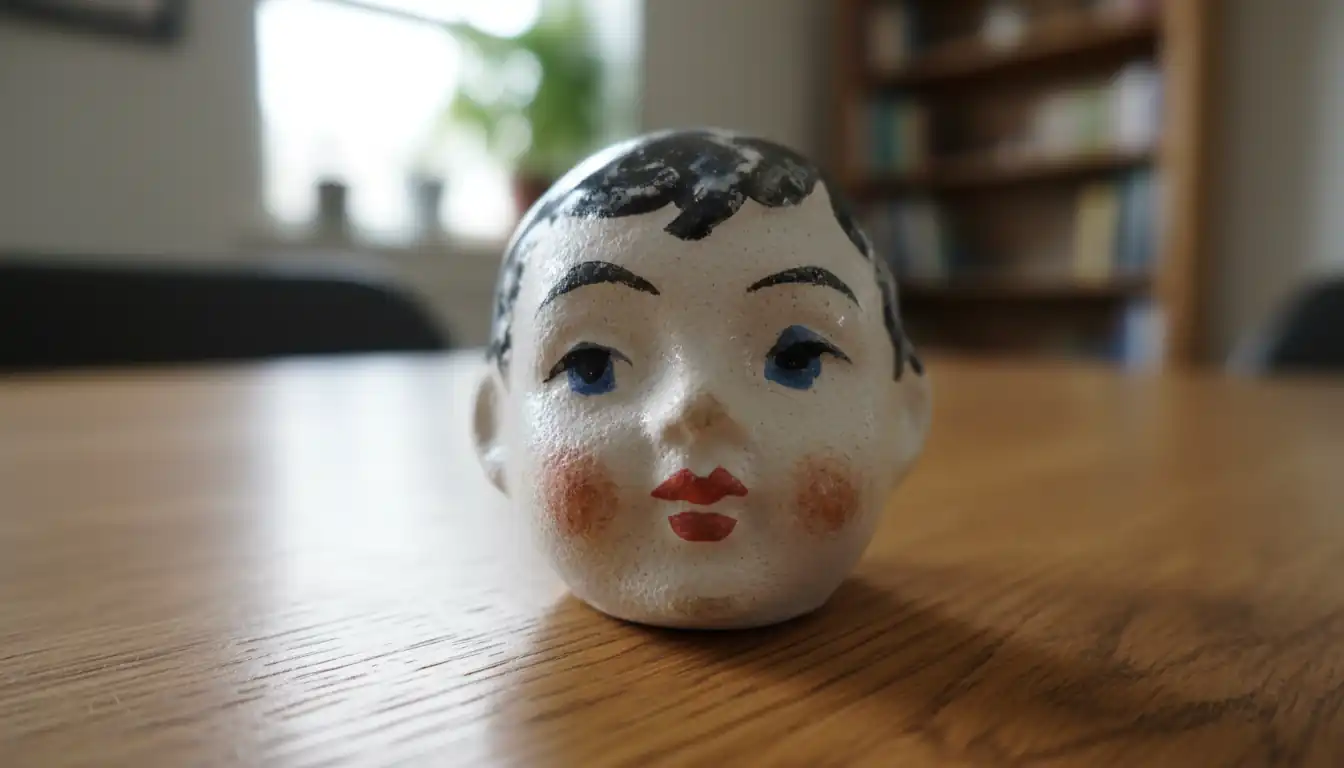
As Hummels grew in popularity, especially among American soldiers stationed in Germany after WWII, the market saw an explosion of "look-alikes." Some were intentional forgeries, while others were "tribute" pieces from Japan or Taiwan that mimicked the style but lacked the soul of the original.
Sloppy Paintwork and Color Palettes
The most immediate red flag is the color. Authentic Hummels use a very specific, muted color palette. Think earthy tones: moss greens, dusty blues, terracotta oranges, and soft browns. The colors are applied by hand using a "stippling" technique that creates soft transitions.
Counterfeits often feature:
- Garish Colors: Bright, neon-like reds or harsh primary yellows.
- Shiny Paint: Authentic Hummels have a matte finish. If the cheeks of the figurine look like they were painted with lip gloss, it’s a fake.
- Lack of Detail: Look at the eyes. A real Hummel has tiny, precise pupils and a gentle expression. Fakes often have "dead" eyes or sloppy, thick lines where there should be delicate lashes.
Inconsistent Base Markings
Forgers often struggle to replicate the ink stamps on the bottom. On a genuine piece, the stamp is crisp and sits under the glaze. On a fake, the stamp might look blurry, as if it were applied with a rubber stamp from a craft store.
Another "instant fail" for a figurine is the country of origin. Authentic Hummels are German. They were made in the Oeslau/Rödental region. If you see a sticker or a stamp that says "Made in Japan," "Made in Taiwan," or "Made in Occupied Japan," you are looking at a "Hummel-style" figurine, not a genuine M.I. Hummel. While some of these (like those made by the Japanese company Lefton) are collectible in their own right, they are not Hummels and are worth a fraction of the price.
- The "Lefton" Factor: Many Japanese companies produced figurines of children in the 1950s. They are often cute, but the clay is different, and they lack the incised "M.I. Hummel" signature.
- The Glaze Test: Look for "crazing"—tiny spiderweb cracks in the glaze. While some older authentic Hummels have crazing, it is very common in cheap fakes where the clay and glaze expand at different rates.
Leveraging Modern Tech for Instant Appraisal
Even with a guidebook in hand, the nuances of trademarks and mold numbers can be overwhelming. Is that a "Small Stylized Bee" or a "Large Stylized Bee"? The difference could be decades of history and hundreds of dollars. This is where modern technology has changed the game for collectors.
Instead of carrying around heavy reference books or spending hours scrolling through forum posts, you can now use your smartphone to do the heavy lifting. The Relic app is a specialized tool designed specifically for this purpose. It functions as an antique identifier that removes the guesswork from the process.
How AI Identifies Rare Variants
The Relic app uses advanced AI that has been trained on tens of thousands of authentic antiques, including the entire catalog of Goebel Hummel production. When you take a photo of your figurine—especially the base and the signature—the app analyzes the specific geometry of the mold and the exact typography of the trademark.
It can distinguish between a common TMK-6 and a rare "Full Bee" variant in seconds. This is particularly helpful because some trademarks were used in overlapping years, and the subtle differences in the "V" or the bee's wings are hard to spot with the naked eye. Relic compares your photo against a massive database of authentic marks to ensure the piece matches known factory standards.
Getting a Digital Appraisal in Seconds
Beyond just identification, the app provides a real-world appraisal and historical context. It tells you the name of the design (like "The Merry Wanderer" or "Apple Tree Boy"), when it was produced, and what its current market value looks like.
For a collector at an auction or a dealer at a flea market, this is a massive advantage. You can instantly see if a piece has a history of being faked or if it’s a rare "closed edition" that is no longer in production. With a 4.9-star rating from over 20,000 reviews, Relic has become a trusted companion for those who want professional-grade accuracy without needing a PhD in German ceramics. It turns your phone into a digital expert, allowing you to verify origin and history with a single tap.
The Market Value of Authenticity
Why does all this detective work matter? Because the Hummel market is driven entirely by the "TMK" and the condition of the piece. A common figurine from the 1980s might sell for $30, while the exact same design with a 1930s Crown Mark could fetch $500 or more.
Valuation Gaps Between Real and Fake
The financial stakes are high. If you accidentally buy a "Made in Japan" look-alike for $100, you have essentially lost $95. Serious collectors will not touch a piece that lacks the incised signature or has a questionable trademark.
"In the world of Hummels, a fake has zero resale value. It is a decorative item, not an investment."
The most valuable Hummels are usually those with:
- Low TMK Numbers: TMK-1 and TMK-2 are the "holy grails."
- Rare Molds: Some designs were only produced for a few years before the molds were broken.
- Large Scale: Most Hummels are 3 to 5 inches tall. Versions that are 10 inches or larger are significantly more valuable.
Trusted Sources for Serious Collectors
If you are looking to build a collection that holds its value, you must be careful about where you shop. Online marketplaces like eBay are flooded with Hummels, but many sellers are not experts. They might list a piece as "vintage" when it is actually a modern reproduction.
- Reputable Auction Houses: Look for auctions that specialize in European porcelain. They usually have experts who pre-verify every piece.
- Certified Dealers: Many long-time collectors have transitioned into dealing. Buying from someone who offers an authenticity guarantee is worth the slight premium in price.
- The "Too Good to Be True" Rule: If you see a "Full Bee" figurine for $20 on a local classified ad, ask for a photo of the base. If the seller refuses or the photo is blurry, walk away.
Authentic Hummels are more than just dust-collectors; they are pieces of history that survived a world war and a changing artistic landscape. By focusing on the weight of the earthenware, the presence of the incised signature, and the specific evolution of the Goebel trademark, you protect yourself from the disappointment of a counterfeit.
Conclusion
Identifying an authentic Hummel is a blend of sensory observation and historical knowledge. You now know to feel for the velvety texture of the earthenware, to look for the incised "M.I. Hummel" signature on the base, and to decode the "Bee" marks that define the Goebel era. You understand that a "Made in Japan" sticker is a red flag and that the difference between a TMK-2 and a TMK-6 can be worth hundreds of dollars.
The next time you find a charming figurine at a sale, you won't have to guess. Use your hands to judge the weight, your eyes to inspect the trademark, and if you're still unsure, let the Relic app provide the final word with its AI-driven appraisal.
Your Next Step: Go to your china cabinet or a local antique shop and practice. Look for that incised signature. Flip the piece over and identify the trademark. The more Hummels you handle, the more the fakes will stand out like a sore thumb. Happy hunting!
Identify antiques instantly
Point your camera at any antique, collectible, or vintage item. Get valuations, history, and market insights in seconds.
Download for iPhone