Stop Guessing: Use Your Phone to Identify and Appraise Antique Sewing Machines

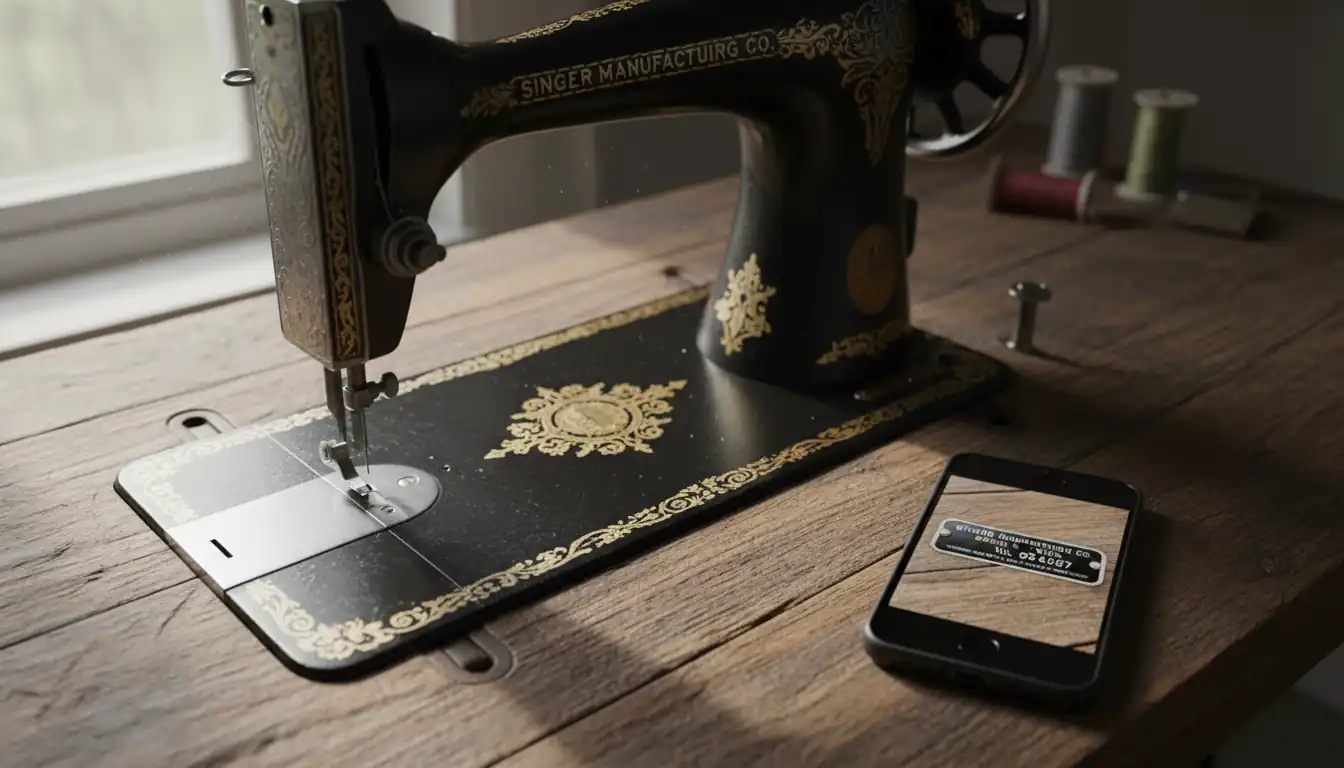
You find it in the corner of a dusty estate sale or tucked away in your grandmother’s attic—a heavy, cast-iron beast with intricate gold filigree and a mysterious wooden cabinet. It looks like a piece of history, but is it a valuable heirloom or just a beautiful paperweight? Most people see an old sewing machine and assume it’s worth a fortune, while others see a relic of a bygone era that belongs in a museum. The truth usually lies somewhere in the middle, hidden beneath layers of grime and decades of forgotten history.
Identifying these machines used to require hours of squinting at faded serial numbers and flipping through grainy reference books. You had to know the difference between a vibrating shuttle and a rotary hook just to figure out what decade you were looking at. It was a hobby reserved for the most patient of historians. But the landscape of antique collecting is changing, and the tools you carry in your pocket are making the "guessing game" a thing of the past.
This guide will walk you through the process of transforming that heavy piece of iron into a documented piece of history. We will explore the physical markers that define a machine’s age, the mechanical categories that dictate its function, and the modern technology that can identify and appraise your find in seconds. Whether you want to sew through six layers of denim or simply want to know the market value of your family’s legacy, the answers are closer than you think.
The Vintage Threshold and the Eight Core Machine Types
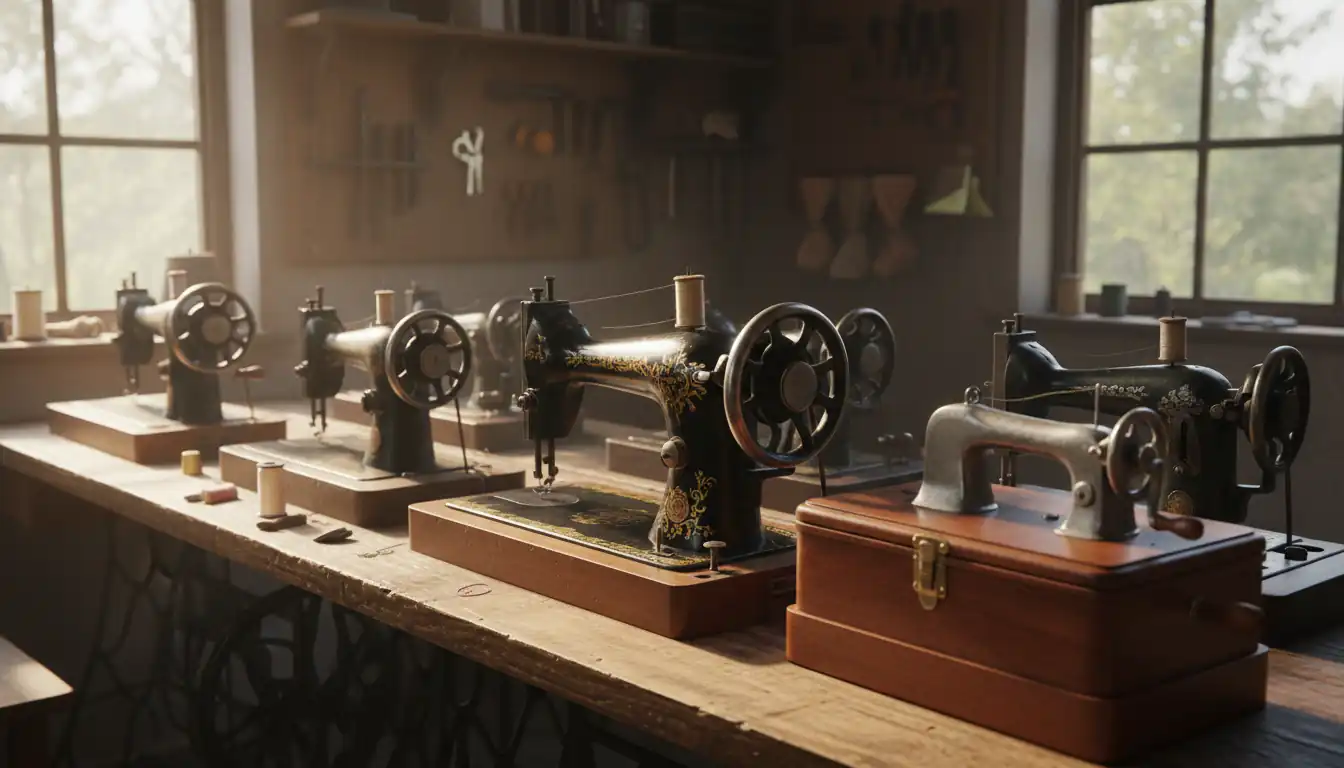
Before you can determine the value of a sewing machine, you have to understand where it sits on the timeline of industrial history. Not every old machine is an "antique," and the distinction matters significantly to collectors and appraisers. In the world of collectibles, we generally use a specific set of age brackets to categorize items.
Defining the Age of Your Machine
How old is considered vintage for sewing machines? If your machine was manufactured between 20 and 49 years ago, it falls into the "vintage" category. These are often the machines from the 1970s and 1980s—the first era where plastic components began to replace all-metal internals. While they are reliable, they lack the "antique" status that drives high-end auction prices.
A machine is considered "antique" once it crosses the 100-year mark. Machines from the late 1800s and very early 1900s are the true prizes for many collectors. Anything between 50 and 99 years old sits in a middle ground, often referred to as "collectible vintage." Understanding these tiers helps you set realistic expectations for rarity and mechanical complexity.
The Eight Essential Sewing Machine Categories
To identify what you have, you need to look at how it is powered and how it creates a stitch. Most machines found in the wild today fall into one of these eight primary categories:
- Treadle Machines: These are powered by a foot pedal built into a heavy cast-iron stand. A leather belt connects the foot pedal to the machine’s handwheel.
- Hand-Crank Machines: Common in Europe and for portable use, these feature a handle on the handwheel that the user turns manually to power the needle.
- Chain Stitch Machines: These early models use a single thread to create a loop, similar to a crochet stitch. They are often small and highly prized by collectors for their simplicity.
- Lockstitch (Vibrating Shuttle) Machines: These use a long, bullet-shaped shuttle that moves back and forth. This was the dominant technology for home machines in the late 19th century.
- Oscillating Shuttle Machines: A refinement of the vibrating shuttle, where the shuttle moves in a semi-circle. This design was a bridge to modern sewing.
- Rotary Hook Machines: These feature a hook that spins in a full circle. This is the smoothest and fastest mechanical design, still used in high-end machines today.
- Early Electric (External Motor) Machines: These are often older hand-crank or treadle models that were "electrified" later with a motor bolted to the back.
- Integrated Electric Machines: These were designed from the ground up to be electric, with the motor hidden inside the casting or neatly tucked into the frame.
Knowing the mechanical category of your machine is the first step in narrowing down its date of manufacture. A vibrating shuttle machine, for example, almost certainly dates your find to before the mid-20th century.
Traditional Identification via Manual Markers and Serial Numbers
Once you know the general type of machine you are holding, it is time to look for the "fingerprints" left by the manufacturer. Every antique sewing machine has a story told through its serial numbers, logos, and decorative decals. Identifying these markers is like solving a puzzle where the pieces are hidden in plain sight.
Locating Hidden Serial and Model Numbers
The serial number is the most important piece of data you can find. It is the "Social Security number" of the machine, often revealing the exact day it left the factory. However, manufacturers weren't always consistent about where they stamped these numbers.
| Common Location | What to Look For |
|---|---|
| The Base Plate | A small brass or steel plate riveted near the front or side of the machine. |
| Under the Handwheel | Stamped directly into the cast iron on the right-hand side. |
| The Pillar | On the vertical "arm" of the machine, often near the bottom. |
| Underneath the Machine | You may need to tilt the machine back out of its cabinet to see numbers stamped on the underside of the bed. |
For many brands, the serial number is a simple string of digits. For others, like the famous British Jones machines, the numbers might be hidden behind the faceplate or on the internal frame. If you find a number, write it down exactly as it appears, including any letter prefixes, as these often denote the specific factory of origin.
Decoding Decals and Manufacturer Logos
In the Victorian and Edwardian eras, sewing machines were more than just tools; they were centerpieces of the home. Manufacturers decorated them with elaborate paint patterns known as decals. These aren't just for show—they are secondary identifiers that can help you confirm a model when the serial number is worn away.
The iconic "Featherweight" models, for instance, are famous for their specific decal patterns. You might find the "Scroll" or "Celtic Knot" patterns on early models, while later versions moved to simpler, more geometric designs. Other machines might feature the "Red Eye" pattern, which looks like a stylized peacock feather, or the "Tiffany" (also known as Gingerbread) pattern, which is characterized by gold floral flourishes.
If the manufacturer's name has rubbed off the arm of the machine, look at the brass "boss" or medallion on the front. This small circular badge often contains the company’s logo and the city where the headquarters were located. Even a partially visible logo can be the key to distinguishing a high-end machine from a "stencil machine"—a generic model sold to department stores and rebranded with a local name.
Modern Identification Using AI and the Relic App
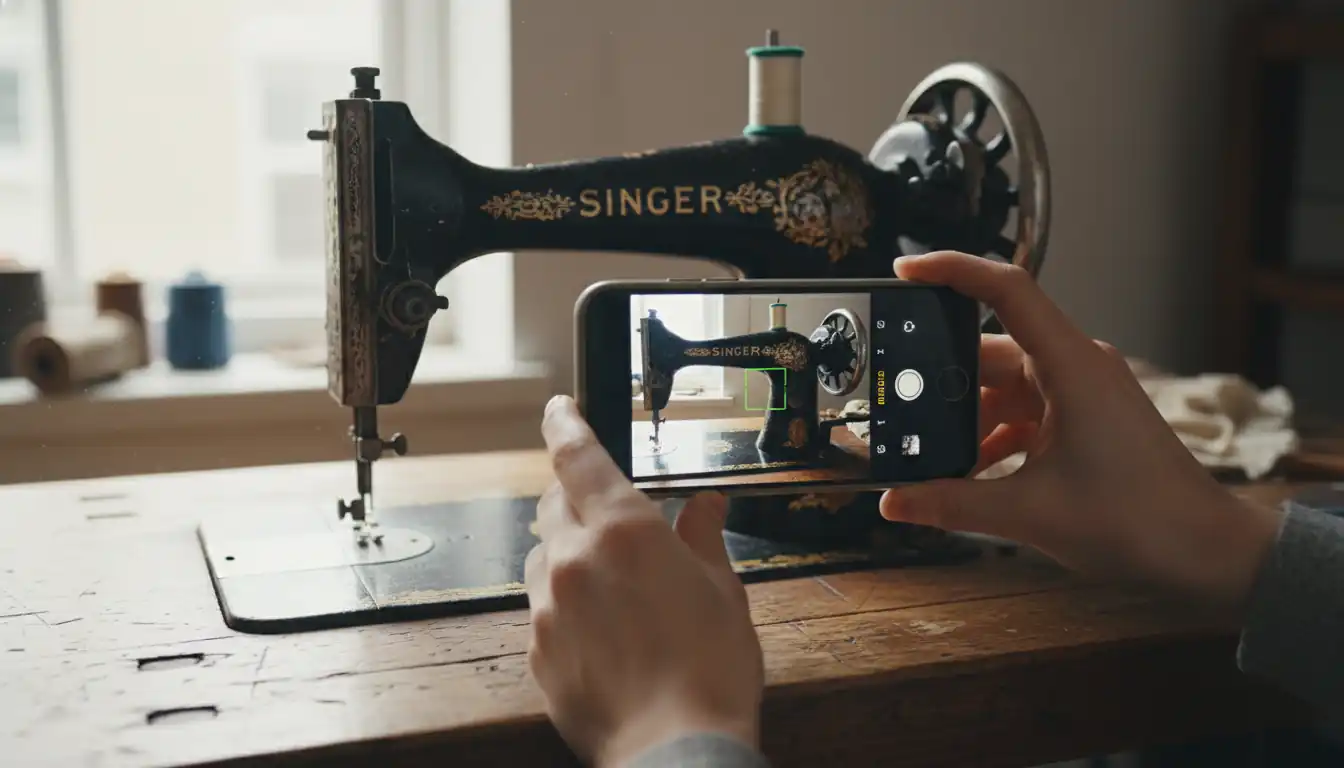
Manual identification is a rewarding process, but it is also time-consuming and prone to error. Misreading a single digit in a serial number can lead you down a rabbit hole of incorrect dates and values. This is where modern technology bridges the gap between the 19th-century machine and the 21st-century collector.
How AI Recognizes Mechanical Engineering Patterns
Artificial Intelligence has changed the way we look at antiques. An app like Relic doesn't just look for a serial number; it analyzes the entire "silhouette" of the machine. Every manufacturer had a unique way of casting their iron frames. The curve of the neck, the placement of the stitch regulator, and the specific shape of the tension assembly are all unique identifiers.
Relic’s advanced AI has been trained on thousands of historical images. When you use the app, it compares the visual data of your machine against a massive database of known models. It can distinguish between a standard domestic model and a rare industrial variant simply by looking at the proportions of the casting marks. This allows you to get a real appraisal and a deep history of the item without needing to be an expert yourself.
Capturing the Perfect Photo for an Instant Appraisal
To get the most out of an AI identifier, the quality of your input matters. Think of it like taking a portrait of a person; the AI needs to see the "features" clearly to make a match.
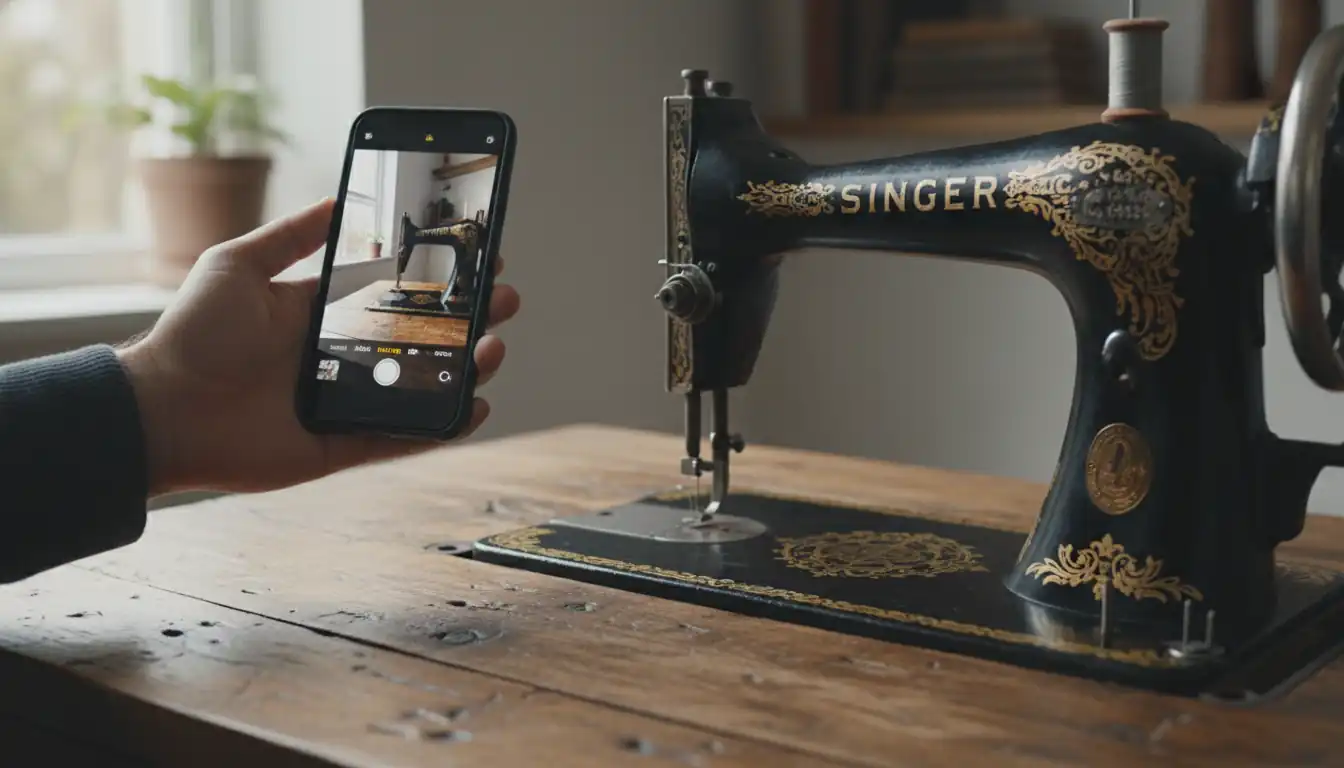
- Lighting is Everything: Avoid using a harsh flash, which can create glare on the black enamel. Instead, move the machine near a window for soft, natural light.
- The Profile Shot: Take your primary photo from the front, showing the entire machine from the handwheel on the right to the needle bar on the left.
- Detail the Decals: If there are specific paint patterns or logos, take close-up shots of those as well.
- The Underside: If you can safely tilt the machine, a photo of the internal mechanics can help the AI confirm the shuttle type.
Once you upload the photo to Relic, the app processes the visual cues to provide an origin story and a market valuation. It’s a professional-grade tool that fits in your pocket, making it an essential resource for dealers, pickers, or anyone who finds themselves staring at a beautiful old machine in a thrift store and wondering, "Is this the one?"
Functional Value and Heavy Fabric Capabilities
For many collectors, the value of an antique sewing machine isn't just in its history—it's in its ability to work. There is a growing movement of "vintage sewists" who prefer these old machines over modern, computerized versions. Why? Because these machines were built to last forever.
Identifying the Best Models for Heavy Fabrics
If you are looking for a machine that can handle denim, leather, or canvas, you are likely looking for a specific type of vintage workhorse. Which Singer is best for heavy fabrics? The consensus among experts usually points to the Singer 15-91 or the Singer 201.
The 15-91 is famous for its "potted motor," which uses gears rather than a belt to transfer power. This means there is no belt to slip when the needle hits a thick seam. The 201, on the other hand, is often called the "Rolls Royce" of sewing machines. It uses a rotary hook and all-metal gears, providing a stitch quality that modern plastic machines simply cannot replicate.
- All-Metal Internals: Unlike modern machines that use plastic gears, antique machines use heat-treated steel. This allows them to punch through heavy materials without stripping the gears.
- High Torque: Older motors and treadle systems provide incredible piercing power at slow speeds, which is essential for detailed leatherwork.
- Simplicity: Because these machines are mechanical rather than electronic, they can be tuned to handle much heavier thread than a standard home machine.
Evaluating Mechanical Condition via Visual Cues
How do you know if a machine is a "workhorse" or just a "parlor" model meant for light decorative work? Look at the size of the motor and the thickness of the needle bar. Industrial-leaning domestic machines often have a larger "throat space"—the distance between the needle and the vertical pillar.
Check the handwheel. If it is large and heavy, it acts as a flywheel, storing kinetic energy to help the needle penetrate tough fabrics. If the machine feels light or has a lot of plastic trim, it was likely designed for light dressmaking rather than heavy-duty utility. A quick scan with an app like Relic can often tell you the original intended use of the machine, saving you the heartbreak of trying to sew leather on a machine designed for silk.
Uncovering the Origin Story and Market Rarity
Every antique sewing machine was once a significant investment for a family. In the late 1800s, a high-end sewing machine could cost as much as a small carriage. This history is baked into the machine itself, and uncovering it is the final step in a true appraisal.
Tracing the Machine from Factory to Attic
Once you have identified the model and date, you can often trace the machine back to its specific factory. For example, many machines were produced in the massive Kilbowie factory in Scotland or the Elizabethport factory in New Jersey. Each factory had its own quirks and production standards.
The social history of these machines is fascinating. They were the first major mechanical appliances in the home, predating the washing machine and the vacuum cleaner. They represented independence for women, allowing them to start businesses from their parlors. When you look at your machine, you aren't just looking at iron and thread; you're looking at a tool that changed the economic landscape of the 19th century.
Determining Rarity Beyond the Brand Name
Rarity is driven by more than just age. A machine from 1920 might be worth more than one from 1890 if it possesses certain "scarcity factors."
- Limited Edition Colors: While most machines were "Japanned" black, some were produced in tan, "Godzilla" green (a crinkle finish), or even blue. These are highly sought after.
- Unique Attachments: Finding a machine with its original box of "puzzle box" attachments—special feet for hemming, quilting, and ruffling—can double the value.
- Industrial Cross-Overs: Some machines were built for specific trades, like glove making or sail repair. These industrial-spec machines are rare and highly functional.
- Condition of the Cabinet: For treadle machines, the woodwork is often as important as the metal. A machine in a rare "parlor cabinet" with inlaid wood is a piece of fine furniture.
By combining the data from serial numbers, the visual analysis of AI tools like Relic, and an understanding of mechanical history, you can move from "guessing" to "knowing." You’ll know if that machine in the attic is a common household model or a rare piece of industrial art.
Conclusion
Identifying and appraising an antique sewing machine is a journey through the history of engineering and domestic life. By understanding the difference between vintage and antique, recognizing the eight core mechanical types, and using the physical markers like serial numbers and decals, you can begin to piece together the story of any machine you find.
While traditional detective work is a vital skill for any collector, you don't have to do it alone. Modern tools have simplified the process, allowing you to get professional-grade insights in the palm of your hand. Using an app like Relic allows you to skip the hours of manual research and get straight to the heart of your item’s history and value. With a simple photo, you can access a wealth of information that used to be hidden in archives and out-of-print manuals.
The next time you see a heavy, black-enameled machine at a garage sale or in a relative's basement, don't just walk past it. Take a moment to look at the decals, check the serial number, or pull out your phone for a quick scan. You might just be looking at a functional masterpiece that is ready for another century of service—or a valuable antique waiting to be rediscovered.
Identify antiques instantly
Point your camera at any antique, collectible, or vintage item. Get valuations, history, and market insights in seconds.
Download for iPhone