Stop Guessing: Use Your Phone to Identify Mystery Antique Marks in Seconds

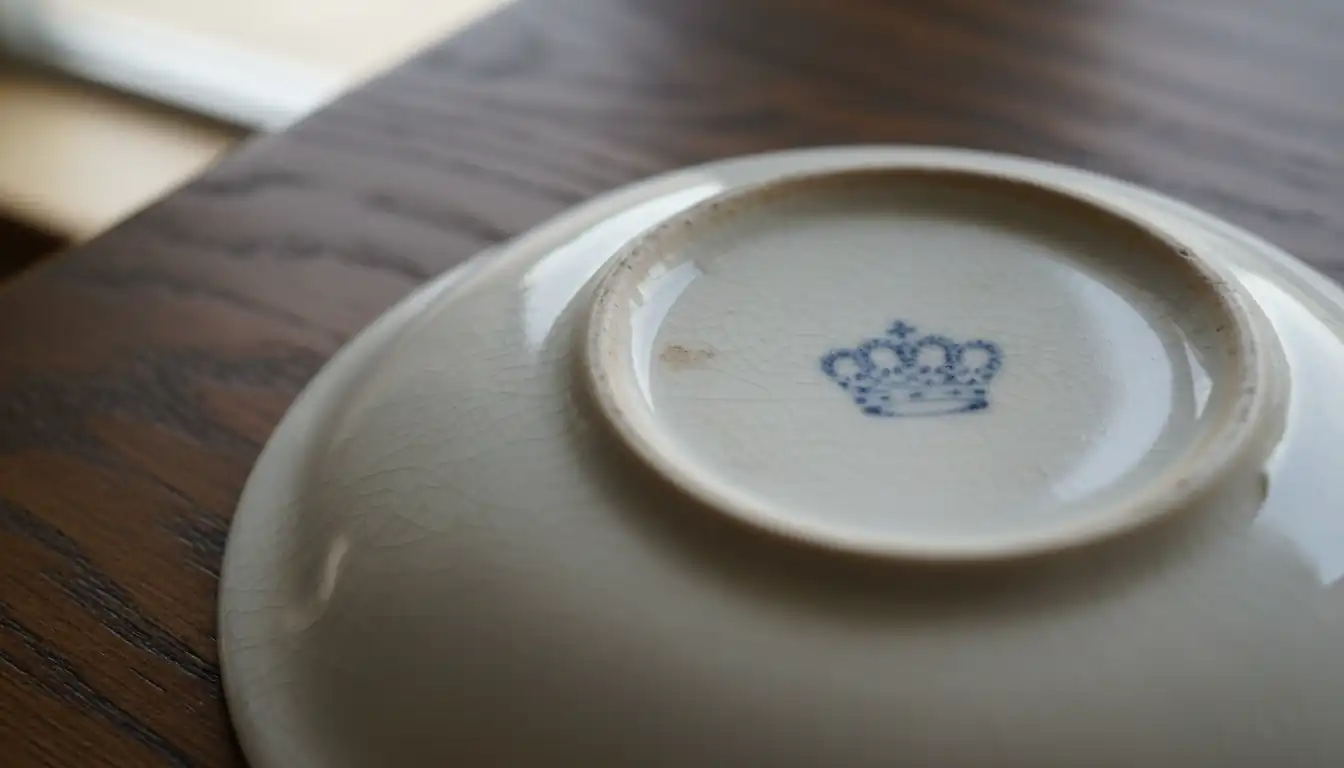
Imagine standing in a crowded thrift store or a quiet estate sale, holding a heavy silver teapot or a delicate porcelain figurine. You turn it over, squinting at a tiny, weathered stamp on the base. It looks like a lion, or perhaps a shield, or maybe just a blurred set of initials. In that moment, you are holding a mystery that spans decades, or even centuries.
That small mark is more than just a decoration; it is a fingerprint. It tells you who made the item, where it was created, and exactly how old it is. For generations, decoding these symbols required a library of heavy reference books and years of specialized study. You had to know exactly what you were looking for just to find the right page in a manual.
The good news is that the days of guessing are over. You no longer need to be a professional historian to uncover the story behind a piece of pottery or a set of silverware. By understanding the basic language of these marks and using the right digital tools, you can transform a mystery find into a documented piece of history in a matter of seconds.
The Secret Language of Antique Hallmarks and Maker's Marks
When you look at the bottom of an antique, you are often looking at a complex "sentence" written in symbols. To the untrained eye, these marks look like a jumble of icons. However, they follow a very specific logic. The first step in becoming a savvy collector is learning to distinguish between a hallmark and a maker's mark. While people often use these terms interchangeably, they serve two very different purposes.
Distinguishing Between Hallmarks and Maker's Marks
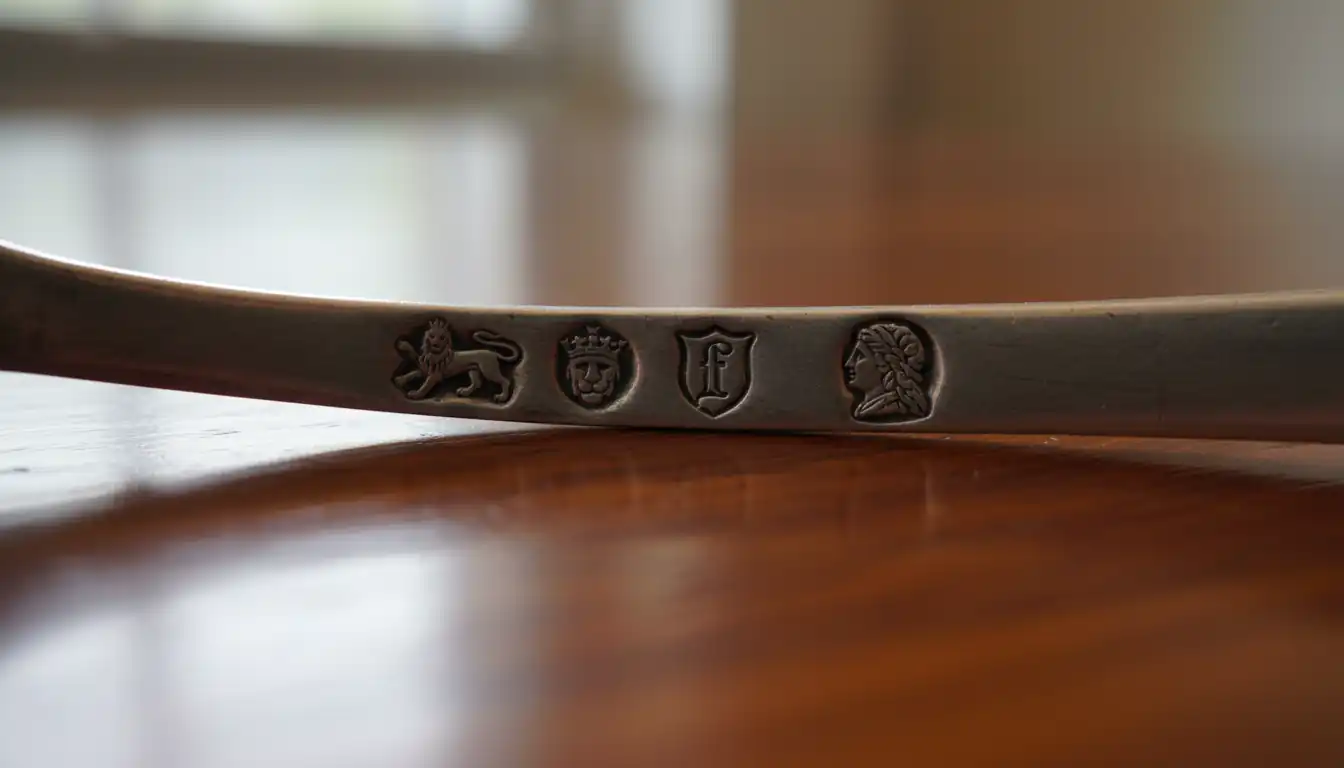
A hallmark is an official mark of quality. Think of it as a government or guild "seal of approval." Historically, these were used primarily on precious metals like gold and silver. A hallmark doesn't tell you who made the item; instead, it guarantees the purity of the metal. For example, if you see a tiny lion walking to the left (known as the Lion Passant) on a piece of English silver, that is a hallmark. It tells you the item is sterling silver, meaning it is 92.5% pure.
A maker's mark, on the other hand, is the signature of the artist or the company. This is the "brand name" of the antique world. It might be a set of initials, a full name, or a unique graphic symbol. While a hallmark tells you the material is honest, the maker's mark tells you whose hands shaped it. Sometimes these marks are stamped into the metal (incuse), and other times they are raised (relief).
Key Insight: A hallmark is a guarantee of material, while a maker's mark is a signature of origin. You need both to get the full story of a piece.
Material Specifics: Silver, Porcelain, and Pewter Symbols
Different materials have their own unique marking traditions. Understanding these traditions helps you know where to look and what to expect.
- Silver Marks: These are usually the most regulated. In addition to the purity mark and the maker's mark, you will often find a "duty mark" (showing tax was paid) and a "date letter."
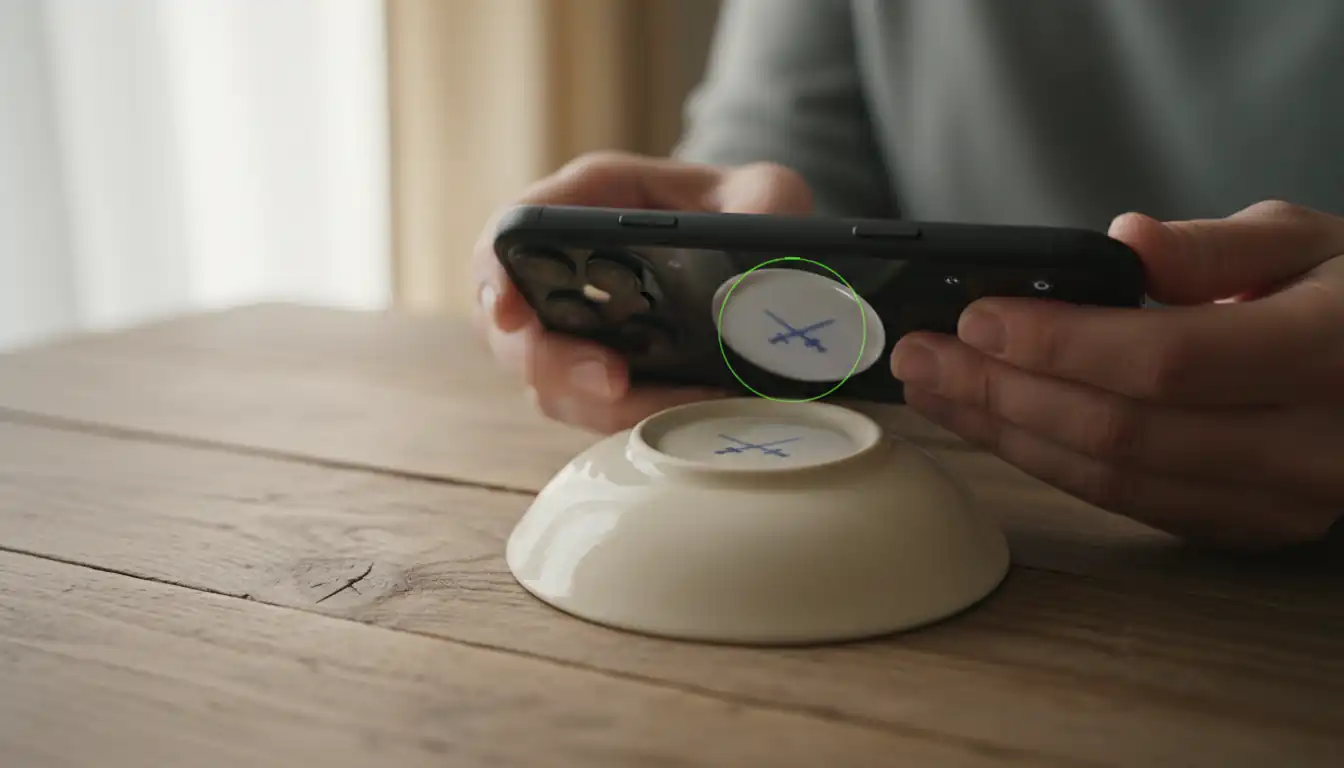
- Porcelain and Ceramics: These marks are often applied under the glaze in blue or over the glaze in various colors. One of the most famous is the "crossed swords" of Meissen porcelain. If you see two blue swords crossing each other, you are likely looking at one of the most prestigious ceramic makers in European history.
- Pewter Touchmarks: Pewter makers used "touchmarks." These often featured symbols like a rose and crown or an angel. Because pewter is a softer metal, these marks often wear down over time, making them some of the most challenging to identify by sight alone.
| Material | Common Mark Type | Purpose |
|---|---|---|
| Sterling Silver | Lion Passant | Guarantees 92.5% silver purity |
| Meissen Porcelain | Crossed Swords | Identifies the Royal Saxon Porcelain Manufactory |
| English Pewter | Rose and Crown | Indicates high-quality "extra hard" pewter |
| Sheffield Plate | Crossed Keys | Often associated with specific 18th-century makers |
The Modern Collector's Toolkit: Can AI Identify Antiques?
For decades, the only way to identify a mark was to consult a physical database like Kovels' or Jackson's. This process was notoriously difficult. If you found a mark that looked like a bird, you had to flip through hundreds of pages of "birds" hoping to find a match. If the mark was worn or partial, your chances of a correct identification dropped significantly.
This brings up a question many new collectors ask: Can AI identify antiques? The answer is a resounding yes. Technology has moved past simple keyword searches. We have entered an era where computer vision can "see" an object and its marks with more precision than the human eye.
The Shift from Reference Books to Digital Recognition
Traditional research relies on your ability to describe what you see. The problem is that one person's "flower" is another person's "star." AI removes this subjective barrier. Instead of trying to find the right words to describe a faded stamp, you can now use your phone to capture the image directly.
Modern AI models are trained on millions of images of authentic antiques. They don't just look at the shape of a mark; they look at the depth of the stamp, the wear patterns, and the specific style of the engraving. This allows for a level of accuracy that was previously reserved for museum curators.
Using Relic to Decode Marks Instantly
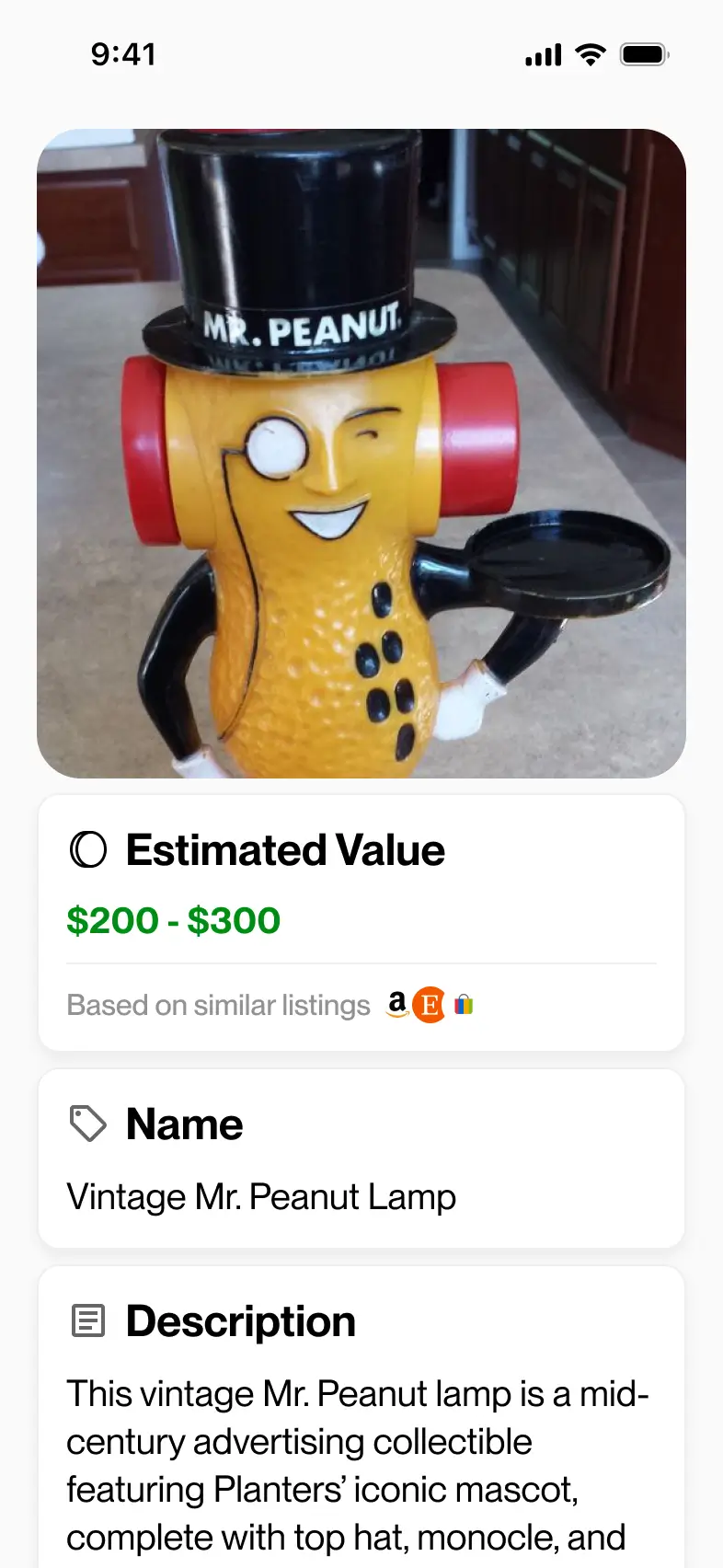
This is where a tool like the Relic app becomes an essential part of your kit. Relic is an iOS app designed specifically for this purpose. Instead of carrying a backpack full of reference books to an antique mall, you simply take a photo of the item and its mark.
Relic uses advanced AI to analyze the photo and provide a real appraisal, history, and origin of the item. It bridges the gap between seeing a mystery symbol and understanding its historical context. Because the app is built for professionals like dealers and pickers, it handles the "heavy lifting" of research in seconds. You get an instant identification and a searchable catalog of your finds, which is a massive advantage when you need to make a quick buying decision in the field.
Decoding the Hidden Details Within a Mark
Once you have identified the maker, the next step is to look closer. Many marks contain "hidden" data that can pinpoint the exact year an item was made. This is particularly true for English silver and fine European porcelain. This granular detail is what separates a common item from a true collector's piece.
Reading Date Letters and Assay Office Symbols
English silver uses a sophisticated four-part marking system. If you can read this code, you can date a piece to a specific twelve-month window.
- The City Mark (Assay Office): This tells you where the item was tested for purity. An anchor represents Birmingham, a leopard’s head represents London, and a crown represents Sheffield.
- The Date Letter: This is a single letter of the alphabet. The font and the shape of the shield surrounding the letter change every 20 to 26 years. For example, a "lowercase a" in a pointed shield means something entirely different than an "uppercase A" in an oval shield.
When you use an app like Relic, the AI recognizes these subtle variations in font and shield shape. It can distinguish between a 1790 mark and an 1810 mark, even if the letter looks identical to the naked eye. This level of precision is vital because a twenty-year difference in age can sometimes double the value of an item.
Spotting the Red Flags of Modern Reproductions
As long as there have been valuable antiques, there have been people trying to fake them. "Fantasy marks" are symbols that look old but never actually existed. There are also modern reproductions that use laser etching to mimic the look of an old hand-struck mark.
How to spot a fake mark:
- Check the Depth: Authentic antique marks were struck with a metal die and a hammer. This displaces the metal, often creating a slight "bulge" on the opposite side or a crisp, deep indentation. Laser-etched marks are shallow and feel "flat" to the touch.
- Look for Wear: A mark on a 200-year-old spoon should show the same amount of wear as the rest of the spoon. If the spoon is heavily scratched but the mark looks brand new and crisp, be suspicious.
- Analyze the Symmetry: Many modern fakes are "too perfect." Hand-struck marks are often slightly off-center or tilted.
Pro Tip: If a mark looks like it was printed on with a computer printer rather than stamped into the material, it is almost certainly a modern reproduction.
From Identification to Valuation: What Is Your Mark Worth?
Identifying a mark is a thrill, but the next logical question is always: "What is it worth?" It is a common mistake to assume that a famous mark automatically equals a high price tag. In reality, the mark is just the starting point. The market value of an antique is determined by a combination of the maker, the rarity of the specific design, and the physical condition of the piece.
How Provenance and Rarity Influence Price
Two items can have the exact same maker's mark but vastly different values. For example, a standard silver fork made by a famous silversmith like Paul Storr might be worth a few hundred dollars. However, a centerpiece or a wine cooler by that same maker could be worth tens of thousands.
Factors that drive value:
- Rarity: Was this a common pattern produced for decades, or a custom commission for a royal family?
- Provenance: Does the item have a documented history? An item owned by a historical figure is always more valuable than an anonymous piece.
- Market Trends: Antiques go in and out of fashion. Mid-century modern marks are currently very high in demand, while some Victorian styles have seen a dip in price.
Getting a Real Appraisal Through Relic
One of the most difficult parts of collecting is finding a trustworthy appraisal. Most local shops will give you a "buy price," which is much lower than the actual value. Relic changes this dynamic by providing a real appraisal and origin story based on your photo.
Because the app has access to a massive database of market insights and historical sales, it can give you a professional-grade valuation in seconds. This is a powerful tool for sellers on platforms like eBay or Etsy. Instead of guessing at a price, you can list your item with the confidence that you are asking for its true market value. For professionals like importers or estate liquidators, this one-touch scanning saves hours of manual research.
| Feature | Traditional Appraisal | Relic App Appraisal |
|---|---|---|
| Speed | Days or Weeks | Seconds |
| Cost | $50 - $200+ per hour | Included in app access |
| Portability | Must transport item | Use your phone anywhere |
| Documentation | Paper certificate | Digital catalog & history |
Preserving the History Behind the Mark
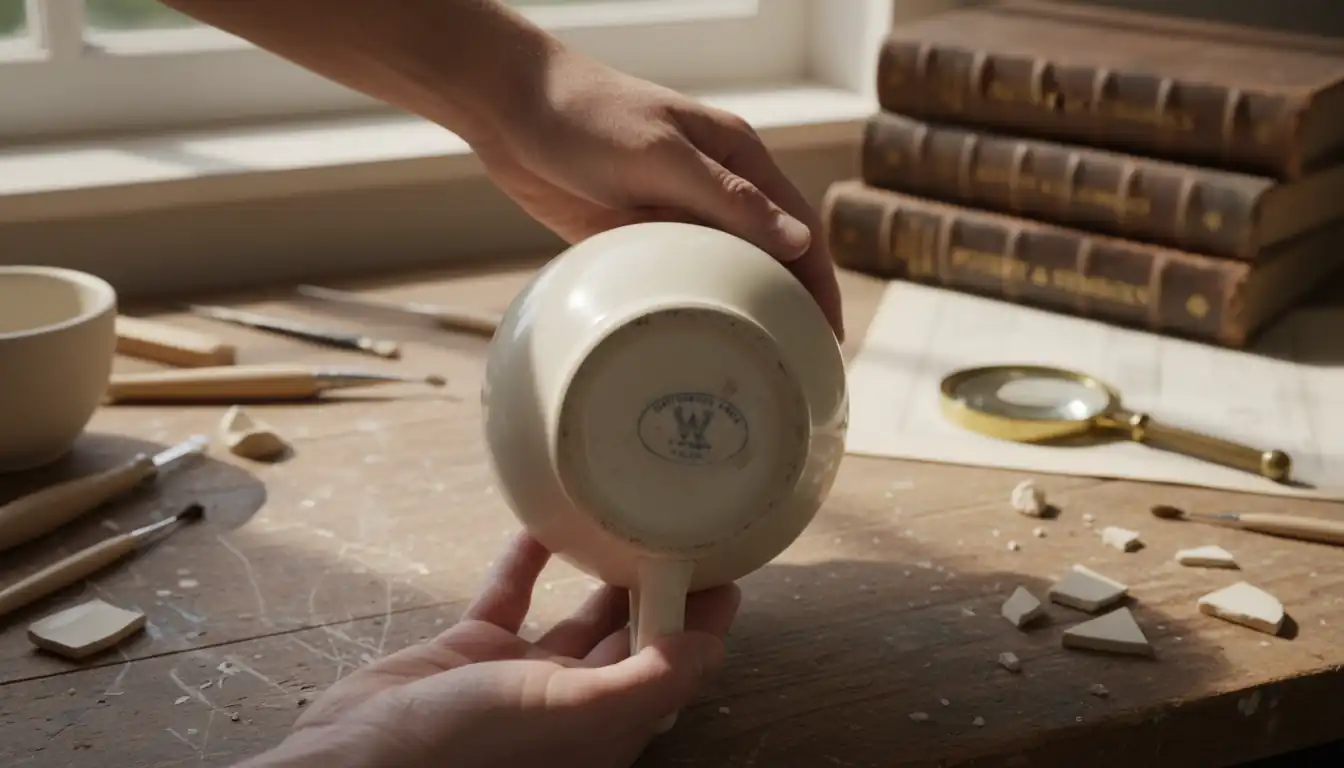
Once you have identified and valued your antique, you become its steward. Your job is to preserve the mark and the item's condition for the next generation. Improper care is one of the leading causes of value loss in the antique world.
Documenting Your Collection for Future Generations
A mark is only useful if it can be seen. Over time, marks can be lost to "over-cleaning" or accidental damage. This is why digital documentation is so important.
- Take High-Resolution Photos: Use a macro lens or the "portrait" mode on your phone to get a clear, focused shot of the mark.
- Use Side Lighting: If a mark is faint, shine a flashlight from the side rather than from directly above. This creates shadows in the indentations, making the mark pop.
- Keep a Digital Ledger: Store your photos, the identification details, and the appraisal in one place. Relic’s searchable catalog feature makes this easy, allowing you to keep a permanent record of every item you scan.
Safe Cleaning Practices for Marked Antiques
The fastest way to ruin a mark is with abrasive polish. This is especially true for silver-plate. Silver-plating is a thin layer of silver over a base metal like copper or brass. If you polish it too aggressively, you will "rub out" the silver and the mark along with it.
- For Silver: Use a soft cloth and a non-abrasive cream. Avoid "dipping" solutions, which can strip away the patina in the crevices of the mark that actually helps it remain visible.
- For Porcelain: Never put marked porcelain in a dishwasher. The heat and harsh detergents can flake off overglaze marks. Use lukewarm water and a very mild soap.
- For Pewter: Pewter should rarely be "shined." Its value often lies in its dull, grey patina. A light dusting is usually all that is required.
Warning: Never use a metal scouring pad or a stiff brush on a mark. Once the metal is scratched or worn away, the history of that piece is gone forever.
Conclusion
Identifying an antique mark used to feel like trying to solve a puzzle with half the pieces missing. You had to rely on luck, expensive books, and the hope that you were interpreting a tiny symbol correctly. But by understanding the difference between hallmarks and maker's marks, and by recognizing the "hidden" codes like date letters and assay symbols, you can begin to see the story behind every object.
Technology has finally caught up with the needs of the modern collector. You no longer have to wonder if that flea market find is a hidden gem or a clever fake. With the Relic app, you have a professional-grade tool in your pocket that uses AI to provide instant identification, historical context, and real appraisals.
Whether you are a professional dealer looking to streamline your workflow or a hobbyist who wants to know the history of a family heirloom, the power to identify mystery marks is now in your hands. Stop guessing and start scanning—your next great discovery is just a photo away.
Identify antiques instantly
Point your camera at any antique, collectible, or vintage item. Get valuations, history, and market insights in seconds.
Download for iPhone