Stop Guessing Your Hardware Style: Identify Rare Antique Finds with a Single Photo

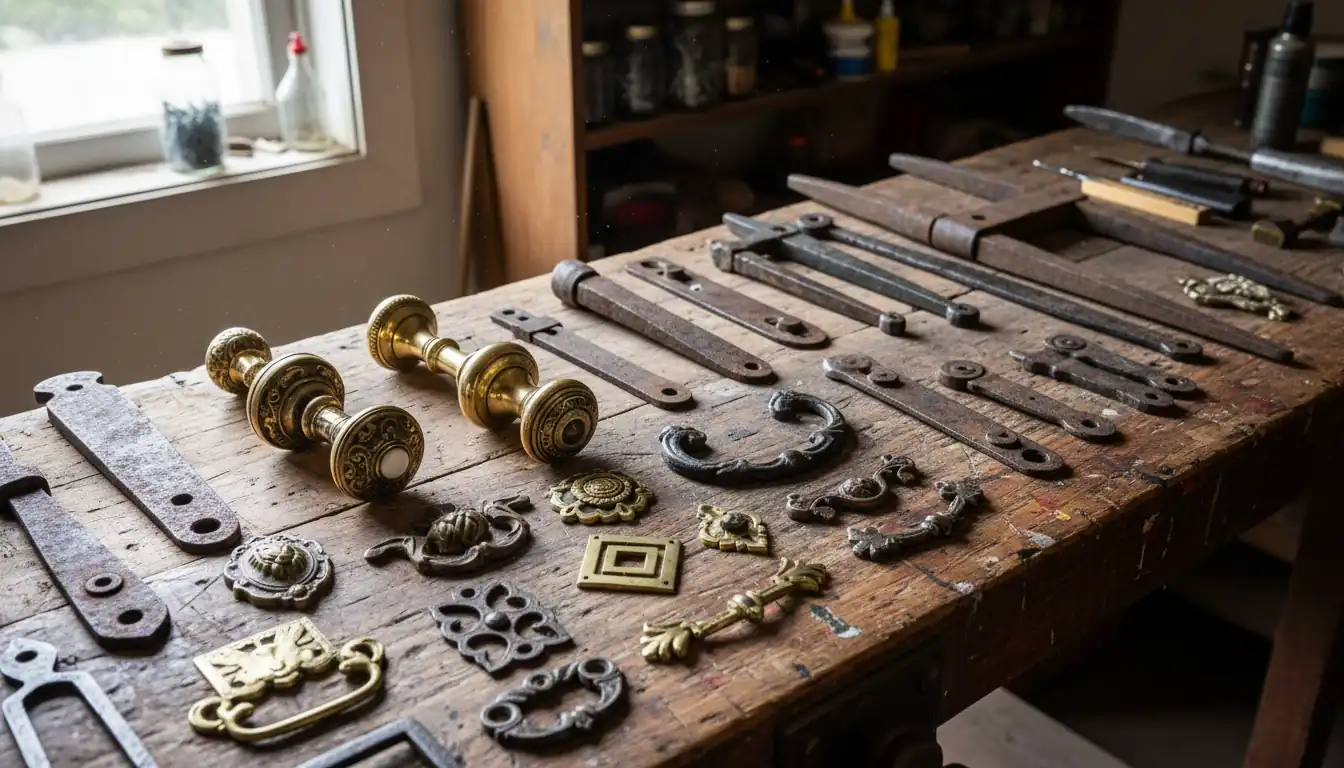
You are standing in a dusty corner of a salvage yard, holding a heavy, tarnished brass door knocker. You can feel the weight of history in your palm, but the details are a mystery. Is this a mass-produced reproduction from the 1970s, or a genuine piece of 19th-century craftsmanship?
The difference between a five-dollar paperweight and a five-hundred-dollar collector’s item often hides in plain sight. Most people rely on guesswork or hours of frustrating internet searches, hoping to stumble upon a matching image. You might find yourself typing "old brass handle with flowers" into a search bar, only to be met with thousands of irrelevant results.
Identifying antique hardware requires more than just a keen eye; it requires an understanding of how styles, materials, and manufacturing processes have shifted over centuries. By learning to read the visual language of metalwork, you can transform a simple hobby into a sophisticated pursuit. This guide will show you how to decode those subtle clues and use modern technology to identify rare finds with a single photo.
The Evolution of Antique Hardware Aesthetics
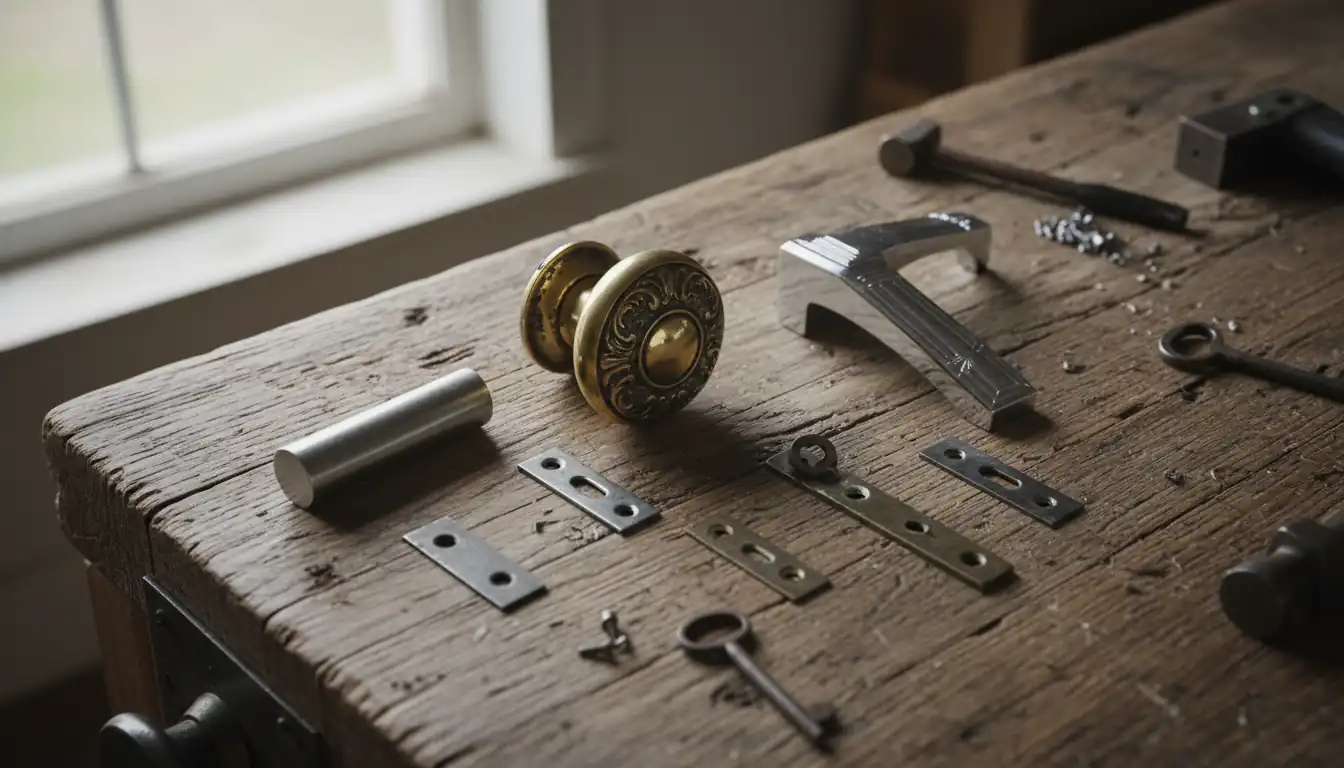
To understand what you are looking at, you must first understand the era that birthed it. Hardware design has never existed in a vacuum. It has always mirrored the broader architectural and social movements of its time. When you look at a hinge or a pull, you are looking at a snapshot of history’s changing tastes.
Victorian Era Craftsmanship and Ornate Detail
The Victorian era, spanning roughly from 1837 to 1901, was a period of "more is more." This was a time when the Industrial Revolution made mass production possible, yet designers still clung to the intricate, hand-crafted look of earlier centuries. Victorian hardware is characterized by its intense, almost frantic level of detail.
If you find a bin pull covered in deep-relief scrollwork, stylized sunflowers, or mythical creatures, you are likely looking at a Victorian piece. These items were often made of cast bronze or iron and featured "Eastlake" patterns—geometric yet highly decorative designs named after architect Charles Eastlake. The goal was to show off wealth and sophistication through complexity.
| Feature | Victorian Style Characteristics |
|---|---|
| Primary Motifs | Florals, vines, birds, and intricate geometric patterns |
| Surface Texture | Deeply recessed areas, often darkened to highlight raised details |
| Common Shapes | Organic, flowing curves mixed with rigid rectangular borders |
| Material Feel | Heavy, substantial, and often highly textured to the touch |
Victorian designers loved to fill every square inch of a surface. A simple escutcheon—the plate surrounding a keyhole—wasn't just a functional piece of metal. It was a canvas for storytelling. You might see a "Doggie" pattern from the Reading Hardware Company or a "Cupid" design that turned a door into a work of art.
Art Deco Geometric Precision and Modernist Influence
As the world moved into the 1920s and 30s, the aesthetic pendulum swung violently in the opposite direction. The chaos of the First World War led to a desire for order, speed, and modernity. This gave rise to Art Deco, a style that traded Victorian flowers for the sleek lines of the machine age.
Art Deco hardware is all about symmetry and verticality. Think of the Chrysler Building in New York; that same "skyscraper" motif is often found in the stepped edges of a 1930s door handle. Instead of the soft, organic curves of the Victorian era, you will see sharp angles, chevrons, and sunburst patterns.
The influence of the "Streamline Moderne" movement also introduced rounded, aerodynamic shapes. This hardware looks like it belongs on a high-speed locomotive or a luxury ocean liner. The focus shifted from the hand of the artist to the precision of the machine. If your hardware find looks like it could be a part of a futuristic city from a 1930s film, you’ve likely found an Art Deco treasure.
The transition from Victorian to Art Deco represents a fundamental shift in human priority: from celebrating the complexity of nature to celebrating the efficiency of the machine.
Decoding Visual Cues in Vintage Metalwork
Once you understand the style, you need to look at the "bones" of the piece. Authentic antique hardware has a physical DNA that modern reproductions struggle to replicate. Learning to read the metal itself is like learning a secret language that reveals the item's true age.
Identifying Patina and Base Material Composition
The first thing you should examine is the patina. Patina is the thin layer that forms on the surface of metals through oxidation and age. It is the "skin" of the antique. A genuine patina takes decades to develop and has a depth that chemical "aging" kits cannot match.
- Solid Bronze: This metal often develops a rich, chocolatey brown or even a greenish "verdigris" over time. If you scratch a hidden area and see a warm, gold-like color underneath, it’s likely bronze.
- Cast Iron: Older iron hardware was often "japanned"—coated in a black, lacquer-like finish to prevent rust. Over time, this finish wears away in high-touch areas, revealing a dull, dark grey metal beneath.
- Brass Plating: Many mid-range vintage pieces were made of steel or white metal and then plated in brass. You can spot these by looking for "pitting" or areas where the plating has flaked off to reveal a silvery or grey metal underneath. A magnet is your best friend here; it will stick to plated steel but not to solid brass or bronze.
The way a piece has worn tells a story. On a genuine antique knob, the areas where fingers have gripped it for a century will be polished bright, while the recessed areas will be dark with accumulated dust and oxidation. This contrast is a hallmark of authenticity.
Recognizing Period Specific Casting Marks and Textures
Before the age of high-precision die-casting, hardware was often made using sand molds. This process left behind specific "fingerprints" that are vital for identification. If you flip a piece of hardware over and see a slightly grainy, sandy texture on the back, you are looking at a sand-cast item.
Casting Marks to Look For:
- Gate Marks: These are small, rough protrusions where the molten metal was poured into the mold. In very old pieces, these were roughly filed down by hand.
- Seam Lines: Modern hardware often has perfectly straight, thin seam lines from steel molds. Antique seams are often slightly irregular or have been hand-smoothed.
- Manufacturer Stamps: Look for tiny, raised letters or numbers. Companies like Yale & Towne, Sargent, or Corbin often stamped their names or patent dates into the metal. A patent date is a "smoking gun" for age, though it only tells you the earliest the item could have been made.
The weight of the metal also matters. Antique hardware was built to last several lifetimes. If a large backplate feels surprisingly light or "tinny," it is likely a modern zinc-alloy reproduction. Genuine Victorian or Deco pieces have a heft that feels significant in your hand.
The Power of Visual Search for Restoration Projects
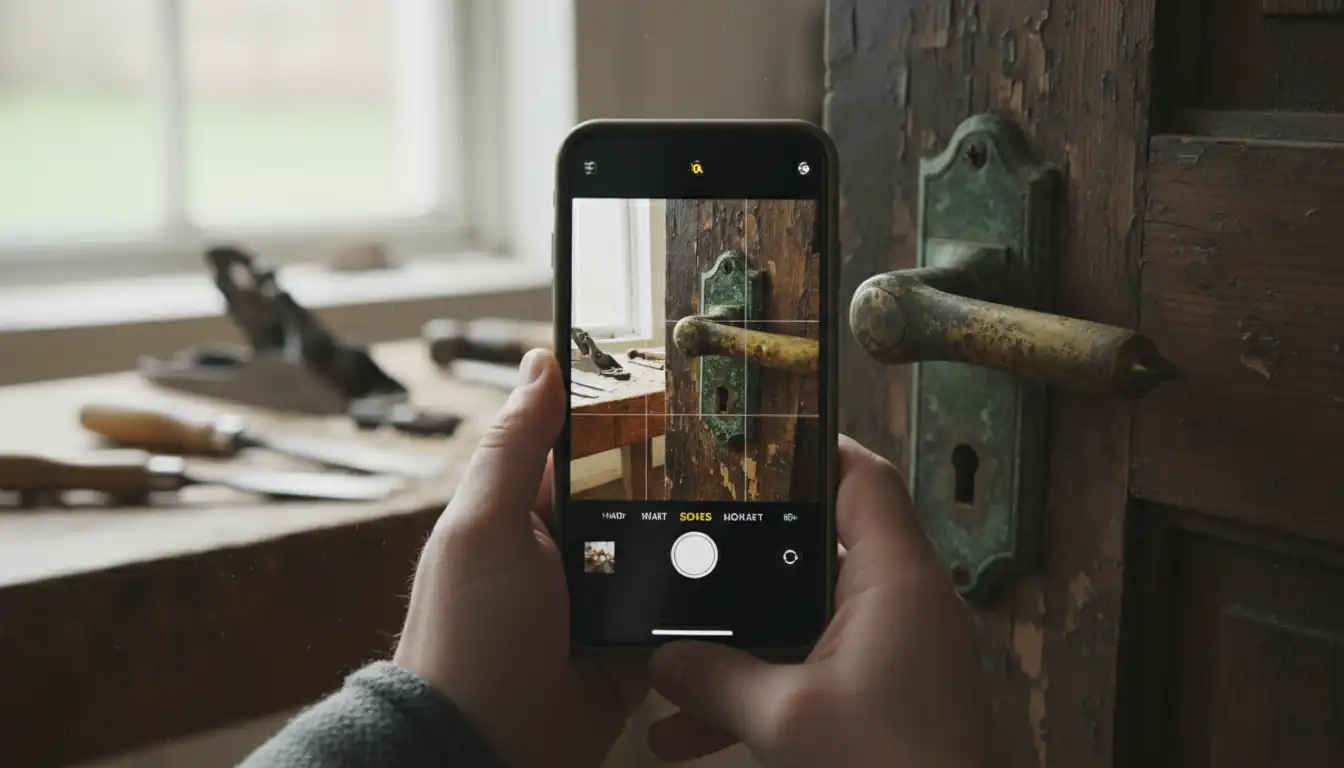
If you are restoring an old home, you know the specific agony of the "missing piece." You have seven original door knobs, but the eighth one is a cheap plastic replacement from the 1990s. Finding that one matching piece can feel like searching for a needle in a haystack the size of the internet.
Finding Matching Replacements for Missing Pieces
Keyword searches are notoriously unreliable for hardware. What you call a "swirly handle," a seller might call a "scrollwork pull" or a "filigree lever." This linguistic gap makes traditional searching a chore. Visual search technology changes the game by focusing on the geometry and texture of the object rather than the words used to describe it.
By using an image-to-image match, you can bypass the vocabulary barrier. The technology looks at the specific ratio of the curves, the placement of the screw holes, and the unique silhouette of your hardware. It then scans vast databases of architectural salvage and auction listings to find an identical twin. This is the most efficient way to ensure your restoration remains historically accurate.
Verifying Authenticity via Image Matching Technology
How do you know if that "antique" hinge on eBay is actually from 1890? Or if it’s a clever "distressed" piece from a big-box store? Visual matching allows you to compare your item against known historical catalogs.
Many manufacturers from the late 19th century published massive, illustrated catalogs. Visual search can cross-reference your photo with these archival drawings. If your photo matches a drawing in a 1885 Russell & Erwin catalog, you have definitive proof of its origin. This verification is crucial for maintaining the value of a historic property or a private collection.
Using your eyes is the first step, but using a digital lens allows you to see through the fog of time and marketing.
AI as Your Personal Hardware Historian
The gap between seeing a beautiful object and knowing its worth used to require a library of reference books or a paid consultant. Now, that expertise fits in your pocket. Artificial Intelligence has reached a point where it can analyze the "anatomy" of hardware with more precision than many human hobbyists.
Instant Appraisals and Origin Stories with Relic
This is where the Relic app becomes an essential tool for your kit. Relic isn't just a photo uploader; it’s a sophisticated AI designed to function as a professional appraiser. When you encounter a mysterious piece of hardware, you simply take a photo within the app.
Relic analyzes the visual data—the casting marks, the patina, the stylistic markers—and compares it against an exhaustive database of antiques. Within seconds, it provides you with:
- A Real Appraisal: An estimated dollar value based on current market trends and historical significance.
- Historical Context: The specific era and design movement the piece belongs to.
- Origin Details: Information on the likely manufacturer or the region where the style was most prominent.
Imagine being at a flea market and spotting a dusty box of hinges. Instead of wondering if they are worth the twenty-dollar asking price, you can use Relic to discover they are rare 1870s Gothic Revival pieces worth five times that amount. It turns every outing into a potential discovery.
Connecting Visual Data to Historical Archives
The true power of Relic lies in its ability to connect a physical object to a digital archive. It bridges the gap between the "thing" in your hand and the "knowledge" in the history books. For professionals like dealers or importers, this speed is a massive advantage.
- Market Insights: Understand how similar items are performing in the secondary market.
- Searchable Catalog: Keep a digital record of everything you’ve scanned, creating a personal inventory of your finds.
- Accuracy: With a 4.9-star rating from over 20,000 reviews, the AI has been trained on enough data to recognize the subtle differences that human eyes might miss.
Relic serves as a bridge. It takes the guesswork out of the equation, allowing you to buy, sell, or restore with the confidence of a seasoned expert. You no longer have to "hope" you found something special; you can know for sure.
Maximizing Your Hardware Identification Accuracy
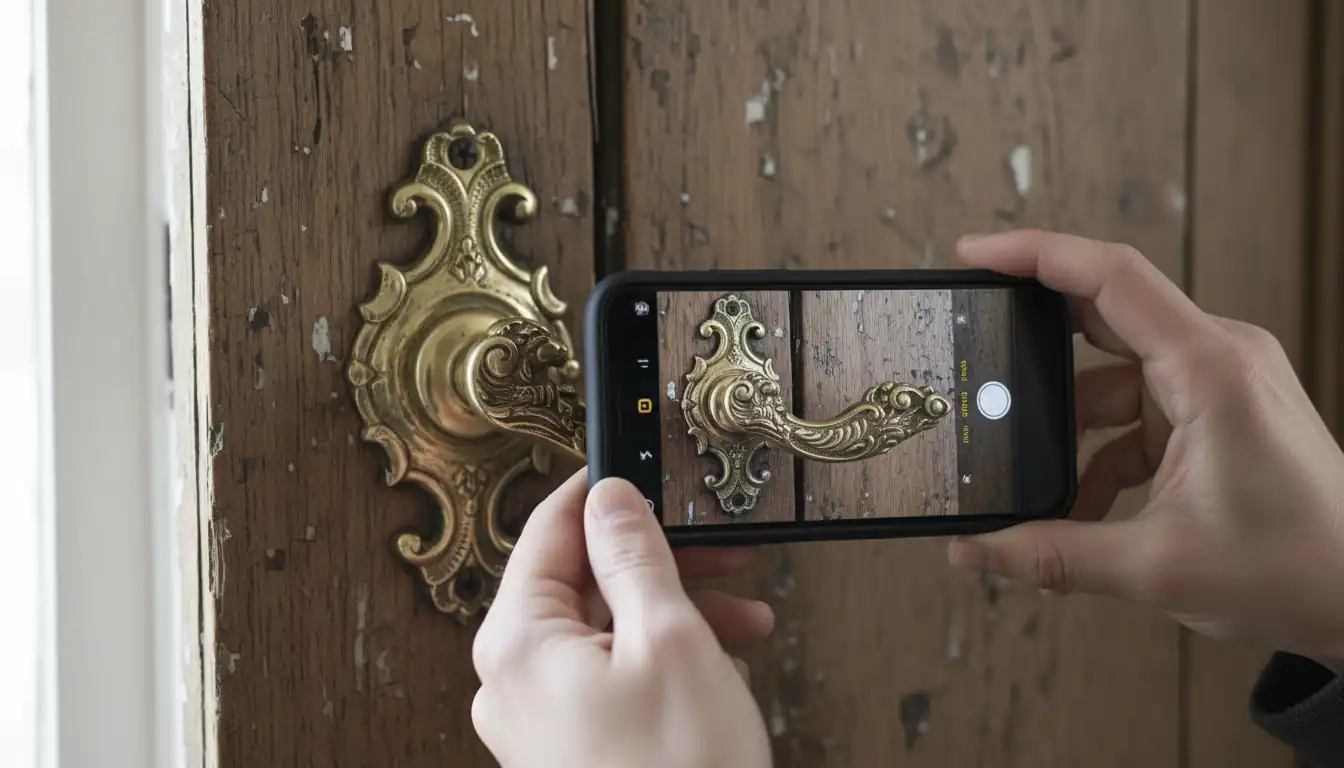
To get the most out of AI tools like Relic, the quality of your input is paramount. The AI is only as good as the "eyes" you give it. Taking a blurry photo in a dark basement will lead to inconclusive results. To get a professional-grade appraisal, you need to take professional-grade photos.
Perfecting Photo Angles for Intricate Hardware
Hardware is three-dimensional, and its most defining features are often its profile or its depth. When photographing a piece for identification, don't just take one flat shot from the front.
- The "Hero" Shot: Take a direct, top-down photo of the most decorative face of the item. Ensure the item is centered and fills the frame.
- The Profile View: For items like knobs or pulls, a side-angle shot is vital. This reveals the "projection" (how far it sticks out) and the shape of the stem, which are key indicators of age.
- The Reverse Side: Always photograph the back. As discussed earlier, casting marks and manufacturer stamps are almost always hidden on the rear of the piece.
Avoid holding the item in your hand if possible. Placing it on a neutral, flat surface—like a piece of white paper or a wooden table—prevents the AI from getting distracted by your fingers or a cluttered background.
Optimizing Lighting to Capture Metal Textures
Lighting is the difference between seeing a "flat" piece of metal and seeing the rich texture of a 100-year-old patina. Harsh indoor lights or camera flashes often create "hot spots"—bright white reflections that hide the very details you need to see.
Tips for Better Lighting:
- Natural Light is King: Take your hardware near a window or outside. Overcast days are actually better than bright, sunny days because the light is diffused and soft.
- Avoid the Flash: A flash will flatten the image and distort the color of the metal. If you must be indoors, use a lamp from the side rather than from the front to create soft shadows that define the texture.
- Focus on the Grain: If the metal has a specific grain or a manufacturer's stamp, use the "macro" setting on your iPhone. Get close, but ensure the camera has enough distance to lock focus.
By providing a clear, well-lit, multi-angle view, you allow the AI to see the "micro-details." This leads to a much more accurate identification and a more reliable appraisal. You are essentially giving the AI the same view an appraiser would have if they were holding the item under a magnifying glass.
Conclusion
Identifying antique hardware is a journey of discovery that combines the thrill of the hunt with the precision of history. By understanding the shift from Victorian opulence to Art Deco's geometric lines, you gain a visual vocabulary that brings old metal to life. You've learned to look for the "fingerprints" of the past—the sand-cast textures, the genuine patinas, and the manufacturer stamps that separate the rare from the common.
The days of guessing and endless searching are over. With the Relic app on your iPhone, you have a professional-grade tool that turns your camera into an expert historian and appraiser. Whether you are a homeowner trying to match a single hinge or a professional dealer looking for the next big find, the power to identify and value antiques is now in your pocket.
Next time you find a piece of hardware that catches your eye, don't leave it to chance. Take a clear photo, let the AI do the heavy lifting, and uncover the story hidden beneath the tarnish. Download Relic today and start seeing the true value in the world around you.
Identify antiques instantly
Point your camera at any antique, collectible, or vintage item. Get valuations, history, and market insights in seconds.
Download for iPhone