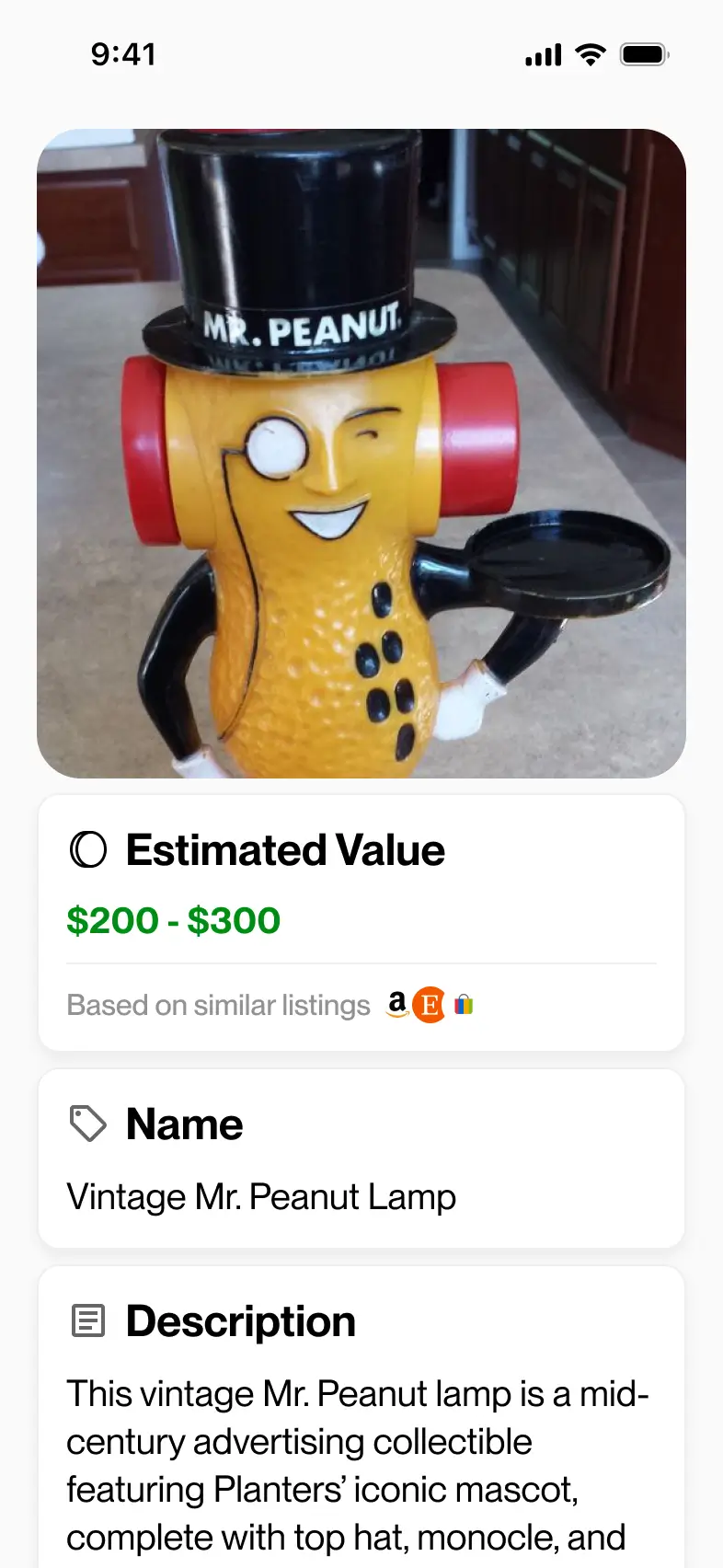
Stop Leaving Money at the Thrift Store: Use AI to Spot Hidden Antiques Instantly

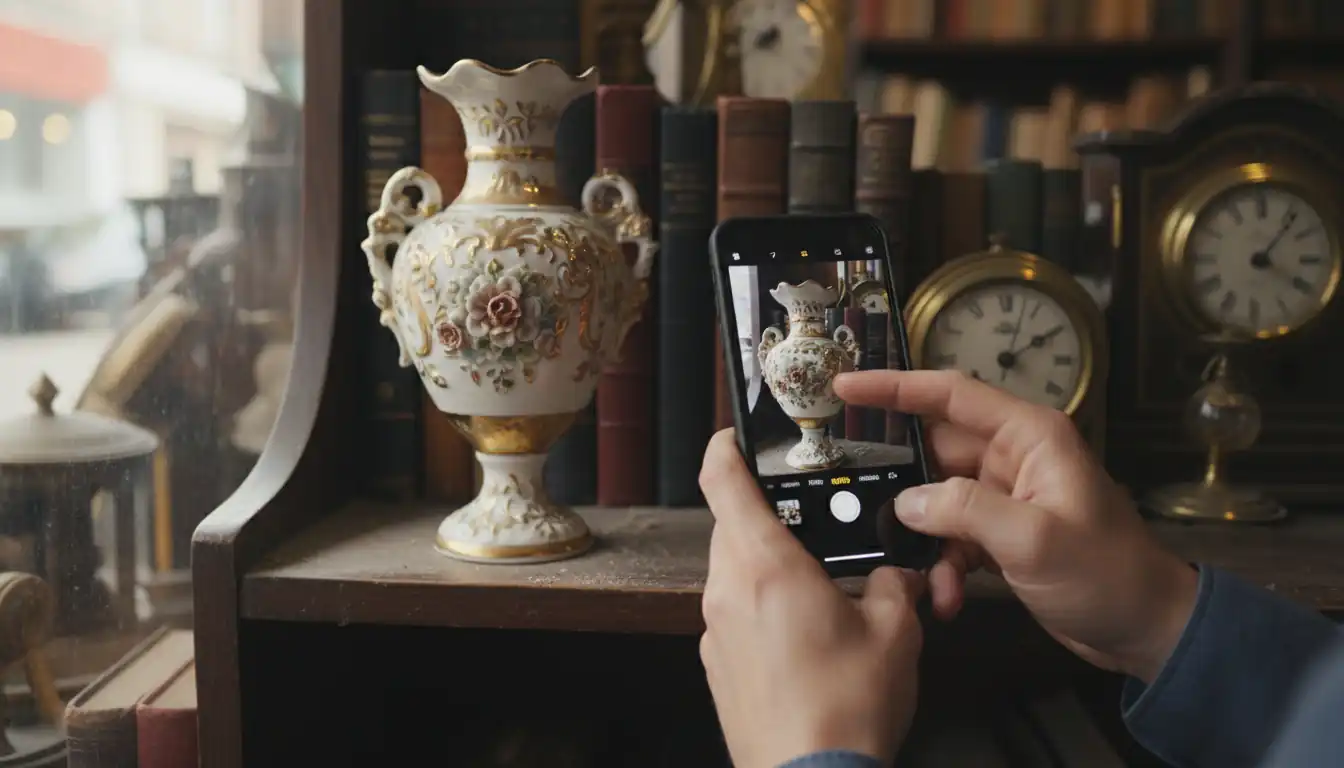
You are standing in a crowded thrift store, the smell of old dust and floor wax filling the air. Your eyes scan a shelf of mismatched glassware and chipped ceramics, looking for that one item that doesn't belong. You see a heavy, tarnished silver bowl tucked behind a stack of plastic plates. Is it sterling silver worth hundreds, or just a silver-plated souvenir from a 1990s department store? In the past, you might have spent twenty minutes scrolling through eBay sold listings or trying to find a hallmark in a blurry guidebook. By the time you figured it out, another picker might have already snatched it from your cart.
The reality of modern reselling is that information is the only currency that truly matters. The gap between a five-dollar "old pot" and a five-hundred-dollar "mid-century masterpiece" is bridged entirely by what you know—or what your tools know. As the market becomes more crowded, the advantage goes to those who can identify value in seconds rather than minutes. This isn't about working harder; it’s about having a digital expert standing over your shoulder while you shop.
In this guide, we will explore how artificial intelligence is rewriting the rules of the antique trade. You will learn how to spot international treasures from your local donation center, how to protect your business data, and why professional-grade documentation is the secret to commanding higher prices. By the time you finish reading, you will understand how to turn your smartphone into a high-precision instrument for wealth creation.
The Reseller Advantage in the Age of AI
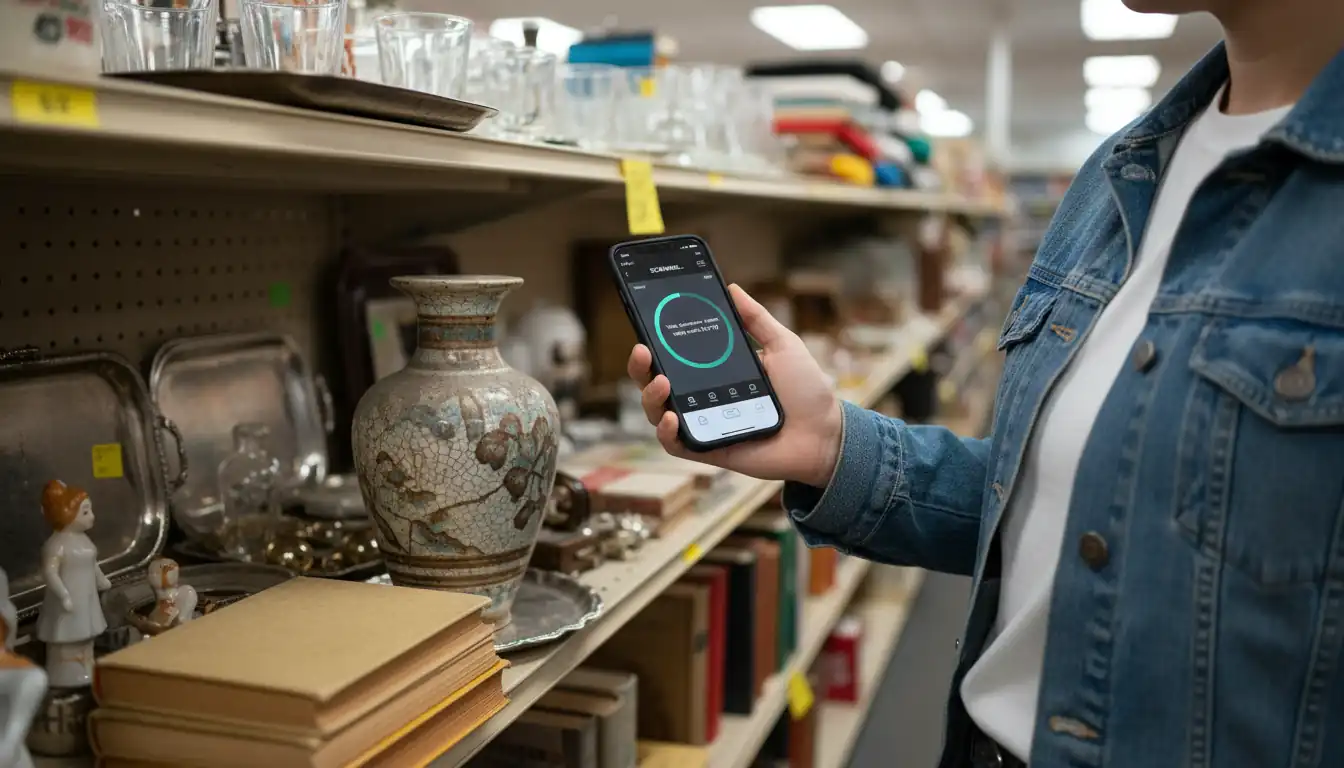
The "old guard" of the antique world used to rely on massive, multi-volume price guides and decades of trial-and-error experience. While that knowledge is still valuable, the speed of the modern resale market has outpaced the ability to flip through a physical book. If you are spending your Saturday morning at estate sales, you know that the best items are gone within the first ten minutes. You don't have the luxury of going home to do research. You need to know the value of an item before you even reach the checkout counter.
This is where visual recognition technology changes the math for the average reseller. Instead of typing vague descriptions like "blue floral vase with gold trim" into a search engine, you can now use your camera to analyze the specific geometry, color palette, and maker's marks of an object. This shift from manual searching to AI-driven identification removes the guesswork that often leads to "bad buys" or, even worse, leaving a fortune on the shelf.
AI Identification vs Manual Research
Manual research is a linear process that is prone to human error. You might misinterpret a hallmark or miss a subtle detail in the glaze that distinguishes a reproduction from an original. AI, however, processes thousands of data points simultaneously. It compares your photo against a massive database of known antiques, looking for patterns that the human eye might overlook.
- Speed: Manual research takes 5-15 minutes per item; AI identification takes seconds.
- Accuracy: AI doesn't get tired or suffer from "wishful thinking" when looking at a potential find.
- Breadth: A human might be an expert in clocks but know nothing about Depression glass; AI is a generalist with specialist-level depth across all categories.
Instant Appraisals for High Stakes Flipping
Is the antique identifier app any good? This is the question every serious reseller asks before trusting a tool with their capital. The answer lies in the sophistication of the underlying neural networks. High-end tools like Relic don't just "guess" based on a photo; they analyze the historical context and market trends associated with the visual data.
When you use Relic to scan an item, the AI isn't just looking at a picture; it’s performing a real-time appraisal. It looks at the origin, the probable era of manufacture, and the current demand in the secondary market. This allows you to make high-stakes decisions with confidence. If you are at an auction and the bidding for a "mystery" bronze statue is climbing, having an instant appraisal on your screen can be the difference between a massive profit and a costly mistake.
"The most successful resellers aren't necessarily the ones who know the most; they are the ones who can access the most information the fastest."
Global Sourcing and Regional Market Nuances
We live in a globalized world, but the items we find in thrift stores are often relics of a much older, more fragmented history. An item found in a small town in the Midwest could have been brought over by an immigrant from Eastern Europe in the 1920s or purchased by a soldier stationed in Japan during the 1950s. Understanding the geographic origin of an item is often the most important factor in determining its true market value.
Professional resellers know that "local" value is a myth. An African tribal mask might sit in a Florida thrift store for $10 because nobody recognizes it, but that same item could be worth thousands to a collector in Paris or New York. To capitalize on these discrepancies, you need a tool that understands global history and regional market nuances.
Identifying Treasures from Asia to Europe
The ability to distinguish between different regional styles is a superpower in the reselling world. Each region has specific hallmarks, materials, and aesthetic traditions that dictate value.
- Asia Pacific: Look for intricate lacquerware, specific jade carvings, and Ming-style porcelain. The market for authentic Chinese antiques remains one of the strongest globally.
- Europe: Focus on porcelain from Meissen or Sèvres, and silver hallmarks from London or Birmingham. European decorative arts often carry high prestige in the Americas.
- Middle East and India: Keep an eye out for intricate brass work, hand-knotted textiles, and colonial-era furniture. These items often have a high "crossover" appeal for modern interior designers.
- Africa: Authentic beadwork and carved wooden figures can be highly collectible, though they require careful verification to distinguish from modern tourist trade items.
Relic uses a global database to help you identify these origins instantly. By taking a photo, you aren't just seeing what an item is; you are seeing where it came from. This geographic data allows you to target the right buyers. You wouldn't sell a rare piece of Indian silver on a local classifieds site; you would list it on a platform where international collectors are looking.
Regional Market Values and Origin Tracking
Value is not a fixed number; it is a reflection of local demand and scarcity. A piece of American folk art will likely fetch a higher price in the United States than it would in Latin America. Conversely, certain European ceramics are currently seeing a surge in demand among the growing middle class in Asia.
| Region | High-Demand Categories | Value Driver |
|---|---|---|
| North America | Mid-Century Modern, Folk Art | Nostalgia & Design Trends |
| Europe | Fine Porcelain, 18th Century Furniture | Historical Provenance |
| Asia Pacific | Imperial Ceramics, Jade, Calligraphy | Cultural Heritage |
| Latin America | Religious Art, Silverwork | Craftsmanship & Rarity |
Understanding these flows of value allows you to "buy low" in one market and "sell high" in another. Your phone is no longer just a communication device; it is a gateway to global antique expertise that helps you track these origins and their corresponding values.
Beyond the Image with Data and History

A photo tells you what an object looks like, but the history tells you what it’s worth. In the professional resale world, we call this "provenance." Provenance is the documented history of an item's ownership and origin. While you might not always find a signed letter from a former king, knowing the historical context of a piece allows you to tell a story that justifies a premium price.
When you use an app like Relic, you get more than a name and a price. You get the "History" and "Origin" features that provide the narrative behind the object. Why was this specific type of glass popular in the 1930s? Which factory in Germany produced this specific pattern of china? This information is gold when it comes to writing your sales listings.
Uncovering the Provenance Behind the Object
Imagine you find a small, unassuming wooden box. To the average person, it’s a place to keep paperclips. But after a quick scan, you discover it’s a Treen spice box from the late 18th century. You now have a story about how spices were once as valuable as gold and how these boxes were handcrafted to protect them.
- Better Listings: Instead of "Old wooden box," you write "18th Century Hand-Turned Treen Spice Box with Original Patina."
- Higher Authority: When you speak knowledgeably about an item's history, buyers trust you more.
- Price Justification: History adds "intangible value" that allows you to push your asking price to the top of the market range.
Privacy and Data Security for Professional Sellers
As you build your reselling business, your data becomes one of your most valuable assets. Your "scans" are essentially a map of your inventory and your sourcing strategy. This is why professional sellers are often concerned about app privacy. You don't want a tool that tracks your location to see exactly which thrift stores you are "hitting" or one that links your personal identity to your high-value finds.
When evaluating a tool, you must look at how it handles "Data Linked to You" and "Data Used to Track You." A professional app should prioritize your business security. You are building a digital inventory, and that inventory should be yours alone. Relic understands this professional need, ensuring that your collection and your search history remain private. This allows you to build your business without worrying that your "honey holes" are being broadcast to your competitors.
"Your inventory is your trade secret. The tools you use should protect that secret as fiercely as you do."
Professional Documentation and Inventory Management
Most hobbyist resellers fail because they treat their business like a pile of stuff rather than a catalog of assets. If you want to move from making "gas money" to making a "living," you have to change how you manage your finds after you leave the store. This is the "administrative" side of the business that most people ignore, but it is where the real profit is solidified.
Once you have identified an item and understood its history, the next step is documentation. This is about creating a paper trail that proves the value of what you are selling.
Exporting PDF Reports for Serious Buyers
One of the most powerful features for a professional seller is the ability to export detailed PDF reports. Think of this as a "Certificate of Authenticity" or a professional spec sheet. If you are selling a high-end watch on Chrono24 or a rare collectible on eBay, a generic description isn't enough.
- Professionalism: Sending a buyer a clean, data-rich PDF report makes you look like a high-end dealer.
- Transparency: A report that includes history, origin, and appraisal details reduces buyer friction and returns.
- Record Keeping: These reports are vital for insurance purposes or for your own tax records.
Using Relic to generate these reports saves you hours of manual typing. You can take the data provided by the AI and instantly turn it into a sales asset. This moves you away from being a "flipper" and toward being a "curator."
Building a Digital Catalog of Your Finds
How many times have you bought something, put it in a storage bin, and forgotten what you paid for it? Inventory bloat is a silent killer of resale businesses. By using the "Build Your Personal Antique Collection" feature in Relic, you can create a digital catalog of every item you own.
- Track Cost Basis: Record what you paid so you know exactly what your profit margin is.
- Inventory Location: Note which bin or shelf the item is on so you don't lose it.
- Growth Tracking: Watch the total value of your collection grow over time as you add more high-value finds.
This digital catalog acts as your business's balance sheet. It allows you to see at a glance how much capital you have tied up in "stock" and which categories are performing the best for you.
Choosing the Right Tool for Your Resale Business
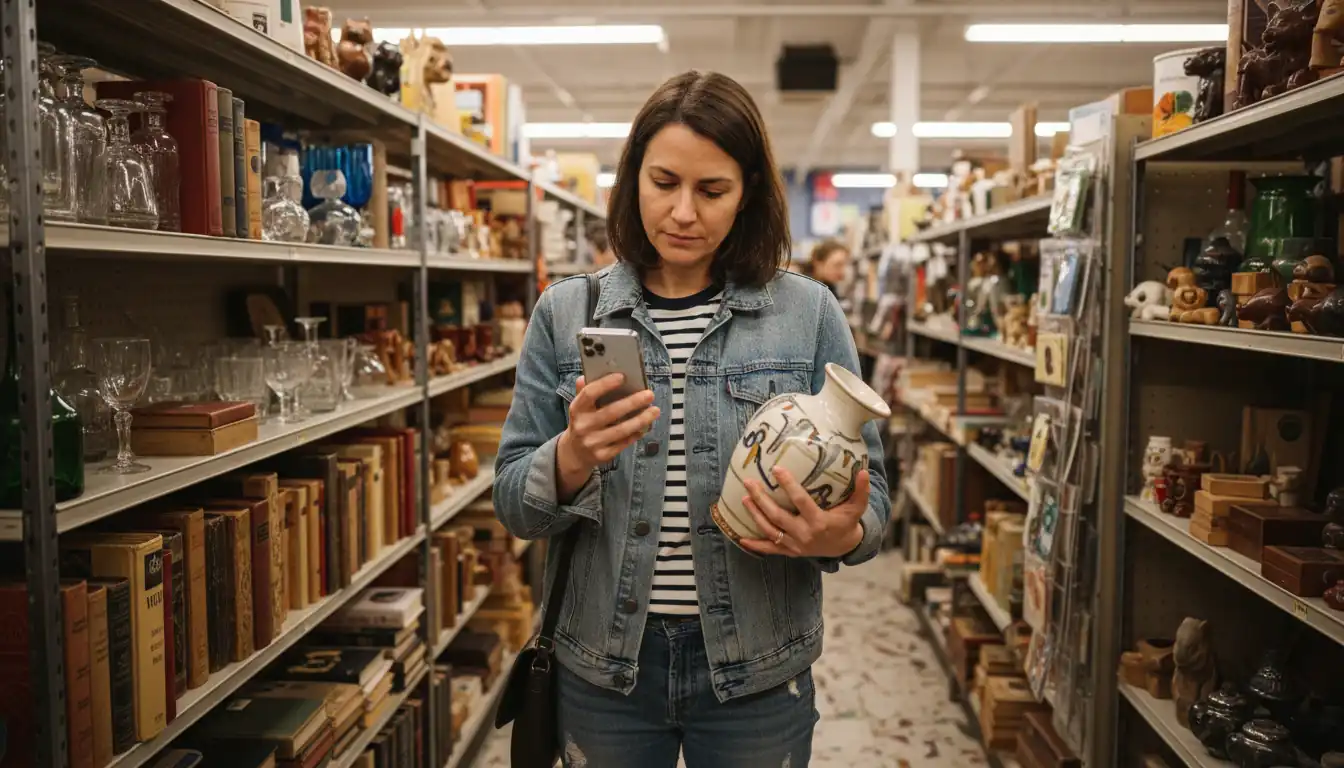
As you look to upgrade your toolkit, you will inevitably face a choice: do you use a free tool or invest in a professional subscription? This is a classic business decision. In the world of antiques, the "cost" of a tool is often much less than the "cost" of a missed opportunity.
Free Apps vs Professional AI Subscriptions
Is there a free app to identify vintage items? Yes, there are several. However, free tools often come with significant trade-offs that can hurt a professional business.
- Accuracy Gaps: Free apps often use generic image search engines that can't distinguish between a $500 original and a $5 reproduction.
- Data Monetization: If the app is free, they are often selling your data or your location to advertisers.
- Limited Features: You won't find PDF exporting, deep historical context, or professional appraisals in a free tool.
Think of a professional subscription like Relic as a business investment. If the app helps you spot just one mislabeled item per year, it has likely paid for itself several times over. For a serious reseller, the ROI (Return on Investment) of a high-accuracy tool is undeniable.
Evaluating Ratings and Recent Updates
When choosing an app, you should look at the "Ratings & Reviews" and the "What’s New" logs. A tool that hasn't been updated in six months is a tool that is falling behind. The world of AI moves fast, and the database of an antique identifier needs to be constantly expanding to include new market trends and newly discovered categories of collectibles.
Relic, for example, maintains a 4.9-star rating with over 20,000 reviews. This level of user satisfaction is a strong indicator of accuracy and reliability in the field. When you check the "What's New" section, look for mentions of:
- Database Expansions: Are they adding more categories or regional specialties?
- UI Improvements: Is the app getting faster and easier to use in a crowded thrift store?
- Feature Additions: Are they adding tools that help with the "business" side of reselling, like better export options?
Accessibility is also key. You need a tool that works as well on a dim estate sale basement as it does in a bright showroom. The interface should be "one-touch," allowing you to get an appraisal without fumbling through menus while other buyers are circling.
Conclusion
The days of relying on luck at the thrift store are over. We are in a new era where the most successful resellers are those who embrace the power of artificial intelligence to bridge the gap between "junk" and "jewelry." By using a tool like Relic, you aren't just taking photos; you are accessing a global database of history, origin, and value that was once reserved for elite auction house experts.
You now have the roadmap to:
- Identify high-value items in seconds using advanced AI.
- Understand the global market nuances that dictate regional prices.
- Protect your business data while building a professional digital inventory.
- Command higher prices by providing buyers with detailed historical reports.
The next time you walk into a thrift store or an estate sale, don't just look with your eyes. Look with the power of AI. Your next big find is likely sitting on a shelf right now, waiting for someone with the right tool to recognize it. Download Relic today and stop leaving money on the table. Your professional reselling journey starts with the very next scan.
Identify antiques instantly
Point your camera at any antique, collectible, or vintage item. Get valuations, history, and market insights in seconds.
Download for iPhone