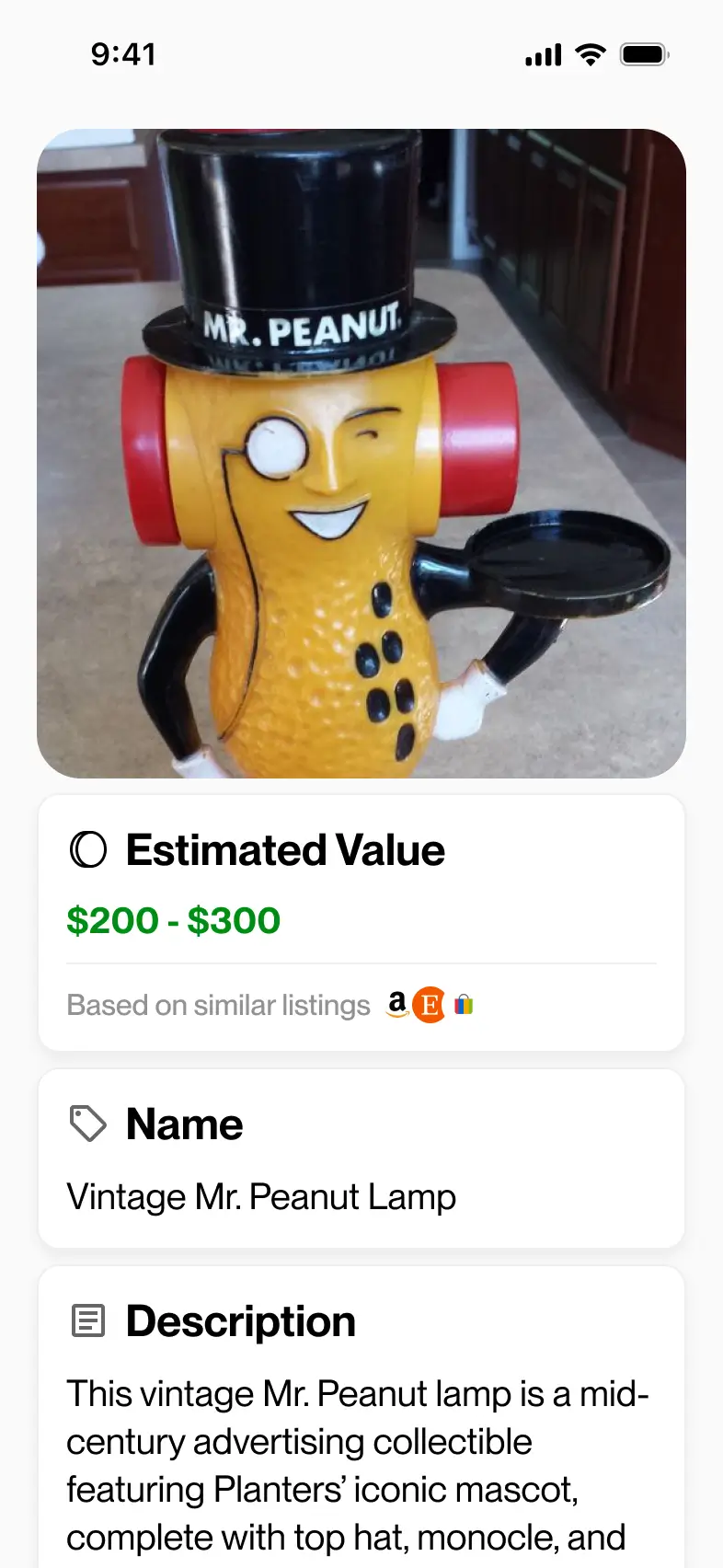
Stop Leaving Money on the Shelf: How to Spot High-Value Antiques with Your Phone

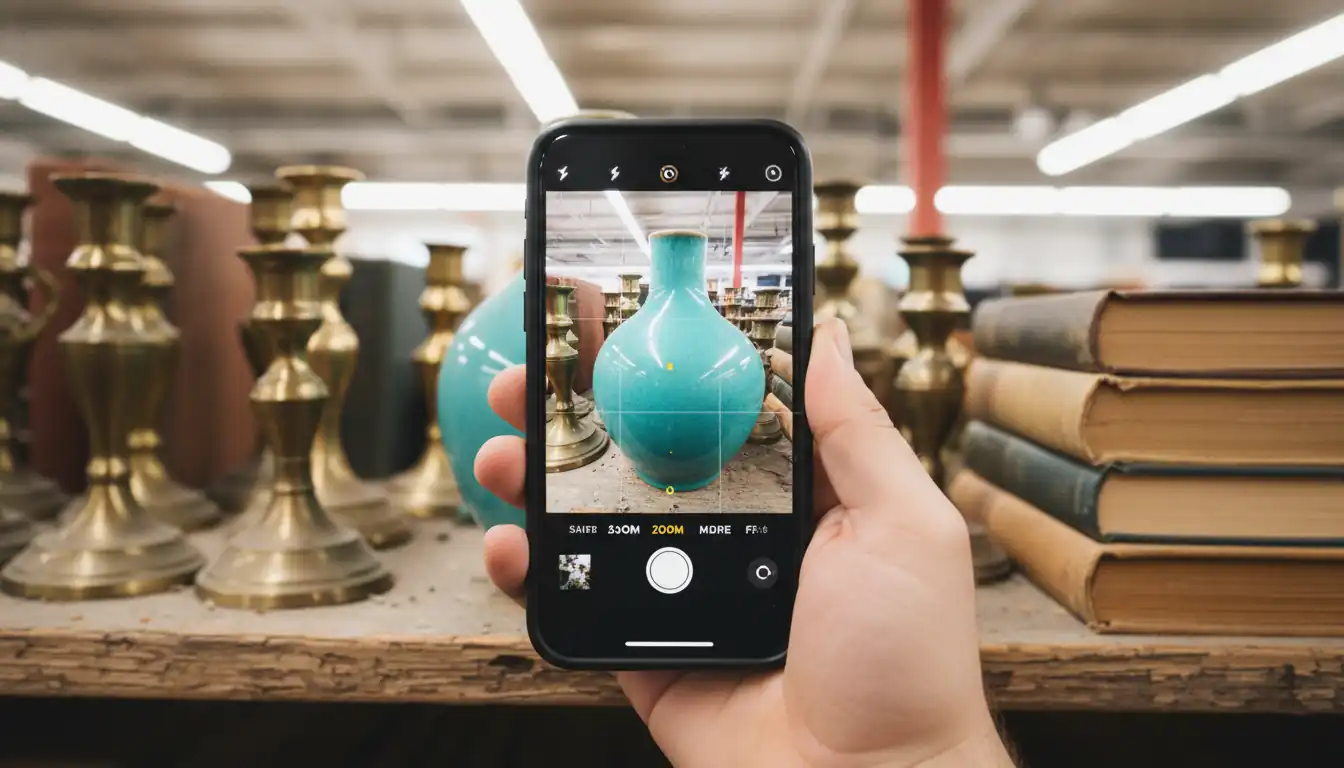
You are standing in a crowded thrift store, surrounded by the scent of old paper and dust. Your eyes land on a heavy, tarnished silver bowl tucked behind a stack of chipped dinner plates. It has no price tag, but the weight feels significant, and the underside bears a tiny, faded stamp you can’t quite read. In the past, you might have passed it by, unwilling to risk twenty dollars on a hunch. Or perhaps you would have spent twenty minutes squinting at your screen, typing "three lions silver mark" into a search engine, only to be met with thousands of conflicting images.
The reality of modern collecting is that the most valuable items often look the most unassuming. High-value antiques are frequently mislabeled or overlooked by staff who simply don't have the time to research every donation. This creates a massive opportunity for you, provided you have the right tools to bridge the gap between curiosity and certainty. The difference between a hobbyist and a professional collector often comes down to how quickly they can access accurate information in the field.
In this guide, we will explore how the landscape of antiquing has shifted from heavy reference books to the device in your pocket. You will learn how to identify hidden treasures in real time, the mechanics of the technology that makes this possible, and how to protect your privacy while building a digital inventory. By the time you finish reading, you will understand how to turn every thrift store visit into a data-driven hunt for profit.
The Modern Thrifter's Digital Toolkit
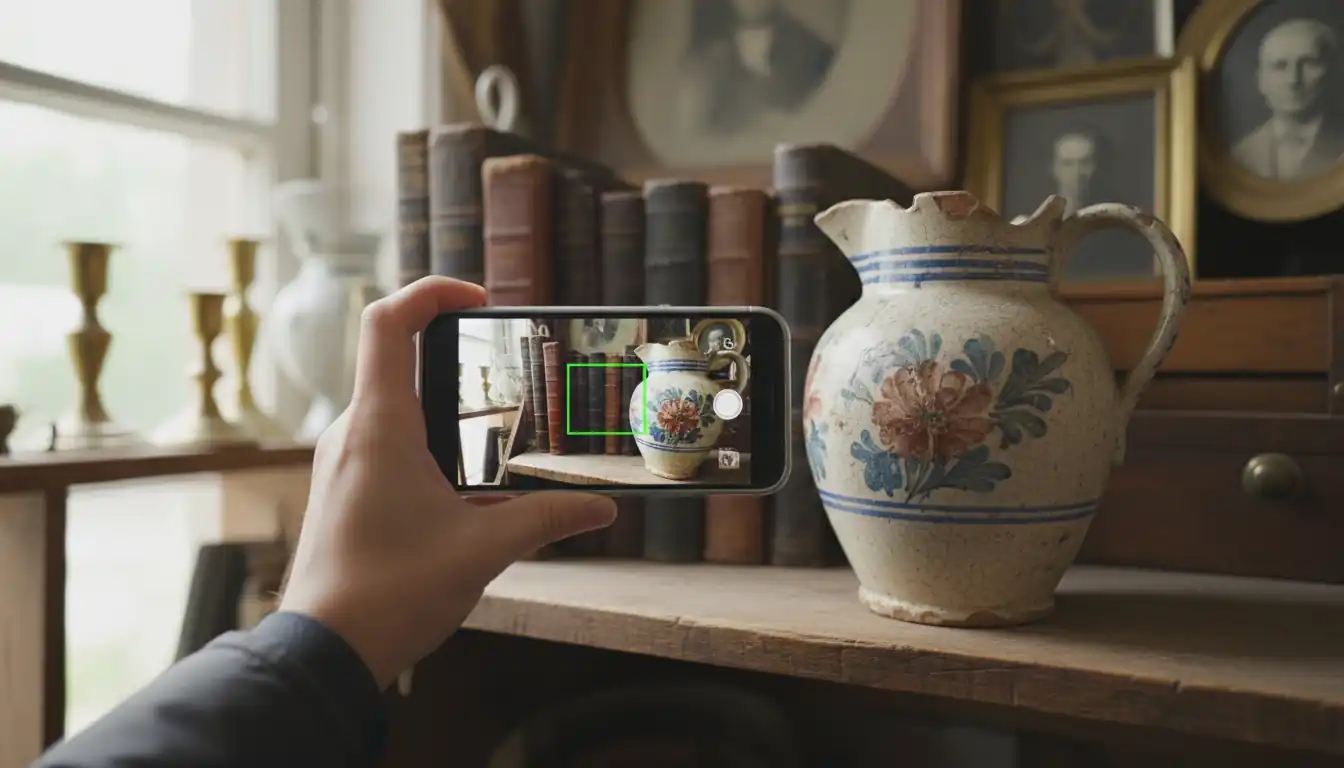
The days of carrying a pocket-sized guide to pottery marks are largely over. While those books still hold value for deep academic study, they are impractical when you are navigating a fast-moving estate sale or a crowded flea market. The modern toolkit is digital, centered on the idea that your phone camera is more than a way to take photos—it is a sophisticated sensor capable of identifying objects that the human eye might miss.
Many people ask, "Is there an app for thrift store finds?" The answer is a resounding yes, but the utility of these apps goes far beyond simple identification. They represent a shift in how we interact with history. Instead of relying on a single expert's opinion or a lucky guess, you now have access to vast databases of auction records and historical archives. This democratization of information means that a beginner can walk into a shop and spot a piece of mid-century modern glassware with the same accuracy as a seasoned dealer.
Identifying Hidden Gems in Real Time
When you are "in the wild," speed is your greatest asset. High-value items don't stay on the shelves for long. If you have to go home and research an item, it will likely be gone by the time you return. Real-time identification allows you to make an informed decision on the spot. This is particularly useful for items that lack obvious branding.
Consider the "What is the app that identifies objects to buy?" question often seen on search forums. Collectors are looking for a tool that removes the guesswork. When you find an unsigned piece of studio pottery, a visual identification tool can analyze the shape, the glaze texture, and the foot ring to suggest a specific artist or region. This immediate feedback loop transforms the thrifting experience from a gamble into a calculated investment.
- Speed of Acquisition: Identifying an item in seconds allows you to claim it before other pickers notice.
- Confidence in Pricing: Knowing the history of an item helps you determine if the asking price allows for a healthy profit margin.
- Broadening Your Scope: You no longer have to stick to categories you know well; the right tool allows you to branch out into textiles, metalwork, or furniture.
Why Visual Search Beats Manual Research
Manual research is inherently flawed because it relies on your ability to describe an object in words. How do you describe the specific shade of "celadon" on a Chinese vase? How do you type out the intricate pattern of a lace collar? Language is often too imprecise for the nuances of antiques. Visual search bypasses this hurdle by comparing the physical characteristics of the object directly against a database.
"The most significant barrier to entry in the antique market isn't a lack of money; it's a lack of specialized knowledge. Visual search tools act as a bridge, giving everyone the ability to read the 'language' of objects."
Manual searching also fails when it comes to maker marks. Many marks are symbolic—a stylized bird, a specific crown, or a series of geometric shapes. Trying to find these through text queries is an exercise in frustration. A visual tool can "see" the mark, account for wear and tear, and match it to a known manufacturer in a fraction of the time it would take to flip through a reference book.
| Feature | Manual Research | Visual AI Identification |
|---|---|---|
| Search Method | Text-based descriptions | Image-based analysis |
| Accuracy | Subjective and prone to error | Objective and data-driven |
| Time Required | 10–30 minutes | 3–5 seconds |
| Skill Level | High (requires prior knowledge) | Low (accessible to beginners) |
Decoding the Technology Behind the Lens
To understand how your phone can suddenly become an expert appraiser, we have to look at the evolution of image recognition. Early versions of this technology were essentially "reverse image searches." They looked for identical photos on the internet. If no one had taken a photo of your specific item before, the search would fail. Modern technology has moved far beyond this.
Advanced AI doesn't just look for a matching photo; it analyzes the "DNA" of the object. It looks at the curvature of a chair leg, the specific way light reflects off a certain type of glass, and the brushstroke patterns on a painted surface. This is where a tool like Relic becomes indispensable. Instead of just showing you similar-looking pictures, Relic uses AI to provide a real appraisal, historical context, and the origin of the item. It understands the difference between a mass-produced reproduction and a genuine 18th-century artifact by evaluating these subtle physical cues.
How AI Image Recognition Deciphers Maker Marks
Maker marks are the fingerprints of the antique world. They tell you who made the item, where it was made, and often exactly when it was produced. However, these marks are frequently tiny, worn down, or partially obscured by age. Traditional cameras often struggle to focus on these details, and the human eye can easily misinterpret them.
AI models are trained on millions of images of these marks. They can recognize a specific silversmith’s hallmark even if it’s 40% rubbed away. The technology uses pattern recognition to fill in the blanks, comparing the proportions and spacing of the remaining marks against known historical stamps. This level of precision is what allows an app to tell you that a piece of silver isn't just "old," but was specifically crafted in London in 1792.
- Pattern Matching: AI identifies the specific geometry of logos and stamps.
- Contextual Analysis: The tool looks at the material of the item to narrow down which marks are even possible.
- Macro Capabilities: Modern phone lenses, combined with AI sharpening, can see details invisible to the naked eye.
The Evolution of Instant Appraisal Data
An identification is only half the battle. Knowing that a vase is "Roseville Pottery" is helpful, but knowing that it is from the "Pine Cone" line and currently sells for $400 is what makes the information actionable. The evolution of this technology has integrated market data directly into the identification process.
Apps like Relic don't just stop at the name of the object. They pull from historical auction data and current market trends to give you a realistic idea of what an item is worth. This isn't just a "suggested price"; it’s a reflection of what people are actually paying. This historical context is vital because the antique market is fluid. What was popular ten years ago might be stagnant now, and vice versa. Having that data at your fingertips prevents you from overpaying for a "trend" that has already passed.
"True appraisal isn't just about naming an object; it's about understanding its place in the current market ecosystem."
Navigating Privacy and Data in Identification Apps
As we use more powerful digital tools, we must consider the digital footprint we leave behind. When you take a photo of a rare, high-value item, that data is processed by a server. For collectors, privacy is a significant concern. If you find a $10,000 item at a garage sale, you might not want that information linked to your personal identity or location until you are ready to sell it.
This is where the distinction between "Data Linked to You" and "Data Not Linked to You" becomes critical. When an app links data to you, it may track your location, your search history, and your specific finds to build a marketing profile. For a serious collector, this can be invasive. The preferred standard in the industry is to use tools that prioritize your anonymity, ensuring that your "finds" remain your business.
Understanding Data Collection and User Privacy
Most users don't realize that every photo they upload to a cloud-based service contains metadata. This can include the exact GPS coordinates of where the photo was taken. If you are scouting a "secret" honey hole—a small-town thrift store that consistently stocks high-end items—you don't want that location data being harvested.
When choosing an identification app, look for transparency regarding how your images are used. Does the company own the rights to your photos once you upload them? Is your search history private? A professional-grade tool should treat your data with the same respect a high-end auction house treats a private collection. You want the power of the AI without the cost of your personal privacy.
- Metadata Scrubbing: Some apps automatically remove location data from your photos before processing.
- Anonymized Searching: Your searches should be used to improve the AI, not to track your personal buying habits.
- Local Storage Options: The ability to keep your "digital catalog" on your device rather than a public cloud is a major plus for security.
Managing Your Digital Collection Safely
Once you begin using an app to identify items, you will quickly build a digital library of your finds. This is incredibly useful for organization, but it also requires a strategy for digital safety. Think of your app's history as a digital vault. It contains a record of your assets, their values, and where you found them.
Managing this collection safely means using strong authentication and being mindful of how you share these records. If you are showing a potential buyer an appraisal on your phone, you want to ensure they aren't seeing your entire inventory or the prices you paid for other items. A well-designed app will allow you to export individual reports without exposing your entire history.
- Secure Backups: Ensure your digital inventory is backed up in case you lose your phone.
- Private Folders: Use features that allow you to categorize finds into "private" and "public" views.
- Selective Sharing: Only share the appraisal data necessary for a sale, keeping your sourcing secrets to yourself.
Global Sourcing and Regional Variations
The antique market is no longer local. Thanks to the internet, a piece of 19th-century Japanese Meiji-era bronze can end up in a small shop in rural Ohio. For the average picker, these "out of place" items are the most profitable because the local shop owner likely doesn't know how to price them. However, identifying items from different cultures and regions requires a massive amount of specialized knowledge.
This is where AI truly shines. While a human expert might specialize in "American Folk Art," an AI model can be trained on global datasets. It can recognize the difference between a genuine Ming dynasty porcelain mark and a 20th-century "Macau" style reproduction. It can distinguish between Victorian silver hallmarks from Birmingham and colonial silver marks from India or South Africa.
Identifying Regional Styles from Europe to Asia
Every region has its own "visual grammar." For example, European furniture often relies on specific wood types like oak or mahogany and follows strict stylistic periods (Queen Anne, Louis XIV, etc.). In contrast, Asian antiques might use zitan or huanghuali wood and focus on joinery techniques that don't use nails.
An identification app acts as a translator for these regional styles. When you scan an item, the AI looks for these specific markers. It might notice the "crazing" pattern on a piece of French faience or the specific pigment used in a Middle Eastern rug. This allows you to identify high-value items from Africa, the Middle East, India, and the Asia Pacific region, even if you have never studied those cultures.
- Material Analysis: AI can often suggest the type of wood or stone based on grain patterns and texture.
- Symbolic Recognition: Identifying regional motifs, such as the "Tree of Life" in Persian designs or the "Bat" symbol in Chinese art.
- Construction Techniques: Recognizing hand-carved vs. machine-cut elements that vary by region and era.
Cross-Border Market Trends for Collectors
The value of an item is often dictated by where it is being sold. A piece of British campaign furniture might be worth a certain amount in London, but its value could be significantly higher in a former colonial market like India or Australia where such pieces are rarer. Understanding these cross-border trends is essential for maximizing your return on investment.
Technology allows you to see these global trends in real time. You can see what similar items are fetching at auction houses in Hong Kong, New York, and Paris simultaneously. This global perspective prevents you from selling an item too cheaply in your local market when there is a hungry international audience willing to pay a premium.
| Region | Common High-Value Finds | Key Identification Markers |
|---|---|---|
| East Asia | Porcelain, Jade, Lacquerware | Reign marks, foot rim finish, weight |
| Europe | Silver, Art Glass, Fine Art | Hallmarks, pontil marks, artist signatures |
| Middle East | Carpets, Brassware, Manuscripts | Knot density, patina, calligraphy style |
| North America | Folk Art, Mid-Century Furniture | Tool marks, manufacturer labels, wood type |
Maximizing Resale Value with Professional Insights
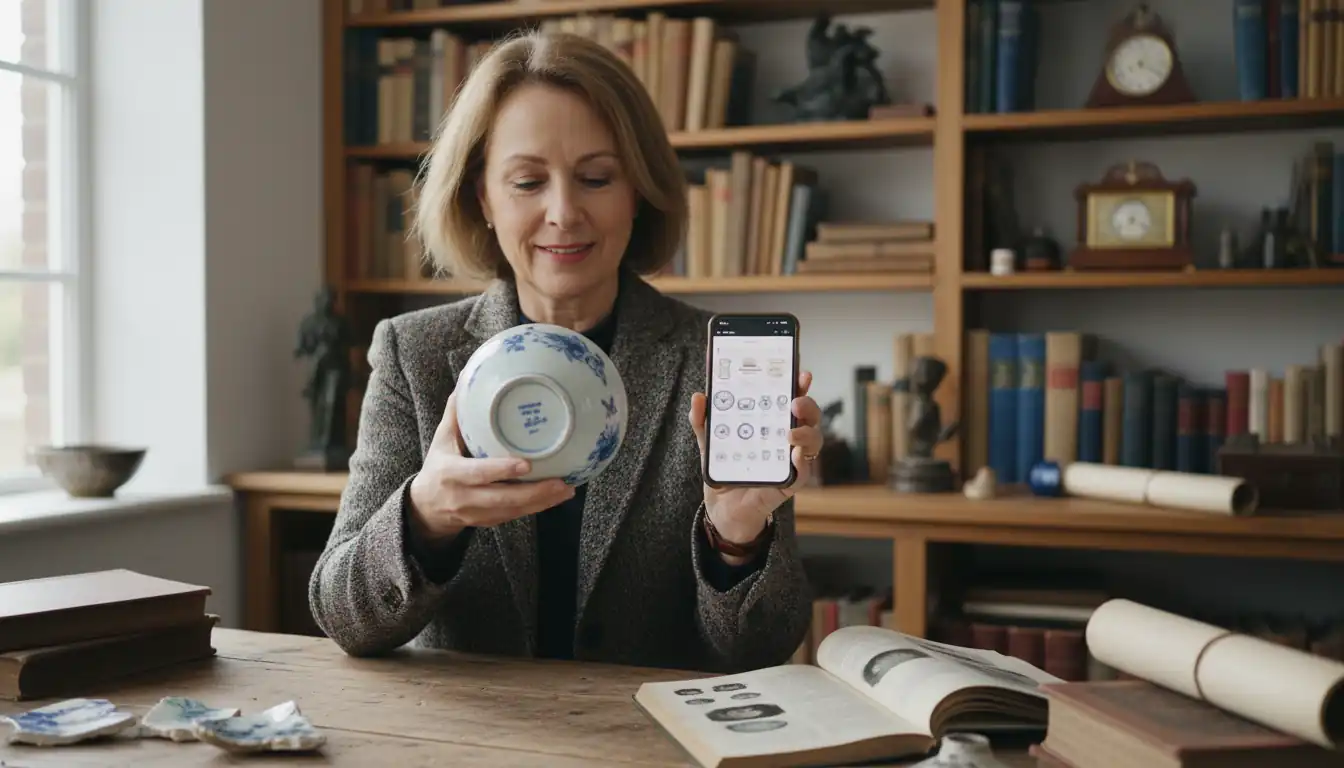
The ultimate goal for many thrifters is to turn a find into a profit. However, simply knowing what an item is isn't enough to get the best price. To sell an item for its true value, you need to present it professionally. This involves providing a clear history, a detailed description, and a justified valuation.
This is the final step in the digital thrifting workflow. By using an app like Relic, you aren't just getting a name for your object; you are getting a professional-grade dossier. Relic provides the historical context and origin that you can copy directly into a listing on eBay, 1stDibs, or Chairish. When a buyer sees a detailed history and a professional appraisal, their confidence increases, and so does the price they are willing to pay.
Transforming Identification into Actionable Appraisals
A professional appraisal is more than just a number. It is a narrative that explains why an item is valuable. Is it rare? Is it in exceptional condition? Does it come from a famous manufacturer? When you use an identification tool, you should look for one that provides these "talking points."
For example, if you find a piece of glass, the app might identify it as "Steuben." But the professional insight is knowing that it is "Aurene" glass, developed to compete with Tiffany’s "Favrile." Including this bit of history in your resale listing transforms the item from "old gold vase" to "a significant piece of American glassmaking history." This narrative-building is what separates high-end dealers from casual sellers.
- Condition Reports: Use the app to help identify common flaws like "flea bites" in glass or "crazing" in ceramics.
- Provenance Building: Even if you don't have the physical paperwork, the historical data provided by the app helps establish a "digital provenance."
- Comparative Analysis: Use the app’s data to show potential buyers what similar items have sold for recently.
Building a Digital Inventory for Long-Term Growth
If you are serious about antiquing, you need to move away from "one-off" sales and toward building a business. This requires organization. A digital inventory allows you to track your acquisitions, your costs, and your potential profits. It also serves as a vital record for insurance purposes. If your collection is ever damaged or stolen, having a digital log with photos and appraisals is the difference between a total loss and a successful claim.
The analytics provided by modern apps can also help you spot patterns in your own buying. You might realize that you have a 90% profit margin on Japanese ceramics but only a 20% margin on silver. This data allows you to refine your strategy, focusing your time and energy on the categories that yield the highest return.
"The most successful collectors don't just find great items; they manage their knowledge like a portfolio."
- Insurance Documentation: A digital log provides proof of value for high-end finds.
- Tax Preparation: Tracking purchase prices and sale dates simplifies your end-of-year accounting.
- Market Timing: By keeping a log, you can wait to sell items until the market for that specific category peaks.
Conclusion
The world of antiques is no longer a closed circle reserved for those with decades of academic study. The barrier to entry has been lowered by technology that can see, analyze, and value objects in the blink of an eye. By using your phone as a sophisticated identification tool, you can spot the "money on the shelf" that others walk right past.
Whether you are looking for a side hustle or a full-time career in picking, the strategy remains the same: use visual search to identify items quickly, rely on AI for deep historical context, and maintain a professional digital inventory. Tools like Relic provide the professional-grade data you need to turn a $5 thrift store find into a $500 sale.
Your next great find is out there, likely hidden under a layer of dust or mislabeled in a bargain bin. The only question is whether you have the tools to recognize it when you see it. Download an identifier, head to your local shop, and start scanning. The history—and the profit—is waiting to be discovered.
Identify antiques instantly
Point your camera at any antique, collectible, or vintage item. Get valuations, history, and market insights in seconds.
Download for iPhone