Stop Leaving Money on the Shelf: The Secret Apps Pro Flippers Use to Spot Hidden Value


You are standing in a crowded thrift store, surrounded by the smell of old dust and the hum of fluorescent lights. Your eyes land on a heavy, tarnished brass lamp tucked behind a stack of chipped dinnerware. Is it a mass-produced piece of 1980s home decor worth five dollars, or a rare mid-century designer original worth five hundred? Most people would walk away, unwilling to take the risk. The professional flipper, however, doesn't guess. They reach for their phone.
The difference between a hobbyist who makes a few extra bucks and a professional who clears a six-figure income often comes down to the data they can access in the palm of their hand. In the high-stakes world of reselling, information is the only currency that truly matters. If you aren't using a specific suite of tools to optimize your route, identify your finds, and calculate your margins, you are leaving money on the shelf for someone else to find.
This guide will walk you through the end-to-end workflow of a professional flipper. We will move from the strategic planning of your weekend "treasure hunt" to the high-tech identification of unmarked antiques, and finally to the visual presentation that commands premium prices. By the time you finish reading, you will have a roadmap to transform your reselling side-hustle into a precision-engineered business.
Strategic Sourcing and Route Optimization
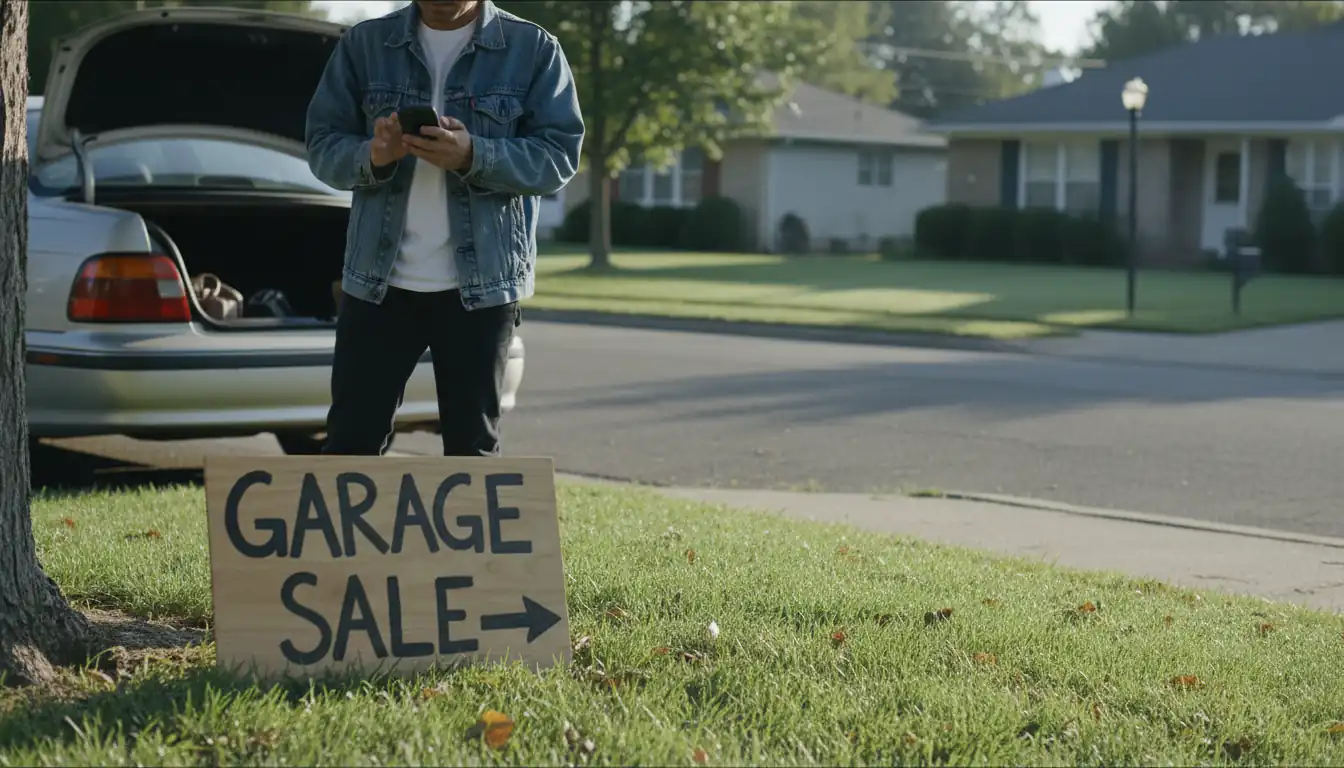
Success in flipping begins long before you step foot in a garage or an estate sale. The most successful pickers treat their weekends like a military operation. They don't just drive around looking for neon-colored cardboard signs taped to telephone poles. Instead, they use data to build a route that maximizes their "find-per-hour" ratio. Every minute spent idling in traffic or wandering through a lackluster yard sale is a minute you aren't finding inventory.
Mapping Your Weekend Treasure Hunt
The foundation of a profitable weekend is an app called Yard Sale Treasure Map. This tool aggregates listings from Craigslist and other public platforms, plotting them onto a visual map. But the real power lies in the filtering. A professional doesn't visit every sale; they visit the sales that mention specific keywords.
- Keyword Filtering: You can set alerts for terms like "vintage," "tools," "estate," or "moving." If a sale mentions "mid-century" or "sterling," it becomes a high-priority stop.
- Route Sequencing: The app allows you to organize your stops in a logical loop. This prevents you from zig-zagging across town, saving you significant money on fuel and, more importantly, saving your time.
- Syncing and Notes: You can add personal notes to each stop, such as "Cash only" or "Starts at 7 AM," ensuring you don't miss the crucial early-access window.
Why does this matter? Because the best items are usually gone within the first twenty minutes of a sale opening. If you are the fifth person to arrive because you took a sub-optimal route, you are likely looking at the leftovers.
Early Access to Estate Sales
While yard sales are great for finding undervalued gems, estate sales are where the high-ticket items live. EstateSales.net is the gold standard for this. Professionals use this app to "window shop" days before the sale even begins. Most estate sale companies upload dozens, if not hundreds, of photos of the home's contents.
- Photo Analysis: By zooming in on the background of photos, you can often spot items the liquidators didn't highlight. That dusty box in the corner of the garage might contain the vintage electronics you specialize in.
- Location Scouting: The app provides the exact address and the "line-up" procedure. Some sales use a numbering system; others are first-come, first-served. Knowing the rules of the game before you arrive is the only way to win.
- Favorite Companies: You will eventually learn which estate sale companies price items to move and which ones price items at full retail. You can "favorite" the liquidators who consistently provide you with the best margins.
"The hunt is won or lost in the planning phase. If you show up to a sale without a plan, you're just a tourist."
Instant Identification and Historical Appraisal
Once you are on the ground, the challenge shifts from "where is the stuff?" to "what is this stuff?" This is the moment where most flippers hit a wall. It is easy to scan a barcode on a modern book or a kitchen gadget using the Amazon Seller App or eBay’s built-in scanner. But what do you do when there is no barcode? What do you do when you are looking at a hand-carved wooden figure, a piece of unmarked pottery, or a painting with an illegible signature?
AI Powered Antique Recognition
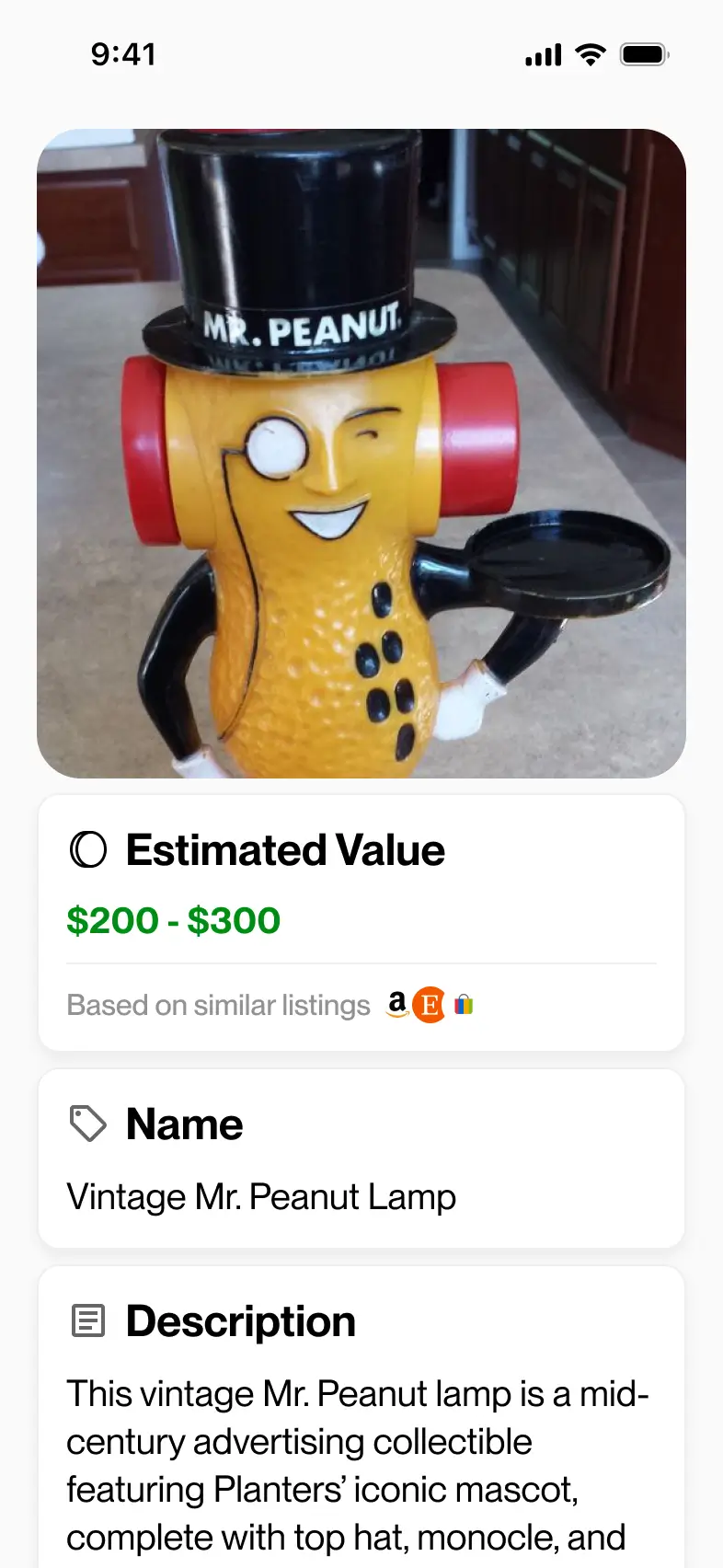
This is where the distinction between a general reseller and a high-end antique dealer becomes clear. To unlock 10x or 20x profits, you have to identify the "unidentifiable." This is exactly why professionals have started using Relic.
Relic is an iOS app designed specifically for the antique and vintage market. Unlike generic image search tools that might just show you "similar looking chairs," Relic uses advanced AI to provide a real appraisal, historical context, and the origin of the item. You simply take a photo or upload one from your gallery, and the app analyzes the specific markers—the joinery, the glaze, the patina, or the artistic style.
- Beyond the Barcode: Most valuable antiques were made long before barcodes existed. Relic bridges that gap by recognizing the physical characteristics of the item itself.
- Historical Context: Knowing that a vase is "old" is one thing. Knowing it was made in a specific Japanese province during the Meiji period is another. That historical "story" is what allows you to list an item for its true value rather than a guessed price.
- Professional Grade Accuracy: With over 20,000 reviews and a 4.9-star rating, the app has become a staple for importers, pickers, and serious collectors who need a reliable second opinion in the field.
| Feature | Generic Image Search | Relic App |
|---|---|---|
| Primary Goal | Find similar images online | Provide appraisal and history |
| Accuracy | High for modern goods | High for unique antiques |
| Context | Links to shopping sites | Historical and origin data |
| User Base | General public | Dealers and professionals |
Barcode Scanning for Retail Arbitrage
For items that do have barcodes—like discontinued toys, board games, or high-end small appliances—the eBay and Amazon apps are still essential. They provide "sold" data, which tells you what people are actually paying, rather than what sellers are asking. However, the real money in flipping is rarely found in items with barcodes. Those markets are saturated and highly competitive. The "hidden value" is almost always in the unique, the vintage, and the antique.
Profit Margin Calculation and Market Trends

Identifying a valuable item is only half the battle. You also need to know if it’s a sound business investment. A $100 item isn't worth buying for $50 if the shipping costs $30 and the platform takes a $15 commission. You would be working for a $5 profit, which is a recipe for burnout.
Factoring in Hidden Seller Fees
Professional flippers use specialized calculators to determine their "net-net" profit. Apps like Underpriced AI or simple fee calculators for eBay and Poshmark are vital. You must account for:
- Platform Fees: These usually range from 10% to 20% depending on the category and the site.
- Payment Processing: Don't forget the small percentage taken by PayPal or the platform's internal payment system.
- Shipping Supplies: Boxes, bubble wrap, and tape aren't free. A pro factors in a flat "handling" cost for every item.
- Taxes: Setting aside 20-30% for self-employment tax is the difference between a successful business and a surprise debt to the IRS.
Tracking Real Time Demand
One of the most important metrics in flipping is the "sell-through rate." This is the ratio of how many items are currently listed versus how many have sold in the last 90 days.
If you see 1,000 "Vintage Blue Willow Plates" listed on eBay, but only 10 have sold in the last three months, that is a bad investment. You will be sitting on that inventory for years. Conversely, if you see 50 listed and 45 have sold, you should buy every single one you find. This data-driven approach removes the emotion from buying. You aren't buying it because you like it; you're buying it because the data says it will sell quickly.
The goal isn't just to sell for a high price; it's to turn your capital over as many times as possible in a year.
Matching Your Finds to the Right Marketplace
A common question among beginners is: What is the best platform to sell thrifted items? The answer depends entirely on the item's size, value, and target demographic. Selling a heavy oak dresser is a completely different logistical challenge than selling a rare Pokémon card.
Local Sales for Bulky Inventory
For furniture, large appliances, or low-value items that aren't worth the hassle of shipping, local marketplaces are your best friend.
- OfferUp and 5Miles: These apps are excellent for quick, local cash sales. They are visual-heavy and allow for easy communication with buyers. They are the modern equivalent of the newspaper classifieds.
- Facebook Marketplace: Currently the king of local sales due to its massive user base. It is particularly effective for "trendy" home decor and baby gear.
- The Advantage: No shipping costs and no platform fees (if paid in cash). The downside is the "no-show" factor and the need to meet strangers in person.
Global Platforms for Rare Collectibles
If you have used an app like Relic to identify a high-value antique or a rare collectible, you want to put it in front of a global audience.
- eBay: Still the undisputed heavyweight for collectibles, electronics, and vintage items. Its reach is unparalleled. If you have a niche item, the person willing to pay the most for it might be on the other side of the country.
- Poshmark and Depop: These are the go-to platforms for vintage clothing and high-end fashion. The user base here expects a certain "aesthetic" and is willing to pay a premium for curated items.
- Etsy: Best for "true" vintage (20+ years old) and handmade items. The buyers here value the "story" and the history of the piece, which you’ve already researched.
| Item Type | Best Platform | Why? |
|---|---|---|
| Furniture | OfferUp / FB Marketplace | Avoids high shipping costs |
| Designer Shoes | Poshmark | Built-in authentication and fashion-focus |
| Antique Pottery | eBay / Etsy | Reaches niche collectors worldwide |
| Common Toys | Mercari | Easy listing process and younger demographic |
Visual Presentation and Listing Optimization

You’ve found the item, identified its history, and chosen the right platform. Now comes the "make or break" moment: the listing. In the digital marketplace, your photos are your storefront. A grainy photo taken on a cluttered kitchen counter will attract low-ballers. A clean, professional-looking photo will attract serious buyers.
Professional Photography with Mobile Tools
You don't need a DSLR camera to take professional photos. Your smartphone is more than capable, provided you use the right apps to clean up the images.
- Background Removal: Apps like PhotoRoom or Adobe Express allow you to strip away a messy background and replace it with a clean, "studio" white. This is the industry standard for eBay and Amazon.
- Lighting Adjustment: Use editing tools to bump up the exposure and contrast. You want the item to look as bright and true-to-life as possible.
- The "Hero" Shot: Your first photo should always be a clear, full-frame shot of the item. Subsequent photos should show the details, the "makers marks" (which you found using Relic), and any flaws. Transparency builds trust.
Digital Mockups for Vintage Apparel
If you are selling vintage t-shirts or clothing, presentation is even more critical. This is where tools like MockLab 3D come into play. Instead of just laying a shirt flat on the floor (the "flat lay"), you can create digital mockups that show how the garment hangs or how the print looks in a 3D space.
High-quality visuals can increase the perceived value of a thrifted item by 20% to 50%. When an item looks like it belongs in a high-end boutique, buyers are less likely to haggle and more likely to hit the "Buy It Now" button. You are selling an experience, not just a used object.
Conclusion
Flipping is no longer a game of luck. It is a game of information. By utilizing route optimization to get to the best sales first, using AI-powered tools like Relic to identify hidden gems, and applying data-driven pricing and professional presentation, you move from "guessing" to "knowing."
The next time you see an unmarked piece of glass or a strange-looking chair at a yard sale, don't just walk by. Use the tools at your disposal to uncover its story. You might just find that the "dusty old junk" in front of you is the profit that pays for your next vacation.
Your next step: Download Yard Sale Treasure Map to plan your upcoming Saturday morning, and keep Relic ready on your phone. The best deals are waiting—you just need the right eyes to see them.
Identify antiques instantly
Point your camera at any antique, collectible, or vintage item. Get valuations, history, and market insights in seconds.
Download for iPhone