Stop Leaving Money on the Table: How to Spot a $500 Antique in Five Seconds


You walk into a crowded Victorian home on a Saturday morning. The air smells of old paper and floor wax. Around you, dozens of people are rummaging through boxes, squinting at price tags, and debating over mid-century lamps. In the corner, there is a small, unassuming side table with a dark finish. To the untrained eye, it looks like something from a thrift store. To a professional, it looks like a potential $800 profit.
The difference between the person who walks past that table and the person who buys it for $40 is five seconds of observation. Most people spend their time looking for things they like, while professionals look for things the market wants. You do not need a degree in art history to stop leaving money on the table. You simply need to know which details matter and which are distractions.
This guide will show you how to strip away the guesswork. You will learn to identify the structural markers of quality, the legal definitions that dictate value, and the modern tools that give you an unfair advantage over other buyers. By the time you finish reading, you will have a mental checklist that turns every estate sale into a high-probability hunt for profit.
Decoding the Century Mark and Red Flags
The word "antique" is thrown around loosely in casual conversation. People often use it to describe anything that looks old or belongs to their grandparents. However, in the professional trade and for legal purposes, the definition is rigid. Understanding this distinction is the first step in accurately pricing an item.
The Reality of the 100 Year Rule
The "100-year rule" is the gold standard for defining an antique. This is not just a stylistic preference; it is a legal definition established by the 1930 Tariff Act in the United States. According to this rule, an item must be at least a century old to be classified as a true antique.
Why does this matter for your wallet? First, true antiques are often exempt from certain import duties and taxes that apply to "vintage" items (which are generally defined as being between 20 and 99 years old). Second, the 100-year mark represents a shift in manufacturing. Items made before the early 1920s were often produced using different methods, materials, and labor standards than the mass-produced goods that followed.
When an item crosses that century threshold, its scarcity increases significantly. A chair from 1950 is one of millions; a chair from 1850 is a survivor. This scarcity creates a floor for the price. Even if the style is currently out of fashion, the historical value of a 100-year-old piece provides a level of financial protection that newer items lack.
Warning Signs of Reproduction
The biggest threat to your profit margin is the "high-quality reproduction." These are items designed to look 150 years old but were actually made in a factory in the 1990s. If you pay antique prices for a reproduction, you lose money instantly. You must develop a "BS detector" for these common estate sale pitfalls.
- The Screw Test: Look for any visible screws, especially on the underside of furniture or inside cabinet doors. Phillips-head screws (the ones with the "X" slot) were not patented until the 1930s. If you see a Phillips-head screw in a "18th-century" chest, it is either a reproduction or has been heavily repaired, both of which tank the value.
- The Symmetry Trap: Hand-carved wood from the 1800s is never perfectly symmetrical. If you look at a decorative flourish on a chair and it is a perfect mirror image of the other side, it was likely made by a CNC machine or a laser cutter. Real hand-carving has slight variations in depth and curve.
- Uniformity of Wear: Authentic age is messy. A table used for 100 years will have more wear near the floor (from mops and feet) and around the handles. If a piece has "distressed" marks that look too even or appear in places that wouldn't naturally be touched, it is a factory-applied finish.
- The Smell of Newness: Old wood has a specific, musty scent—a mix of old wax and time. If you open a drawer and smell fresh pine, plywood, or chemical adhesives, you are looking at a modern piece.
| Feature | Authentic Antique | Modern Reproduction |
|---|---|---|
| Fasteners | Hand-cut nails or single-slot screws | Phillips-head or Robertson screws |
| Wood Edges | Slightly irregular, hand-planed | Perfectly smooth, laser-cut |
| Joinery | Hand-cut dovetails (uneven) | Machine-cut dovetails (perfectly uniform) |
| Materials | Solid wood, often secondary woods inside | Plywood, MDF, or particle board |
Always carry a small flashlight. Shadows can hide modern staples and glue blocks that prove a piece is a fake.
High Stakes Categories for Maximum Profit
If you want to find $500 items consistently, you have to look where the big money moves. While small trinkets are fun, they rarely offer the same return on investment as furniture and fine art. These categories require more physical inspection, but they are the most rewarding for those who know what to look for.
Furniture and Structural Integrity
Furniture is the backbone of the antique market. To spot a high-value piece, you have to look past the dust and the ugly upholstery. You are looking for the "bones" of the item.
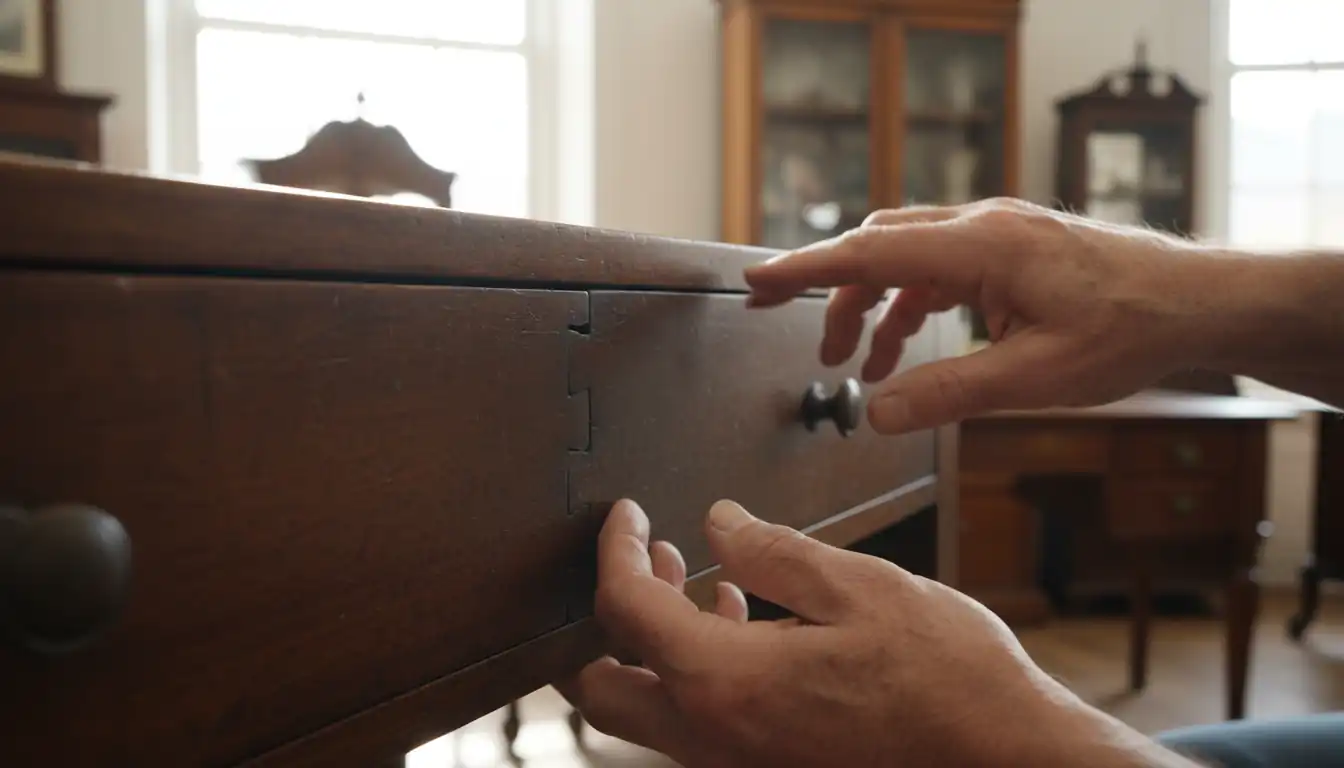
Dovetail Joints: Pull out a drawer. Look at where the front of the drawer meets the side. If you see interlocking wedges of wood, those are dovetails. In pieces made before 1860, these were cut by hand. Hand-cut dovetails are slightly uneven and usually wider than machine-cut ones. If the dovetails are tiny, perfectly spaced, and uniform, the piece was made after the industrial revolution took hold.
Wood Species Identification: The type of wood used can change the value by thousands. Mahogany and Walnut were the "prestige" woods of the 18th and 19th centuries. They are heavy, dense, and have a deep, rich grain. Pine and Poplar were often used as "secondary woods"—the wood used for the parts you don't see, like the bottoms of drawers. If you find a piece that is solid Mahogany all the way through, you have found something special.
The Importance of Finish: Never, ever sand down an antique. The "patina"—the thin layer of oxidation and wear on the surface—is where the value lives. A 200-year-old desk that has been stripped and refinished with modern polyurethane loses up to 80% of its market value. Look for "alligatoring" in the finish, which looks like tiny cracks in a dried-up pond. This is a sign of original shellac or varnish that has aged naturally.
Fine Art and Signed Pieces
Art is intimidating because it feels subjective. However, the physical construction of a painting provides objective clues about its age and value.
Canvas and Stretcher Bars: Turn the painting around. An old canvas will be dark, often a brownish-grey, due to decades of exposure to dust and smoke. Look at the wooden frame the canvas is stretched over. If the wood is held together by wooden pegs or has "keys" (small triangular wedges in the corners), it is likely an older, professional-grade piece. Modern, cheap canvases use staples and light, flimsy wood.
Brushstroke Depth: Run your eye along the surface of the painting at an angle. Do you see "impasto"—thick ridges of paint that stand up off the canvas? Or is the surface perfectly flat? Many modern "paintings" sold at home decor stores are actually prints on canvas with a few fake brushstrokes of clear gel added on top. A real oil painting will have varying depths of paint that correspond to the artist's movements.
The Frame Matters: Sometimes the frame is worth more than the art. A 19th-century gold-leaf frame made of carved wood and gesso is a masterpiece of craftsmanship. If the frame is heavy, has intricate floral details, and shows small chips where you can see white plaster (gesso) underneath, it is an antique. Even if the painting inside is mediocre, a high-quality period frame can sell for several hundred dollars to galleries and collectors.
Instant Appraisal Power in Your Pocket
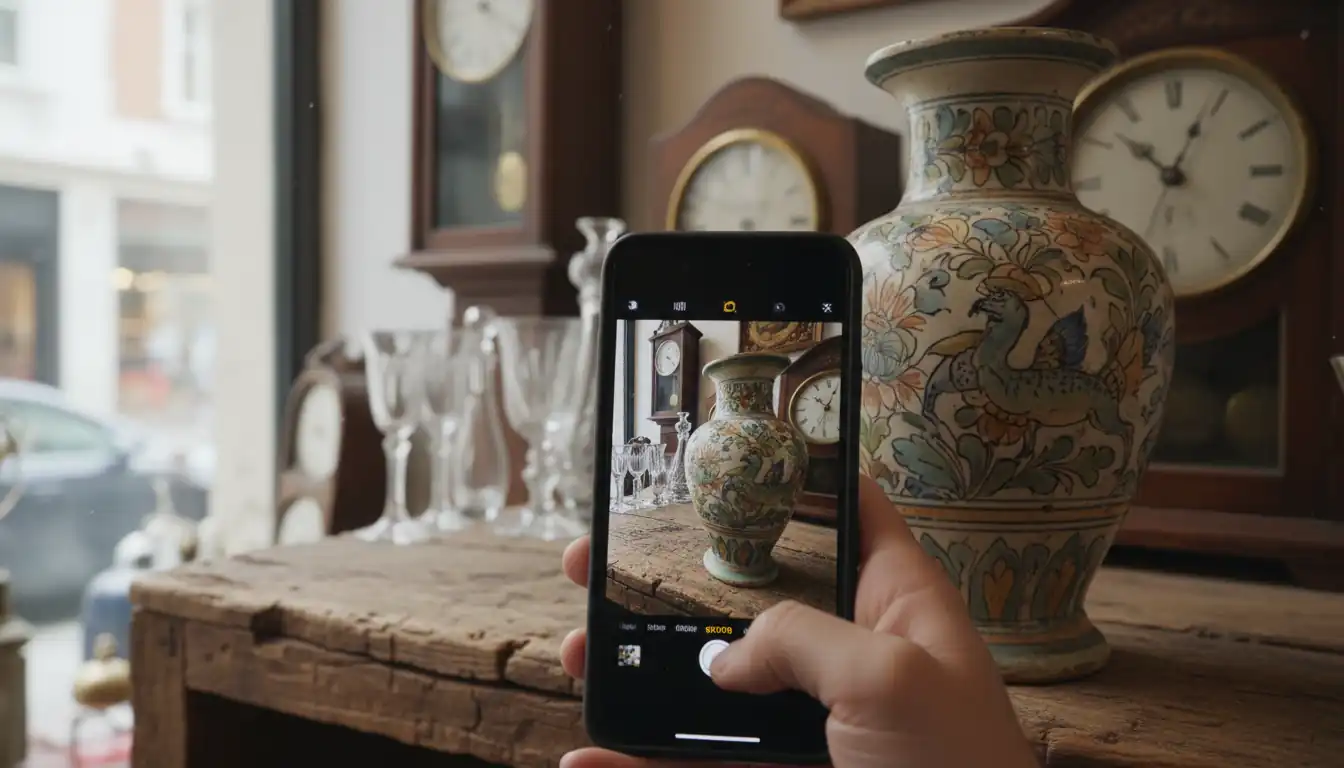
The biggest challenge at an estate sale is time. You are competing with twenty other people who are all looking for the same "sleeper" deals. In the past, you had to rely on your memory or carry a stack of heavy price guides. By the time you looked up an item, someone else had already put it in their cart.
This is where technology changes the math of reselling. The Relic app is designed specifically for these high-pressure environments. Instead of guessing or trying to describe a "blue floral vase" to a search engine, you simply take a photo. Relic uses advanced AI to analyze the visual markers of the item—its shape, pattern, material, and style.
Within seconds, the app provides a real appraisal, historical context, and the origin of the item. This isn't just a list of similar items on an auction site; it is a synthesized report that tells you what you are looking at. If you find a piece of pottery with an obscure mark on the bottom, you don't need to spend twenty minutes on a forum. You scan it, and Relic identifies the kiln, the era, and the current market value.
This speed is your greatest asset. While another buyer is debating whether a chair is "old enough," you have already confirmed its origin and appraised its value through the app. You can make an informed decision to buy or pass in the time it takes to walk across the room. This allows you to cover more ground and secure the best items before the crowd catches up.
Bridging the Gap Between Photo and Value
The power of an AI-driven appraisal lies in its ability to see things the human eye might miss. Relic's database compares your photo against millions of verified sales and museum records. It can detect the subtle difference between a genuine 19th-century porcelain pattern and a 1950s "tribute" piece.
For a professional picker, this is like having an expert appraiser standing over your shoulder at every sale. It removes the emotional bias of "I think this is pretty" and replaces it with "This item has a 90% probability of being a $500 asset." This data-driven approach is how you scale a hobby into a professional reselling business.
The Logistics of Professional Reselling
Finding a $500 antique for $50 is a great feeling, but that $450 difference isn't pure profit yet. To be a professional, you have to account for the "hidden" costs that eat into your margins. If you don't manage the logistics, you might find yourself working for less than minimum wage once the dust settles.
Hidden Costs of Antique Flipping
Before you buy a large item, you must calculate the "landed cost"—the total amount spent to get the item from the sale to the final buyer's hands.
- Professional Cleaning and Restoration: Most antiques are dirty. A light cleaning with professional-grade wax (like Renaissance Wax) is often necessary. However, if a piece needs structural repair or professional conservation, that can cost hundreds of dollars. If you aren't handy with a chisel, factor in the cost of a local restorer.
- Climate-Controlled Storage: You cannot store a 150-year-old mahogany table in a damp garage or a hot attic. The wood will warp, the glue will fail, and the finish will cloud. If you are scaling your business, the cost of a climate-controlled storage unit is a mandatory business expense.
- Shipping and Crating: This is the biggest profit-killer. Shipping a fragile oil painting or a heavy sideboard requires specialized packing. "White glove" shipping for furniture can cost $300 to $600 depending on the distance. If you are selling on a global platform, you must decide if the buyer pays shipping or if you are folding that cost into your asking price.
Local Assessment vs Global Market Value
Where you sell is just as important as what you sell. The value of an item can fluctuate wildly based on geography.
For example, if you are in Duluth, GA, a local assessment might tell you that a specific type of Southern primitive furniture is highly desirable. You might sell it quickly on a local marketplace or at a regional auction house. However, if you find a piece of high-end European art, the local market in a small suburb might not have the "deep pockets" required to pay full value.
In those cases, you look toward global platforms like 1stDibs or specialized auction houses in New York or London. These platforms give you access to international collectors who are willing to pay a premium for specific items. The trade-off is higher commission fees and more complex shipping requirements.
| Market Type | Pros | Cons |
|---|---|---|
| Local (FB Marketplace, Local Auction) | No shipping, fast cash, low fees | Lower price ceiling, limited audience |
| Regional (Specialized Dealers) | Better prices, expert handling | Transportation costs, consignment fees |
| Global (1stDibs, Sotheby's, eBay) | Highest possible price, massive audience | High fees, shipping risks, intense competition |
Always ask yourself: "Is this item a 'local hero' or a 'global star'?" Don't pay global prices for an item that only has local appeal.
Strategic Scouting and Network Building
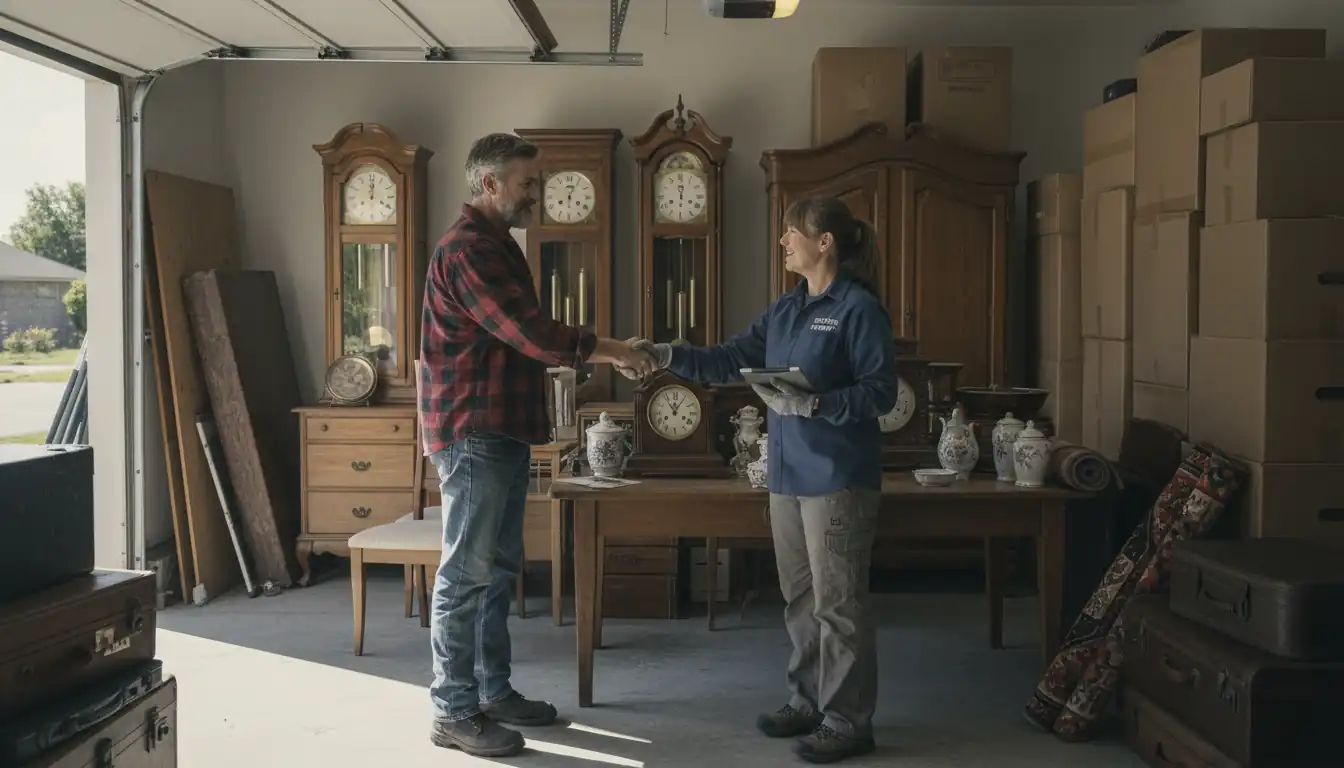
Success in the antique world is often about who you know and where you show up. The most successful resellers don't just wait for a public ad on a Friday morning; they are part of an ecosystem.
Early Arrival and Professional Etiquette
"Arriving early" is not just about being first in line. It is about observing the "set up" of the sale. Professional estate sale companies often have a specific way of pricing. If you arrive early and stay late, you start to see their patterns. Do they discount 50% on Sunday? Do they allow "bundles" where you buy ten items for a flat rate?
More importantly, you need to build relationships with the people running the sales. These companies are often overwhelmed. If you are the buyer who is polite, pays quickly, and doesn't leave a mess, they will remember you. Eventually, you can get on "first look" email lists or be invited to private previews before the general public is allowed in. This "insider" access is where the most profitable deals happen.
Digital Opportunities and Online Estate Sales
The landscape of estate sales has shifted toward the digital. Sites like Hibid, Everything But The House (EBTH), and LiveAuctioneers allow you to scout sales from your living room. This is a massive opportunity for those who can "read" a photo.
When you are looking at an online sale, use the same principles you use in person. Look for the grain of the wood in the photos. Look for the signature on the corner of the painting. You can even use the Relic app on your computer screen. By taking a photo of the auction listing's image, you can get a preliminary appraisal before you even place a bid. This allows you to scout dozens of sales across the country in a single evening, focusing your energy only on the items with the highest potential return.
Conclusion
Finding a $500 antique in five seconds isn't magic; it is the result of disciplined observation and the right tools. You now know that the "100-year rule" is your baseline for value and that Phillips screws and laser-cut wood are the enemies of profit. You understand that the "bones" of furniture and the physical construction of art tell a story that a price tag cannot.
By integrating technology like the Relic app into your scouting routine, you bridge the gap between curiosity and professional-grade data. You no longer have to wonder if a mark on a vase is a designer's signature or a random scratch. You have the answer in seconds, allowing you to move with the speed and confidence of a veteran dealer.
The next time you walk into an estate sale, don't just look at the items. Look for the joints, the wood grain, and the canvas texture. Use your tools, trust your "BS detector," and stop leaving money on the table. Your next big find is likely sitting in a corner right now, waiting for someone with the eyes to see it.
Your Next Steps:
- Download Relic: Get the app on your iPhone and practice scanning items in your own home to get a feel for the appraisal process.
- Check Local Listings: Look up estate sales in your area for the upcoming weekend.
- Build Your Kit: Get a high-quality flashlight and a magnifying glass to inspect marks and joinery.
Answers to Common Questions
How can I identify valuable items at an estate sale? Focus on materials and construction. Look for solid wood, hand-cut joinery, and original finishes in furniture. In art, look for canvas age and frame quality. Use an identification app like Relic to get instant market data on marks and signatures.
What is the 100 year rule for antiques? To be legally considered an antique in the US, an item must be at least 100 years old. This affects its historical value, tax status, and scarcity. Items 20-99 years old are generally classified as "vintage."
What items do not sell at estate sales? Mass-produced furniture from the 1980s and 90s (MDF/particle board), common 1990s collectibles (like Beanie Babies), and heavy "brown furniture" that lacks a specific designer name or historical period often struggle to sell.
What are red flags at estate sales? Look for modern fasteners like Phillips-head screws, perfectly symmetrical machine-carving, and "distressed" finishes that look uniform. These are signs of modern reproductions being sold as antiques.
Identify antiques instantly
Point your camera at any antique, collectible, or vintage item. Get valuations, history, and market insights in seconds.
Download for iPhone