Stop Overlooking These 5 Clues That Reveal a $5,000 Antique Lamp

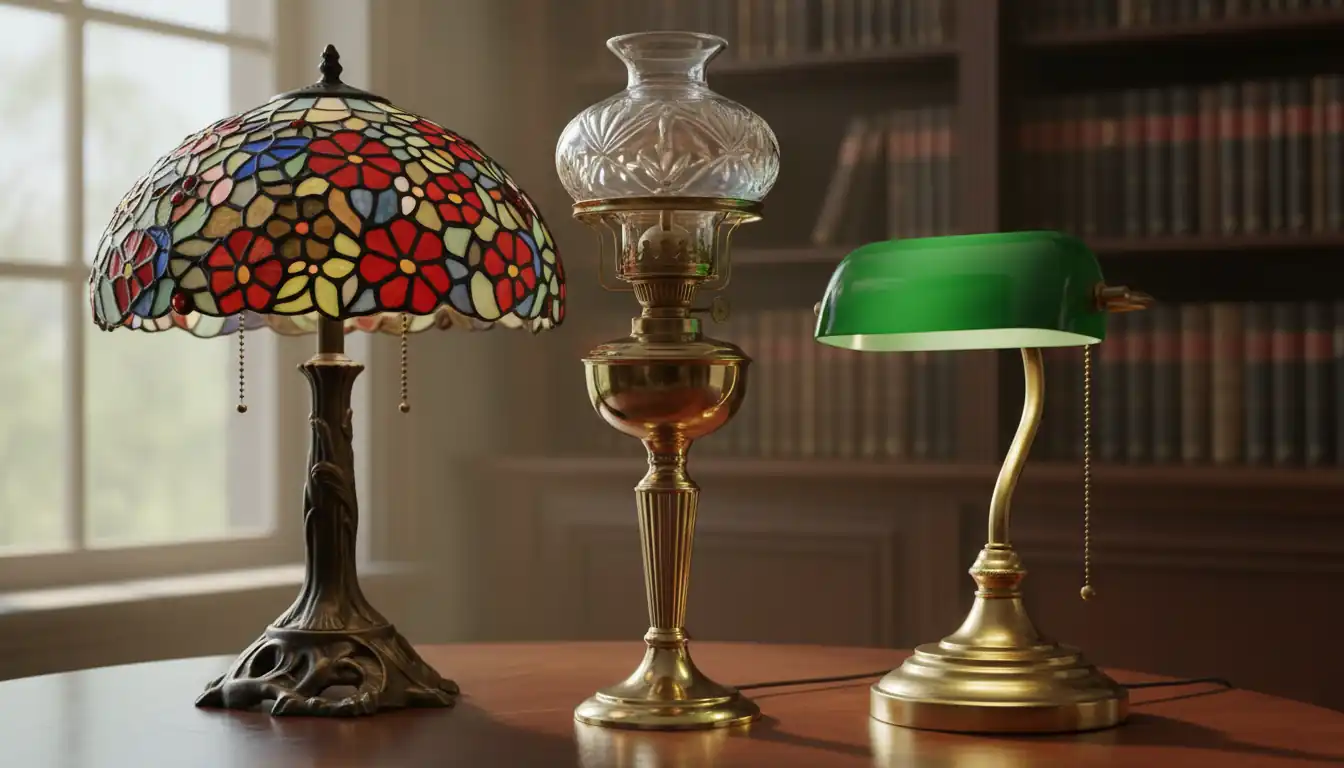
Imagine walking through a crowded estate sale, your eyes scanning past stacks of old books and chipped porcelain. In the corner, a dusty lamp sits on a side table, its brass base tarnished and its shade slightly askew. To most people, it’s just a piece of old furniture destined for a thrift store. But to the trained eye, that lamp might be a sleeping giant—a rare Tiffany or Handel piece worth more than a brand-new car.
The difference between a $50 yard sale find and a $5,000 museum-quality antique often comes down to five specific clues that most people overlook. These indicators aren't always obvious; they are hidden in the weight of the metal, the threading of a wire, or a tiny stamp obscured by a century of grime. If you know where to look, you can stop guessing and start identifying true value with the precision of a professional appraiser.
In this guide, we will break down the structural, electrical, and artistic markers that define high-end antique lighting. You will learn how to read the "DNA" of a lamp, from the casting marks on its base to the patent dates on its internal hardware. By the time you finish reading, you’ll have the framework needed to spot a treasure in the wild and the tools to verify your discovery instantly.
The Physical Blueprint of Early Lighting
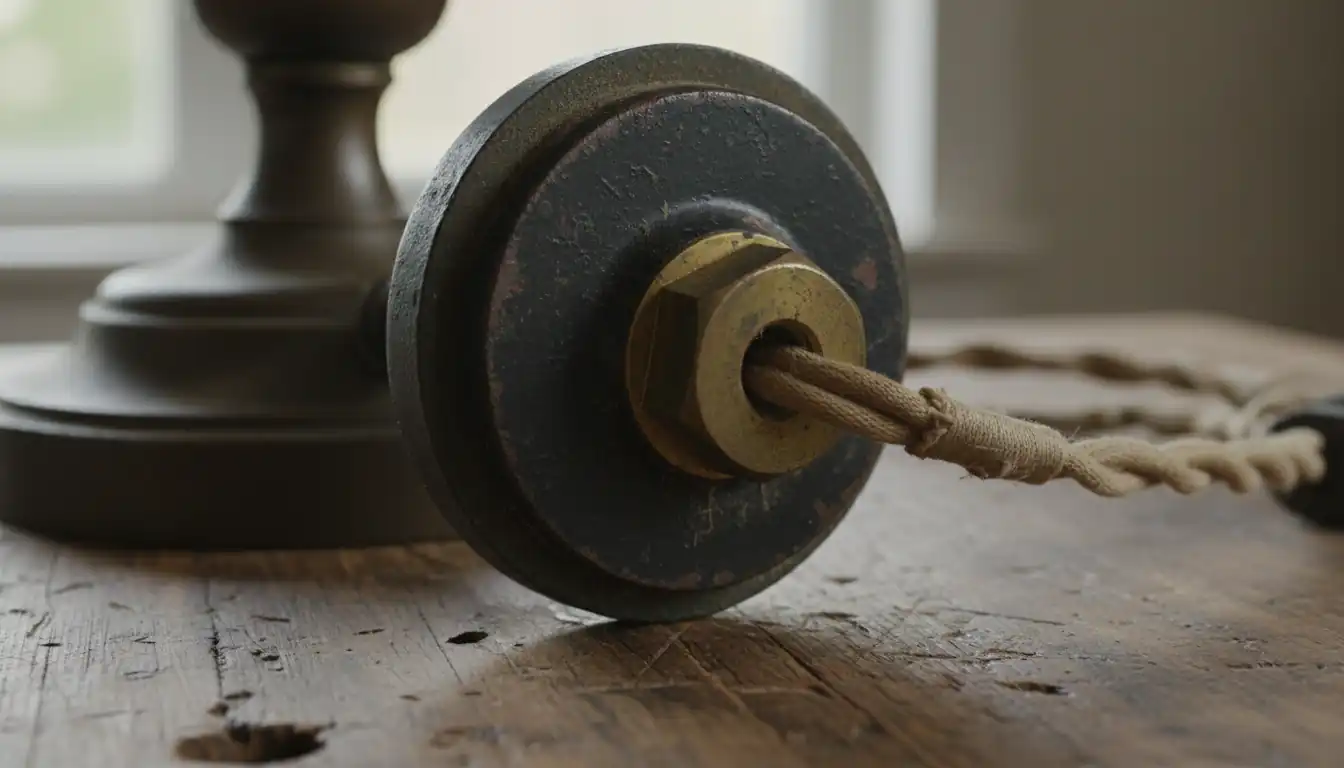
Before you ever look for a signature or check the wiring, you must evaluate the physical integrity of the lamp. The "heft" of an object tells a story that a visual inspection alone cannot. High-end manufacturers of the early 20th century didn't cut corners on materials. If a lamp looks heavy but feels light when you pick it up, that is your first red flag that you are dealing with a modern reproduction or a lower-quality "pot metal" piece.
Casting Marks and Structural Seams
When you examine the base of an antique lamp, you are looking for evidence of how it was born. In the early 1900s, high-quality lamps were often made using the lost-wax casting method or high-grade sand casting. These processes allowed for incredible detail but required significant hand-finishing. A $5,000 lamp will rarely show a prominent, sharp "mold seam" running down its side.
- Hand-Chased Details: Look closely at the decorative elements. Do the leaves or scrolls look crisp and individual? High-end bronze was often "chased" or sharpened by hand after casting.
- The Invisible Seam: On cheaper, mass-produced lamps from the mid-20th century, you will often see a raised line where two halves of a mold met. On a premium antique, these seams were meticulously sanded and polished away until the base appeared as a single, fluid piece.
- Internal Consistency: Turn the lamp over (carefully). The interior of a high-quality bronze base should look relatively clean, though it will have a natural aged patina. If the inside looks like shiny, greyish "white metal," it’s likely a cheaper zinc alloy rather than true bronze.
Material Authenticity and Weight
What did lamps look like in the early 1900s? This was a period of dramatic transition. As the 19th century closed, lamps were often heavy, ornate Victorian pieces made of cast iron or thick brass. As we moved into the early 1900s, the aesthetic shifted toward the fluid, organic forms of the Art Nouveau movement. These lamps were designed to look like they were growing out of the table, with bases mimicking tree trunks, lily pads, or vines.
A genuine antique bronze lamp has a "cold" feel to the touch and a significant weight that prevents it from tipping. If the metal feels warm or sounds "tinny" when tapped with a fingernail, it is likely a modern composite or thin spun brass.
| Material | Characteristics | Value Indicator |
|---|---|---|
| Solid Bronze | Heavy, deep patina, cold to the touch | High (Found in Tiffany, Bradley & Hubbard) |
| Spelter (Pot Metal) | Lighter, often painted to look like bronze | Moderate to Low |
| Wrought Iron | Magnetic, visible hammer marks | High if Arts & Crafts style |
| Slag Glass | Opaque, marbled appearance | High if original and crack-free |
Decoding the Electrical DNA
While the exterior of a lamp provides the first impression, the internal components provide the proof. Many collectors are afraid of the "guts" of a lamp, but the electrical hardware is actually a chronological map. Even if a lamp has been rewired for safety—which is common and often recommended—the original socket housing is frequently preserved because it is integrated into the design.
Evolution of the Socket and Turn Key
The socket is the heart of the lamp’s identification. In the early days of residential electricity, a few major companies dominated the market. Names like Bryant, Perkins, General Electric (GE), and Arrow E are the hallmarks of authenticity.
- The "Fat Boy" Socket: Early sockets from the 1900s to 1910s were often larger and more bulbous than modern versions. These are highly sought after by collectors because they indicate the lamp hasn't been "gutted" and replaced with cheap modern parts.
- Patent Dates: Look for tiny stamps on the metal shell of the socket. You might see "Pat. 1898" or "Pat. 1903." While this doesn't mean the lamp was made in that exact year, it provides a "floor" for the age. A lamp cannot be older than its youngest patent date.
- The Turn Key: Examine the knob used to turn the lamp on. Is it made of black hard rubber (early), porcelain (very early), or cheap plastic (modern)? A paddle-style switch made of brass with a crisp "click" is a sign of a high-quality vintage component.
Wiring Patterns and Plug Indicators
While you should never plug in an antique lamp with original wiring without a safety inspection, the cord itself can tell you if the lamp is a reproduction.
- Silk and Cotton Jackets: Before the 1930s, wires were typically insulated with rubber and then wrapped in a decorative braided silk or cotton sleeve. If you find a lamp with a thick, plastic-coated "zip cord," it has either been rewired or it’s a modern piece.
- Non-Polarized Plugs: Original early 20th-century plugs had two prongs of the exact same size. Modern "polarized" plugs have one prong wider than the other. If the lamp has a small, round, brownish bakelite plug with equal-sized prongs, you are likely looking at an unmolested vintage piece.
- The Under-Base Exit: Note where the wire leaves the lamp. On many high-end antiques, the wire exits through a dedicated "bush" or grommet near the bottom of the base. If the hole looks jagged or like it was drilled as an afterthought, be cautious.
Hidden Signatures and Maker Identities
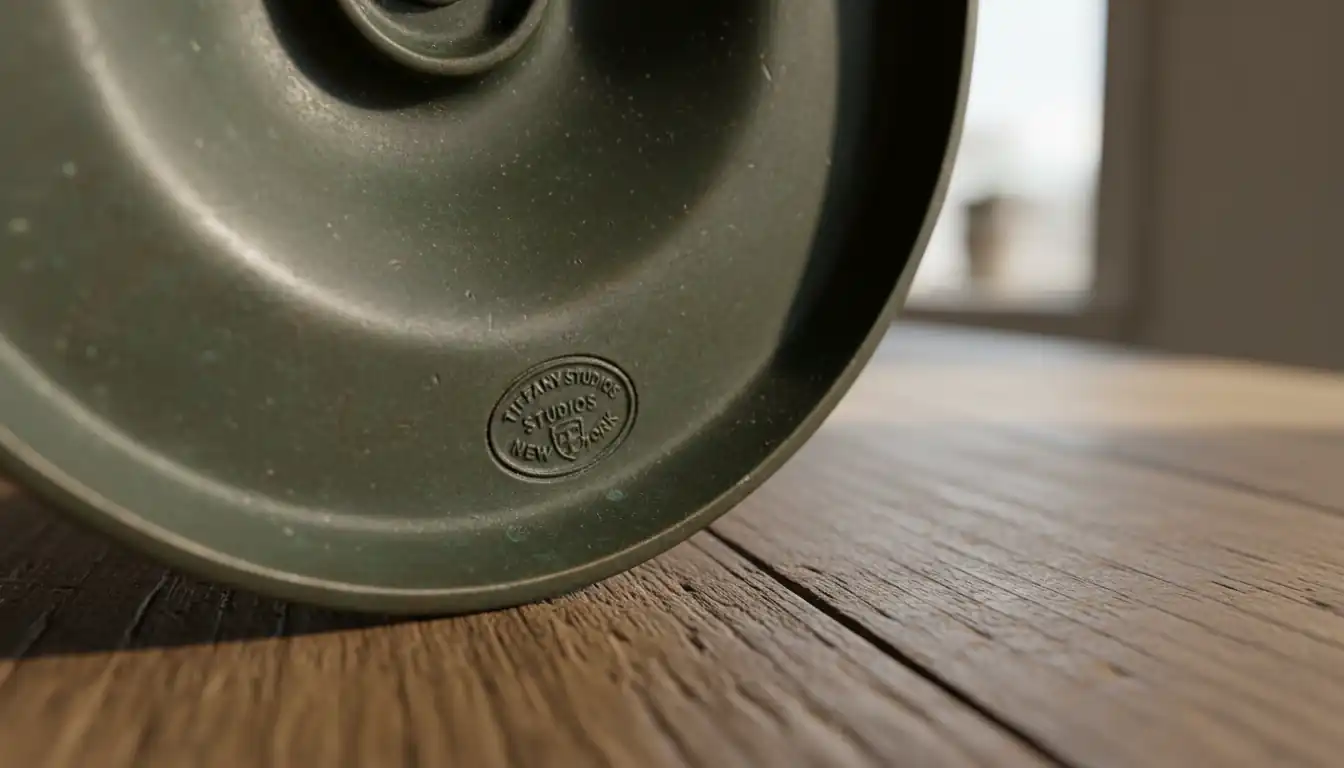
This is where a $200 lamp becomes a $5,000 lamp. Finding a maker’s mark is the ultimate "smoking gun" in the antique world. However, these marks are rarely front and center. Manufacturers like Tiffany Studios or Handel were proud of their work, but they didn't want a logo to distract from the artistic beauty of the piece.
Locating Obscure Manufacturer Stamps
You need to become a detective. Grab a flashlight and a soft cloth, and check these specific locations:
- The Felt Bottom: Many lamps have a green or brown felt pad on the base to prevent scratching furniture. Sometimes, the maker's mark is stamped into the metal underneath that felt. If the felt looks original, don't peel it, but if it's already loose, take a peek.
- The Inner Rim of the Shade: For lamps with glass shades (like Handel or Pairpoint), the signature is often a tiny, hand-painted name or a stamped metal ring along the very bottom edge of the glass. It might be hidden by the "fitter" (the metal part that holds the shade).
- The Top of the Fount: On lamps that transitioned from oil to electric, the signature might be on the "fount" (the tank that originally held the oil).
Identifying Iconic Design Houses
When you find a mark, the font and style matter just as much as the name. For example, a genuine Tiffany Studios New York mark is typically stamped in all capital letters. If the letters look uneven or the "New York" is missing, it warrants closer inspection.
- Handel: Often marked with a cloth label on the base or a signature on the lower inner rim of the shade.
- Pairpoint: Known for their "Puffy" shades; look for a "P" inside a diamond shape on the metalwork.
- Bradley & Hubbard: Usually marked with a circular stamp featuring their name or the initials "B&H."
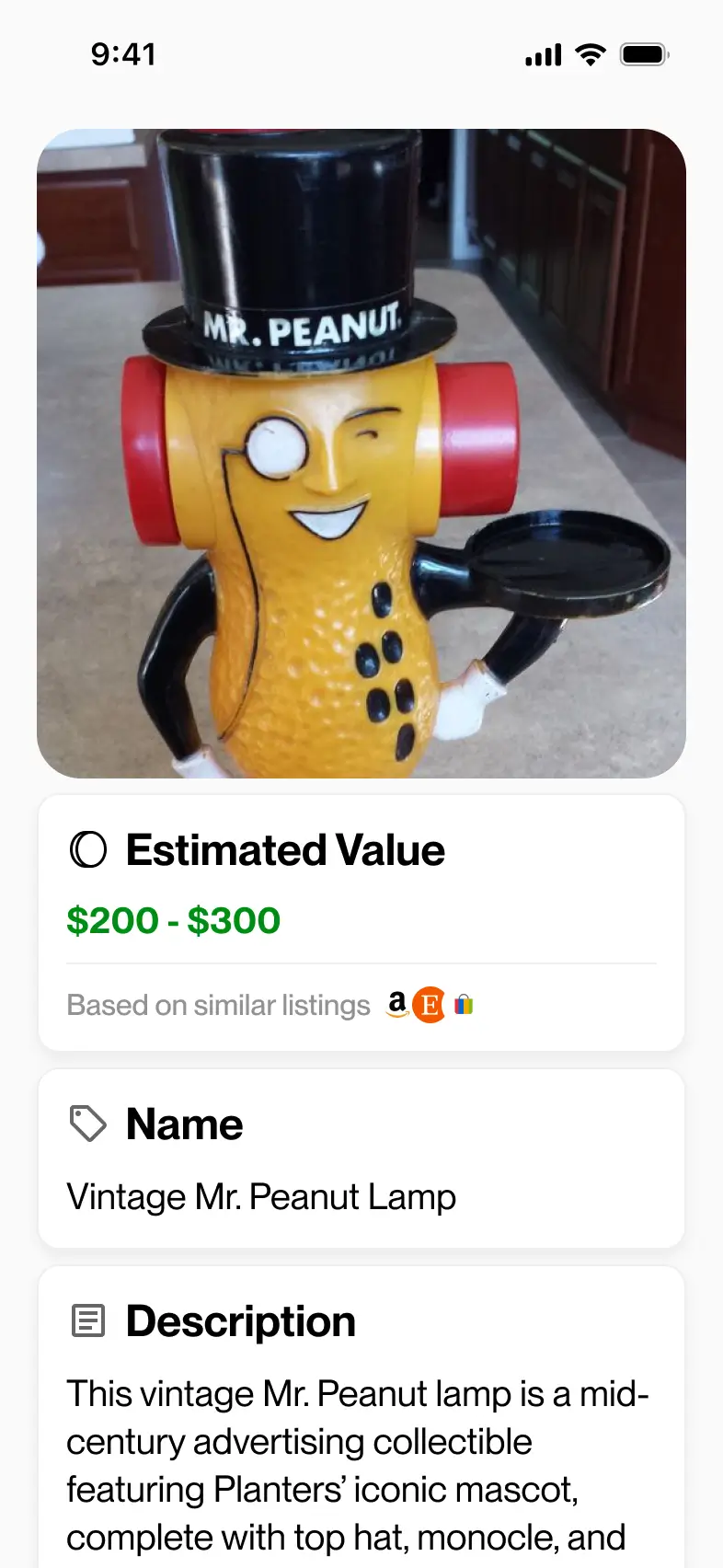
Sometimes, the mark is so faded or corroded that you can't quite make it out. This is where modern technology bridges the gap. If you’re staring at a blurry stamp or a unique silhouette you can't identify, the Relic app can be a lifesaver. By taking a clear photo of the lamp and its markings, Relic uses advanced AI to analyze the craftsmanship and compare it against a massive database of known antiques. It can often identify a maker based on the specific "thumbprint" of the design, even when the physical signature has been lost to time.
Artistic Movements and Period Styles
If a lamp lacks a signature, you must rely on its "visual vocabulary." Antique lamps were not designed in a vacuum; they were products of specific artistic movements that had very strict rules about shape, color, and motif.
Art Nouveau versus Art Deco Aesthetics
Understanding these two movements is the fastest way to categorize a lamp.
Art Nouveau (1890–1910): This style is all about the curve. Think of a vine growing up a wall or the way hair flows in the wind.
- Motifs: Lilies, dragonflies, poppies, and "whiplash" curves.
- Glass: Often iridescent (like soap bubbles) or "slag glass" with multi-colored swirls.
- The Look: Asymmetrical and organic. If the lamp looks like it belongs in a forest, it’s likely Art Nouveau.
Art Deco (1920–1935): After World War I, the world moved away from organic curves toward the "Machine Age."
- Motifs: Sunbursts, stepped pyramids (ziggurats), and stylized female figures (flappers).
- Glass: Often frosted, etched, or molded into geometric shapes.
- The Look: Symmetrical, bold, and streamlined. If the lamp looks like a skyscraper or a piece of a locomotive, it’s Art Deco.
The Victorian Influence on Lighting
Victorian lamps (mid-to-late 1800s) are often much more "fussy" than their successors. They feature heavy ornamentation, often using a mix of materials like brass, colored glass, and even marble. Victorian shades are frequently made of fabric with long silk fringe or "cranberry glass" with deep etched patterns. While some Victorian lamps are incredibly valuable, the market currently favors the cleaner lines of the Art Nouveau and Arts & Crafts periods.
Identifying the movement helps you narrow down the potential manufacturer. A geometric, "stepped" base will never be a Tiffany (Art Nouveau), just as a lily-pad base will never be a Chase (Art Deco).
Modern Tools for Instant Appraisal
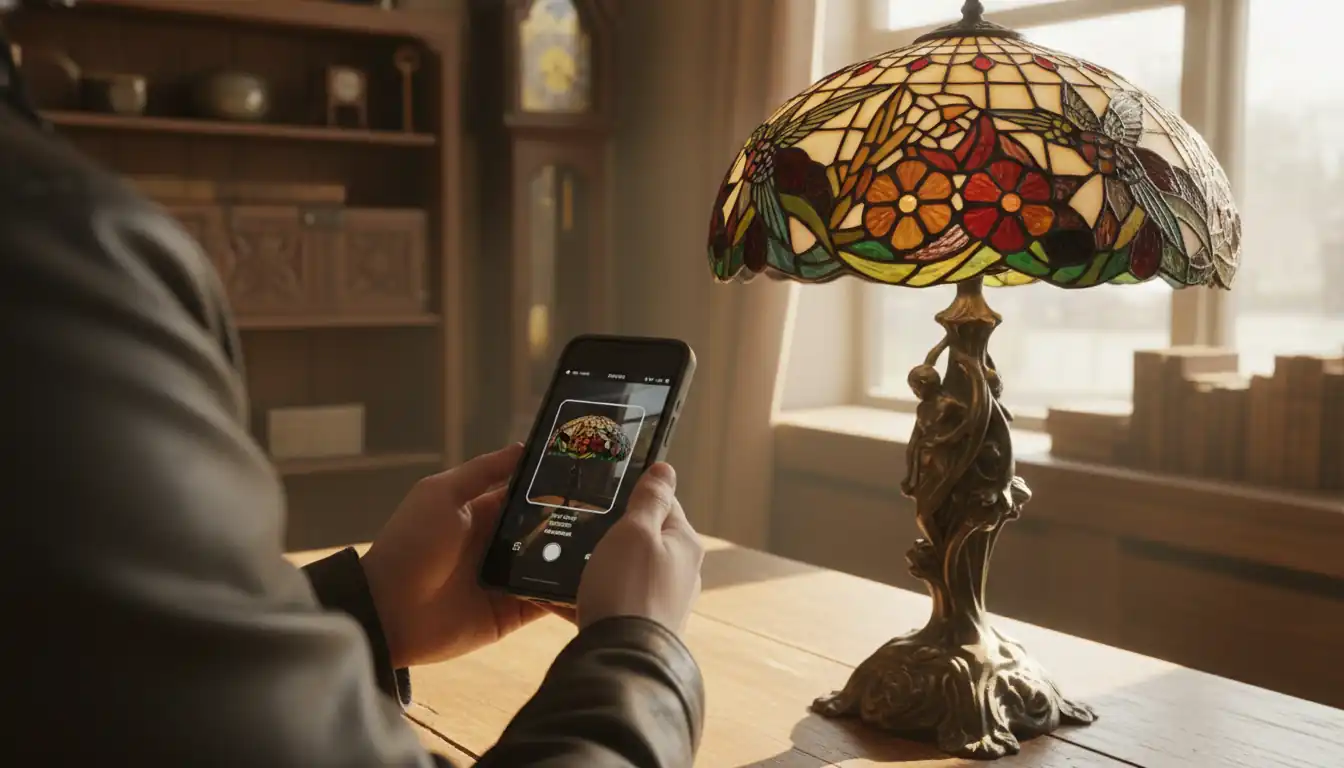
In the past, identifying a mystery lamp meant spending weeks in a library or paying a professional appraiser hundreds of dollars just to look at a photo. Today, the barrier to entry for antique collecting has vanished. You can now carry a professional-grade appraisal tool in your pocket.
Leveraging AI for Visual Recognition
The Relic app has changed the way "pickers" and collectors operate in the field. Instead of relying on a gut feeling, you can use the app to get an instant appraisal and historical context. The AI doesn't just look at the lamp; it "understands" it. It recognizes the specific grain of the glass, the patina of the bronze, and the proportions of the base to provide a match that might take a human hours to find.
This is particularly useful at auctions or estate sales where you only have a few minutes to make a decision. Being able to see a real-world market value and a history of the item in seconds gives you the confidence to walk away from a dud or pounce on a $5,000 treasure.
Verifying Provenance with Digital Databases
When using a tool like Relic, the quality of your data determines the quality of your result. To get the most accurate appraisal, you should follow a specific photography protocol:
- The Hero Shot: A clear, eye-level photo of the entire lamp against a neutral background.
- The Light Test: Take a photo with the lamp turned on to show the translucency and color of the glass.
- The Hardware: A close-up of the socket and the point where the base meets the stem.
- The Underside: A clear shot of the bottom of the base, even if there is no visible mark.
By providing these angles, you allow the AI to cross-reference the lamp’s construction with known authentic examples. This digital "fingerprinting" is often more accurate than a human eye, as it can detect subtle patterns in manufacturing that are invisible to the naked eye.
Conclusion
Finding a $5,000 antique lamp isn't just about luck; it's about developing a "literacy" in the materials and methods of the past. By looking past the dust and focusing on the weight of the bronze, the age of the electrical sockets, and the artistic language of the design, you can spot value where others see junk.
Remember these key takeaways for your next hunt:
- Feel the weight: Real bronze is heavy and cold; pot metal is light and "tinny."
- Check the "guts": Look for Bryant or GE sockets and patent dates from the early 1900s.
- Hunt for the mark: Check the shade rim and the base underside for hidden signatures.
- Identify the era: Determine if the style is organic (Art Nouveau) or geometric (Art Deco).
- Use your tools: Don't guess when you can know. Use the Relic app to get an instant, AI-driven appraisal and history of your find.
The world of antiques is full of hidden treasures waiting for someone with the right knowledge to claim them. Next time you see an old lamp at a garage sale, don't just walk by. Pick it up, check the weight, and let your phone do the detective work. You might just be holding a piece of history worth a small fortune.
Identify antiques instantly
Point your camera at any antique, collectible, or vintage item. Get valuations, history, and market insights in seconds.
Download for iPhone