Stop Selling Your Antiques for Pennies: How AI Instantly Identifies Furniture Worth Thousands

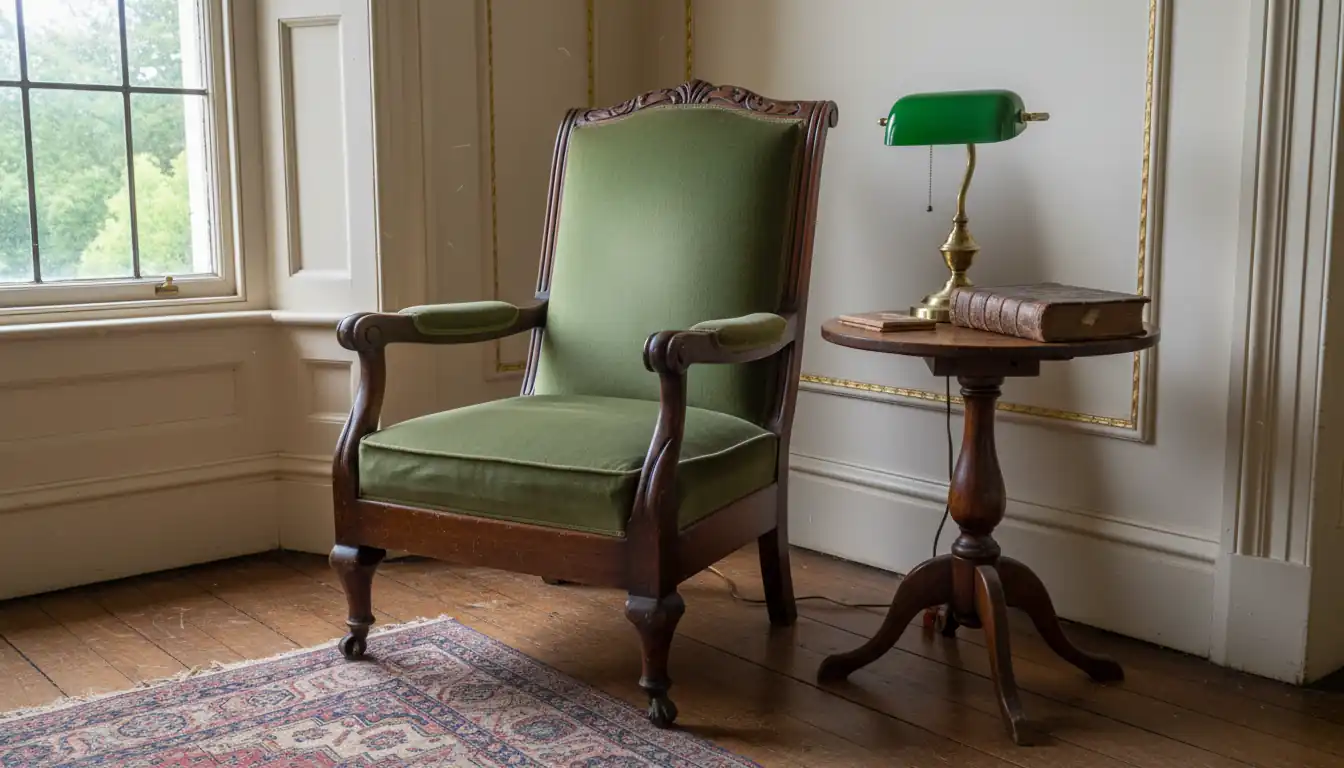
That dusty dresser in your grandmother’s spare bedroom might look like a relic of a bygone era, but to a trained eye, it could represent a significant financial windfall. Most people walk past thousands of dollars in potential profit every day because they lack the specific vocabulary to identify what they are looking at. Have you ever wondered why one wooden chair sells for twenty dollars at a yard sale while another, seemingly identical, fetches five thousand at an auction house?
The difference usually lies in the details that the average person overlooks. Selling an antique for pennies isn't just a missed opportunity; it’s a failure to recognize the craftsmanship and history embedded in the object. You don't need a degree in art history to stop making these expensive mistakes. You simply need to know which markers of quality to look for and how to use modern tools to verify your findings.
This guide will walk you through the process of transforming from a casual observer into a savvy collector. You will learn the legal definitions of age, the physical "fingerprints" left by master craftsmen, and how to use artificial intelligence to get a professional appraisal in seconds. By the time you finish reading, you will never look at a piece of old furniture the same way again.
The 100-Year Rule and What Is Actually in Demand

When you hear the word "antique," what comes to mind? For many, it’s a vague term for anything that looks old or outdated. However, in the world of professional collecting and customs law, the definition is quite rigid. To be classified as a true antique, an item must generally be at least 100 years old. This isn't just a tradition; it’s a standard used by the U.S. Customs and Border Protection to determine duty-free status for imported goods.
Anything younger than a century but older than twenty years is typically categorized as "vintage." Why does this distinction matter to your wallet? True antiques often carry a premium because they represent a specific era of hand-tool construction that disappeared after the Industrial Revolution. However, age is not the only factor that dictates value. A 120-year-old mass-produced chair might be worth less than a 60-year-old designer piece from the Mid-Century Modern movement.
Defining the Century Mark for True Antiques
The 100-year rule serves as a baseline for value, but it is a moving target. Every year, a new "class" of furniture graduates into the antique category. Currently, we are seeing pieces from the early 1920s officially cross the threshold. This is a fascinating period because it marks the transition from the heavy, ornate styles of the Victorian era to the more streamlined, geometric influences of the early 20th century.
| Category | Age Requirement | Typical Characteristics |
|---|---|---|
| Antique | 100+ Years | Hand-crafted, solid woods, unique joinery |
| Vintage | 20–99 Years | Iconic designers, mass production, retro aesthetics |
| Collectible | Varies | High demand regardless of age, often brand-specific |
If you find a piece of furniture, your first task is to determine which side of the 1924 line it falls on. True antiques from the 18th and 19th centuries are often valued for their rarity and the "soul" of the wood. Pieces from the early 1900s, however, are currently seeing a massive resurgence in demand because they fit more easily into modern home layouts than the massive, dark wardrobes of the 1880s.
The Shift Toward Mid-Century and Art Deco Demand
What antiques are in high demand right now? The market has shifted away from the "brown furniture" boom of the 1990s. Today’s buyers are looking for cleaner lines and functional elegance. This has created a "sweet spot" for items produced between 1910 and 1960. While the older items in this range are technically antiques, the younger ones are high-value vintage.
Key Trends in Current Demand:
- Art Deco Elegance: Look for exotic wood veneers like bird’s eye maple or walnut burl. These pieces, dating from the 1920s and 30s, are highly sought after for their "Great Gatsby" aesthetic.
- Early Modernism: Furniture that shows the transition from hand-carved details to machine-age precision is gaining value.
- Functional Antiques: Items like barrister bookcases or slim writing desks are in higher demand than non-functional decorative pieces because they serve a purpose in a modern home office.
The transition from the Victorian era’s heavy oaks and dark stains to the sleeker silhouettes of the early 20th century is where the money is currently hiding. If you spot a piece that looks "modern" but feels incredibly heavy and well-built, you might be looking at an early 20th-century masterpiece that is just now hitting its peak value. Once you suspect you have found a piece from the right era, you must look for the physical proof of its origin.
Physical Clues That Distinguish Masterpieces from Mass-Market
Identifying a valuable antique is a lot like being a forensic investigator. You are looking for the "fingerprints" of the person who built it. Before the era of giant factories, furniture was made by individuals or small teams of craftsmen. These builders left behind specific clues in the way they joined wood together and the tools they used to smooth the surfaces.
One of the most reliable places to look is where the average person never looks: the back and the underside. A finished front can hide a multitude of sins, but the "secondary wood" used for drawer bottoms and back panels tells the real story. If the wood on the back of a chest of drawers looks rough or shows irregular saw marks, you are likely looking at a piece made before the mid-19th century.
Reading the Wood Grain and Joinery
Joinery is the gold standard for dating furniture. How are the drawers put together? If you see "dovetail" joints—those interlocking wedge shapes—look closely at their uniformity. Are they perfectly identical? If so, they were likely cut by a machine after 1870. Are they slightly irregular, with thin "necks" and visible pencil marks? That is the hallmark of a hand-cut joint, suggesting the piece was made before the Civil War.
- Hand-Cut Dovetails: Characterized by uneven spacing and a small number of large "tails." These indicate pre-industrial craftsmanship.
- Knapp Joints: Also known as "pin and scallop" joints. These look like a circle inside a half-moon. They were only produced between 1867 and 1900. If you see this, you have a very specific window for the item's age.
- Quarter-Sawn Oak: Look for "flakes" or "rays" in the wood grain that look like tiger stripes. This technique was expensive and popular in high-end furniture from the Arts and Crafts movement.
"The underside of a drawer is the most honest part of a piece of furniture. It reveals the tool marks, the wood species, and the age in a way the polished exterior never can."
Hardware as a Chronological Map
The metalwork on a piece of furniture—the hinges, handles, and locks—acts as a chronological map. Original hardware is a massive value-adder. If you see "snipe hinges" (which look like two interlocking cotter pins) or hand-forged nails with irregular, square heads, you are likely dealing with a piece from the 1700s or early 1800s.
Later pieces from the late 19th century began using "cast" hardware, which is more uniform. Check the screws. Are the slots perfectly centered? Machine-made screws with centered slots didn't become common until the mid-1800s. Earlier screws have off-center slots and blunt ends. These tiny physical details are the building blocks of a high-value identification. They provide the evidence that a piece isn't just "old," but historically significant.
Leveraging AI to Identify Your Furniture in Seconds
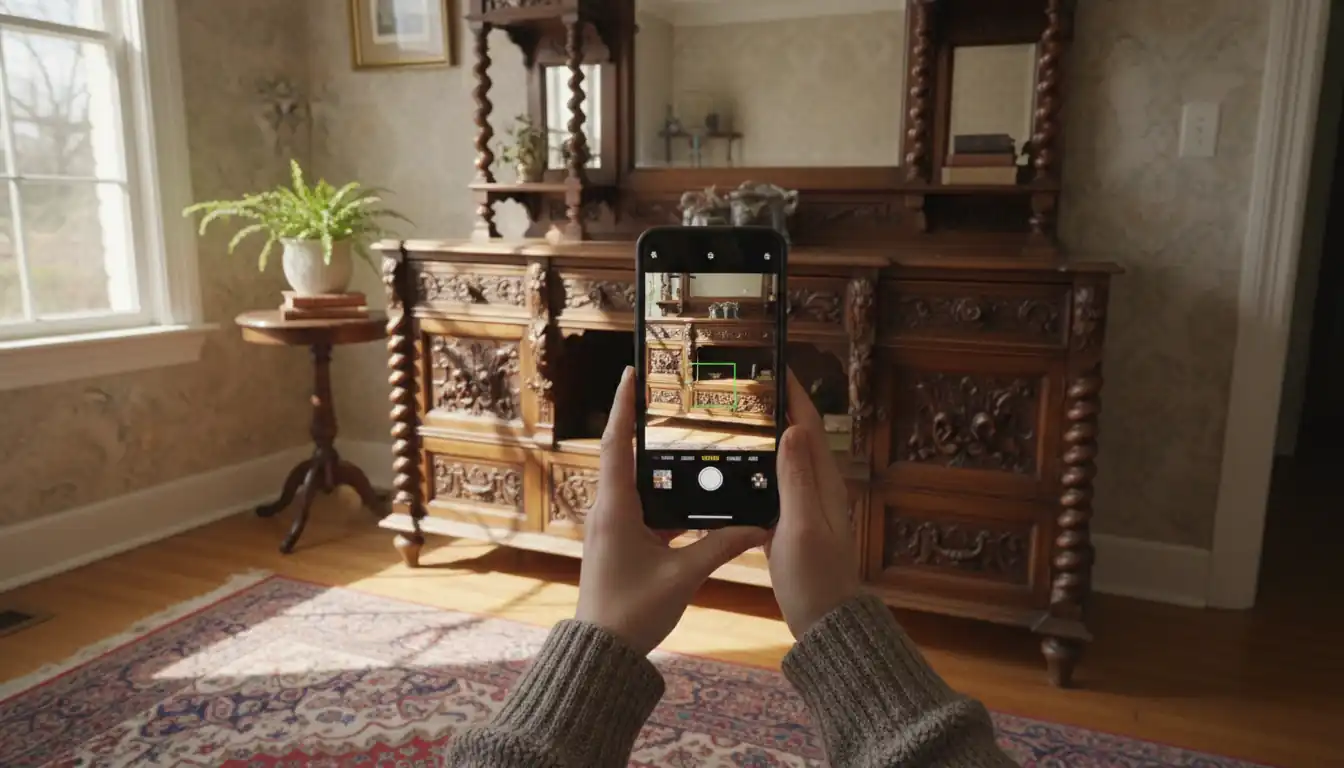
While learning to spot a hand-cut dovetail is a rewarding skill, it takes years to master the nuances of every furniture style. Most people don't have the time to become expert appraisers before they head to an estate sale or clean out an attic. This is where technology bridges the gap between a novice and a professional.
The Relic app has changed the way collectors approach the field. Instead of carrying a library of reference books, you can now use your iPhone to perform a sophisticated visual analysis. Relic uses advanced AI to analyze the silhouette, wood grain patterns, and construction markers of a piece of furniture through your camera lens. It’s like having an expert appraiser standing over your shoulder, pointing out the details you might have missed.
The Relic Method for Instant Appraisal
The process is straightforward. You take or upload a photo of the item—ideally including a shot of the overall piece and a close-up of any joinery or marks. Relic then compares these visual data points against a massive database of historical furniture styles, maker marks, and auction records. Within seconds, the app provides a real appraisal, a detailed history of the style, and the likely origin of the item.
This instant feedback is vital when you are in a high-pressure environment like a live auction or a crowded flea market. You don't have hours to research a "maybe" item. Relic allows you to filter out the mass-produced junk and focus your energy—and your money—on the pieces that have genuine historical value. With a 4.9-star rating from over 20,000 reviews, the app has become a staple for professional pickers and importers who need to make fast, accurate decisions.
Decoding Maker Marks Without a Magnifying Glass
One of the hardest parts of identification is reading faded maker marks or burnt-in stamps on the inside of drawers. These marks are often the difference between a $200 generic chest and a $2,000 designer piece. Relic’s AI is specifically trained to recognize these signatures, even when they are partially worn away.
- Instant Recognition: The app can identify logos from famous manufacturers like Stickley, Herman Miller, or Knoll.
- Historical Context: Beyond just a name, you get the story of when that specific mark was used, helping you narrow down the production year.
- Market Insights: You receive data on what similar items have sold for recently, giving you a realistic expectation of value.
By using a tool like Relic, you bypass the steep learning curve of antique identification. It handles the heavy lifting of pattern recognition, allowing you to focus on the "hunt." Once the app confirms you have a winner, you can move forward with the confidence that you aren't overpaying or underselling.
Investment Pieces That Hold Their Value Best
Not all antiques are created equal. Some styles are "trendy" and may lose value as tastes change, while others are considered "investment-grade" because they have a timeless appeal and a consistent market. If you are looking to build a collection or flip items for a profit, you should focus on specific forms that have proven their staying power over decades.
Two of the most reliable categories in the current market are Barrister Bookcases and Highboy Dressers. These pieces are highly sought after not just by collectors, but by interior designers looking to add "weight" and history to luxury modern interiors.
The Timeless Appeal of Barrister Bookcases
The Lundstrom Barrister Bookcase is a prime example of a high-value functional antique. Originally designed for lawyers who needed to move their libraries frequently, these bookcases consist of individual glass-fronted sections that stack on top of one another.
| Feature | Why It Adds Value |
|---|---|
| Modular Design | Allows the piece to fit into various room heights. |
| Glass "Lead" | Original wavy glass or leaded glass panes are highly prized. |
| Maker Labels | Look for the "C.J. Lundstrom Mfg. Co." decal inside the back. |
A genuine three or four-section Lundstrom bookcase in good condition can easily fetch between $800 and $1,500 at auction. If the piece is made of "tiger" oak or has leaded glass patterns, the price can climb even higher. They are popular because they protect books from dust while providing a sophisticated, academic look that never goes out of style.
Highboy Dressers and the Luxury Market
The "Highboy"—a tall chest of drawers usually made in two sections—is the pinnacle of 18th and 19th-century American furniture. These pieces were status symbols when they were built, and they remain so today. A Queen Anne or Chippendale style highboy with "cabriole" legs (the ones that curve out and then back in) is a major find.
High-end examples from the 1700s can sell for tens of thousands of dollars, but even high-quality 19th-century reproductions can be worth several thousand. The market for these remains strong because they offer an incredible amount of storage while taking up relatively little floor space. When you find a highboy, use Relic to check the leg style and the "finials" (the decorative carvings at the top). These details often dictate whether the piece is a common 1920s revival or a museum-quality original.
Turning Your Attic Finds Into a Profitable Portfolio
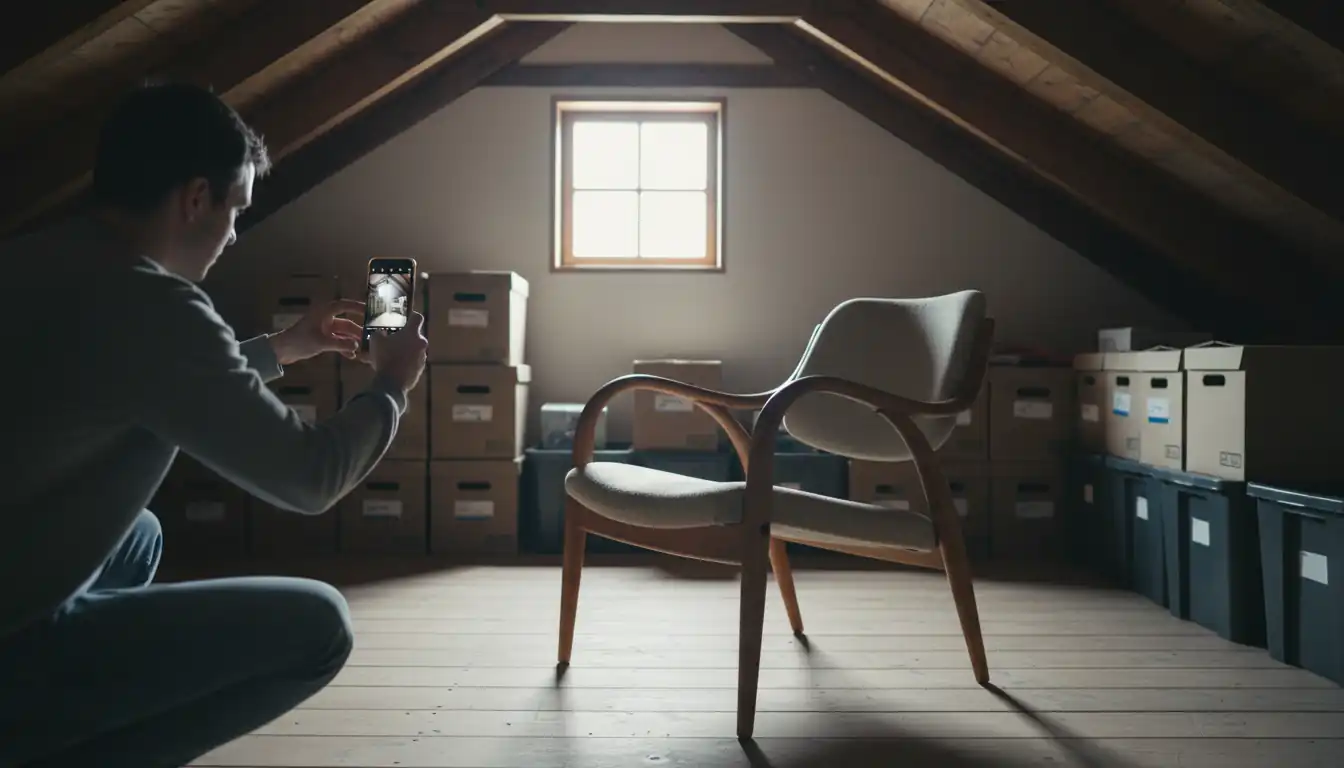
Once you have identified a valuable piece, the next challenge is preserving that value and finding the right buyer. Many people make the mistake of "cleaning up" an antique in a way that actually destroys its market price. The goal is to present the item in its best light without erasing the history that makes it valuable.
The "Antiques Roadshow" tragedy—where someone brings in a 200-year-old table they spent the weekend stripping and refinishing—is a real phenomenon. In the world of high-end antiques, the "patina" is everything. Patina is the soft glow that wood develops over centuries of oxidation, waxing, and use. You cannot fake it, and once you sand it off, it is gone forever.
The Golden Rule of Minimal Restoration
If you find a piece covered in grime, your first instinct might be to reach for the heavy-duty cleaners. Stop. The most valuable thing an antique can have is its original finish. A piece with its original "skin" can be worth five to ten times more than a piece that has been professionally refinished.
- Dusting and Waxing: Usually, a soft cloth and a high-quality paste wax are all you need to bring an old piece back to life.
- Leave the Hardware: Do not polish the brass handles until they look like new. The dark oxidation in the crevices is proof of age.
- Structural Repairs: If a leg is loose, it should be repaired using "hide glue," which is reversible and historically accurate. Modern wood glues can damage the wood fibers permanently.
Smart Selling Strategies for the Digital Age
Identifying the item is only half the battle; the other half is getting it in front of the right eyes. Gone are the days when you had to rely on a local pawn shop or a small-town auctioneer. Today, you can access a global market of collectors.
Using the data you gathered from your Relic appraisal, you can create high-converting listings on premium platforms. Relic provides you with the historical context and "keywords" that high-end buyers search for. When you list a piece on 1stDibs or Chairish, you shouldn't just call it an "old desk." You should call it a "Circa 1890 Quarter-Sawn Oak Barrister Bookcase with Original Leaded Glass."
Where to Sell Your Finds:
- 1stDibs: Best for high-end, museum-quality pieces with a documented history.
- Chairish: Excellent for stylish, "decorator" pieces and Mid-Century Modern finds.
- Specialty Auctions: For items valued over $5,000, a dedicated furniture auction house will often net the highest price, even after commissions.
By combining physical detective work with AI-powered verification, you move from being a gambler to being a strategic investor. You no longer have to wonder if you are leaving money on the table. You have the history, the appraisal, and the market data right in your pocket.
Conclusion
The world of antiques is no longer a closed circle reserved for those with decades of academic study. The barriers to entry have been dismantled by technology and the democratization of information. You now have the tools to look at a discarded piece of furniture and see the "thousands" where others only see "pennies."
Remember the core principles: respect the 100-year rule but stay alert for high-value vintage; look for the "fingerprints" of the craftsman in the joinery and hardware; and use the Relic app to instantly verify your instincts with professional-grade AI. Most importantly, resist the urge to over-restore. The history of the piece is its most valuable asset.
Your next great find is likely closer than you think. It might be in your basement, at a local estate sale, or sitting on a curb on trash day. With your iPhone and a bit of knowledge, you are ready to start building a profitable portfolio of historical treasures. Don't let another masterpiece slip through your fingers—start scanning, start identifying, and start claiming the true value of the history around you.
Identify antiques instantly
Point your camera at any antique, collectible, or vintage item. Get valuations, history, and market insights in seconds.
Download for iPhone