Stop Squinting at Canvas Corners: The New Way to Identify Mystery Artists

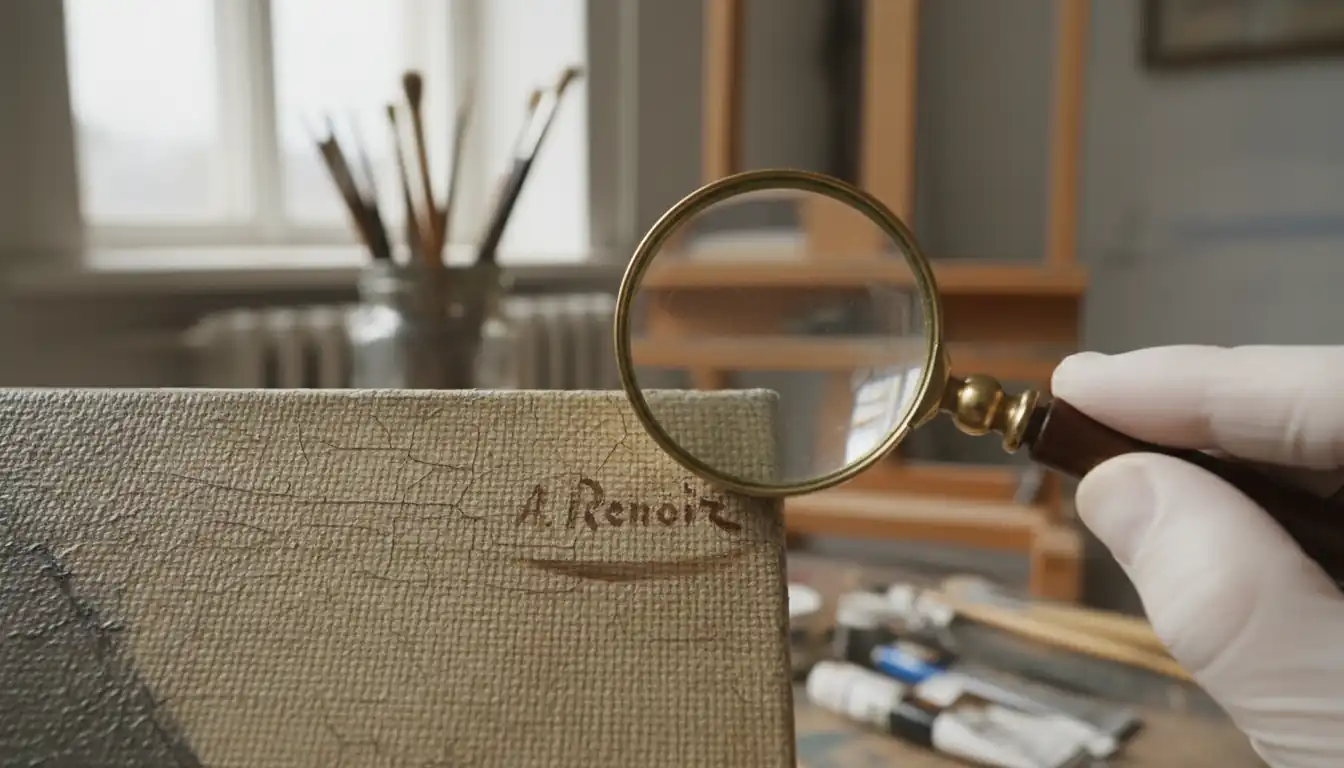
You find yourself standing in a dimly lit corner of an estate sale, staring at a canvas that has clearly seen better days. The brushwork is confident, the colors are vibrant despite a century of dust, and the composition feels like something you might see in a museum. You tilt the frame toward the light, searching for that one piece of evidence that changes everything: the signature. But instead of a clear name, you find a cryptic squiggle or a faded monogram that refuses to give up its secrets.
Identifying an anonymous artist is one of the most rewarding challenges in the world of art collecting. It transforms a decorative object into a historical document, and sometimes, a modest investment into a significant asset. The difference between a "follower of" and the master themselves often rests in the tiny details hidden within those few centimeters of pigment at the bottom of the frame.
This guide will teach you how to move beyond simple squinting. You will learn the forensic techniques used by professional appraisers to decode marks, analyze the physical behavior of paint, and use modern technology to bridge the gap between a mystery and a masterpiece. By the time you finish reading, you will have a toolkit that combines old-world connoisseurship with the latest digital advancements.
The Anatomy of an Artist's Mark
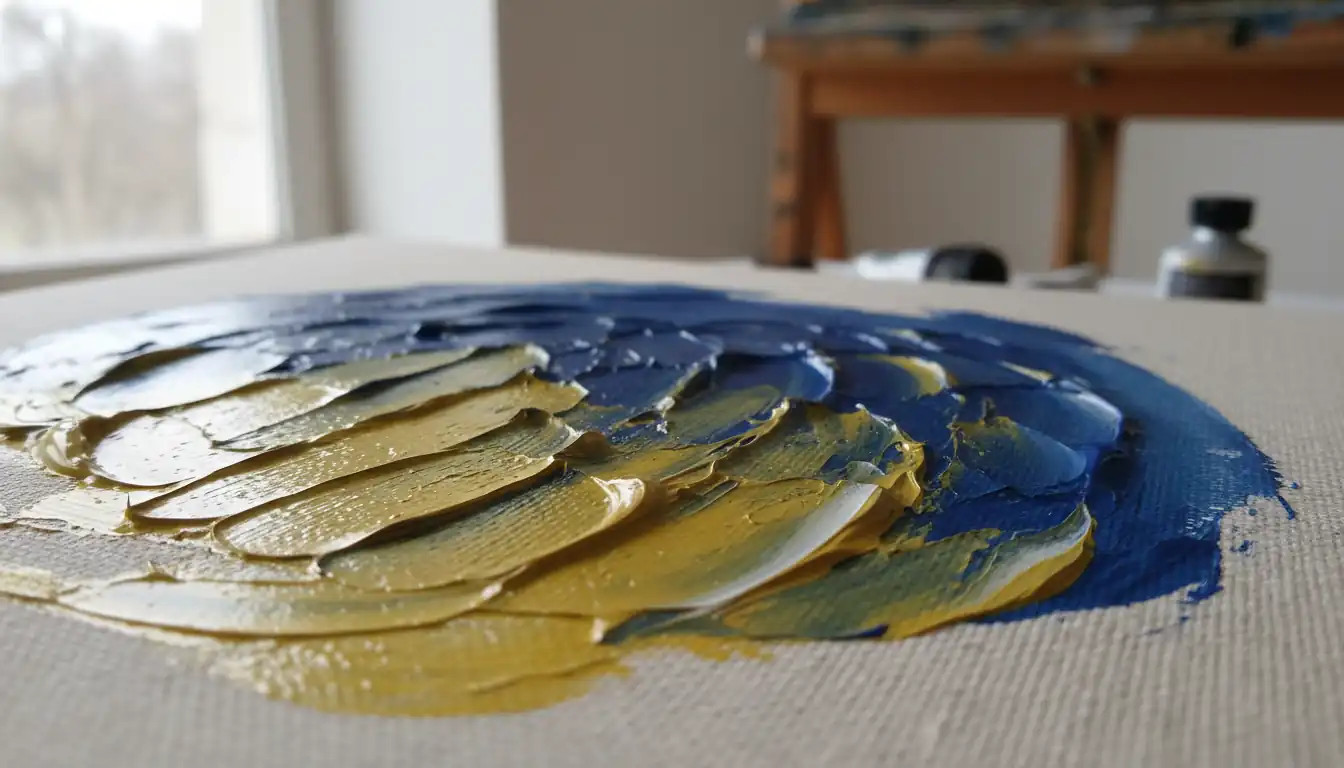
Before you can identify who signed a painting, you have to understand how they signed it. A signature is more than just a name; it is a physical part of the painting’s structure. When you look at an artist's mark, you aren't just looking at handwriting—you are looking at the final layer of a complex chemical construction.
The first thing to determine is whether the signature is "in" the paint or "on" the paint. This is known as the "wet-in-wet" test. If an artist signed the work while the oil paint was still wet, the signature will be physically integrated into the paint film. You will see the pigment of the signature blending slightly at the edges with the background color. If the signature was added years later, it will sit on top of the dried paint, often looking like it is "floating" above the texture of the canvas.
Decoding Monograms and Symbols
Not every artist used a full name. In the 19th century, especially among European painters, monograms and symbols were a popular way to sign work without distracting from the composition. A monogram is a motif made by overlapping or combining two or more letters. These can be incredibly difficult to read because they often look like a single, stylized character.
- The Cipher: Some artists created "ciphers," where letters are reversed or inverted to create a symmetrical design.
- The Symbol: Occasionally, an artist used a visual pun or a small icon. For example, James Abbott McNeill Whistler famously used a stylized butterfly, which evolved from his initials "JMW."
- The Latin Suffix: Look for small words following a name. "Pinxit" (he/she painted it), "Fecit" (he/she made it), or "Delineavit" (he/she drew it) are common markers that help confirm you are looking at an intentional signature rather than a random mark.
Analyzing Pigment Consistency
The way the paint flows in a signature tells a story about the artist's hand. When an artist signs a work, they usually use a thinner consistency of paint than they used for the rest of the piece. This allows the brush to glide over the textured surface of the canvas.
Observe the "start" and "stop" of each letter. Does the paint pool at the end of a stroke? Is there a consistent pressure throughout? A genuine signature usually has a rhythmic flow that matches the brushwork found in the rest of the painting. If the painting is executed with bold, thick strokes (impasto), but the signature is shaky and hesitant, it may be a sign that the mark was added by someone else at a later date.
| Mark Type | Description | Common Era |
|---|---|---|
| Full Signature | First and last name, often in cursive. | 19th - 20th Century |
| Monogram | Interlocking initials. | 16th - 19th Century |
| Stencil | Block letters applied with a template. | Modern/Industrial Art |
| Estate Stamp | A stamped mark applied after the artist's death. | Late 19th Century - Present |
Advanced Lighting Techniques for Faded Ink
Sometimes, the naked eye simply isn't enough. Time, dirt, and old varnish can conspire to hide a signature from view. To see what is truly there, you need to change the way light interacts with the surface of the painting. This is where forensic physics comes into play.
Professional conservators don't just look at a painting; they look through it and across it. By manipulating the angle and wavelength of light, you can reveal details that have been invisible for decades.
Using Ultraviolet Light to Reveal Overpaints
A 365nm UV flashlight is one of the most powerful tools in an art detective's kit. When you shine UV light on an old painting in a dark room, the materials will "fluoresce" or glow. Old varnish typically glows a milky, greenish-yellow color.
If a signature was added later or if the painting has been repaired, those areas will usually show up as dark, "dead" spots under UV light. This is because modern pigments and resins do not fluoresce the same way as 19th-century materials. If you see a signature that looks dark and crisp while the rest of the painting glows, you are likely looking at a signature that was added on top of the original varnish. Conversely, if the signature is partially obscured by the glowing varnish, you know it is original to the piece.
Raking Light for Texture Analysis
Raking light is a simple but effective technique. Instead of pointing your light directly at the painting, place a strong flashlight at a very low angle to the side of the frame. The light should "rake" across the surface.
This technique emphasizes the "impasto"—the physical thickness of the paint. It allows you to see the grooves left by the brush hairs. When you apply raking light to a signature, you can see if the artist scratched their name into the wet paint with the back of their brush (a technique called sgraffito) or if the signature has a physical profile that matches the rest of the work. If the signature is completely flat while the rest of the painting is textured, it warrants closer inspection.
"Light is the first tool of the appraiser. Before you research a name, you must first confirm the name is actually part of the object."
Leveraging AI for Instant Artist Recognition
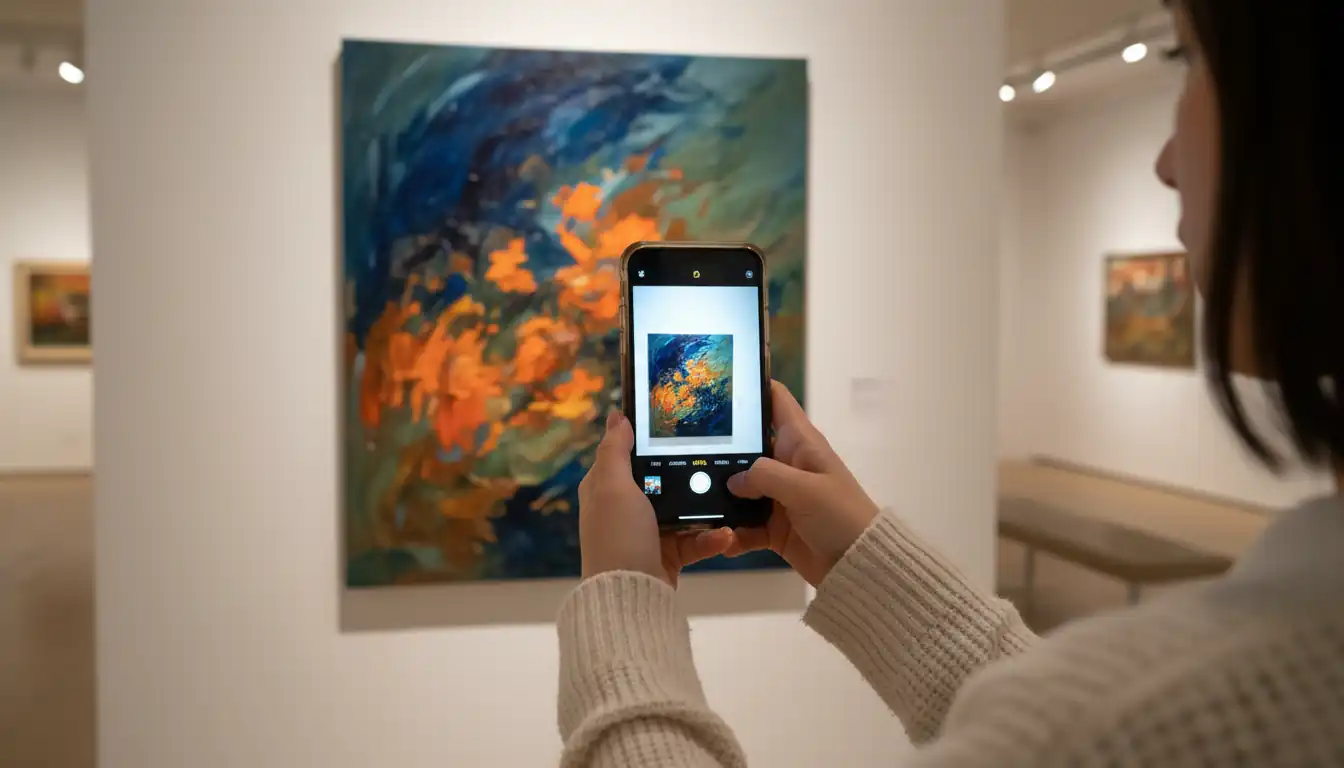
Even with the best lighting and a keen eye, you will eventually encounter a signature that is simply illegible. It might be a series of loops that could be an "M," a "W," or a "N." In the past, this would have required hours of flipping through massive biographical dictionaries or visiting specialized libraries. Today, the question of "Can AI decipher a signature?" has a very clear answer: Yes, and it can do it in seconds.
The mechanics of this technology are based on pattern recognition. Just as a human expert learns to recognize the "hand" of an artist, AI models are trained on millions of images of known works. These systems don't just look at the letters; they look at the "velocity" of the stroke, the way the paint breaks over the canvas weave, and the specific color palettes used by certain artists in specific regions.
How Neural Networks Decipher Script
When you provide a photo of a signature to an advanced AI, the system breaks the image down into thousands of data points. It compares the curvature of the letters and the spacing between characters against a global database of artists. This is particularly useful for identifying obscure regional painters who might not appear in standard English-language art history books but are well-documented in their home countries.
The AI can see through the "noise" of a faded signature by identifying the underlying structure of the handwriting. It’s like having a team of art historians working at light speed to find a match.
Getting Real Appraisals with Relic
For those who want to move beyond simple identification, the Relic app provides a comprehensive solution. Relic is an iOS app designed to identify and appraise antiques and art instantly using your phone's camera. If you have a painting with a mystery signature, you can simply take a photo or upload one from your gallery.
Relic uses its AI to analyze the item, providing not just the name of the artist, but also the historical context, origin, and a real appraisal of its value. This is a massive advantage for collectors at auctions or estate sales where time is of the essence. Instead of waiting weeks for a professional valuation, you get professional-grade insights and market research immediately. With a 4.9-star rating from over 20,000 reviews, it has become a go-to tool for pickers and dealers who need accurate information on the fly. By using the lighting techniques mentioned earlier to get a clear, high-contrast photo, you provide the app with the best possible data to give you an accurate result.
Tracing Signatures Through Art History
Understanding the history of how artists signed their work can help you narrow down the date and origin of a painting before you even read the name. Signature styles have evolved just as much as the art itself.
In the 18th century, signatures were often formal and discreet. They were frequently placed on "trompe l'oeil" elements within the painting, such as a simulated piece of paper or a stone plinth. By the 19th century, signatures became more prominent, often written in a flowing, academic cursive that reflected the penmanship taught in schools of that era.
Evolution of 18th Century Script
During the 1700s, many artists didn't sign the front of the canvas at all. If they did, it was often in a very thin, ink-like paint. The handwriting was typically "Copperplate" or "Spencerian" in style—very elegant with high contrast between thick and thin lines.
If you find a painting that looks old but has a bold, blocky signature, it should raise a red flag. Artists of the 18th century viewed the signature as a legal mark of completion, not a branding tool. They often included the year and sometimes the location, such as "Paris" or "Roma," which can help you trace the artist's travels.
Regional Variations in European Works
Different regions had different "traditions" for signing. Dutch and Flemish artists from the 17th and 18th centuries often used intricate monograms where the letters were stacked vertically. French artists of the 19th-century Academy were known for very clear, underlined signatures, often placed in the lower right corner.
- British Artists: Often used a simple "Last Name, Initial" format.
- Italian Artists: Frequently used Latinized versions of their names.
- American Impressionists: Often used bright, contrasting colors for their signatures, making them a deliberate part of the color scheme.
By recognizing these regional habits, you can narrow your search. If you see a "fecit" suffix, you are likely looking at a work from the 19th century or earlier. If the signature is integrated into the composition—perhaps "carved" into a tree trunk in a landscape—you are looking at a tradition that was popular in Northern Europe.
Spotting the Signs of a Forged Signature
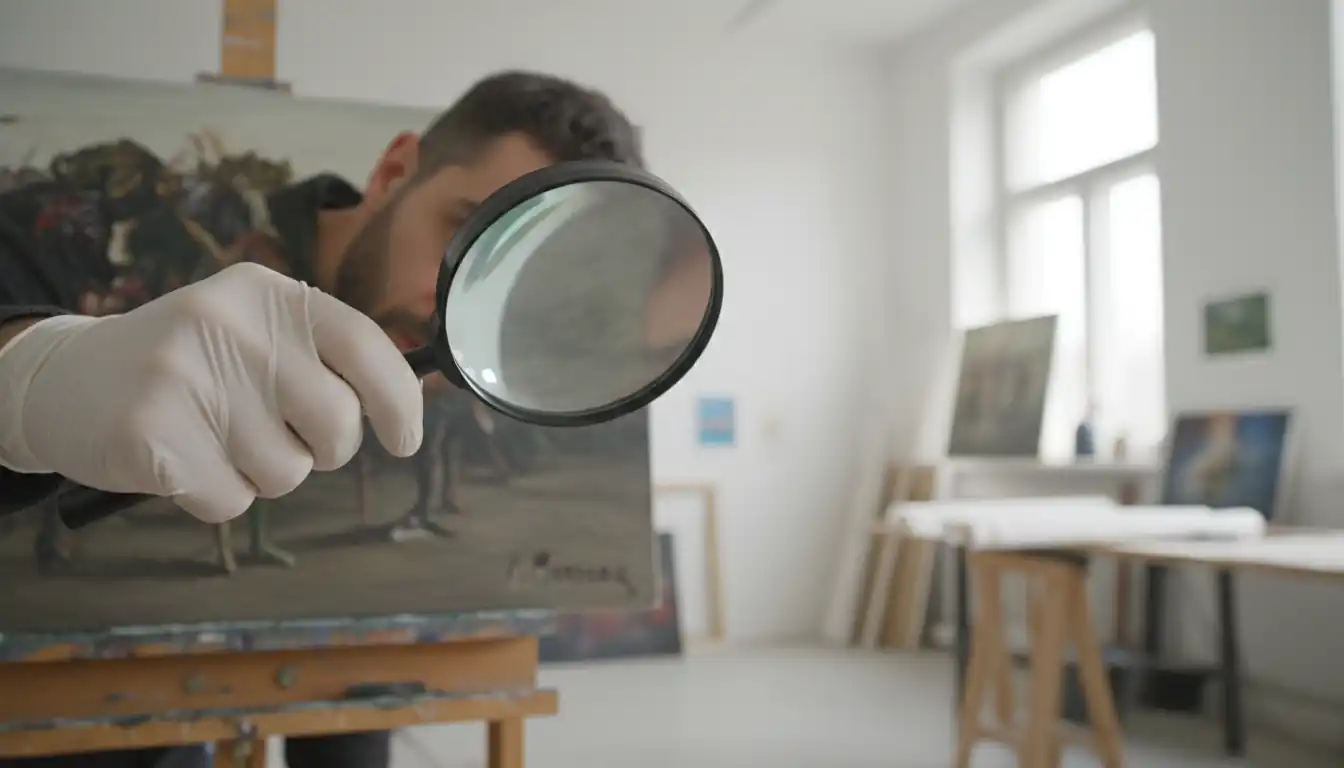
The most dangerous thing in the art world is a "strengthened" signature. This happens when someone takes a genuine but anonymous old painting and adds the name of a famous artist to it to increase the value. Learning to spot these forgeries is essential for any serious collector.
A signature should look like it grew out of the painting. If it looks like it was "dropped" onto the surface, you need to be cautious. This is why the physical examination we discussed in the first section is so vital.
The Floating Signature Trap
A "floating signature" is one that sits on top of the varnish layer. Paintings are typically composed of the canvas, a ground layer, the paint layers, and finally a protective varnish. A genuine signature will be under the varnish.
If you look at the signature through a magnifying glass (a 10x jeweler's loupe is perfect for this), look for "crackle." As a painting ages, the paint develops tiny cracks called craquelure. If the signature is original, the cracks will run right through the letters. If the signature was added later, the paint will often flow into the cracks, or the letters will sit smoothly over the top of a cracked surface. This is a definitive sign that the mark is not original to the piece.
Chemical Testing and Solvent Sensitivity
While this should only be done with extreme caution and on a tiny, inconspicuous area, the "alcohol test" is a classic forensic method. Modern paint remains soluble in alcohol for many years, while 19th-century oil paint becomes incredibly hard and resistant to solvents as it oxidizes.
If a tiny drop of isopropyl alcohol on a cotton swab easily lifts the pigment of a signature but doesn't affect the surrounding paint, the signature is almost certainly a modern addition. However, be warned: some early 20th-century paints are also sensitive, and you risk damaging the work if you aren't careful. This is why digital tools and visual forensics are usually the preferred first steps.
| Feature | Genuine Signature | Forged/Added Signature |
|---|---|---|
| Placement | Integrated with paint layers. | Sits on top of varnish. |
| Craquelure | Cracks pass through the letters. | Paint fills or ignores cracks. |
| UV Light | Fluoresces with the painting. | Appears as a dark, "dead" spot. |
| Consistency | Matches the artist's brushwork. | Often shaky or overly deliberate. |
Conclusion
Identifying a mystery artist is a journey that starts with a single mark and ends with a deep understanding of history and science. By training your eye to see the physical structure of paint, using light to reveal hidden layers, and embracing the power of AI tools like Relic, you can turn a "squiggle" into a story.
Remember that identification is a process of elimination. You start by looking at the physical evidence, move to historical context, and finally use technology to confirm your findings. Whether you are a seasoned dealer or a weekend treasure hunter, these techniques will help you see past the dust and find the hand of the artist waiting underneath.
The next time you find yourself squinting at a canvas corner, don't just guess. Grab your light, open your app, and start the detective work. You might just be holding a piece of history.
Identify antiques instantly
Point your camera at any antique, collectible, or vintage item. Get valuations, history, and market insights in seconds.
Download for iPhone