Stop Squinting at Faded Pottery Marks: The Modern Way to Identify Your Collection

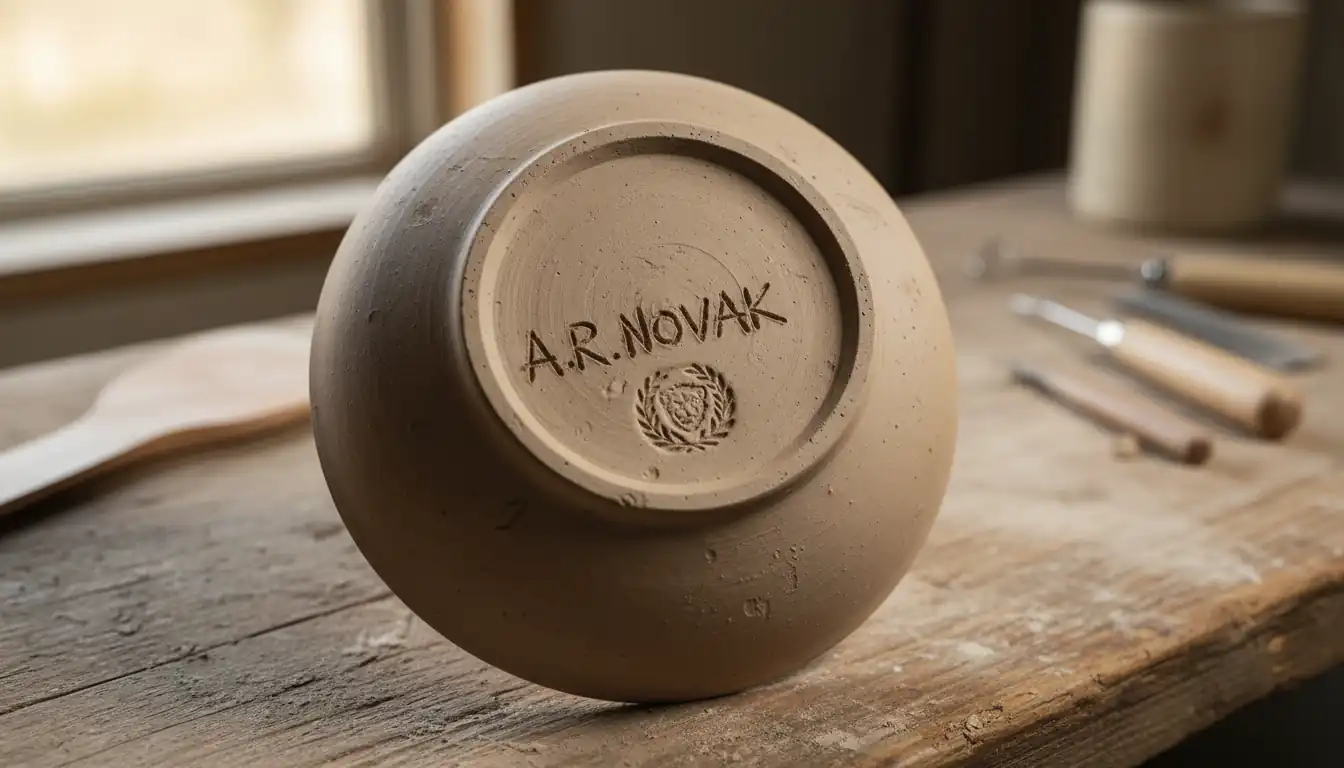
You are standing in a crowded antique mall, the air thick with the scent of old wood and dust. In your hand is a heavy, cream-colored vase with an intricate floral pattern. You flip it over, hoping to find a clear signature, but all you see is a faint, blue smudge beneath the glaze. Is it a rare piece of 19th-century English porcelain, or a mass-produced reproduction from the 1970s? This moment of uncertainty is one every collector knows well, where the difference between a five-dollar thrift find and a five-thousand-dollar investment rests entirely on your ability to decode a few square millimeters of ceramic history.
Identifying pottery marks is often described as a lost art, but it is actually a rigorous science. It requires an eye for detail, an understanding of historical manufacturing processes, and the patience to sift through centuries of stylistic evolution. While the marks themselves may be faded or partial, they tell a story of industrial revolutions, royal patronage, and the personal touch of master craftsmen. By learning to read the visual language of these signatures, you can transform a casual hobby into a sophisticated pursuit of history and value.
In the following guide, we will move beyond simple guesswork. You will learn how to analyze the physical construction of a mark, recognize the "holy grail" signatures of the ceramic world, and understand why traditional research methods often fall short. We will also explore how modern technology is finally catching up to the complexities of the antique trade, providing collectors with tools that were once reserved for museum curators and high-end auction houses.
Decoding the Visual Language of Ceramic Signatures
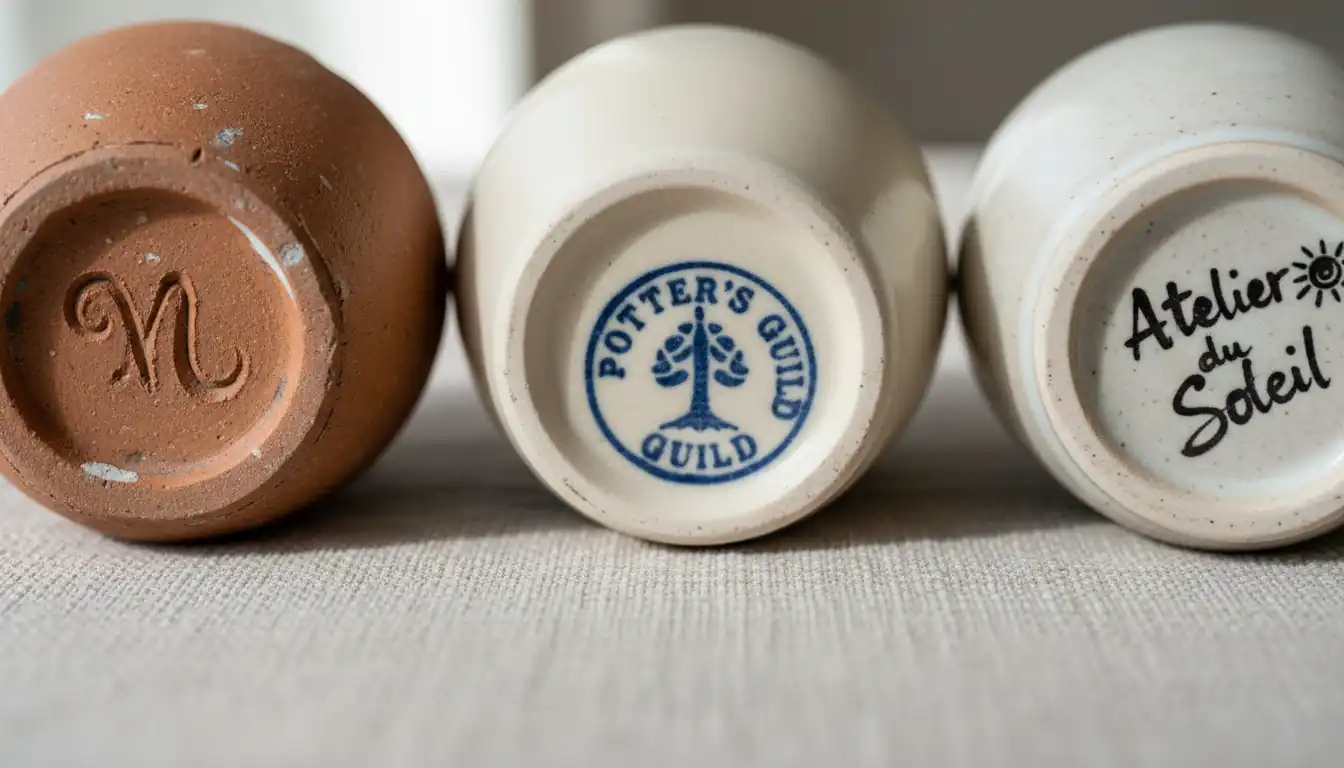
Before you can identify who made a piece of pottery, you must understand how the mark was physically applied. The method of application is often the first clue to the age and quality of the item. Pottery marks generally fall into four categories: incised, impressed, underglaze, and overglaze. Each technique interacts with the ceramic body and the passage of time in different ways, affecting how you should approach the identification process.
Incised marks are scratched directly into the damp clay before the first firing. These are common in early folk art and studio pottery. Because they are hand-drawn, they often look like quick, cursive signatures or simple initials. Impressed marks are created using a metal or wooden stamp pressed into the clay. These are typically more uniform and are frequently found on stoneware and heavy earthenware. Because these marks are physically part of the body of the piece, they are nearly impossible to forge or remove, though they can become "clogged" if the glaze is applied too thickly.
Underglaze marks are painted or printed onto the "bisque" (fired but unglazed) surface before the final clear glaze is applied. These are the most durable marks because they are protected by a layer of glass. However, the heat of the kiln can sometimes cause the pigment—usually cobalt blue or manganese black—to "bleed" or blur, making them difficult to read. Overglaze marks are applied on top of the finished glaze and fired a second or third time at a lower temperature. While these allow for vibrant colors and fine detail, they are susceptible to wear. If you see a mark that looks "scratched" or faded while the rest of the vase looks pristine, it is likely an overglaze mark that has suffered from decades of handling.
Visual Anatomy of a Pottery Mark
To identify signatures on pottery effectively, you must look past the name and analyze the "cipher" or geometric construction of the mark. Many prestigious makers used complex symbols that evolved over time, acting as a secret code for the year of production. For example, companies like Royal Worcester and Minton utilized a sophisticated system of year cyphers—tiny dots, stars, or symbols placed around the main factory mark.
A single dot placed to the left of a crown might indicate 1892, while a dot to the right could mean 1893. Missing these tiny details can lead to a dating error of decades.
When analyzing a mark, look for these specific components:
- The Core Logo: The primary symbol (a crown, an anchor, a shield).
- The Manufacturer’s Name: Often abbreviated or written in a specific font style.
- Country of Origin: Marks like "Made in England" or "Nippon" provide immediate chronological boundaries (e.g., "Made in..." generally appears after 1891 due to the McKinley Tariff Act).
- The Pattern or Shape Number: Usually a hand-painted or stamped set of digits.
- The Artist’s Cipher: A small, stylized set of initials belonging to the decorator.
Common Symbols and Their Historical Meanings
Many European and American potteries used a shared vocabulary of symbols to convey prestige. Understanding these symbols helps you categorize a piece even if the text is unreadable.
- The Anchor: Almost universally signifies a maritime connection or a factory located near a port, most famously used by Chelsea and Davenport.
- The Crown: Indicates royal patronage or a "Royal" warrant. However, hundreds of minor factories added crowns to their marks in the late 19th century to make their wares appear more upscale.
- The Lion Passant: Often found on English pottery to mimic silver hallmarks, suggesting a high-quality "fine" porcelain.
- The Crossed Swords: The iconic symbol of Meissen, though widely imitated by other German and French factories.
| Symbol | Common Meaning | Famous Example |
|---|---|---|
| Crossed Swords | Excellence/German Origin | Meissen |
| Interlaced Ls | French Royalty | Sèvres |
| Anchor | British Quality | Chelsea / Davenport |
| RP with Flames | American Art Pottery | Rookwood |
| Rising Sun | Japanese Export | Various Nippon makers |
High Value Marks That Signal a Major Find
While thousands of potteries have existed over the last three centuries, a handful of marks represent the "holy grail" for collectors. These are the most valuable vintage pottery marks, and recognizing them in the wild can turn a routine trip to a garage sale into a life-changing discovery. These marks are not just signatures; they are stamps of historical significance and artistic mastery.
European Porcelain Powerhouses
The pinnacle of European ceramic art is often found in the works of Meissen and Sèvres. Meissen, the first European factory to produce true hard-paste porcelain, adopted the Crossed Swords mark around 1722. Over the centuries, this mark changed subtly. In the "Marcolini Period" (1774–1814), a small star or dot was added between the hilts. In later years, the swords became more curved. Identifying these nuances is vital because a 1740s Meissen figure is worth significantly more than a 1920s reproduction.
Sèvres, the French national manufactory, is famous for its Interlaced Ls. Inside the "Ls," you will often find a letter. This is a date code: 'A' stands for 1753, 'B' for 1754, and so on. After the French Revolution, the marks changed to include "RF" (République Française) or the eagle of Napoleon. These marks are among the most faked in the world, so the quality of the painting must match the prestige of the mark. If the mark says Sèvres but the gold gilding looks thin or "painted on" rather than burnished, be skeptical.
American Art Pottery Icons
In the United States, the Arts and Crafts movement produced some of the most sought-after ceramics in history. Rookwood Pottery is the gold standard here. Their mark is a reverse 'R' and a 'P' back-to-back. Starting in 1886, they added a small flame point above the logo for each year. By 1900, there were 14 flames. After 1900, they added Roman numerals below the logo to indicate the year (e.g., "XX" for 1920).
Grueby Faience is another high-value American name. Their marks are usually impressed and feature a circular stamp with a lotus flower. Because Grueby pieces were hand-thrown and featured a distinct "cucumber green" matte glaze, the mark is often partially obscured by the thick glaze. Collectors look for the "Grueby Pottery Boston U.S.A." circular stamp, which signals a piece that could easily fetch five figures at auction.
- Key Point: Check for "Seconds" Marks. High-end makers like Meissen or Wedgwood would often strike through their mark with a horizontal or vertical line if the piece had a flaw. These "seconds" are still valuable but worth a fraction of a "first quality" piece.
- Key Point: Look for Artist Signatures. In art pottery (like Rookwood or Newcomb College), the artist's initials are often more important than the factory mark. A piece decorated by a famous artist like Kataro Shirayamadani can triple the value.
Limitations of Traditional PDF Identification Guides
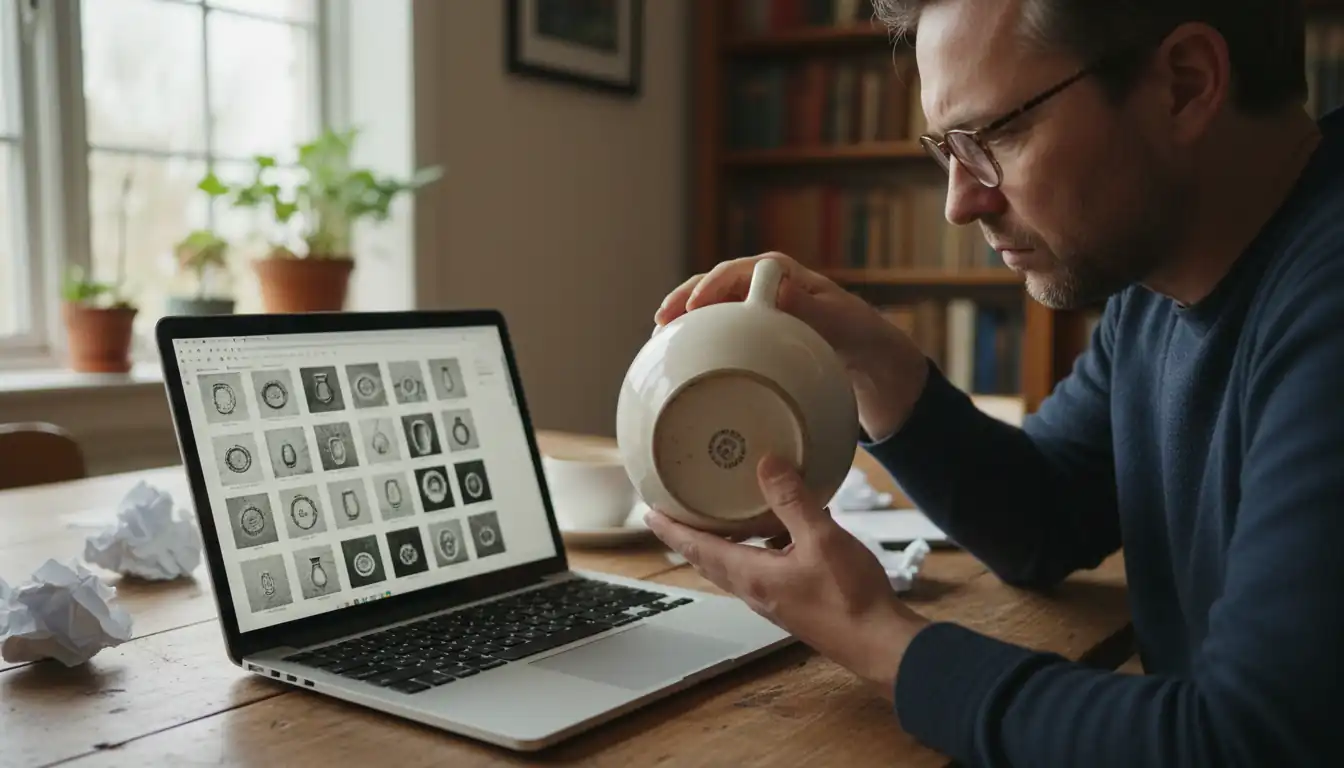
For decades, the serious collector’s primary tool was a thick, heavy book or, more recently, a "pottery marks guide pdf." While these resources are better than nothing, they come with significant drawbacks that can lead to costly mistakes. The "needle in a haystack" problem is real; when you are looking at a blurry mark on a plate, scrolling through a 1,500-page PDF of black-and-white sketches is an exercise in frustration.
Why Static Databases Often Fail
The biggest issue with traditional guides is that they are static. A PDF cannot account for the three-dimensional reality of a ceramic mark. It provides a "perfect" version of a stamp, but in the real world, stamps are often "double-struck" (hit twice, causing a shadow effect), "blind" (pressed without enough ink), or partially obscured by "crazing" (the fine network of cracks in the glaze).
Furthermore, these guides often lack updated market values. A book printed in 2005 might list a piece of Roseville pottery at $800, but the market may have shifted significantly since then. Relying on outdated price guides is a quick way to overpay for an item or undersell a treasure.
The Frustration of Manual Matching
Manual matching is prone to human error and "confirmation bias." When you find a mark that looks almost like a rare Chelsea anchor, your brain wants it to be the real thing. You might overlook the fact that the anchor's flukes are slightly too wide or that the pigment is the wrong shade of red.
- The Grainy Image Problem: Most PDFs use low-resolution scans of old books. Distinguishing between a genuine 18th-century mark and a 20th-century "tribute" mark is nearly impossible when the reference image is a pixelated sketch.
- The Searchability Gap: You cannot "search" a symbol. If you have a mark that looks like a bird holding a twig, you have to flip through every page of the "Animals" section, hoping the author categorized it the same way you did.
- Lack of Context: A mark alone doesn't tell the whole story. You need to know if that specific mark was ever used on that specific shape of vase. Traditional guides rarely bridge the gap between the mark and the object's form.
Using AI to Solve the Mystery of Unreadable Marks
The evolution of antique collecting has reached a point where human expertise can now be augmented by artificial intelligence. If you have ever wondered, "What is the app that identifies pottery marks?" the answer lies in the fusion of computer vision and massive historical databases. This is where the modern collector gains a distinct advantage over those relying on paper guides.
Relic is an iOS app that has changed the way enthusiasts interact with their collections. Instead of squinting at a faded signature and scrolling through a PDF, you simply take a photo. Relic uses advanced AI to analyze the mark, the glaze, and the form of the item. It doesn't just look for a match; it "sees" the piece the way an expert appraiser would, identifying patterns and strikes that the human eye might miss.
How Computer Vision Outperforms the Human Eye
Computer vision algorithms are trained on millions of images, allowing them to recognize a maker's mark even if it is 70% faded or covered by a century of grime. While a human might see a blue smudge, the AI can detect the specific geometric ratios of a Royal Copenhagen wave or the unique "serifs" on a Wedgwood stamp.
This technology removes the guesswork. It provides a level of objective analysis that is difficult to achieve when you are caught up in the excitement of a find. By cross-referencing your photo with a vast digital library, the app can distinguish between a genuine antique and a clever "style-of" reproduction in seconds.
Real Time Appraisal and Origin Data
The true power of using an app like Relic isn't just in the name of the maker; it's in the context. Once the item is identified, the app provides a real appraisal, history, and origin of the item. You aren't just getting a label; you are getting a professional-grade dossier.
- Instant Valuation: Get current market insights based on recent auction results and dealer sales.
- Historical Context: Learn about the specific factory period, the artist involved, and the cultural significance of the piece.
- Accuracy: With a 4.9-star rating from over 20,000 reviews, the app provides a level of reliability that manual searching simply cannot match.
For professionals like dealers, pickers, and online sellers, this speed is essential. In the fast-paced environment of an estate sale, you don't have twenty minutes to research a mark. You need an answer before someone else picks up the item. Relic provides that "one-touch" scanning capability that turns your iPhone into a portable appraisal lab.
Building a Digital Catalog of Your Ceramic Assets
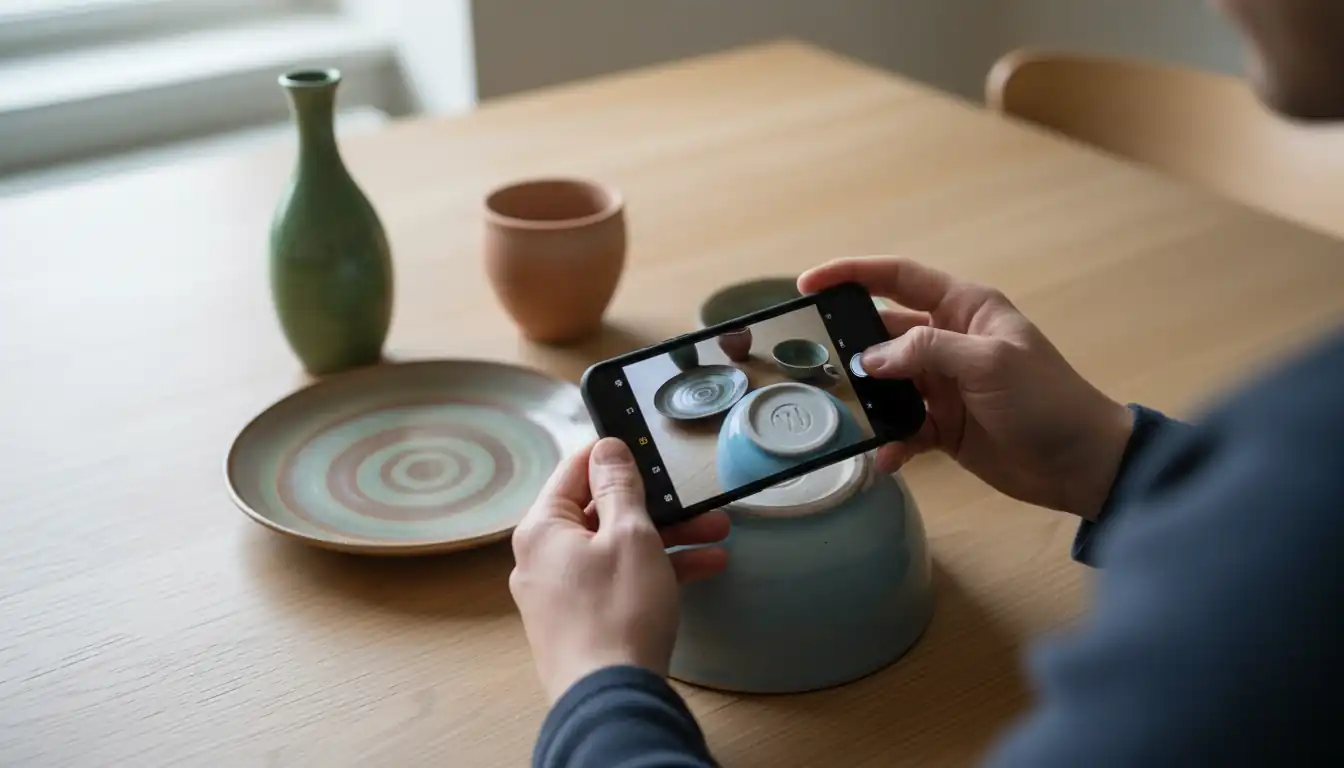
Once you have identified your pieces, the work isn't over. A collection is only as valuable as its documentation. In the past, collectors kept "ledger books" with taped-in polaroids and handwritten notes. Today, the most sophisticated collectors maintain digital archives. This is not just about organization; it is about protecting your investment.
Organizing Your Collection for Insurance and Resale
If your collection were ever lost to fire, theft, or natural disaster, an insurance company would require proof of value. A blurry photo of a shelf full of vases won't suffice. You need a verifiable trail of what each item is, who made it, and what it is worth.
By using a digital cataloging tool, you can create a searchable inventory of your scanned items. This makes estate planning much simpler for your heirs, who may not have your eye for ceramics. It also makes selling much easier. When you can provide a prospective buyer with a high-resolution photo, a confirmed identification, and a professional appraisal, you can command a much higher price.
Verifying Provenance with Modern Tools
Provenance—the history of ownership—is a key driver of value in the antique world. Digital tools help you build this history. Every time you scan an item with Relic, you are creating a digital "birth certificate" for that object in your collection. You can note where you bought it, what you paid, and any repairs or damage you've discovered.
Tips for Photographing Your Collection for Digital Archiving:
- Use Natural Light: Avoid harsh flashes that create "hot spots" on shiny glazes.
- Capture Multiple Angles: Take photos of the mark, the base, the rim, and any interior signatures.
- Use a Neutral Background: A plain grey or white sheet helps the AI focus on the object's details.
- Include a Scale: Place a coin or a ruler next to the piece in at least one photo to document its size.
A well-documented collection is a liquid asset. An undocumented collection is just a room full of breakables.
Conclusion
Identifying pottery marks is the bridge between seeing an object and truly knowing it. By understanding the physical differences between incised and underglaze marks, you gain a foundational skill that protects you from common mistakes. Recognizing the high-value signatures of Meissen, Sèvres, and Rookwood allows you to spot opportunities that others miss. However, the most significant leap a collector can make is moving from the slow, error-prone world of manual research into the efficient, AI-driven world of modern appraisal.
The days of squinting at faded marks and lugging around heavy reference books are over. With tools like Relic, you have the power of a professional appraiser in your pocket, allowing you to identify, value, and catalog your collection with unprecedented accuracy. Whether you are a seasoned dealer or a weekend enthusiast, the goal remains the same: to uncover the hidden stories behind the ceramics we love.
Your Next Steps:
- Audit your current collection: Flip over your favorite pieces and see which marks you can identify using the techniques learned here.
- Go digital: Download the Relic app on your iPhone and start scanning your items to build a secure, appraised digital catalog.
- Keep learning: Use the historical data provided by your scans to deepen your knowledge of specific makers and periods.
The history of your collection is waiting to be read. Stop squinting and start discovering.
Identify antiques instantly
Point your camera at any antique, collectible, or vintage item. Get valuations, history, and market insights in seconds.
Download for iPhone