Stop Squinting at Silver: The New Way to Decode Hallmarks with Your Phone

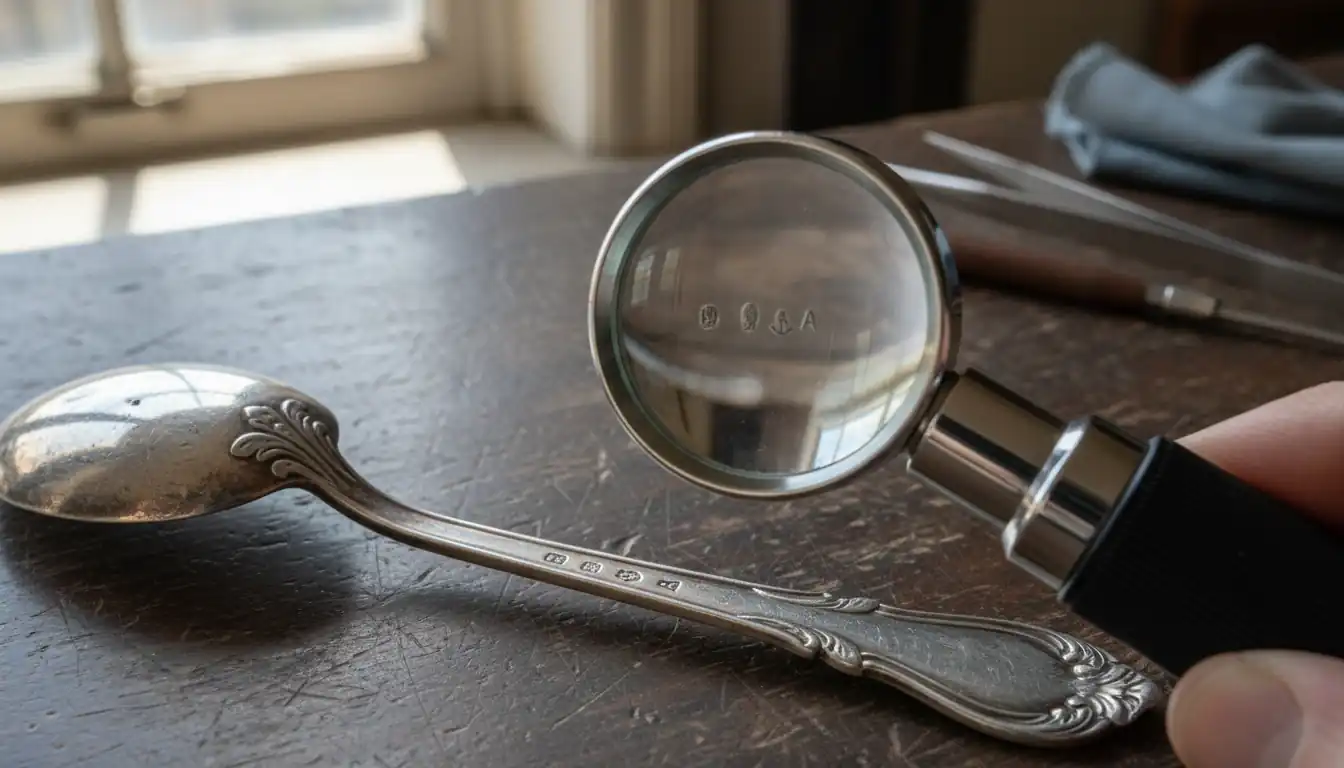
You are standing at a crowded estate sale, holding a heavy silver cream pitcher. It feels substantial in your hand, cool to the touch, and possesses that soft, moonlight glow unique to old silver. You flip it over, squinting at a row of tiny, darkened stamps near the base. They are no larger than a grain of rice, partially obscured by a century of tarnish and polish. Is this a masterpiece from an 18th-century London workshop, or a mass-produced silver-plated trinket from a 1950s department store?
The difference between those two possibilities is often thousands of dollars. For centuries, the only way to bridge that gap was through years of study, a library of thick reference books, and a high-powered magnifying glass. You had to memorize alphabets, shield shapes, and the heraldry of obscure European cities. It was a barrier to entry that kept many casual collectors from ever truly understanding what they owned.
That barrier is finally coming down. By understanding the logic behind these marks and using the right digital tools, you can turn your smartphone into a professional-grade appraisal kit. You no longer need to be a scholar of medieval guilds to identify a piece of history. You just need to know what you are looking at and how to capture it.
The Anatomy of a Hallmark
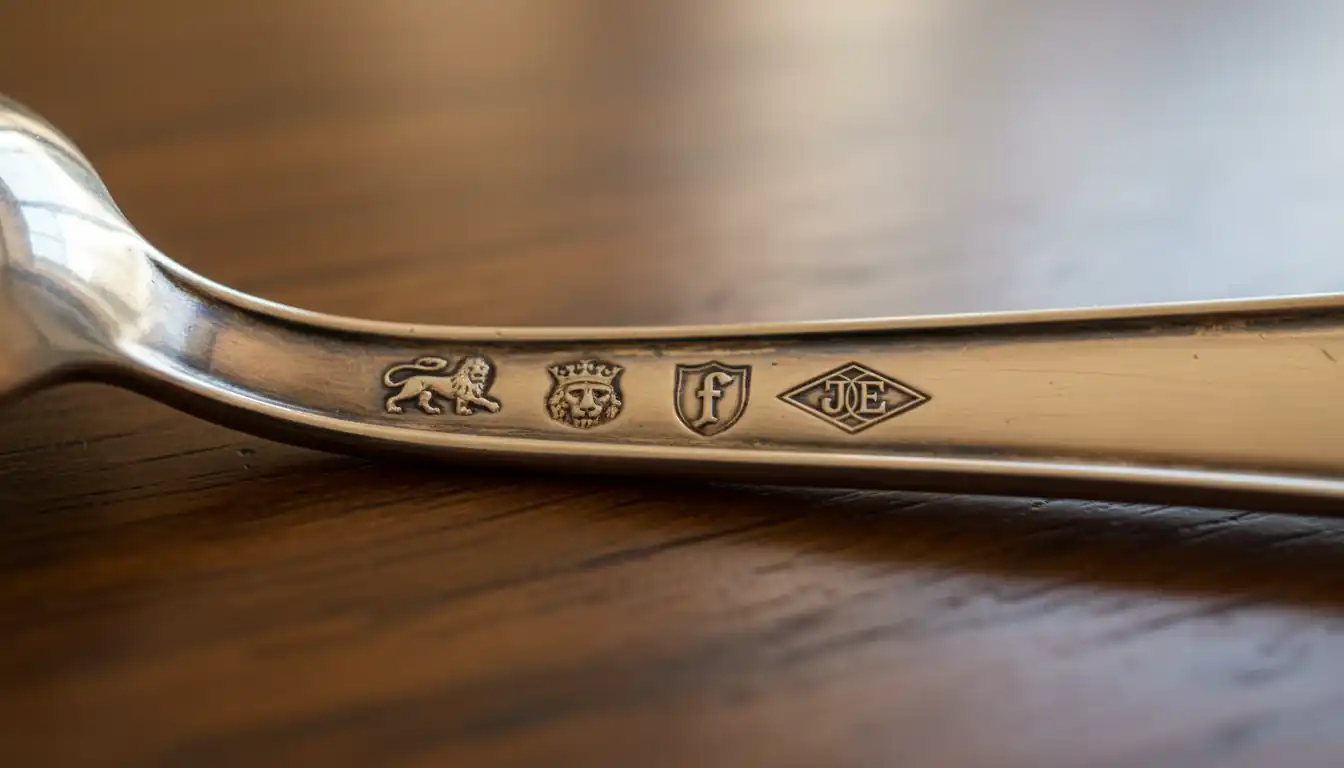
To the uninitiated, a hallmark looks like a random series of tiny pictures. In reality, it is one of the oldest and most sophisticated consumer protection systems ever devised. While many countries have their own systems, the British hallmarking system is widely considered the gold standard for clarity and detail. It isn't just a brand name; it is a legal record of a piece's biography.
When you look at a piece of British silver, you are usually looking for a sequence of four or five specific stamps. Each one tells a different part of the story. If you can decode these four elements, you can pinpoint exactly when and where a piece was made, and who was responsible for its quality.
Standard Marks and Purity Grades
The most important mark is the standard mark. This tells you the purity of the metal. Since pure silver is too soft to be used for functional objects, it is alloyed with other metals, usually copper, to give it strength. The standard mark is the legal guarantee that the silver content meets a specific requirement.
- The Lion Passant: This is the most famous hallmark in the world. A lion walking to the left with one paw raised indicates "Sterling Silver," which is 92.5% pure silver. If you see this lion, you know you are holding high-quality solid silver.
- The Britannia Mark: Occasionally, you might see a seated figure of Britannia holding a trident. This indicates a higher purity of 95.8%. This standard was mandatory in Britain between 1697 and 1720 to prevent people from melting down silver coins to make plate, though it is still used occasionally today.
- Continental Grades: Outside of Britain, you might see numbers like "800," "900," or "950." These are decimal representations of purity. "800" is common in Germany and Italy, meaning the item is 80% silver. While still valuable, it is less pure than Sterling.
Maker Marks and Date Letters
Once you have established the purity, you need to know who made it and when. This is where the "Maker's Mark" and the "Date Letter" come into play. These marks provide the historical context that collectors crave.
The Maker's Mark is the "responsibility mark." It usually consists of the initials of the silversmith or the firm that produced the piece. In the early days, these were often pictorial symbols, but by the 17th century, initials became the standard. Finding a "PS" for Paul Storr or an "HB" for Hester Bateman can instantly change the value of a piece from its weight in metal to a five-figure museum piece.
The Date Letter is perhaps the most ingenious part of the system. Each year, the assay office assigned a specific letter of the alphabet to that year's production. To prevent confusion, the font style and the shape of the shield surrounding the letter change with every 20-year cycle. For example, a lowercase "a" in a square shield represents a completely different year than an uppercase "A" in an oval shield.
Finally, the Town Mark tells you which assay office tested the silver. A leopard’s head means London, an anchor means Birmingham, and a crown means Sheffield. By combining these four marks—the lion, the leopard, the letter, and the initials—you have a complete, unalterable record of the item’s origin.
Why Traditional Hallmark Guides Often Fail Beginners
If the system is so logical, why is it so hard to use in practice? The reality of antique hunting is rarely as clean as the diagrams in a textbook. Beginners often find themselves frustrated because the physical condition of the silver doesn't match the "perfect" examples they see online.
The Problem with Tiny Stamps and Physical Wear
The first hurdle is scale. Most hallmarks are incredibly small. On a delicate teaspoon or the hinge of a snuff box, the marks might be less than two millimeters wide. At that size, the difference between a "G" and a "C" is almost impossible to see with the naked eye, especially if the piece is tarnished.
Then there is the issue of "rubbing." Silver is a relatively soft metal. Over two hundred years of enthusiastic polishing by housemaids and collectors, the sharp edges of a stamp can wear down. These are known as "ghost marks." You might see the faint outline of a shield, but the letter inside has been smoothed away into a silver blur. Traditional guides assume you have a crisp, clear mark to look at, which is rarely the case with genuine antiques.
Regional Variations and Global Complexity
The second hurdle is the sheer volume of data. While the British system is structured, other countries are far less consistent. American silver, for instance, didn't have a national hallmarking system for much of its history. Instead, makers often used "pseudo-hallmarks"—tiny symbols that looked like British marks to trick consumers into thinking the silver was imported and high-quality.
If you move into silver from the Middle East, India, or North Africa, the complexity triples. These regions often use Arabic calligraphy or local symbols that don't follow the Western "four-mark" logic. Without a specialized degree in art history, identifying a 19th-century silver bowl from Cairo or a colonial piece from Calcutta is nearly impossible using a standard printed guide. This is where the frustration peaks; you know you have something special, but you lack the key to unlock its story.
Modern Tools for Instant Identification
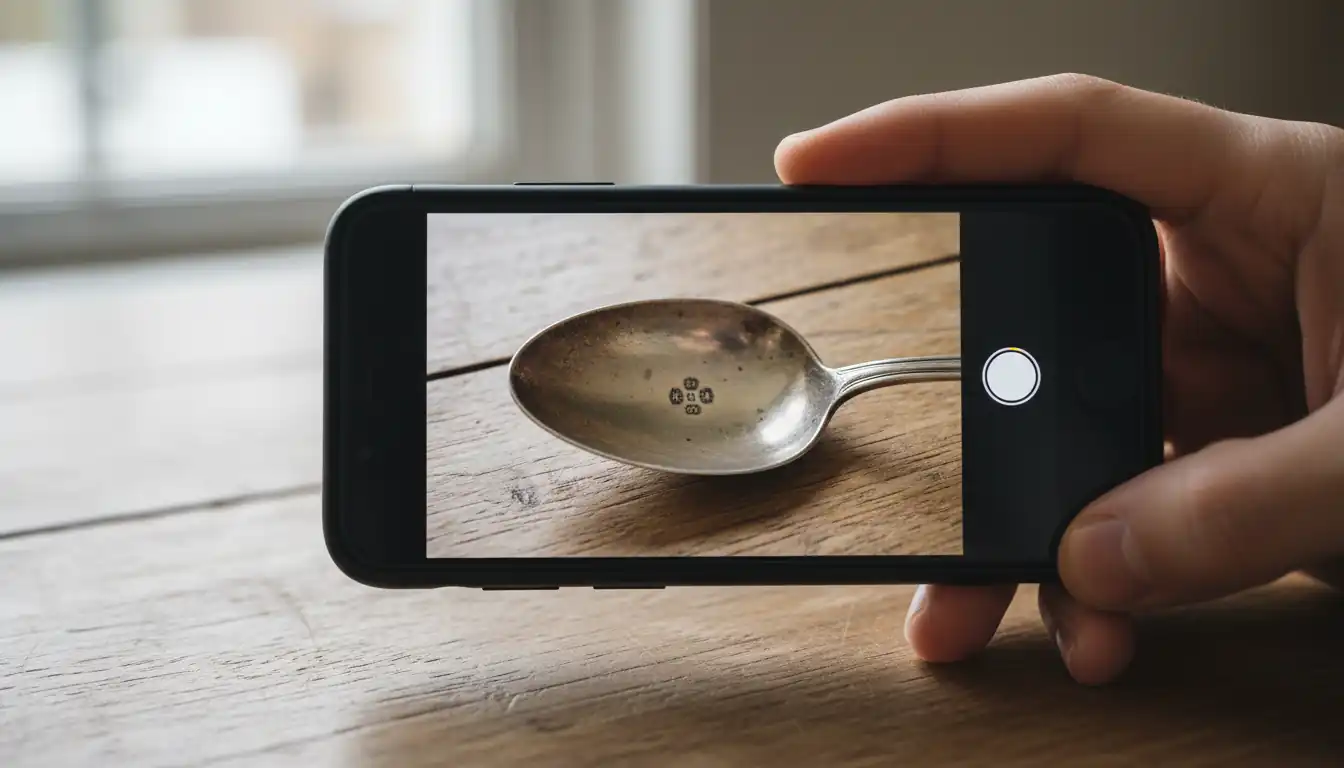
The days of carrying a heavy "Pocket Guide to Hallmarks" and a jeweler's loupe are fading. While a 10x magnification loupe is still a useful tool for inspecting the surface of a piece, it doesn't help you interpret what you see. You still have to manually flip through thousands of pages to find a match.
From Magnifying Glasses to AI Scanning
Technology has finally caught up to the complexity of the silver market. We have moved from manual searching to visual recognition. If you've ever wondered, "What tools identify silver hallmarks?" the answer is no longer just a piece of glass. It is a combination of high-resolution optics and artificial intelligence.
The modern collector uses their phone to bridge the gap between the physical object and the historical database. Instead of trying to describe a tiny symbol in a search engine—which is notoriously difficult—you can now use software that "sees" the hallmark the same way a human expert does, but with a much larger memory.
How Relic Transforms Your Phone into an Expert Appraiser
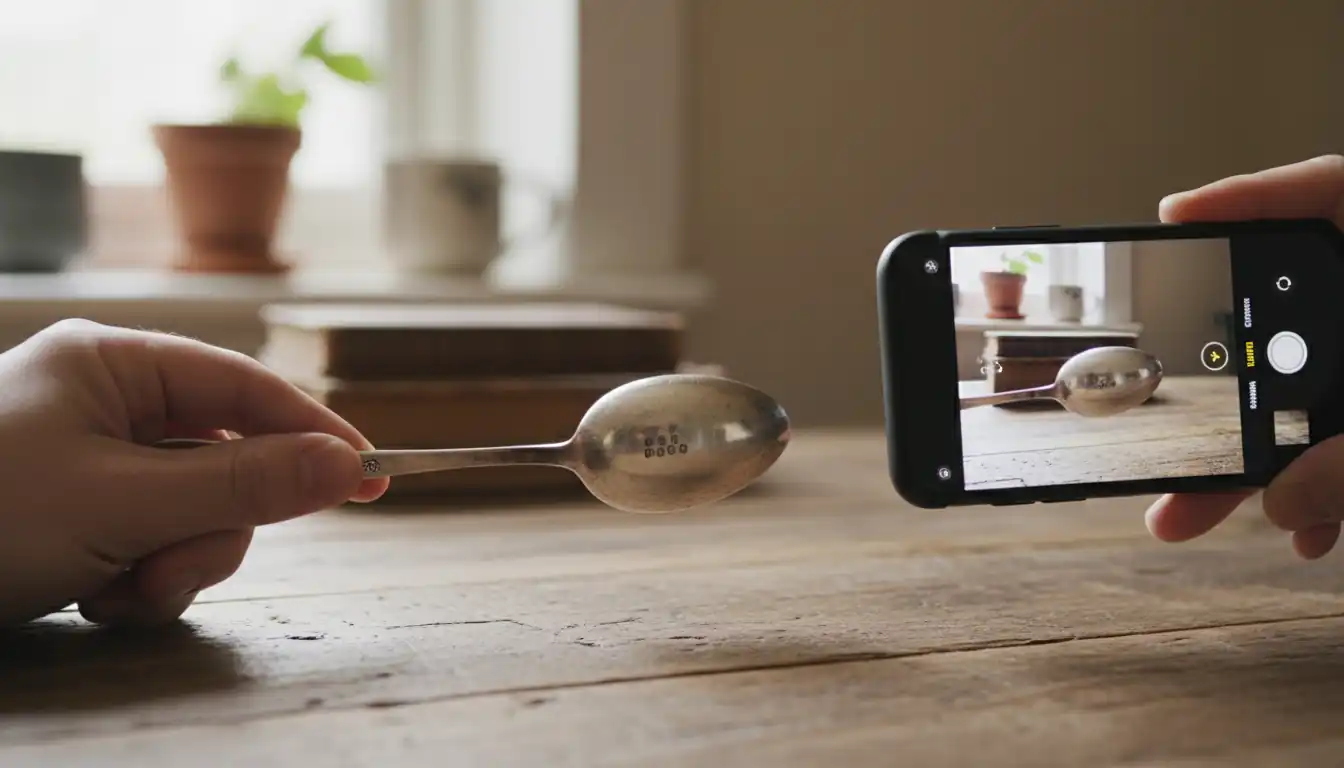
This is where the Relic app becomes an essential part of your toolkit. Relic is designed specifically to handle the "messy" reality of antiques. When you encounter a hallmark that is partially rubbed or oddly placed, you don't have to guess. You simply take a high-resolution photo through the app or upload one from your gallery.
Relic uses advanced AI to analyze the geometry, font, and symbols within the hallmark. It compares your photo against a massive database of historical marks, including those difficult-to-track regional variations from across the globe. Within seconds, the app provides more than just a name; it gives you the origin, the approximate age, and the historical context of the piece.
The true power of modern identification isn't just finding a match; it's having the history of the world's silversmiths in your pocket.
For professionals like dealers, pickers, and online sellers, this speed is vital. In a fast-moving auction or a crowded flea market, you don't have twenty minutes to research a single spoon. Relic provides instant identification and a searchable catalog of your scans, allowing you to build a digital inventory of your collection as you go. With a 4.9-star rating from over 20,000 reviews, it has become the go-to resource for those who need accuracy without the academic overhead.
Determining Value Beyond the Stamp
Once you know what a piece is, the next logical question is: "What is it worth?" It is a common misconception that the hallmark itself dictates the price. While the hallmark proves the purity of the silver, the market value is driven by factors that a simple stamp cannot fully convey.
Weight and Purity vs Historical Provenance
The most basic way to value silver is by its "melt value." This is simply the weight of the item multiplied by the current market price of silver. However, treating an antique this way is a major mistake. This is known as the "scrap silver trap." Many people sell valuable family heirlooms to "cash-for-gold" shops, receiving only the metal value for a piece that might be worth ten times that to a collector.
The real value lies in provenance and craftsmanship. A plain silver tray by an unknown maker might sell for its weight in silver. However, a tray of the same weight by a master like Paul Storr or Hester Bateman can command a massive premium. Why? Because you aren't just buying metal; you are buying a piece of art from a specific moment in history.
| Factor | Impact on Value | Why it Matters |
|---|---|---|
| Maker's Prestige | High | Famous makers are highly collectible and hold value better. |
| Rarity of Form | Medium-High | Unusual objects (like marrow scoops) are worth more than common ones. |
| Condition | Medium | Heavy wear or "rubbed" marks can decrease value significantly. |
| Provenance | Variable | Items owned by historical figures carry a significant "story" premium. |
Current Market Trends for Collectible Silver
The market for silver is constantly shifting. Currently, there is a high demand for "clean" lines—think Mid-Century Modern silver or early Georgian pieces with minimal decoration. Conversely, highly ornate Victorian silver, which was once the peak of the market, has become more affordable.
Relic helps you navigate these fluctuations through its appraisal feature. Instead of just identifying the mark, the app uses AI to provide real-world valuations based on current market data. It looks at what similar items are actually selling for in the current climate, not just what a price guide from five years ago says. This ensures that whether you are buying or selling, you are doing so with a clear understanding of the item's financial worth.
Protecting Your Investment and Avoiding Scams
As you become more active in the silver market, you will inevitably encounter items that aren't what they seem. The more valuable an item is, the more likely someone has tried to faked it. Protecting your investment requires a mix of technological help and a healthy dose of skepticism.
Spotting Modern Reproductions and Silver Plate Deceptions
The most common "scam" isn't necessarily a criminal forgery, but a misunderstanding of materials. Many beginners are fooled by "EPNS" (Electroplated Nickel Silver). These items look exactly like sterling silver but are actually a base metal coated in a thin layer of silver. They often carry marks that look like hallmarks to the untrained eye.
- Check for "EPNS" or "A1": These are clear indicators of silver plate, not solid silver.
- Look for "Bleeding": On older plated items, the silver wears away on high points (like the curve of a spoon), revealing the yellowish or copper-colored base metal underneath.
- The Magnet Test: While not foolproof, silver is non-magnetic. If a magnet sticks firmly to your "silver" tray, it is likely silver-plated steel.
Another danger is the "cast fake." This is where a genuine piece of silver is used to create a mold, and a new piece is cast from it. In these cases, the hallmarks are part of the mold, so they look "soft" or blurry rather than sharp and struck into the metal. A genuine hallmark is always stamped into the finished piece, leaving crisp, deep edges.
Cleaning and Preservation Best Practices
Once you have a genuine piece of silver, you must protect it. One of the saddest sights for a collector is a beautiful 18th-century piece that has been "over-polished." Every time you use a harsh abrasive polish, you remove a microscopic layer of silver. Over decades, this is what causes marks to become "rubbed" and details to disappear.
- Use Gentle Polishes: Avoid "dipping" solutions, which can be too aggressive. Use a soft cloth and a high-quality silver cream.
- Wash After Use: If you use your silver for food, wash it immediately in warm, soapy water. Salt and acidic foods (like eggs or vinegar) can corrode silver quickly.
- Store Properly: Use "silver cloth" bags or chests lined with tarnish-resistant fabric. This reduces the frequency with which you need to polish the item.
By identifying your silver correctly and maintaining its condition, you aren't just a hobbyist; you are a steward of history. You are ensuring that the craftsmanship of the past survives for another century.
Conclusion
Decoding silver hallmarks used to be a skill that took a lifetime to master. You had to struggle with tiny stamps, confusing date letters, and the constant fear of being fooled by a clever fake. But the landscape has changed. With the foundational knowledge of how the hallmarking system works and the power of the Relic app in your pocket, the world of antique silver is now open to everyone.
You can now walk into any antique shop or estate sale with the confidence of a professional appraiser. You have the tools to see past the tarnish, identify the maker, and determine the true market value of a piece in seconds.
The next time you see a mysterious mark on a piece of silver, don't just squint at it. Open Relic, take a photo, and let the AI reveal the story hidden in the metal. Whether you are looking to build a valuable collection or simply want to know the history of a family heirloom, the answers are now just a tap away. Turn your phone into your most valuable tool and start uncovering the treasures hiding in plain sight.
Identify antiques instantly
Point your camera at any antique, collectible, or vintage item. Get valuations, history, and market insights in seconds.
Download for iPhone