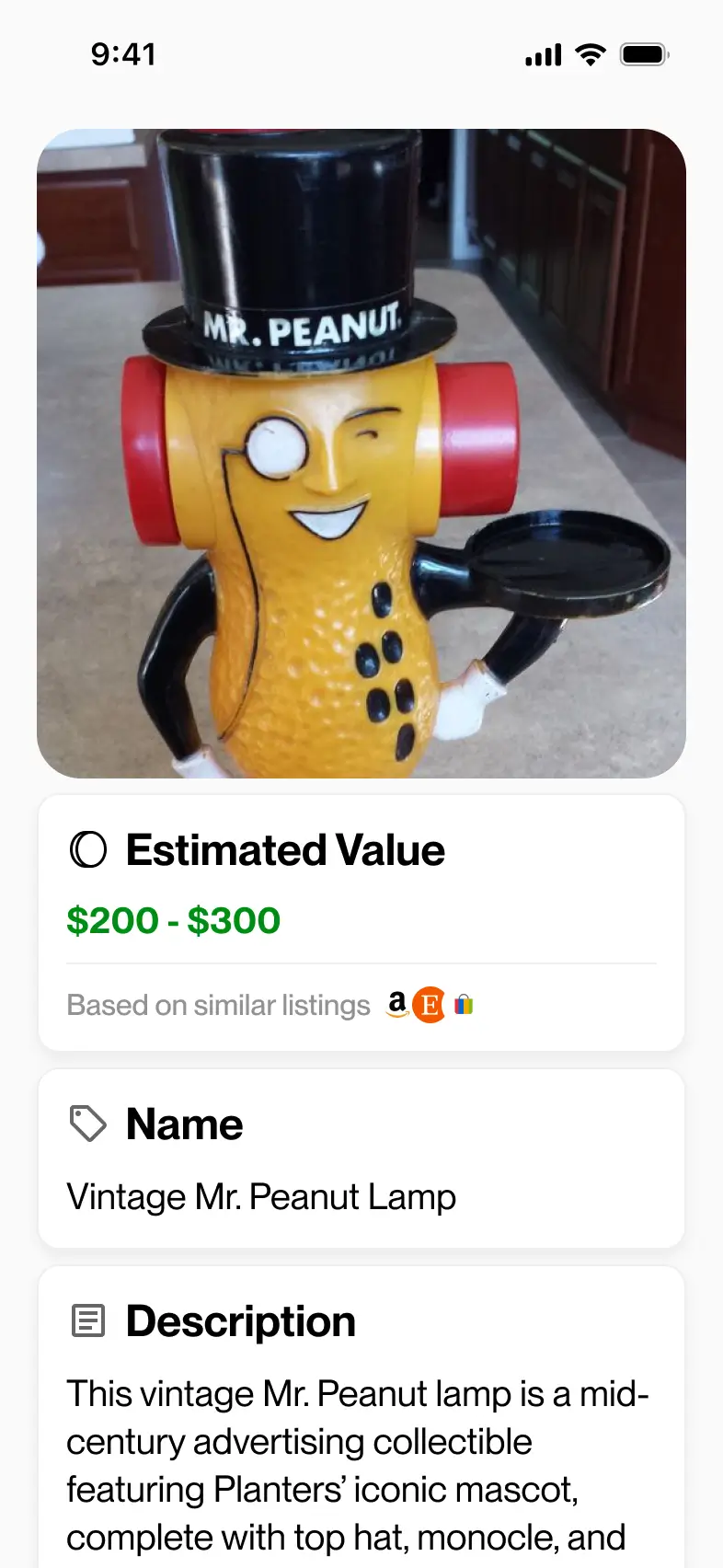
Stop Throwing Away Money: Use Your Camera to Identify Rare Antique Tools Instantly

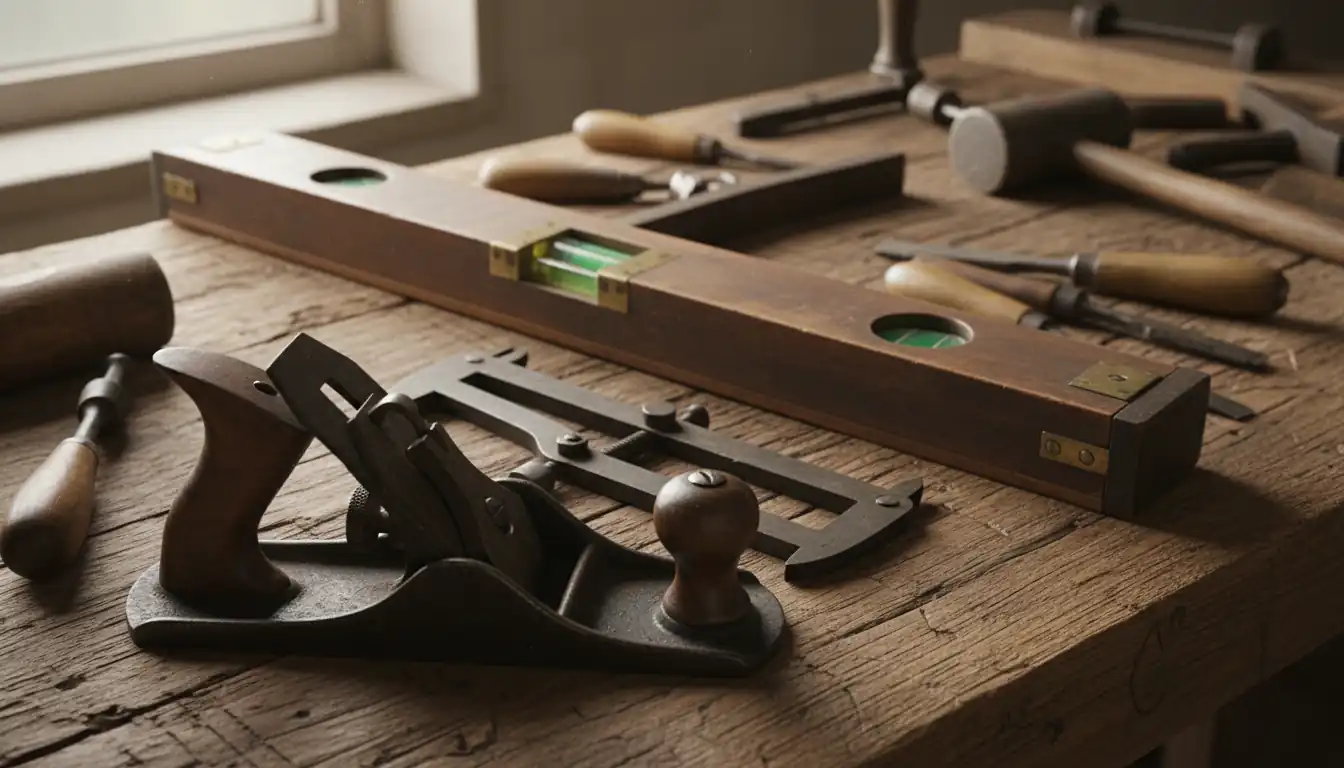
You are standing in a dusty barn or a crowded estate sale, staring at a pile of rusted iron and weathered wood. To the untrained eye, it looks like a heap of scrap metal destined for the landfill. To a seasoned collector, that "scrap" might actually be a rare 18th-century timber framing tool worth hundreds, or even thousands, of dollars.
The difference between throwing away a small fortune and making a savvy investment often comes down to your ability to read the physical history of an object. You do not need a degree in archaeology to spot a diamond in the rough. You simply need to know which visual cues indicate age, craftsmanship, and rarity.
By the time you finish reading this, you will have the skills to distinguish a hand-forged masterpiece from a mass-produced factory imitation. You will also see how modern technology can instantly verify your instincts, turning your smartphone into the ultimate appraisal tool.
The Visual Language of Antique Tools
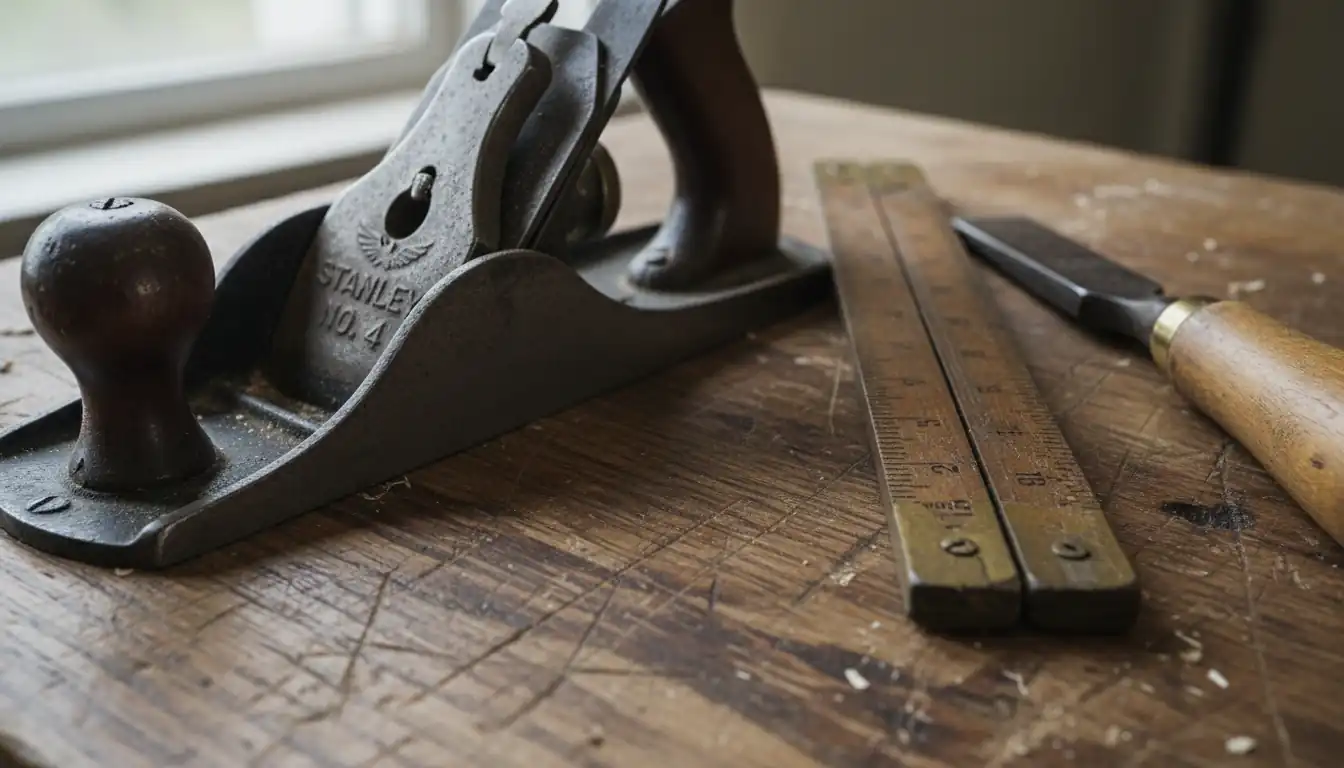
Before you can determine what a tool is worth, you have to understand how it was made. The history of tool manufacturing is a story of the transition from the individual blacksmith’s forge to the roaring factories of the Industrial Revolution. Each era left behind specific "fingerprints" on the metal and wood.
Forged vs Cast Iron Construction
The most significant divide in the history of tools is the move from wrought iron to cast iron. If you find a tool that looks slightly asymmetrical or shows faint, rhythmic indentations, you are likely looking at a hand-forged piece. Blacksmiths hammered these tools into shape while the metal was red-hot, leaving behind subtle "hammer marks" that machines simply do not replicate.
Wrought iron tools often feature a "laminated" construction. Because steel was expensive in the 1700s and early 1800s, smiths would forge a body out of cheaper iron and weld a thin strip of high-carbon steel only onto the cutting edge. You can often see a faint line where these two metals meet, a hallmark of early craftsmanship.
In contrast, tools from the mid-to-late 19th century are often made of cast iron. These were created by pouring molten metal into sand molds. Look for "flash lines"—thin, raised ridges of metal where the two halves of the mold met. While cast iron allowed for more complex shapes and standardized parts, it also marked the end of the era of unique, one-of-a-kind implements.
- Surface Pitting: Deep, irregular pitting usually suggests long-term exposure to moisture on older, hand-forged iron.
- Uniformity: If two tools of the same model look identical down to the millimeter, they are almost certainly factory-made.
- Weight: Hand-forged tools often feel "balanced" differently, as the weight was distributed by a human hand for specific tasks.
Wood Species and Handle Ergonomics
The handle of a tool can tell you as much as the blade. Early American and European tools utilized local hardwoods that were chosen for their specific properties. Hickory was prized for its shock absorption in hammers and axes, while beech and applewood were the preferred choices for the "totes" (handles) of high-quality hand planes.
Look at the way the wood is finished. Early tools were often shaped with drawknives and spokeshaves, leaving behind slightly faceted surfaces rather than the perfectly smooth, cylindrical finish of a modern lathe. The "patina"—the dark, waxy glow created by decades of sweat and oil from a worker’s hands—is nearly impossible to fake.
A genuine patina is not just dirt; it is a chemical change in the wood and metal that serves as a protective layer and a badge of history.
| Feature | Hand-Forged (Pre-1850) | Mass-Produced (Post-1850) |
|---|---|---|
| Metal Texture | Hammer marks, lamination lines | Smooth, uniform, flash lines |
| Fasteners | Hand-cut nails or wooden pegs | Machine-made screws and bolts |
| Wood Finish | Faceted, hand-shaved | Perfectly round, lathe-turned |
| Symmetry | Often slightly asymmetrical | Highly symmetrical and standardized |
Leveraging AI for Instant Identification
Even with a trained eye, some tools remain a mystery. You might find a specialized wrench or a strange-looking gauge that defies conventional logic. This is where the question "Can AI identify antiques?" becomes relevant for the modern picker.
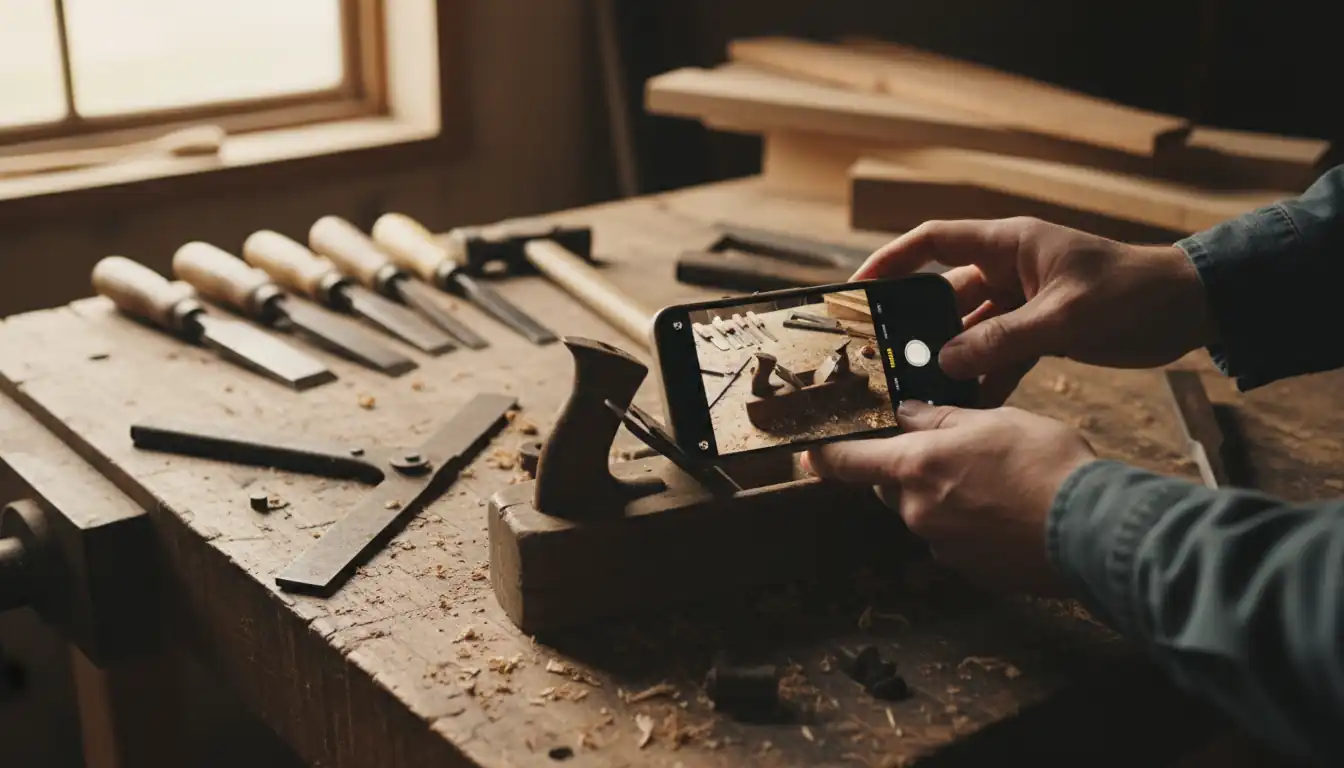
Technology has reached a point where your camera can do the heavy lifting of research. Using an app like Relic, you can bridge the gap between curiosity and expert knowledge in seconds. Instead of carrying a library of reference books into the field, you simply take a photo of the item.
How AI Deciphers Tool Markings
The AI behind Relic doesn't just look at the tool as a whole; it analyzes the "geometry" of the object. It looks at the curvature of a handle, the specific angle of a blade, and the placement of rivets. It then compares these features against a massive database of known historical implements.
This process is particularly useful for identifying maker marks that have been partially obscured by rust. The AI can often recognize the "silhouette" of a logo or the specific font used by a manufacturer in the 1890s, even if you can only see a few letters. This allows you to identify the origin of a tool without needing to scrub away the valuable patina to find a hidden stamp.
- Visual Recognition: The app identifies the category of the tool (e.g., a "cooper's adze" vs. a "carpenter's adze").
- Historical Context: It provides the likely date range of manufacture based on the design features detected.
- Market Comparison: It looks at recent sales and auction data to give you an idea of what similar items are fetching.
Real Time Appraisal and Origin Data
The most significant advantage of using a digital identifier is the speed of appraisal. In a fast-moving estate sale, you don't have twenty minutes to search through forums. You need to know if that $10 tool is worth $100 before someone else picks it up.
Relic provides a real appraisal by synthesizing historical data and current market trends. It tells you the story of the tool—where it was likely made, who used it, and why it was designed that way. This context doesn't just help you sell the item; it helps you appreciate the history you are holding in your hand.
Using AI for identification isn't about replacing your knowledge; it's about augmenting your "field vision" with a global database of expertise.
Regional Variations and Global Craftsmanship
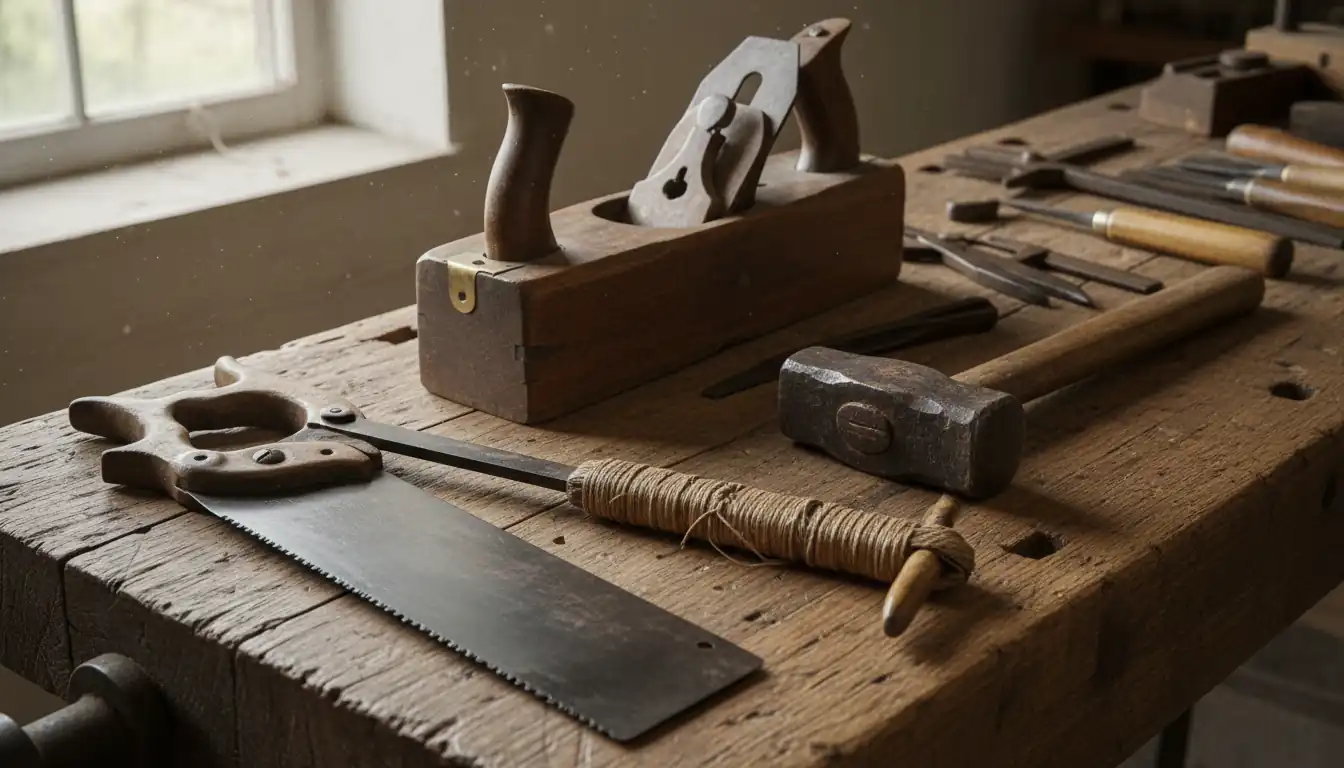
While many collectors focus on North American or British tools, the global market for antique implements is vast and diverse. Tools from Africa, the Middle East, and Asia often follow entirely different design philosophies, prioritizing different ergonomics and aesthetic values.
European Industrial Standards vs Colonial Implements
In Western Europe, the 19th century was defined by a push toward standardization. British toolmakers like Sheffield produced millions of chisels and saws that followed strict patterns. These tools were built for durability and heavy use in the burgeoning industrial cities.
However, in colonial settings or rural areas of Africa and the Middle East, tools remained localized for much longer. You might find an African "adze"—a tool used for carving wood—that features a hand-forged blade lashed to a naturally curved tree branch with leather thongs. These tools are often highly decorated, with carvings on the handle that represent the status of the craftsman or the spirit of the wood.
Eastern Artistry in Functional Hand Tools
The tools of the Asia Pacific region, particularly Japan, represent a peak in functional artistry. The Japanese "Kanna" (hand plane) is a perfect example. Unlike Western planes, which are pushed away from the body, the Kanna is designed to be pulled toward the user.
- The Kanna (Japan): These planes use a thick, laminated steel blade set into a simple wooden block. The focus is on the quality of the steel and the precision of the fit, rather than the complexity of the adjustment mechanism.
- The Basola (India): This is a versatile adze used by Indian carpenters for everything from rough-hewing logs to fine carving. Its weight and balance are specifically tuned for a seated working position, which is common in traditional Indian woodworking.
- Middle Eastern Folding Knives: Often featuring intricate "piqué" work (inlaying small metal pins into horn or wood handles), these tools were as much a status symbol as a functional implement.
Understanding these regional differences is vital. A tool that looks "primitive" to a Western collector might actually be a highly sophisticated piece of Eastern engineering. By recognizing these global variations, you can spot valuable imports that others might overlook as mere curiosities.
Spotting the Rare and the Valuable
Once you have identified what a tool is and where it came from, the next step is determining its value. Not every old tool is a treasure. To find the high-value items, you must look for the "markers" of rarity that collectors crave.
Identifying Maker Marks and Patent Dates
The "Holy Grail" for many tool collectors is a clear maker's mark. Companies like Stanley, Miller’s Falls, and Keen Kutter are the "blue chips" of the tool world. However, even within these brands, certain eras are more valuable than others.
For example, Stanley planes manufactured between 1910 and 1918 often feature the "Sweetheart" logo (a heart shape with the letters S.W. inside). These are highly sought after because they represent a period of exceptional quality. Look for patent dates cast into the metal or stamped into the wood. A tool with a "Pat. Pending" mark or a very early patent date (pre-1870) often commands a premium because it represents an early or transitional design.
- Obscured Marks: Use a flashlight at a low angle to reveal faint stamps that are invisible under direct light.
- Logo Evolution: Research how a company's logo changed over time. A small change in font can mean a difference of fifty years in age.
- Model Numbers: Some manufacturers numbered their tools. A Stanley #1 plane is tiny and rare, often selling for thousands, while a Stanley #4 is common and worth much less.
Condition Grading for Collectors
In the world of antique tools, condition is everything. However, "good condition" for a tool is different than for a coin or a comic book. Collectors use a specific grading scale to communicate the state of an item.
| Grade | Description | Impact on Value |
|---|---|---|
| Fine | Almost new, original finish, no rust, all original parts. | Highest value; often kept as "shelf queens." |
| Good | Shows signs of use but well-maintained. No major damage. | Solid collector value; very desirable. |
| User-grade | Significant wear, maybe some light rust, but still functional. | Value is based on utility rather than collectibility. |
| Parts-grade | Broken handles, missing blades, or heavy pitting. | Low value; used only to repair other tools. |
Be careful with cleaning. Many beginners make the mistake of using a wire wheel on a bench grinder to "shine up" an old tool. This destroys the patina and can slash the value by 50% or more. Collectors prefer "honest wear"—the signs of a tool that was used and cared for over decades.
Data Privacy and the Digital Collector
As you build your collection and use digital tools to manage it, you must consider the security of your data. Documenting a high-value collection involves taking photos and recording locations, which is sensitive information.
Protecting Your Collection Data
When using an app to identify and appraise your finds, it is essential to choose a platform that prioritizes privacy. You want an app that doesn't sell your data or track your location unnecessarily. Relic is designed with this in mind, ensuring that your digital catalog of treasures remains your private business.
Digital documentation is also a vital part of "future-proofing" your collection. If you ever need to file an insurance claim or sell the collection as a whole, having a timestamped, appraised digital record is invaluable. It moves your hobby from a pile of "old stuff" to a documented asset class.
Accessibility in Digital Identification
Digital tools also make the world of antique collecting more inclusive. For those with visual impairments, an app that can read out the history and value of a tool is a significant advantage. It removes the barrier of needing to read tiny, rusted stamps or navigate through small-print reference guides.
Furthermore, for older collectors who may find it difficult to carry heavy crates of tools to an appraiser, the ability to get a professional-grade appraisal from a photo is a massive benefit. It allows the hobby to be enjoyed from home, making the thrill of the hunt accessible to everyone, regardless of physical mobility.
- Portability: Your entire reference library and appraisal history live on your iOS device.
- Organization: You can categorize your finds by type, era, or value with a single tap.
- Searchability: Instantly find when and where you bought a specific item and what you paid for it.
Conclusion
The world of antique tools is a landscape of hidden value and fascinating history. By learning the visual language of forged iron and hand-carved wood, you can begin to see the stories hidden in every rusted implement. You now know how to distinguish the "soul" of a hand-forged tool from the efficiency of a mass-produced one, and you understand the global diversity of craftsmanship from the Japanese Kanna to the Indian Basola.
Identifying these items is no longer a matter of guesswork or years of academic study. With the Relic app on your iPhone, you have the power of advanced AI to identify, appraise, and document your finds instantly. You can step into any estate sale or flea market with the confidence of a professional dealer.
Stop letting valuable history slip through your fingers. The next time you see an odd-looking tool at a yard sale, don't walk past it. Take a photo, use Relic to uncover its story, and start building a collection that is both a passion and a smart investment. Your next great find is waiting for you to see it.
Identify antiques instantly
Point your camera at any antique, collectible, or vintage item. Get valuations, history, and market insights in seconds.
Download for iPhone