Stop Walking Past a Fortune: The High-Value Antique Brands Hiding in Plain Sight

You are likely walking past a small fortune every time you visit a local thrift store or browse a weekend garage sale. Most shoppers see a cluttered shelf of old dishes and dusty chairs, but a trained eye sees high-margin assets waiting to be claimed. The difference between a $5 "old glass bowl" and a $500 Waterford crystal centerpiece often comes down to a few physical markers that most people simply don't know how to spot.
Thrifting has evolved from a hobby into a sophisticated hunt for undervalued treasures. To succeed, you have to move beyond looking for things that are "pretty" and start looking for things that are "valuable." This requires a shift in perspective, moving from a casual observer to a researcher who understands the hallmarks of quality.
In the following guide, you will learn how to identify the specific brands and craftsmanship markers that define high-value antiques. From the weight of European crystal to the hidden stamps on Mid-Century Modern furniture, we will break down the "white whales" of the resale market. By the time you finish reading, you will have the framework needed to spot authentic pieces and avoid the common pitfalls that trap amateur collectors.
The Glass and Crystal Powerhouses
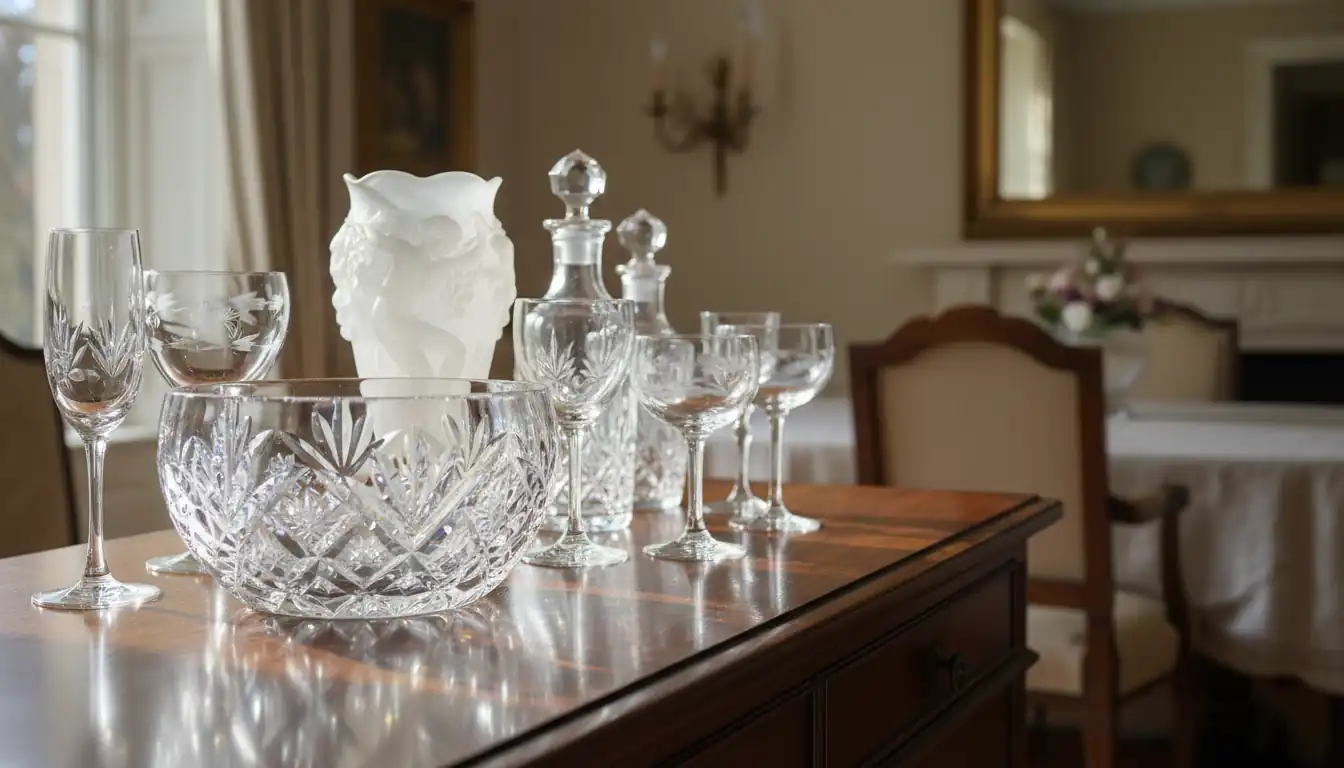
Glassware is one of the most common categories in any secondhand shop, yet it is also where the most money is left on the table. Because glass is fragile and often lacks obvious branding, many people assume it is all "junk" from a department store. However, high-end crystal brands like Waterford and Baccarat carry a prestige that translates directly into high resale prices.
Mastering the Clarity of Waterford and Baccarat
When you pick up a piece of Waterford or Baccarat, the first thing you should notice is the weight. These brands use high lead content—often 30% or more—which makes the glass significantly heavier than standard soda-lime glass. If a large decanter feels light in your hand, it is almost certainly a mass-produced reproduction.
The "ring test" is your next line of defense. Gently tap the rim of the glass with your fingernail. High-quality lead crystal will produce a clear, sustained musical tone that vibrates for several seconds. Standard glass will produce a dull "thud." This resonance is a direct result of the lead content and the precision of the cut.
| Feature | High-End Crystal (Waterford/Baccarat) | Mass-Produced Glass |
|---|---|---|
| Weight | Heavy, dense feel | Light, airy feel |
| Sound | Long, musical ring | Short, dull thud |
| Edges | Sharp, crisp facets | Rounded, smooth edges |
| Clarity | Prismatic, rainbow refraction | Grey or yellow tint |
Look closely at the cuts. On a piece of authentic Waterford, the "Lismore" or "Colleen" patterns will have sharp, crisp edges that might almost feel prickly to the touch. This is because the patterns are cut into the glass using diamond wheels. In contrast, cheap glass is often "pressed" into a mold, resulting in rounded, soft edges that lack the prismatic fire of real crystal.
Pro Tip: Look for the acid-etched signature. On Waterford, it is often found on the base or in the "wells" of a stemware piece. It is incredibly faint—you may need to hold it up to a bright light and tilt it at an angle to see the word "Waterford" in a gothic script.
The Mid-Century Charm of Indiana and Fostoria
While Waterford represents the peak of European luxury, American companies like Indiana Glass and Fostoria dominate the collectible "elegant glass" market. These pieces are more accessible but still command a loyal following among collectors.
Fostoria’s "American" pattern is perhaps the most recognizable glassware in history. Produced for decades, its cube-like design catches the light in a way that mimics expensive cut crystal. To identify authentic Fostoria American, look for the three-part mold mark. While mold marks are usually a sign of lower quality, in the case of Fostoria, they are a hallmark of the era's manufacturing process.
Indiana Glass is famous for its "Hen on Nest" covered dishes and its "Tiara" line. These pieces often come in "Amberina" (a red-to-yellow gradient) or "Carnival Glass" finishes. Carnival glass has an iridescent, oil-slick sheen that was originally given away as prizes at fairs. Today, rare patterns can fetch hundreds of dollars.
When you transition from the translucent world of glass to the opaque world of ceramics, the rules change. You are no longer looking for light refraction; you are looking for the story told by the clay itself.
Porcelain and Fine China Legends
If you want to know what to look for when thrifting vintage ceramics, you have to start at the bottom. The "backstamp" or maker's mark is the most important piece of evidence you have. It tells you the manufacturer, the approximate date of production, and sometimes even the specific artist who decorated the piece.
The Timeless Appeal of Wedgwood and Lenox
Wedgwood is a name that even non-collectors recognize, but not all Wedgwood is created equal. The brand is most famous for "Jasperware"—that iconic unglazed stoneware with white relief decorations. While blue is the most common color, "Crimson" or "Lilac" Jasperware is significantly rarer and more valuable.
- The Feel of Jasperware: Authentic Jasperware has a matte, biscuit-like finish that feels like a smooth stone. It should never feel chalky or rough.
- The Detail: The white figures (bas-reliefs) should be crisp. If the edges of the figures look blurry or "melted" into the background, it’s likely a low-quality imitation.
Lenox, on the other hand, is the gold standard for American bone china. Known for its distinct ivory tone, Lenox was the first American china to be used in the White House. When you hold a Lenox plate up to the light, you should be able to see the shadow of your hand through it. This translucency is the hallmark of true bone china, which contains bone ash for strength and whiteness.
European Elegance with Limoges and Spode
A common mistake new thrifters make is searching for a brand called "Limoges." In reality, Limoges is a region in France famous for its kaolin clay deposits. Dozens of different factories in this region produced porcelain, all of which may use the word "Limoges" in their backstamp.
To find the high-value pieces, look for additional names like "Haviland" or "Bernardaud." These factories produced the exquisite hand-painted dinnerware that graced the tables of European royalty. Look for "Peint Main" (painted by hand) on the bottom of small porcelain trinket boxes. These tiny boxes are highly collectible and can sell for $100 to $300 despite being only two inches wide.
Spode is another giant, specifically known for "Transferware." This is a process where a pattern is printed onto a copper plate, transferred to paper, and then pressed onto the ceramic. The "Blue Italian" pattern has been in production since 1816.
- Identifying Spode: Look for a blue underglaze mark. Older pieces will have a slightly blurred look to the pattern, whereas modern reproductions look "too perfect" and digital.
- The Weight of History: Older Spode pieces are often heavier and have a deeper, richer blue than the modern versions made in overseas factories.
Once you master the art of flipping plates to check for marks, you'll start to notice that the same principles of quality apply to much larger items. The transition from the dining table to the living room involves looking for the same "maker's marks," just on a much larger scale.
High-End Vintage Furniture Brands

Furniture is the "big game" of thrifting. While a plate might net you a $40 profit, the right chair can net you $4,000. Knowing what vintage furniture brands to look for at thrift stores can turn a routine Saturday into a massive payday.
Mid-Century Modern Icons to Memorize
The Mid-Century Modern (MCM) movement remains the most profitable sector of the vintage furniture market. Brands like Herman Miller and Knoll are the "white whales" of this category.
Herman Miller is famous for its collaborations with designers like Charles and Ray Eames. If you see a lounge chair with a plywood shell and black leather, don't just assume it’s a replica. Check the underside. An authentic Eames chair will have a black and white paper label or a circular "Herman Miller" logo embossed directly into the wood or metal frame.
Knoll is another powerhouse, known for the "Tulip" tables designed by Eero Saarinen. These tables have a heavy cast-aluminum base—never plastic. If you find a pedestal table and the base feels light or sounds hollow when tapped, it’s a knockoff. Authentic Knoll pieces almost always have a branded nameplate or the designer's signature engraved into the frame.
American Heritage Craftsmanship and Maker Marks
Not all valuable furniture is "modern." American heritage brands like Drexel, Ethan Allen, and Henredon produced high-quality pieces that are often overlooked because they look "traditional."
Drexel’s "Declaration" or "Parallel" lines are highly sought after. To identify these, open the top drawer of a dresser. High-end manufacturers almost always "burn" their logo into the interior wood of the drawer. This is called a "branded mark." If you don't see a brand, look at the construction.
- Dovetail Joints: Pull a drawer out and look at the side. Do you see interlocking wedge-shaped joints? These are dovetails. If they are slightly uneven, they were hand-cut, indicating an older, more valuable piece.
- Solid Wood vs. Veneer: Don't be afraid of veneer. Many high-end MCM pieces used beautiful walnut or teak veneers over solid wood cores. However, if you see "particle board" or "MDF" (which looks like compressed sawdust) on the back of a piece, it is a modern, low-value item.
- The "Bones": Look at the underside of a chair. Is the frame held together with screws and glue blocks, or is it just stapled? Quality furniture uses "mortise and tenon" joinery, where one piece of wood fits into a hole in another.
"A bad paint job can hide a masterpiece. Never judge a dresser by its 'shabby chic' exterior; judge it by the weight of the drawers and the stamp inside the cabinet."
Identifying the brand is only half the battle. The other half is determining if the piece is actually an original or a clever modern reproduction. This is where a critical eye for "red flags" becomes your most valuable asset.
Red Flags and Authenticity Checks
When you're in the heat of the hunt, it’s easy to get excited and overlook flaws that destroy resale value. Knowing the red flags when thrifting will save you from "buying your lessons"—a polite way of saying you wasted money on junk.
Distinguishing Reproductions from Originals
The "shabby chic" movement of the early 2000s led to a wave of mass-produced furniture designed to look old. To spot these fakes, look at the hardware. Genuine antique furniture will have "slotted" screws (a single line). If you see Phillips-head screws (a cross shape) on a piece that claims to be from the 1800s, it’s a reproduction. Phillips screws weren't widely used until the 1930s.
In the world of glass and ceramics, look for "wear patterns." A 100-year-old plate should have some light scratching on the surface where forks have scraped it over the decades. It should also have a "wear ring" on the bottom where it has sat on a table. If the bottom of a "vintage" vase is perfectly smooth and white, it likely came off a shipping container last month.
The "Black Light Test" is a secret weapon for glass collectors. Carrying a small UV flashlight allows you to see things the naked eye misses.
- Uranium Glass: Genuine uranium glass (highly collectible) will glow a bright, neon green under UV light.
- Repairs: If a piece of porcelain or glass has been broken and glued back together, the glue will often glow a different color under the black light, revealing the hidden damage.
Identifying Damage That Tanks Resale Value
Not all damage is created equal. Some "patina" is good, but certain flaws are deal-breakers.
| Damage Type | Description | Impact on Value |
|---|---|---|
| Crazing | Tiny spiderweb cracks in the glaze of ceramics. | High (often indicates structural weakness). |
| Sick Glass | A cloudy, milky film on glass that won't wash off. | Fatal (this is a chemical change, not dirt). |
| Fleabites | Tiny chips along the rim of glass or china. | Moderate (can sometimes be polished out). |
| Pitting | Small holes in metal or silver plate. | High (indicates the base metal is corroding). |
"Sick glass" is particularly frustrating. It happens when the chemicals in the glass begin to break down due to hard water or dishwasher use. If you see a beautiful Waterford decanter that looks "foggy" inside, try rubbing it with a bit of vinegar. If the fog doesn't move, it's "sick," and it's virtually worthless to a serious collector.
As you become more proficient at spotting these physical cues, you'll realize that the sheer volume of information can be overwhelming. No one can memorize every backstamp or furniture label ever created. This is where the transition from "gut feeling" to "data-driven" thrifting happens.
The Modern Thrifter Digital Toolkit
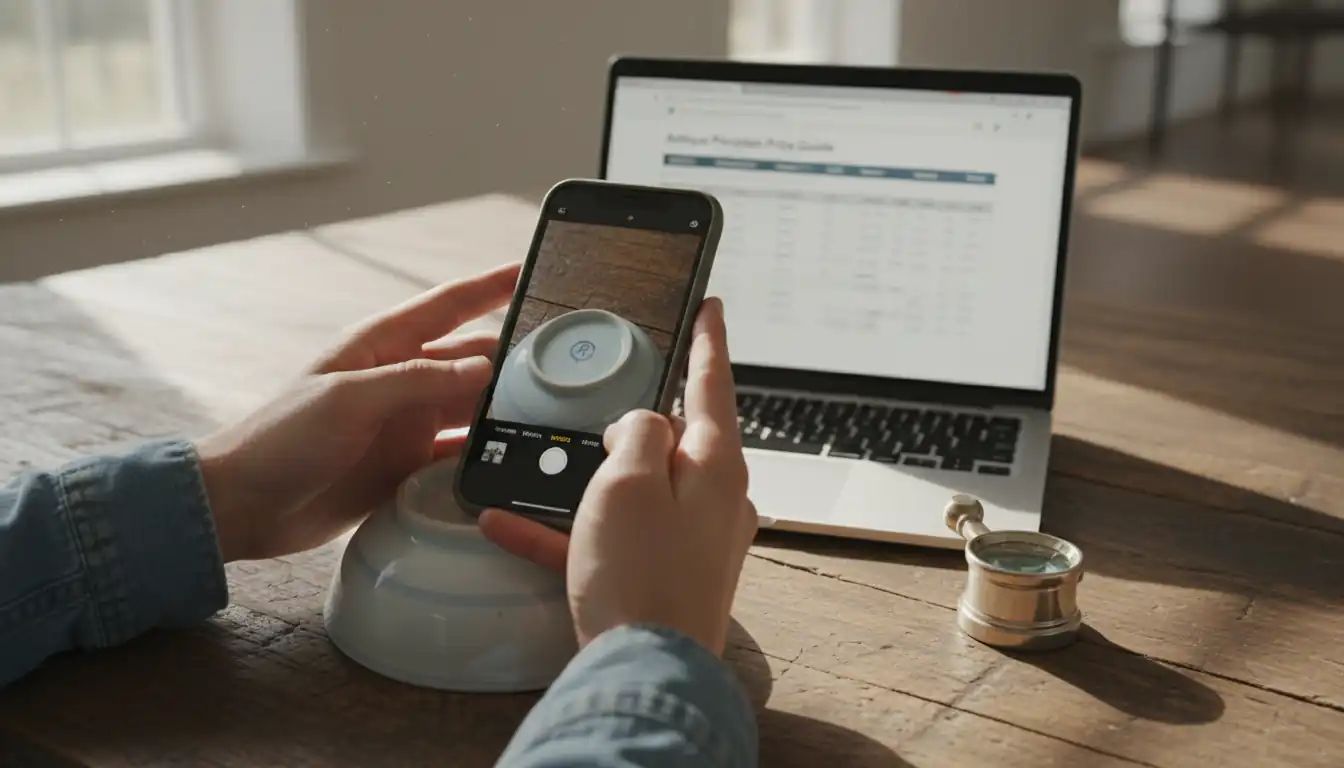
The days of carrying around heavy price guides and encyclopedias of maker's marks are over. To compete in the modern resale market, you need to use the same technology that professional appraisers use. The most successful pickers today aren't just relying on their memory; they are using digital tools to verify their finds in real-time.
Leveraging AI for Instant Appraisals
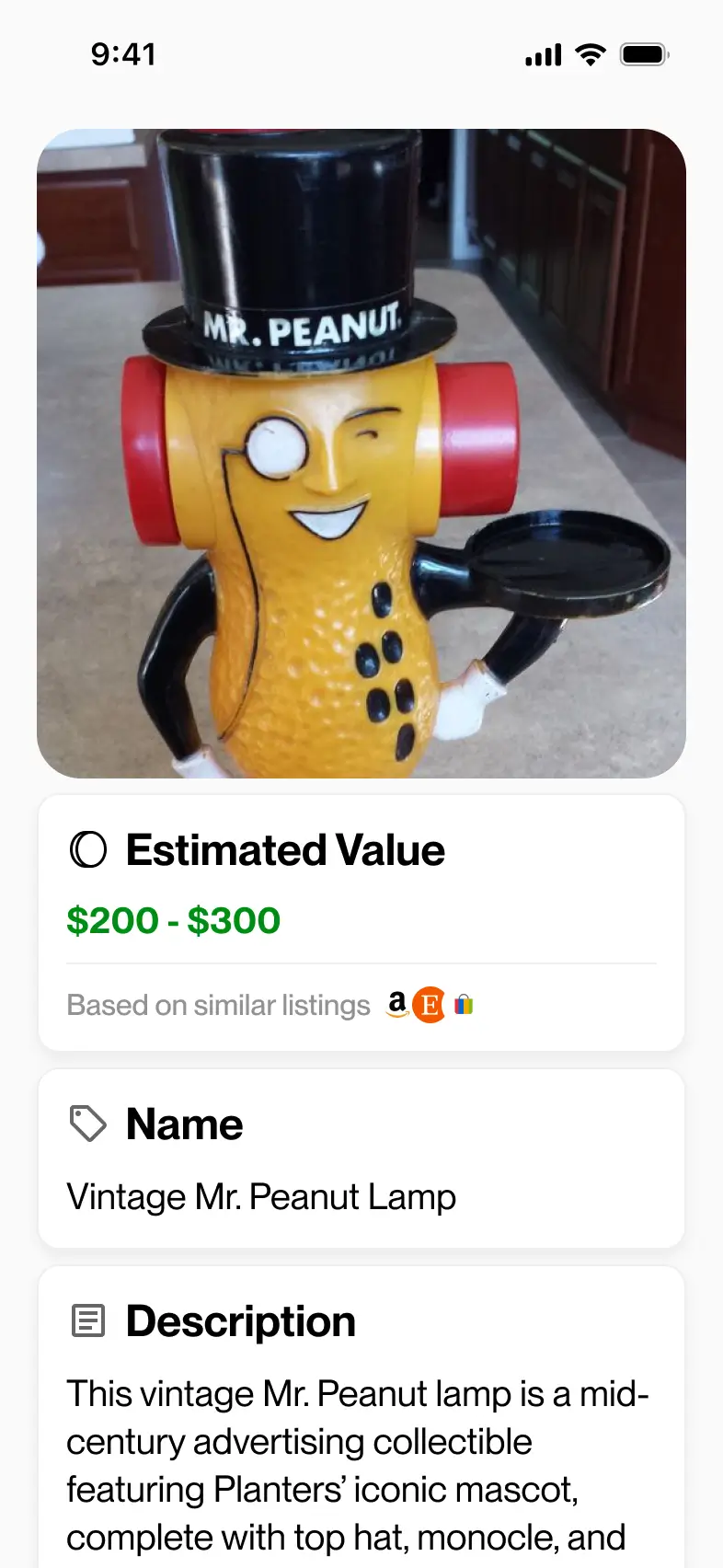
One of the biggest hurdles in thrifting is the "anxiety of the unknown." You find a strange, unmarked vase that feels heavy and looks expensive, but you aren't sure if it's a $200 piece of art glass or a $2 hobby project. This is exactly where the Relic app changes the game for collectors.
Relic is an iOS app that acts as a professional antique identifier in your pocket. Instead of scrolling through endless Google Image results or trying to describe a "blue flower pattern" in a search bar, you simply take a photo of the item. Relic uses advanced AI to analyze the shape, color, texture, and markings of the object.
Within seconds, the app provides:
- Identification: The likely manufacturer and era.
- History: Contextual details about the piece's origin.
- Appraisal: A real-world valuation based on current market data.
This level of instant feedback allows you to make informed decisions on the spot. If you're at an estate sale and the line is moving fast, you don't have ten minutes to research. You need to know now if that chair is a genuine Knoll or a clever imitation. Relic provides that clarity, helping you avoid the "red flags" we discussed earlier by comparing your photo against a massive database of authentic items.
Building a Curated Collection with Data
Beyond just identification, the shift toward digital tools allows you to build a searchable catalog of your finds. Professional dealers, importers, and online sellers use these archives to track their inventory and market research.
By using an app like Relic, you aren't just guessing based on a "gut feeling." You are using a tool that has earned a 4.9-star rating from over 20,000 reviews because it works. Whether you are a professional picker looking for a quick appraisal or a hobbyist who wants to know the history of a family heirloom, having a digital toolkit ensures you never walk past a fortune again.
Data-driven thrifting also helps you spot trends. You might notice that certain "Limoges" patterns are rising in value, or that a specific "Indiana Glass" color is suddenly in high demand. Having this information at your fingertips gives you a competitive advantage over the casual shopper who is just looking for something that matches their curtains.
Conclusion
The world of antiques is no longer reserved for people with art history degrees and decades of experience. By mastering the physical characteristics of high-end brands—the weight of Waterford, the translucency of Lenox, and the joinery of Drexel—you can begin to see the hidden value in every thrift store aisle.
Remember to always check for the "red flags" like Phillips-head screws or "sick glass" that can turn a potential profit into a loss. Use the "ring test" for crystal and the "light test" for bone china. Most importantly, don't be afraid to lean on technology. Tools like the Relic app provide the professional-grade insights you need to verify your finds and appraise them with confidence.
The next time you walk into a dusty shop, don't just look at the shelves. Look through them. Your next big find is likely sitting right there, hiding in plain sight, waiting for someone with the right knowledge to pick it up. Download the right tools, keep your eyes open for the maker's marks, and start building your own collection of high-value treasures today.
Identify antiques instantly
Point your camera at any antique, collectible, or vintage item. Get valuations, history, and market insights in seconds.
Download for iPhone