Stop Walking Past Fortune: The Secret to Finding Valuable Antiques for Sale Anywhere

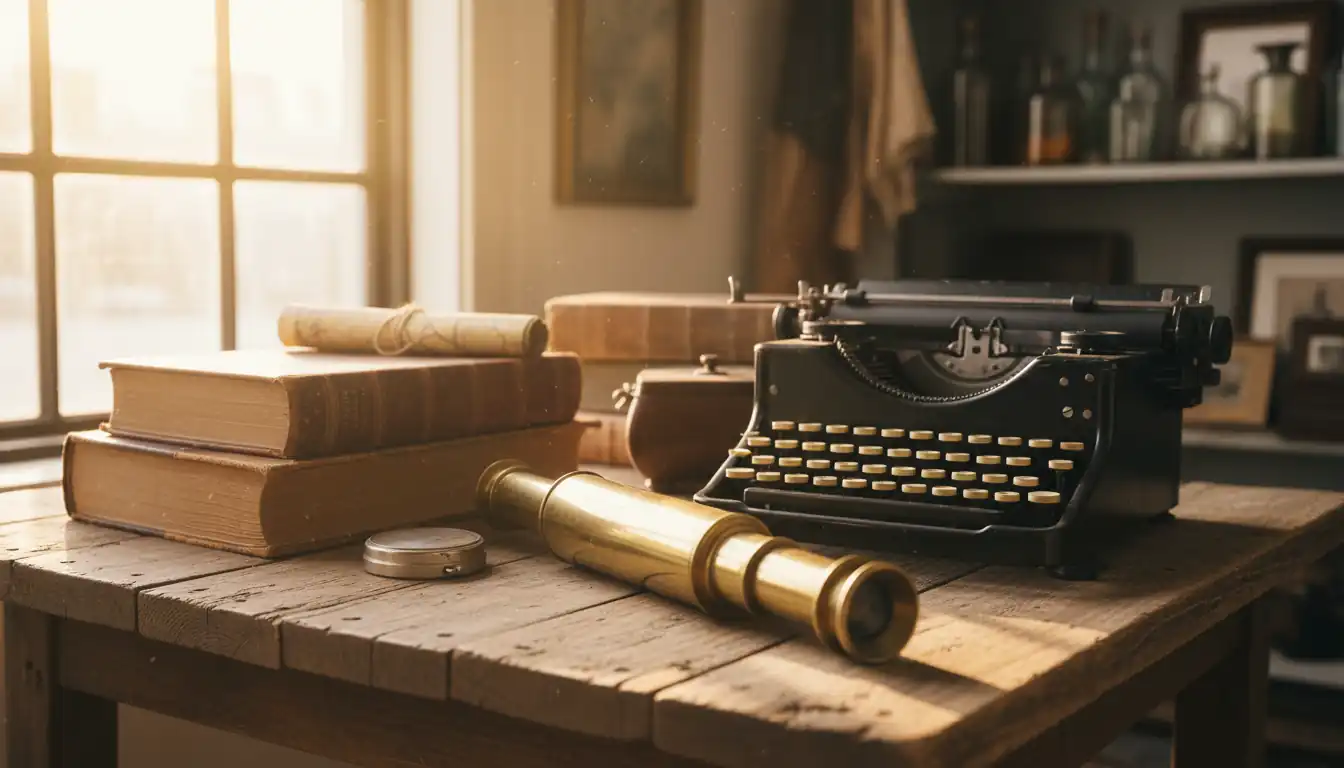
You are likely walking past a small fortune every single week. It might be sitting on a dusty shelf at your local thrift store, tucked under a pile of old linens at an estate sale, or hidden behind a "mislabeled" tag at a community flea market. Most people see a cluttered room full of old objects; a trained eye sees a portfolio of appreciating assets.
The difference between an amateur and a professional picker isn't just luck. It is a combination of knowing exactly where the inventory moves and having the right tools to verify what you are looking at in real-time. This guide will show you how to find, identify, and value antiques like a seasoned pro, turning a casual weekend hobby into a sophisticated investment strategy.
Where to Find Hidden Gems Without Breaking the Bank
Finding high-quality antiques for sale at a fraction of their value requires a shift in how you view the marketplace. You aren't just looking for "old stuff." You are looking for inefficiency—places where the seller doesn't know what they have or is more interested in clearing space than maximizing profit.
Navigating Estate Sales and Local Auctions
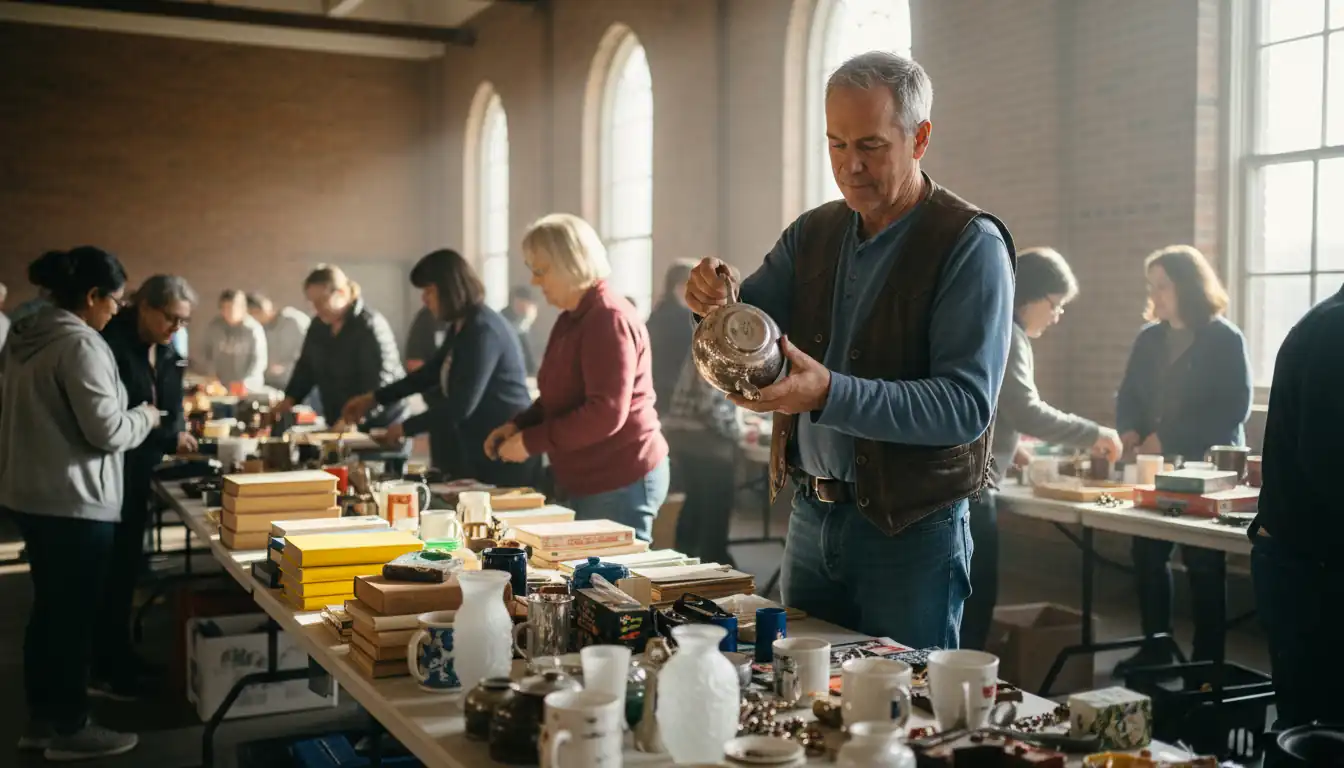
Estate sales are the primary source for serious collectors because they represent a "whole house" liquidation. To get the best results, you need to master the timing. Professional pickers usually arrive an hour before the doors open on the first day to secure the "blue chip" items like furniture and fine art.
However, if your goal is to get cheap antiques, the final hours of the final day are your best friend. Most estate sale companies offer 50% to 75% off everything on Sunday afternoon because they don't want to haul the remaining items to a warehouse. This is when you look for the heavy, overlooked items that others were too lazy to move, such as large mirrors or industrial workbenches.
Local auctions operate on a different rhythm. Instead of a fixed price, you are competing with the room. To win here, focus on "box lots." Auctioneers often bundle smaller, unidentified items into a single box to save time. These boxes frequently contain hidden treasures—a sterling silver spoon mixed with plated cutlery, or a signed piece of pottery buried under kitchenware.
Scoring Big at Thrift Stores and Flea Markets
Thrift stores are a volume business. The staff is often overwhelmed with donations and lacks the time to research every single mark or material. This leads to mislabeled items that can be massive wins for you.
- The "Heavy" Rule: If you see a piece of metalware or pottery that looks ordinary but feels surprisingly heavy for its size, buy it. Weight often indicates high-quality materials like solid brass or dense, high-fired stoneware.
- Check the "New Arrivals" Cart: Don't just walk the aisles. Position yourself near the back where employees bring out new stock. Items often sell within minutes of hitting the floor.
- Look for "Ugly" Beauty: Many high-value mid-century modern pieces were considered garish or "too much" by the previous generation. Look for bold shapes and unusual glazes that stand out from the mass-produced beige of the 1990s.
Flea markets require a different strategy. Here, you are buying the seller as much as the item. Build relationships with vendors who specialize in "clean-outs." These are the people who buy the contents of storage units or attics and want to flip the inventory quickly. They often have the lowest prices because they haven't spent hours researching every piece.
The secret to a successful hunt isn't finding the perfect item; it's finding the seller who is ready to let it go.
Identifying High-Value Items in a Sea of Junk
Once you are in the right location, the challenge shifts. How do you distinguish a mass-produced 1970s reproduction from a genuine 19th-century masterpiece? You need to train your eyes to look for specific "visual cues" that signal quality and age.
Spotting the Most Sought-After Antique Categories
If you want to know what the most sought-after antiques are right now, look toward specific eras of craftsmanship. The market is currently leaning heavily into items that offer both historical significance and functional beauty.
19th-Century Brass and Copper Genuine 19th-century brass has a different "soul" than modern replicas. Look for casting seams—thin lines left by the mold. On older pieces, these seams might be slightly irregular or partially filed down. The color should be a deep, honey-like gold, not the bright, yellowy "flash" of modern plating.
Art Deco Lighting Art Deco pieces from the 1920s and 30s are perennial favorites. Look for geometric patterns, stepped bases, and materials like frosted glass, chrome, and alabaster. If a lamp has its original "slip shades" (glass panels that slide into the frame), the value skyrockets.
Mid-Century Studio Pottery Unlike mass-produced ceramics, studio pottery is often one-of-a-kind. Look for "incised" signatures on the bottom—marks scratched into the clay while it was still wet. High-value pieces often feature experimental glazes, such as "lava" textures or crystalline patterns that look like snowflakes frozen in the ceramic.
Using AI to Reveal an Item's Secret History
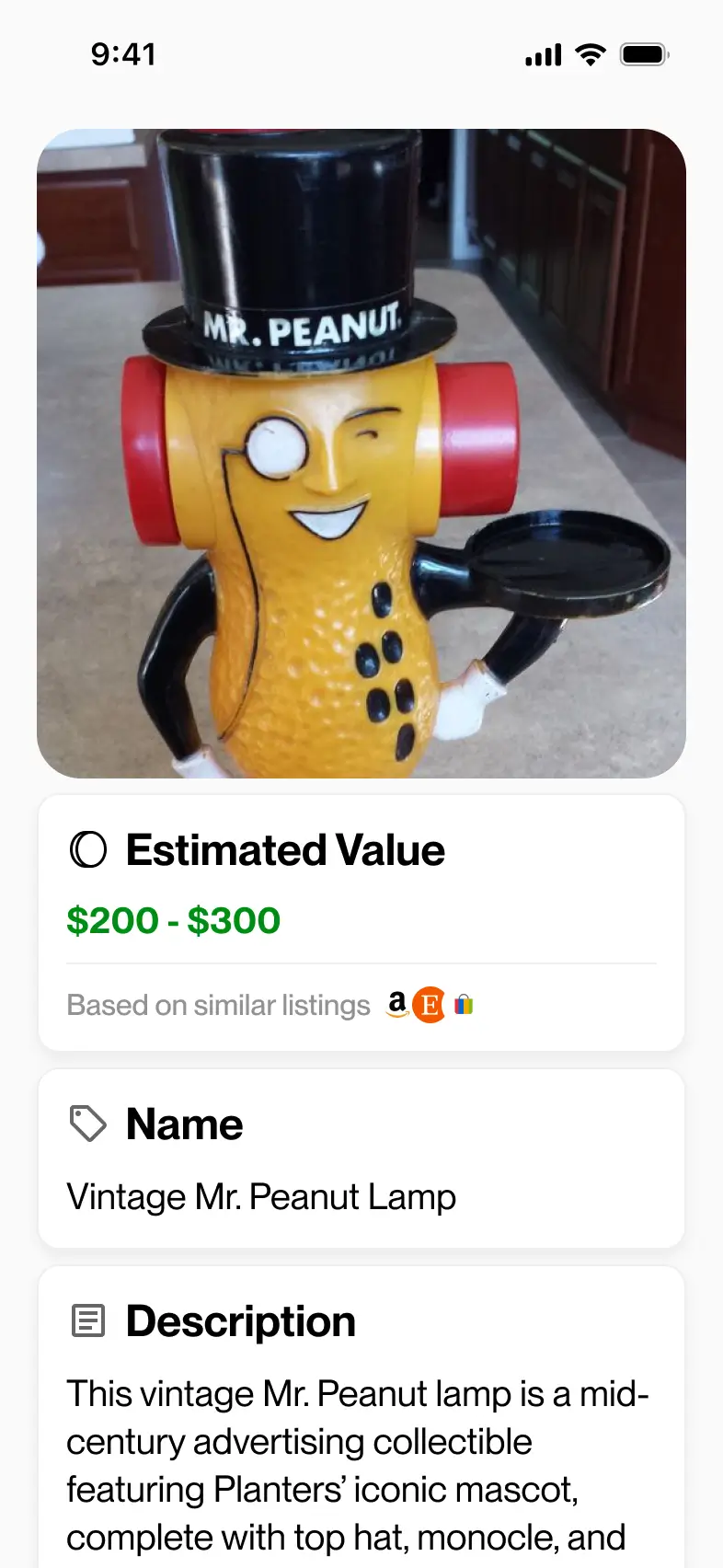
In the past, identifying these items required carrying a library of reference books or spending years as an apprentice. Today, technology has bridged that gap. When you find an object that feels "right" but lacks an obvious label, you can use the Relic app to get an instant answer.
By simply taking or uploading a photo, Relic uses advanced AI to analyze the item's form, material, and markings. It doesn't just give you a guess; it provides a real history and origin of the piece. This allows you to identify a rare piece of 18th-century porcelain or a specific designer's furniture mark in seconds. Instead of wondering if that chair is a genuine Eames or a knockoff, you have a professional-grade identification tool in your pocket.
| Category | Key Visual Cue | Why It Matters |
|---|---|---|
| Furniture | Hand-cut dovetails | Indicates pre-industrial craftsmanship |
| Glassware | Pontil mark (scar on bottom) | Shows the piece was hand-blown, not molded |
| Silver | Hallmarks (small stamps) | Identifies the maker, purity, and year of production |
| Textiles | Natural dyes (uneven fading) | Signals age and authentic material use |
Determining Real Market Value Before You Buy
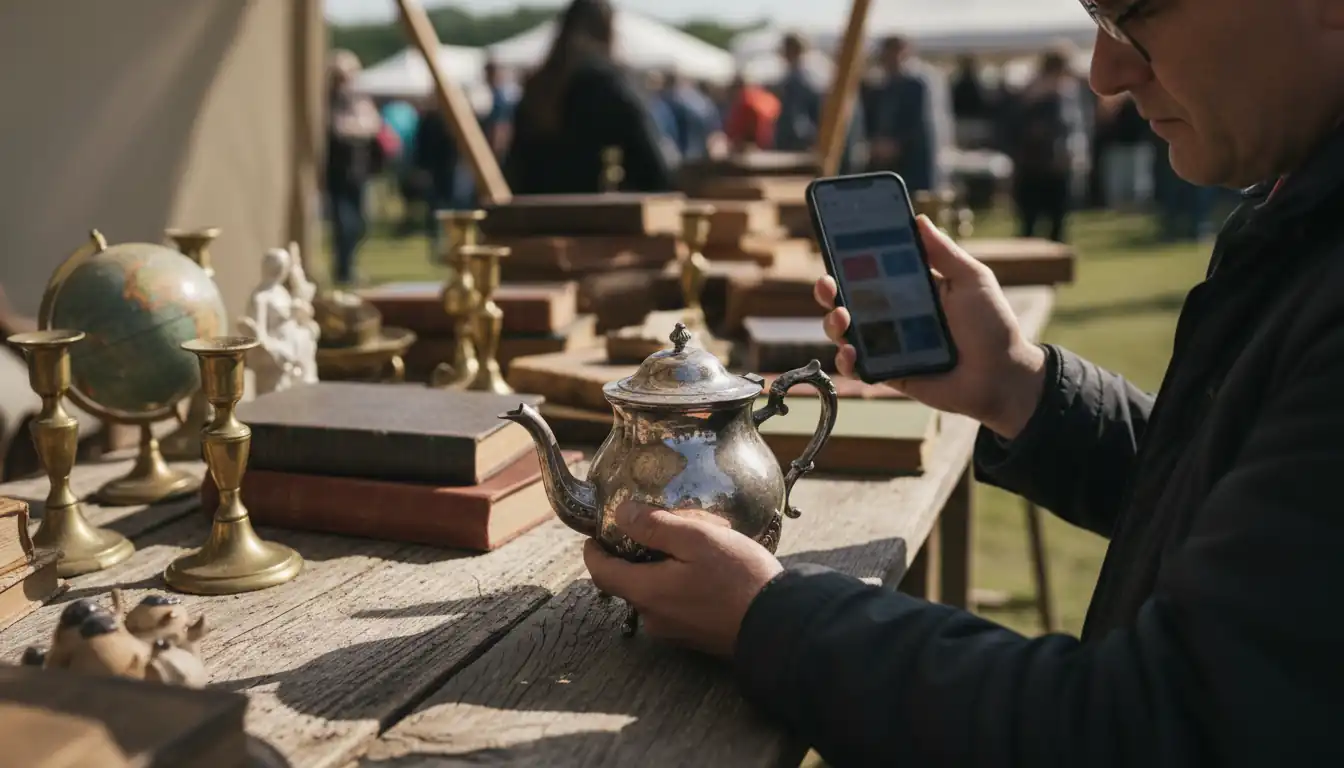
Finding a beautiful item is only the first step. The real skill lies in determining if the price on the tag allows for a profit or a sound investment. You must be able to distinguish between an original and a high-quality reproduction.
Understanding Provenance and Maker Marks
Provenance is the history of ownership. While you won't always find a paper trail at a garage sale, you can find "internal provenance" through maker marks. These are the stamps, signatures, or labels left by the creator.
Take Amsterdam School brass, for example. This early 20th-century style is known for its expressive, almost organic shapes and hammered textures. A genuine piece will often have a specific workshop stamp. If you find a piece of ironwork that looks like Art Nouveau, look for the fluidity of the lines. Authentic Art Nouveau "whiplash" curves are difficult to replicate in modern cast iron, which tends to look stiff and chunky.
Relic’s AI is particularly helpful here because it provides a real appraisal based on current market data. It looks at what similar items have actually sold for recently, not just what people are asking for them online. This prevents you from overpaying for an item that might be beautiful but has no secondary market demand.
Evaluating Condition and Restoration Impact
In the world of antiques, "condition is king." However, the definition of "good condition" varies by material.
- Patina vs. Damage: On copper or bronze, a dark, aged surface (patina) is highly desirable. Scrubbing it off to make the item "shiny" can actually reduce the value by 50% or more.
- Structural Integrity: For furniture, check the joints. A loose joint is an easy fix, but a cracked "stile" (the vertical part of a chair back) is a major red flag.
- Glass and Ceramics: Run your fingernail along the rim. You will feel "flea bites" (tiny chips) that your eyes might miss. In high-end porcelain, even a hairline crack can negate the value.
Before you commit to a purchase, ask yourself: "Is this item 100% original?" If a 19th-century clock has modern Phillips-head screws, someone has been inside it. If the finish on an oak table looks too plastic-like, it has been stripped and refinished, which usually lowers the collector value.
Building a Profitable Collection on a Budget
Antique hunting is more than just buying old things; it is about building a curated portfolio. Whether you are looking for a side hustle or a long-term investment, you need a strategy.
Developing an Eye for Specific Design Eras
The most successful collectors don't try to buy everything. They specialize. By focusing on a specific era—say, the Arts and Crafts movement or Post-War Industrial design—you become an expert in the nuances of that niche. You start to recognize the "hand" of certain designers before you even see the signature.
There is a famous saying in the design world: "Be faithful to your own taste." This is excellent advice for decorating, but for investing, you must balance your taste with market demand. Use data to see what is trending. Currently, there is a massive surge in "brutalist" metalwork and "biomorphic" mid-century furniture. If you can find these items at local sales before they hit the high-end galleries, you are positioned for a significant return.
Flipping for Profit vs. Collecting for Keeps
If your goal is to flip items for a profit, you need to think like a dealer. This means buying at 30% to 50% of the expected resale price to account for cleaning, listing fees, and shipping.
- The Digital Catalog: Use Relic to build a digital catalog of your finds. The app stores the history and origin of the items you scan, creating a ready-made "dossier" for when you decide to sell. Having this professional background information makes your listings stand out on platforms like eBay or 1stDibs.
- The "Hold" Strategy: Some items are "slow burners." You might buy a piece of 1980s Memphis-style glass today for $20, knowing that in five years, as that decade becomes more "antique," the price will triple.
A collection is not a heap of objects; it is a story told through the things we choose to keep.
Caring for Your Finds to Maintain Their Value
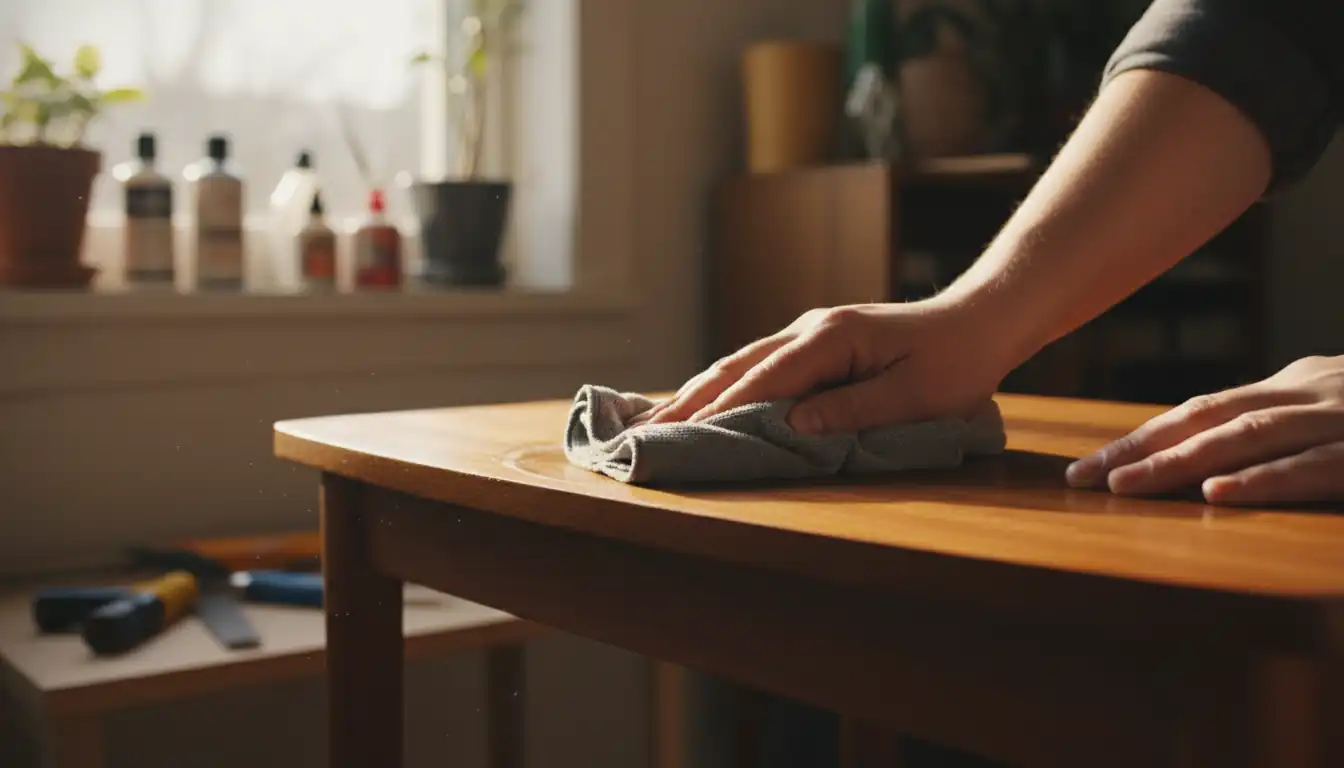
Once you have brought your treasures home, your job shifts to preservation. Improper cleaning is the number one cause of value loss in the antique world. You are the temporary steward of these items, and your goal is to pass them on in better condition than you found them.
Proper Cleaning and Preservation Techniques
Different materials require vastly different approaches. Never use a "one-size-fits-all" cleaner.
- Copper and Brass: If you must clean them, use a gentle paste of lemon juice and salt, or a specialized non-abrasive cream. Avoid power-buffing at all costs.
- Slag Glass: This marbled, opaque glass found in many antique lamps is fragile. Clean it only with a soft, dry microfiber cloth. If it is very dirty, use a slightly damp cloth with a drop of pH-neutral soap.
- Oak and Hardwoods: Avoid "lemon oil" or "orange oil" sprays that contain silicones. These create a sticky buildup that attracts dust. Instead, use a high-quality beeswax paste once a year to keep the wood hydrated and protected.
The Golden Rule of Restoration: If you aren't sure, don't do it. It is always better to sell an item with "honest wear" than to ruin it with a botched restoration attempt. Collectors often prefer a piece that shows its age over one that looks suspiciously new.
Documenting Your Collection for Insurance and Resale
Documentation is your best defense against loss. If your home were ever damaged by fire or theft, an insurance company will not take your word that a vase was a "valuable antique." They need proof.
Keep the digital records provided by Relic. The app’s ability to provide a real appraisal and historical context serves as a professional record of the item's existence and value at the time of discovery. Store these records in the cloud so they are accessible even if your physical files are lost. This documentation also adds value when you sell; a buyer is much more likely to pay a premium for an item that comes with a verified history and origin report.
Conclusion
The world of antiques is one of the few places where you can still find "free money" if you are willing to put in the work. By knowing where to look—from the early morning rush of an estate sale to the final hours of a local auction—you put yourself in the path of opportunity.
Remember that identification is the key to unlocking value. You no longer need to guess or spend hours researching in libraries. Tools like the Relic app allow you to identify and appraise items instantly, giving you the confidence to make a "buy" decision on the spot.
Whether you are building a personal collection that reflects your unique taste or a side hustle that pads your bank account, the secret is to stop walking past the "junk" and start seeing the fortune hidden in plain sight. Your next great find is out there right now—go find it.
Identify antiques instantly
Point your camera at any antique, collectible, or vintage item. Get valuations, history, and market insights in seconds.
Download for iPhone