Stop Walking Past Hidden Treasures: How to Spot High-Value Antiques in Manhattan and Brooklyn

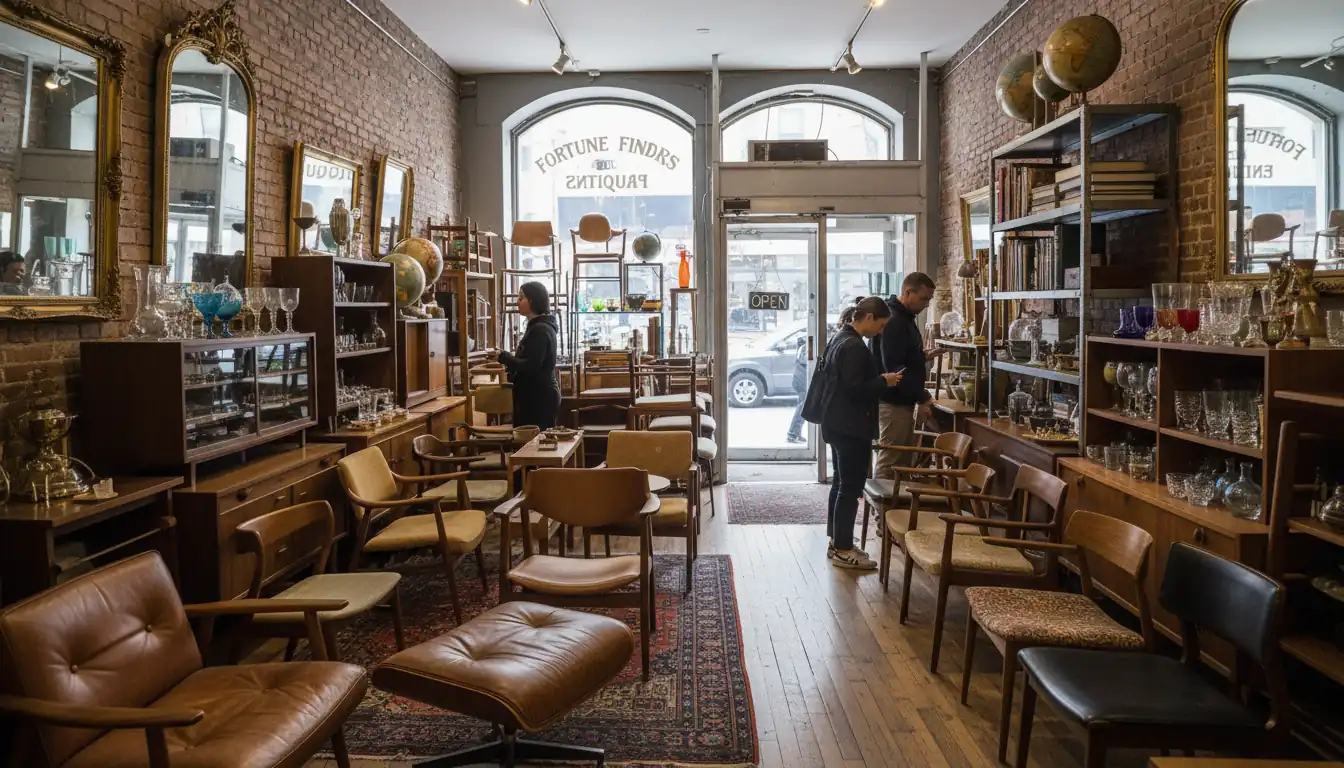
You walk past them every day. They sit in the windows of dusty shops on the Upper East Side or hide beneath stacks of mid-century textiles in a Brooklyn warehouse. To the untrained eye, they are just old objects—relics of a bygone era with no place in a modern apartment. But to the collector, these items represent a tangible connection to history and, more importantly, a significant financial opportunity. New York City is one of the densest concentrations of high-value antiques on the planet, yet most people walk right past a fortune because they don't know what they are looking at.
The difference between a "cool find" and a genuine investment piece often comes down to a few millimeters of wood grain, the specific patina on a brass fixture, or a maker’s mark hidden under a century of grime. Manhattan and Brooklyn offer two entirely different ecosystems for the aspiring collector. One is a world of white-glove service and documented provenance, while the other is a sprawling, industrial treasure hunt where the best deals are found by those willing to get their hands dirty.
In this guide, you will learn how to distinguish between the elite galleries of Manhattan and the rugged markets of Brooklyn. We will break down the technical rules of valuation, including the "100-year rule" that defines a true antique, and show you how to use modern technology to verify authenticity on the spot. By the time you finish reading, you will have the framework needed to stop "shopping" and start "investing" in the hidden treasures of the five boroughs.
Manhattan’s Elite Auction and Gallery Circuit
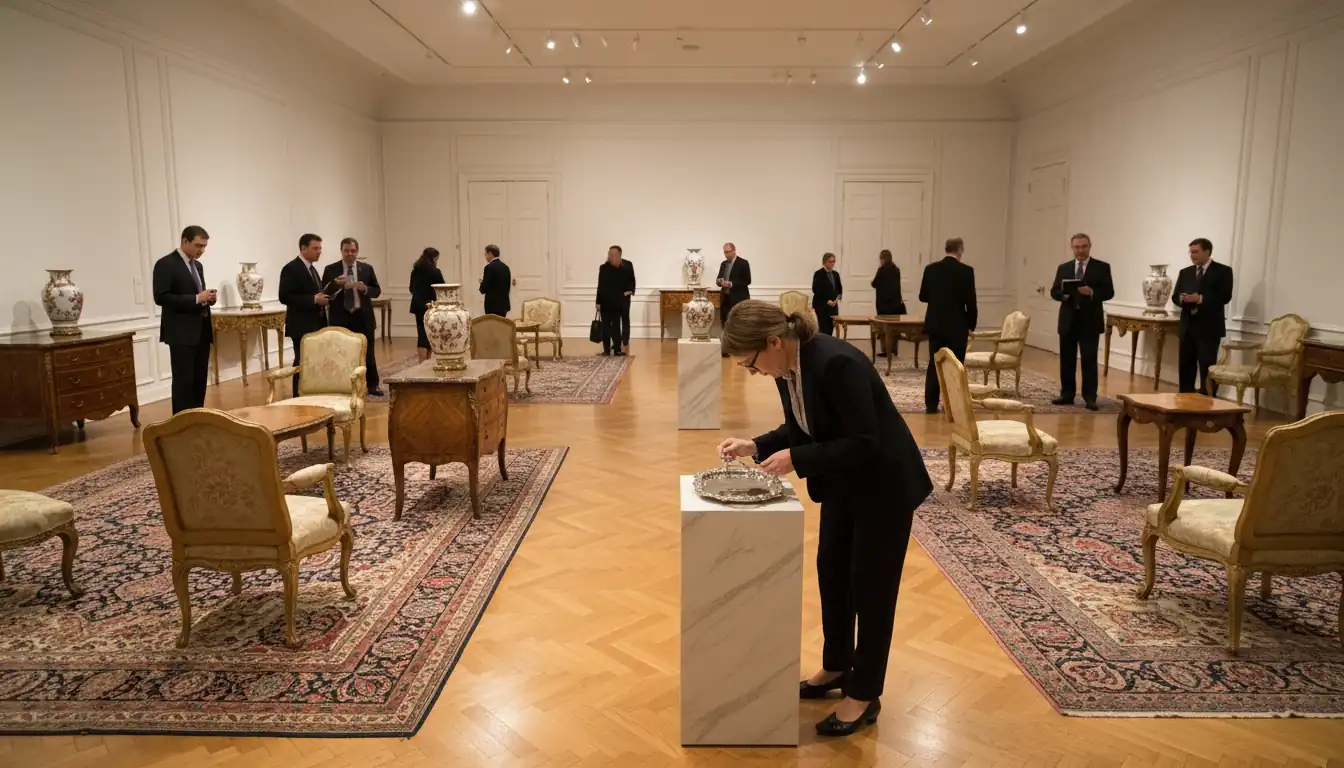
If you are looking for items with a pedigree, Manhattan is your starting point. This is where the world’s most significant pieces of furniture, art, and decor eventually land. In Manhattan, you aren't just buying an object; you are buying a documented history. The market here is driven by scarcity and prestige, making it the primary destination for those who view antiques as a stable asset class.
The Upper East Side Auction Powerhouses
The Upper East Side (UES) is the undisputed center of the high-end antique trade. While many people think of museums when they visit this neighborhood, the real action happens inside the auction houses. Phillips Auction House, located on Park Avenue, is a prime example of where the "elite" circuit operates. Unlike casual shops, Phillips focuses on the intersection of 20th-century design and contemporary art.
When you enter an environment like Phillips, the rules of engagement change. You aren't haggling over a price tag; you are participating in a global market. The items here—ranging from French Art Deco furniture to rare Italian glass—have been vetted by specialists. For the serious collector, these auction houses provide a level of security that you won't find elsewhere. You are paying a premium for the "house" name, but that name acts as a guarantee of authenticity that protects your investment over time.
Chelsea’s Hidden Design Galleries
Moving downtown to Chelsea, the atmosphere shifts from the traditional prestige of the UES to a more curated, design-forward aesthetic. Chelsea is home to galleries like Guild Antiques II, where the focus is on "statement pieces." These are the items that interior designers for the city’s elite use to anchor a room.
In these galleries, the distinction between "shopping" and "investing" becomes clear. A shop sells you what you like; a gallery sells you what has historical significance. At Guild Antiques II, you might find a 19th-century English sideboard or a rare set of neoclassical chairs. The inventory is highly edited. You won't find piles of junk to sort through. Instead, you find pieces that have already been restored and researched. This is the best neighborhood for someone who wants the highest quality without the uncertainty of a flea market, provided they have the capital to compete in this tier of the market.
Pro Tip: When visiting Manhattan galleries, always ask for the "provenance" or the "pedigree" of a piece. A high-value antique should have a paper trail that tracks its ownership history.
Brooklyn’s Industrial Relics and Weekend Markets
If Manhattan is the showroom, Brooklyn is the workshop. The borough offers a more visceral experience for collectors who enjoy the hunt. Here, the "industrial" and "mid-century" aesthetics reign supreme. You are less likely to find a Louis XIV commode and more likely to find a 1950s Eames chair or a factory-scale drafting table from the 1920s.
Navigating the Best Flea Markets in NYC
When people ask where to go antiquing in NYC, the conversation almost always starts with the Brooklyn Flea. It is widely considered the best flea market in NYC for those looking for a mix of high-end vintage and true antiques. Currently operating in DUMBO and other seasonal locations, the Flea is a microcosm of Brooklyn’s creative energy.
Unlike the Manhattan galleries, the Brooklyn Flea requires you to "dig." You might find a vendor selling $5 vinyl records right next to someone with a $2,000 set of Danish Modern nesting tables. The potential for finding undervalued items is significantly higher here because the inventory moves fast, and sellers are often more interested in liquidating stock than holding out for the highest possible gallery price.
| Market Name | Primary Aesthetic | Best For |
|---|---|---|
| Brooklyn Flea (DUMBO) | Industrial & Mid-Century | Furniture and Textiles |
| Williamsburg Vintage Circuit | 1960s-1990s Retro | Fashion and Small Decor |
| Bushwick Warehouses | Raw Industrial | Large-scale architectural salvage |
Mid-Century Modern Gems in Williamsburg and Bushwick
Williamsburg and Bushwick have become the epicenter for Mid-Century Modern (MCM) enthusiasts. This style, characterized by clean lines, organic curves, and a lack of ornamentation, fits perfectly into the minimalist aesthetic of modern Brooklyn apartments.
In these neighborhoods, you’ll find shops that specialize in "industrial relics"—items salvaged from the old factories that once lined the East River. Think heavy steel desks, oversized clock faces, and laboratory glass. The challenge in Brooklyn is distinguishing between a mass-produced reproduction and a genuine piece of 20th-century design. Because the "industrial look" is so popular, many modern retailers create faux-vintage items. To find a real treasure, you have to look for signs of authentic wear: flat-head screws instead of Phillips-head, solid wood construction instead of veneer, and the weight of real cast iron.
The Science of Identifying Real Value

Identifying a high-value antique is not a matter of "gut feeling." It is a technical process that involves understanding history, materials, and legal definitions. If you want to move from an amateur hobbyist to a serious collector, you need to understand the mechanics of valuation.
Decoding the 100 Year Rule for Antiques
One of the most common questions in the trade is: What is the 100 year rule for antiques? This isn't just a tradition; it has roots in legal and customs definitions. According to the U.S. Customs and Border Protection (and many international trade bodies), an item must be at least 100 years old to be officially classified as an "antique."
Why does this matter?
- Taxation: True antiques (100+ years old) are often exempt from certain import duties.
- Valuation: There is a significant price jump when an item crosses the century mark. An item from 1930 is "vintage," while an item from 1920 is an "antique."
- Rarity: The survival rate of objects drops significantly after 100 years.
When you are in a shop, use the 100-year rule as your baseline. If a dealer claims a chair is a "19th-century original," it must have been made before 1900. If you see signs of modern manufacturing—like staples, plastic components, or uniform machine-cut wood—it likely fails the 100-year test.
Using Relic to Verify Authenticity Instantly
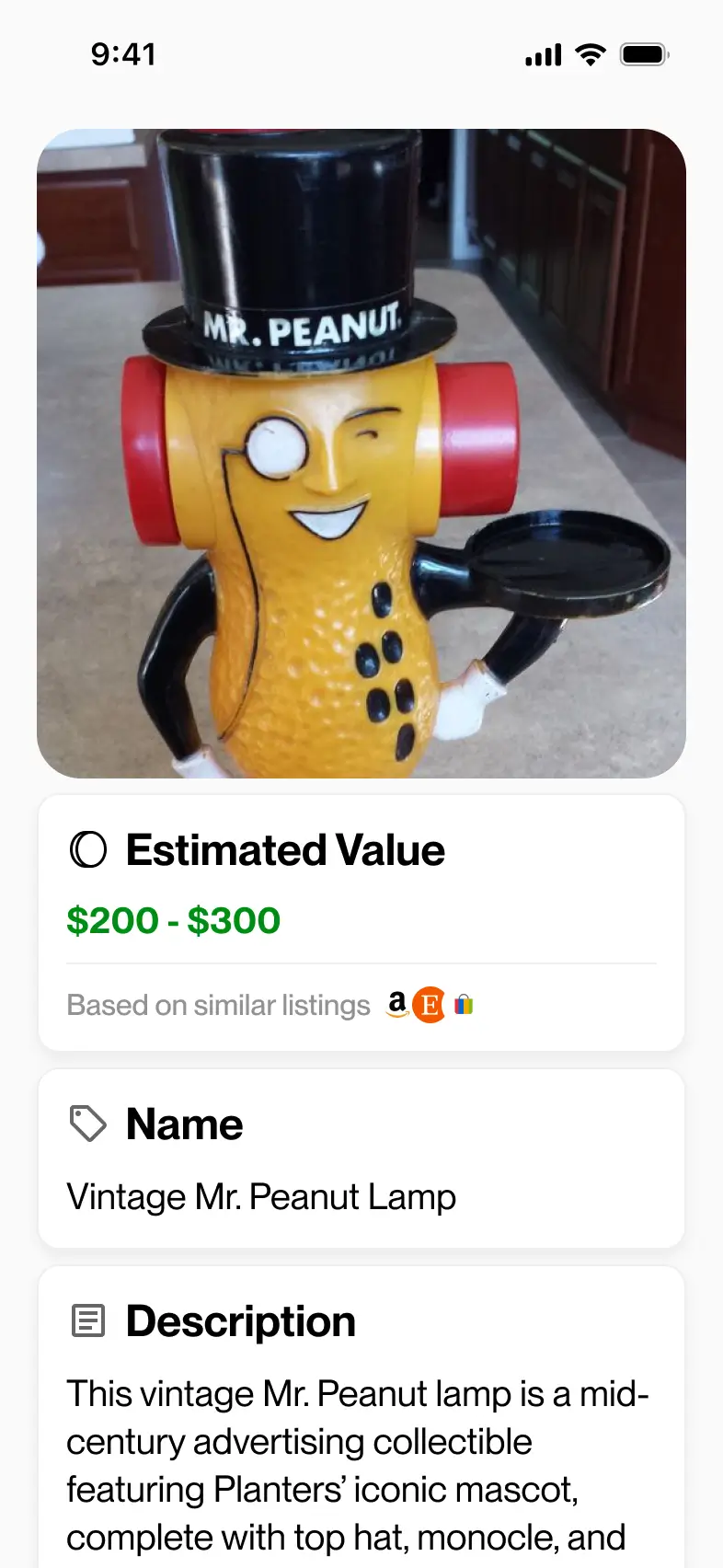
Even with a deep knowledge of the 100-year rule, the sheer volume of items in a place like the Brooklyn Flea can be overwhelming. How do you know if that tarnished silver tray is a mass-produced souvenir or a rare piece of Paul Revere-era craftsmanship? This is where the Relic app becomes an essential part of your kit.
Relic uses advanced AI to analyze photos of an item and provide a real appraisal, history, and origin in seconds. Instead of spending hours researching a maker's mark on your phone while standing in a crowded aisle, you can simply take a photo. Relic identifies the item, cross-references it with historical databases, and gives you a market valuation. It’s like having a Manhattan auction house specialist in your pocket. For collectors, this instant verification is the difference between walking away from a masterpiece and overpaying for a clever fake.
- Instant Identification: Take a photo, and the AI identifies the era and style.
- Historical Context: Learn the story behind the piece, including the manufacturer and origin.
- Market Insights: Get a real-time appraisal based on current auction and retail data.
Niche Collections from Numismatics to Lighting
New York City is a collection of "micro-markets." While furniture and art get the most attention, some of the highest profit margins are found in niche categories that require specialized knowledge.
Rare Coins and Numismatic History in Midtown
For those interested in "portable wealth," the numismatic (coin) market in Midtown Manhattan is world-class. This is a highly technical field where a single microscopic mark can change a coin's value from $20 to $20,000.
If you are serious about coins, Vieira Coins & Collectibles and Big Apple Coins are the standard-bearers. These shops deal in everything from ancient Roman currency to rare U.S. gold coins. Unlike furniture, the value of coins is determined by a strict grading scale (the Sheldon Scale). In this niche, the "history" is literally minted into the object. Midtown is also home to The Red Caboose, a legendary spot for niche hobbyists that reminds us that "value" is often found in the things people loved as children—rare model trains and vintage toys.
The Bright Side of NYC Vintage Lighting and Seating
If you talk to any high-end interior designer in NYC, they will tell you that lighting and seating are the two most important categories for any project. A rare 1920s Bauhaus lamp or a set of original Pierre Jeanneret chairs can define an entire apartment.
Why Lighting? Antique lighting is often undervalued because it frequently requires rewiring. However, the "bones" of the fixture—the hand-blown glass, the heavy brass, the unique silhouettes—cannot be replicated by modern mass-market brands.
Why Seating? Seating is the most "architectural" form of furniture. In NYC, where space is at a premium, a single iconic chair acts as a piece of sculpture. Look for "signed" pieces. Designers like Hans Wegner or Gio Ponti often marked their work under the frame. If you find a chair with a faded paper label or a branded stamp in the wood, you likely have a high-value asset on your hands.
"In the world of specialized collectibles, the smaller the item, the deeper the research required."
The Logistics of an NYC Antique Hunt
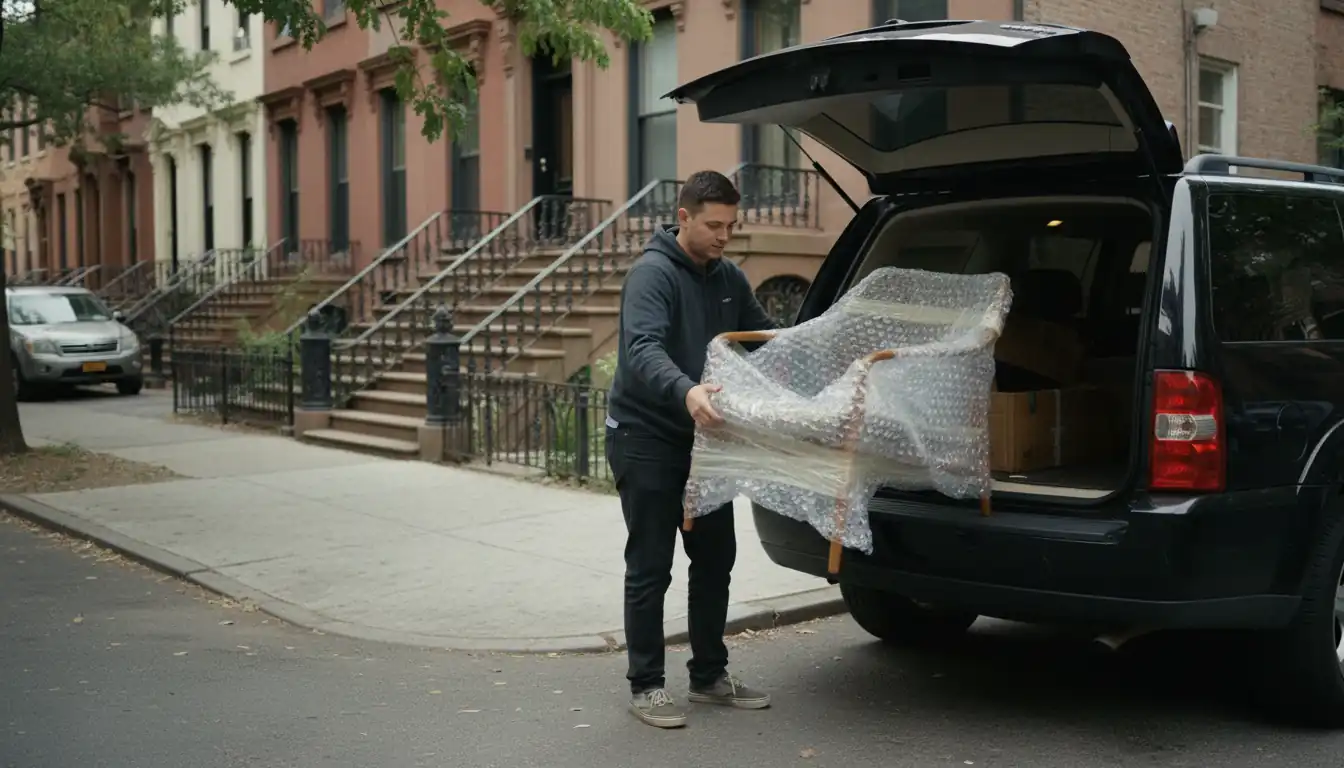
Finding a treasure is only half the battle. In New York City, the logistics of getting a 19th-century armoire from a shop in Bushwick to a fourth-floor walk-up in Chelsea can be a nightmare. If you don't have a plan for the "after-purchase" phase, your great find can quickly become a liability.
Transporting Large Finds Through the Five Boroughs
Do not rely on standard moving companies for high-value antiques. They are built for speed, not the delicate handling required for aged wood and fragile glass. Instead, look for specialized antique movers or local courier services.
If you find something smaller but still too big for the subway, services like Stooping NYC have popularized the idea of "community transport," but for a high-value investment, you want a professional. Many Brooklyn dealers have "man with a van" contacts who specialize in moving vintage furniture through narrow hallways and up steep staircases. Always measure your doorways and elevator dimensions before you buy. A "bargain" isn't a bargain if it has to be left on the sidewalk because it won't fit through your front door.
Negotiating Prices Using Real-Time Appraisal Data
Negotiation is an art form in the antique world, but it should be based on data, not just haggling for the sake of a lower price. This is where your research pays off. If you are standing in a shop and the dealer is asking $1,200 for a lamp, you need to know if that price is fair.
Using the appraisal data from the Relic app, you can approach the dealer with confidence. If the app shows that similar items have recently sold at auction for $800, you have a concrete starting point for your negotiation.
- Be Respectful: Dealers are more likely to give a discount to someone who appreciates the history of the item.
- Point Out Flaws: Use the AI analysis to identify if parts are non-original (like a replaced lampshade or modern screws), which justifies a lower price.
- Cash is King: In the world of NYC flea markets and independent shops, offering to pay in cash can often trigger an immediate 10-15% discount.
Conclusion
The streets of Manhattan and Brooklyn are a living museum, but unlike a traditional museum, the exhibits are for sale. Whether you are navigating the high-stakes auction houses of the Upper East Side or digging through the industrial relics of a Bushwick warehouse, the key to success is a combination of historical knowledge and modern tools.
Remember that a true antique is defined by the 100-year rule, but its value is determined by its story, its condition, and its rarity. By using the Relic app to verify these details in real-time, you remove the guesswork from the hunt. You no longer have to wonder if you’ve found a masterpiece or a clever imitation—you can know for sure before you ever open your wallet.
Your next great find is out there, hidden in plain sight. Stop walking past the treasures of the past and start building a collection that carries both history and value into the future. Download Relic today and turn your next walk through the city into a high-stakes treasure hunt.
Identify antiques instantly
Point your camera at any antique, collectible, or vintage item. Get valuations, history, and market insights in seconds.
Download for iPhone