Stop Walking Past These 10 High-Value Antiques That Flip for Massive Profits

You walk into a local thrift store, and the air smells of old paper and cedar. Your eyes scan the shelves, passing over chipped mugs, mass-produced glass vases, and stacks of discarded fast-fashion sweaters. To the untrained eye, it looks like a graveyard of unwanted belongings. To a professional flipper, this room is a treasure map where the gold is hidden in plain sight, disguised as "junk."
The difference between the person who leaves empty-handed and the person who walks out with a $500 profit in their shopping basket isn't luck. It is the ability to recognize value where others see clutter. The market for antiques has shifted dramatically in the last five years, and if you are still looking for the same items your grandparents collected, you are likely leaving thousands of dollars on the table every single month.
In this guide, you will learn how to identify the new wave of high-value collectibles, the technology that allows you to appraise items on the fly, and the specific categories that offer the highest return on investment. Whether you are looking to start a side hustle or scale a full-time resale business, mastering these ten categories will change the way you look at every garage sale and estate auction you encounter.
The New Era of High Demand Antiques
The definition of an "antique" is traditionally an item over 100 years old, but in the world of high-profit flipping, that definition is far too narrow. We are currently witnessing a massive shift in what collectors are willing to pay top dollar for. While heavy, dark Victorian furniture was once the gold standard, it has largely fallen out of favor with modern buyers who live in smaller spaces and prefer a cleaner aesthetic.
The real money is now moving into "modern antiques"—items from the 1970s through the early 2000s. This shift is driven by Millennial and Gen Z buyers who are looking to reclaim pieces of their childhood or experience a tactile, analog world they never fully knew.
Modern Nostalgia and the Y2K Boom
If you want to know what antiques are currently in high demand, look no further than the year 2000. The "Y2K" aesthetic has moved beyond fashion and into home decor and electronics. Items that were considered e-waste just five years ago are now becoming centerpiece collectibles.
Think about the early digital era. First-generation iPods, colorful iMac G3s, and even early digital "point and shoot" cameras from brands like Canon and Sony are seeing a massive resurgence. Why? Because younger generations are tired of the clinical perfection of modern smartphone photos. They want the "crunchy," nostalgic look of early 2000s sensors. A camera you find for $5 in a bin could easily sell for $150 to a college student looking for that specific aesthetic.
The Resurgence of Analog Technology
Beyond the digital boom, there is a powerful movement back toward analog experiences. This is why certain antiques are making a huge comeback, specifically those that offer a physical connection to media. Vinyl records have been back for a while, but the market is now expanding into high-end turntables and vintage audio receivers.
- Film Cameras: Mechanical SLRs from the 70s and 80s (like the Canon AE-1 or Pentax K1000) are staples, but the real profit is in high-end "point and shoots" like the Contax T2 or Nikon 35Ti.
- Typewriters: While common models are hard to ship, portable "designer" typewriters in bright colors (like the Olivetti Valentine) are highly sought after by interior designers.
- Handheld Gaming: Original Nintendo Game Boys and early color handhelds are no longer toys; they are blue-chip assets in the collectibles market.
The key to profiting from this era is condition and "vibe." A piece of tech doesn't just need to work; it needs to represent the era perfectly. When you find these items, you aren't just selling a tool; you are selling a time capsule.
Mastering the Art of Instant Identification
The biggest hurdle for any flipper is the "knowledge gap." You see a strange ceramic vase with a weird mark on the bottom. Is it a mass-produced piece from a 1990s hobby lobby, or is it a mid-century masterpiece by a noted Japanese potter? In the past, you would have to buy it, take it home, and spend hours scrolling through forums or library books. By then, the risk is already taken.
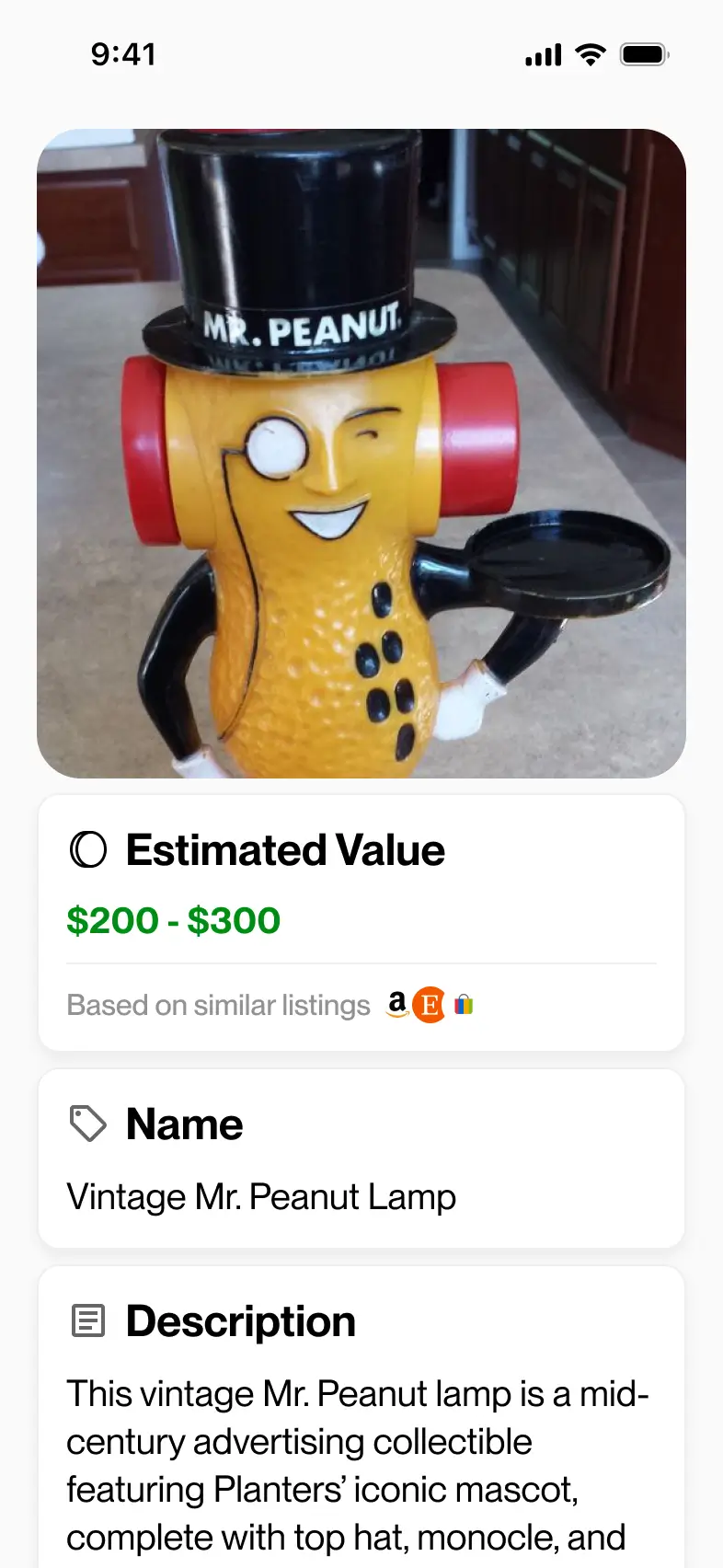
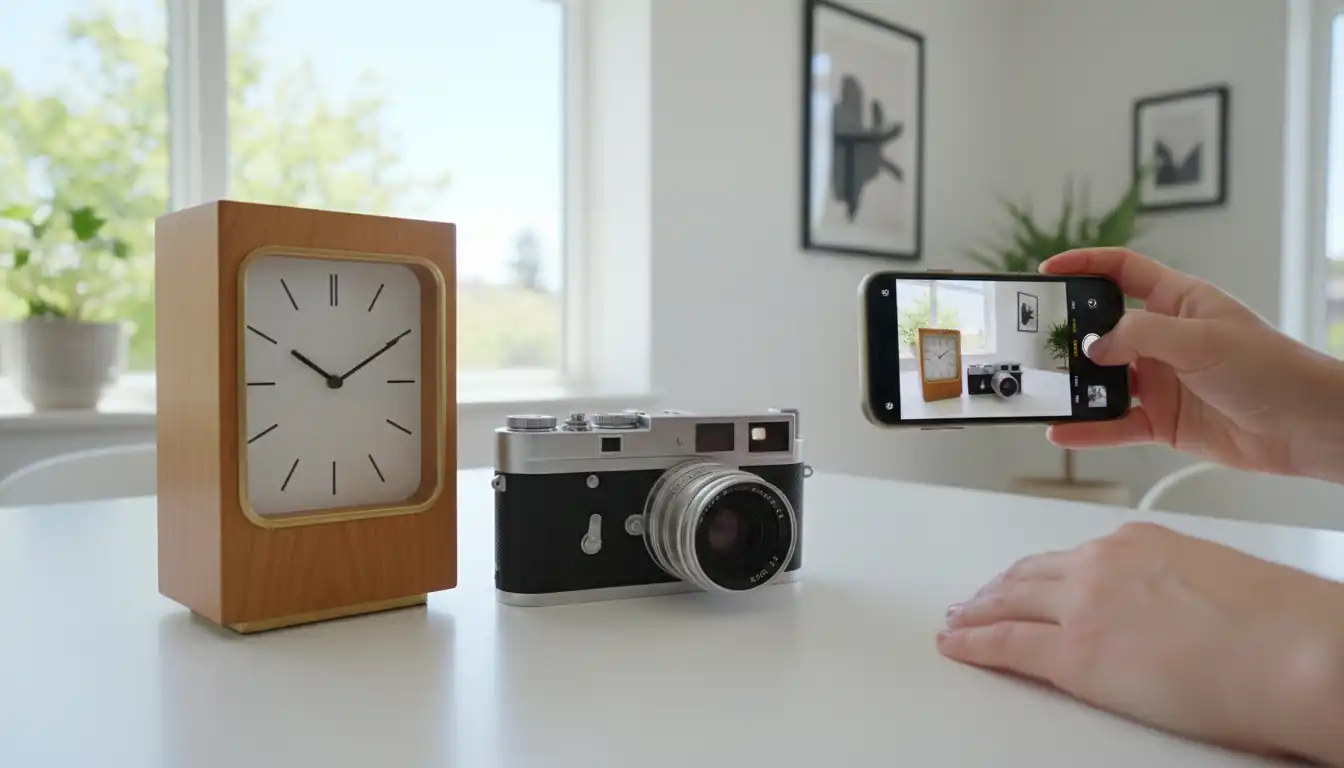
To succeed in the current market, you need to be able to identify and appraise items in seconds, right there in the aisle. This is where professional-grade technology changes the equation. Using an app like Relic allows you to bridge that knowledge gap instantly. You simply take a photo of the item—or that obscure maker's mark on the bottom—and the AI analyzes the history, origin, and current market value.
Leveraging AI for Real-Time Appraisals
Imagine standing in a crowded thrift store on a Saturday morning. You spot a heavy glass bowl with an iridescent finish. You aren't sure if it's Loetz (very expensive) or just a modern reproduction. Instead of guessing, you use Relic to scan the piece. Within seconds, the app identifies the pontil mark and the specific glass-blowing technique, giving you a real-world appraisal based on recent auction data.
This speed is your competitive advantage. While other shoppers are Googling vague descriptions like "green glass bowl with ripples," you already know the exact manufacturer and the potential profit margin. This allows you to move through a store faster and claim high-value items before anyone else realizes what they are looking at.
Decoding Makers Marks and Origin Stories
The most valuable information is often hidden. A silver tray might look like tarnished junk, but the tiny hallmarks stamped into the back tell a story of 18th-century craftsmanship. A watch might have a plain face, but the serial number inside the casing could reveal a rare movement.
- Ceramic Hallmarks: Look for impressed marks, hand-painted signatures, or "beehive" stamps.
- Furniture Tags: Check the underside of drawers or the back of legs for paper labels or branded heat stamps.
- Textile Labels: In vintage clothing, the font and material of the "Made in" tag can date a garment within a three-year window.
Using technology to decode these marks removes the guesswork. When you can prove the origin of an item, you aren't just a reseller; you become a verified dealer. This verification is what allows you to charge premium prices.
Most Profitable Categories for Online Resale
If you are asking, "What is the most profitable item to flip?" the answer usually lies in items with a high "value-to-weight" ratio. You want things that are easy to ship but carry a high price tag due to brand recognition or scarcity. While furniture can be incredibly profitable, the logistics of shipping a sofa can eat your margins. For the highest ROI, focus on these specific niches.
Mid Century Modern Decor and Lighting
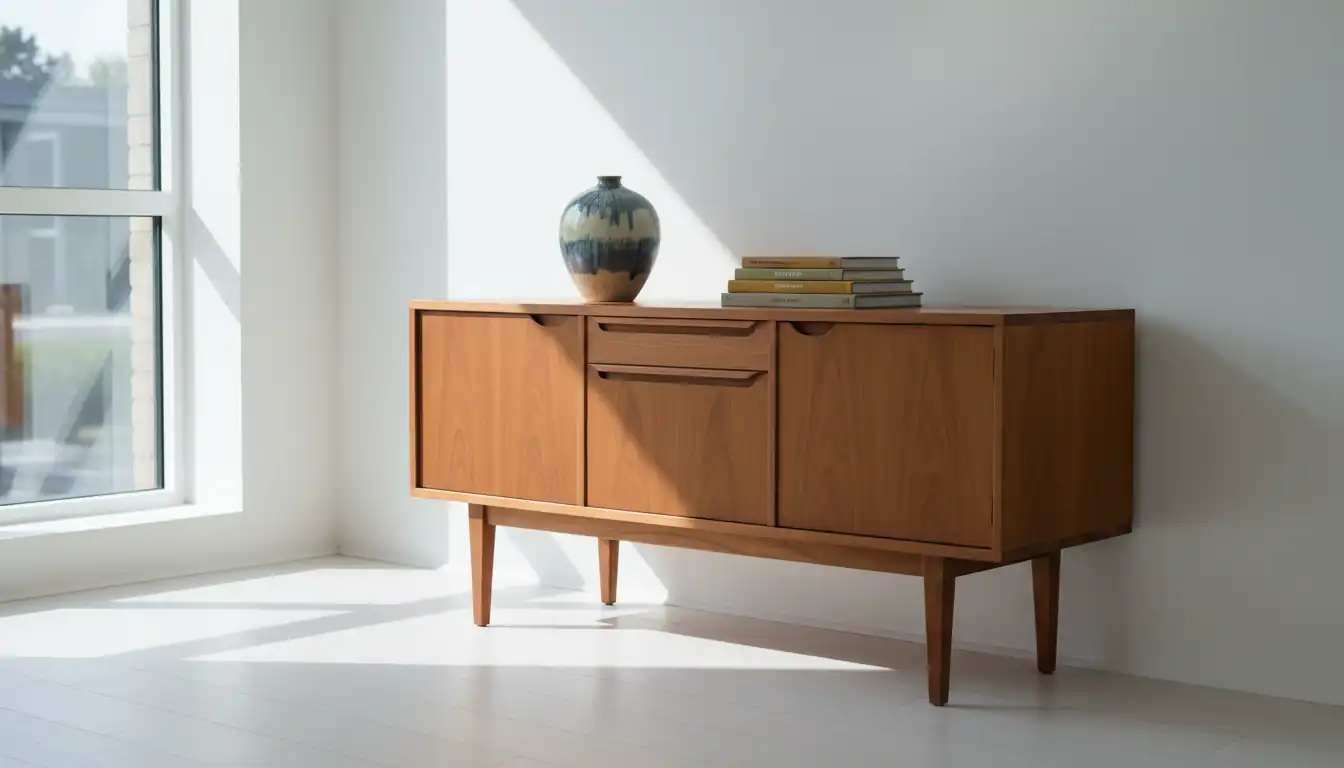
Mid-Century Modern (MCM) remains the king of the resale market. The clean lines and functional beauty of the 1950s and 60s fit perfectly into contemporary homes. However, you shouldn't just look for "cool looking" chairs. You need to look for specific designers and manufacturers.
| Brand/Designer | What to Look For | Value Indicator |
|---|---|---|
| Herman Miller | Eames chairs, Nelson clocks | Look for the red or black circular logo. |
| Artemide | Tizio or Tolomeo lamps | Check for the "Made in Italy" stamp on the base. |
| Dansk | Teak ice buckets and trays | Look for the "JHQ" (Jens Quistgaard) initials. |
| Bitossi | "Rimini Blue" ceramics | Look for a rough, textured finish and "Italy" on the base. |
Lighting is particularly lucrative. A "spaghetti" lamp or a Poul Henningsen-style pendant can often be found at estate sales for $20 because they look "dated" to the average person. Online, these can fetch $400 to $1,200 depending on the authenticity.
Professional Grade Vintage Tools and Equipment
This is a "sleeper" category that many flippers ignore. High-quality vintage tools were built to last multiple lifetimes, and modern craftsmen often prefer them over new, plastic-heavy versions.
- Starrett: Any precision measuring tool (micrometers, calipers) with the Starrett name is worth money. These are the gold standard in machining.
- Snap-on: Vintage hand tools from Snap-on carry a lifetime warranty and a massive collector following.
- Vintage Sewing Machines: Look for heavy, all-metal machines like the Singer Featherweight 221. These are small, easy to ship, and can sell for $400+.
- Music Boxes: High-end Swiss music boxes (like Reuge) are mechanical marvels. A small pocket-sized Reuge can sell for hundreds, while larger "interchangeable cylinder" models can reach into the thousands.
Pro Tip: When checking tools, look for "patina" vs. "rust." A tool with a dark, smooth finish is desirable; a tool with pitted, orange rust may require too much restoration work to be profitable.
Strategic Sourcing Beyond the Thrift Store
To find the items that flip for massive profits, you have to go where the competition isn't. While thrift stores are great, they are often "picked over" by professional sorters before the items even hit the floor. To find the real "sleepers," you need to change your geography and your timing.
Navigating Estate Sales and Online Auctions
Estate sales are the purest form of sourcing. You are walking into a person's life and seeing the items exactly where they lived. However, the first day of an estate sale is usually a frenzy of professional dealers.
The "Last Day" Strategy: Most estate sale companies offer 50% off everything on the final day. This is when you look for the items that were "overpriced" on day one. A $200 painting that didn't sell on Friday becomes a $100 steal on Sunday. If your research (using an app like Relic) shows the painting is actually worth $600, your margin just doubled.
Digital Sourcing: This is the art of buying poorly photographed items on local marketplaces (Facebook Marketplace, Craigslist, OfferUp) and selling them on national platforms (eBay, 1stDibs, Chairish). Look for listings with titles like "Old wooden chair" or "Box of cameras." These sellers don't know what they have. They just want the items gone. By applying your knowledge and better photography, you can "arbitrage" the item from a local market to a global one.
Finding Hidden Value in Original Paintings and Art
Art is one of the most difficult categories to master, but it offers the highest potential for "home run" flips. Many people see a framed picture and assume it's a print.
- The "Flashlight Test": Shine a light at an angle across the surface of the art. If you see texture, brushstrokes, or "peaks" of paint, it's likely an original oil or acrylic painting.
- Check the Frame: Often, the frame itself is an antique. A hand-carved, gold-leaf frame from the early 1900s can be worth $200 even if the art inside is worthless.
- Look for Signatures: Even an illegible signature can be identified. This is where AI tools are invaluable. A quick scan of a signature can link it to a listed artist in a database, instantly turning a $10 "garage sale find" into a $1,000 gallery piece.
Maximizing Margins with Professional Listings
Finding the item is only half the battle. To answer the question, "Is it profitable to sell antiques online?" you have to look at your presentation. You are not just selling an object; you are selling a piece of history. The more information you provide, the more confident a buyer feels, and the more they are willing to pay.
Using History to Build Value in Descriptions
When you list an item, don't just say "Vintage Blue Vase." That is a commodity description. Instead, use the data you gathered during identification to tell a story.
"This mid-century Bitossi ceramic vase, designed by Aldo Londi in the 1960s, features the iconic 'Rimini Blue' glaze. Hand-stamped with geometric patterns, it represents the height of Italian modernist export. A perfect example of the brutalist influence on 20th-century decor."
By including the designer's name, the specific glaze, and the historical context, you justify a $250 price tag instead of a $25 one. Buyers on platforms like eBay or Etsy are looking for expertise. When you provide a detailed history—which you can easily adapt from the appraisal data provided by the Relic app—you position yourself as a high-end dealer rather than a casual seller.
Photography Secrets for High Ticket Antiques
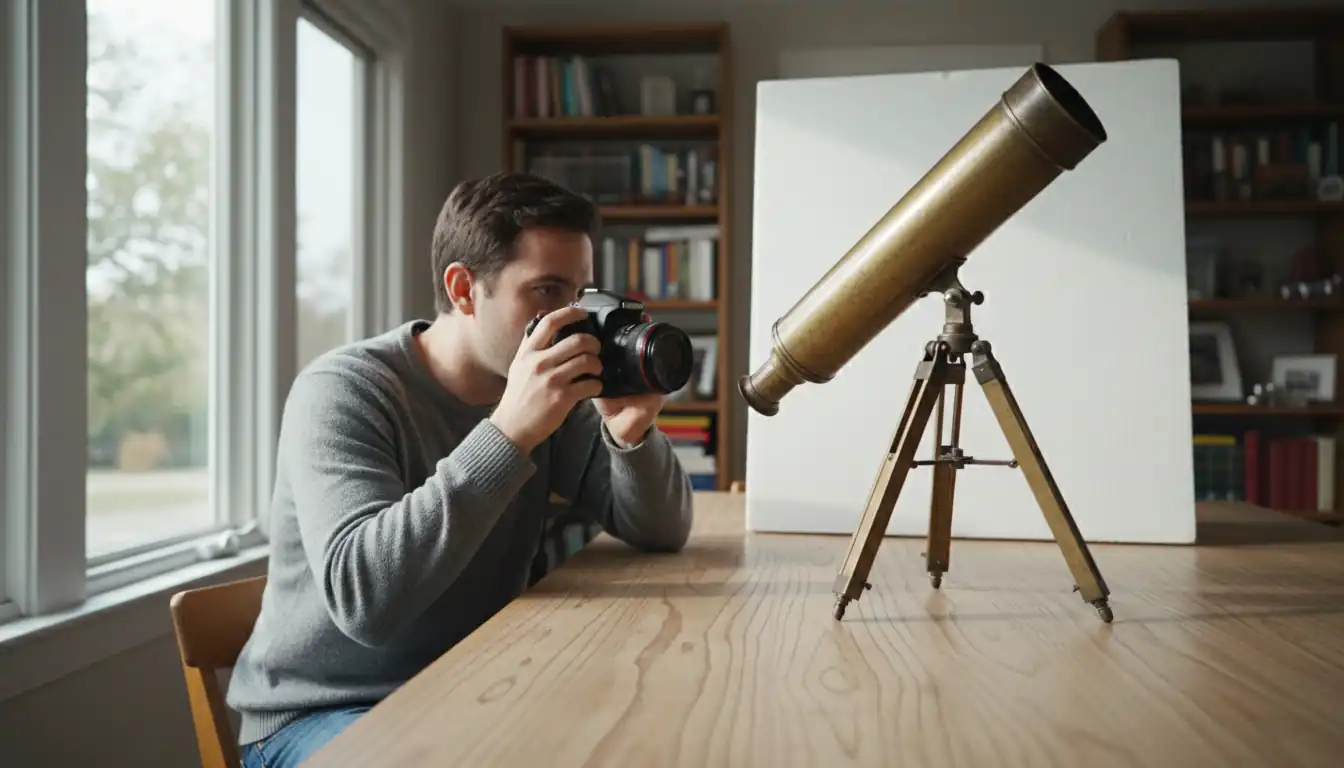
Your photos are your storefront. If they look amateur, your prices will have to stay low. You don't need a professional studio, but you do need to follow a few rules:
- Macro Photography: For antiques, the "money" is in the details. Take close-up shots of makers' marks, signatures, and even the "wear and tear" that proves age. A clear shot of a dovetail joint in a drawer proves it was handmade.
- Natural Light: Never use a camera flash. It flattens the object and creates harsh reflections. Shoot near a large window on a cloudy day for soft, even lighting.
- The "Hero" Shot: Your first photo should be on a clean, neutral background (a white sheet or a grey wall). This makes the item pop in search results.
- Show the Flaws: Honesty builds trust. If there is a small chip or a scratch, photograph it clearly. It's better to lose a sale now than to deal with a return and a negative review later.
Conclusion
The world of antique flipping is no longer reserved for people with decades of academic study. The "new antiques"—from Y2K tech to Mid-Century lighting—have opened the doors for a new generation of resellers. By focusing on high-demand categories and using technology to bridge the knowledge gap, you can turn a Saturday morning hobby into a serious source of income.
Remember that the most profitable item to flip is the one you can identify faster than the person standing next to you. Whether it's a piece of professional-grade vintage equipment or a hidden original painting, the value is there if you know how to look for it.
Your next step is simple: stop walking past the "junk." The next time you see an obscure mark or a strange piece of tech, don't guess. Use a tool like the Relic app to get an instant appraisal and history. You might find that the dusty item you were about to ignore is actually the $500 flip that pays for your entire month. Happy hunting.
Identify antiques instantly
Point your camera at any antique, collectible, or vintage item. Get valuations, history, and market insights in seconds.
Download for iPhone