Stop Walking Past Thousands: The Modern Way to Appraise Vintage Toys in Seconds

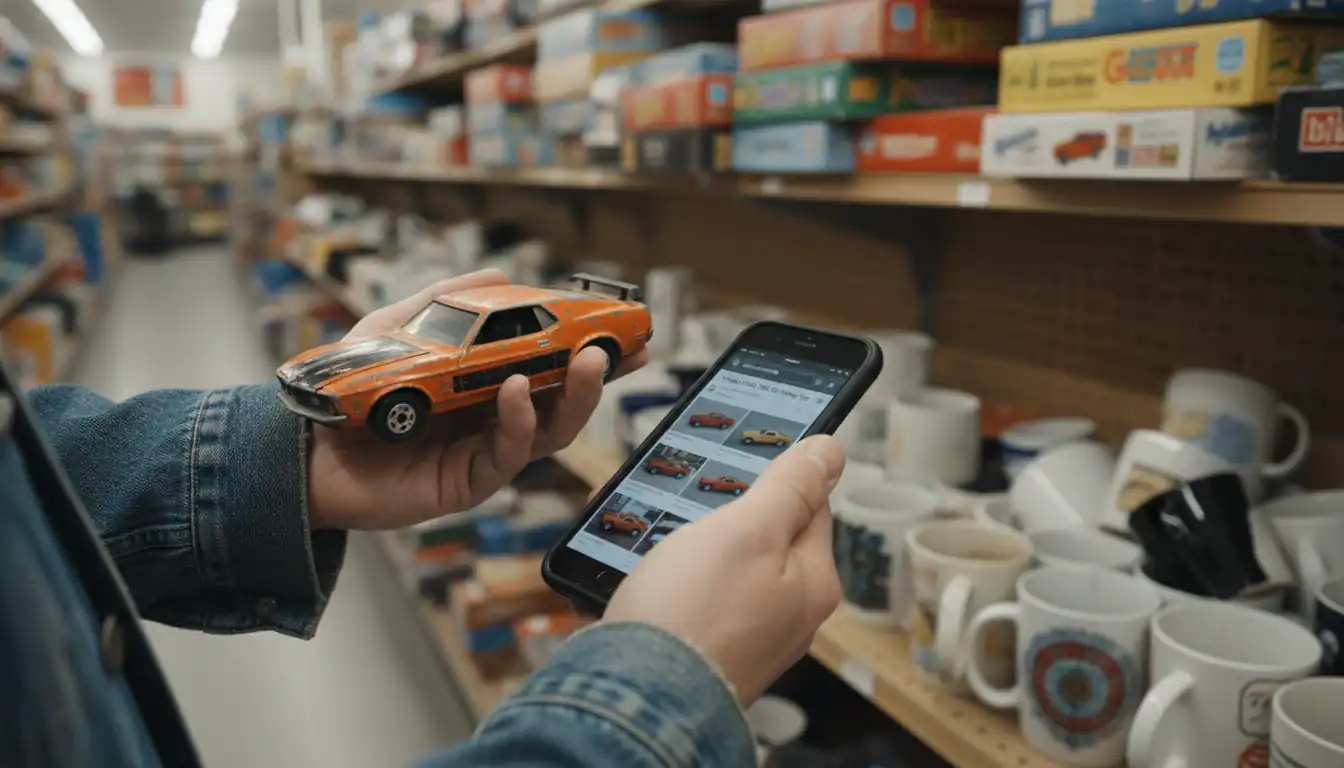
Imagine standing in the middle of a crowded thrift store, surrounded by the smell of old dust and the sound of plastic bins scraping against the floor. You see a tangled mess of colorful limbs, rusted metal, and faded boxes. To most people, this is a pile of junk destined for a landfill. To a trained eye, it’s a potential gold mine.
The difference between walking away empty-handed and walking away with a $500 profit often comes down to a few seconds of observation. You don't need to be a lifelong historian to spot these treasures. You just need to know which physical cues to look for and how to use modern tools to bridge the gap between "interesting old toy" and "authenticated collectible."
By the time you finish reading this, you will understand how to decode the hidden language of vintage manufacturing. You’ll know how to spot a high-value collection before you even touch a single item. Most importantly, you’ll have a strategy to identify and appraise any object in the palm of your hand, ensuring you never leave a small fortune sitting on a thrift store shelf again.
Physical Indicators of High Value Vintage Toys
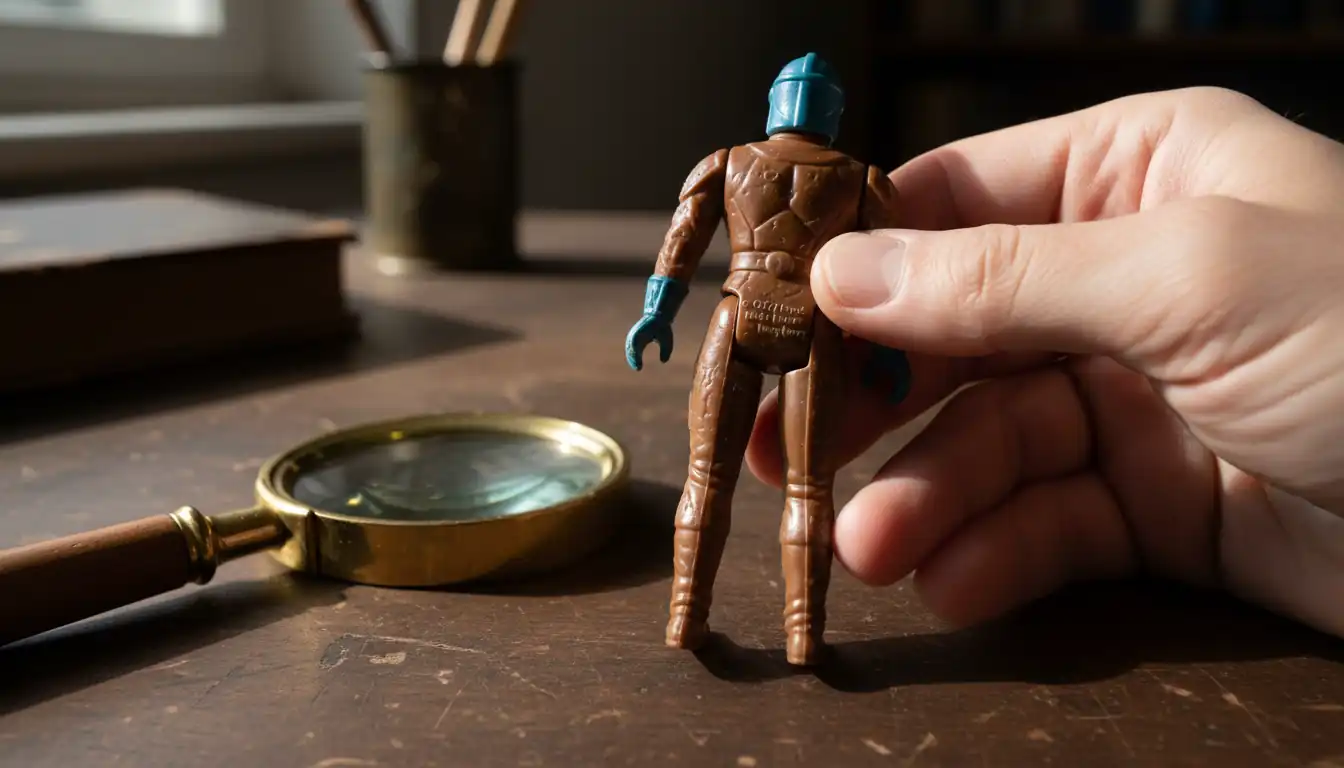
Before you reach for your phone or start checking prices online, you need to develop a "tactile intuition." High-value toys from the mid-20th century have a specific weight, texture, and marking system that distinguishes them from modern reproductions. When you pick up a toy, your first goal is to determine its era of origin.
Decoding Manufacturer Marks and Patent Dates
The most reliable evidence of a toy's age is often stamped directly into its "skin." Manufacturers of the 1940s, 50s, and 60s were required to mark their products with their country of origin and, frequently, patent information. These marks are usually found on the bottom of a foot, the small of the back, or near the battery compartment.
Country of Origin Stamps:
- Made in Japan: This is a major green flag for tin toys and robots. Post-WWII Japan became the world leader in high-quality tin lithography. If you see "Made in Occupied Japan," you have found an item produced between 1945 and 1952, which carries significant historical value.
- West Germany: Toys marked "West Germany" or "US-Zone Germany" date back to the Cold War era. German engineering in toys like Schuco cars or Lehmann wind-ups is legendary for its complexity and durability.
- Great Britain: Often found on high-end die-cast vehicles. Look for "Lesney" or "Meccano" markings, which indicate a pedigree of craftsmanship that collectors still crave.
Patent Numbers and Dates: Don't mistake a patent date for a production date. A toy stamped "Pat. 1952" might have been manufactured in 1958. However, the patent number provides a "ceiling" for the age. You can use these numbers to verify if a toy is an original or a later "retro" reissue. Original toys usually have deeply embossed or engraved lettering, whereas modern fakes often have printed or shallow, laser-etched marks.
Understanding the 10 Toy Rule for Collection Quality
How do you know if a thrift bin is worth your time? Experienced pickers use the 10 Toy Rule. This strategy helps you identify whether you are looking at a "curated donation" or a "random dump."
Thrift stores often process donations in batches. If a serious collector passes away or decides to downsize, their entire collection often hits the floor at the same time. The 10 Toy Rule states that if you find 10 toys of a similar era and quality in one area, there is a 90% chance that a "Holy Grail" item is hidden somewhere in that store.
- Look for Consistency: If you see three 1970s action figures, two die-cast cars from the same era, and a few pieces of period-accurate furniture, stop moving. You have found a vein of gold.
- Ignore the "Noise": Modern fast-food toys and broken generic blocks are noise. If the ratio of "quality vintage" to "modern junk" is high within a small cluster, it indicates the donation came from a single, well-maintained household.
- Check the Perimeter: When the 10 Toy Rule is triggered, don't just look in the bin. Check the "new arrivals" cart and the glass display cases. The staff may have separated the most obvious valuables, but they often miss the obscure ones.
Pro Tip: If you find a cluster of high-quality toys, look for the "boring" stuff nearby. Collectors often kept original catalogs, instruction manuals, or even small repair kits. These items are frequently overlooked by casual shoppers but can double the value of a toy.
| Marking Type | Era | Significance |
|---|---|---|
| Occupied Japan | 1945–1952 | High historical rarity; post-war tin toys. |
| US-Zone Germany | 1945–1949 | Rare transitional period for European toys. |
| Pat. Pend. | Various | Indicates an early production run before the patent was granted. |
| No Markings | Pre-1900s | Very old cast iron or wood; requires expert identification. |
Instant Identification with AI Appraisal Technology
Even the most seasoned expert eventually runs into a "mystery object." Perhaps the manufacturer's mark has been rubbed smooth by decades of play, or the toy is a character from an obscure 1960s Japanese television show that never aired in your country. In the past, this meant buying the item on a hunch or spending hours scrolling through forum archives.
Using Relic to Identify Obscure Figures and Parts
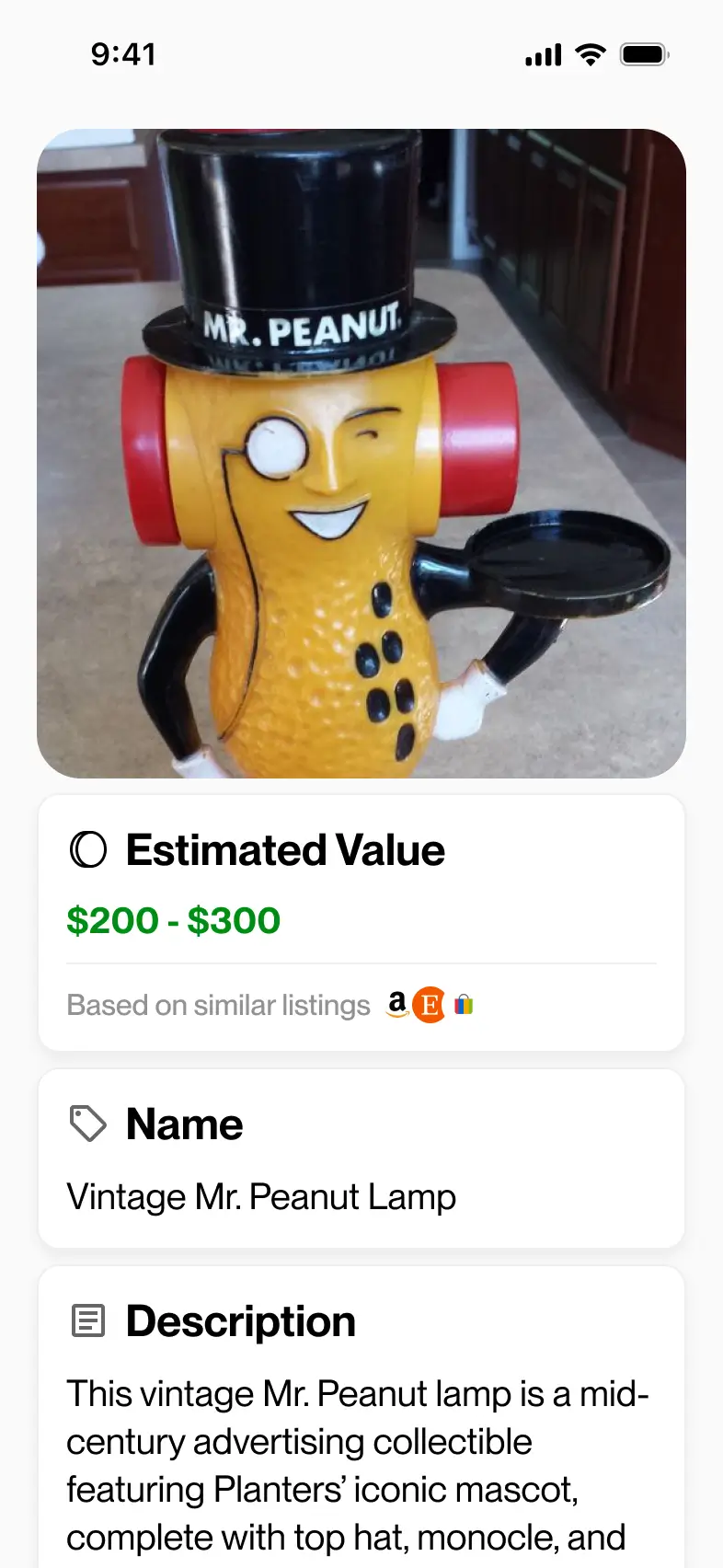
This is where modern technology changes the game for collectors. When you encounter a toy that defies your physical inspection, you can use the Relic app to get answers in seconds. Relic uses advanced AI to analyze the visual characteristics of an object—its silhouette, paint patterns, and even the specific screw placements—to identify exactly what it is.
Imagine finding a strange, translucent blue plastic wing in a bag of mixed parts. To the naked eye, it’s garbage. By uploading a photo to Relic, the AI can cross-reference that specific mold with thousands of entries in its database. It might tell you that the wing belongs to a 1982 "Micronauts" vehicle, a part that collectors will pay $40 just to complete their set.
The app doesn't just give you a name; it provides the history and origin of the item. Knowing that a toy was only sold in a specific region or for a limited six-month window gives you the leverage you need when negotiating a price or writing a resale listing.
Getting Real-Time Appraisals While You Shop
The biggest challenge in a thrift store is the "Buy or Fly" decision. If a store is asking $20 for an unmarked robot, is it a bargain or a ripoff?
Relic provides a real appraisal based on current market data. Instead of guessing, you get a professional-grade valuation that considers the item's rarity and historical significance. This is particularly useful for items that don't have a high volume of sales on traditional auction sites.
- Instant Context: You get the "story" behind the toy, which is often what drives the price.
- Searchable Catalog: Every item you scan is saved, allowing you to build a digital inventory of your finds.
- Professional Accuracy: With a 4.9-star rating from over 20,000 reviews, the app provides a level of confidence that manual searching simply can't match.
Using an AI tool like Relic allows you to move through a store with the speed of a casual shopper but the knowledge of a museum curator. You stop being a "picker" and start being an "investor."
High Value Toy Categories to Hunt For
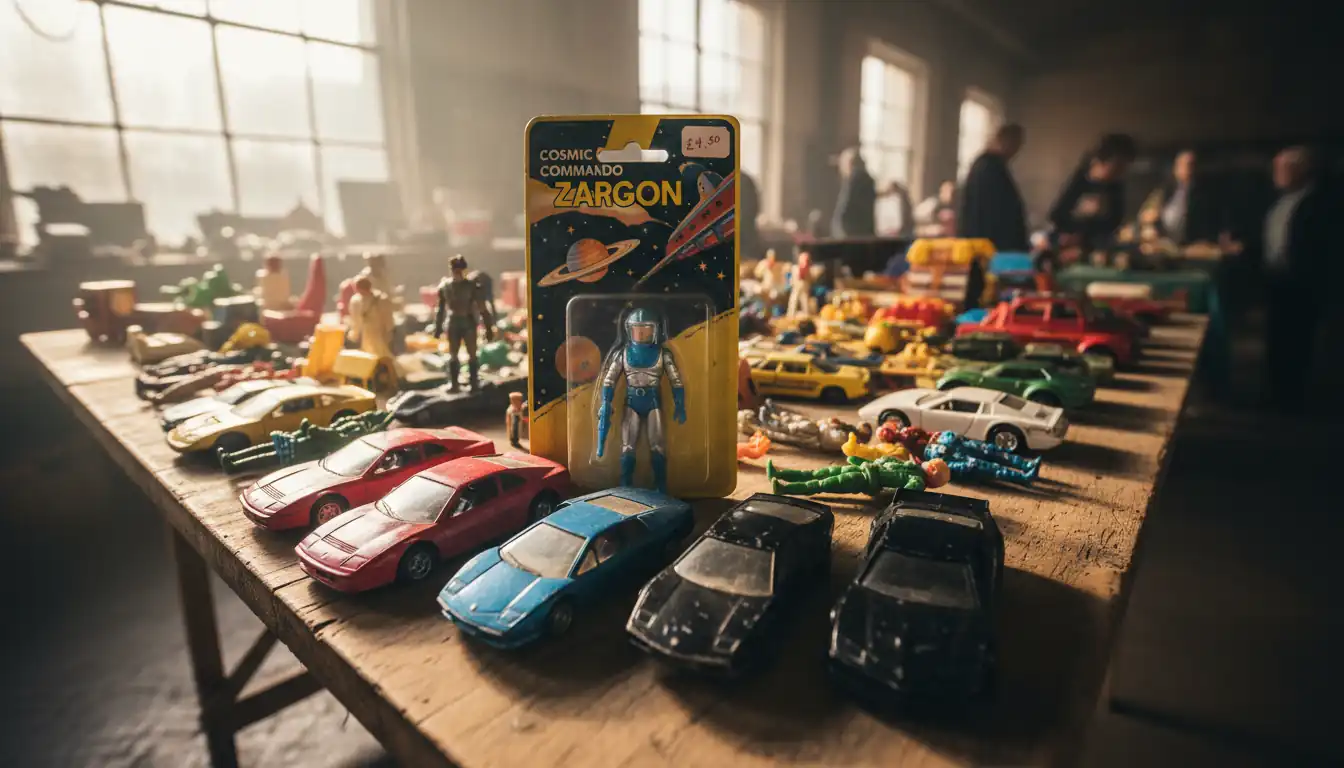
While you should always be open to surprises, having a "hit list" of high-value categories will help you focus your energy. Certain brands and models have stayed consistently valuable for decades because they represent the pinnacle of design for their era.
From Ponytail Barbies to Machine Man Robots
If you see a doll that looks like it stepped out of a 1950s fashion magazine, look closer. The "Holy Grail" of dolls is the 1959 Mattel Barbie (No. 1).
How to identify a No. 1 Barbie:
- The Eyes: She has a distinct "sideways glance" and white irises.
- The Feet: The most famous indicator is the holes in the bottom of her feet, which were designed to fit into a weighted stand.
- The Material: She is made of a heavy, pale vinyl that often turns "chalky" over time.
In the world of mechanical toys, the Masudaya "Gang of Five" robots are the ultimate find. These large, tin-lithographed robots from the late 1950s and early 60s are masterpieces of Japanese engineering.
- Radicon Robot: The first remote-controlled toy robot.
- Machine Man: Known for its vibrant red color and complex internal gears.
- Sonic Robot: Features a "train whistle" sound and a distinctive "bump and go" motion.
Finding one of these in a thrift store is rare, but not impossible. Many people donate them thinking they are "just old tin," not realizing they can fetch thousands of dollars at auction.
The Hidden Market for Pre-War Die-Cast and Trains
Model trains are a staple of the antique world, but the real money is in the "Pre-War" era (pre-1941). Lionel is the name to watch for here. Specifically, look for the Lionel 400E locomotive. This was the flagship of the "Standard Gauge" era.
Identifying a 400E:
- Size: Standard Gauge is much larger than the common HO or O scale trains you see today. The track is 2.125 inches wide.
- The "Blue Comet" Livery: While many were black, the bright blue version is a collector's dream.
- Weight: These are made of heavy die-cast metal and nickel-plated trim. They feel like industrial equipment, not toys.
Similarly, look for Dinky Toys or TootsieToys from the 1930s. These early die-cast cars often have "fatigue" (small cracks in the metal), but if you find one with smooth, original paint and its original rubber tires, you are looking at a high-ticket item.
The "Litho" Test: On tin toys, look for "lithography"—the process of printing designs directly onto the metal. High-quality lithography has vibrant colors and intricate details (like tiny gauges on a dashboard or individual rivets on a rocket ship). If the paint looks "flat" or "fuzzy," it might be a modern reproduction.
The Value of Imperfection and Rare Parts
A common mistake new collectors make is passing over a toy because it looks "beaten up." While "Mint in Box" (MIB) is the gold standard, the vintage market has a massive sub-sector dedicated to "salvage" and "completeness."
Why Mint in Box Is Not the Only Way to Profit
A "beater" toy—one that has been played with, has paint chips, or a missing limb—can still be worth a significant amount if it is rare enough. Collectors often buy these "grade 2" or "grade 3" items for two reasons:
- Restoration: They need original parts to fix a near-mint toy.
- Placeholders: They want the item in their collection but can't afford the $5,000 mint version.
For example, an original 1970s Star Wars Boba Fett figure with a broken arm might only be worth $20. However, if that figure still has its original, translucent green "blaster" pistol, that tiny piece of plastic alone could be worth $100.
Identifying Rare Replacement Accessories and Components
The "parts market" is one of the most profitable niches in toy flipping. Many thrift stores will bag up "random plastic bits" and sell them for $1.99. Inside those bags are often the very items collectors are searching for.
High-Value Accessories to Watch For:
- Original Capes: Early vinyl capes for action figures (like the "Telescoping Lightsaber" Darth Vader) are incredibly fragile and rare.
- Battery Covers: On tin robots and early electronic toys, the battery cover is the first thing to get lost. A toy missing its cover loses 50% of its value. Finding a loose cover in a bin is like finding a $50 bill.
- Missiles and Projectiles: 1970s "Shogun Warriors" or "Micronauts" came with small plastic missiles. Because of safety recalls and kids losing them in shag carpets, these are now worth more than the robots themselves.
| Toy Line | Rare Accessory | Why It's Valuable |
|---|---|---|
| G.I. Joe (1960s) | Small Medals/Pins | Easily lost; essential for "complete" sets. |
| Transformers (G1) | Chrome Weapons | The chrome plating often flaked off or the parts snapped. |
| Mego Figures | Original Boots | The soft plastic often split or fell off during play. |
| Tin Wind-ups | Original Keys | Many keys were unique to the internal clockwork mechanism. |
If you find a toy that is broken beyond repair, don't throw it away. Strip it for parts. The screws, the gears, and even the original decals can be sold to restorers who are looking for "period-correct" materials.
Strategic Sourcing and Resale Logic
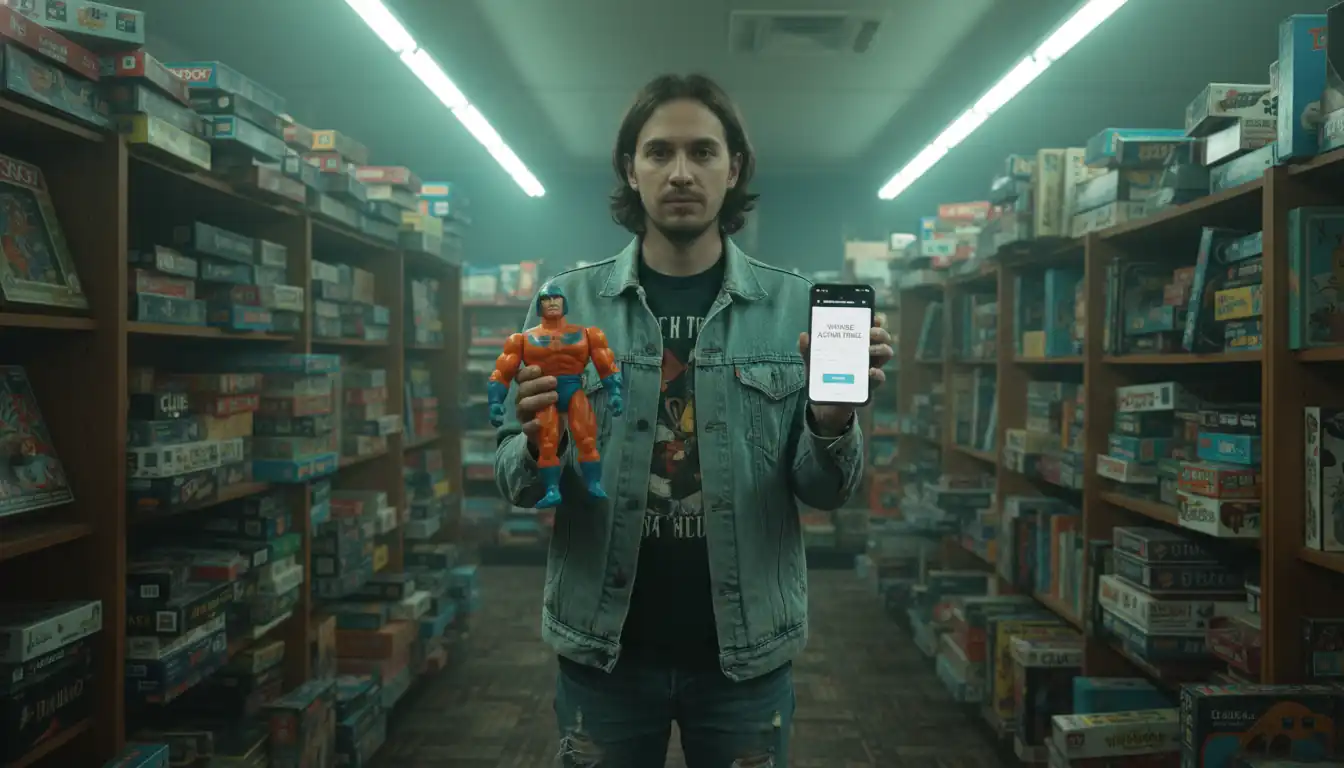
Finding the toy is only half the battle. To turn this into a sustainable side hustle or a professional business, you need to understand the logic of the marketplace.
Navigating Thrift Store Inventory Cycles
Thrift stores are not random; they operate on cycles. Most stores receive the bulk of their donations on weekends. This means the "processing" happens on Monday and Tuesday.
- The Tuesday Morning Strategy: Being at the store when the doors open on a Tuesday often gives you first access to the items that were donated over the weekend and priced on Monday afternoon.
- Build Relationships: Don't be a "silent picker." Talk to the staff. Ask them, "Do you ever get old toy collections in?" or "When do you usually roll out the collectibles cart?" If they know you are a serious buyer who doesn't cause a mess, they might even give you a heads-up when a large estate donation arrives.
- The "Back-Room" Myth: Most stores don't have a secret vault. They want to move inventory as fast as possible. If you see a bin that looks like it hasn't been touched in weeks, ask if they have any "new old stock" waiting to be priced.
Using Provenance and History to Maximize Resale Price
When it comes time to sell your find, the "story" is your most powerful marketing tool. A listing that says "Old Tin Robot - $100" will sit forever. A listing that says "1958 Masudaya Sonic Robot - Original Japanese Lithography - Rare Blue Variant" will spark a bidding war.
This is where the data from Relic becomes invaluable. The app provides the historical context and origin of the item. You can use this information to write authoritative descriptions that build trust with buyers.
How to write a high-converting description:
- State the Origin: Mention the manufacturer and the country of origin (e.g., "Produced by Paya in Spain, circa 1935").
- Detail the Condition: Be honest about the "play wear." Collectors appreciate transparency.
- Highlight the Rarity: If the AI appraisal indicates that your item is a rare color variant or a first-edition mold, make that the headline.
- Explain the Mechanism: For wind-ups or battery-operated toys, describe the action. "The sparking mechanism still functions" is a phrase that adds $50 to a price tag.
By providing this level of detail, you aren't just selling a toy; you are selling a piece of history. Buyers are willing to pay a premium when they know exactly what they are getting and why it matters.
Conclusion
The world of vintage toys is a landscape of hidden value, waiting for someone with the right eyes—and the right tools—to claim it. You now know that a simple "Made in Japan" stamp is a signal of quality, and that the "10 Toy Rule" can lead you to a jackpot. You understand that a broken toy isn't a failure, but a potential source of rare parts that other collectors are desperate to find.
Most importantly, you have a way to eliminate the guesswork. By using the Relic app, you can transform a moment of uncertainty into a moment of certainty. Whether you are standing in a dusty garage or a bright thrift store aisle, you have the power to identify, appraise, and document history in seconds.
Your next step is simple: go to your local thrift store. Don't just look at the shelves; look into them. Use your new tactile knowledge to filter the junk, and when you find that one "mystery" item that feels a little heavier or looks a little more detailed than the rest, pull out your phone. The thousands of dollars you've been walking past are finally within reach.
Identify antiques instantly
Point your camera at any antique, collectible, or vintage item. Get valuations, history, and market insights in seconds.
Download for iPhone