That $5 Thrift Store Bowl Could Be Murano—Here’s How to Know for Sure

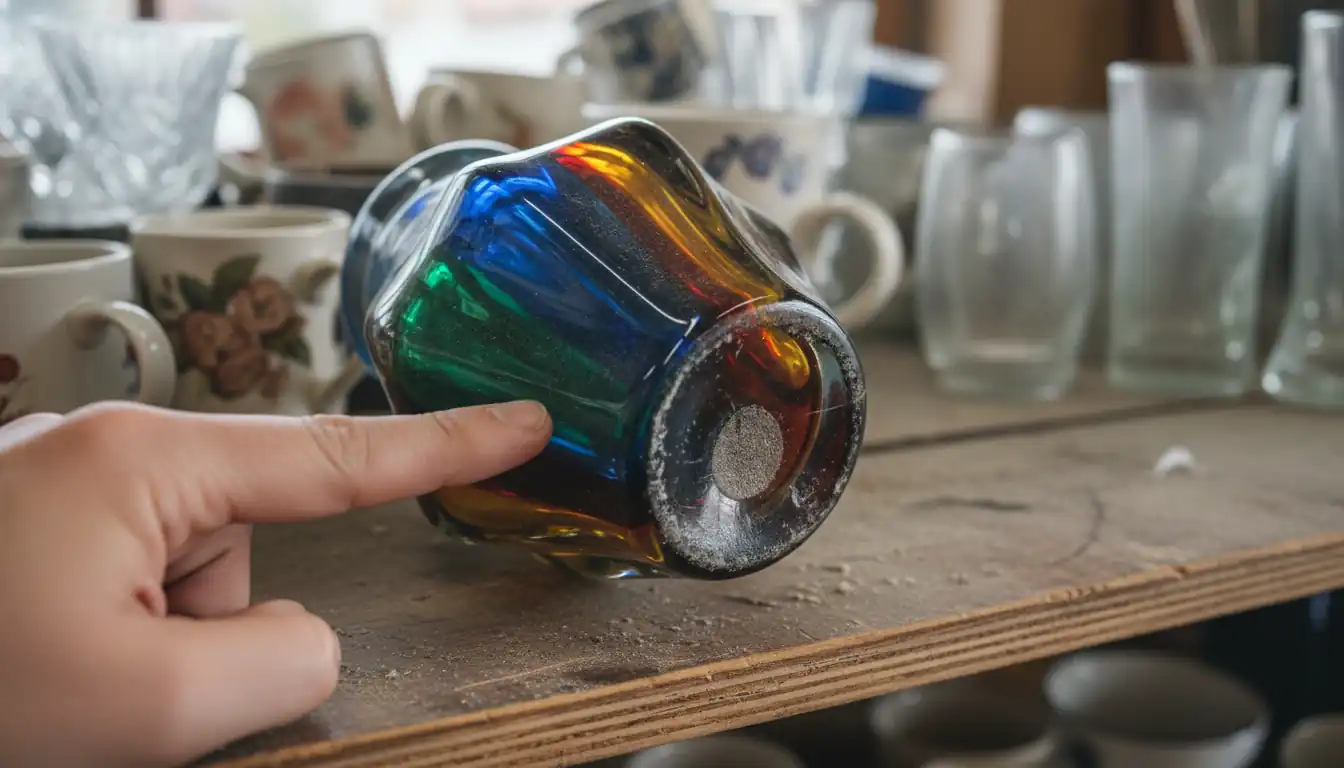
You are standing in a dimly lit thrift store, scanning rows of chipped mugs and dusty plates. Suddenly, a flash of cobalt blue catches your eye. You pull a heavy, multi-colored glass bowl from the back of the shelf. It feels different—weightier than the surrounding glassware, with colors that seem to float inside the material rather than sitting on the surface. The price tag says $5.00. Your heart beats a little faster because you suspect this isn't just a piece of kitchenware; it might be a masterpiece from the island of Murano.
Finding authentic Venetian glass in the wild is the ultimate high for any collector. For centuries, the glassmakers of Murano have guarded their secrets with a level of intensity that once carried the death penalty for those who shared their techniques abroad. Today, that legacy lives on in pieces that command thousands of dollars at auction. But how do you separate a genuine work of art from a mass-produced factory imitation?
This guide will teach you how to read the "language" of Murano glass. You will learn to identify specific artisanal techniques, decode the mystery of markings, and use modern tools to validate your finds. By the time you finish reading, you will have the confidence to spot a treasure where others only see a dusty bowl.
The Visual Anatomy of Venetian Mastery
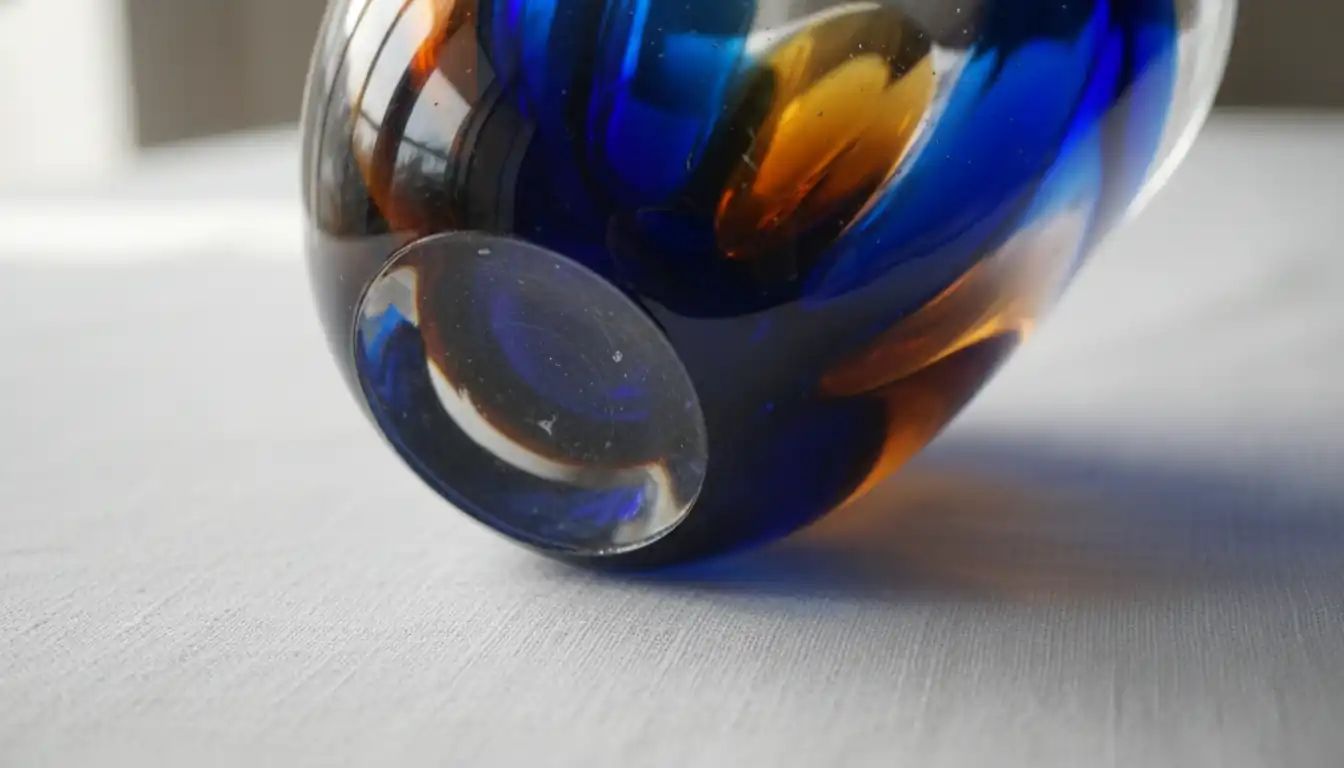
Authentic Murano glass is not manufactured; it is birthed in the heat of a furnace. Because every piece is hand-blown, it possesses a "soul" that machine-made glass simply cannot replicate. When you hold a piece of glass you suspect is from Murano, your first task is to look past the shape and examine the internal structure of the material itself.
Sommerso and Millefiori Techniques
One of the most recognizable Murano styles is Sommerso, which literally translates to "submerged." This technique involves dipping a gather of colored glass into another gather of a different color before blowing the final shape. The result is a piece with distinct, layered bands of color that never bleed into one another.
When you inspect a Sommerso piece, look at it from the side. You should see a clear, crisp line where the cobalt blue ends and the amber yellow begins, all encased in a thick layer of transparent glass. It should look like a solid drop of color frozen inside a block of ice. If the colors look fuzzy or if they seem to swirl together like a marble cake, it is likely a cheap imitation.
Another hallmark of Venetian excellence is Millefiori (a thousand flowers). This involves creating long glass canes with floral patterns in the cross-section, slicing them into tiny "murrine," and fusing them together.
In authentic Murano Millefiori, the patterns will have slight organic variations. Because these are handmade canes, no two "flowers" will be identical. If the pattern looks perfectly uniform or printed, it is a red flag.
Weight and Clarity Differences
There is a common misconception that high-end glass must be heavy. While Murano glass has a satisfying heft, it is actually lighter than English or French lead crystal. This is because Murano glass is traditionally lead-free. Instead of lead, Venetian masters use a soda-lime composition that allows the glass to remain "soft" and workable for longer periods at high temperatures.
This chemical makeup affects how the glass feels and looks. Murano glass has a legendary clarity, but it also has a "warmth" to it. Lead crystal often has a blueish or grayish tint and rings like a bell when tapped. Murano glass has a shorter, duller "thud" when flicked with a fingernail, and the glass itself often feels slightly "waxy" or smoother to the touch than standard soda-lime glass.
| Feature | Authentic Murano Glass | Mass-Produced Glass |
|---|---|---|
| Color Transitions | Crisp, defined layers (Sommerso) | Blurry or bleeding colors |
| Pattern Symmetry | Organic, slight variations | Perfectly identical, repetitive |
| Material Feel | Smooth, slightly "soft" or waxy | Sharp, cold, or "plastic" feel |
| Clarity | High transparency, no yellowing | May have a grey or green tint |
Decoding Labels and the Infamous Pontil Mark
Once you have assessed the "vibe" of the glass, it is time to look for technical evidence. This is where many novice hunters get tripped up. There is a lot of conflicting information about how Murano glass should be marked, and relying on a single sign can lead to an expensive mistake.
The Truth About Pontil Marks
The most common question collectors ask is: Does all Murano glass have a pontil mark? The answer is no, but understanding what a pontil mark is will help you tremendously.
A pontil mark is the scar left behind when the "punty" rod is broken off the bottom of a hand-blown piece. In older or more rustic Murano pieces, this mark might be rough and jagged. However, many high-end Murano maestros prefer a "polished pontil." They grind the scar down until it is a smooth, concave dimple that feels like a thumbprint in the glass.
If the bottom of a vase is perfectly flat and smooth with no sign of a mark or a polished indentation, it might be a modern piece finished with advanced machinery, or it might be a mold-blown imitation. Conversely, if the bottom has a sharp, circular seam, you are looking at a machine-made product.
Reading Labels and Signatures
Labels are the most sought-after proof of origin, but they are also the easiest to fake. Since 1994, the "Vetro Artistico Murano" trademark has been the official gold standard. This is a tamper-proof foil sticker that includes the producer’s identification code.
Before the 1990s, labels were more varied. Look for foil labels that say "Murano Italy" or name specific furnaces like Venini, Pauly & C., or Seguso. Be wary of paper labels that look brand new on a supposedly "vintage" piece.
Signatures are another layer of the paper trail. Masters like Archimede Seguso or Alfredo Barbini often signed their work with an acid-etched signature on the base. These signatures are usually very faint—you might need to tilt the piece under a strong light to see the delicate, scratch-like script.
- Foil Labels: Look for metallic sheen and specific furnace names.
- Acid Signatures: Usually found on the outer edge of the base; feels slightly textured.
- Trademark Stickers: Check for the "Vetro Artistico" logo with a unique serial number.
Instant Appraisal in the Palm of Your Hand
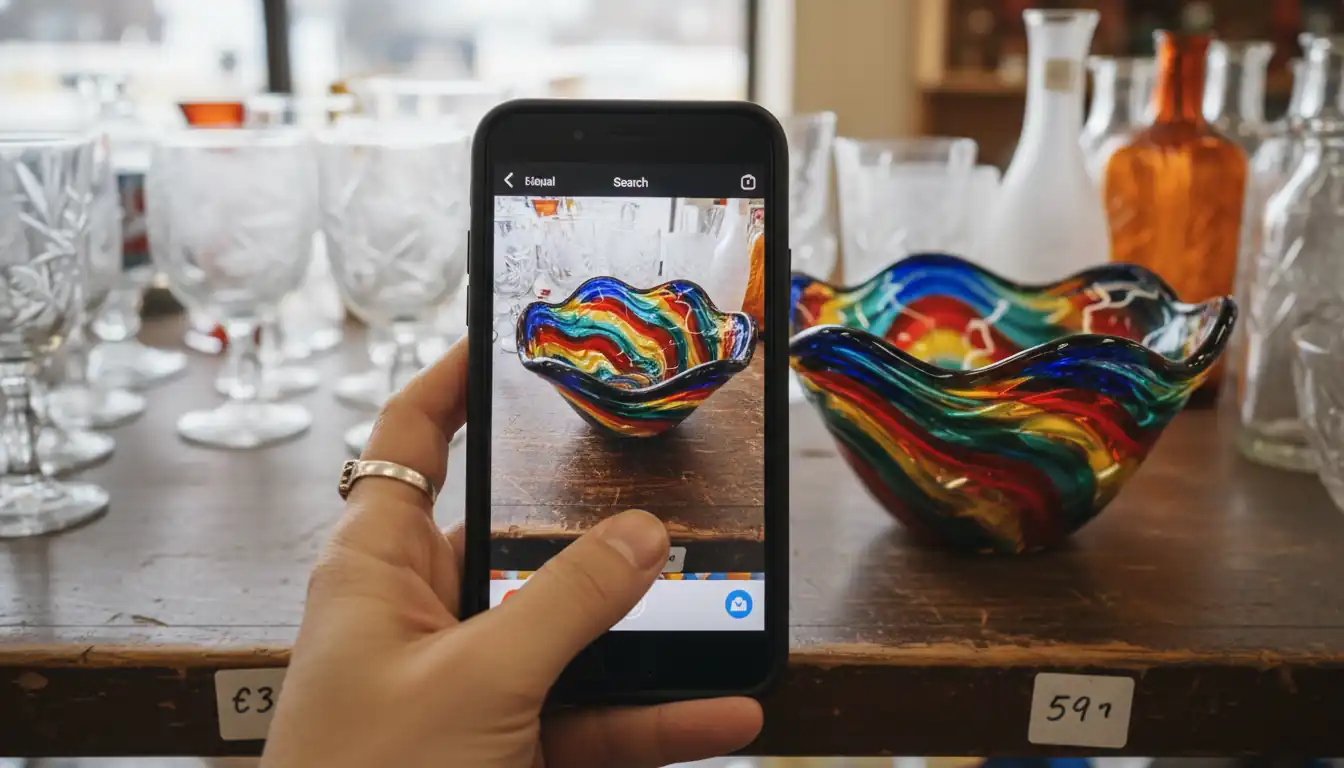
The high-pressure environment of a thrift store doesn't always allow for a thirty-minute research session on your phone. You might be worried that if you put the bowl down to Google "blue Sommerso vase," another shopper will snatch it up. This is where modern technology bridges the gap between your intuition and a professional appraisal.
The Relic app is designed specifically for these "make or break" moments. Instead of scrolling through endless image galleries trying to find a match, you can simply take a photo of the item. Relic uses advanced AI to analyze the shape, color patterns, and craftsmanship of the piece. Within seconds, it provides a real appraisal, historical context, and the likely origin of the item.
Identifying Rare Patterns with Relic
One of the hardest things for a novice to identify is a specific artist's "hand." For example, a Mid-Century Modern piece might look like a simple green vase to the untrained eye, but it could actually be a rare "Fazzoletto" (handkerchief) design by Fulvio Bianconi.
Relic’s AI is trained on a massive database of authenticated antiques, allowing it to recognize the subtle silhouettes and color palettes associated with famous Venetian maestros. It doesn't just tell you if it's glass; it tells you if it's important glass.
Validating History and Origin
Beyond just a price tag, Relic provides the "why" behind the object. It can identify if a piece belongs to a specific era, such as the Art Deco period of the 1930s or the bold, experimental 1970s. This historical context is vital because a 1950s piece by a known master is worth significantly more than a 1990s tourist piece, even if they look similar to a casual observer. With a 4.9-star rating from over 20,000 reviews, the app has become a staple for pickers and professional dealers who need accuracy on the fly.
Common Imposters and Chinese Knockoffs
As the value of Murano glass has climbed, so has the quality of the fakes. Most "Murano" glass found in big-box home decor stores is actually produced in China or Eastern Europe. These pieces are designed to mimic the look of Venetian glass at a fraction of the cost, but they lack the technical precision of the real thing.
Spotting Murano-Style Mass Production
The biggest "tell" for a fake is a mold seam. Authentic Murano glass is hand-blown or hand-shaped. This means the glass is manipulated in the air or on a flat "marver" table. It never touches a mold that would leave a vertical line up the side of the piece. If you see or feel a thin, raised line running from the base to the rim, put it back. It’s a factory-made imitation.
Another red flag is the quality of the "attachments." Look at the handles of a pitcher or the base of a figurine. On a real Murano piece, the point where two pieces of glass meet will be fused perfectly. On cheap knockoffs, these joints often look clunky, with visible "globs" of glass or messy transitions.
The Made in Italy Trap
Labels can be intentionally misleading. You will often see stickers that say "Murano Style" or "Made in Italy." While "Made in Italy" sounds promising, it doesn't mean "Made in Murano." There are many glass factories on the Italian mainland that produce mass-market glassware.
True Murano glass is made exclusively on the islands of the Venetian lagoon. Look for the specific word "Murano" on the label, and be skeptical of anything that uses the word "style" or "type." These are legal loopholes used to sell imitations to unsuspecting tourists and thrift shoppers.
- Mold Seams: A vertical line indicating the piece was pressed in a machine.
- Color Bleed: Muddy colors that mix together rather than staying in distinct layers.
- Uniformity: If you see twelve identical bowls on a shelf, they are not hand-blown Murano.
The Economics of the Thrift Store Find
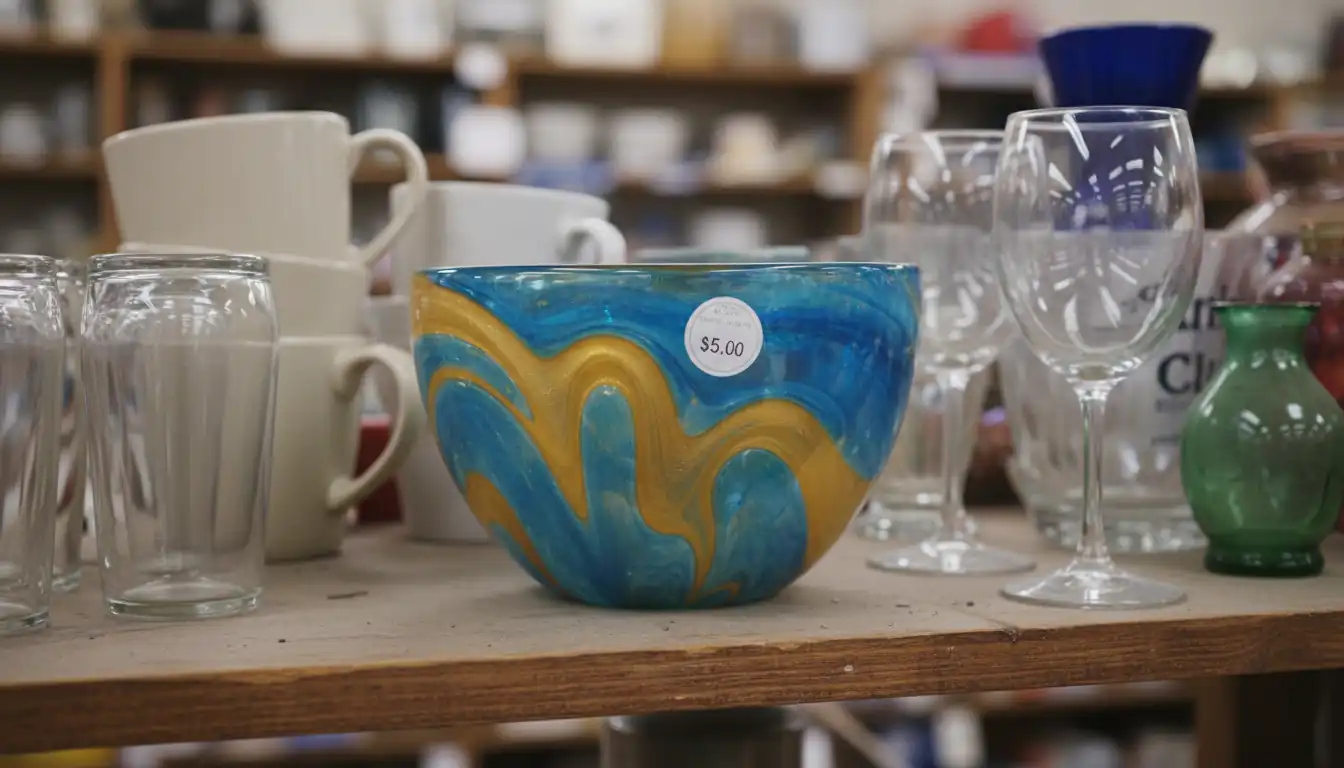
If you have used your eyes, checked the markings, and verified the piece with Relic, you might be holding a genuine treasure. But before you head to the register, you need to perform a final "quality control" check. Even a genuine Seguso vase can lose 90% of its value if it has the wrong kind of damage.
Assessing Condition and Rarity
The first thing to look for are "flea bites." These are tiny, pinhead-sized chips, usually found around the rim or the base. While they are common in vintage glass, they do impact the resale value. Much more serious are "heat cracks" or "stress fractures." These are internal cracks that don't reach the surface but look like shimmering silver lines inside the glass. These occur if the glass was cooled too quickly (annealed improperly) and can eventually cause the piece to shatter.
Rarity also plays a huge role in the economics of your find. Currently, the market is obsessed with Mid-Century Modern aesthetics.
| Highly Coveted Styles | Characteristics | Market Trend |
|---|---|---|
| Fazzoletto (Handkerchief) | Folded, fabric-like edges | Extremely High |
| Pulegoso | Thousands of tiny air bubbles | Steady |
| Bullicante | Controlled bubbles in a grid pattern | High |
| Calcedonio | Mimics natural stones like agate | Rare / Collector Grade |
Maximizing Your Resale Value
If your goal is to flip your $5 find for a profit, documentation is everything. Never scrub off an original sticker, even if it’s half-peeled and ugly. That tattered bit of foil is your proof of provenance.
When you list the item for sale, take high-resolution photos of the base, the pontil mark, and any internal details like bubbles or color layers. Mention the specific technique (like Sommerso) and the era. Using the data provided by the Relic app can help you write a professional description that justifies a higher asking price. A listing that says "Vintage Blue Vase" will sell for $20; a listing that says "1960s Murano Sommerso Vase in the style of Flavio Poli" can sell for $200 or more.
Conclusion
Finding a piece of Murano glass in a thrift store is like finding a message in a bottle from a different era. It represents a tradition of craftsmanship that has survived wars, economic collapses, and the rise of industrial automation. By training your eye to recognize the crisp layers of Sommerso, the organic variety of Millefiori, and the tell-tale signs of hand-blown artistry, you turn a simple shopping trip into a treasure hunt.
Remember that while your intuition is a powerful tool, you don't have to rely on it alone. Use the physical clues—the weight, the pontil mark, and the absence of seams—to narrow down the possibilities. When you find that special piece that makes your heart skip a beat, use the Relic app to get the final, data-backed confirmation you need. Whether you choose to keep your find as a protected heirloom or sell it to a dedicated collector, you are now part of the long history of those who appreciate the magic of Venetian glass. Next time you see a flash of color on a dusty shelf, don't walk past it—you might just be looking at a masterpiece.
Identify antiques instantly
Point your camera at any antique, collectible, or vintage item. Get valuations, history, and market insights in seconds.
Download for iPhone