That Dusty Attic Find Could Be Worth Thousands—Here Is How to Prove It

You just pulled a heavy, dust-covered trunk from the corner of your grandmother’s attic. Inside, tucked beneath yellowed newspapers, sits a tarnished silver teapot and a small, hand-painted porcelain figurine. Your first instinct might be to wonder if they are worth anything, or perhaps you assume they are just sentimental clutter. Most people let these items sit for decades because the process of identifying them feels overwhelming.
The truth is that thousands of dollars in value often hide behind a layer of grime. You don't need a degree in art history to determine if an object has potential. By learning to spot specific physical markers and using the right digital tools, you can transform from a curious observer into a confident researcher.
This guide will walk you through the exact steps professional dealers use to "triage" an item. You will learn how to read the physical language of antiques, how to use artificial intelligence to get instant answers, and how to navigate the complex market of realized prices. Whether you want to sell your finds or simply protect your family’s heritage, the journey starts with a closer look at the object in your hands.
Visual Clues That Signal High Value
Before you reach for a computer or call an expert, you must look at the item with a critical eye. Professional appraisers start with a physical "triage" to separate mass-produced replicas from authentic pieces of history. High-value antiques almost always leave breadcrumbs of their origin and quality in their construction.
Decoding Maker Marks and Signatures
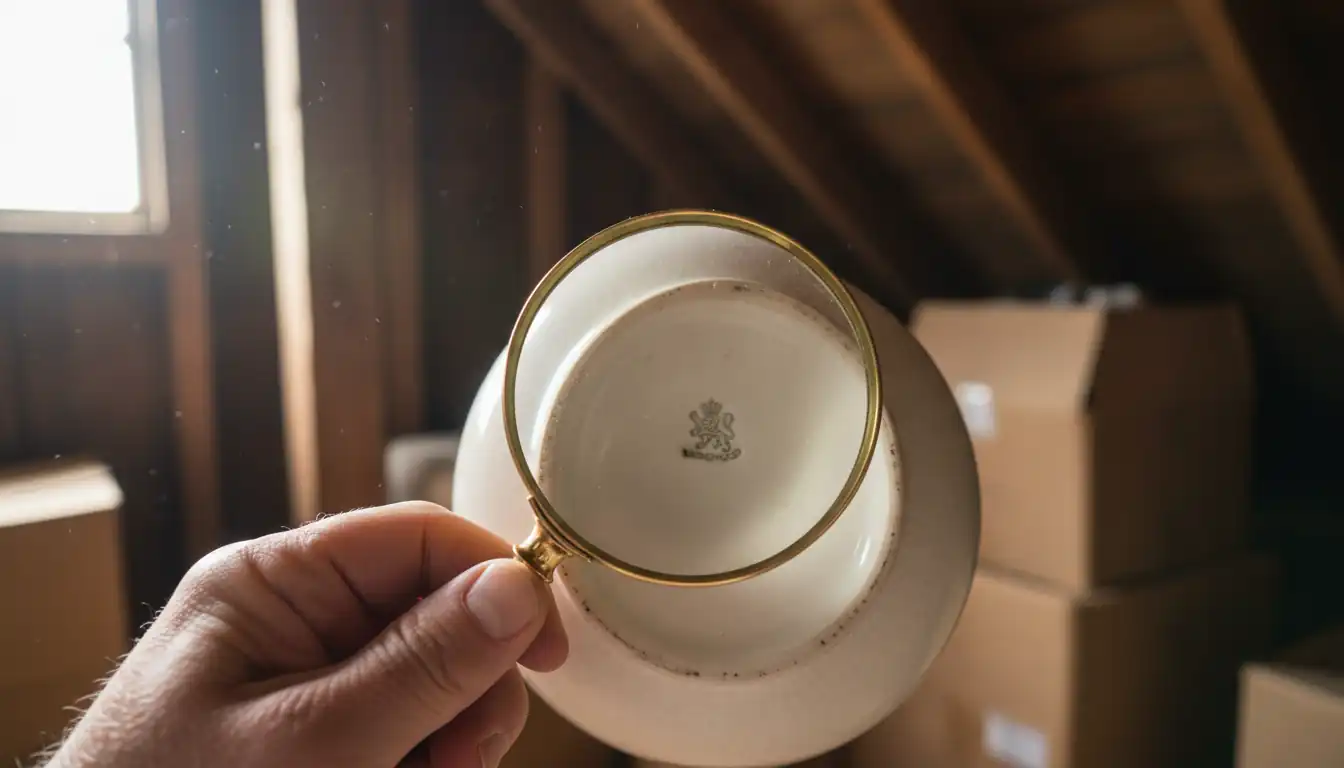
The most obvious place to start is the bottom, back, or inside of an object. Manufacturers and artisans have used stamps, engravings, and signatures for centuries to claim their work. However, these marks are often tiny or obscured by age.
- Silver Hallmarks: If you are holding a piece of metalware, look for tiny stamped symbols. In British sterling silver, for example, a "lion passant" (a lion walking with one paw raised) indicates the piece is 92.5% pure silver. Other marks might tell you the city of origin or the specific year it was assayed.
- Porcelain Marks: Flip over that ceramic plate. You might see the famous "crossed swords" of Meissen, a mark used since the early 18th century. Or perhaps a "Nippon" stamp, which indicates Japanese porcelain made for export between 1891 and 1921.
- Furniture Labels: Check the inside of drawers or the underside of chair frames. High-end makers like Stickley or Herman Miller often used paper labels or branded wood stamps. Even if the label is partially torn, the font and material of the paper can help date the piece.
Don't be discouraged if a mark looks blurry or faded. In many cases, the "wear and tear" around a signature is a sign of authenticity. A perfectly crisp, modern-looking stamp on a supposedly 200-year-old vase is often a sign of a reproduction.
Assessing Material Quality and Craftsmanship
If there is no mark, you must look at how the item was built. Mass production leaves different footprints than hand-craftsmanship. When you examine an object, you are looking for "honest" construction.
- Dovetail Joints: Pull out a drawer from an old dresser. Look at where the front of the drawer meets the side. Are the joints wide, slightly uneven, and chunky? Those are hand-cut dovetails, common before the mid-19th century. Are they perfectly uniform and thin? Those are likely machine-cut, indicating a later date.
- Pontil Marks on Glass: Pick up a glass vase and look at the bottom. Do you see a rough, circular scar or a smooth indentation? This is a "pontil mark," where the glassblower’s pipe was broken off. Its presence proves the piece was hand-blown rather than pressed in a mold.
- The Weight of Quality: Real materials have a specific "heft." Solid bronze feels significantly heavier than "spelter" (a cheap zinc alloy). Solid mahogany has a different grain and weight than a piece of pine with a thin veneer.
Authentic antiques often show "signs of life." This includes uneven wear on the bottom of chair legs or slight irregularities in hand-painted patterns. Perfection is often the hallmark of a modern machine.
| Feature | Hand-Crafted (Antique) | Machine-Made (Modern) |
|---|---|---|
| Symmetry | Slight irregularities | Perfectly symmetrical |
| Fasteners | Hand-forged nails or wooden pegs | Uniform screws or staples |
| Surface | Subtle tool marks or hand-planing | Perfectly smooth or uniform texture |
| Color | Natural patina and oxidation | Uniform stain or "faked" distressing |
Modern Identification Through AI and Mobile Tech
Once you have identified that an item has the physical characteristics of a quality antique, the next step is to put a name and a date to it. In the past, this required spending hours in a library or flipping through massive price guides that were often out of date by the time they were printed. Today, the process is significantly faster.
Instant Appraisal with Relic AI
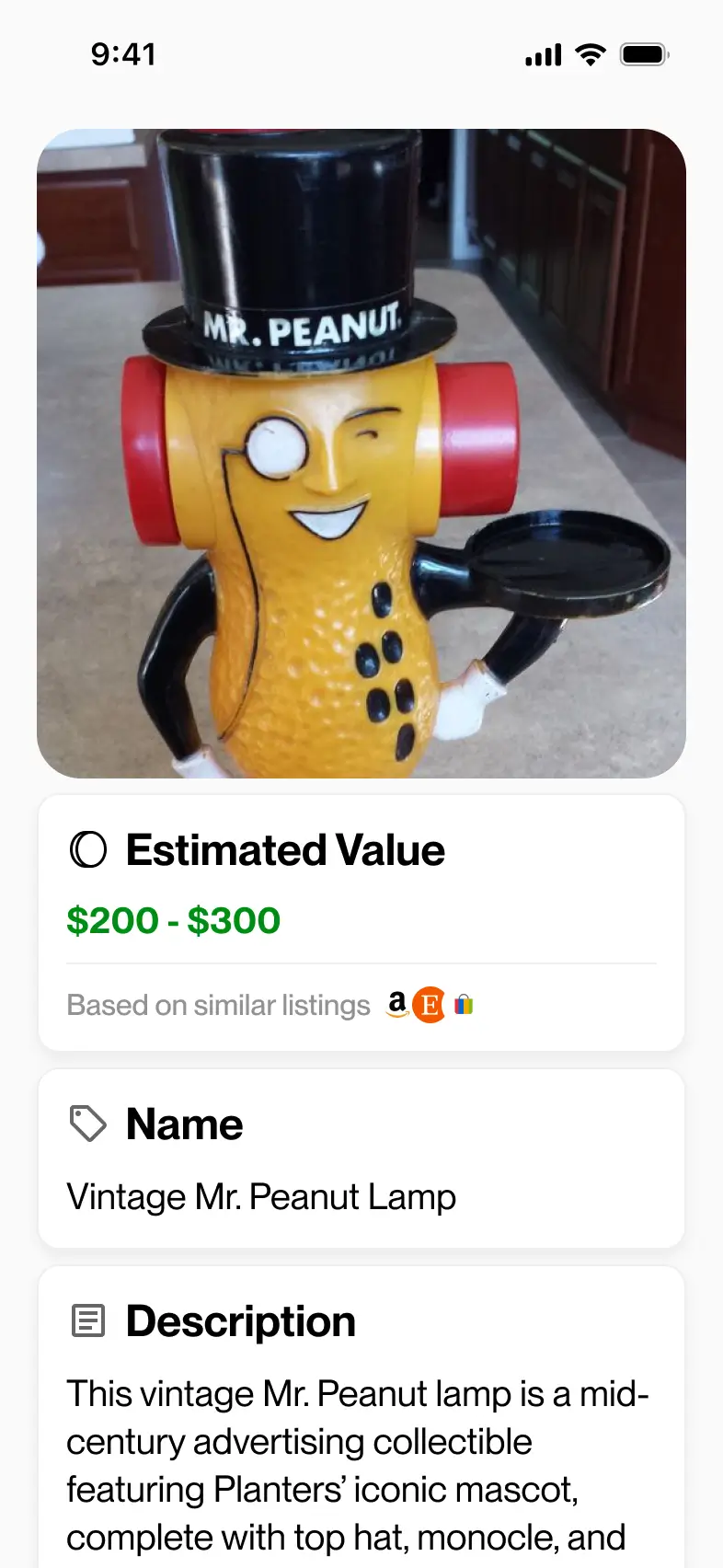
The most efficient way to bridge the gap between a novice and a professional is to use mobile technology. The Relic app is a powerful tool for this exact purpose. Instead of guessing what a specific hallmark or furniture style might be, you can simply take a photo of the item.
Relic uses advanced AI to analyze the visual data of your object—its shape, texture, color, and markings—and compares it against a massive database of known antiques. Within seconds, the app provides a real appraisal, historical context, and the origin of the item. This is particularly useful when you encounter a mark you don't recognize or a style that seems to blend different eras.
For a collector or a casual attic explorer, having this kind of data instantly is a massive advantage. It allows you to decide on the spot whether an item is worth a deeper investigation or if it’s a common household object. With a 4.9-star rating from over 20,000 reviews, the app has become a staple for pickers and dealers who need to make quick, informed decisions in the field.
The Science of Photo-Based Recognition
You might wonder how an app can "know" what a piece of wood or ceramic is just by looking at it. The AI doesn't just look at the object as a whole; it looks at patterns. It recognizes the specific brushstroke style of a certain pottery school or the exact proportions of a Mid-Century Modern chair.
- Pattern Matching: The AI identifies specific motifs, such as the "scroll and leaf" patterns of the Victorian era.
- Contextual Analysis: By analyzing the materials and the way light hits the surface, the tech can often distinguish between different types of finishes or glazes.
- Database Comparison: It cross-references your photo with thousands of auction records and museum archives to find the closest match.
Using a tool like Relic transforms your smartphone into a professional-grade scanner. It removes the "gatekeeping" of the antique world, allowing anyone to access information that was previously reserved for those with decades of experience.
Free Digital Resources for Price Comparison
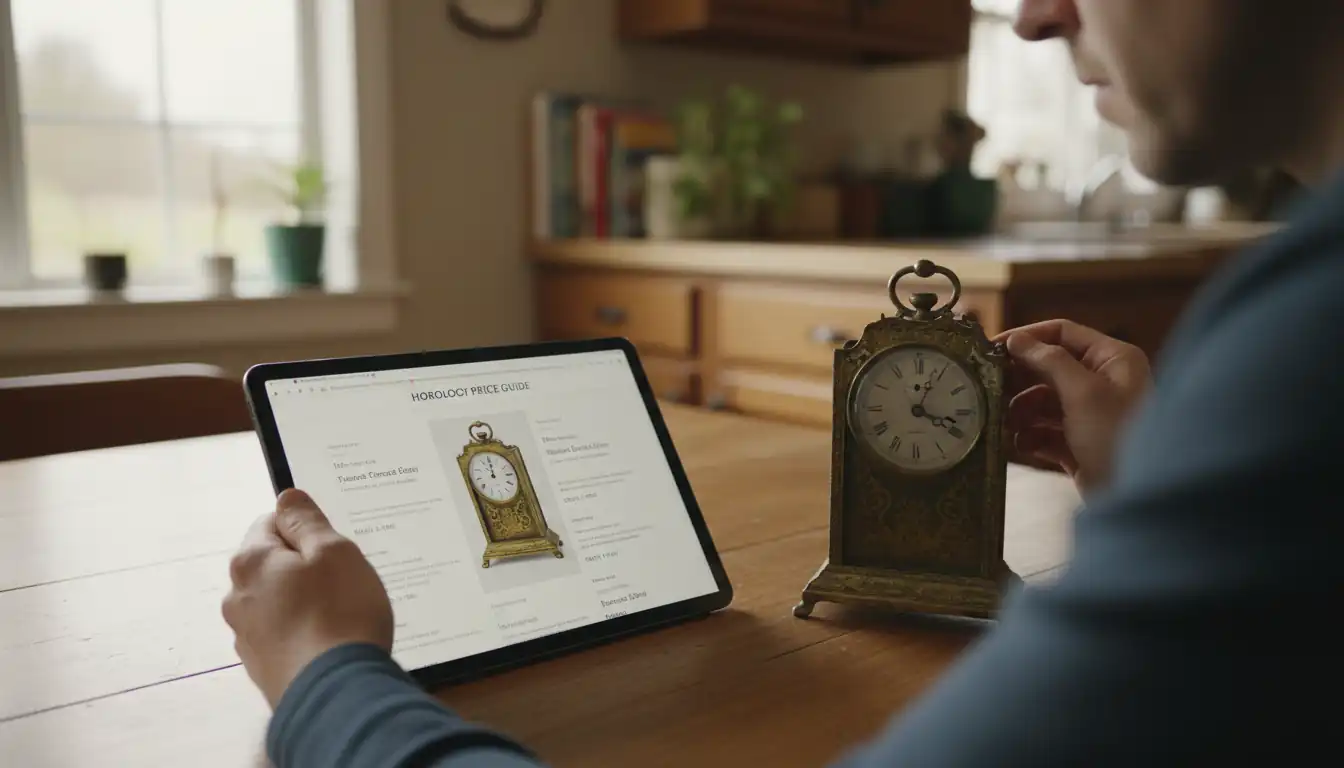
After you have identified what your item is, you need to know what it is worth in the current market. This is where many people make a critical mistake: they confuse "asking price" with "value." Just because someone is asking $5,000 for a lamp on a website doesn't mean anyone is actually buying it for that price.
Mastering eBay Sold Listings
To find the true market value of an antique for free, you must look at realized prices. eBay is one of the best tools for this, provided you use it correctly.
- Filter by "Sold": When you search for your item, scroll down the filter menu on the left-hand side (or under "Filter" on the app) and toggle the "Sold Items" box.
- Analyze the Dates: Look at the most recent sales from the last 90 days. Markets fluctuate; what was popular two years ago might be cold today.
- Compare Condition: If a mint-condition version of your vase sold for $200, but yours has a small chip, your value might be 50% lower. Be honest about the state of your find.
Navigating Museum and Auction Archives
For higher-end items or pieces that seem particularly old, eBay might not be the right benchmark. You need to look at where serious collectors spend their money.
- Museum Databases: The Victoria and Albert Museum (V&A) and the Metropolitan Museum of Art have extensive online collections. While they won't give you a price, they will give you a definitive identification. If your item matches a museum piece, you are likely looking at something of significant value.
- Auction Houses: Websites like LiveAuctioneers or Invaluable allow you to search through past auction catalogs. These sites show you what items sold for at regional and national auction houses.
- Specialized Forums: While you should be careful with "random" advice, specialized collector forums for things like fountain pens, coins, or specific pottery brands can provide niche knowledge that general sites miss.
Always remember: Value is what a willing buyer will pay a willing seller. A "book value" is a starting point, but the "sold price" is the reality.
Professional Appraisal for High Stakes Items
There comes a point where DIY research reaches its limit. If your initial research suggests an item is worth more than $1,000, or if you need a valuation for legal reasons, it is time to step away from the internet and hire a professional.
Finding Certified Appraisers for Insurance
A casual estimate from a website is not enough if you want to add an item to your homeowner's insurance policy or if you are settling an estate. You need a formal, written appraisal from a certified expert.
- Look for Credentials: Seek out appraisers who belong to professional organizations like the American Society of Appraisers (ASA), the International Society of Appraisers (ISA), or the Appraisers Association of America (AAA). These members must adhere to a strict code of ethics and the Uniform Standards of Professional Appraisal Practice (USPAP).
- Understand the Fee Structure: A reputable appraiser will charge you by the hour or a flat fee for the report. Never hire an appraiser who asks for a percentage of the item's value. This is a major conflict of interest, as it incentivizes them to inflate the price.
- Avoid "Free" Appraisals from Buyers: If a dealer offers to appraise your item for free and then immediately offers to buy it, walk away. They cannot give you an unbiased value if they are also the ones trying to profit from the purchase.
Understanding Fair Market vs. Replacement Value
When you receive a professional appraisal, you will likely see two different numbers. It is vital to understand the difference so you aren't disappointed when you try to sell.
- Replacement Value: This is the highest value. It represents what it would cost to go out and buy the exact same item (or a near-identical one) in a retail setting today. This is the number used for insurance purposes.
- Fair Market Value (FMV): This is the price an item would realistically sell for at an auction or between two private individuals. This is usually lower than replacement value because it doesn't include the high markups of a luxury retail gallery.
If you are planning to sell your attic find, the Fair Market Value is the number that matters to your wallet.
Strategic Preservation and Market Timing
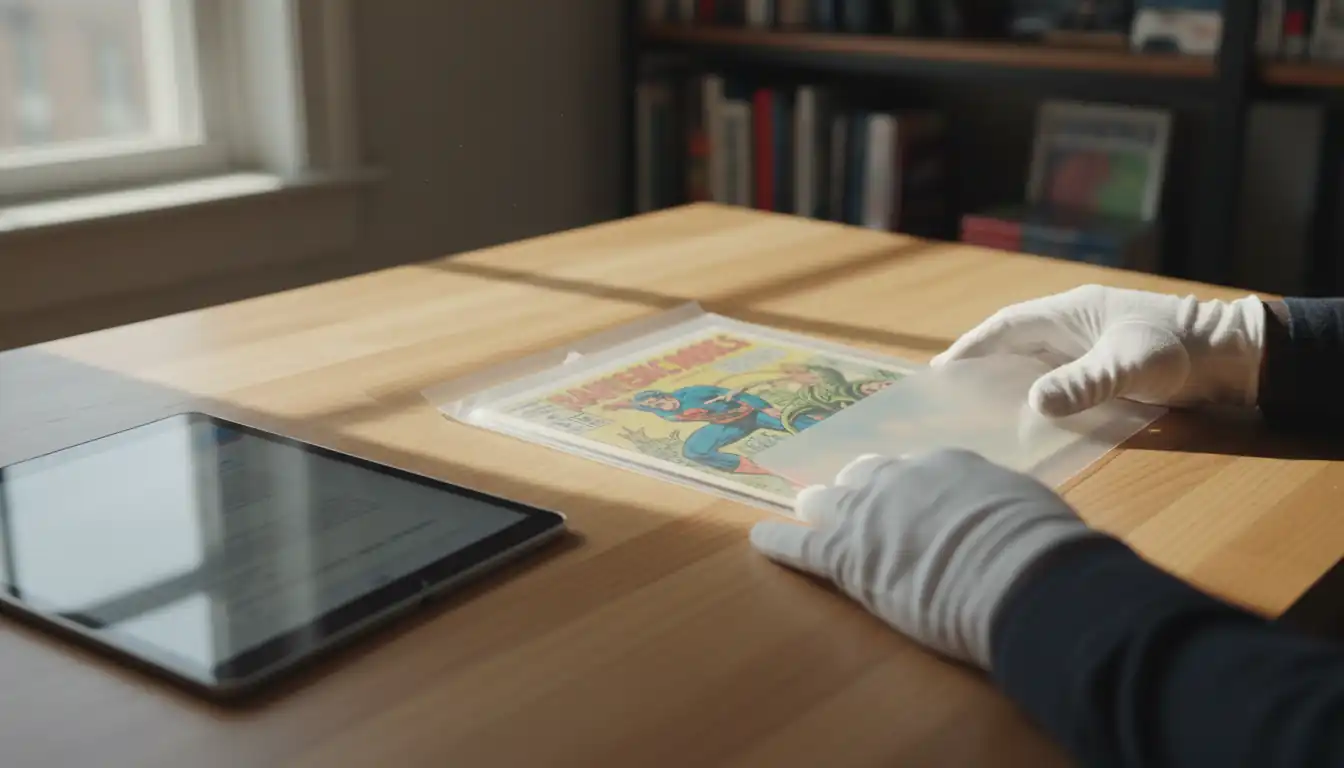
Once you have proven that your item is valuable, your job is to protect that value. An antique is a physical asset, and like any asset, its condition and the timing of its sale will dictate your final return.
Protecting Value Through Proper Storage
The environment is the greatest enemy of an antique. Many people find a valuable item and then accidentally destroy its value by trying to "clean" it or by storing it in the wrong place.
- Avoid the "Clean" Trap: Never use harsh chemicals or abrasive polishes on an antique. For many items, like old coins or bronze statues, the "patina" (the surface oxidation that comes with age) is a huge part of the value. Stripping it away can reduce the price by 80%.
- Control the Climate: High humidity causes wood to swell and mold to grow. Extreme dryness causes wood to crack and leather to become brittle. Keep your valuables in a "living" area of the house—not a damp basement or a sweltering attic.
- Light Exposure: UV light is devastating to textiles, watercolors, and certain types of wood finishes. Keep high-value items out of direct sunlight to prevent fading.
Identifying the Best Time to Sell
The antique market runs in cycles. What was "hot" in the 1990s might be "cold" today. Understanding these trends helps you decide whether to sell now or wait for a market rebound.
- The "Brown Furniture" Slump: Currently, large, dark Victorian and Edwardian furniture is selling for much less than it did thirty years ago. Modern buyers often prefer smaller, more functional pieces.
- The Mid-Century Modern (MCM) Boom: Items from the 1950s and 60s are currently in high demand. If you have clean-lined furniture or "atomic" style decor, now is an excellent time to sell.
- Niche Markets: Some items, like vintage toys, high-end watches, and sports memorabilia, have their own micro-economies that operate independently of the general antique market.
If your item is currently out of style, it may be better to store it properly and wait. Antiques are the ultimate "long game."
Conclusion
Proving the value of a dusty attic find is a process of elimination. You start by looking for the physical "tells" of quality—the hallmarks, the hand-cut joints, and the weight of the material. You then use modern tools like the Relic app to get instant historical context and an AI-driven appraisal, which saves you hours of manual research.
Once you have a name for your item, you can use realized sales data from sites like eBay to see what people are actually paying. For high-stakes items, a certified professional appraiser ensures you are protected for insurance or estate purposes. Finally, by preserving the item’s condition and watching market trends, you ensure that you get the maximum return on your discovery.
The next time you see something old and neglected, don't walk past it. Take a photo, look for a mark, and start the process. That piece of "clutter" might just be the most valuable thing in the room.
Identify antiques instantly
Point your camera at any antique, collectible, or vintage item. Get valuations, history, and market insights in seconds.
Download for iPhone