That Dusty Bowl Could Be a Dynasty Heirloom: Identifying Pottery with Your Phone

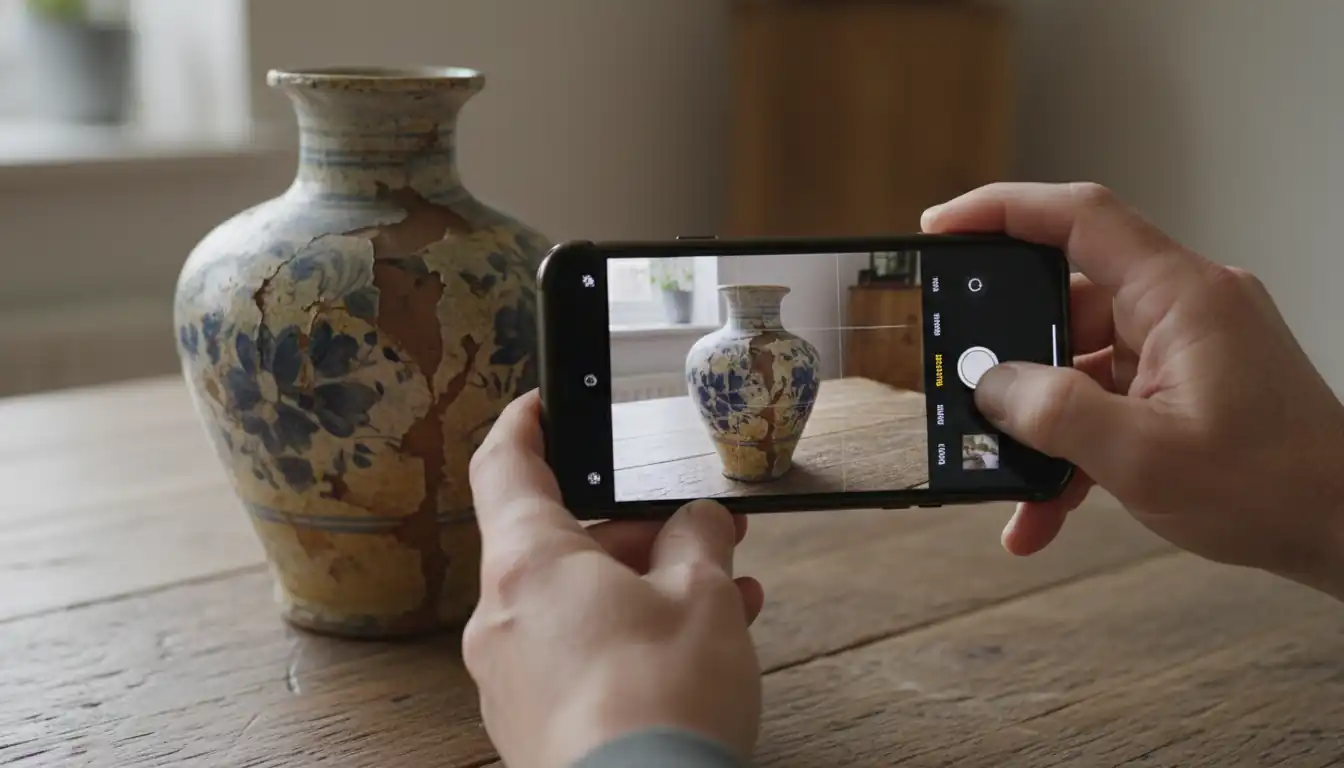
You are standing in a crowded thrift store or perhaps clearing out a relative’s attic when you spot it: a ceramic bowl, slightly dusty, with an intricate blue pattern that seems a bit too detailed for a modern reproduction. Your pulse quickens. Is this a piece of mass-produced kitchenware from the 1990s, or could it be a relic of the Qing Dynasty worth thousands of dollars? For decades, answering that question required a library of reference books, a magnifying glass, and perhaps a costly trip to an auction house.
The barrier between a casual hobbyist and a seasoned collector has always been the "eye"—that hard-earned ability to distinguish between a factory-made imitation and a handcrafted masterpiece. You might see a pretty vase; an expert sees the specific mineral composition of the glaze and the tell-tale signature of a 19th-century kiln. However, the tools available to you have changed. You no longer need to spend years studying ceramic chemistry to begin identifying the treasures hiding in plain sight.
By learning to look at pottery through a more critical lens, you can transform a simple photograph into a wealth of historical data. This guide will show you how to decode the visual language of ceramics, from the cryptic marks on the base to the subtle textures of the glaze. You will learn how to use your phone not just as a camera, but as a sophisticated diagnostic tool that bridges the gap between curiosity and professional appraisal.
Decoding the Visual Language of Ceramics
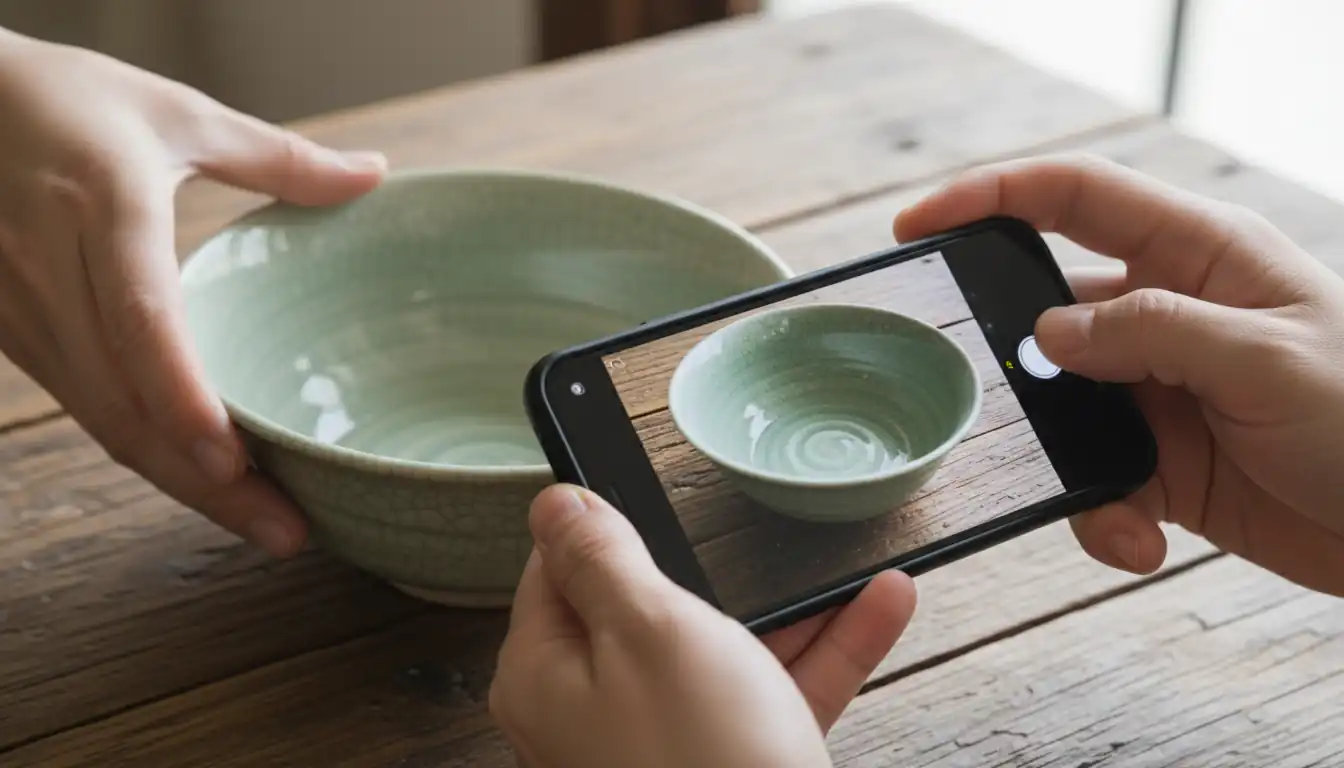
Before you even reach for a digital tool, you must understand what your eyes—and your camera—need to find. Ceramics carry their history on their skin. Every ridge, every bubble in the glaze, and every stamp on the bottom is a piece of a puzzle. To identify a piece accurately, you have to know which details are the "fingerprints" of the maker and which are merely decorative.
Reading the Marks on the Bottom
The base of a ceramic piece is often referred to as its "passport." This is where the maker, the location, and the date of manufacture are most likely to be recorded. However, reading these marks is rarely as simple as reading a label on a soup can.
Backstamps are the most common marks you will encounter. These are usually printed or stamped onto the bottom of the piece after the first firing. A clear, crisp backstamp often indicates a more modern, industrial process. In contrast, older pieces might have blurry or slightly off-center stamps, reflecting the manual nature of early production. When photographing a backstamp, ensure your light source is indirect to avoid a "hot spot" of glare that can obscure the fine lettering.
Incised marks offer a different clue. These are scratched directly into the wet clay before the piece is fired. You see these often in studio pottery or early European porcelain. Because they are part of the physical body of the piece, they can’t be rubbed off like a printed stamp. If you find a mark that looks like it was carved with a needle, you are likely looking at a piece where the artist had a direct hand in the finishing process.
Reign marks are perhaps the most exciting and complex marks to find. Specifically common in Chinese porcelain, these marks usually consist of four or six characters. For example, a Kangxi period mark (1662–1722) typically features six characters arranged in two columns. It is important to be cautious here; for centuries, later potters added "apocryphal" marks to honor earlier dynasties. A mark that says "Kangxi" doesn't always mean it was made in the 17th century, but the quality of the calligraphy can tell an expert—or a sophisticated AI—if the mark is contemporary to the piece.
Texture and Glaze as Historical Fingerprints
If the marks on the bottom are the passport, the glaze is the DNA. The way light interacts with the surface of a bowl can tell you almost as much as a signature. When you take a photo, you want to capture the "topography" of the ceramic.
- Crazing: These are the tiny, spider-web cracks that appear in the glaze. While sometimes a defect, in many antique pieces, it is a natural result of the glaze and the clay body expanding and contracting at different rates over decades.
- Orange Peel Texture: If you look closely at the surface of certain salt-glazed stonewares or specific porcelains, you might see a dimpled texture similar to the skin of an orange. This is a specific byproduct of high-temperature firing and is very difficult to fake convincingly.
- Hand-Painted Brushstrokes: Under a high-resolution lens, you can see the "load" of the brush. A hand-painted piece will have areas where the pigment is thicker or thinner, and you might even see the individual hairs of the brush captured in the paint. A transfer-print (a decal), by contrast, will look like a series of tiny dots, much like a photo in a newspaper.
"The difference between a masterpiece and a reproduction often lies in the 'shiver' of the line—the slight, human imperfection of a hand-guided brush versus the cold precision of a machine."
| Feature | What it Indicates | How to Photograph |
|---|---|---|
| Incised Mark | Hand-crafted, often older | Use side-lighting to create shadows in the grooves. |
| Crazing | Age or specific kiln cooling | Close-up macro shot with soft, diffused light. |
| Cobalt Bleed | Authentic hand-painting | Focus on the edges of the blue patterns to see pigment spread. |
The Evolution of Digital Appraisal Tools
The way we identify antiques has undergone a massive shift. Not long ago, if you found a strange plate at a garage sale, you would have to visit a library and flip through "Godden’s Guide to British Porcelain" or "Kovel’s Antiques and Collectibles Price Guide." You would spend hours matching a tiny crown symbol to thousands of line drawings. While this method is educational, it is incredibly time-consuming and prone to human error.
Why Reverse Image Search Often Fails Collectors
In the early days of the mobile internet, many collectors turned to generic reverse image search tools like Google Lens. While these tools are impressive for identifying a specific model of a modern sneaker or a type of flower, they often fail the "antique test."
The problem is that generic AI is built for visual similarity, not historical accuracy. If you scan a 19th-century hand-painted floral plate, a standard image search will show you thousands of other floral plates. It might link you to a cheap set from a modern big-box store because the colors are the same. It doesn't "understand" the significance of the foot ring's shape or the specific shade of "Mazarine blue" that identifies a piece as authentic Chelsea porcelain. For a collector, a "similar-looking" item is often a false lead that can result in a missed opportunity or a bad investment.
How AI-Powered Apps Like Relic Bridge the Gap
This is where specialized technology changes the game. Instead of just looking at the "vibe" of an image, advanced tools are now trained on massive databases of verified museum pieces, auction records, and expert catalogs.
The Relic app, for instance, functions as a professional appraiser that lives on your iPhone. When you upload a photo to Relic, the AI doesn't just look for a visual match; it analyzes the "anatomy" we discussed in the first section. It looks at the backstamp, the glaze quality, and the stylistic markers to provide a real appraisal, history, and origin of the item.
Because the AI is trained specifically on antiques, it can distinguish between the "cubic floral" patterns of a genuine Charles Catteau piece and a modern Art Deco-style reproduction. It provides the context that a generic search engine misses—telling you not just what the item is, but why it matters and what it is currently worth in the collector's market. This turns your phone into an expert partner, giving you the confidence to make a purchase or a sale based on data rather than a hunch.
Spotting High-Value Styles Through Your Lens
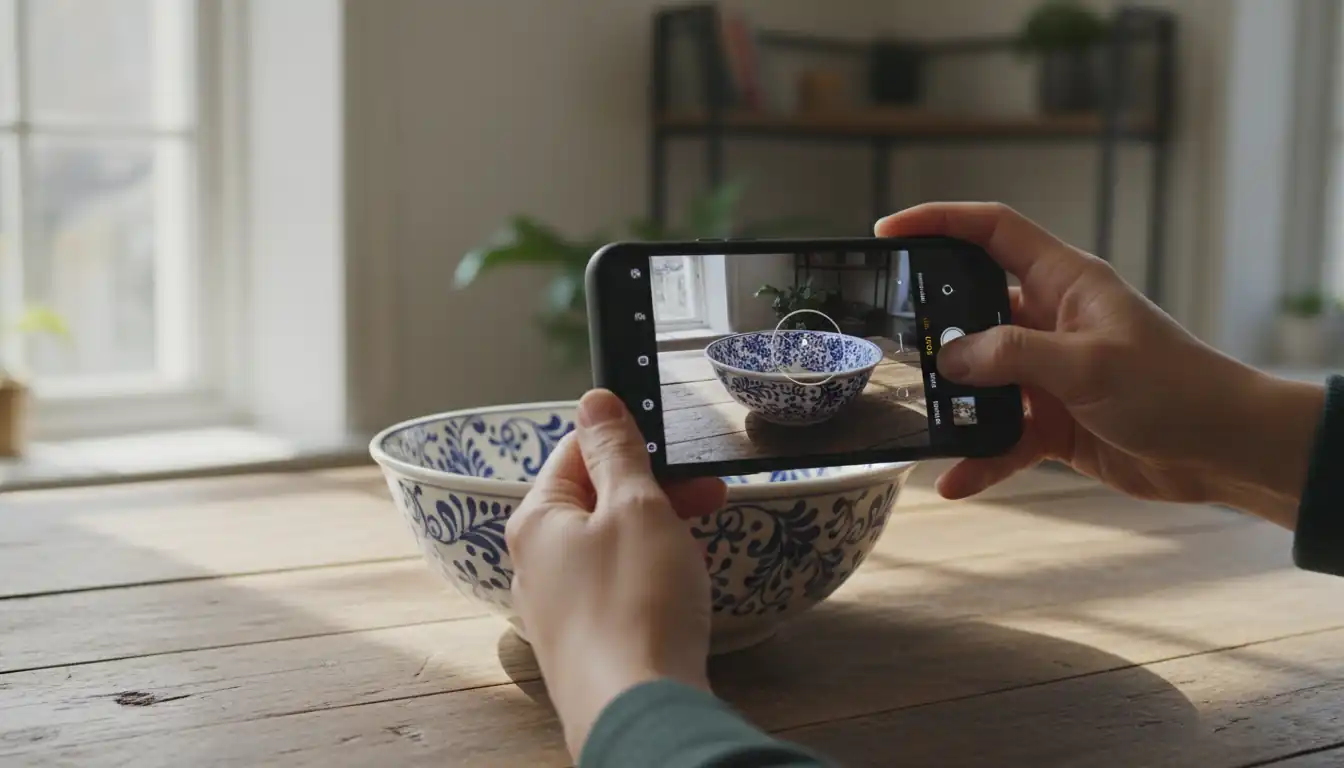
To get the most out of an identification tool, you need to know what "high-value" looks like. Certain eras and styles are more sought after by collectors, and knowing their visual signatures helps you prioritize what to scan. When you are out in the field, keep an eye out for these specific "photographable" traits.
Identifying Rare Chinese Kangxi and Qing Dynasty Porcelain
Chinese porcelain is a minefield of reproductions, but the genuine articles from the Kangxi (1662–1722) and later Qing periods are the holy grails of the ceramic world.
- The Blue Palette: Kangxi blue-and-white porcelain is famous for its "sapphire" blue. It’s a deep, vibrant cobalt that seems to have layers of depth. When photographing these, try to capture the areas where the blue meets the white; in authentic pieces, there is often a slight "halo" or "bleed" where the mineral pigment soaked into the paste.
- The Base Construction: Look for a "channel" or a "groove" on the foot ring. Kangxi pieces often have a very distinctive, cleanly cut foot that feels like smooth jade to the touch.
- The Subject Matter: Look for "The Four Gentlemen" (plum blossom, orchid, bamboo, and chrysanthemum) or scenes from classical literature. If the painting looks rushed or the faces of the figures lack expression, it’s likely a later copy.
Recognizing Art Deco and Mid-Century Modern Gems
If your taste runs more toward the 20th century, the visual cues change entirely. Here, the value is often in the geometry and the innovation of the glaze.
Charles Catteau for Boch Freres: Catteau was a master of the Art Deco movement. His work is defined by "cubic floral" designs—flowers and animals rendered in bold, geometric shapes. When you photograph a suspected Catteau piece, focus on the "cloisons" (the lines separating the colors). His technique involved thick, enamel-like glazes that have a physical height to them. A photo taken at a slight angle will reveal this texture, helping an app like Relic confirm the piece's origin.
Wedgwood and the English Tradition: While everyone knows the blue-and-white "Jasperware," older Wedgwood pieces like "Queen's Ware" (a cream-colored earthenware) or early 19th-century "Fairyland Lustre" are highly prized. For Jasperware, the key is the "applied" decoration. The white figures were made in separate molds and "sprigged" onto the blue body. A high-resolution photo can show the tiny gaps or joins where the figure meets the background, a sign of authentic hand-assembly.
- Key Point: Always photograph the "foot" of the vase; the way the piece sits on a table reveals the thickness of the clay and the method of firing.
- Another Point: Capture the "rim" of the piece. Hand-thrown pottery will have slight variations in thickness, whereas mold-made pieces are perfectly uniform.
Validating Authenticity and Condition via Photo
Identification is only half the battle. The other half is determining condition. In the world of high-end ceramics, a single "hairline" crack can reduce the value of a piece by 50% or more. Your phone’s camera is actually better at spotting these flaws than the naked eye, especially when you use the right techniques.
Distinguishing Between Real Patina and Clever Fakes
"Patina" is the gentle wear and tear that comes with age. On a ceramic piece, this might look like very fine scratches on the bottom where it has sat on a table for a hundred years. It might be a slight softening of the colors.
Fakers often try to simulate this by using acids to dull the glaze or by "distressing" the surface with abrasives. However, these "artificial" signs of age usually look too uniform. When you take a high-resolution photo, look for "randomness." Real wear is chaotic. If the scratches on the bottom all go in the same direction, someone might have used sandpaper to make a new plate look old.
Documenting Damage for Accurate Appraisals
When you use an app like Relic to get a valuation, the AI needs to see the "scars" of the object to give you an honest market price.
- Flea Bites: These are tiny chips, often found on the rim or the foot. They are small—the size of a flea—but they matter.
- Hairline Cracks: These are cracks that don't go all the way through the body but are visible on the surface. To find these, hold a flashlight at a 45-degree angle to the surface. The light will "catch" on the edge of the crack, making it glow in your photo.
- Professional Restoration: This is the hardest thing to spot. A master restorer can use epoxy and paint to hide a broken handle so well that you can't see it. However, these materials reflect light differently than fired ceramic. A photo taken under a strong, cool-toned light will often reveal "dull" spots where a repair has been made.
A "perfect" antique is a rarity. Most items that have survived a century or more will have some signs of life. The goal of digital appraisal isn't to find a flawless item, but to accurately document what is there so you can determine a fair price.
Building a Digital Catalog of Your Collection
Once you have identified your "dusty bowl" as a genuine piece of history, what comes next? For many, the joy of collecting is in the curation. In the past, this meant keeping a physical ledger or a box of Polaroids. Today, your identification process can automatically become the foundation of a digital archive.
Organizing Your Finds for Insurance and Resale
Having a digital catalog is a practical necessity for any serious collector. If you ever need to file an insurance claim due to fire or theft, a "replacement value" appraisal is your most important document. By using an app to identify and store your items, you are creating a timestamped record of your collection's worth.
Furthermore, if you decide to sell your find on platforms like eBay, 1stDibs, or Chairish, the data you've gathered is your best marketing tool. Buyers are much more likely to pay a premium for an item that comes with a detailed history, a confirmed origin, and a professional-grade appraisal. Instead of saying "Old Blue Vase," you can list it as "Authentic Kangxi Period Blue and White Porcelain, c. 1700, featuring 'Four Gentlemen' motifs." That specificity builds trust and drives up the final price.
Sharing Your Discoveries with the Global Pottery Community
Collecting doesn't have to be a solitary pursuit. The data you gather through your phone allows you to participate in a global conversation. When you have a confirmed identification, you can share your find with specialized forums or social media groups with confidence.
You aren't just asking "What is this?" anymore. You are contributing to the collective knowledge of the community. You might find that your "dusty bowl" is a missing piece of a known set, or that the specific mark you discovered helps another collector identify their own find. This transition from "seeker" to "contributor" is one of the most rewarding aspects of the hobby.
| Benefit of Digital Cataloging | Description |
|---|---|
| Provenance Tracking | Keeps a permanent record of where and when you found an item. |
| Instant Valuation | Updates the market value of your collection as prices fluctuate. |
| One-Touch Export | Allows you to send a full PDF report to an insurance agent or auction house. |
Conclusion
That dusty bowl in the corner of the shop might just be a bowl—but it might also be a window into the 18th century, a masterpiece of Art Deco design, or a valuable heirloom waiting to be rediscovered. The difference lies in your ability to see the details and your willingness to use the tools at your disposal.
By understanding the visual language of backstamps, glazes, and textures, you've already taken the first step toward becoming an expert. You know that a photo is more than just a picture; it's a data set that contains the history of an object's creation and the story of its survival through the years.
Technology like the Relic app has removed the gatekeepers of the antique world, putting professional-grade appraisal and historical research directly into your hands. Whether you are looking to build a high-value investment portfolio or simply want to know the story behind your grandmother’s favorite vase, the answers are only a photo away.
The next time you see something that catches your eye, don't walk past it. Take out your phone, capture the light on the glaze, and see what history is waiting to be revealed. Your next great discovery is likely closer than you think.
Identify antiques instantly
Point your camera at any antique, collectible, or vintage item. Get valuations, history, and market insights in seconds.
Download for iPhone