That Dusty Bowl Could Be a Masterpiece: Identifying Pottery Marks with Your Phone

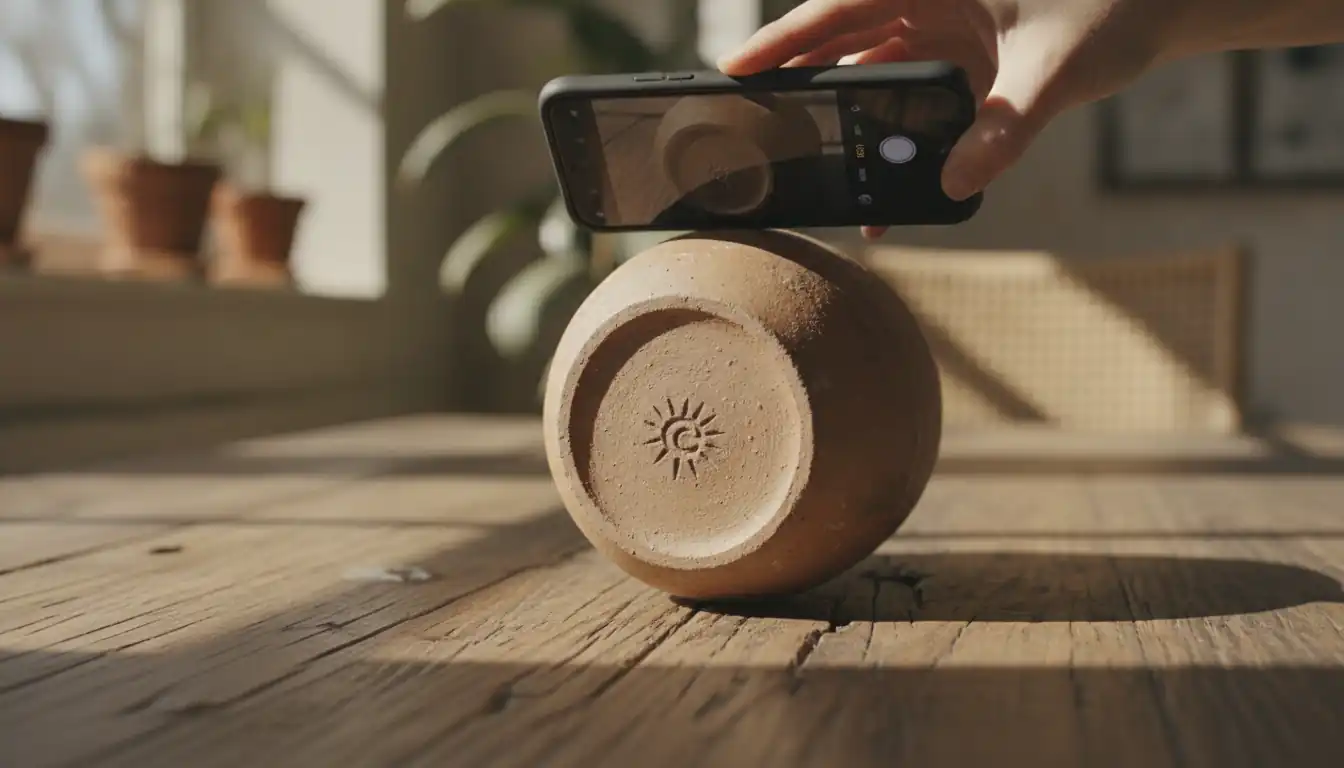
You are standing in a crowded thrift store or a dusty estate sale, and your eyes land on a ceramic bowl tucked away on a bottom shelf. It has a certain weight to it, a glaze that catches the light with an unusual depth, and a shape that feels intentional rather than mass-produced. You flip it over, and there it is: a small, faded blue stamp or perhaps a faint incised squiggle in the clay. In that moment, you aren't just holding a piece of kitchenware; you are holding a mystery that could be worth five dollars or five thousand.
Correctly identifying a pottery mark is the difference between a lucky find and a missed fortune. These marks are the primary language of the ceramics market, acting as a direct link to the person who sat at the wheel or the factory that fired the kiln centuries ago. Understanding how to read these "fingerprints" allows you to peel back the layers of history, revealing the origin, the era, and the true value of an object that others might simply walk past.
This guide will walk you through the evolution of these marks, the modern tools that have replaced heavy reference books, and the subtle physical clues that help identify a piece when the mark is missing. You will learn how to spot the clever reproductions that fool even seasoned collectors and how to turn your hobby into a well-documented, valuable collection. By the time you finish reading, you will have the knowledge to transform your phone into a professional-grade appraisal tool.
The Evolution of the Maker's Mark
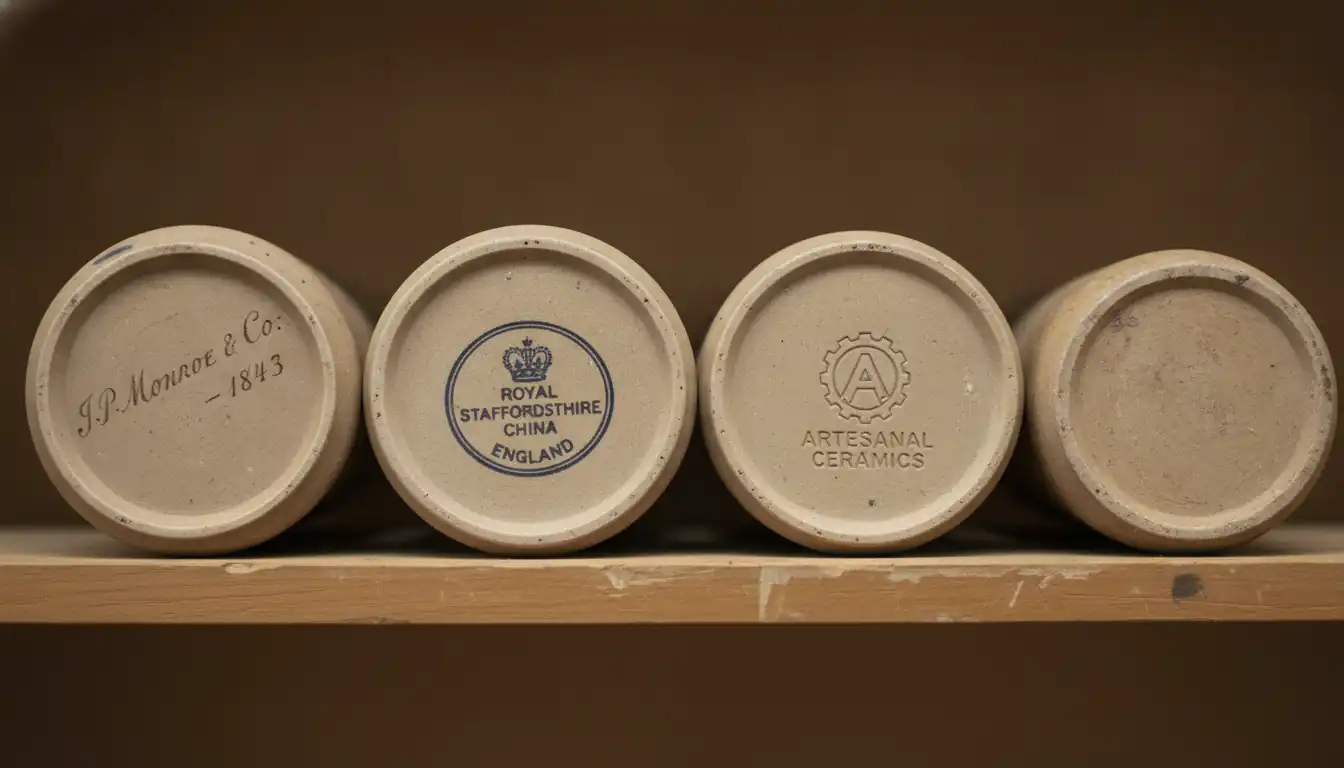
The history of pottery marks is a history of human pride and legal protection. Long before the concept of a "brand" existed, potters wanted to claim their work. In ancient times, this was often a simple matter of survival or logistics. A potter in a communal village might scratch a specific number of lines into the base of a pot before it went into a shared kiln to ensure they received their own work back after the firing. These early marks were utilitarian, but they laid the groundwork for the complex systems of identification we use today.
As trade expanded, these marks became a form of quality control. By the medieval period, guilds in Europe and dynasties in China began implementing more standardized marking systems. A mark wasn't just a signature; it was a guarantee that the clay had been refined to a certain standard and the glaze was free of defects. If a merchant purchased a crate of porcelain that arrived cracked or poorly finished, the mark told them exactly who was responsible. This accountability turned the maker's mark into a symbol of reputation.
From Ancient Symbols to Modern Branding
The transition from simple scratches to sophisticated branding happened alongside the Industrial Revolution. In the 18th century, factories like Meissen in Germany and Sèvres in France began using elaborate painted marks, such as the famous crossed swords or the royal "L" cypher. These weren't just for identification; they were status symbols. Owning a piece with a specific mark meant you had the taste and the wealth to afford the finest ceramics in the world.
By the Victorian era, the process became even more complex. The introduction of the transfer-printing process allowed factories to apply highly detailed, multi-colored stamps to the bottom of their wares. These marks often included the name of the pattern, the name of the factory, and sometimes even a registration diamond that indicated the exact date the design was protected by law. This era turned pottery marks into a dense code that, if read correctly, provides a biography of the piece.
Why Faded Marks Still Hold the Key to Value
You will often find pieces where the mark is nearly invisible. Perhaps the glaze was applied too thickly, or decades of use have worn the stamp away. To a novice, a faded mark looks like a dead end. To a professional collector, a partial mark is a challenge that often leads to a significant discovery. Even a single letter or a specific shade of blue ink can narrow down the origin of a piece to a specific decade or a particular artist.
The value of a ceramic item is inextricably linked to its provenance. A beautiful vase is just a vase until you can prove it was made by a master like Rookwood or Grueby. The mark provides the objective evidence needed to justify a high valuation. It transforms a subjective opinion about beauty into a factual statement about historical significance. This is why identifying the mark is always the first and most critical step in the appraisal process.
The Modern Toolkit for Ceramic Sleuthing
For decades, the only way to identify a mysterious mark was to own a library of massive, expensive reference books. Collectors would spend hours flipping through the pages of Kovel’s Dictionary of Marks or specialized encyclopedias for British or European porcelain. You had to manually match the tiny drawing on the page to the mark on your pot, a process that was prone to error and incredibly time-consuming. If the mark was slightly different or the book was out of date, you were out of luck.
The digital age has completely changed this dynamic. We have moved from physical books to instant, image-based identification. You no longer need to memorize thousands of variations of the Meissen crossed swords or the Wedgwood urn. The knowledge that once took a lifetime to acquire is now accessible in seconds through your smartphone. This shift has democratized the world of antique collecting, allowing anyone with a curious eye to compete with professional dealers.
Why Traditional Reference Books Are Failing Modern Collectors
Reference books are static, while the antique market is dynamic. A book published ten years ago cannot account for new research or the discovery of previously unknown marks. Furthermore, books are limited by their physical size. They can only show a few variations of a mark, whereas a single factory might have used dozens of different stamps over a century. If your piece has a rare "transitional" mark that didn't make it into the book, you might incorrectly assume it's a fake.
The search process in a book is also inherently flawed. You have to know what you are looking for to find it. If you can't identify the shape of a symbol—is it a bird or a crown?—you don't even know which chapter to open. This "search by description" method is slow and often leads to false positives. Modern collectors need a tool that can see what they are seeing and provide an answer without the guesswork.
Leveraging AI for Instant Origin and Appraisal
This is where technology like the Relic app becomes an essential part of your toolkit. Instead of squinting at a faded stamp and guessing which book to consult, you simply take a photo. Relic uses advanced AI to analyze the mark, the shape of the piece, and even the texture of the clay. It then cross-references this data against a massive database of known ceramics to provide a real appraisal, history, and origin of the item.
The advantage of using an app like Relic is the speed and accuracy of the results. It doesn't just tell you who made the piece; it provides the historical context that gives the item its value. You get an instant understanding of whether you are looking at a common mass-produced item or a rare collector's piece. With a 4.9-star rating from over 20,000 reviews, it has become the go-to resource for professionals like dealers and pickers who need to make split-second decisions at auctions or flea markets.
| Feature | Traditional Reference Books | Relic App |
|---|---|---|
| Search Speed | Minutes to Hours | Seconds |
| Portability | Heavy and Bulky | Always in your pocket |
| Updates | Requires buying new editions | Real-time database updates |
| Identification Method | Manual visual matching | AI-powered image recognition |
| Valuation | Often outdated or missing | Real-time market appraisals |
Deciphering the Unreadable and the Obscure
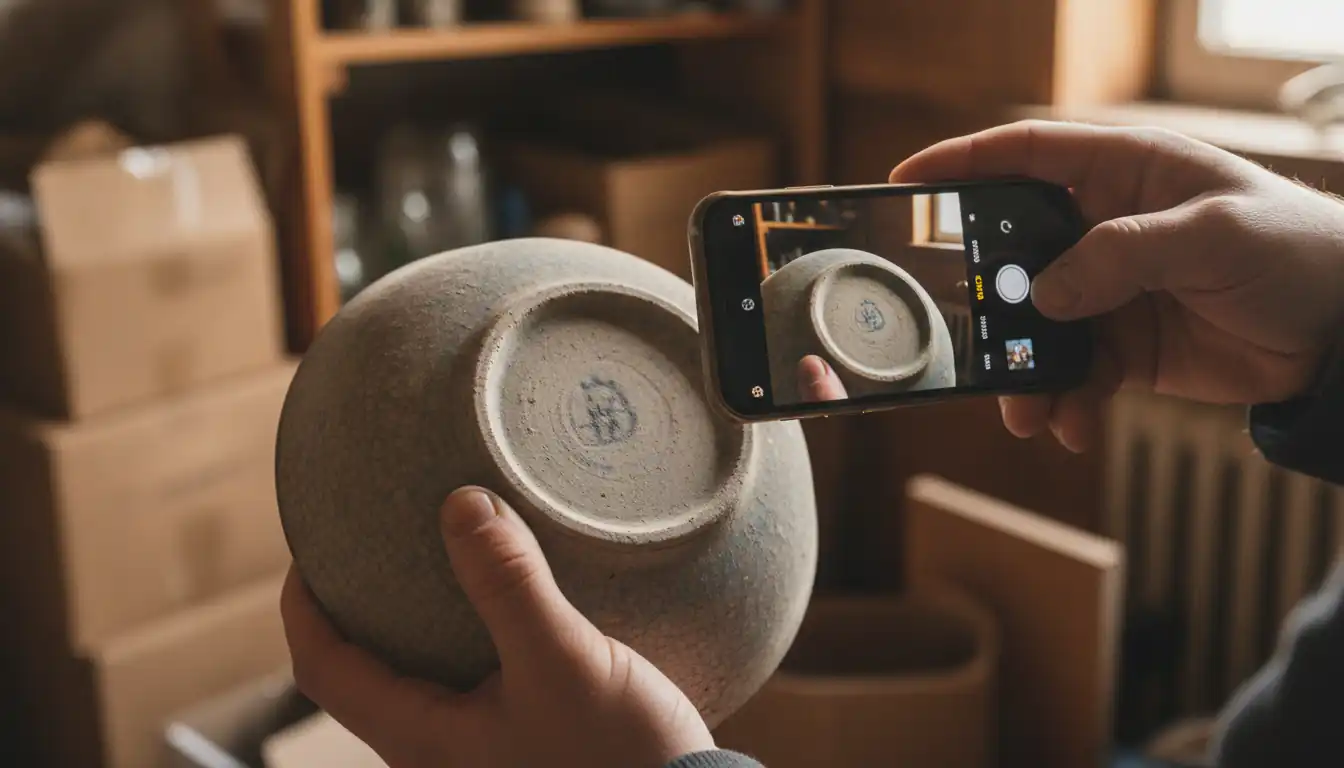
What happens when there is no mark at all? Many of the world's most valuable ceramics, especially early earthenware and certain folk art pieces, were never marked. In these cases, the "mark" is the object itself. You have to look at the physical characteristics of the piece to tell its story. This requires a shift from looking at the bottom of the pot to looking at the clay, the glaze, and the way it was constructed.
The clay body—the actual material the pot is made of—is a major clue. Is it heavy, red, and porous like terracotta? Or is it white, translucent, and glass-like like fine porcelain? Different regions had access to different types of clay. For example, the grey, salt-glazed stoneware of the American Northeast is distinct from the creamy "Queensware" developed by Wedgwood in England. Learning to identify these materials is like learning the dialects of a language.
Identifying Regional Styles Without a Clear Stamp
Regional styles often serve as a secondary signature. A piece of pottery from the American South might feature "slip-trailing," where a liquid clay mixture is used to draw designs on the surface. Meanwhile, a piece from the Zuni Pueblo will have distinct geometric patterns and a specific color palette of red, black, and white. These aesthetic choices weren't random; they were passed down through generations of makers in a specific area.
"When the mark is missing, the maker's hand is still visible in the weight of the throw, the thickness of the glaze, and the way the foot of the pot was trimmed."
You should also pay attention to the "furniture" of the piece—the handles, the spout, and the lid. Were they molded separately and attached with visible seams, or were they seamlessly integrated? Is the bottom of the piece flat, or does it have a "foot ring"? These technical details are often more difficult to fake than a simple stamp, making them incredibly reliable for identification.
How Machine Learning Sees Patterns the Human Eye Misses
One of the most fascinating aspects of modern identification is how AI can "see" these subtle physical cues. While a human might struggle to distinguish between two similar types of green glaze, machine learning algorithms can analyze the exact spectral signature and texture patterns. An app like Relic doesn't just look for a logo; it analyzes the entire aesthetic of the piece.
If you upload a photo of an unmarked vase, the AI can compare the curve of the shoulder and the "crackle" pattern in the glaze to thousands of known examples. It can identify that a specific shade of cobalt blue was only used by a certain factory during a five-year window in the 1880s. This level of pattern recognition allows you to identify obscure pieces that would have remained mysteries in the era of paper books. It turns the "detective work" of ceramic identification into a precise science.
Avoiding the Pitfalls of Pottery Identification
The antique market is a minefield of reproductions, "marriages" (where a lid from one pot is put on the body of another), and outright fakes. As the value of certain makers has skyrocketed, so has the sophistication of those trying to mimic them. One of the most common traps is the "fake" Ming mark. For centuries, Chinese potters have placed the marks of earlier, more prestigious dynasties on their work as a sign of respect, not necessarily to deceive. However, in the Western market, these are often sold as originals to unsuspecting buyers.
Another common pitfall is the 1970s reproduction. During the mid-20th century, there was a massive revival of interest in Victorian and Art Nouveau styles. Companies produced thousands of pieces that looked almost identical to the originals, even using similar marks. However, the materials used were different. A 19th-century piece might have a lead glaze that has a specific "glow," while a 1970s reproduction will often have a flatter, more plastic-looking finish.
Spotting Fakes and Reproductions in the Digital Age
How do you protect yourself from these mistakes? You have to look for inconsistencies. A common error in fakes is the "perfect" mark. Authentic 18th-century marks were applied by hand and often look a bit messy or asymmetrical. If a mark on a supposedly 200-year-old plate looks like it was printed by a modern laser printer, it probably was. You should also check the wear patterns. A genuine antique should have "shelf wear"—fine scratches on the bottom where it has sat on surfaces for decades. If the bottom is pristine but the rest of the piece looks old, be suspicious.
Using a tool like Relic acts as a vital safeguard in these high-risk scenarios. Because the app provides origin data and historical context, it helps you verify authenticity. If you scan a piece that claims to be from the 1700s but the AI identifies the glaze composition as something developed in the 1950s, you've just saved yourself a very expensive mistake. It provides a layer of objective verification that is essential in a market flooded with replicas.
The Danger of Misinterpreting Commemorative Marks
Not every mark that looks old is actually an indicator of age. Many companies release "commemorative" editions to celebrate an anniversary. These pieces often feature the original 18th or 19th-century mark, but with a small, easy-to-miss addition like a date or a special symbol. If you don't know to look for that extra detail, you might pay "original" prices for a modern tribute.
Common Red Flags in Pottery Identification:
- Uniformity: Marks that are perfectly centered and identical on every piece of a set often indicate modern mass production.
- "Made In" Stamps: The McKinley Tariff Act of 1890 required the country of origin to be marked on imports. If a piece says "Made in England," it almost certainly dates after 1891.
- Weight Discrepancies: Reproductions are often made with different clay formulas, making them significantly heavier or lighter than the originals.
- Acid-Etched Marks: Some modern fakes use acid to "age" a mark, but this often leaves a fuzzy edge that a genuine fired-on mark wouldn't have.
Turning Your Finds into a Curated Collection
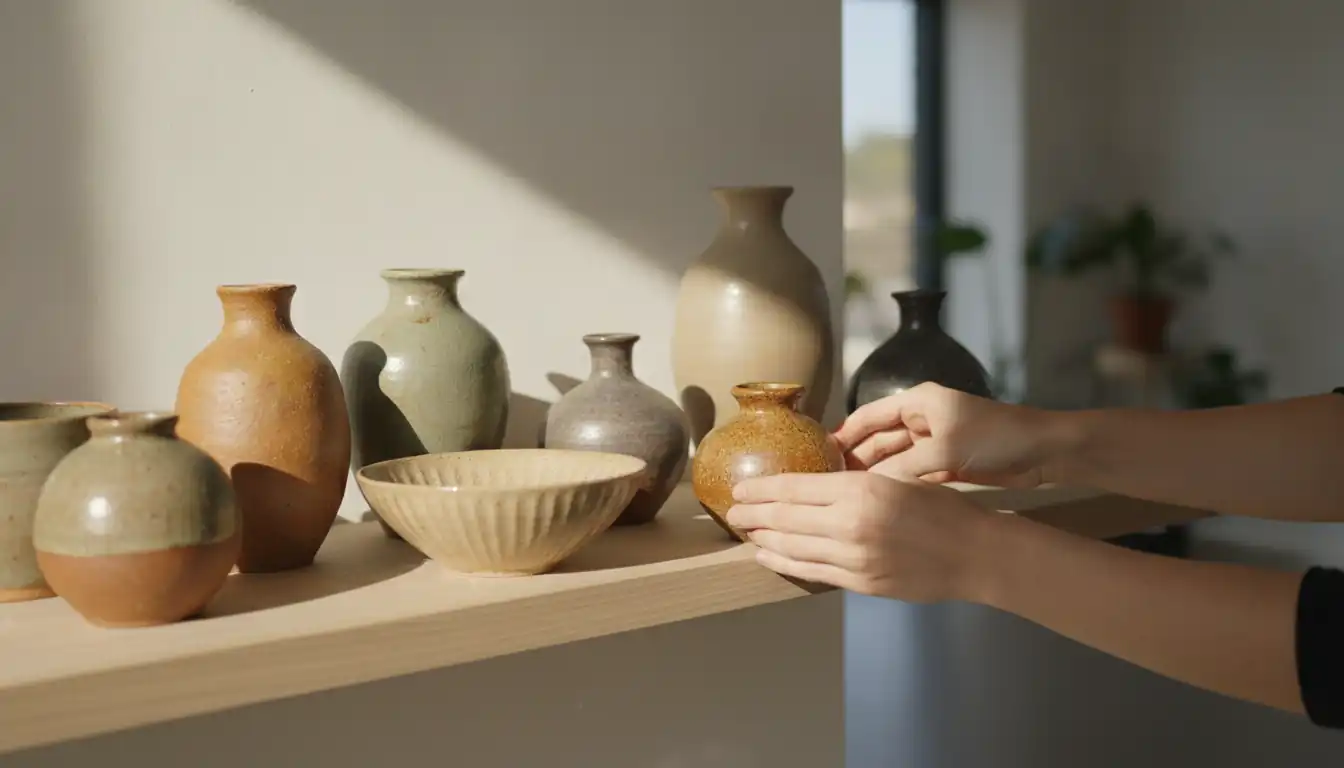
Once you have identified and appraised your pieces, the next step is moving from being a "gatherer" to being a "collector." A collection is more than just a pile of pretty objects; it is a curated set of items with documented history and value. This documentation is crucial for several reasons. First, it's essential for insurance. If your home is damaged, an insurance company won't take your word that a bowl was a rare piece of Meissen; they need proof of identification and a professional valuation.
Second, documentation makes resale much easier. When you decide to sell a piece, having a digital record of its appraisal and history allows you to command a higher price. Buyers are willing to pay a premium for certainty. They want to know exactly what they are buying and have the confidence that it has been properly vetted. By keeping a detailed catalog, you are essentially building a "pedigree" for your collection.
Building a Digital Catalog of Your Ceramic Assets
The "old way" of documenting a collection involved physical folders filled with receipts and printed photos. Today, you can maintain a digital catalog that is updated in real-time. This is another area where the Relic app excels. It allows you to save your scans into a searchable catalog. Every time you identify a new find, it is added to your digital portfolio, complete with its appraisal value and historical data.
This digital record-keeping is especially useful for "pickers" and online sellers. If you are at a garage sale and see a piece that looks familiar, you can quickly check your catalog to see if you already own something similar or if you've researched that maker before. It turns your phone into a portable database of your entire inventory, making it easy to manage your assets whether you are at home or out in the field.
Understanding Market Trends Through Real-Time Data
The value of pottery isn't static. Just like the stock market, the antiques market has trends. A maker that was highly sought after ten years ago might be cooling off today, while a previously obscure regional potter might suddenly be in high demand. To be a successful collector, you need to understand these shifts. You need to know which items are "investment-grade"—pieces that are likely to appreciate over time due to their rarity and historical importance.
How to Track the Value of Your Collection:
- Monitor Auction Results: Keep an eye on what similar pieces are selling for at major auction houses like Sotheby's or specialized ceramic auctions.
- Use Real-Time Appraisal Tools: Regularly re-scan items in your collection using Relic to see if the market valuation has shifted.
- Focus on Condition: Remember that a small chip or crack can reduce the value of a piece by 50% or more. Always document the condition of your items.
- Identify "Blue Chip" Makers: Certain names, like Wedgwood, Meissen, and Rookwood, have a long history of stability and are generally safer investments.
By treating your pottery finds as a financial portfolio, you change the way you look at every estate sale and thrift store. You aren't just looking for something pretty to put on the mantel; you are looking for an asset. With the right tools and a bit of knowledge, that dusty bowl on the bottom shelf isn't just a piece of clay—it's a masterpiece waiting to be discovered.
Conclusion
Identifying pottery marks is a skill that blends history, art, and detective work. From the ancient scratches of village potters to the sophisticated AI-driven appraisals of today, the goal has always been the same: to uncover the truth behind the object. You now know that a mark is a fingerprint, a guarantee of quality, and a roadmap to an item's value. You understand that even when a mark is missing, the clay and glaze still have a story to tell.
The transition from a casual observer to a savvy collector happens the moment you stop guessing and start verifying. By using modern tools like the Relic app, you bypass years of manual research and gain instant access to professional-grade insights. You can spot the fakes, avoid the pitfalls of commemorative editions, and build a documented collection that holds its value over time.
The next time you see a piece of pottery that catches your eye, don't leave its story to chance. Pick it up, turn it over, and use the technology in your pocket to unlock its history. Whether you are a professional dealer or a weekend enthusiast, the world of ceramics is full of hidden treasures. All you need is the right tool to find them. Download Relic today and see what masterpieces are hiding in plain sight in your own home or at your next local find.
Identify antiques instantly
Point your camera at any antique, collectible, or vintage item. Get valuations, history, and market insights in seconds.
Download for iPhone