That Dusty Camera in Your Attic Could Be Worth Thousands—Here’s How to Know for Sure

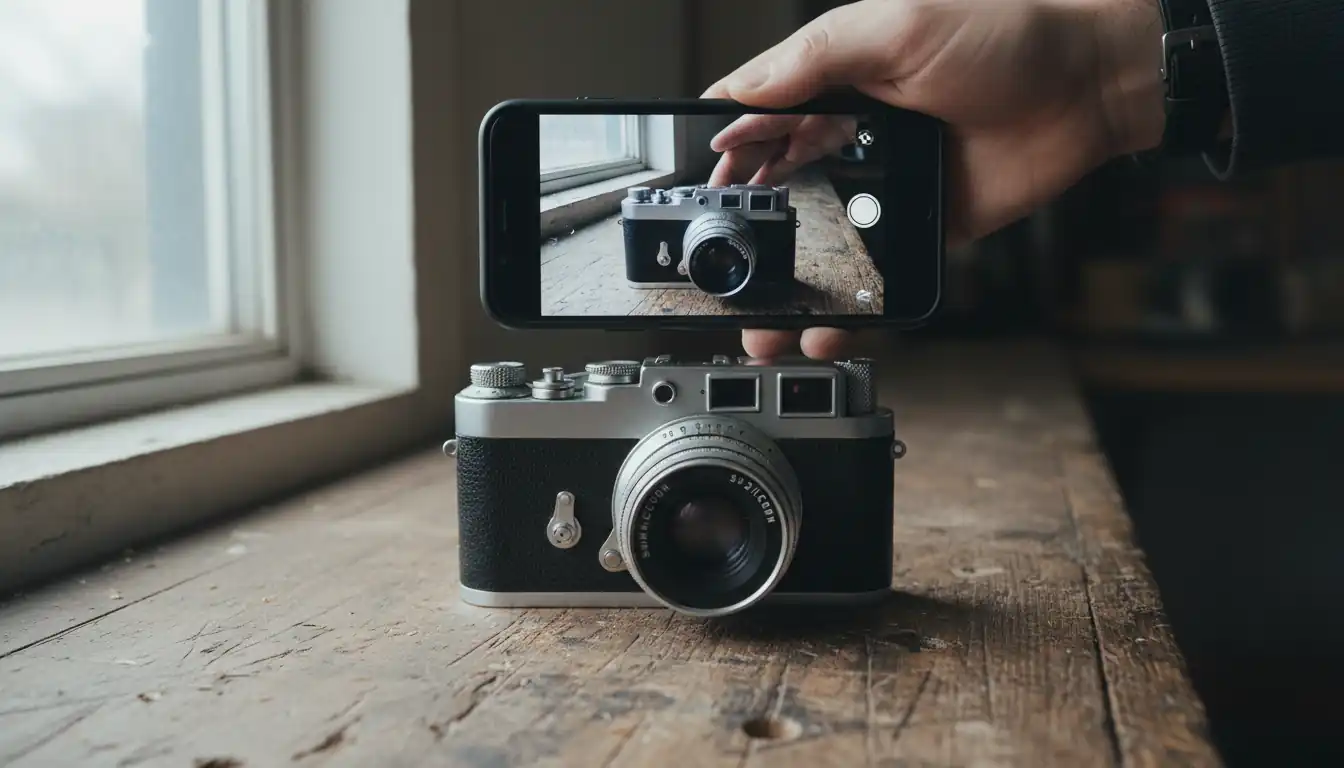
You might have found it while clearing out a grandparent’s estate or tucked behind a stack of old suitcases in the crawl space. It’s heavy, smells faintly of ozone and old leather, and looks like it belongs in a black-and-white spy movie. Most people see these objects as relics of a bygone era—charming shelf decorations at best. But for a growing community of collectors and historians, that "old camera" is a precision-engineered instrument that could be worth more than the car parked in your driveway.
The vintage camera market has experienced a massive resurgence. While digital photography offers convenience, the mechanical perfection of a mid-century Leica or Hasselblad offers something tangible. However, the difference between a $50 thrift store find and a $5,000 collector’s piece often comes down to a single letter in a serial number or the specific color of a lens coating. If you don't know what you're looking at, you could easily overlook a fortune.
This guide will walk you through the process of identifying your find with the precision of a professional appraiser. You will learn how to read the physical "DNA" of a camera, how to use modern tools to verify your discoveries, and how to protect your investment for the long term. By the time you finish reading, you’ll know exactly whether that dusty attic find is a common consumer model or a rare piece of photographic history.
Decoding the Physical DNA of Vintage Cameras
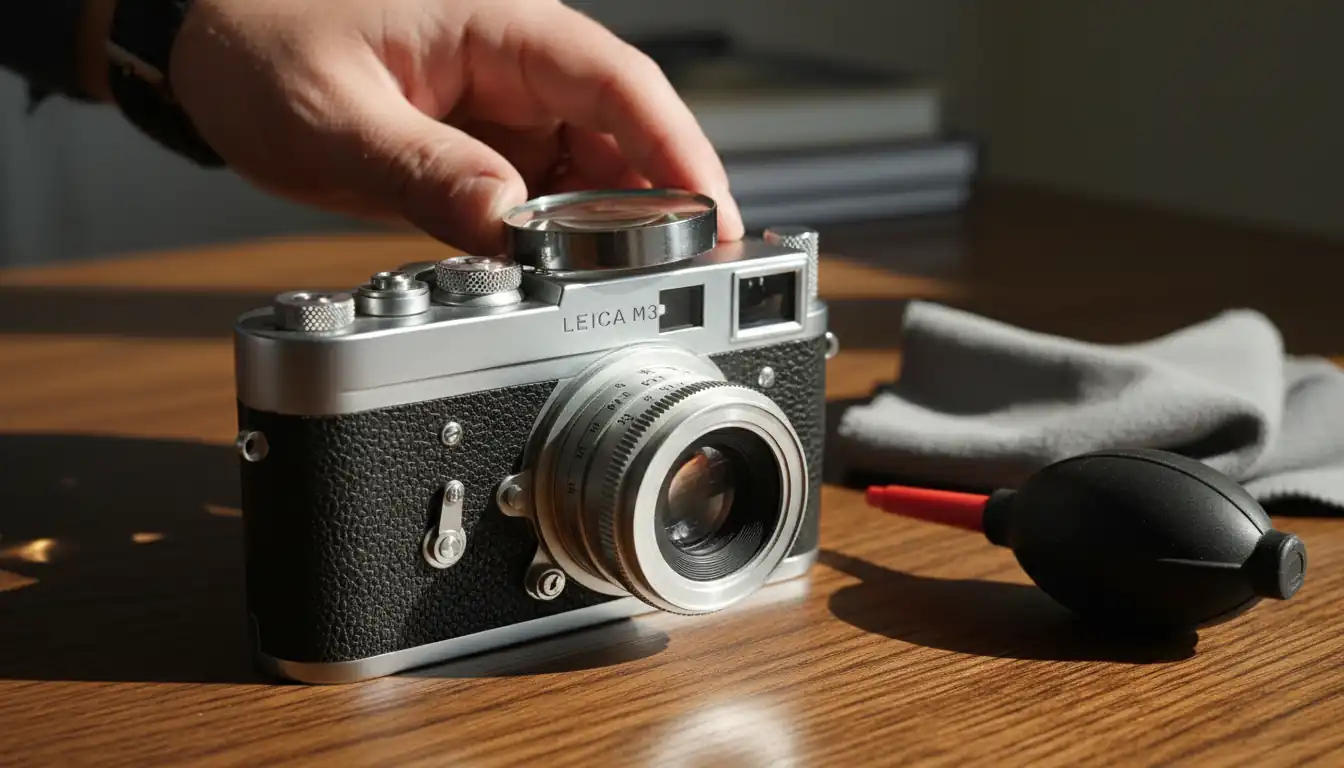
Before you reach for a computer or a price guide, you need to handle the camera. Identifying a vintage camera is a tactile process. Manufacturers from the golden age of photography didn't always make their branding obvious. In fact, some of the most valuable cameras in the world have very little writing on the front. You have to know where to look to find the clues the manufacturer left behind.
Identifying Models through Branding and Serial Numbers
The first step is locating the serial number. This is the camera’s social security number; it tells you the exact year, factory, and production batch. While many modern cameras have a sticker on the bottom, vintage cameras often had their serial numbers engraved directly into the metal.
- The Accessory Shoe: Look at the metal bracket on top of the camera where a flash would slide in. Manufacturers like Leica often engraved the serial number right on the edge of this shoe or just in front of it.
- Inside the Film Chamber: Open the back of the camera. Sometimes, the serial number is printed or engraved on the inner rails where the film travels, or even on the inside of the removable back door.
- Under the Rewind Crank: On many 35mm cameras, you might need to lift the film rewind knob to see a number stamped into the body underneath.
- The Lens Ring: Don't confuse the camera body serial number with the lens serial number. The lens will almost always have its own number engraved on the front ring, surrounding the glass.
Branding can also be deceptive. For example, a camera might say "Honeywell Pentax." This tells you it was a Pentax camera imported into the U.S. by the Honeywell corporation. Knowing these nuances helps you determine the origin and the specific market the camera was intended for, which can influence its rarity.
Distinguishing Camera Types by Body Architecture
If the branding is worn away, the physical shape of the camera—its architecture—will tell you what category it falls into. Most vintage cameras found in attics fall into three primary design families.
Rangefinder Cameras These are often the most sought-after by collectors. You can identify a rangefinder by looking at the front of the camera: it will have two or three small windows instead of one large lens opening. When you look through the viewfinder, you see a double image in the center. As you turn the focus ring, those two images merge into one. This triangulation system was the pinnacle of technology before the rise of the SLR.
Single Lens Reflex (SLR) Cameras The SLR is what most people picture when they think of a "professional" camera. The defining characteristic is the "hump" on top, which houses a pentaprism. This prism allows you to look directly through the lens via a mirror. When you press the shutter, the mirror flips up with a distinct "clack" sound. If your camera has a detachable lens and a mirror inside that reflects your view, it’s an SLR.
Twin Lens Reflex (TLR) Cameras These are the "boxy" cameras that you typically hold at waist level and look down into. They have two lenses stacked vertically on the front. The top lens is for viewing and focusing, while the bottom lens captures the image. Names like Rolleiflex or Yashica dominate this category. Because of their unique look, they are highly prized as display pieces, but the high-end models are also incredible photographic tools.
| Camera Type | Visual Hallmark | Common High-Value Brands |
|---|---|---|
| Rangefinder | Multiple small windows on front | Leica, Canon (V-series), Nikon (S-series) |
| SLR | Pentaprism "hump" on top | Nikon, Zeiss Ikon, Pentax |
| TLR | Two lenses stacked vertically | Rolleiflex, Yashica, Minolta |
Modern Shortcuts for Instant Identification
Once you’ve done your initial "detective work" on the hardware, you might still find yourself staring at a series of numbers and German words that don't seem to make sense. This is where technology bridges the gap between a curious amateur and a seasoned pro. Many people ask, "How to identify a camera model?" or "Can I take a picture of something and get it identified?" The answer is yes, but the tool you choose matters immensely.
Comparing General Visual Search with Specialized AI
You might be tempted to use a general tool like Google Lens. While these are great for identifying a breed of dog or a type of flower, they often struggle with the nuances of vintage hardware. A general AI might recognize a camera as a "Leica," but it likely won't distinguish between a 1932 Leica II and a 1950s Russian Zorki—a common clone that looks almost identical but is worth a fraction of the price.
General visual search tools look at the broad shape. They see a silver body and a black lens and give you a generic result. Specialized tools, however, are trained on the specific "patina" and mechanical markers of authentic antiques. They understand that the specific shape of a screw head or the font used in an engraving can be the difference between a masterpiece and a counterfeit.
Using Relic for Deep History and Appraisal
For those using an iPhone, the Relic app provides a more professional approach to this process. Instead of just giving you a name, Relic uses advanced AI to analyze the photo you take and provide a real appraisal, history, and origin of the item.
When you upload a photo to Relic, the algorithm doesn't just look at the brand name. It analyzes the wear patterns, the specific texture of the leatherette (the "skin" of the camera), and the mechanical configuration to provide a detailed report. This is particularly useful for cameras found in attics, as they often have decades of dust or minor corrosion that can confuse simpler apps. Relic’s ability to provide historical context means you aren't just finding out what the item is; you're learning why it was made and who would have used it. With a 4.9-star rating from over 20,000 reviews, it has become a go-to for collectors who need accuracy over a quick, generic guess.
Using specialized AI ensures you don't fall for "clones." In the mid-20th century, many factories produced cameras that looked exactly like high-end German models but lacked the internal precision and value.
Technical Indicators of Age and Origin
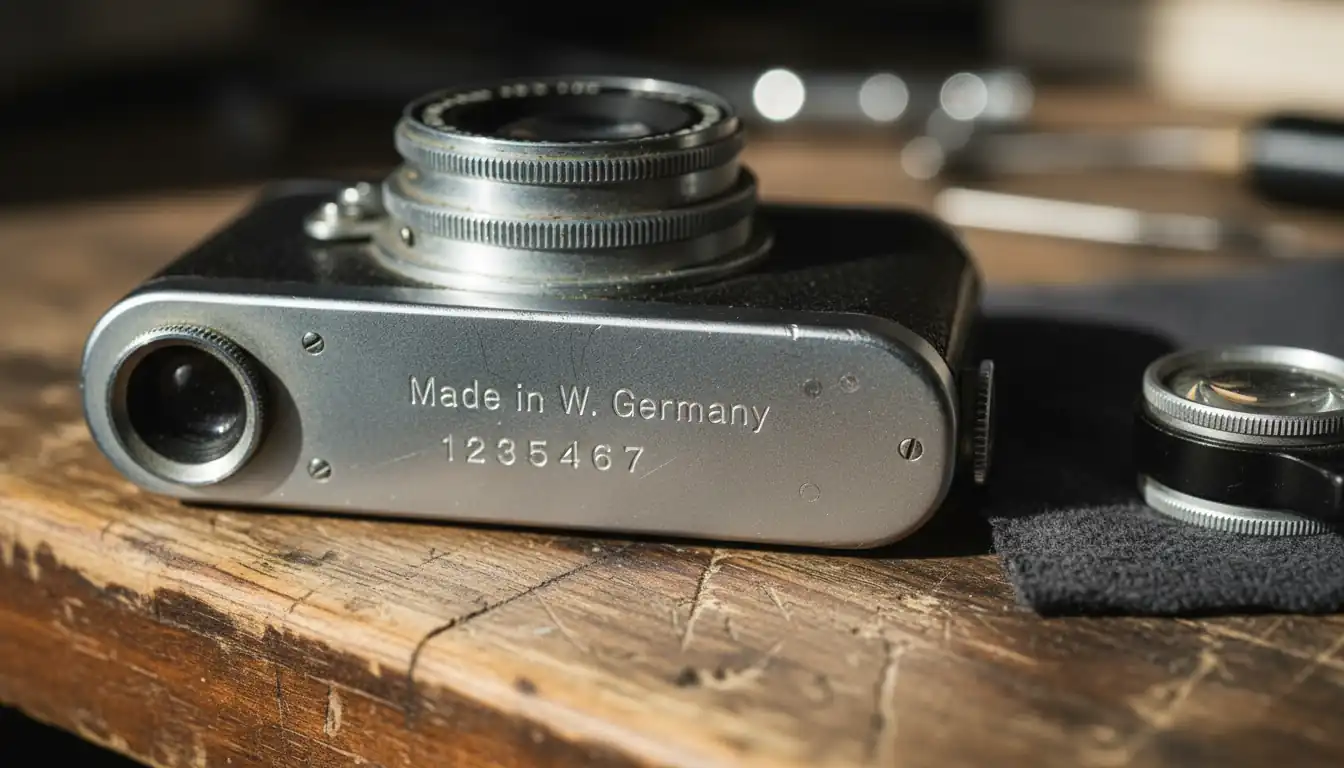
To truly understand a camera, you have to look at the parts that actually do the work: the lens and the shutter. These components act as chronological fingerprints. Even if the camera body is generic, the glass and the mechanics inside will tell you exactly when and where it was born.
Reading Lens Markings and Optical Coatings
The lens is the soul of the camera. If you look closely at the ring around the front element of the glass, you’ll see a series of names and numbers. These aren't just technical specs; they are a map of the camera’s history.
- The Name Game: If you see names like "Summar," "Elmar," or "Summicron," you are looking at Leica glass. If it says "Nikkor," it’s Nikon. "Carl Zeiss" or "Opton" indicates high-end German optics.
- Aperture Scales: Look at the numbers on the ring that turns to change the light (the f-stops). Older European cameras often used a different scale than we use today. If you see numbers like 1.1, 1.6, 2.2, or 6.3, you are likely looking at a camera made before or during World War II. Modern scales (1.4, 2, 2.8, 4, 5.6) became the standard later.
- Lens Coating: Tilt the camera under a light. Do you see a purple, blue, or amber reflection on the glass? This is an optical coating used to reduce flare. If the glass is perfectly clear with no tint, the camera was likely made before the mid-1940s. Early "T-coated" lenses from Zeiss are particularly valuable and are marked with a small red "T."
Shutter Mechanisms as Chronological Fingerprints
The shutter is the "heartbeat" of the camera. There are two main types, and knowing which one you have can help you date the device.
Leaf Shutters These are located inside the lens itself. They consist of small overlapping metal blades that fly open and shut. They are very quiet—often making just a faint "snip" sound. Leaf shutters were common in folding cameras and TLRs. If the shutter is stuck, it’s often because the internal lubricants have turned to "glue" over seventy years.
Focal Plane Shutters These are located inside the camera body, right in front of where the film sits. They usually look like two curtains of cloth or metal that slide across the opening. These are much louder and provide a mechanical "thwack." Leica and most SLRs use this system. If you open the back of the camera and see a wrinkled piece of black silk, you’re looking at a cloth focal plane shutter from the early to mid-20th century.
| Feature | Older Indicator (Pre-1945) | Newer Indicator (Post-1945) |
|---|---|---|
| Lens Coating | None (Clear glass) | Purple/Blue/Amber tint |
| Aperture Scale | 1.6, 2.2, 6.3, 9, 12.5 | 2, 2.8, 4, 5.6, 8, 11 |
| Shutter Material | Often cloth or simple metal | Advanced alloys or titanium |
Translating Identification into Market Value
Identification is only half the battle. Once you know you have a 1954 Nikon S2, the next question is naturally: "What is it worth?" This is where many people make mistakes that cost them hundreds or even thousands of dollars.
The Difference Between Rare Models and Mass Produced Units
The vintage camera market is driven by "variants." A standard Nikon F might be worth $150. However, a Nikon F with a "Red Dot" (a tiny red engraving near the serial number) can fetch significantly more because it indicates a specific, limited production run.
- Prototypes and "M" Models: Any camera with an "M" or "P" in the serial number or engraved on the body should be handled with extreme care. These often denote "Military" or "Prototype" models, which are the "Holy Grail" for collectors.
- Color Variants: While most cameras were silver (chrome) or black, certain rare colors like olive green (often military issue) or grey can increase value by 500% or more.
- The "Sold" Listing Trap: When researching value, never look at "Asking" prices on sites like eBay. Anyone can ask $10,000 for a broken camera. You must filter by "Sold" listings to see what people are actually paying.
How Condition and Functionality Impact Appraisal
In the world of antiques, condition is everything. However, with cameras, there is a distinction between "cosmetic" and "mechanical" condition.
- Mint vs. User: A "Mint" camera looks like it just came off the factory floor. A "User" camera has brassing (where the black paint has worn away to reveal the yellow brass underneath). Surprisingly, some collectors love "brassing" because it shows the camera was used by a professional.
- The Fungus Factor: Hold the lens up to a bright light and look through it. Do you see tiny, spider-web-like threads? That’s lens fungus. It’s a living organism that eats the coating on the glass. If a lens has heavy fungus, its value drops significantly because it requires a professional cleaning that can cost hundreds of dollars.
- The Relic Advantage: This is where an app like Relic becomes an essential part of your toolkit. Because the app provides a real appraisal based on the specific item you’ve photographed, it takes the guesswork out of the "Sold vs. Asking" confusion. Having a digital record of an item's history and origin—backed by AI analysis—gives you a massive advantage when negotiating with a dealer or listing the item for sale. It provides a level of "proof" that a simple eBay search can't match.
Building and Protecting a Valuable Camera Portfolio
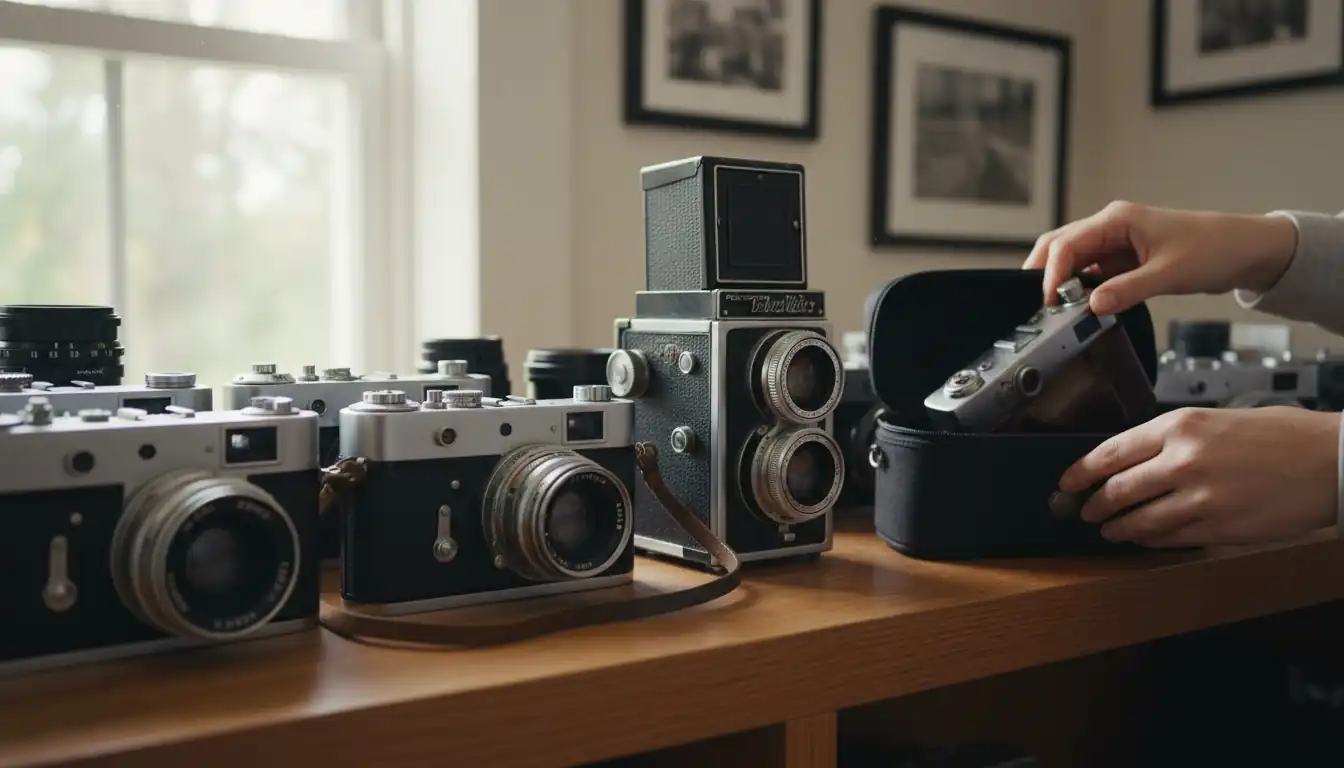
If you’ve discovered that your attic find is indeed a treasure, your role changes from "finder" to "steward." Vintage cameras are delicate machines made of glass, silk, brass, and organic lubricants. If you store them incorrectly, they will deteriorate, and their value will evaporate.
Digital Inventory Management for Collectors
As you find more items, keeping track of them becomes a challenge. You need a record for insurance purposes and for your own sanity.
- Document Everything: Take high-resolution photos of the front, back, top, and inside of every camera.
- Store Appraisals: Keep your digital appraisals in one place. Using the Relic app allows you to store your scans, histories, and valuations in a searchable catalog. If your house were ever to suffer a fire or theft, having a cloud-based record of your collection’s value is the difference between a successful insurance claim and a total loss.
- Note the "Quirks": Every vintage camera has a personality. Maybe the shutter is slow at 1/10th of a second, or the focus ring is a bit stiff. Documenting these details helps you track the health of the camera over time.
Best Practices for Storing Sensitive Vintage Gear
The irony of the "attic find" is that the attic is actually the worst place to store a camera. Extreme heat dries out the lubricants, while humidity encourages the growth of the dreaded lens fungus.
- Climate Control is Key: Store your cameras in a room with stable temperature and low humidity. A bookshelf in a living room is much better than a basement or attic.
- The Silica Gel Strategy: Keep your gear in a sealed plastic bin or a dedicated "dry cabinet" with several large packets of silica gel to absorb moisture.
- The Leather Case Paradox: Many vintage cameras come in beautiful "ever-ready" leather cases. While they look great, the chemicals used to tan the leather in the 1940s and 50s can actually outgas and corrode the metal and glass of the camera over decades. It is often better to store the camera and the case separately.
- Exercise the Shutter: Like a vintage car, a camera needs to "run." Once every few months, take the camera out and fire the shutter at various speeds. This keeps the internal lubricants from settling and hardening.
Pro Tip: Never store a camera with the shutter cocked. This keeps the internal springs under tension, which can cause them to lose their "snap" over several years. Always fire the shutter one last time before putting it away.
Conclusion
That dusty camera in your attic represents a unique intersection of art, history, and engineering. Whether it turns out to be a common family heirloom or a rare collector's piece worth thousands, the process of identifying it connects you to a past where things were built to last for centuries, not just until the next software update.
By learning to read the serial numbers, understanding the architecture of the body, and using advanced tools like the Relic app to verify your findings, you move from being a casual observer to an informed collector. Remember that value is found in the details—the tint of a lens, the sound of a shutter, and the digital proof of an item's origin.
If you’ve found something interesting, don't let it sit in the dark for another decade. Take it out, clean it gently with a microfiber cloth, and start the identification process. You might just be holding a piece of history that is ready for its next chapter—and a significant payday for you.
Identify antiques instantly
Point your camera at any antique, collectible, or vintage item. Get valuations, history, and market insights in seconds.
Download for iPhone