That Dusty Chair Might Be a $5,000 Eames—Here is How to Know for Sure

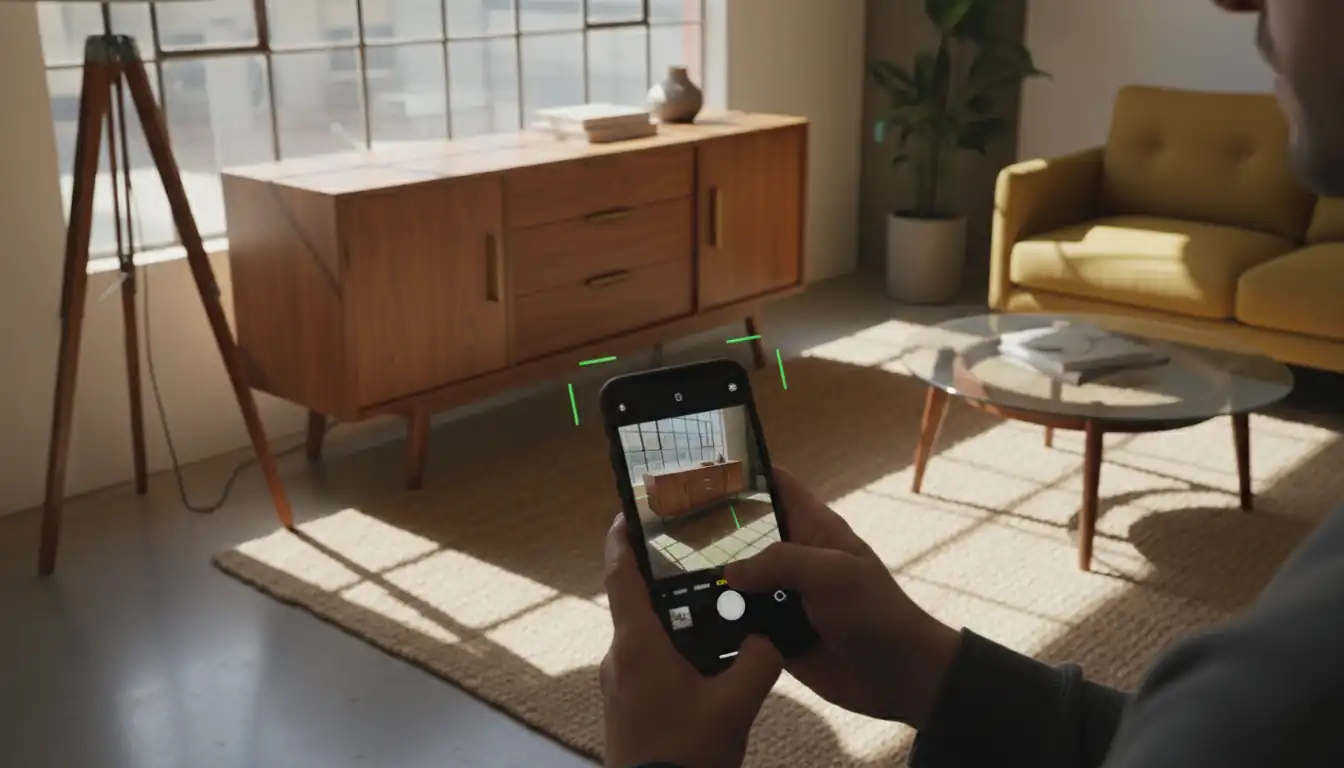
Imagine walking through a local estate sale on a Saturday morning. Amidst the piles of chipped ceramic mugs and outdated encyclopedias, you spot a low-slung wooden chair tucked into a corner. It is covered in a layer of grey dust, and the fabric is a faded, questionable shade of avocado green. The price tag dangling from the armrest says $40. To the untrained eye, it is a relic of a bygone era that belongs in a dumpster. To a collector, those specific curves and the warm glow of the wood underneath the grime suggest something much more significant.
That "dusty chair" could very well be an original Eames Lounge Chair or a Hans Wegner masterpiece. In the world of high-end furniture, the difference between a piece of junk and a $5,000 investment often comes down to a few millimeters of wood curvature or the specific way a leg tapers toward the floor. Identifying these pieces isn't just a hobby; it is a skill that combines art history, engineering, and a bit of detective work.
By the time you finish reading this guide, you will have the tools to distinguish a masterpiece from a mass-produced imitation. We will explore the visual language of Mid-Century Modern (MCM) design, the technological shift in how we identify antiques, and the physical markers that prove a piece is the real deal. Whether you are looking to furnish your home with history or flip a find for a significant profit, the journey starts with learning how to see.
The Visual DNA of Mid-Century Modern Design

To identify a high-value piece of furniture, you first have to understand the philosophy that birthed it. Mid-Century Modern design, which flourished roughly from the mid-1940s through the late 1960s, was defined by a movement called "organic functionalism." This wasn't just about making things look pretty; it was about the marriage of natural forms and industrial efficiency. Designers wanted to create furniture that felt like an extension of the human body while utilizing the new manufacturing capabilities of the post-war era.
When you look at a true MCM piece, you should notice a distinct lack of ornamentation. There are no ornate carvings, no gilded edges, and no heavy, imposing silhouettes. Instead, the beauty comes from the geometry and the material itself.
Identifying Iconic Silhouettes and Tapered Legs
The most recognizable hallmark of this era is the silhouette. If you look at a chair or a sideboard from the side, does it feel "light"? MCM designers were obsessed with lifting furniture off the ground to create a sense of space in the home. This led to the creation of the "compass leg" and the "tapered leg."
- Compass Legs: These legs are angled outward, resembling the legs of a mathematical compass. They provide a wide, stable base while looking incredibly sleek. You will often find these on desks and dining tables from designers like Jean Prouvé.
- Tapered Legs: Also known as "pencil legs," these start thick at the top and narrow down toward the floor. This creates an optical illusion of height and elegance. If a piece has thick, blocky legs that go straight down, it is likely not a high-end MCM original.
- The Atomic Profile: During the 1950s, the Space Race influenced everything, including furniture. Look for "sputnik" shapes—starburst patterns, kidney-shaped tabletops, and backrests that seem to float independently of the frame.
- Tambour Doors: On sideboards and credenzas, look for doors made of thin vertical slats of wood that slide into the body of the piece. This "disappearing" door is a classic sign of high-quality functionalist design.
Decoding Materials from Teak to Molded Plastic
The materials used in the mid-20th century were a mix of the traditional and the experimental. Designers in Scandinavia favored warm, rich woods, while American designers like Charles and Ray Eames leaned into industrial materials like fiberglass and plywood.
| Material | Characteristics | Common Uses |
|---|---|---|
| Teak | Golden-brown hue, high oil content, very durable. | Danish dining tables, sideboards, and desks. |
| Rosewood | Dark, dramatic grain patterns with deep chocolate or purple tones. | High-end executive desks and luxury seating. |
| Molded Plywood | Visible layers on the edges, curved into ergonomic shapes. | The Eames Lounge Chair and LCW (Lounge Chair Wood). |
| Fiberglass | A matte, slightly textured finish with visible glass fibers. | Eames Shell Chairs and Saarinen Tulip Chairs. |
If you run your hand across a genuine teak sideboard, it should feel silky, not plastic-like. The grain should be continuous across the front of the piece. In high-end construction, craftsmen would use a single "flitch" of wood (a slice from the same log) to ensure the pattern matched perfectly across multiple drawers or doors. This attention to detail is what separates a $5,000 piece from a modern reproduction.
The Rise of AI in Furniture Identification
For decades, identifying a mystery chair required a library of design books and hours of scrolling through auction archives. You had to hope that your "wood chair with green cushion" search query would eventually lead you to the right designer. But the landscape of antique hunting has changed. One of the most common questions asked by new collectors is: Can AI identify furniture?
The answer is a resounding yes, and the technology behind it is fascinating. Modern identification tools use neural networks—complex computer systems modeled after the human brain—that have been trained on millions of images of furniture. These systems don't just look at the color of a chair; they analyze the mathematical proportions, the specific angle of the joinery, and the unique grain patterns of different wood species.
How Computer Vision Detects Authentic Designer Pieces
Computer vision is a branch of AI that allows software to "see" and interpret visual data. When you take a photo of a piece of furniture, the AI breaks that image down into thousands of data points. It measures the ratio of the backrest to the seat, the curvature of the armrests, and the distance between the legs.
Traditional search engines rely on words, but design is a visual language. AI bridges that gap by recognizing the "fingerprint" of a designer's style.
For example, a designer like Adrian Pearsall had a very specific way of crafting "gondola" sofas with upswept ends. An AI can recognize that specific curve even if the sofa has been reupholstered in a non-original fabric. This level of precision is something that manual keyword searches simply cannot match. It removes the guesswork and the "I think this might be..." uncertainty that plagues many amateur pickers.
Why Photo Recognition Beats Manual Keyword Searches
Think about how difficult it is to describe a specific shade of wood or a complex geometric shape using only words. Is it "honey oak" or "natural teak"? Is the leg "angled" or "splayed"? These subjective terms lead to dead ends.
Photo recognition technology, like the kind found in the Relic app, bypasses the language barrier entirely. By simply uploading a photo, the app compares your item against a massive database of authenticated antiques. It looks for the subtle markers that define a specific manufacturer or era. This technology has effectively democratized the world of antique dealing. You no longer need twenty years of experience to spot a diamond in the rough; you just need a smartphone and the right software to verify what your eyes are seeing.
Physical Markers the Professionals Look For
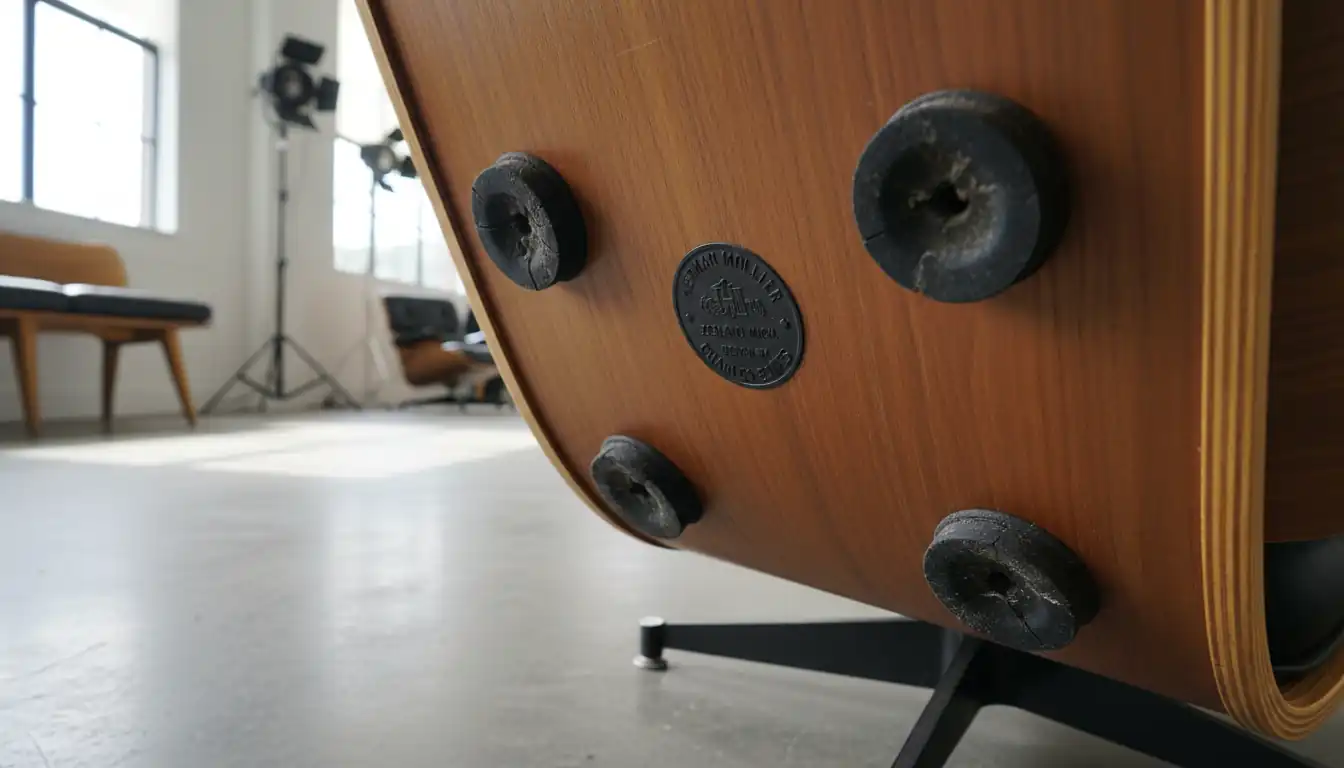
Once you have identified the "look" of a piece, it is time to get your hands dirty. Professional appraisers don't just look at a chair; they flip it over, pull out the drawers, and inspect the hardware. This is where the "hidden" evidence lives. If a piece is a genuine Eames or a Knoll original, the manufacturer wanted you to know—but they often hid the proof in places that wouldn't disrupt the aesthetic.
Locating Manufacturer Stamps and Hidden Paper Labels
The first thing you should do when you encounter a potential treasure is look for a mark. However, don't expect a giant logo on the front.
- The Underside of the Seat: On chairs, look for a small metal medallion, a heat-stamped logo, or a paper label glued to the underside of the frame. Herman Miller often used circular metal discs or rectangular black-and-white labels.
- Inside Drawer Boxes: On dressers and desks, the manufacturer’s mark is almost always branded into the side or the bottom of the top drawer. Look for names like "Lane," "American of Martinsville," or "Broyhill."
- The Back of the Piece: On large wall units or credenzas, look for a stencil or a paper tag on the unfinished back panel. This might include a model number or a production date.
Be aware that paper labels are fragile. They often fall off over sixty years of use. If the label is missing, look for a "ghost" mark—a rectangular area of wood that is lighter than the rest, indicating where a label once protected the wood from darkening over time.
Analyzing Joinery and Underside Construction
High-end MCM furniture was built to last, often using techniques that are too expensive for modern mass production. If you see staples or plastic brackets holding a piece together, walk away.
Check for Dovetail Joints: Pull out a drawer and look at where the front meets the sides. You should see interlocking "teeth" of wood. These are dovetail joints. In the mid-century era, high-quality pieces used "machine-cut" dovetails that are tight and precise. If the drawer is just glued or nailed together, it is a low-quality imitation.
Inspect the Edging: Look at the edges of a tabletop. Is it a solid piece of wood, or can you see a thin layer of veneer peeling away to reveal particle board underneath? While many great MCM pieces used veneers (especially for beautiful grain patterns), they were applied over high-quality plywood or solid secondary woods, never the "sawdust and glue" boards found in modern flat-pack furniture.
Hardware Quality: Genuine designer pieces used high-quality hardware. Look for solid brass hinges or heavy steel glides. If the handles feel light, hollow, or "tinny," the piece was likely a budget-friendly knockoff from the same era.
Instant Appraisals with the Relic App
Identifying a piece is only half the battle. The real question is: what is it worth? Value in the antique world is fluid; it depends on the designer, the condition, the rarity, and the current market trends. This is where the Relic app becomes an essential tool for any serious hunter.
Relic isn't just a search tool; it is a comprehensive appraisal platform. When you upload a photo of that dusty chair, the app’s advanced AI doesn't just give you a name. It provides a full report that includes the history of the item, the designer’s background, and its origin. Knowing if a chair was manufactured in a small workshop in Denmark or a large factory in North Carolina can change the value by thousands of dollars.
Getting a Professional History and Origin Report
One of the most powerful features of Relic is the "Origin" report. For example, if you find a piece of "Danish Modern" furniture, the app can help you determine if it is a true Danish import or an "in the style of" piece made in the United States.
- Historical Context: Relic provides the story behind the design. Was this chair part of a specific collection? Was it featured in a famous architectural project?
- Designer Insights: Understanding who designed a piece allows you to research their other works, helping you build a cohesive collection.
- Material Verification: The app can often help distinguish between different wood types or finishes based on the visual data in your photo.
Understanding the Real Market Value of Your Finds
The most stressful part of buying or selling antiques is the price. You don't want to overpay at a garage sale, and you certainly don't want to undersell a masterpiece on Facebook Marketplace. Relic provides real-time market insights based on recent auction results and dealer listings.
Instead of paying hundreds of dollars for a professional physical appraisal, you can get a reliable estimate in seconds. This allows you to make split-second decisions. If you are standing in a crowded thrift store with three other people eyeing the same table, having an instant valuation on your phone gives you the confidence to pull the trigger before someone else does. With over 20,000 reviews and a 4.9-star rating, the app has become a trusted companion for professional dealers and casual pickers alike.
Avoiding the Replica Trap in Online Marketplaces

The rise of the "Mid-Century Modern" aesthetic has led to a flood of replicas and "tribute" pieces. Online marketplaces like Facebook Marketplace, Craigslist, and even eBay are full of listings that use keywords like "Eames style" or "Wegner-esque." While these pieces might look good in a living room, they hold very little resale value.
Red Flags in Facebook Marketplace and Craigslist Listings
When browsing online, you have to be a skeptic. Sellers often use the name "Eames" as a catch-all for any chair with curved wood. Here is a checklist of red flags to look for in listing photos:
- The "Too Perfect" Finish: Vintage furniture should have a "patina." This is a slight change in color and texture that comes from decades of light exposure and use. If a "1950s" chair looks like it just came out of a box from a big-box retailer, it probably did.
- Incorrect Screws: Look at the hardware. Mid-century furniture typically used flat-head screws. If you see Phillips-head (cross-shaped) screws in a piece that claims to be from 1945, it’s either a modern replica or has been heavily repaired with non-original parts.
- Proportion Errors: Replicas often get the proportions slightly wrong to save on shipping or manufacturing costs. For example, a replica Eames Lounge Chair is often taller and more upright than the original, which was designed to be low and reclined.
- Visible Staples: If a photo of the underside shows staples holding the fabric or dust cover in place, it is almost certainly a mass-produced modern piece.
Verifying Provenance Before You Buy
Before you drive across town to pick up a "rare find," ask the seller for specific photos. A legitimate seller who knows they have a valuable item won't mind providing extra details.
- Ask for a photo of the underside. This is where the labels and joinery are visible.
- Ask for a close-up of the wood grain. This helps you verify if it is solid wood, high-quality veneer, or a cheap laminate.
- Run the listing photos through Relic. You don't even need to be in front of the item. You can take a screenshot of the marketplace listing and upload it to the app. This "pre-screening" can save you hours of driving and the disappointment of realizing a piece is a fake only after you’ve arrived.
| Feature | Authentic Vintage | Modern Replica |
|---|---|---|
| Joinery | Dovetail or specialized dowels | Staples, glue, or cam-locks |
| Hardware | Flat-head screws, solid brass | Phillips-head screws, plastic |
| Weight | Heavy (solid wood/high-quality ply) | Light (particle board or hollow metal) |
| Labeling | Heat stamps, paper tags, medallions | Often no label or "Made in China" sticker |
Conclusion
The world of antique furniture is a high-stakes game of observation. That dusty chair in the corner of a thrift store represents more than just a place to sit; it is a piece of history, a masterclass in engineering, and potentially a significant financial windfall. By training your eye to recognize the visual DNA of Mid-Century Modern design—the tapered legs, the organic curves, and the rich teak grains—you are already ahead of 90% of the people in the room.
However, visual intuition is only the first step. To truly know for sure, you must look deeper. Inspect the joinery, hunt for the hidden manufacturer’s stamps, and use the technology available to you. The Relic app bridges the gap between curiosity and certainty, providing the professional-grade appraisal and historical context you need to make informed decisions in seconds.
The next time you see a piece of furniture that feels "different," don't walk away. Take a photo, look for the markers of quality, and verify its story. You might just find that the dusty relic in front of you is the $5,000 treasure you’ve been searching for. Happy hunting.
Identify antiques instantly
Point your camera at any antique, collectible, or vintage item. Get valuations, history, and market insights in seconds.
Download for iPhone