That Dusty Glass Bowl Could Be Worth Thousands—Here’s How to Spot the Real Treasure

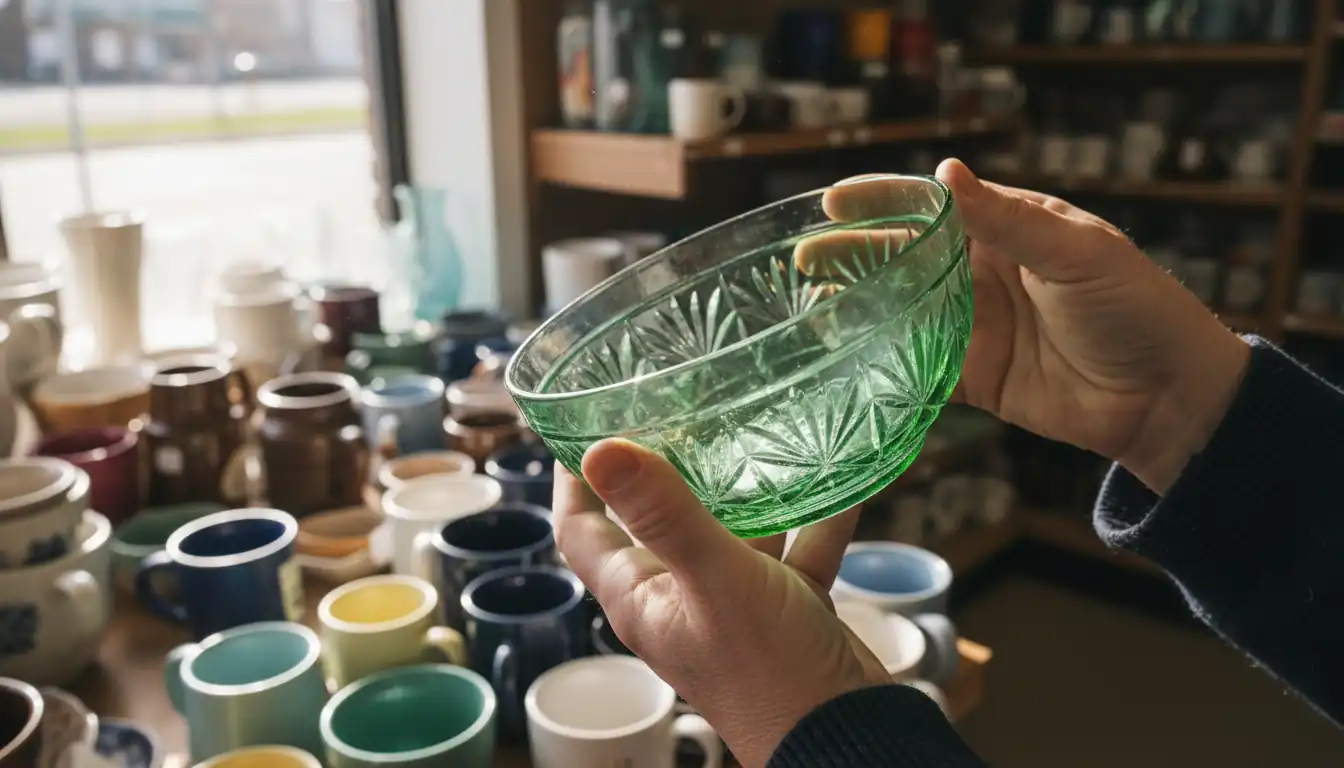
You are standing in a crowded thrift store, surrounded by the clatter of ceramic plates and the musty scent of old books. Your eyes scan a shelf of glassware, mostly comprised of chipped jelly jars and mass-produced floral vases from the nineties. Then, you see it: a heavy, amber-colored bowl tucked behind a stack of plastic tumblers. It feels different. It has a certain weight, a specific glow, and a clarity that the surrounding items lack.
Most people would walk right past it, dismissing it as another piece of "old glass." But for the trained eye, that bowl represents a potential windfall. The world of antique glass is one of the few places where a five-dollar investment can turn into a three-thousand-dollar asset in a single afternoon. The challenge, of course, is knowing how to separate the treasures from the trash.
This guide will transform the way you look at glass. You will learn to read the physical language of glassmaking, decode the history of different eras, and use modern tools to verify your finds. By the time you finish reading, you won't just be looking at a dusty bowl—you’ll be looking at a story, a chemical composition, and a market opportunity.
Physical Clues Hidden in the Glass
Before you worry about who made a piece or how old it is, you need to handle it. Glass leaves behind physical "scars" from its creation process. These marks are like fingerprints; they tell you if a human being blew the glass through a pipe or if a machine stamped it out by the thousands.
The Anatomy of Quality: Pontil Marks and Mold Lines
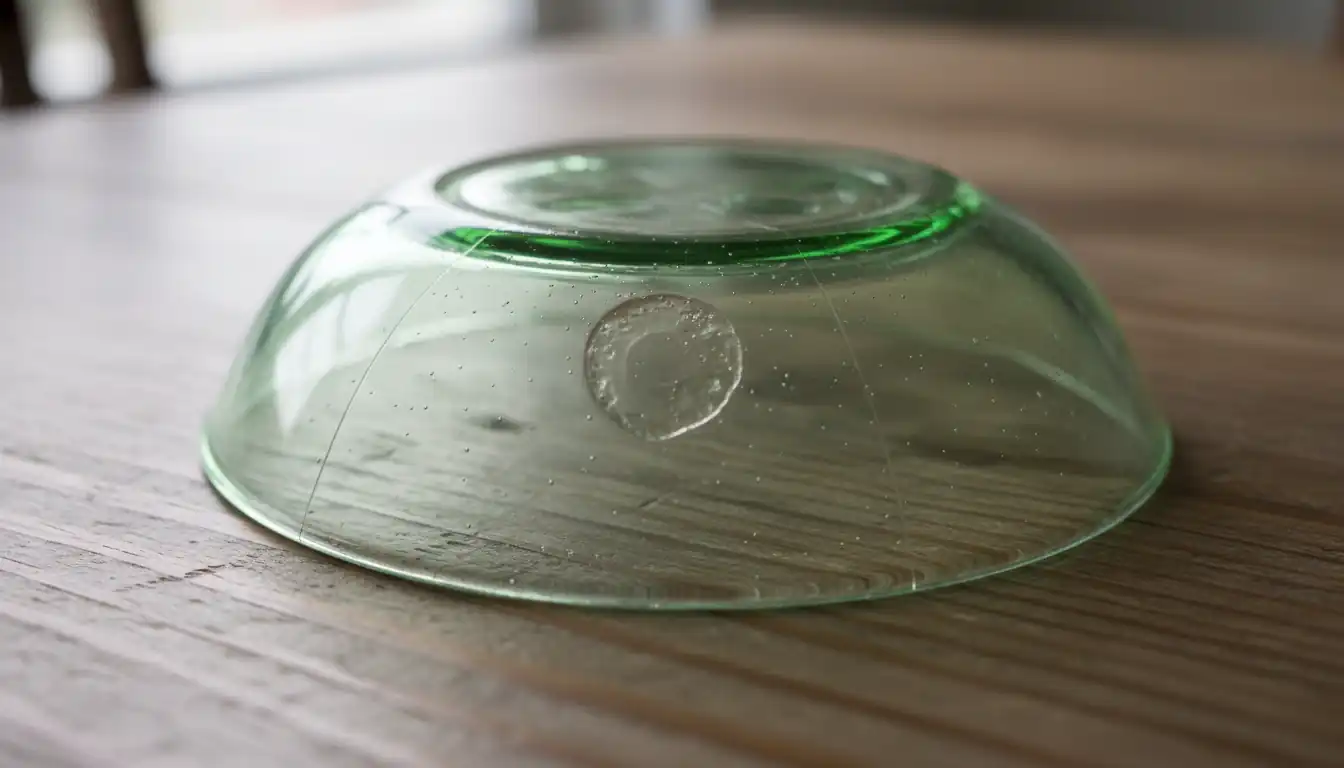
The most important place to look on any piece of glass is the bottom. When a glassblower creates a vessel, they use a metal rod called a pontil to hold the piece while they finish the rim. When the rod is snapped off, it leaves a mark.
- The Rough Pontil: This looks like a jagged, circular scar or a "break" in the glass at the center of the base. A rough pontil is a hallmark of older, hand-blown glass. It indicates the piece wasn't mass-finished in a factory.
- The Ground Pontil: High-end makers didn't like the look of a jagged scar. They would grind the mark down until it was a smooth, polished indentation, often called a "button." If you find a deep, perfectly smooth circular dip on the bottom of a heavy vase, you are likely holding a piece of quality craftsmanship.
- The Absence of Mold Lines: Run your fingers along the sides of the glass. Do you feel a thin, raised line running from the top to the bottom? That is a mold line. It means the glass was pressed into a machine mold. While some molded glass is valuable, the most expensive "art glass" is usually blown freehand and will be perfectly smooth all the way around.
Pro Tip: If you see a mold line that has been partially smoothed over or "fire-polished," it suggests a higher level of factory finishing, often found in "Elegant Glass" from the early 20th century.
Weight, Clarity, and the Lead Content Question
One of the most common questions new collectors ask is: How can I tell if thrifted glass has lead? This isn't just a matter of safety; it’s a matter of value. Lead glass, commonly known as lead crystal, is denser, clearer, and more valuable than standard soda-lime glass.
To identify lead content, use the "Weight and Ring" test:
- The Weight Test: Lead is heavy. If a small wine glass feels surprisingly substantial in your hand, it likely has a high lead oxide content. Standard glass feels light and "cheap" by comparison.
- The Ring Test: Wet your finger and run it around the rim, or gently flick the side of the glass with your fingernail. Lead crystal will produce a long, clear, bell-like ring that resonates for several seconds. Standard glass will produce a dull, short "thud."
- The Prism Effect: Hold the glass up to a natural light source. Lead crystal has a higher refractive index, meaning it will catch the light and create miniature rainbows (chromatic aberration) much more effectively than plain glass.
| Feature | Lead Crystal | Soda-Lime Glass |
|---|---|---|
| Weight | Heavy and dense | Light and airy |
| Sound | Long, musical ring | Short, dull thud |
| Clarity | Brilliant, white-blue tint | Often has a faint green or yellow tint |
| Edges | Can be cut into sharp facets | Usually rounded or molded |
Decoding Eras and Iconic Styles
Once you’ve determined that a piece has physical quality, you need to place it in time. The 20th century was the golden age of glass production, but the value difference between a 1930s giveaway item and a 1960s designer piece is massive.
Depression Glass vs. Elegant Glass
During the Great Depression, glass companies produced massive quantities of colorful glassware to be given away in oatmeal boxes or at movie theaters. This is known as Depression Glass. It was made quickly, often has small air bubbles (seeds), and usually features molded patterns.
Common Depression Glass patterns to watch for:
- American Sweetheart: A delicate, scalloped pattern often found in "Monax" (a translucent white) or pink.
- Mayfair (Open Rose): A popular floral pattern by Hocking Glass Company.
- Royal Lace: Known for its intricate, lace-like details; the cobalt blue version is highly sought after.
However, there is a "step up" from Depression Glass known as Elegant Glass. While Depression Glass was sold in hardware stores, Elegant Glass was sold in high-end department stores. Companies like Fostoria, Cambridge, and Heisey produced this glass. It was hand-finished to remove mold lines and often featured intricate etchings. If you find a piece of colored glass that feels perfectly smooth and has a delicate, etched floral design, you’ve likely found Elegant Glass, which holds its value much better than standard Depression pieces.
Mid-Century Modern and the Art Deco Revival
In the 1950s and 60s, the aesthetic shifted from delicate florals to bold, sculptural forms. This is the era of Mid-Century Modern (MCM) glass. Collectors today are obsessed with the vibrant colors and "space age" shapes of this period.
- Blenko Glass: Based in West Virginia, Blenko is famous for its bold, "hand-hammered" look and vivid colors like Tangerine, Turquoise, and Winslow Anderson’s iconic designs. Look for large, heavy decanters with oversized stoppers.
- Viking Glass: Known for their "Epic" line, Viking produced "swung vases"—vases that were literally swung by the glassmaker while hot to create elongated, organic necks. A three-foot-tall swung vase in a bright "Persimmon" orange can sell for hundreds of dollars.
- Art Deco Influence: Before MCM, the 1920s and 30s favored geometric shapes and "satin" finishes (frosted glass). If you find a vase with sharp angles or stepped "skyscraper" motifs, it’s a classic Art Deco piece.
Instant Identification with Modern Technology
You can spend years memorizing catalogs of glass patterns, but even the experts get stumped. In a fast-paced thrift store environment, you don't have time to flip through a 500-page identification guide. This is where the gap between an amateur and a pro-level picker closes.
Manual research is often a dead end. If you type "green glass bowl with flowers" into a search engine, you will be met with thousands of irrelevant images. You might misidentify a common reproduction as a rare original, or worse, leave a masterpiece on the shelf because you couldn't find its name.
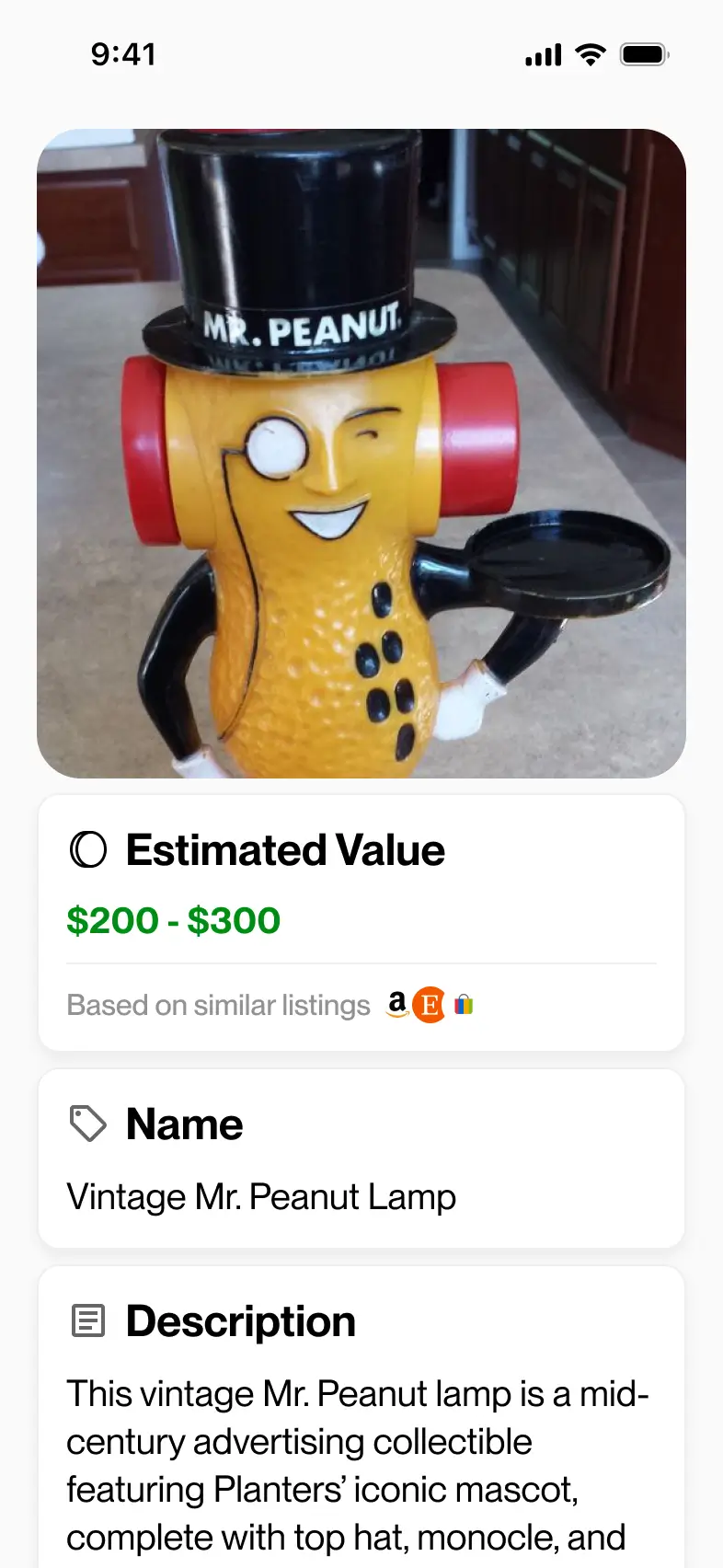
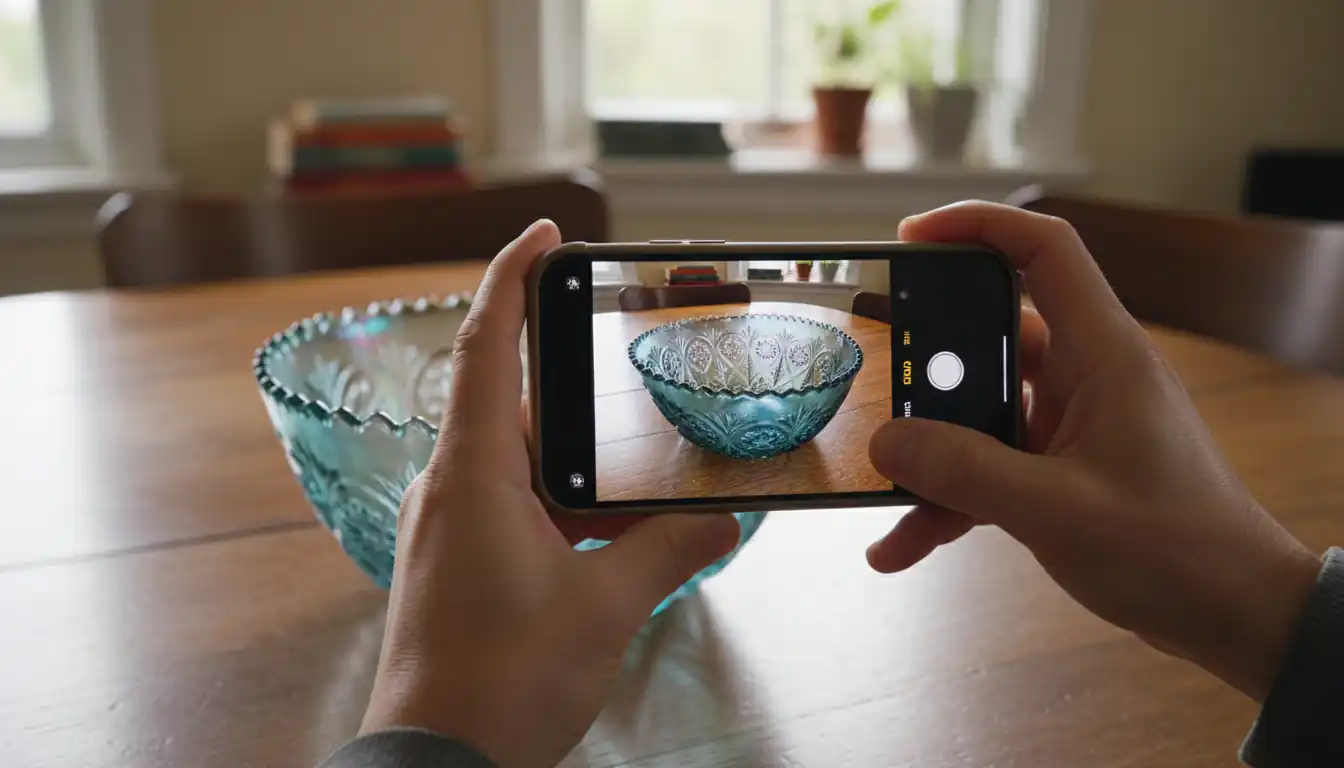
The Relic app changes this dynamic entirely. Instead of guessing, you can use your iPhone to get an instant, professional-grade appraisal. Relic uses advanced AI to analyze the specific silhouette, color, and pattern of the glass piece you’re holding.
When you take a photo through the app, Relic doesn't just look for similar images; it identifies the specific maker, the era of production, and the historical context of the item. It’s like having an antique appraiser standing next to you at the thrift store. For dealers and serious collectors, this efficiency is vital. With a 4.9-star rating from over 20,000 reviews, the app has become a staple for those who need to make quick, informed decisions on the fly. Whether you are a "picker" looking for items to flip or a decorator looking for authentic pieces, having access to a searchable catalog and instant valuations ensures you never overpay for a "faked" antique or miss out on a genuine treasure.
The Science of Rare Colors and Chemical Compositions
Sometimes, the value of glass isn't in the shape or the maker, but in the chemistry. Throughout history, glassmakers added various minerals and elements to the "batch" to create unique visual effects. Some of these are invisible to the naked eye until you know how to test for them.
Uranium Glass and the Glow Factor
Perhaps the most famous "secret" in glass collecting is Uranium Glass, often called Vaseline Glass due to its yellow-green color that resembles petroleum jelly. Between the mid-1800s and the start of WWII, glassmakers added uranium oxide to the glass mix for color.
The result is a piece of glass that looks fairly ordinary in daylight but glows a brilliant, neon "radioactive" green under ultraviolet (UV) light.
- The Test: Carry a small UV flashlight (blacklight) in your pocket. When you see a piece of transparent yellow or pale green glass, shine the light on it. If it glows bright green, it’s Uranium Glass.
- The Value: Because production was halted during the war (when uranium was diverted for weapons), these pieces are finite and highly collectible.
Neodymium and Dichroic Color Shifters
Even rarer than Uranium glass is glass containing Neodymium, often referred to by the trade name "Alexandrite glass." This is a "dichroic" glass, meaning it changes color based on the light source.
- The Magic Trick: In natural sunlight or standard incandescent light, Neodymium glass appears lavender or lilac. However, when you move it under a fluorescent light (like the harsh overhead lights in many thrift stores), it instantly shifts to a bright, icy blue.
- Why it Matters: This color-shifting property was difficult and expensive to produce. Makers like Tiffin, Moser, and Heisey used it sparingly. If you find a piece of glass that seems to "change clothes" as you walk through the store, you are likely holding a high-value collector's item.
"The most valuable glass doesn't always scream for attention. Sometimes, it waits for the right light to reveal its true nature."
Market Trends and Resale Strategy
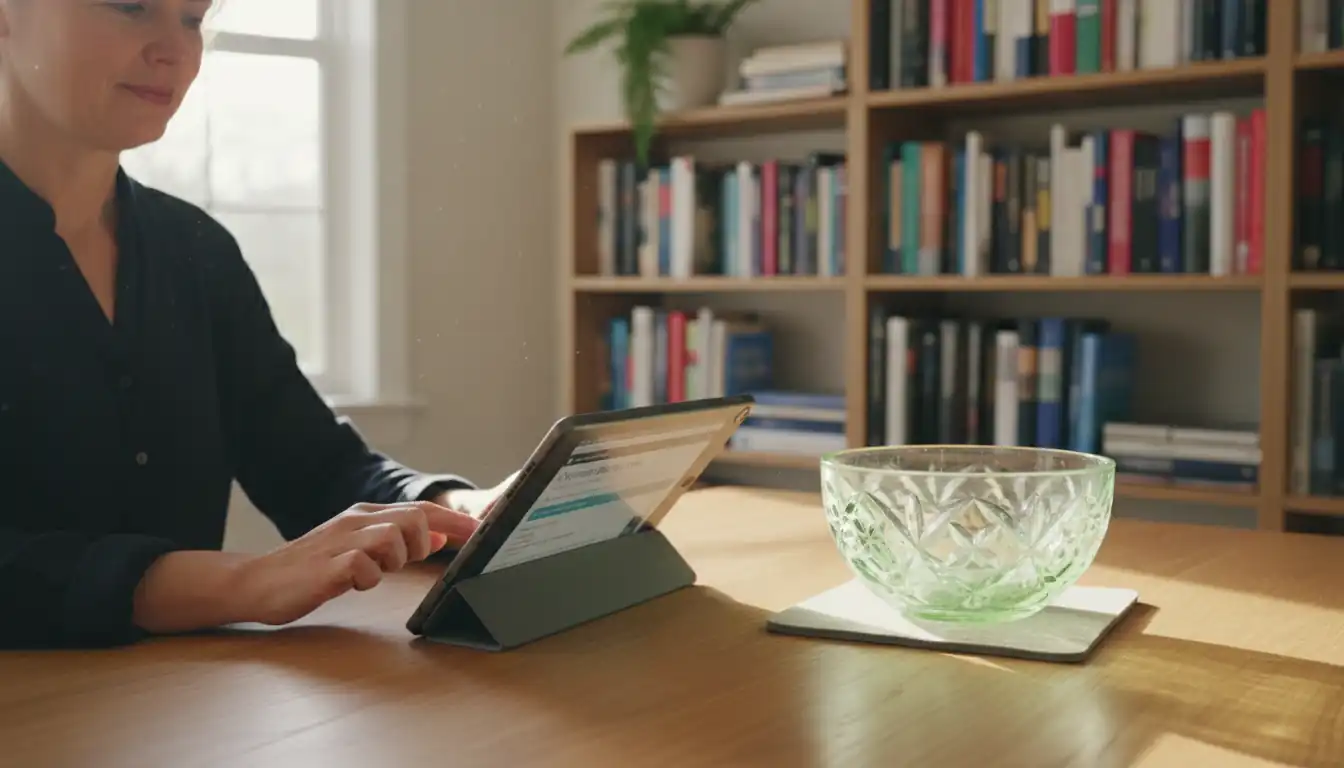
Finding the glass is only half the battle. To realize its value, you need to understand who is buying and what they are looking for. The market for glass is highly regional and trend-dependent.
Identifying Niche Markets for Art Glass
Currently, two specific categories are dominating the high-end resale market: Italian Murano and Scandinavian Art Glass.
- Murano Glass: Coming from the island of Murano in Venice, this glass is known for its "Millefiori" (thousand flowers) patterns and "Sommerso" technique (where layers of different colored glass are submerged in clear glass). Look for "Made in Italy" labels, but be wary of modern "Murano-style" imports that lack the weight and crispness of the originals.
- Scandinavian Glass: Designers from companies like Iittala (Finland) or Orrefors (Sweden) focused on minimalism. They often created glass that looks like melting ice or smooth river stones. This "organic" look is incredibly popular with the current interior design trend toward "Warm Minimalism."
Protecting Your Investment from Thrift Store to Sale
The value of glass is incredibly fragile. A single "flea bite"—a chip so small it looks like a speck of dust—can reduce the value of a piece by 50% or more.
The "Fingernail Test" for Damage: Don't just look for chips; feel for them. Run your fingernail slowly along the rim, the base, and any sharp edges of the pattern. Your nail will catch on tiny nicks that your eyes might miss.
When it comes to selling, your platform matters:
- Specialized Auctions: Best for rare, identified pieces (e.g., a signed Steuben vase).
- Etsy/Instagram: Best for "aesthetic" pieces like MCM swung vases or colorful Depression glass.
- Local Consignment: Best for large, heavy sets of Elegant Glass that are risky to ship.
| Glass Type | Current Trend Level | Best Resale Platform |
|---|---|---|
| Blenko/MCM | Very High | Instagram / Etsy |
| Uranium Glass | High | eBay / Niche Groups |
| Depression Glass | Moderate | Antique Malls |
| Murano Sommerso | High | 1stDibs / High-end Auctions |
Conclusion
The world of antique glass is a blend of art, history, and chemistry. By training your hands to feel for pontil marks and your ears to listen for the ring of lead crystal, you move beyond the realm of guesswork. You now know that a mold line isn't just a seam—it's a clue about production. You know that a purple bowl might actually be a blue bowl in disguise, thanks to the magic of Neodymium.
Most importantly, you have the tools to verify your instincts. While physical checks and historical knowledge are your foundation, technology like the Relic app provides the final layer of certainty. It allows you to step into any thrift store, estate sale, or flea market with the confidence of a seasoned professional.
The next time you see a dusty glass bowl sitting on a shelf, don't just walk by. Pick it up. Check the base. Listen to its ring. Use Relic to uncover its origin. You might just be holding a piece of history that’s worth a lot more than the price tag suggests. Happy hunting.
Identify antiques instantly
Point your camera at any antique, collectible, or vintage item. Get valuations, history, and market insights in seconds.
Download for iPhone