That Dusty Hallway Mirror Might Be a Masterpiece—Here’s How to Know for Sure

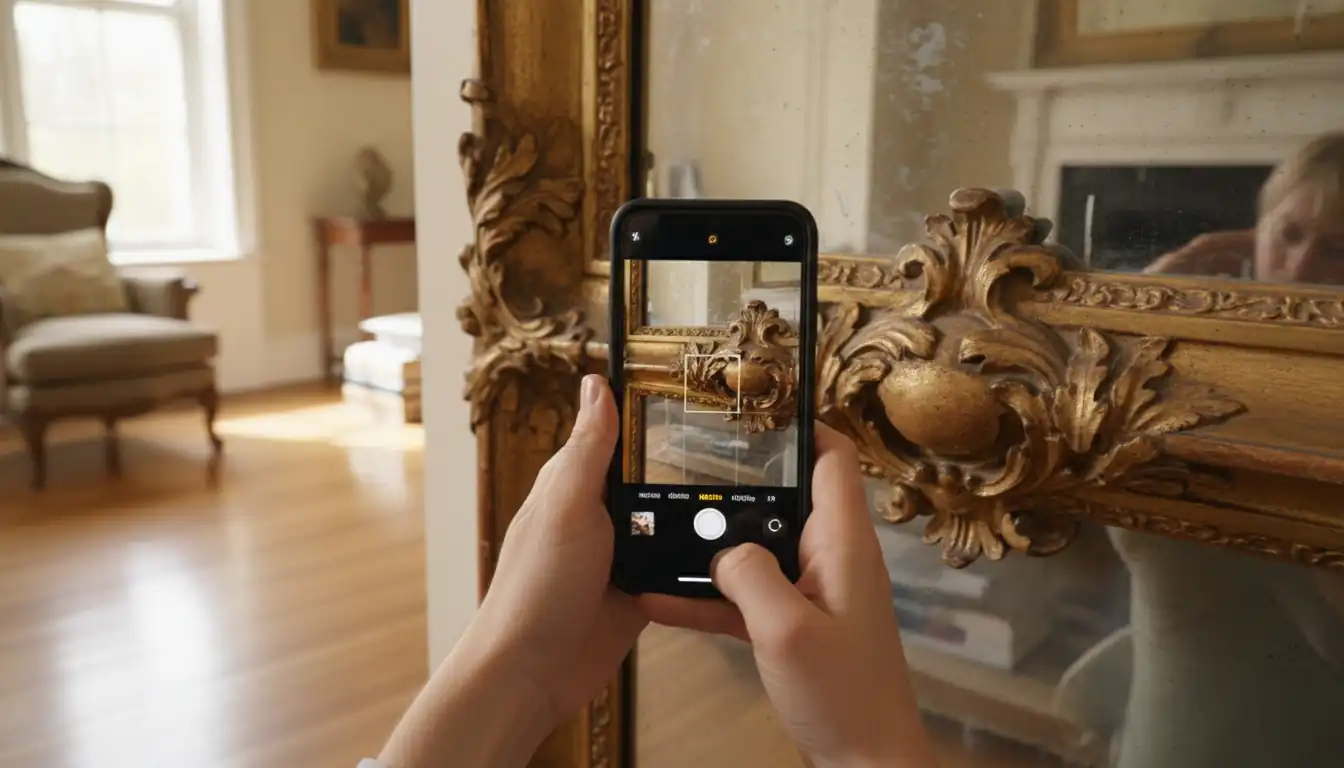
That mirror hanging in your hallway has likely been there so long you’ve stopped really seeing it. It’s just a functional object, a place to check your hair before heading out the door. But if you look closer—past your own reflection—you might notice a slight greyish bloom behind the glass or a frame that feels heavier and more substantial than anything found in a modern furniture store.
Antique mirrors are more than just home decor; they are survivors of specific eras, carrying the fingerprints of craftsmen who worked long before mass production became the norm. Identifying a true masterpiece requires a mix of historical knowledge and a keen eye for physical evidence. You don't need to be a seasoned auctioneer to figure out if your find is a treasure or a clever reproduction.
In the following guide, we will explore how to decode the secrets hidden in the glass and wood of your mirrors. You will learn how to spot the difference between natural aging and artificial distressing, how to date a piece based on its stylistic flourishes, and how modern technology is making it possible to get a professional appraisal without ever leaving your home.
The Evolution of Antique Identification from Magnifying Glasses to AI
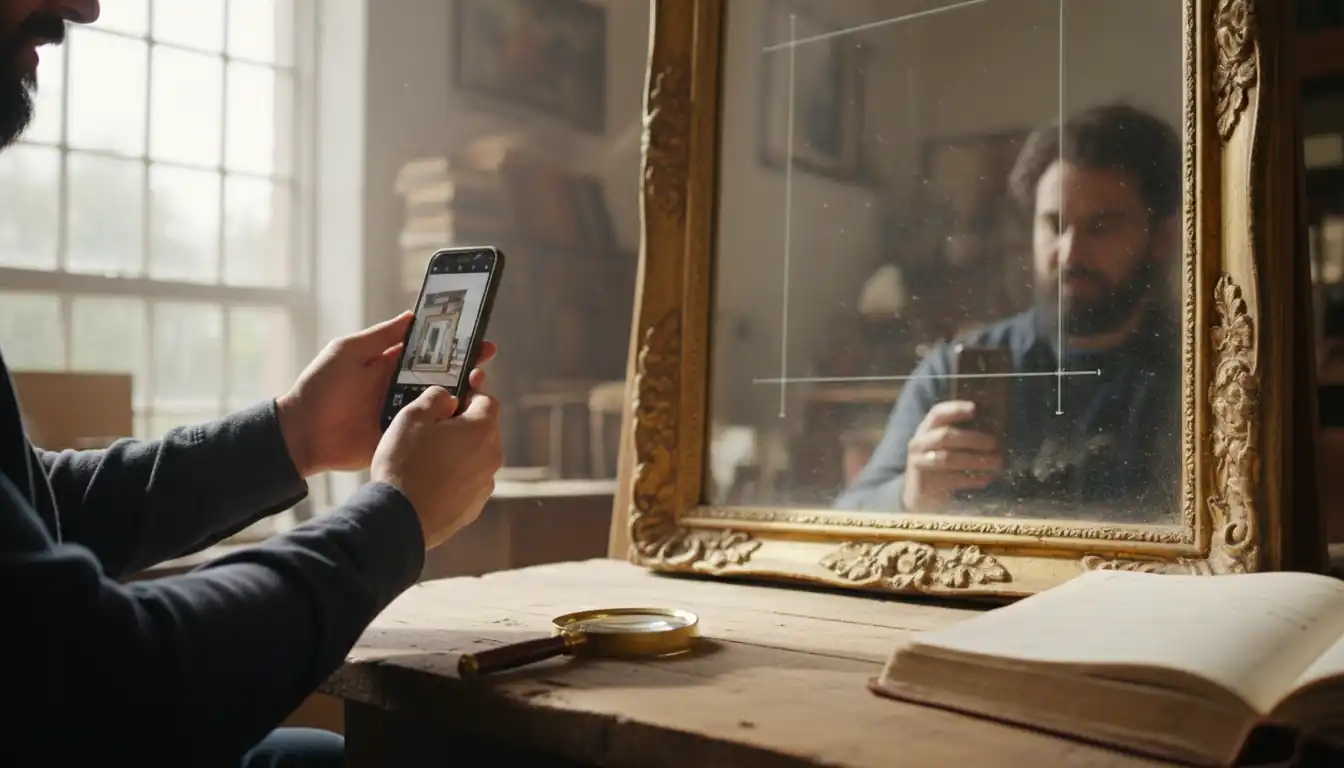
For decades, the process of identifying an antique was a slow, manual endeavor. You would need a magnifying glass, a stack of reference books, and perhaps a few phone calls to local experts who might—or might not—be familiar with your specific piece. This "old way" relied heavily on intuition and years of tactile experience. While that expertise is still valuable, the barrier to entry for the average person was incredibly high.
Today, the landscape has shifted toward data-driven discovery. We are moving away from guesswork and toward precision. Instead of wondering if a specific pattern of wear is authentic, we can now use tools that analyze the very fabric of the object. This transition doesn't replace the soul of antiquing; it simply gives you a more powerful lens through which to view your collection.
How Computer Vision Decodes Centuries of Craftsmanship
The most significant leap in this field is the application of computer vision. When you look at a mirror, you see a frame and some glass. When an advanced AI like Relic looks at it, it sees thousands of data points. The technology analyzes pixel patterns to distinguish between the random, organic "foxing"—those dark spots caused by oxidation—and the uniform, sprayed-on dots found on modern "antique-style" mirrors.
This digital analysis goes deeper than the surface. It can detect the subtle irregularities in hand-carved joinery that a human eye might miss. By comparing the specific curves of a mahogany frame against a vast database of known historical styles, the software can pinpoint an era with startling accuracy. It’s like having a professional appraiser’s brain condensed into a pocket-sized tool, allowing you to identify the origin and history of an item in seconds just by uploading a photo.
Bridging the Gap Between Amateur Discovery and Professional Appraisal
The beauty of this technological shift is the democratization of knowledge. You no longer have to pay a hefty fee just to find out if a mirror is worth the cost of a professional cleaning. AI bridges the gap between "I think this is old" and "I know this is a mid-19th-century French pier mirror."
By using an app like Relic, you are essentially skipping the line at the auction house. The app uses its advanced recognition capabilities to provide a real appraisal based on current market trends and historical data. This empowers you to make informed decisions about whether to sell, insure, or simply cherish your find, turning a dusty hallway object into a documented piece of history.
The true value of an antique isn't just in its age, but in the story its physical details tell about the era of its creation.
Visual Markers Your Phone Camera Can Detect Instantly
To get the most out of a digital appraisal, you need to know what the "tells" are. Your phone camera is a powerful diagnostic tool, but it needs to be pointed at the right things. While the front of the mirror is what we admire, the back of the mirror is where the truth usually hides.
When you are examining a piece, think like a detective. You are looking for evidence of manual labor versus machine precision. Modern mirrors are perfectly uniform because they are made by machines in controlled environments. Antique mirrors are full of "mistakes" and inconsistencies that serve as badges of authenticity.
The Back of the Mirror and Structural Integrity
If you can safely move the mirror, look at the back. This is the most honest part of the furniture. In the 18th and 19th centuries, the back of a mirror wasn't meant to be seen, so craftsmen didn't waste time making it pretty.
- Wood Planks: Look for thick, unevenly cut wooden boards protecting the back of the glass. If the wood is held in place by hand-forged nails with irregular heads, you are likely looking at a piece from before the mid-1800s.
- Saw Marks: Examine the texture of the wood. Straight, slightly uneven saw marks suggest a hand-powered pit saw. Perfectly circular, uniform marks indicate a later, steam-powered circular saw.
- Oxidation Patterns: On very old mirrors, the silvering (or mercury) on the back of the glass will degrade. This creates a "starry night" effect of dark spots. If these spots are concentrated near the bottom or edges where moisture might settle, it’s a strong sign of genuine age.
Analyzing Glass Color and the Famous Pen Test
The glass itself holds clues about its birth date. Before the 1900s, glass wasn't perfectly clear. It often had a slight grey, yellow, or even purple tint due to the minerals used in the manufacturing process. Modern glass, by contrast, often has a very slight green tint at the edges or is perfectly colorless.
One of the most reliable ways to check the age of the glass is the "Pen Test." This simple trick helps you determine the thickness and the "depth" of the reflection, which changed as manufacturing techniques evolved.
| Test Component | Antique Glass Observation | Modern Glass Observation |
|---|---|---|
| The Pen Test | Tip of pen and its reflection do not touch (thick glass). | Tip of pen and its reflection meet nearly perfectly (thin glass). |
| Surface Texture | May have slight ripples or "seeds" (tiny bubbles). | Perfectly smooth and uniform surface. |
| Reflection Quality | May have a slight "funhouse" distortion or waviness. | Perfect, undistorted reflection across the entire surface. |
When you use your camera to capture these details, ensure you are getting close-up shots of the glass edge and any bubbles within the pane. These "imperfections" are exactly what an AI looks for to verify that the piece wasn't made in a modern factory.
Dating Your Mirror Through Frame Styles and Regional Origins
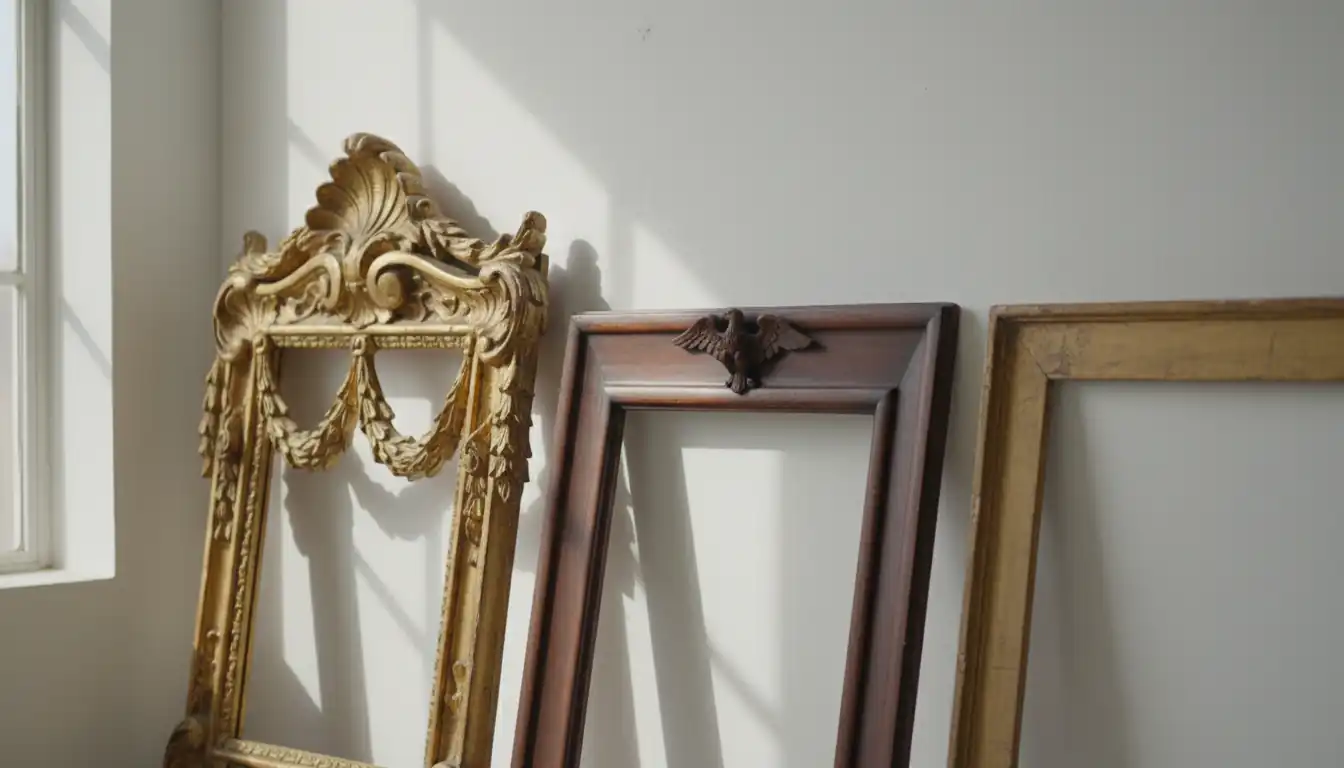
Identifying what you have is the first step; identifying when it was made is where the real fun begins. To answer the common question of how to identify an antique mirror, you have to look at the "fashion" of the frame. Just like clothing, mirror frames followed strict stylistic trends that varied by decade and region.
When you use an app like Relic, the AI identifies these motifs automatically. It recognizes the specific "vocabulary" of a designer or a movement. However, knowing these styles yourself helps you appreciate the artistry involved.
From Baroque to Art Deco Stylistic Signatures
Each era had a "vibe" that dictated everything from the choice of wood to the complexity of the carving. Here is a breakdown of the most common styles you might encounter:
- Rococo (1730–1770): Think "extra." These frames are often gilded (covered in gold leaf) and feature asymmetrical designs, C-scrolls, acanthus leaves, and shells. If it looks like it belongs in a palace, it might be Rococo.
- Federal/Neoclassical (1780–1820): A reaction against the "extra" Rococo style. These mirrors are more symmetrical and restrained. Look for eagles, urns, and columns. They often feature a "tabernacle" style with a painted glass panel at the top.
- Victorian (1837–1901): Victorian mirrors are often heavy and dark. They used woods like mahogany and walnut. The carvings are usually deep and floral. This is also the era where we see a lot of "overmantel" mirrors—massive pieces designed to sit above a fireplace.
- Art Deco (1920–1940): This style is all about geometry. You’ll see stepped frames, sunburst patterns, and the use of "new" materials like chrome, tinted glass, and even plastic (celluloid).
Tracing the Mirror to Its Geographic Roots
Regionality plays a huge role in value. A mirror made in Philadelphia in 1790 has a different market value and construction style than one made in Paris during the same year. American mirrors of the colonial period often used local woods like white pine for the secondary structures (the parts you don't see), while European makers might use oak or deal.
How do you date a hand mirror specifically? Hand mirrors often follow jewelry trends more closely than furniture trends. A silver-backed hand mirror with intricate "repoussé" (hammered from the back) floral patterns is likely late Victorian or Edwardian. If the handle is made of a bone-like material with a yellowish tint and no grain, it might be early celluloid from the 1920s. Relic can cross-reference these material textures and patterns against its database to tell you exactly where and when your hand mirror originated.
Determining Rarity and Market Value Without a Middleman
Once you’ve confirmed that your mirror is indeed an antique, the next logical question is: "What is it worth?" Traditionally, you would have to take the item to an appraiser or an auction house, often paying a percentage of the value just to get an estimate. Now, you can perform a high-level self-valuation by looking for specific markers of rarity.
The "Fresh Angle" on valuation is that you don't need a middleman to tell you if a piece is special. You just need to know where the "signatures" are hidden.
Identifying Maker’s Marks and Provenance Clues
Most antique mirrors aren't signed like paintings, but they often have clues about their "provenance" (history of ownership) or their maker.
- Paper Labels: Check the back of the frame or the wooden backing for remnants of paper labels. These might be from the original cabinetmaker or a high-end department store from the 1800s.
- Stamps and Brands: Sometimes a maker would brand their name directly into the wood. These are often small and located in inconspicuous places, like the very top edge of the frame.
- Inventory Numbers: If you see a hand-painted number or a small metal tag, the mirror may have once belonged to a large estate or a museum collection.
When you scan these marks with the Relic app, it can cross-reference them with historical auction databases. This allows you to see what similar pieces by that maker have sold for recently, giving you a real-world market value in seconds.
The Impact of Condition on Antique Valuation
In the world of antiques, "perfect" isn't always better. In fact, if a 200-year-old mirror looks brand new, it’s usually a sign that it has been heavily restored, which can actually lower its value to serious collectors.
Collectors often prefer "honest wear" over a bad restoration. Original glass with some foxing is almost always more valuable than an antique frame with modern, hardware-store glass.
- Originality: A mirror with its original glass, original gilding, and original backboards is the "holy grail." Every part that has been replaced reduces the historical value.
- Foxing vs. Damage: Foxing (the grey spots) is a natural part of aging. However, "desilvering"—where the reflective coating is actually peeling off in large chunks—can be seen as damage that requires expensive repair.
- The Frame's Patina: The "patina" is the thin layer of wear and oxidation that develops on the surface of wood or metal over time. A genuine patina has a depth and glow that modern "distressing" techniques simply cannot replicate.
| Condition Factor | Value Impact | Why? |
|---|---|---|
| Original Glass | High Increase | Collectors prize the wavy, imperfect look of old glass. |
| Re-gilding | Moderate Decrease | Modern gold paint lacks the depth of original 18th-century gold leaf. |
| Replaced Backing | Slight Decrease | It makes it harder to prove the age of the piece. |
| Active Insect Damage | Major Decrease | "Wormholes" are fine if old, but active pests can destroy the piece and your home. |
Optimizing Your Digital Appraisal for Maximum Accuracy
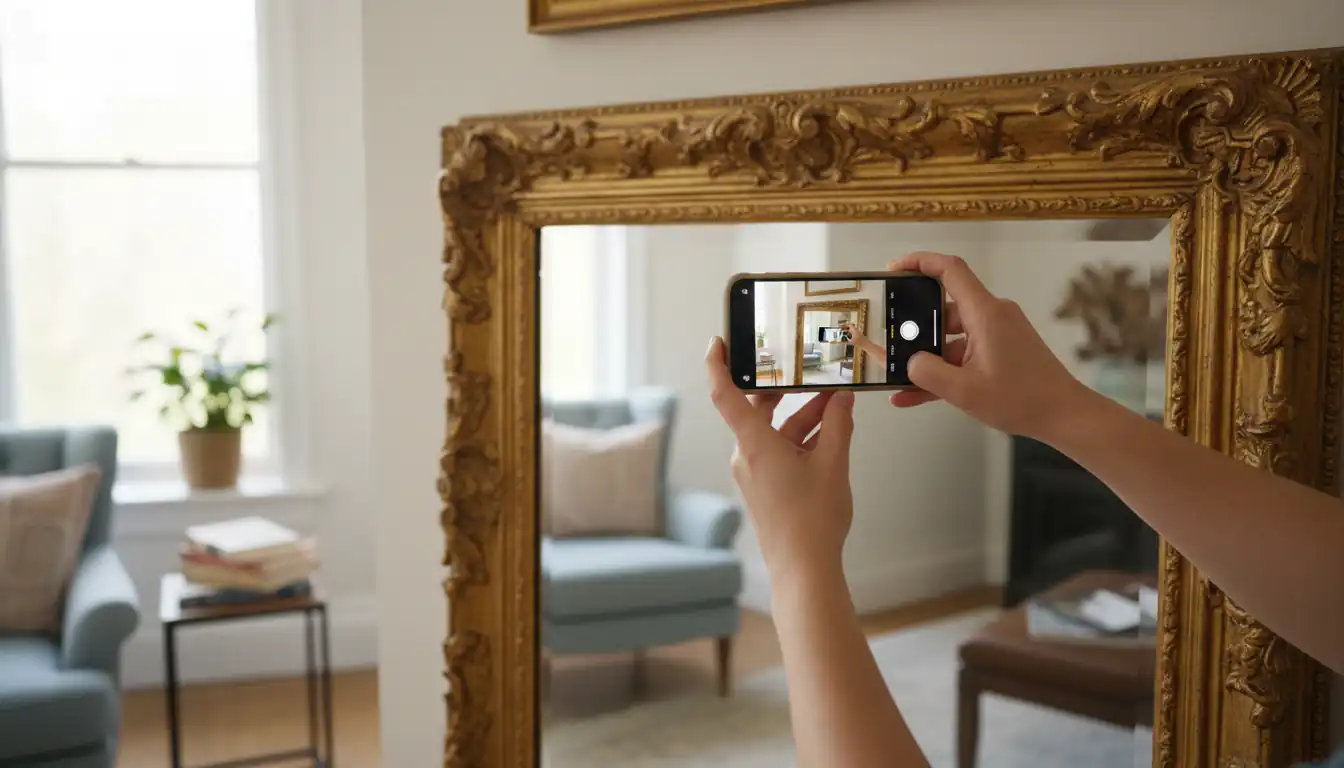
To get a professional-grade report from an AI tool, you need to provide professional-grade data. The quality of the appraisal is directly linked to the quality of the photos you upload. You don't need a high-end DSLR camera; your iPhone or Android is more than capable if you follow a few basic principles.
The goal is to capture the "soul" of the mirror—the tiny details that prove its age. If the photo is blurry or washed out by a flash, the AI might miss the very markers that make the piece valuable.
Lighting Techniques for Capturing Authentic Patina
Lighting is the most important factor when photographing glass. Mirrors are notoriously difficult to shoot because they reflect everything, including you and your camera's flash.
- Avoid Direct Flash: Never use your flash. It will create a massive white "hot spot" on the glass that hides the texture and any foxing.
- Use Indirect Natural Light: The best time to photograph an antique is during the day in a room with plenty of windows, but not in direct sunlight. Direct sun can create harsh shadows that obscure carving details.
- The 45-Degree Angle: Instead of standing directly in front of the mirror, stand at a 45-degree angle. This allows the camera to capture the surface of the glass and the depth of the frame without you being the main focus of the reflection.
- Highlight the Texture: If the frame has deep carvings, side-lighting (light coming from the left or right) will create small shadows that define the shape of the work, making it easier for the Relic app to identify the specific style.
Interpreting Your Relic History and Origin Report
Once you’ve uploaded your photos to Relic, the app processes the visual data and generates a comprehensive report. This isn't just a one-sentence guess; it’s a structured breakdown of what you own.
- The Appraisal: This gives you a price range based on current market data. It considers the style, condition, and rarity of the piece.
- The History: This section explains the era the mirror comes from. It might tell you about the social significance of mirrors in the 18th century or why certain woods were popular during the Victorian era.
- The Origin: This identifies the likely geographic region where the mirror was crafted. Knowing your mirror is "English Regency" versus "American Empire" can change how you talk about it to potential buyers.
This report serves as a digital certificate of authenticity. If you decide to sell the item on a platform like eBay or 1stDibs, or if you need to add it to your home insurance policy, having a data-backed appraisal gives you a significant advantage. You are no longer just selling a "dusty mirror"; you are selling a documented piece of history.
Conclusion
That dusty hallway mirror is no longer a mystery. By looking at the joinery of the frame, the thickness of the glass, and the "starry night" oxidation of the silvering, you’ve begun to peel back the layers of time. You now know that the "imperfections" are actually the most important parts of the story, and that the back of the mirror is just as important as the front.
The shift from manual identification to AI-powered tools like Relic has turned every smartphone owner into a potential historian. You have the power to identify, date, and appraise your finds with a level of accuracy that was once reserved for the elite world of high-end auction houses.
The next step is simple: take your phone, find a good source of natural light, and see what your mirror has to say. Whether it’s a rare Rococo masterpiece or a charming Victorian heirloom, your discovery is waiting to be documented. Download the Relic app today and turn your curiosity into a professional appraisal.
Identify antiques instantly
Point your camera at any antique, collectible, or vintage item. Get valuations, history, and market insights in seconds.
Download for iPhone