That Dusty Heirloom Might Be a Masterpiece: Spotting 19th-Century Treasures in Your Home

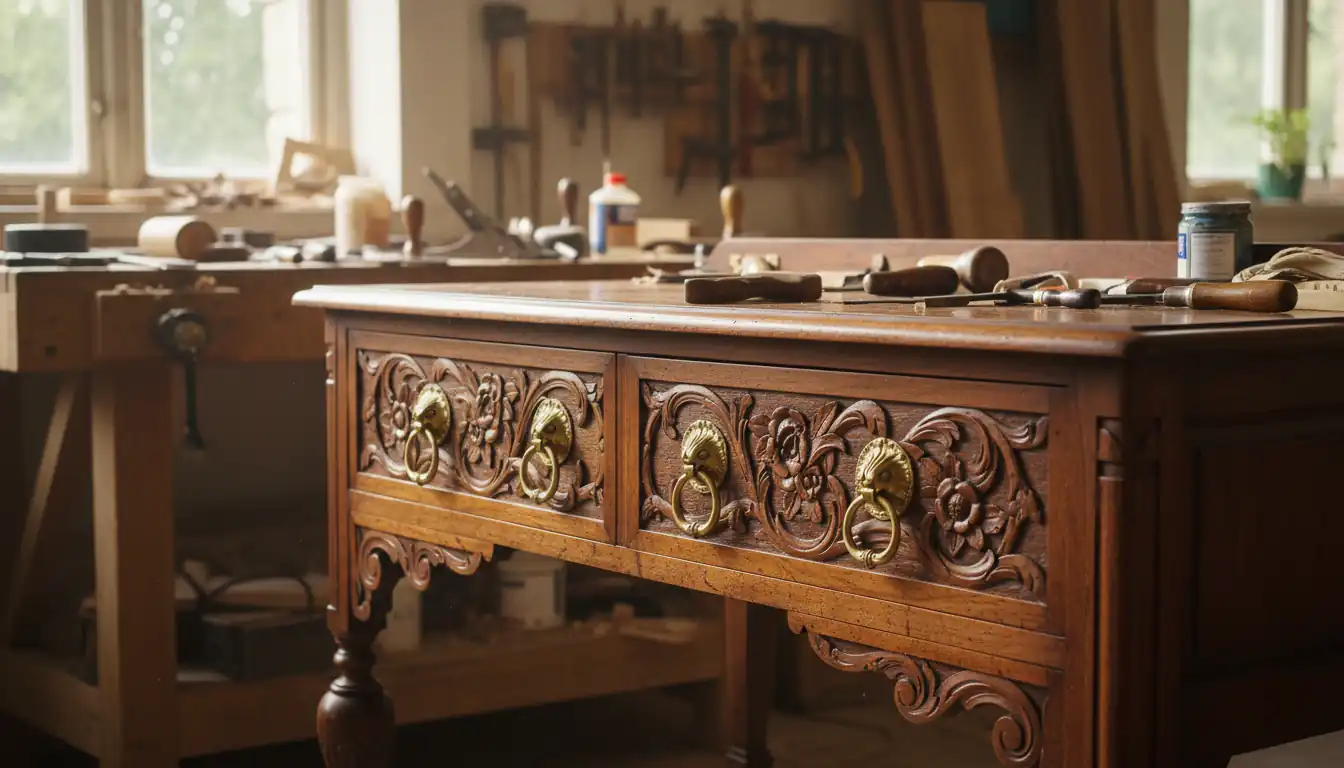
That dusty chair in the corner of your guest room or the heavy sideboard inherited from a distant aunt might be more than just old furniture. For many homeowners, these pieces are often dismissed as "brown furniture"—outdated relics that don't fit a modern aesthetic. However, the 19th century was a golden age of craftsmanship and design evolution, producing pieces that range from understated elegance to breathtakingly ornate displays of wealth.
Identifying these treasures requires a keen eye and a bit of detective work. You don't need a degree in art history to spot a masterpiece, but you do need to know where the history is hidden. By looking at the silhouette, the wood, and the way the piece was physically put together, you can begin to peel back the layers of time to reveal its true origin.
In this guide, we will walk through the visual cues of the 1800s, the physical evidence left by the craftsmen's tools, and the modern technology that makes identification easier than ever. Whether you are looking to sell, insure, or simply appreciate what you own, understanding the "bones" of your furniture is the first step toward uncovering a hidden masterpiece.
Visual Markers of the 19th Century Style Evolution
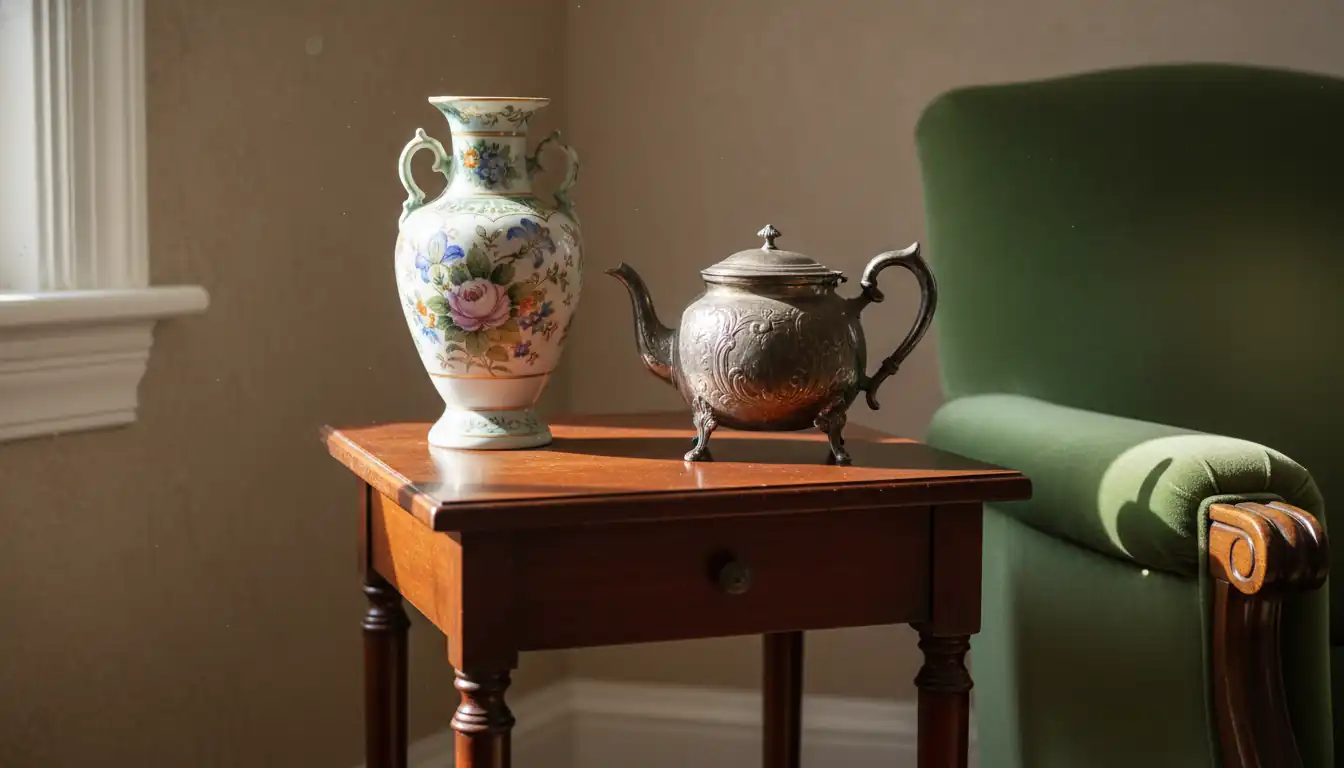
The 1800s were a century of rapid change, and furniture styles moved just as quickly. If you want to know how to tell if furniture is from the 1800s, you have to start with the "look." The century began with a focus on the ancient world and ended with a flourish of industrial excess.
From Regency Elegance to Victorian Excess
The early 1800s were dominated by the Regency and Federal styles. These pieces are characterized by their lightness and restraint. Think of thin, tapered legs, delicate brass inlays, and a focus on symmetry. The lines are clean, often mimicking the architecture of ancient Greece and Rome. You will frequently see the lyre shape used in chair backs or table pedestals, a direct nod to classical music and art.
As the decades progressed, the furniture began to "put on weight." By the 1840s and 1850s, the Victorian era was in full swing. The restraint of the early century vanished, replaced by heavy, dark woods and deep, three-dimensional carvings. The acanthus leaf—a stylized plant motif—became a staple of this period, appearing on everything from bedposts to mirror frames. If your piece feels imposing, dark, and covered in floral or leaf-like carvings, it likely belongs to the mid-to-late Victorian period.
The Rise of Biedermeier and Romanticism
While England and America were leaning into Victorian styles, Central Europe was perfecting Biedermeier. This style is a favorite among modern collectors because it bridges the gap between antique and contemporary. Biedermeier furniture focuses on the natural beauty of the wood grain rather than heavy carvings. You will see light-colored fruitwoods like cherry, pear, or maple, often arranged in "book-matched" patterns where the grain creates a symmetrical image.
The shift in wood choice is one of the most reliable visual markers of the century:
- 1800–1830: Light woods like satinwood, maple, and light mahogany. Focus on delicate veneers and brass accents.
- 1840–1870: The "Dark Ages" of furniture. Heavy use of rosewood, dark mahogany, and walnut. Deep, ornate carvings are the priority.
- 1880–1900: A mix of "Revival" styles (Gothic, Renaissance, Rococo). Pieces become even more massive, often featuring "gingerbread" machine-cut details.
Pro Tip: Look at the silhouette. Early 19th-century pieces have a vertical, airy feel. Late 19th-century pieces have a horizontal, grounded, and "busy" appearance.
While these visual cues provide a great starting point, they are only half the story. A skilled forger can mimic a style, but they rarely mimic the way a piece was actually built. To find the truth, we have to look closer at the joinery and the hardware.
Clues Hidden in the Craftsmanship
One of the most common questions for new collectors is how to identify antique furniture with no markings. Most 19th-century furniture was not "branded" by a manufacturer. Instead, the "signature" is left in the way the wood was cut and joined. By performing a physical inspection of the areas people weren't meant to see—like the bottom of a drawer or the back of a cabinet—you can find the real date of the piece.
Deciphering Hand Cut vs Machine Made Joinery
The dovetail joint is the gold standard for dating furniture. This is the interlocking joint that connects the front of a drawer to its sides. In the early 1800s, these were cut by hand using a mallet and chisel. Because humans aren't perfect, hand-cut dovetails are slightly uneven. You might see three or four "tails" that vary in size and spacing.
By the late 1800s, machines took over this process. Machine-cut dovetails are perfectly uniform, appearing like a series of identical teeth. If the dovetails look "too perfect," the piece was likely made after 1870. If they are chunky, few in number, and slightly irregular, you are looking at a piece from the early-to-mid 19th century.
Identifying Original Hardware and Finishes
The metalwork on a piece of furniture acts like a timestamp. In the early 1800s, screws were made by hand. These "blunt-tipped" screws have no point; a hole had to be pre-drilled for them to enter the wood. The slots on the heads are often off-center because they were cut by hand. If you find a screw with a perfectly centered slot and a sharp, pointed tip, it was likely manufactured after 1850.
| Feature | Early 19th Century (1800-1840) | Late 19th Century (1850-1900) |
|---|---|---|
| Dovetails | Hand-cut, uneven, few in number | Machine-cut, perfectly uniform |
| Screws | Blunt-tipped, handmade, off-center slots | Pointed, machine-made, centered slots |
| Saw Marks | Straight, parallel lines (hand-sawn) | Circular, curved lines (circular saw) |
| Nails | Square-headed, forged by hand | Round-headed, wire nails (late 1800s) |
Don't forget to run your hand along the underside of a tabletop or the back of a drawer. If the wood feels perfectly smooth, it was likely finished with a modern power sander. Authentic 19th-century pieces often have "planing marks"—slight, rhythmic undulations left by a hand plane. These marks are the tactile fingerprints of a craftsman who lived over 150 years ago.
Modern Tech Meets Antique Expertise
Even with a checklist of dovetails and screw types, identifying a specific piece can be overwhelming. You might find yourself wondering how to use Google to identify furniture, only to be met with thousands of generic images of "old brown chairs" that look nothing like yours. This is where the gap between manual inspection and professional appraisal becomes apparent.
Using AI to Identify Furniture Without Markings
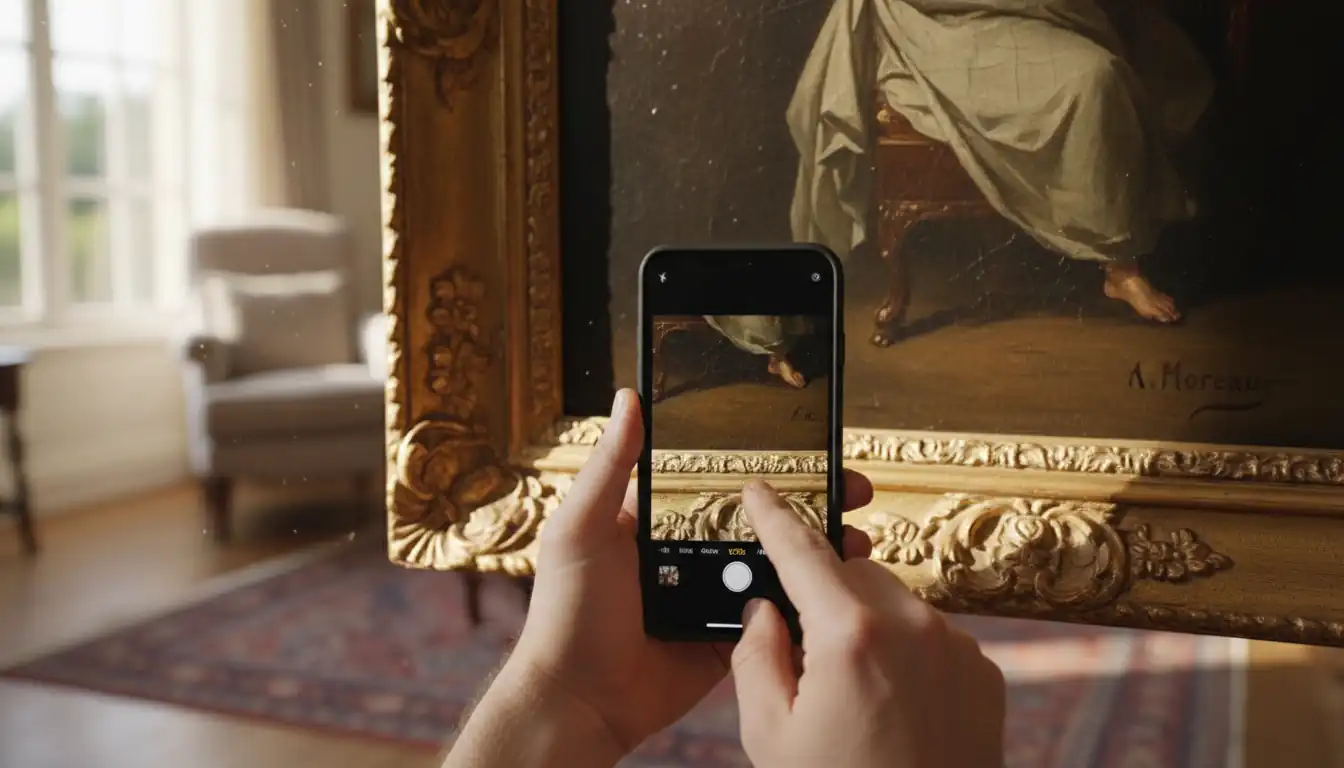
For most of us, carrying a library of furniture history books isn't practical. This is why the Relic app has become an essential tool for collectors and casual owners alike. Instead of spending hours scrolling through search engines, you can simply take a photo of your item. Relic uses advanced AI to analyze the silhouette, the wood grain, and the stylistic motifs we discussed earlier.
The app doesn't just give you a name; it provides a real appraisal, history, and the origin of the item. It synthesizes the visual cues—like that acanthus leaf or the specific curve of a cabriole leg—and compares them against a massive database of verified antiques. For a piece with no markings, this kind of pattern recognition is a lifesaver. It can distinguish between a genuine 1840s Rococo Revival chair and a 1920s reproduction that was designed to look old.
Why Photo Recognition Beats Manual Searching
Generic search engines struggle with antiques because furniture terminology is often inconsistent. One person might call a piece a "buffet," while another calls it a "sideboard" or a "credenza." Relic bypasses the language barrier by focusing on the physical object.
With over 20,000 reviews and a 4.9-star rating, the app has proven its accuracy for everyone from professional dealers to people cleaning out their grandparents' attics. It provides the kind of market research and historical context that used to require hiring a professional appraiser. By using your phone's camera, you're essentially putting an expert's eyes on your furniture, allowing you to move from "I think this is old" to "I know exactly what this is."
This technological bridge is vital because the 19th century was a time of massive transition. To truly understand why your furniture looks the way it does, we have to look at the industrial forces that were reshaping the world while these pieces were being built.
Manufacturing Innovations of the Industrial Revolution
The mid-1800s marked a pivot point in human history. Before 1840, furniture was largely a bespoke product, made one piece at a time by a craftsman at a bench. After 1840, the Industrial Revolution brought steam power into the woodshop, changing the "DNA" of furniture forever.
The Impact of Steam Powered Saws and Lathes
The introduction of the circular saw is the "smoking gun" for dating 19th-century furniture. Before the circular saw became common in the 1840s, lumber was cut using straight pit saws or frame saws. These left straight, parallel marks on the wood. If you look at the back of a chest of drawers and see curved, circular marks, you know the wood was processed in a steam-powered mill post-1840.
Steam power also allowed for the mass production of "gingerbread" carvings. In the early 1800s, every curve was carved by hand with a chisel. By the 1870s, steam-powered lathes and routers could churn out intricate, repetitive patterns in a fraction of the time. This is why late Victorian furniture is often so much more "busy" than early Regency pieces—it was finally cheap and easy to add decoration.
Evolution of Veneers and Inlays
Veneer—the practice of gluing a thin layer of expensive wood over a cheaper base—is often misunderstood as a sign of "cheap" furniture. In the 19th century, it was an art form. However, the thickness of that veneer tells you exactly when it was made.
- Early 1800s: Veneers were cut by hand with a saw. They are thick, often about 1/8th of an inch. Because they were hand-cut, they are often slightly uneven.
- Mid-to-Late 1800s: The invention of the rotary slicer allowed factories to "peel" a log like an apple, creating paper-thin veneers. If the veneer on your piece is as thin as a piece of cardstock, it’s a product of the later industrial era.
"The Industrial Revolution didn't just change how we made furniture; it changed how we valued it. We moved from valuing the labor of the hand to valuing the precision of the machine."
This shift in manufacturing is what creates the "hidden clues" we look for today. A piece might look like it's from 1810, but if it has paper-thin veneer and circular saw marks on the frame, it's a later revival piece. Understanding these industrial milestones helps you separate the truly old from the "old-looking."
Determining Authenticity and Market Value

As you become more confident in identifying 19th-century styles and construction, the final challenge is distinguishing a true antique from a "revival" piece. In the 1920s and again in the 1980s, there were massive trends for "antique-style" furniture. These reproductions can be very convincing, but they almost always fail the "physical evidence" test.
Spotting 20th Century Reproductions
The easiest way to spot a modern fake is to look for materials that didn't exist in the 1800s.
- Plywood and Particle Board: If you see layers of wood glued together (plywood) or compressed wood chips (particle board) on the back or bottom of a piece, it is not a 19th-century antique.
- Staples and Phillips Head Screws: 19th-century craftsmen used nails, wooden pegs, or glue. If you see staples holding a back panel on, or screws with a "cross" (Phillips) head, the piece is likely mid-20th century or later.
- The Smell Test: Old furniture has a distinct scent—a mix of old wax, dust, and seasoned wood. Modern reproductions often smell like chemicals, fresh lacquer, or "new" wood. If it smells like a modern furniture showroom, it probably is one.
Assessing Condition and Provenance
Once you’ve confirmed a piece is authentic, its value depends on two things: condition and provenance. In the world of antiques, "original" is almost always better than "restored." A 19th-century chest with its original finish and "patina"—the soft glow and minor wear that comes from a century of use—is worth significantly more than one that has been stripped and refinished with modern polyurethane.
To maximize the value of your find, follow these steps:
- Document Everything: Keep any old receipts, letters, or photos that show the piece in your family's history. This "provenance" can double the price at auction.
- Check for "Marriages": Sometimes a top from one piece is put onto the base of another. Look for matching wood grains and consistent wear patterns across the whole item.
- Look for Signatures: While rare, check the undersides of marble tops or the interior of drawer casings for pencil signatures or paper labels from the maker.
Conclusion
Uncovering a 19th-century masterpiece in your own home is a journey of observation. By moving past the "dusty" exterior and looking at the visual evolution of the era—from the restrained lines of the Regency to the industrial flourishes of the Victorian—you can begin to categorize your find. Remember to look for the "fingerprints" of the craftsman: the irregular dovetails, the blunt-tipped screws, and the thick, hand-cut veneers that define the pre-industrial age.
While manual inspection is a vital skill, don't be afraid to use modern tools to confirm your suspicions. Using an app like Relic can provide the professional-grade appraisal and historical context you need to turn a "maybe" into a "definitely." Whether you're holding onto a family heirloom or hunting for treasures at a local estate sale, you now have the knowledge to see the history hidden in the wood.
Your next step? Grab a flashlight, head to that "dusty" piece of furniture, and start looking at the joints. You might just be sitting on a piece of history.
Identify antiques instantly
Point your camera at any antique, collectible, or vintage item. Get valuations, history, and market insights in seconds.
Download for iPhone