That Dusty Heirloom Might Be Solid Gold—Here’s How to Know for Sure

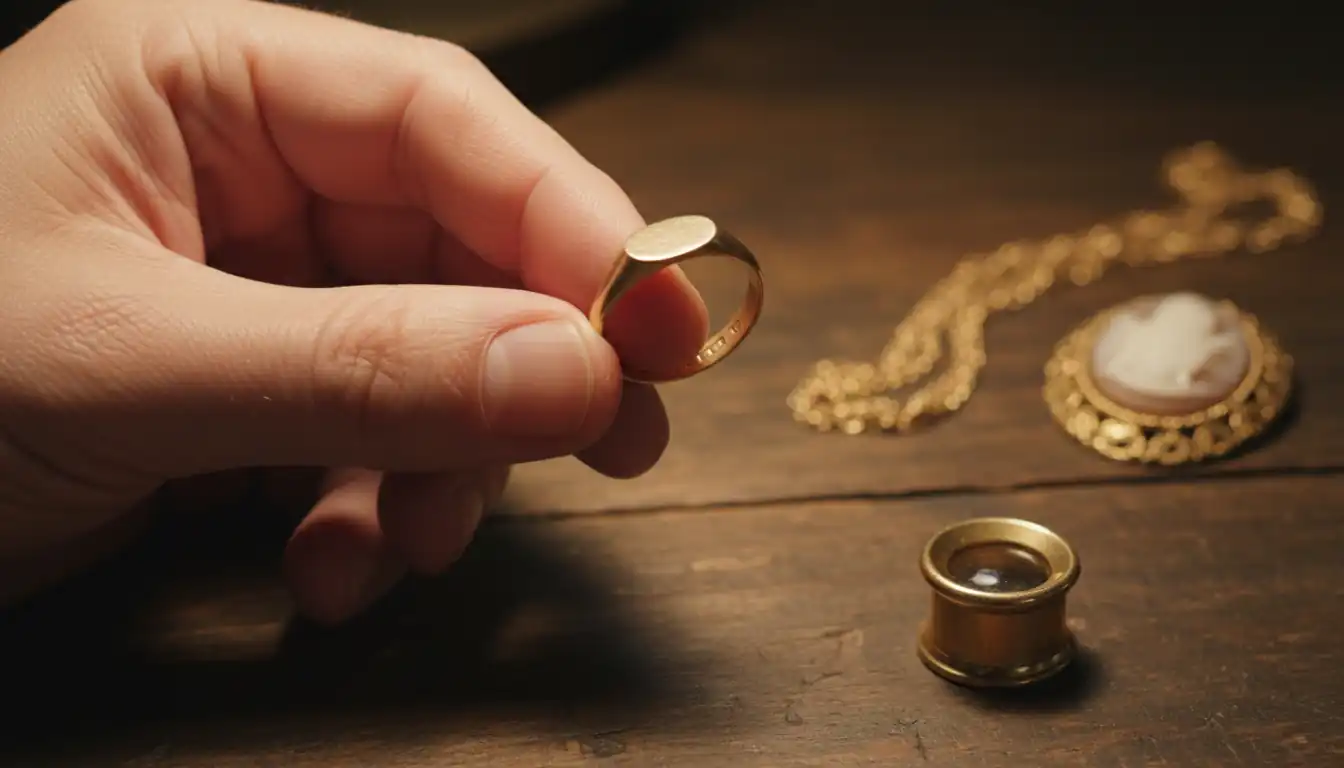
You find a heavy, tarnished brooch at the bottom of an old jewelry box. It belonged to your grandmother, or perhaps you picked it up for a few dollars at a weekend estate sale. It looks old, and it feels significant, but there are no obvious markings. Is it a priceless piece of 18-karat history, or is it merely a well-crafted piece of costume jewelry from a bygone era?
The difference between a "find of a lifetime" and a "pretty trinket" often comes down to details invisible to the untrained eye. Identifying vintage gold is a skill that combines history, chemistry, and a bit of detective work. You don't need a degree in metallurgy to start uncovering the truth about your collection, but you do need to know where to look and what questions to ask.
In this guide, we will explore the nuances of vintage gold identification. You will learn how to read the cryptic symbols stamped into old metal, how to perform safe tests at home, and why the "old-school" methods of scratching and acid testing might be costing you a fortune in lost value. By the time you finish reading, you will have a clear roadmap for turning that dusty heirloom into a documented treasure.
Decoding the Secret Language of Hallmarks
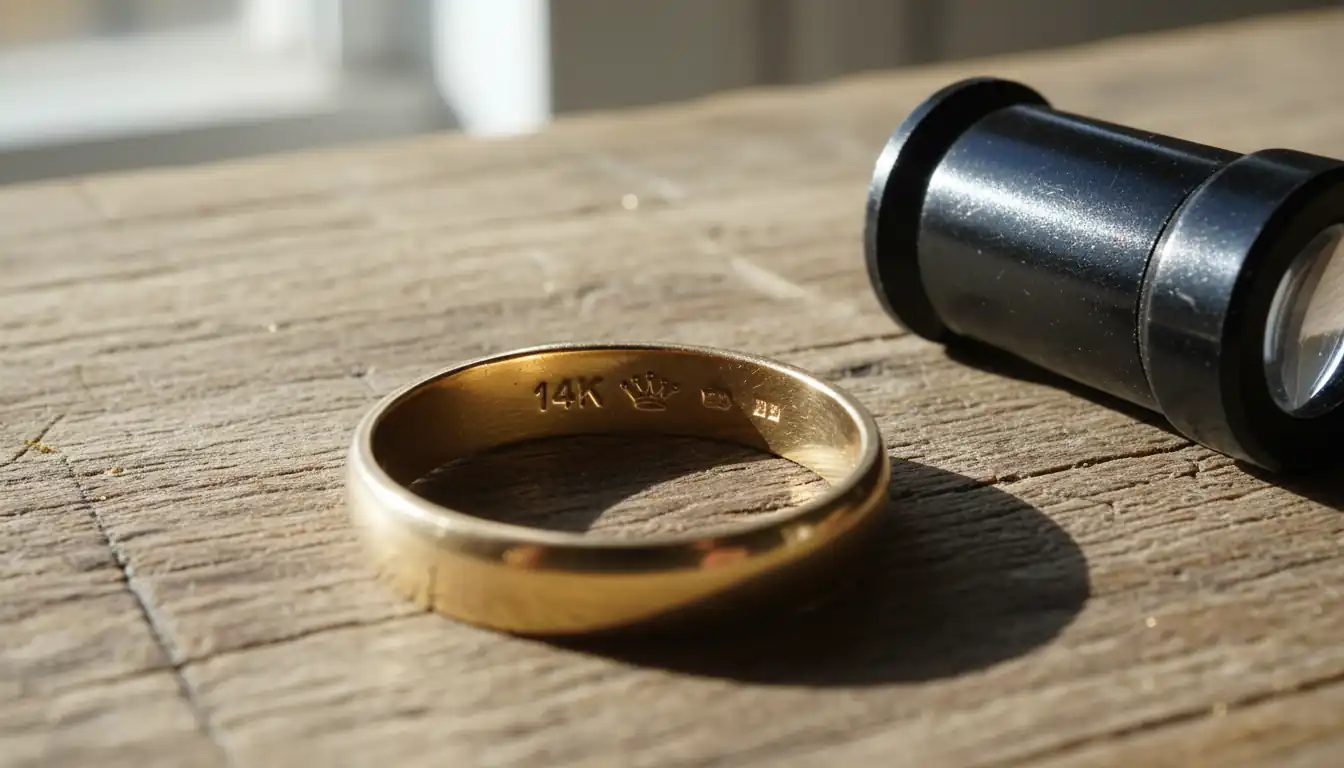
When you pick up a piece of vintage jewelry, your first instinct is likely to flip it over and look for a stamp. This is the right move. These tiny engravings, known as hallmarks or purity stamps, are the primary way makers have communicated the quality of their work for centuries. However, reading them isn't always straightforward. The symbols used in 1850s London are vastly different from those used in 1920s New York.
Understanding Historical Purity Stamps
The history of hallmarking is essentially the history of consumer protection. In Europe, particularly in the United Kingdom and France, the government has strictly regulated precious metals for hundreds of years. If you find a piece with a tiny lion passant (a lion walking), you are looking at a British sterling silver mark. If you see a crown or a specific number like "18," you are likely holding gold.
American jewelry followed a different path. It wasn't until the National Gold and Silver Stamping Act of 1906 that US manufacturers were legally required to include a purity mark if they were also including a trademark. Before this, many American pieces were left blank or featured only the maker’s name. Even after 1906, there was a "tolerance" allowed, meaning a piece stamped 14K could actually be slightly less pure. It wasn't until 1976 that the law was tightened to require near-exact purity.
| Region | Common Gold Markings | Historical Context |
|---|---|---|
| United Kingdom | Crown, 18, 22, 750, 916 | Regulated by Assay Offices since the 1300s. |
| United States | 10K, 14K, 18K, 14Kt | Standardized by the 1906 Stamping Act. |
| Europe (Metric) | 585 (14K), 750 (18K), 999 (24K) | Uses parts per thousand to denote purity. |
| France | Eagle's Head (18K) | Uses specific animal icons for different purities. |
Why No Stamp Doesn't Mean Fake
A common question among new collectors is: Is vintage gold always stamped? The short answer is no. While a stamp is a great sign, the absence of one is not a deal-breaker. There are several reasons why a genuine solid gold piece might be "naked."
- Resizing and Repair: When a ring is resized, the jeweler often cuts out a small portion of the band. If the hallmark was located at the bottom of the shank—which it usually is—it might have been removed during the process.
- Custom Work: Many 19th-century pieces were handmade by local goldsmiths for specific clients. These artisans didn't always follow formal hallmarking protocols, especially in rural areas or in countries with lax regulations.
- Wear and Tear: Gold is a soft metal. Over fifty or a hundred years of constant wear, a stamp can simply rub away against the skin. This is particularly common in wedding bands and frequently worn bangles.
- Historical Context: During times of war or economic upheaval, some jewelry was produced without marks to avoid taxes or to make the items easier to transport across borders discreetly.
Just because a piece lacks a hallmark doesn't mean it lacks value. It simply means the evidence of its quality is hidden deeper within the metal itself.
Physical Tests for the Home Collector
Once you’ve exhausted the visual search for stamps, it’s time to get hands-on. You don't need a laboratory to perform a "first-pass" screening. These tests are designed to help you separate the obvious fakes from the potential winners. They are non-destructive, meaning they won't hurt the item, which is vital for preserving the integrity of an antique.
The Magnet and Skin Reaction Myths
One of the most frequent questions people ask is: How can you tell if vintage jewelry is gold? Many turn to the magnet test. While it is true that pure gold is not magnetic, this test is not foolproof. Many high-quality gold-plated items use silver or copper as a base, neither of which is magnetic. Conversely, some modern "white gold" alloys contain nickel, which can show a very slight magnetic pull.
- The Magnet Test: Use a strong neodymium magnet. If the jewelry sticks firmly, it is almost certainly a base metal like iron or steel with a thin gold wash. If it doesn't stick, it could be gold, but it could also be brass, copper, or silver.
- The Skin Test: Have you ever worn a ring that turned your finger green or blue? This is caused by the oxidation of base metals like copper or nickel when they react with the acids in your skin. Solid gold (especially 14K and higher) is chemically inert and won't react this way. However, 10K gold has a high percentage of alloy metals and may cause a slight reaction in people with high skin acidity.
Calculating Density and Weight
Another common PAA question is: Does real gold feel heavy or light? Gold is an incredibly dense element. It is much heavier than most other metals used in jewelry. If you have a small ring that feels surprisingly "hefty" for its size, that is a positive sign. Lead is also heavy, but it is much softer and has a duller gray tone when scratched.
If you want to be more scientific, you can use a simplified version of Archimedes' Principle. You will need a digital scale that measures in grams and a small container of water.
- Weigh the item: Record the weight in grams (Weight A).
- Displace the water: Place the container of water on the scale and tare it to zero. Suspend the jewelry by a thin thread and lower it into the water until it is fully submerged but not touching the bottom or sides. Record this weight (Weight B).
- Divide: Divide Weight A by Weight B.
The resulting number is the density. Pure 24K gold has a density of about 19.3 g/cm³. 14K gold typically falls between 12.9 and 14.6 g/cm³. If your result is around 8 or 9, you are likely looking at copper or brass.
Preserving Value by Avoiding Destructive Testing
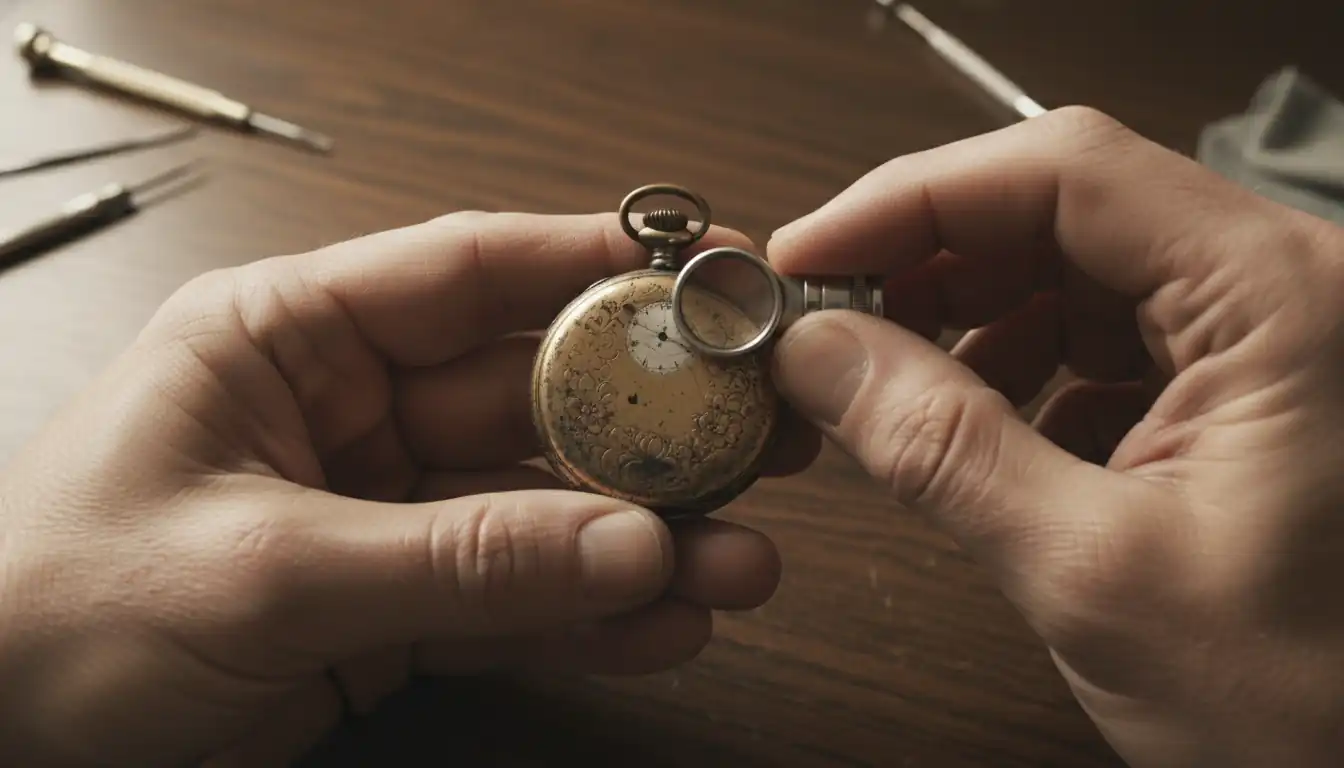
If you search the internet for "how to test gold," you will see countless videos of people rubbing jewelry against a black stone and dropping acid on it. While this is a standard practice for "we-buy-gold" shops looking to melt items down, it is a terrible idea for a vintage collector.
The Dangers of Acid and Scratch Tests
Acid testing is inherently destructive. To get an accurate reading, you have to scratch the item deeply enough to get past any potential gold plating. This leaves a permanent scar on the piece. For a modern, mass-produced wedding band, this might not matter. For a Victorian filigree ring or a signed Art Deco piece, a visible scratch can reduce the resale value by 30% or more.
Furthermore, the acid itself is a harsh chemical. If it accidentally touches a gemstone or a delicate soldered joint, it can cause irreparable damage. Many vintage pieces are "gold-filled," which means they have a thick layer of gold bonded to a base metal. A shallow scratch test might only hit the gold layer, giving you a "false positive" for solid gold while still damaging the item's surface.
Protecting Patina and Antique Integrity
In the world of antiques, there is a massive difference between "melt value" and "numismatic" or "collector value." Melt value is simply the weight of the gold multiplied by the current market price. Collector value takes into account the era, the maker, the craftsmanship, and the condition.
- Patina: This is the soft glow and micro-scratching that develops on gold over decades. It is highly prized by collectors. Polishing it away or scratching through it ruins the "story" of the piece.
- Historical Markers: Sometimes the way a clasp is constructed or the specific tint of the "rose gold" (which was achieved using different copper alloys in the 1800s) is more important than the gold content itself.
- Integrity: A piece of jewelry is a work of art. You wouldn't scratch a painting to see what kind of canvas is underneath; you shouldn't scratch a vintage heirloom to see what's inside.
Your goal is to identify the item without leaving a trace. The most valuable antiques are those that remain in their original, unaltered state.
Leveraging AI for Instant Identification
The struggle for many collectors is the gap between "I think this is gold" and "I know this is gold." Traditionally, filling that gap required a trip to a jeweler or hours of scouring library books for maker's marks. Today, technology has provided a much faster, non-destructive alternative.
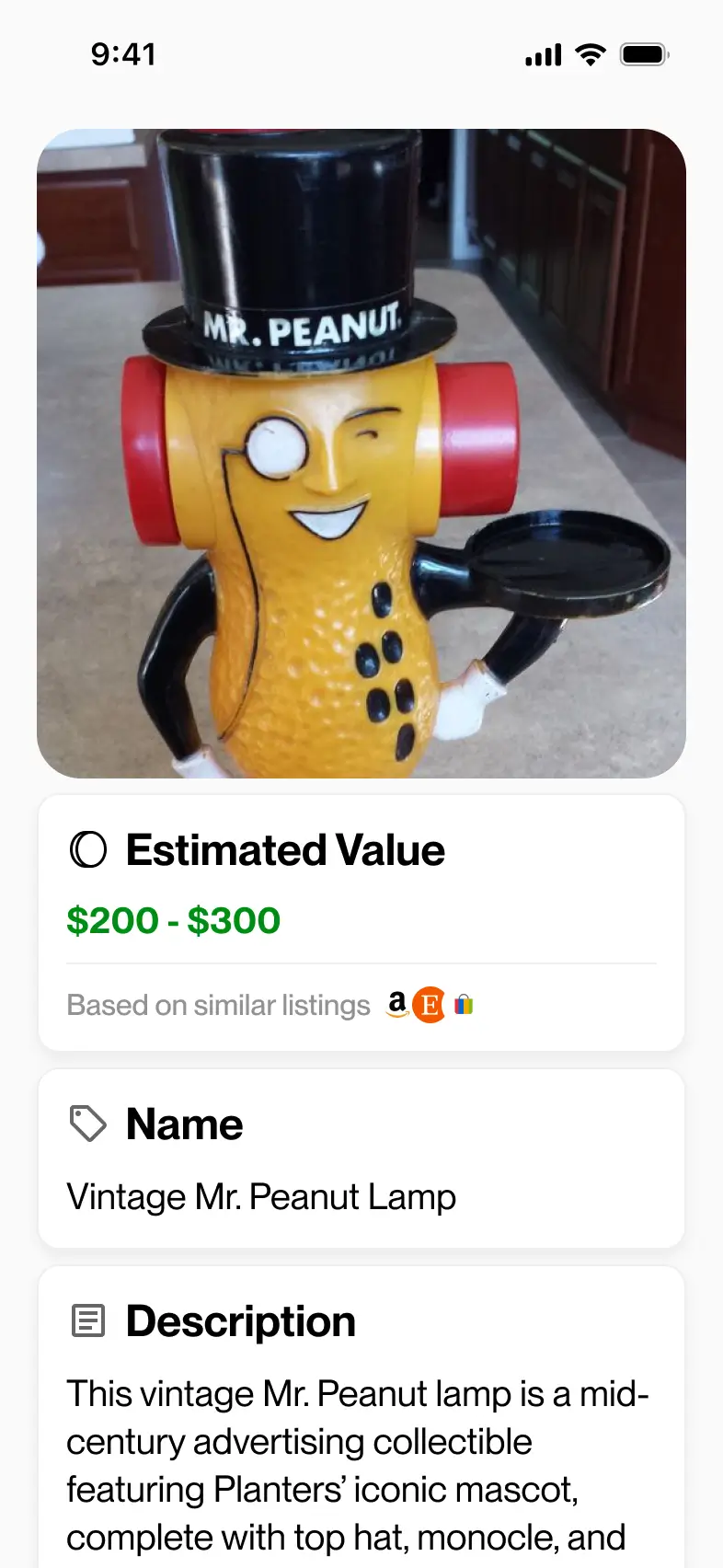
This is where the Relic app becomes an essential tool for the modern enthusiast. Instead of relying on guesswork or risky chemicals, Relic uses advanced computer vision to analyze your jewelry through your iPhone's camera. It functions like an expert appraiser that lives in your pocket, ready to assist at a moment's notice.
How Computer Vision Identifies Metalwork
When you take a photo of a piece with Relic, the AI doesn't just look at the color. It analyzes the construction techniques, the style of the setting, the wear patterns, and the specific visual characteristics of the metal.
For example, 18-karat gold has a specific "richness" and luster that differs from gold-plated brass. The AI can detect the subtle differences in how light reflects off the surface. It also cross-references your item against a massive database of historical jewelry, identifying if the design matches a specific era or a known manufacturer. This provides a level of context that a simple magnet or acid test could never offer.
Getting a Digital Appraisal with Relic
The process is designed to be straightforward for anyone, regardless of their technical background. You simply upload a clear photo of the item—ideally from multiple angles—and the app processes the visual data.
- Instant Identification: Relic identifies the likely metal composition and the historical era of the piece.
- Historical Context: You receive information about the style (such as Edwardian, Art Nouveau, or Retro) and the common manufacturing methods of that time.
- Real Appraisal: The app provides a valuation based on current market trends and historical sales data.
- Searchable Catalog: You can save your scans to create a digital inventory of your collection, which is incredibly useful for insurance purposes or estate planning.
By using an AI-driven tool, you bypass the risk of damaging your heirlooms. You get the answers you need—origin, history, and value—without ever having to pick up a file or a bottle of acid.
When to Consult a Professional Appraiser
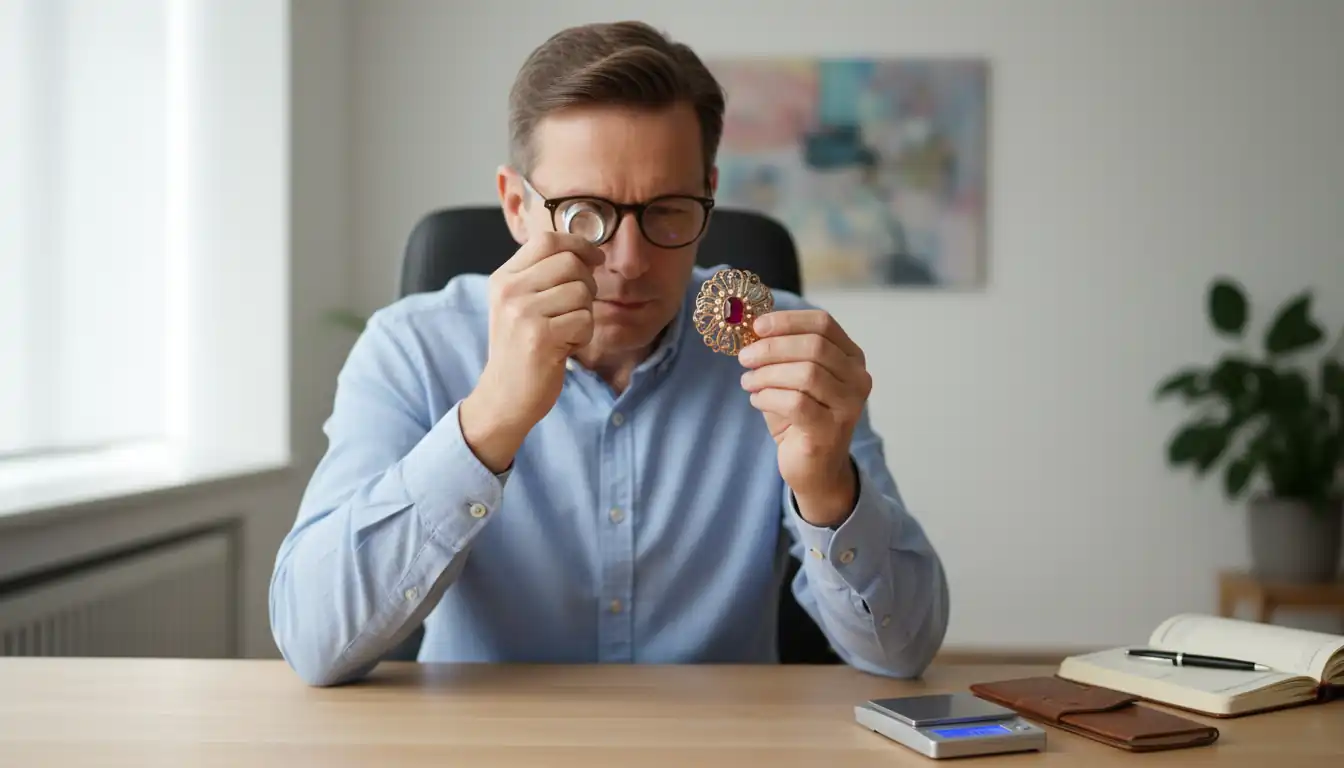
While tools like Relic provide an incredible first line of defense and a wealth of information, there are times when you need to take the final step and see a human expert. Knowing when to spend the money on a professional appraisal is a key part of being a savvy collector.
Identifying High Stakes Pieces
If your initial research and digital appraisal suggest that your item is worth more than $1,000, it is time to seek a certified professional. High-value items require a "paper trail" for several reasons:
- Insurance Riders: Most standard homeowners' insurance policies have a limit on jewelry (often as low as $1,000 or $2,500). If you have a piece worth $10,000, you need a professional appraisal to add a specific "rider" to your policy to ensure you are covered for its full value.
- Estate Planning: If you are dividing assets among heirs, an unbiased professional valuation prevents family disputes and ensures everyone receives an equitable share.
- Resale at Auction: Major auction houses like Sotheby’s or Christie’s require professional authentication before they will list an item.
Finding a Certified Jewelry Historian
It is important to distinguish between a retail jeweler and a certified appraiser. A retail jeweler's primary business is selling new jewelry or buying gold for scrap. They may not have the specialized historical knowledge to identify a rare 19th-century piece.
Instead, look for someone certified by the American Society of Appraisers (ASA) or the International Society of Appraisers (ISA). You want a "Graduate Gemologist" (GG) who also specializes in antique and period jewelry. These professionals don't just look at the gold; they look at the "hand" of the maker. They can identify the specific way a stone was cut or how a hinge was forged, confirming the item's authenticity beyond a shadow of a doubt.
| Scenario | Recommended Action |
|---|---|
| Found a box of mixed jewelry at a yard sale. | Use the Relic app for quick sorting and identification. |
| Inherited a ring you suspect is 18K gold. | Perform density tests and use AI for historical context. |
| Planning to sell a piece worth several thousand dollars. | Obtain a written appraisal from a certified ISA appraiser. |
| Adding a high-value heirloom to your insurance policy. | Get a formal valuation from a Graduate Gemologist. |
Conclusion
Identifying vintage gold is a journey of discovery. It starts with a simple visual inspection, looking for those tiny, hidden hallmarks that tell the story of the piece's origin. It continues through non-destructive physical tests that respect the age and beauty of the metal.
By avoiding the temptation of "quick-fix" destructive tests, you preserve the historical integrity and the financial value of your collection. Modern technology, like the Relic app, has made this process easier than ever, allowing you to bridge the gap between curiosity and certainty with just a few taps on your phone.
Whether you are a seasoned collector or someone who just found a mysterious treasure in a relative's attic, the tools are now in your hands. Start by looking closely at your pieces, use technology to uncover their history, and only then decide which treasures are worth the investment of a professional appraisal. That dusty heirloom might indeed be solid gold—and now you have the roadmap to prove it.
Identify antiques instantly
Point your camera at any antique, collectible, or vintage item. Get valuations, history, and market insights in seconds.
Download for iPhone