That Dusty Heirloom Might Be Worth Thousands—Here's How to Identify Hidden Treasures

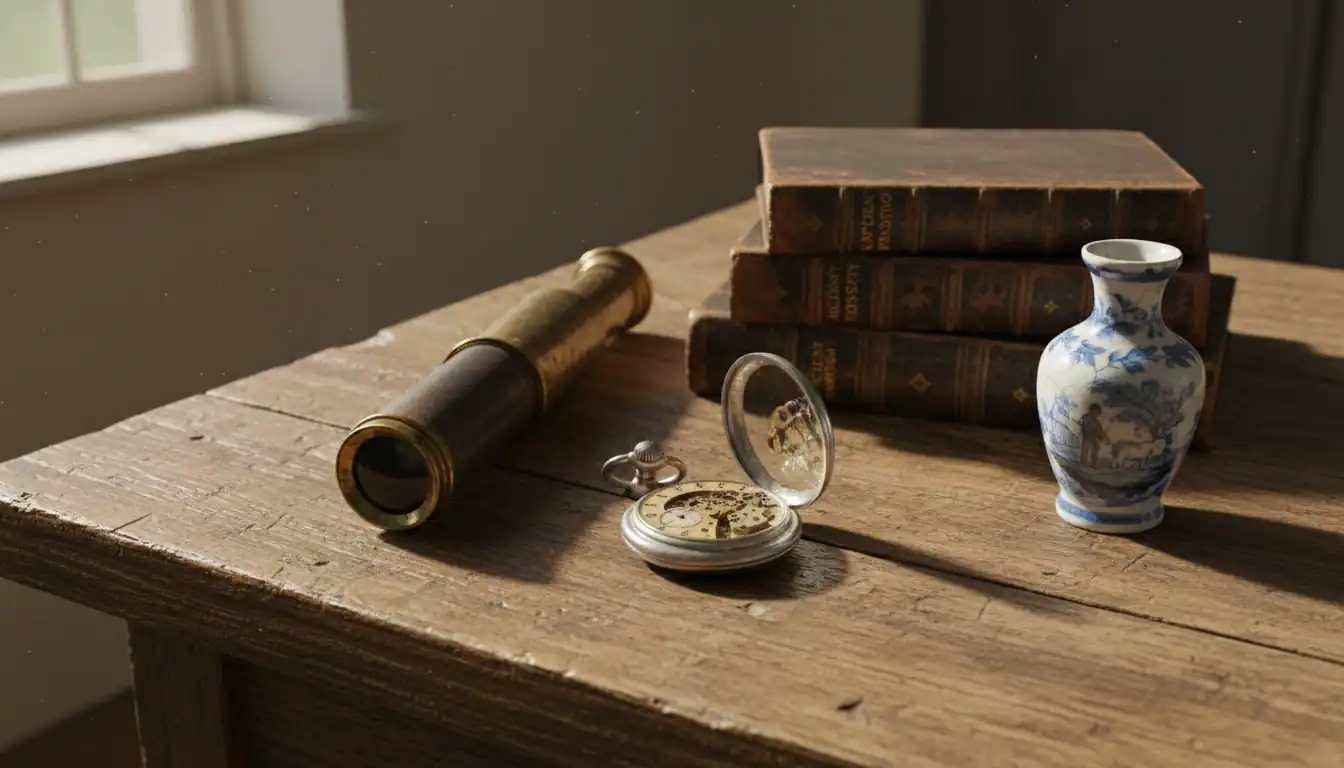
You walk into your attic, pull a heavy cardboard box from behind a stack of old suitcases, and find a tarnished silver teapot wrapped in a 1974 newspaper. Your first instinct might be to toss it in the donation bin or head to a garage sale. But what if that teapot isn't just old? What if it’s a piece of history that could pay for your next vacation?
The line between "old junk" and "valuable treasure" is often thinner than a coat of dust. Most people sit on a small fortune without ever realizing it because they lack the tools to distinguish a mass-produced replica from a genuine masterpiece. Identifying these items requires a mix of historical knowledge, a keen eye for detail, and an understanding of the current market.
By the time you finish reading this, you will know how to categorize your finds, which items are currently making waves in the auction world, and how to use modern technology to get a professional appraisal in seconds. You don't need a degree in art history to uncover the secrets hidden in your storage unit; you just need to know where to look.
The Real Difference Between Antiques and Collectibles
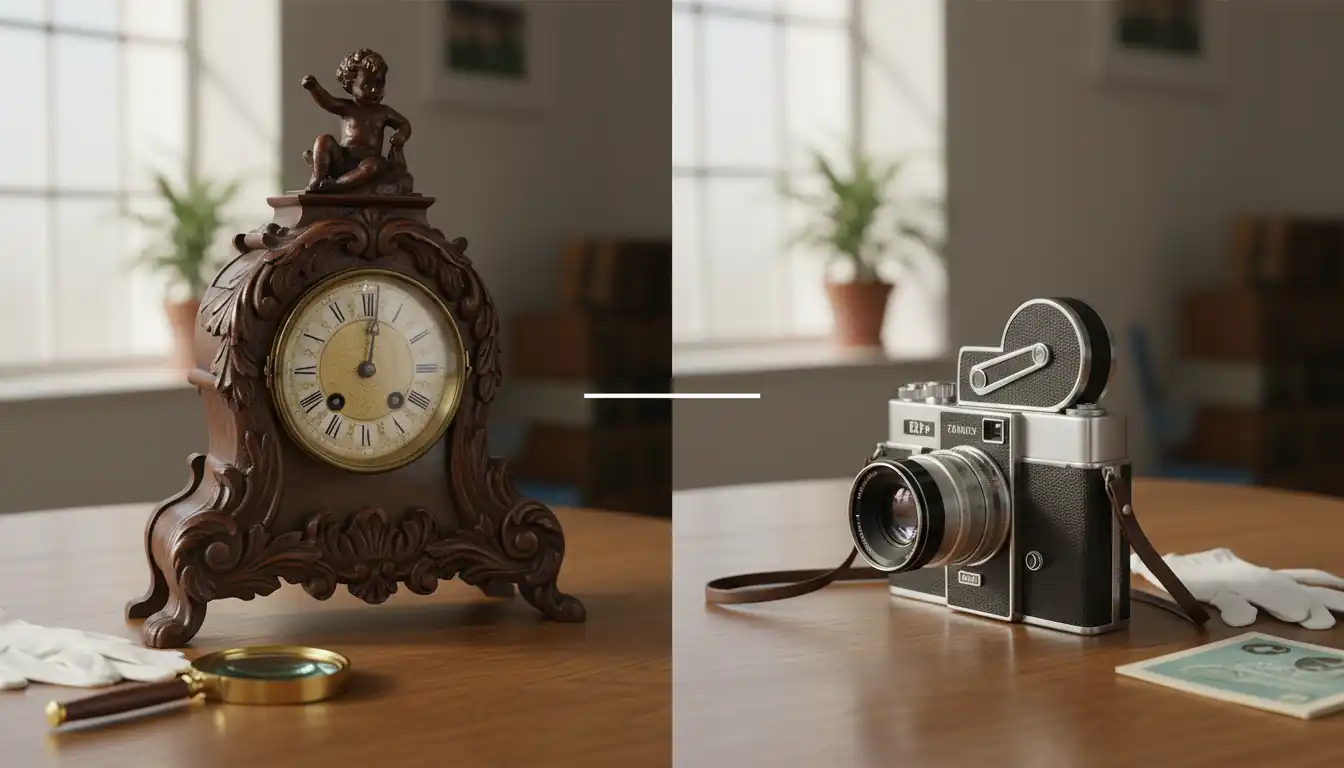
When you start sorting through old items, you’ll hear two terms used constantly: "antique" and "collectible." While people often use them interchangeably, they mean very different things to professionals and tax authorities. Knowing which category your item falls into is the first step in determining its potential value.
The Traditional Century Rule
In the world of professional appraising and international trade, the definition of an antique is remarkably strict. To be considered a true antique, an item must be at least 100 years old. This isn't just a suggestion; it’s a standard used by the U.S. Customs Service and most major auction houses.
Why 100 years? This benchmark suggests the item has survived through multiple generations and represents a specific era of craftsmanship that is no longer common. An antique chair from 1910 was likely handmade or produced with early industrial techniques that differ significantly from modern mass production.
- Material Quality: Antiques often feature solid woods, hand-forged metals, or natural pigments.
- Craftsmanship: Look for hand-dovetailed joints in furniture or hand-painted details on porcelain.
- Historical Context: An antique serves as a physical record of the social and economic conditions of its time.
Why Modern Collectibles Are Dominating the Market
If an item isn't 100 years old, does that mean it’s worthless? Absolutely not. This is where the "collectible" or "vintage" category comes into play. A collectible is generally defined as anything less than 100 years old that people want to own, often driven by rarity, nostalgia, or pop culture significance.
Think about a first-edition comic book from the 1960s or a limited-edition sneaker from the 1990s. Neither is an antique, but both could easily outperform a 150-year-old Victorian side table at auction. The value of a collectible isn't tied to its age, but rather to the emotional connection of the buyer and the scarcity of the item in the current market.
| Feature | Antique | Collectible |
|---|---|---|
| Age Requirement | 100+ Years | Generally under 100 years |
| Primary Value Driver | History, Craftsmanship, Age | Nostalgia, Rarity, Pop Culture |
| Market Stability | Usually slow and steady | Can be highly volatile |
| Example | 18th-century French clock | 1980s Nintendo Game Boy |
Key Insight: While antiques rely on the "test of time," collectibles rely on the "test of the heart." An item’s worth is often a reflection of how many people remember it fondly and how few of them are left in good condition.
High Demand Items Currently Trending with Collectors
The market for old items is never static. What was popular twenty years ago—like heavy oak dining sets or Hummel figurines—might be struggling today, while items once considered "trash" are suddenly worth thousands. If you want to find a hidden treasure, you need to know what collectors are currently fighting over.
The Resurgence of Mid-Century Modern Aesthetics
If you have furniture from the 1950s or 60s, you might be sitting on a goldmine. The Mid-Century Modern (MCM) movement has seen a massive resurgence over the last decade. Collectors are looking for clean lines, organic curves, and functional designs that fit into modern, minimalist homes.
Names like Eames, Herman Miller, Knoll, and Hans Wegner are the "blue chip" stocks of this market. A genuine Eames lounge chair, even one that needs a little bit of leather repair, can fetch thousands of dollars. Even "no-name" pieces that capture the MCM aesthetic—think tapered "peg" legs and teak wood—are in high demand among younger homeowners who prefer vintage quality over flat-pack furniture.
Nostalgia Mining in 90s Pop Culture
The most surprising shift in the market involves items from the 1980s and 1990s. As the children of these decades reach their peak earning years, they are looking to buy back their childhoods. This has created a massive boom in "nostalgia mining."
- Video Games: Early Nintendo, Sega, and PlayStation games—especially those still in their original shrink-wrap—are seeing record-breaking prices.
- Trading Cards: It’s not just baseball cards anymore. Pokémon and Magic: The Gathering cards from the late 90s have become legitimate alternative assets.
- Analog Tech: There is a growing market for "obsolete" technology. Working Walkmans, early Apple computers, and even specific models of VHS players are being snatched up by enthusiasts.
Why is this happening? It’s a matter of supply and demand. Most kids played with their toys, threw away the boxes, and eventually tossed the items in the trash. Finding a 1996 toy in a pristine, unopened box is statistically rarer than finding a 19th-century farm tool.
Identifying Treasures Instantly with AI Technology
In the past, identifying a mystery item was a grueling process. You would have to lug a heavy object to a local dealer, flip through massive price guides that were often outdated by the time they were printed, or spend hours scrolling through grainy forum photos. The barrier to entry was so high that many people simply gave up and sold their treasures for pennies.
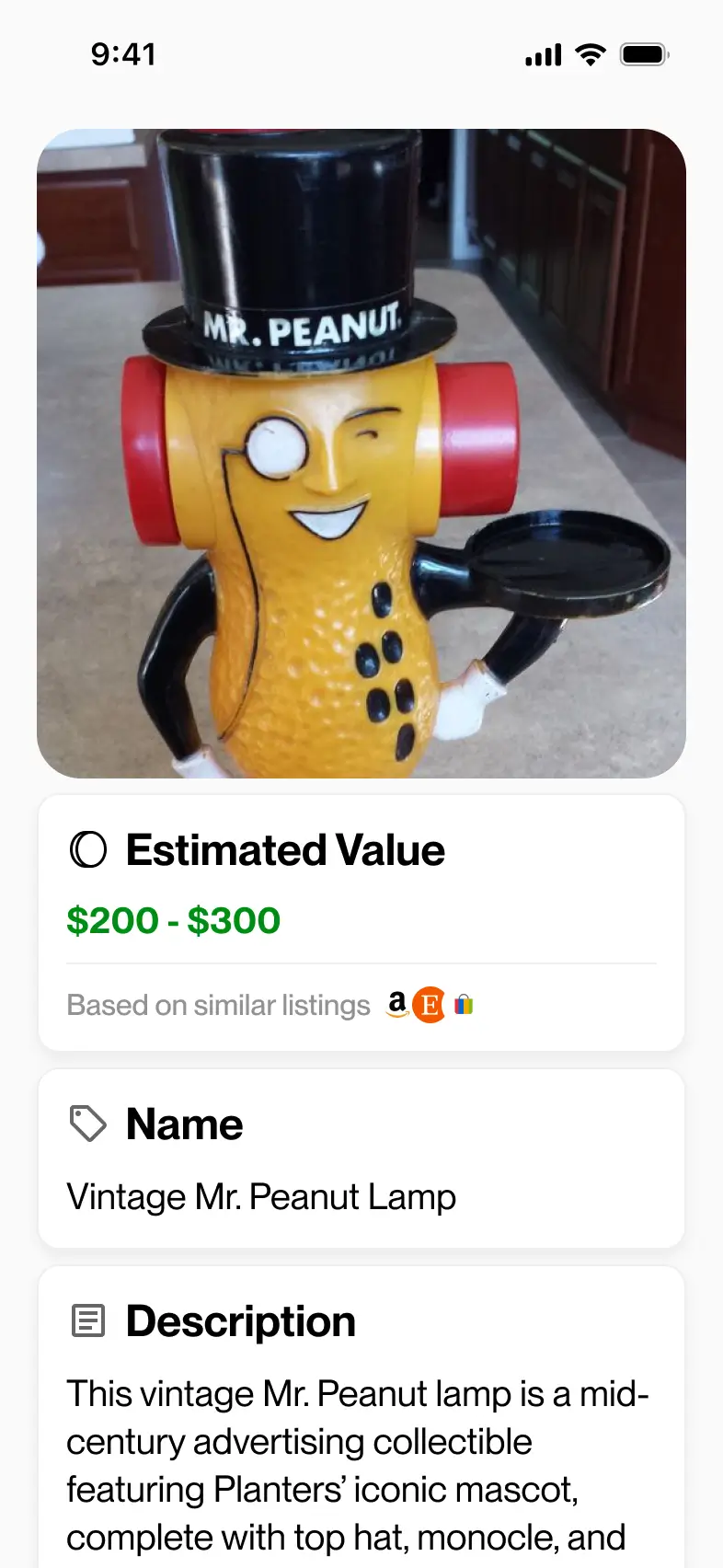
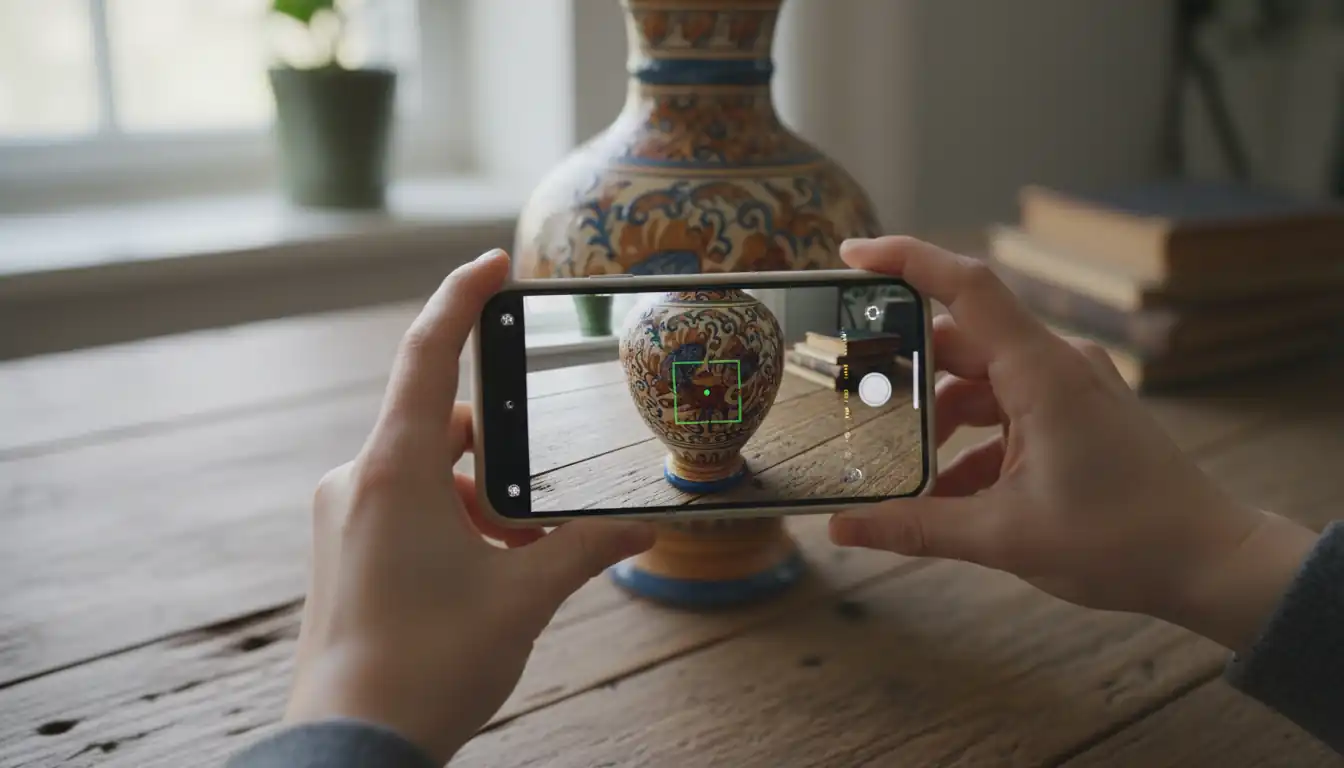
Technology has finally caught up to the world of antiquing. You no longer need to be an expert to identify a maker’s mark or a specific furniture style. With the Relic app on your iPhone, the process of identifying an heirloom is as simple as taking a photo.
Using Relic to Decode History from a Photo
Relic uses advanced AI to analyze visual markers that the human eye might miss. When you upload a photo of an item, the app scans its database to provide a real appraisal, historical context, and the origin of the piece. It’s like having a professional appraiser standing in your living room 24/7.
Imagine you find a small ceramic bowl with a faint blue stamp on the bottom. Is it a mass-produced souvenir or a piece of 18th-century Delftware? By using Relic, you can instantly see the history behind that stamp. The app provides market insights that help you understand if you’re looking at a $5 item or a $5,000 one. This immediate feedback is vital when you’re at an estate sale or a thrift store and need to make a split-second decision.
The End of Manual Catalog Research
The "old way" of researching antiques involved a lot of guesswork. You might think a chair looks like it’s from the Queen Anne period, but without knowing the specific nuances of the leg carvings or the type of wood used, you could be wrong by a century.
Relic removes that uncertainty. Because the AI has been trained on millions of data points, it can identify specific patterns, materials, and manufacturing techniques. For dealers, importers, and online sellers, this one-touch scanning is a massive time-saver. Instead of spending an entire afternoon researching one item, you can catalog an entire collection in minutes. With over 20,000 reviews and a 4.9-star rating, it has become a go-to tool for anyone serious about finding value in the vintage market.
Determining the Real World Value of Your Finds
Once you’ve used a tool like Relic to identify what your item is, the next question is always: "What is it actually worth?" Value is a fluid concept in the world of antiques. An item doesn't have a fixed price tag like a gallon of milk; its value is determined by a complex interplay of factors known as the "Four Cs."
The Impact of Provenance and Condition
The two most significant factors in valuation are how the item looks and where it came from.
Condition is the most brutal metric. In the world of collectibles, a tiny crease on a box or a small chip in a porcelain figurine can drop the value by 50% or more. Collectors are looking for "investment grade" items, which usually means they are as close to their original state as possible.
- The Mint Standard: For toys and electronics, "Mint in Box" (MIB) is the gold standard.
- Patina vs. Damage: For antiques, "original condition" is preferred. Cleaning a 200-year-old coin or refinishing a 17th-century table can actually destroy its value. Collectors want the "patina"—the natural wear that proves age.
Provenance refers to the item's history of ownership. A standard silver pen might be worth $50. However, if you have documented proof that the pen was used by a famous author to sign a classic novel, that same pen could be worth $50,000. Provenance provides the "story" that collectors are willing to pay a premium for.
Why Rarity Does Not Always Equal Value
A common mistake beginners make is assuming that because an item is rare, it must be valuable. This isn't always true. For an item to be valuable, there must be a "market" for it—meaning at least two people who want it enough to bid against each other.
If you own the only surviving example of a 1920s washing machine from a company that went bankrupt in three months, you have a very rare item. But if nobody collects old washing machines, its value is essentially zero.
| Factor | High Value Scenario | Low Value Scenario |
|---|---|---|
| Condition | Pristine, original packaging | Cracked, repaired, or refinished |
| Completeness | Includes all parts and manuals | Missing key components |
| Demand | Thousands of active collectors | Niche interest with few buyers |
| Provenance | Documented royal or celebrity ownership | Unknown or "family legend" history |
Strategic Selling and Long Term Preservation
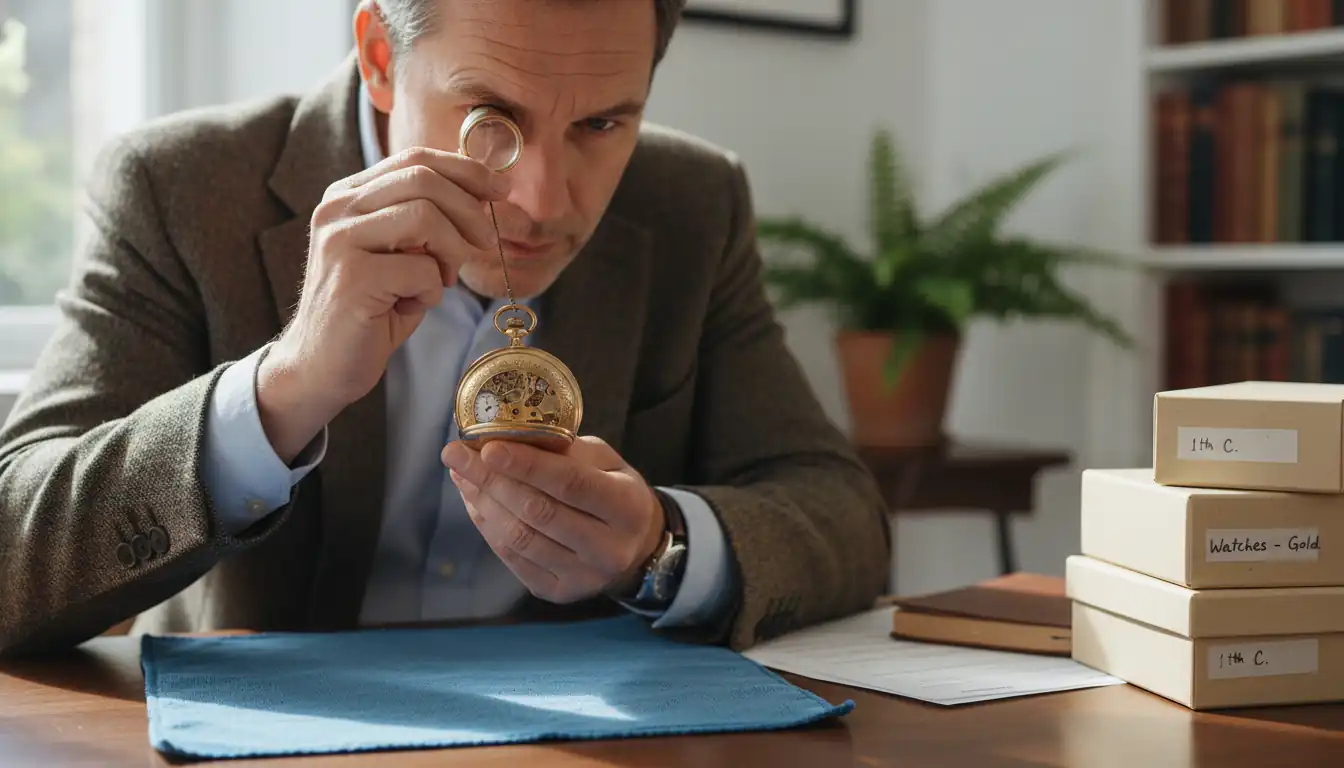
You’ve identified your item, you’ve checked its condition, and you know it’s worth something. Now comes the most important part: turning that item into cash or preserving it for the future. Selling an antique isn't as simple as putting it on the curb with a "For Sale" sign.
Matching Your Item to the Right Marketplace
The "best" site to sell your item depends entirely on what the item is. There is no one-size-fits-all platform for antiques and collectibles.
- Broad Marketplaces (eBay): Best for items with a high volume of buyers and a clear market price, like vintage video games, toys, or common silver patterns. eBay’s massive reach ensures your item will be seen, but you’ll deal with high fees and shipping logistics.
- Niche Auction Houses: For high-end antiques, fine art, or rare jewelry, you want a specialist. Houses like Sotheby’s or Christie’s handle the ultra-rare, while regional experts like Eurasian Interiors or Lang Antique specialize in specific categories. They take a larger commission but can often find the one buyer willing to pay a record price.
- Local Dealers and Consignment: This is the best route for large furniture or fragile items that are difficult to ship. You’ll get less money than selling directly to a collector, but the dealer handles the marketing and "the wait" for a buyer.
Conservation Techniques for Amateur Collectors
If you decide to keep your treasure, you become its temporary guardian. Improper storage is the number one killer of antique value.
- Climate Control: Extreme heat and humidity are the enemies of wood, paper, and fabric. Never store valuable items in an uninsulated attic or a damp basement.
- Light Exposure: UV rays will fade signatures on sports memorabilia and rot the fibers in vintage clothing. Keep your best pieces away from direct sunlight.
- Handling: Use gloves when handling unpainted metal or delicate paper. The oils from your skin can cause permanent staining or "foxing" on old documents.
- Avoid "DIY" Repairs: Never use clear tape to fix an old book or superglue to repair a ceramic plate. These "fixes" are often permanent and significantly reduce the item's value. If an item is truly valuable, it is always worth paying for a professional conservator.
Conclusion
Uncovering a hidden treasure is a thrill that combines the excitement of a scavenger hunt with the satisfaction of a history lesson. Whether it’s a Mid-Century Modern chair found at a curb or a 90s video game tucked away in a closet, the potential for a significant find is all around you.
The key to success lies in moving past the guesswork. By understanding the 100-year rule for antiques, keeping an eye on modern trends like nostalgia mining, and using tools like the Relic app to get instant, AI-powered appraisals, you can navigate the market with the confidence of a seasoned pro.
Don't let your heirlooms gather dust. Take a moment this weekend to look through those old boxes. Use your phone to scan the items that catch your eye. You might just find that the "junk" in your garage is actually the start of your next great adventure.
Identify antiques instantly
Point your camera at any antique, collectible, or vintage item. Get valuations, history, and market insights in seconds.
Download for iPhone