That Dusty Lamp Could Pay Your Rent: How Visual Search is Changing the Estate Sale Game

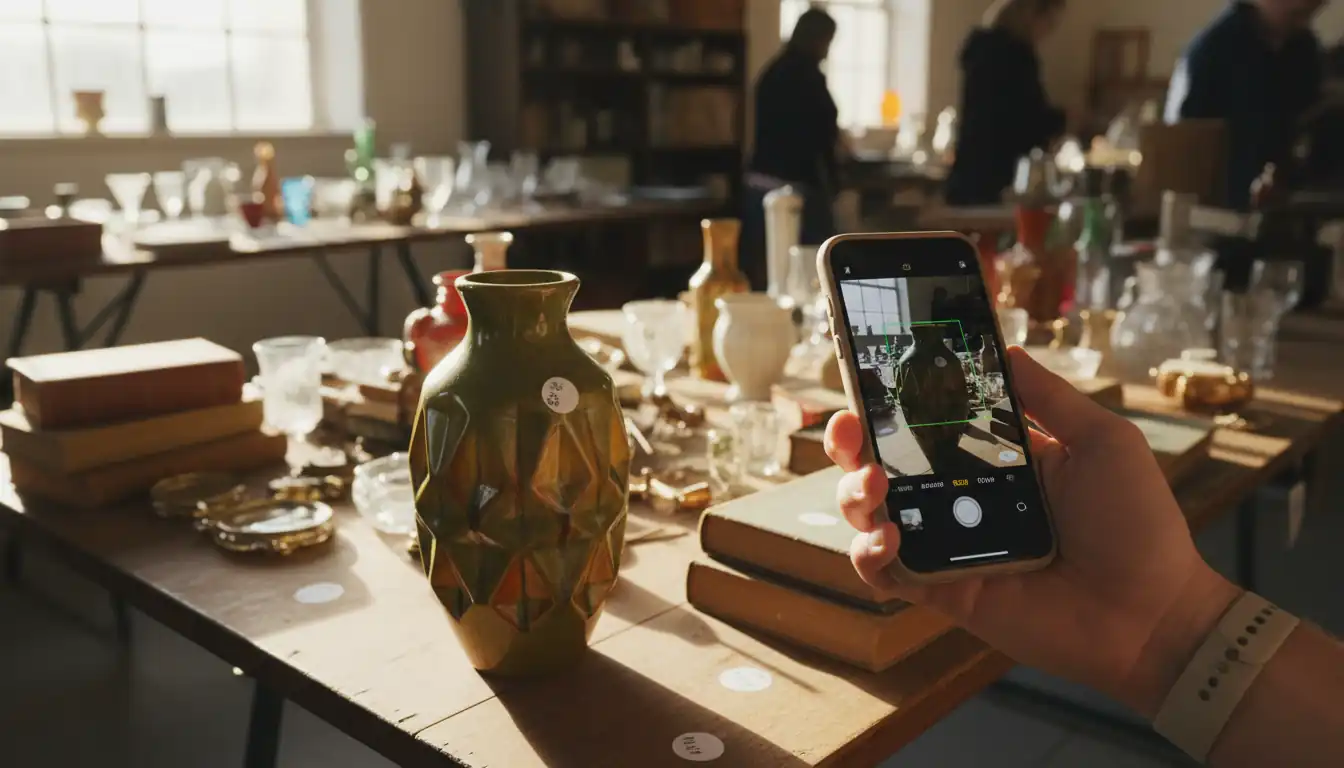
The front lawn of a suburban home at 7:00 AM on a Friday shouldn't feel like a battlefield, yet for the seasoned estate sale hunter, the tension is palpable. You stand in a line that snakes down the driveway, clutching a lukewarm coffee, eyeing the competition. Some carry empty bins; others have loupes hanging around their necks. Everyone is waiting for that front door to swing open, signaling the start of a high-stakes scavenger hunt where the prize could be a $5,000 teak sideboard priced at fifty bucks.
The reality of the estate sale is that value is often hidden in plain sight, masked by decades of dust and the sheer volume of "stuff." You have seconds to decide if a tarnished silver tray is worth the $100 asking price or if it’s just silver plate destined for a thrift store shelf. This is the fundamental challenge of the "pick": your profit or your collection's quality depends entirely on the gap between what you know and what the seller doesn't.
In the following sections, we will explore how the landscape of antique hunting is shifting. We’ll look at why traditional search tools often leave you stranded and how a new generation of visual AI is turning casual hobbyists into expert appraisers. Whether you are looking to pay your rent with a single lucky find or curate a museum-grade home, the way you "see" an item is about to change forever.
The High Stakes World of Estate Sale Hunting

The "Day One" experience at an estate sale is a masterclass in controlled chaos. When the liquidator finally steps aside and allows the first ten people into the house, the atmosphere shifts from polite small talk to a frantic, silent sprint. You aren't just looking for things you like; you are looking for the things everyone else is overlooking. The pressure is immense because, in this environment, speed is the only currency that matters. If you stop to spend ten minutes researching a vase on your phone, someone else has already claimed the mid-century chair in the next room.
Navigating the Chaos of Day One
The first hour of a sale is where the most significant "flips" happen. Professional dealers often have a mental map of the house before they even enter, based on grainy pre-sale photos. They head straight for the "high-value zones": the dining room for silver and fine china, the basement for vintage tools or industrial lighting, and the bedrooms for designer clothing or jewelry.
The psychological hurdle here is "analysis paralysis." You see an object that looks promising—perhaps a heavy, brutalist-style lamp—but you aren't 100% sure of its origin. Do you carry it around while you research, or do you leave it and keep moving? Most people hesitate, and in the world of estate sales, hesitation is the same as a "no." The fear of missing out (FOMO) is real, but the fear of overpaying for a reproduction is often stronger. This tension defines the experience of the modern hunter.
Why Speed is Your Greatest Asset
To succeed, you have to answer a fundamental question: What can you find at an estate sale? The answer is almost anything, but the high-value categories generally fall into a few specific buckets. Knowing these categories allows you to scan a room and filter out the noise.
- Mid-Century Modern Furniture: Look for names like Eames, Knoll, or Herman Miller. Even "no-name" Danish teak pieces can command high prices if the lines are clean and the wood is solid.
- Sterling Silver: This is a perennial favorite. You aren't just looking for flatware; look for weighted candlesticks, dresser sets, and even silver-topped vanity jars.
- Rare Ceramics and Porcelain: This is where the biggest "sleepers" live. A piece of 18th-century Meissen or a rare bit of Rookwood pottery can look like a garage sale trinket to the untrained eye.
- Vintage Electronics: Old tube amps, turntables (like Marantz or Thorens), and even early video game consoles can be worth a fortune to the right collector.
- Textiles and Fashion: High-end vintage quilts, designer scarves (Hermès, Chanel), and even old rock-and-roll tour t-shirts have a massive secondary market.
The problem is that human knowledge is finite. You might be an expert in silver but know nothing about 1960s Italian glass. When you encounter an item outside your niche, your speed drops to zero. You need a way to bridge that knowledge gap instantly, without losing your spot in the flow of the sale.
"In an estate sale, the person with the most information wins. The person with the fastest access to that information wins bigger."
Beyond Google Lens: Why General Image Search Fails Collectors
When most people encounter an unknown object, their first instinct is to pull out a general visual search tool. It seems like the logical solution: snap a photo and let the internet tell you what it is. However, for the serious collector or the professional picker, these general tools often do more harm than good. They are designed to identify "things," not "value."
The Accuracy Gap in Standard Visual Search
A general image search engine is built on broad pattern recognition. If you take a photo of a wooden chair, the AI will correctly identify it as a "wooden chair." It might even show you twenty other wooden chairs that look vaguely similar. But in the world of antiques, the difference between a $50 chair and a $5,000 chair is found in the details that general AI isn't trained to prioritize.
| Feature | General Visual Search | Specialized Antique AI |
|---|---|---|
| Object Identification | High (It knows it's a vase) | High (It knows it's a vase) |
| Nuance Detection | Low (Ignores joinery or glaze) | High (Analyzes specific maker styles) |
| Maker Mark Analysis | Poor (Often treats marks as "noise") | Superior (Trained on hallmark databases) |
| Market Valuation | Non-existent or generic | Real-time market data and appraisals |
| Historical Context | Surface level | Deep provenance and era data |
General tools struggle with "visual noise." In a crowded estate sale, the lighting is often poor, and the background is cluttered. A standard search tool might get distracted by the wallpaper behind the item or the rug it's sitting on. More importantly, these tools lack the "niche data" required to distinguish a high-quality reproduction from an original period piece. They can't tell you if the patina on a bronze statue is "right" for its age, nor can they interpret the subtle "wear patterns" that indicate authenticity.
Identifying Maker Marks and Hallmarks
Perhaps the biggest failure of general search is its inability to handle maker's marks, silver hallmarks, and porcelain backstamps. These are the "fingerprints" of the antique world. They are often tiny, partially rubbed away, or located in awkward places like the underside of a heavy sideboard or the interior of a watch case.
To a general AI, a tiny lion passant mark on a silver spoon is just a smudge. To a collector, that mark indicates the item is sterling silver, was made in London, and dates to a specific year. Identifying these marks manually requires a library of reference books and years of study. Even then, the sheer volume of marks—thousands of different porcelain factories, silver guilds, and furniture makers across centuries—is too much for any one person to memorize.
When you rely on a tool that isn't specialized, you risk two things: buying a "fake" because the AI thought it looked like the real thing, or—even worse—leaving a treasure behind because the AI couldn't find a match. Serious treasure hunting requires a tool that understands the language of antiques, not just the shapes of objects.
Relic: Your Pocket Appraiser for Instant Valuations
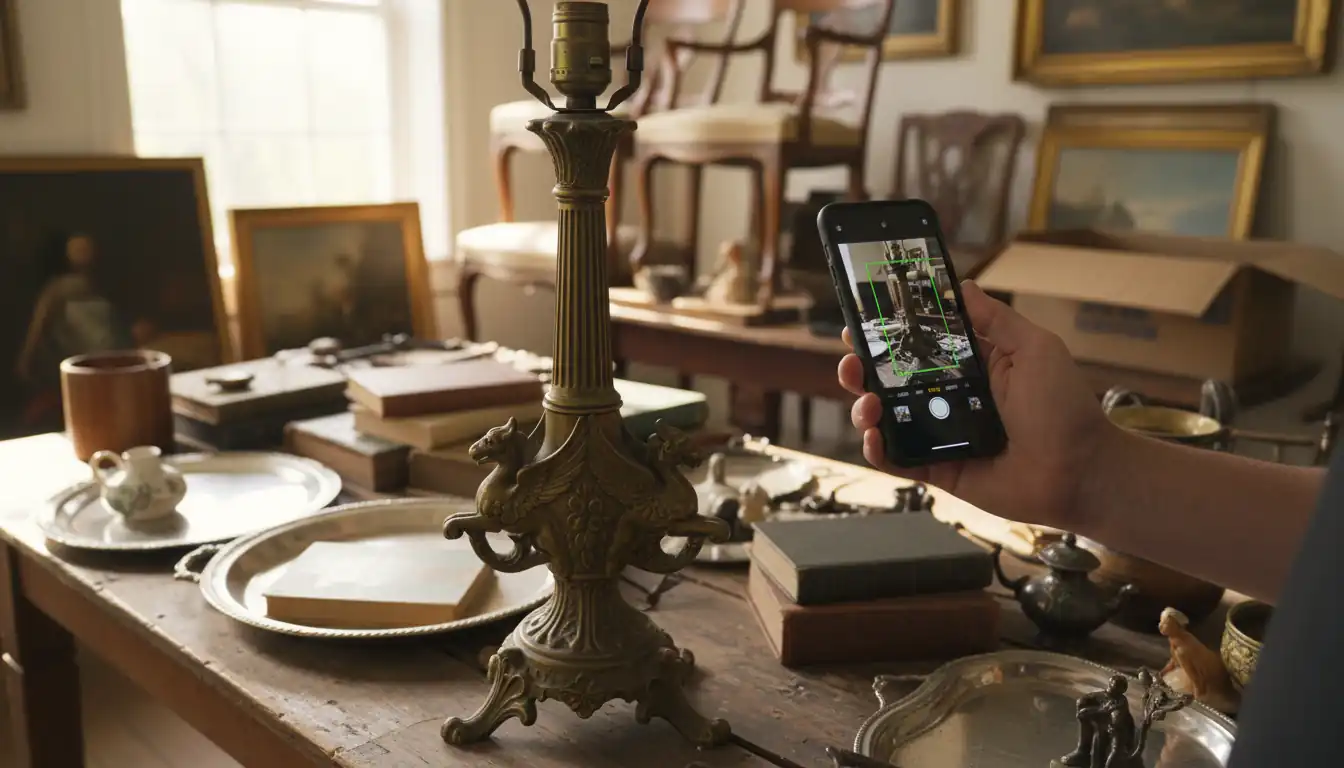
This is where the technology catches up to the needs of the professional collector. While general tools fail, specialized applications are filling the gap. One of the most effective tools currently available for iOS users is Relic. It isn't just a search engine; it’s a dedicated antique identifier designed to function as a professional appraiser you carry in your pocket.
Turning Photos into Professional Appraisals
The workflow of Relic is designed for the high-pressure environment of an estate sale. You don't have time to type in descriptions or scroll through endless pages of "similar" items. With Relic, you simply take a photo within the app or upload one from your gallery.
The advanced AI behind the app doesn't just look for a visual match. It analyzes the item’s construction, style, and markings to provide a real appraisal. It looks at the "bones" of the object. If you’re looking at a piece of jewelry, the app can help decode the history and origin of the piece, giving you a sense of whether you’re looking at costume jewelry or a piece of fine estate gold.
How to use Relic effectively at a sale:
- The "Quick Snap": If you see something interesting but the room is crowded, snap a clear photo and move to the next item. You can review the appraisal and history in the app while you wait in the checkout line.
- The "Mark Scan": Use the app to zoom in on backstamps or hallmarks. The AI is specifically trained to recognize these "hidden" identifiers that general search tools miss.
- The "Gallery Upload": If you’re researching before a sale, upload screenshots from the estate sale listing to get a head start on valuations.
Decoding the History and Origin of Your Finds
One of the most powerful features of Relic is the historical context it provides. Knowing an item is worth $200 is helpful, but knowing why it’s worth $200 makes you a better collector. The app provides the "origin story" of the item—where it was made, the era it belongs to, and the significance of the maker.
For example, if you scan a piece of pottery, Relic might identify it as "Weller Pottery" from the "Louwelsa" line, produced in Ohio in the late 1890s. It will explain the significance of the hand-painted slip decoration and provide a current market value based on recent sales. This turns a simple "buy/sell" decision into an educational moment. Over time, using the app actually trains your eye, making you less dependent on the technology as your own internal database grows.
With a 4.9-star rating from over 20,000 reviews, the app has become a staple for importers, pickers, and online sellers who need accuracy and speed. It removes the guesswork that usually leads to "buyer's remorse" or missed opportunities.
Advanced Tactics for Digital Treasure Hunting
While the physical "Day One" rush is the traditional way to shop, the game has expanded. Many people ask, "Can I shop estate sales online?" The answer is a resounding yes, and this is where visual search tools become even more powerful. Digital estate sale platforms have exploded in popularity, allowing you to "pick" from your couch. However, these listings often feature poor-quality photos, vague descriptions, and a lack of detailed information.
Shopping Estate Sales Online with Visual Tools
To find an estate seller or upcoming sales, most pros use sites like EstateSales.net, Hibid, or LiveAuctioneers. These sites are gold mines, but they require a different strategy than physical sales. When you're in person, you can feel the weight of a glass bowl or look at the dovetail joints on a drawer. Online, you are at the mercy of the photographer.
This is where "Advanced Reverse Image Search Tactics" come into play. Instead of taking a photo of a physical object, you are analyzing a digital one. You can take a screenshot of a "mystery item" in an online listing and run it through Relic. The AI can often "see" through the low resolution or poor lighting of a listing photo to identify a signature or a specific design pattern that the estate seller missed.
Steps for Digital Scouting:
- Identify "Sleepers": Look for listings with titles like "Old Vase" or "Assorted Kitchenware." These are often where the best items are hidden because the seller hasn't done their research.
- Screenshot and Analyze: Take high-quality screenshots of any item that catches your eye. Focus on the shape and any visible marks.
- Check the Catalog: Use the searchable catalog of scanned items within your tools to see if similar items have been appraised recently.
- Map Your Route: Once you've identified 3-4 high-value items at different sales, you can plan your Friday morning route to hit the most promising houses first.
Reverse Image Searching Listing Photos
The "secret weapon" of the modern picker is the ability to identify an item before the sale even starts. If an estate sale company posts 200 photos on a Tuesday for a sale that starts on Friday, you have three days to do your homework.
Most people just scroll through the photos. A pro will take the most interesting photos and run them through a specialized appraiser. By the time Friday morning rolls around, you aren't guessing. You know that the "dusty lamp" in photo #42 is actually a rare 1950s Stilnovo floor lamp worth three months' rent. You know exactly where it is in the house (based on the background of the photo), and you can walk straight to it the moment the doors open.
"The digital hunter doesn't find treasure by luck; they find it by out-researching the competition before the first door is even unlocked."
Building a Profitable Collection with AI Insights
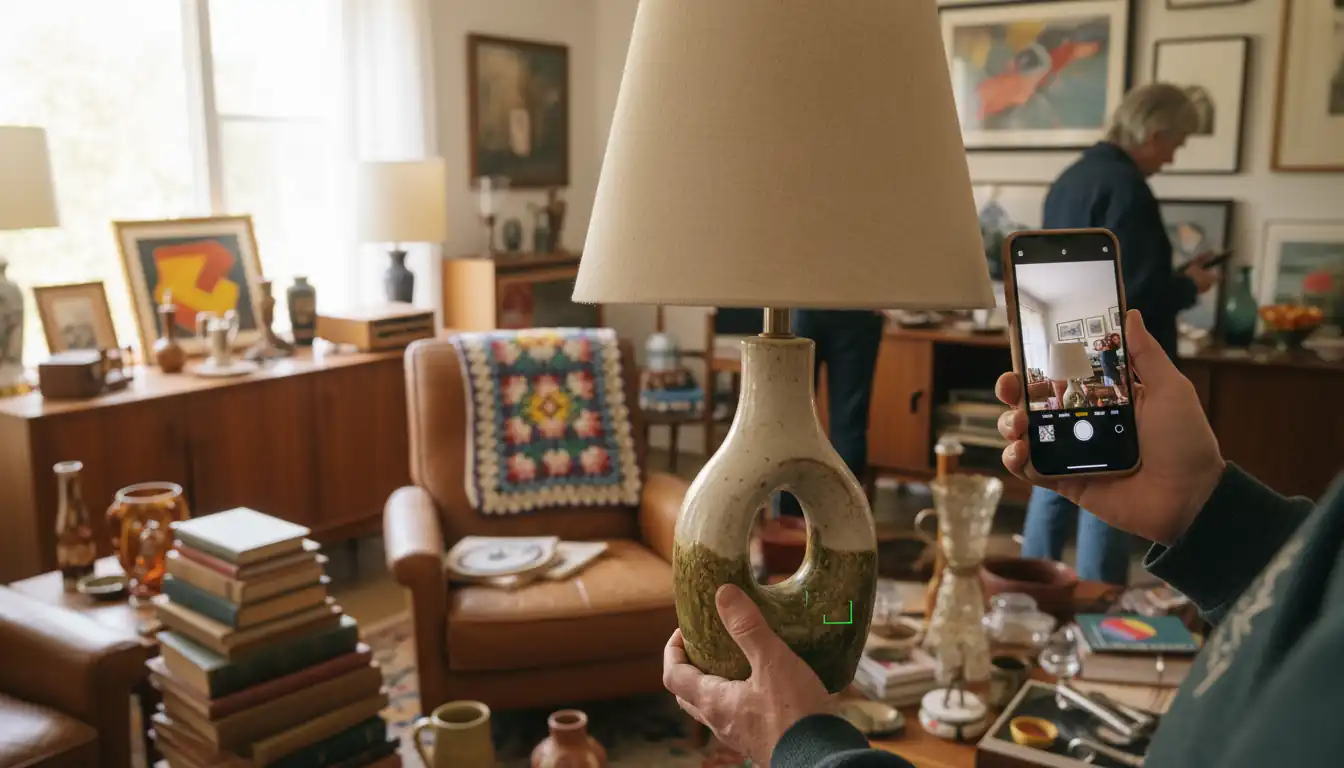
Antique hunting is often portrayed as a series of "lucky breaks," but for those who do it successfully for years, it’s a calculated investment strategy. Using visual search tools isn't just about the immediate "flip"; it’s about building a foundational knowledge of the market and the history of design.
Spotting Trends Before the Market Catch Up
The "history and origin" features of a tool like Relic do more than just identify an object; they teach you about eras. You might start by scanning a few "weird-looking" chairs and realize they all fall under the "Brutalist" or "Post-Modern" umbrellas. You begin to see the patterns: the heavy metals of the 70s, the organic curves of Art Nouveau, or the geometric precision of Art Deco.
By understanding these movements, you can start to spot trends before they hit the mainstream. For example, while everyone else is fighting over Mid-Century Modern teak, you might notice that 1980s "Memphis Group" style furniture is beginning to climb in value. Because you've been using AI to analyze these pieces, you recognize the "look" and the key makers before the general public catches on. This allows you to buy low and hold until the market reaches its peak.
Avoiding Overpriced Fakes and Reproductions
As the value of antiques rises, so does the quality of fakes. We are currently seeing a flood of "vintage-style" items from big-box retailers that are designed to look like authentic 19th-century antiques. To the naked eye, a distressed "French Country" cabinet from a modern mall store can look remarkably like a period piece.
How AI helps you avoid the "Fake Trap":
- Proportion Analysis: AI can detect if the proportions of a piece are "off" for the era it claims to be from.
- Material Consistency: The AI's database knows that a certain maker never used Phillips-head screws or specific types of synthetic glazes.
- Mark Verification: Fakers often get the hallmarks slightly wrong—the font might be too modern, or the spacing might be incorrect. A specialized tool will flag these inconsistencies.
| Item Type | Common Fake/Reproduction | What to Look For |
|---|---|---|
| Cast Iron Toys | Modern "recasts" with grainy texture | Smooth finish and original flat-head screws |
| Silverware | "Silver Plate" marked as Sterling | Specific hallmarks (Lion, Crown, etc.) |
| Art Glass | Modern "Murano-style" imports | Pontil marks and weight/clarity of glass |
| Designer Handbags | High-quality "Superfakes" | Stitch count and hardware weight |
Building a collection is about more than just accumulation; it's about curation. By using advanced visual tools, you ensure that every piece you add to your home or your inventory is authentic, historically significant, and a sound financial investment. You stop being a "buyer" and start being a "collector."
Conclusion
The world of estate sales is no longer just for those with decades of experience and a library of reference books. The barrier to entry has been dismantled by visual search technology. What used to take years of study can now be accomplished in seconds with the right tool in your pocket.
We’ve seen how the "Day One" rush demands speed, why general search tools like Google Lens often fail the specific needs of collectors, and how specialized apps like Relic provide the professional-grade data needed to make high-stakes decisions. We’ve also explored how to take these tactics into the digital realm, scouting sales from home and building a long-term strategy for profit and investment.
The next time you’re standing in that 7:00 AM line, or scrolling through a grainy online listing, remember that the "dusty lamp" or the "old plate" isn't just an object—it's an opportunity. You don't need to know everything; you just need the right way to look at it.
Your Next Steps:
- Download a specialized tool: If you’re on iOS, get Relic and spend some time scanning items in your own home to see how the AI handles different materials and marks.
- Research upcoming sales: Visit EstateSales.net and practice "digital picking" by screenshotting mystery items and running them through the app.
- Start small: Go to a local sale with a set budget and use your new visual search skills to find one "sleeper" item.
The treasure is out there. Now you have the eyes to see it.
Identify antiques instantly
Point your camera at any antique, collectible, or vintage item. Get valuations, history, and market insights in seconds.
Download for iPhone