That Dusty Pitcher Could Be Worth Thousands—Here’s How to Spot Real Antique Glass

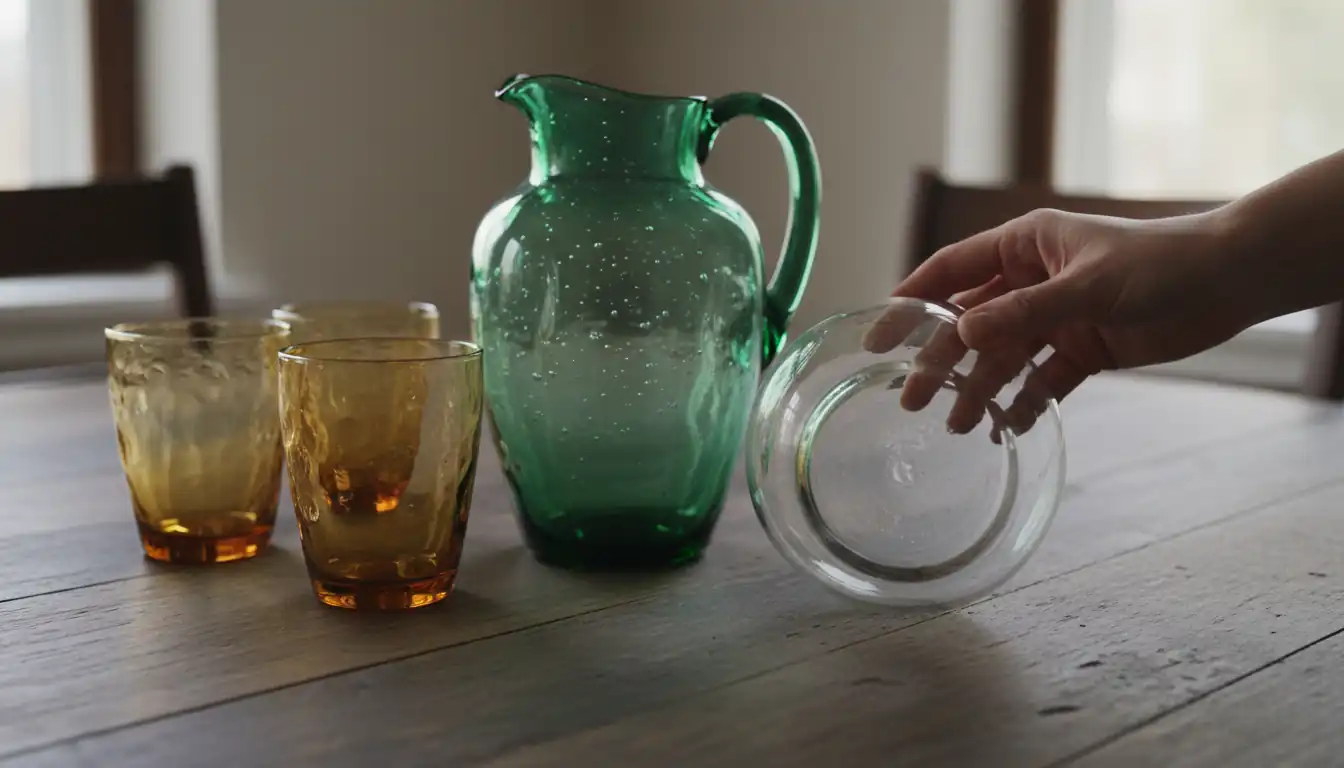
You are walking through a crowded estate sale when a faint glimmer catches your eye from a high shelf. It is a pitcher, thick with dust and tucked behind a stack of chipped ceramic plates. To most people, it is just old kitchenware, something to be cleared away or sold for a few dollars. But to a seasoned collector, that dusty surface might be hiding a masterpiece of 19th-century craftsmanship or a rare piece of Depression-era history.
The difference between a piece of junk and a four-figure treasure often comes down to details smaller than a grain of sand. Identifying antique glass is a skill that combines history, chemistry, and a bit of detective work. You have to look past the grime and focus on how the piece was formed, what it is made of, and who left their mark on it.
By the time you finish reading this, you will know how to read the "fingerprints" left by glassmakers from over a century ago. You will understand why a tiny bubble in the glass is a good sign and why a blacklight is your best friend at a flea market. Most importantly, you will learn how to use modern tools to turn a hunch into a professional appraisal in seconds.
Physical Markers of the Handmade Era

Before the mid-19th century, every piece of glass was a product of human breath and physical labor. There were no assembly lines or automated molds to ensure perfection. Because of this, the most valuable antique glass often carries "scars" from its birth. If you pick up a piece of glass and it feels too perfect—too smooth, too symmetrical, and too light—you are likely holding something modern.
Pontil Marks and Tooling Scars
The most significant clue to a piece’s age is found on the very bottom. When a glassblower creates a vessel, they use a metal rod called a pontil (or punty) to hold the piece while they finish the rim. When the work is done, they have to break that rod away from the base. This leaves a permanent mark known as a pontil mark.
- Snapped Pontil: This looks like a rough, jagged circular scar. It feels sharp to the touch and indicates the glass was broken off the rod and left as-is. This is a hallmark of glass made before the 1850s.
- Ground Pontil: If the maker wanted a more finished look, they would grind the rough spot down. This leaves a shallow, circular indentation that feels smooth but looks slightly different from the rest of the base.
- Polished Pontil: Common in high-end Victorian glass, this is a ground pontil that has been polished back to a high shine. It looks like a clear, intentional "dimple" in the bottom of the glass.
If the bottom of your pitcher is perfectly flat and smooth with no indentation or scarring, it was likely made in a mold by a machine. Machine-made glass uses air pressure to force glass into a shape, eliminating the need for a pontil rod entirely.
Bubbles and Structural Imperfections
In the world of modern manufacturing, a bubble in your glassware is a reason to return it to the store. In the world of antiques, those bubbles are called "seed bubbles," and they are a badge of authenticity. Before modern refining processes, it was nearly impossible to get all the air out of the molten glass.
- Seed Bubbles: These are tiny, often microscopic air pockets trapped inside the glass. In very old pieces, these bubbles might be elongated or "stretched" because the glass was pulled and shaped while the air was still trapped inside.
- Straw Marks: You might see thin, faint lines on the surface of the glass that look like scratches or hairs. These aren't actually scratches; they are "straw marks" or "shear marks." They occurred when the molten glass was cut with cool metal shears or cooled unevenly on a bed of straw.
- Whittle Marks: Some old glass has a wavy, textured surface that looks like the ripples on a pond. This happened when the glass was blown into a cold wooden or metal mold, causing the surface to "shiver" and solidify instantly.
Think of these imperfections as the glass's DNA. They tell you that a human being was involved in the process, reacting to the heat and the tools in real-time. A machine doesn't make mistakes, but it also doesn't create character.
The Chemistry of Color and Light
Once you have felt the texture of the glass, your next step is to look at its chemical soul. Glass isn't just melted sand; it is a complex cocktail of minerals and metallic oxides. Over the centuries, glassmakers changed their recipes based on what was available and what was fashionable. By using light, you can reveal these hidden ingredients.
Uranium and Manganese Reactions
One of the most exciting moments for any collector is "the glow." During the 19th and early 20th centuries, glassmakers added uranium dioxide to glass to give it a vibrant yellow or green tint. This is commonly known as Vaseline glass or Uranium glass.
- The UV Test: If you shine a long-wave UV light (a blacklight) on a piece of Uranium glass, it will glow a bright, neon green. This isn't a trick of the light; it is a chemical reaction.
- Manganese Glow: If you see a faint, peach or sickly green glow under UV light, you are likely looking at manganese. Manganese was used as a "decolorizer" to make glass look clear. Over time, this chemical reacts to UV light in a very specific way.
| Glass Type | Chemical Additive | Reaction to UV Light |
|---|---|---|
| Vaseline Glass | Uranium | Bright Neon Green |
| Early Clear Glass | Manganese | Faint Yellow/Green or Peach |
| Custard Glass | Uranium | Strong Green Glow |
| Modern Glass | None/Synthetic | No Glow or Dull Blue |
Natural Solarization and Sick Glass
Sometimes, the environment does the work for you. Have you ever seen an old bottle or jar that has a beautiful, light purple or amethyst tint? This is called solarization. It happens when clear glass containing manganese is exposed to the UV rays of the sun for decades. This process cannot be faked easily; a deep, rich purple usually indicates the glass has been sitting in a window or a desert for a very long time.
However, not all "cloudiness" is desirable. You may encounter what collectors call "sick glass." This is a foggy, milky appearance that doesn't wash off with soap and water.
- Chemical Instability: Sick glass is caused by a chemical imbalance in the original recipe. Over time, the glass literally begins to decompose on a microscopic level, creating tiny fissures that trap moisture.
- Dirt vs. Sickness: If you can scratch the cloudiness away with a fingernail, it’s just mineral buildup from hard water. If the cloudiness is "inside" the glass and feels smooth, the piece is "sick."
While solarized purple glass can increase value, sick glass almost always destroys it. A cloudy Tiffany vase is worth a fraction of a clear one because the damage is permanent and structural.
Instant Identification with Visual AI
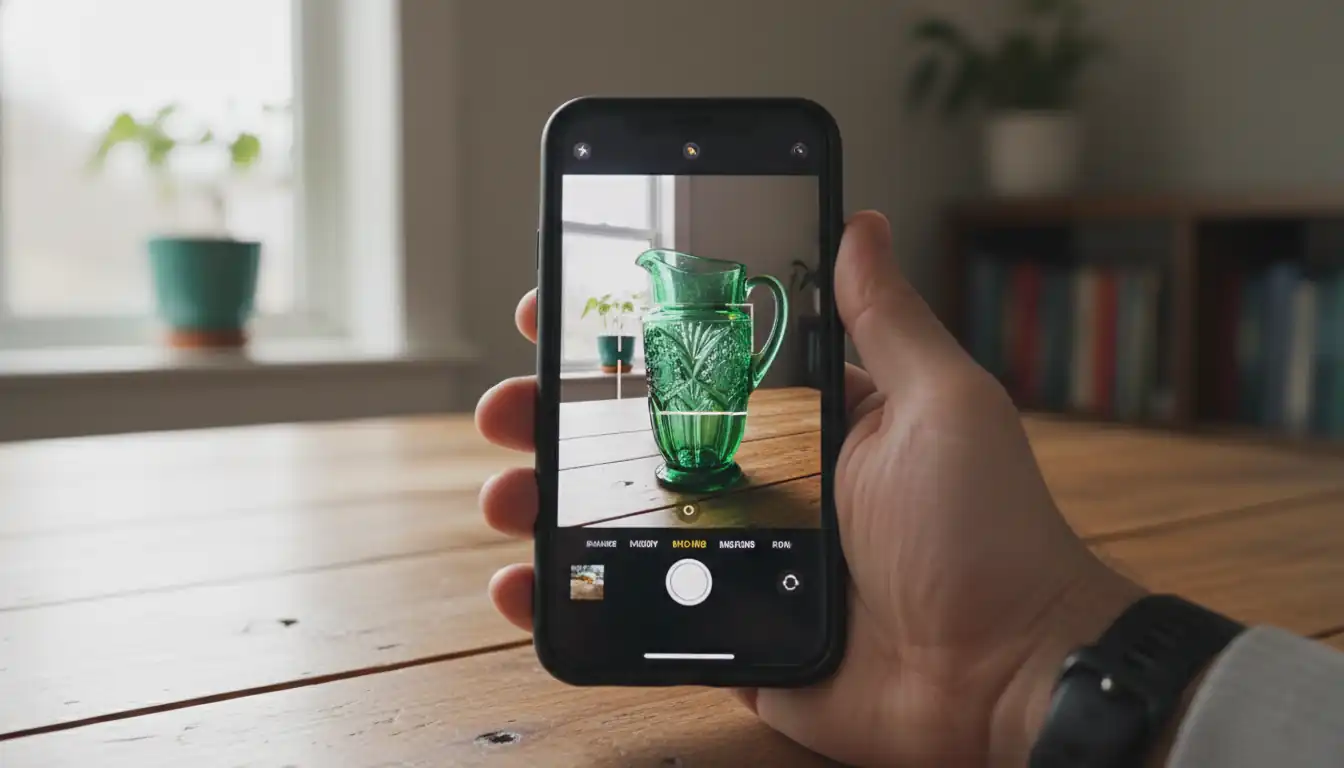
Even with a blacklight and a magnifying glass, identifying a specific pattern can feel like looking for a needle in a haystack. There are tens of thousands of documented glass patterns from the last two centuries. A novice might spend hours flipping through heavy reference books or scrolling through endless forum posts trying to find a match for a specific floral border or a geometric base.
This is where technology bridges the gap between a curious hobbyist and a professional appraiser. The Relic app has changed the way collectors interact with their finds by using advanced visual AI to do the heavy lifting. Instead of guessing if your pitcher is "Early American Pattern Glass" or a 1970s reproduction, you can let the software analyze the geometry.
Pattern Recognition Beyond the Human Eye
The human eye is great at seeing beauty, but AI is better at seeing math. When you take a photo of a piece of glass with Relic, the AI looks at the exact spacing of the "thumbprints," the angle of the fluting, and the specific hue of the color. It compares these data points against a massive catalog of known historical pieces.
- Subtle Differences: Two patterns might look identical to you, but a manufacturer in 1932 might have used a slightly different mold than one in 1935. Relic can spot these minute variations that define a piece's true origin.
- Instant Context: Within seconds of uploading a photo, you receive a report. This isn't just a name; it’s a deep dive into the history of the piece, the manufacturer, and the years it was in production.
Getting Appraisals and History via Relic
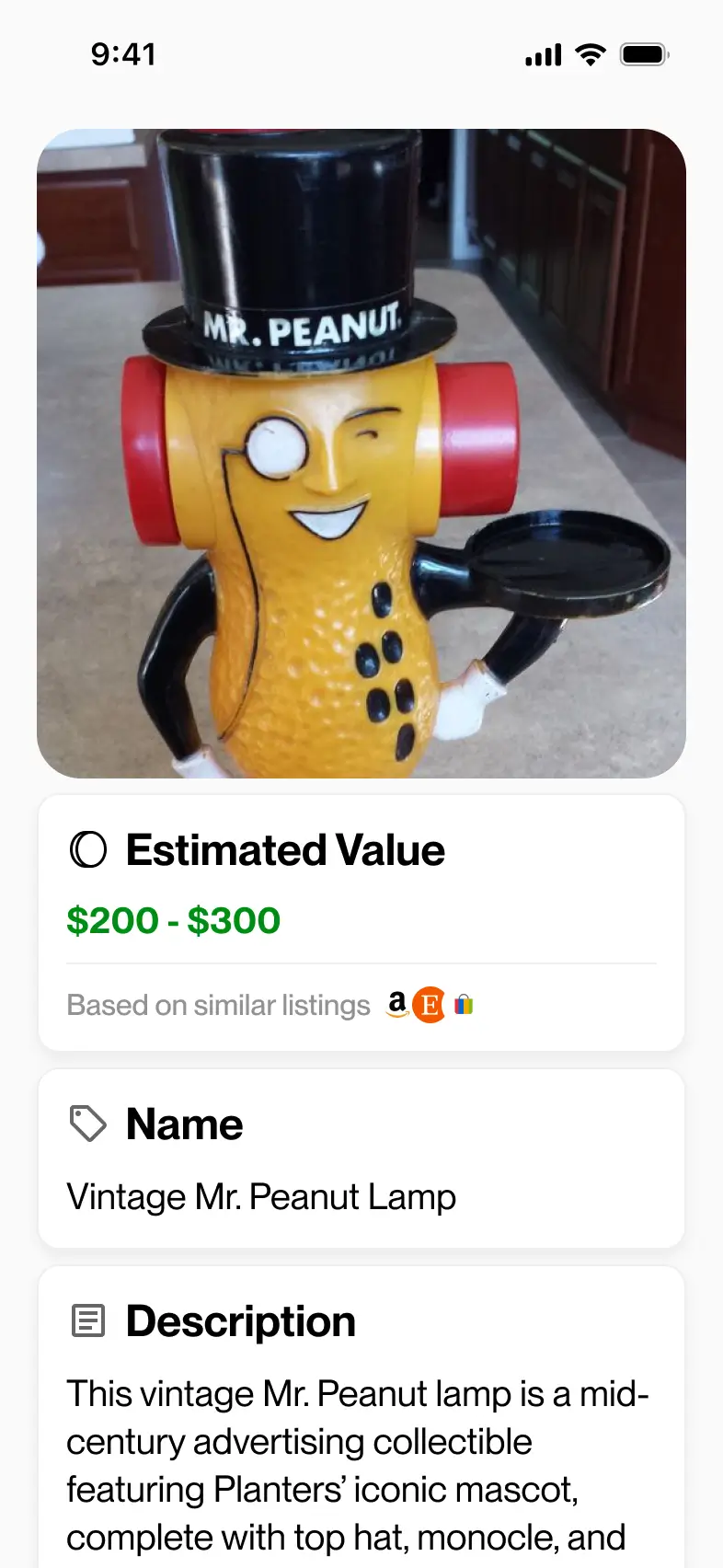
The most stressful part of antiquing is the "buy or pass" decision. If you are at an auction and a piece of glass is about to go under the hammer, you don't have time to go home and research. Relic provides a real appraisal value based on current market data, which is essential for anyone looking to flip items for a profit or build a serious collection.
The true value of an antique isn't what someone asked for it ten years ago; it's what people are paying for it today.
By using the app, you get a professional-grade valuation that accounts for the rarity and demand of that specific item. It turns your smartphone into a portable expert, giving you the confidence to negotiate prices or spot a "sleeper" hit that everyone else has overlooked.
Deciphering Maker Marks and Design Patterns
If the physical markers and the chemistry haven't given you a definitive answer, it’s time to look for the "signature." Not all glassmakers marked their work—in fact, many didn't—but when they did, it was often hidden in plain sight.
Hidden Signatures of Famous Manufacturers
Famous glass houses like Fenton, Tiffany, and Anchor-Hocking had different philosophies on branding. Some wanted their name front and center, while others integrated it into the art itself.
- Fenton: Look for a small, oval-shaped logo with the word "Fenton" inside. On older pieces (pre-1970), there might be no mark at all, but later pieces often have a small number inside the oval to indicate the decade.
- Tiffany: Louis Comfort Tiffany usually signed his pieces on the bottom rim. Look for "L.C.T." or "L.C. Tiffany Favrile" etched into the glass. If the signature looks too "perfect" or was done with a modern drill, be wary.
- Anchor-Hocking: This giant of the industry often used an "H" over an anchor symbol. You will usually find this embossed on the bottom of the piece.
Sometimes the mark isn't a name, but a style. For example, Northwood glass is famous for its "n" in a circle mark, but it is also instantly recognizable by its iridescent "carnival" finish. Learning these visual shorthand cues allows you to scan a shelf and pick out the high-value items without even touching them.
Depression Glass and Mass Production Trends
During the 1920s and 30s, glass production shifted. Companies began mass-producing colorful glassware to give away in cereal boxes or at movie theaters. This "Depression Glass" is now a massive category for collectors.
- The Patterns: Look for names like "Mayfair," "American Sweetheart," or "Royal Lace." These patterns are intricate and cover the entire surface of the glass.
- The Colors: Depression glass is famous for its "ice cream" colors—pink, pale green, amber, and delphite (opaque blue).
- Mold Lines: Unlike the handmade glass of the 1800s, Depression glass will have prominent mold lines. These are thin ridges where the two halves of the metal mold met. In high-end glass, these are polished away; in Depression glass, they are left as-is.
Understanding the "Who" and "When" is a matter of cross-referencing. Once you identify a pattern—like the distinctive "Hobnail" bumps of a Fenton piece—you can pinpoint the era of production with incredible accuracy.
The Realities of Market Value and Provenance
-a01c6c8b-7b09-478c-a526-bef893a6bbf3.webp)
You’ve identified the piece. You know it’s a 1930s pink Depression glass pitcher in the "Cherry Blossom" pattern. Now comes the hard question: What is it actually worth? In the antique world, two identical items can have values that are hundreds of dollars apart based on two factors: condition and provenance.
Impact of Condition on Final Appraisal
Glass is fragile. Even if a piece has survived 100 years, its value is tied to how well it survived. Collectors use a specific vocabulary to describe damage, and you should too.
- Flea Bites: These are tiny nicks, often along the rim or base, that are so small they feel like a rough spot rather than a chip. While minor, they can still drop the value by 10-20%.
- Heat Cracks (Sickness): We mentioned "sick glass" earlier, but "heat cracks" are internal fractures caused by sudden temperature changes. They look like shimmering silver lines inside the glass. A piece with a heat crack is often considered "filler" and has very little resale value.
- Base Wear: Flip the piece over. If a piece is truly old, the bottom should have "shelf wear"—tiny, random scratches from being moved across tables for decades. If the bottom is pristine but the piece is supposed to be 100 years old, it might be a modern reproduction.
| Condition Grade | Description | Value Impact |
|---|---|---|
| Mint | No chips, scratches, or cloudiness. | 100% of Market Value |
| Excellent | Minor shelf wear on base, no visible chips. | 80-90% of Market Value |
| Good | Small "flea bites" or light surface scratches. | 50-60% of Market Value |
| Poor | Visible chips, cracks, or "sick" cloudiness. | 10-20% of Market Value |
The Role of Ownership History
The final piece of the puzzle is "provenance." This is a fancy word for the documented history of who owned the item. If you have a glass pitcher that looks like any other, it’s worth the market rate. If you have that same pitcher and a letter proving it was owned by a prominent historical figure or was part of a famous museum exhibit, the price can skyrocket.
Provenance removes the "maybe" from an antique. It provides a paper trail that confirms the item's age and importance. When using the Relic app, you can often find historical context that helps you understand if your piece belongs to a specific, highly-sought-after line that collectors are currently fighting over.
A professional valuation doesn't just look at the object; it looks at the market's appetite. Is there a sudden trend in "Grandmillennial" decor that is driving up the price of pink glass? Is a specific manufacturer's work being featured in a new design magazine? These factors are just as important as the glass itself.
Conclusion
Spotting a treasure in a sea of dusty glassware is a journey that starts with your hands and ends with your curiosity. By looking for the tell-tale signs of the pontil mark, testing the chemical reactions under a UV light, and checking for the "fingerprints" of seed bubbles, you can separate the mass-produced from the handcrafted.
You don't have to be a lifelong scholar to find success in the world of antiques. Tools like the Relic app allow you to bring a professional's eye to every garage sale and thrift store you visit. It turns the daunting task of pattern identification into a simple photo, giving you the history and the value of a piece before you even reach the checkout counter.
The next time you see a dusty pitcher or a strangely colored bowl, don't just walk past it. Pick it up. Look at the base. Check for the glow. You might just be holding a piece of history that is worth a lot more than the price tag suggests. Your next great find is out there—now you have the tools to see it.
Identify antiques instantly
Point your camera at any antique, collectible, or vintage item. Get valuations, history, and market insights in seconds.
Download for iPhone